Laundry Vinegar Science: Acetic Acid Mechanisms and pH Interactions
Table of Contents
Things You'll Learn From This Article:
- Adding vinegar to the final rinse helps get rid of leftover detergent that makes clothes feel stiff or rough.
- Vinegar works best as a rinse aid, not as part of the main wash with detergent.
- It can make towels and linens feel softer by removing buildup, not by coating the fabric.
- In hard water areas, vinegar helps dissolve mineral deposits that cause clothes to look gray and feel scratchy.
- Vinegar is useful for removing ammonia smells from things like pet bedding, gym clothes, or cloth diapers.
- It does not disinfect laundry, so it’s not enough when someone in the house is sick.
- Vinegar does not “set” colors in modern clothes and won’t stop new jeans from fading.
- Using vinegar too often or undiluted can damage rubber seals and hoses in your washing machine.
- Never mix vinegar with bleach, even indirectly, because it can release dangerous chlorine gas.
- Putting vinegar in the fabric softener compartment ensures it’s released at the right time.
- Vinegar can reduce static a bit, especially in natural fibers, but it’s not as strong as commercial softeners for synthetics.
- The main benefit comes from balancing pH and removing residue, not from killing germs or acting as a miracle cleaner.
Vinegar has become a staple in eco-friendly laundry routines, and for good reason. The acetic acid in standard white vinegar performs several useful chemical functions in the wash. It neutralizes alkaline detergent residue, dissolves mineral deposits from hard water, and converts ammonia-based odors into odorless salts. These are real benefits grounded in straightforward acid-base chemistry.
But vinegar has also been oversold. Eco-cleaning blogs sometimes treat it as a universal disinfectant, a color-setting agent, and a cure-all for every laundry problem. Some of these claims are outright false. Others are half-truths based on outdated textile chemistry. Understanding what vinegar can and cannot do helps you use it effectively while avoiding disappointing results or even damage to your machine.
The science of laundry vinegar is really the science of acetic acid at work. Knowing when its pH-lowering properties are beneficial and when they pose risks allows for optimized use in your laundry routine.
How Vinegar Changes the pH of Your Rinse Water
The primary chemical action of vinegar in laundry is lowering pH through the release of hydrogen ions from acetic acid.
Standard laundry detergents are alkaline, with pH levels ranging from 8 to 11. This high alkalinity is necessary to optimize surfactant performance and swell cotton fibers for better cleaning. But it can leave fabrics feeling rough with a microscopic film of unrinsed soap.
When vinegar is added to the final rinse, the acetic acid releases protons that react with remaining hydroxide ions from the detergent. This neutralization forms water and brings the solution toward neutral pH. The shift has immediate physical effects on natural fibers. Cotton and linen that swell in alkaline conditions relax and flatten as pH drops. The result is a smoother surface texture that feels softer against skin.
This neutralization also prevents long-term yellowing. Alkaline residues left on white fabrics slowly oxidize and develop a dingy cast. Neutralizing them before drying stops this degradation.
The Bottom Line Vinegar neutralizes alkaline detergent residue by donating protons. This softens fabric feel and prevents yellowing from oxidized soap deposits.
Stripping Detergent Buildup
Detergent residue accumulates over time, especially in high-efficiency washers that use minimal water. Surfactants, chelating agents, and builders never fully rinse away. They crystallize within the fiber matrix, trapping body soil and bacteria.
Acetic acid acts as a solubilizing agent for these deposits. It reacts with fatty acid salts found in many soaps, converting them back into free fatty acids or soluble acetates that rinse away easily. This stripping action is particularly valuable for heavy textiles.
Washing linens and towels often results in stiffness as detergent accumulates in dense loop piles. A vinegar rinse breaks down this chemical crust, restoring absorbency and flexibility to terry cloth. The removal of this residue also eliminates the “crunchy” feeling often associated with line-dried laundry.
Dissolving Hard Water Mineral Deposits
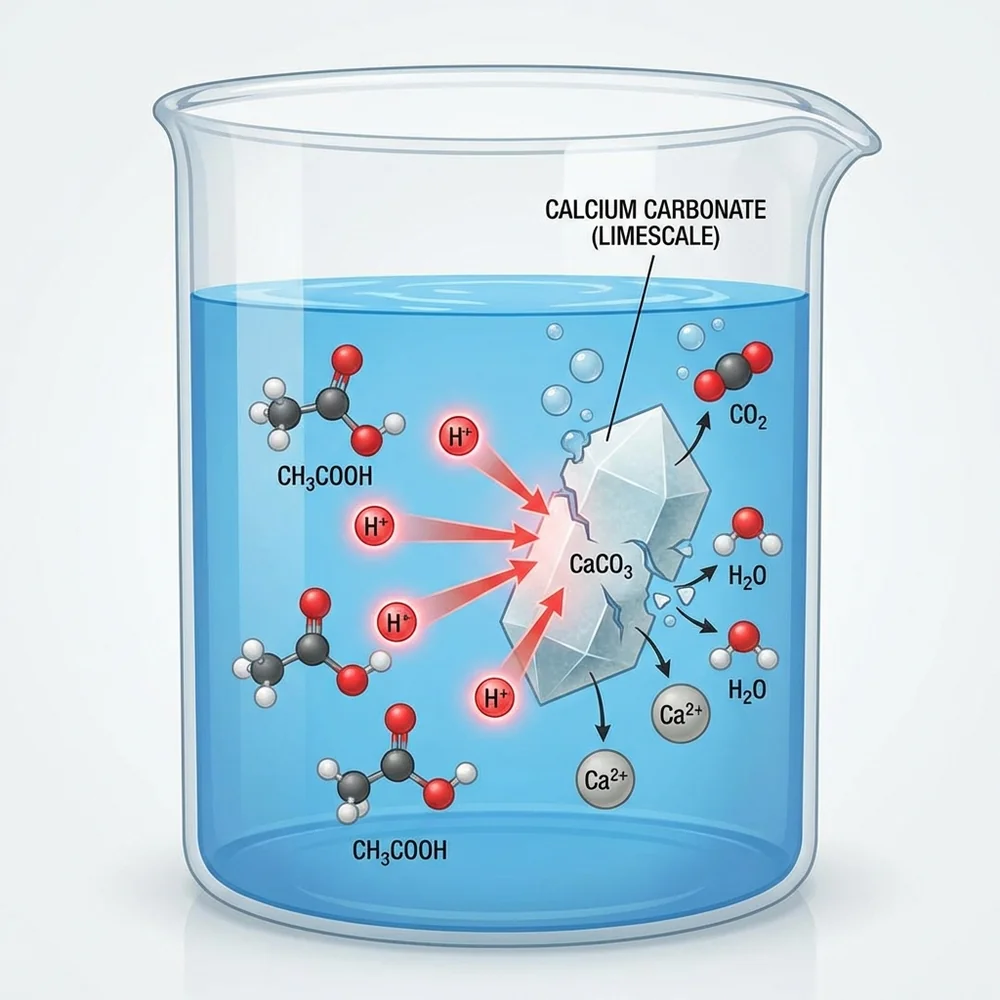
Calcium and magnesium ions in hard water react with detergent to form insoluble soap scum. These mineral deposits interlock with fabric fibers, causing graying and abrasive texture. Hard water laundry chemistry requires acid to break these ionic bonds.
Acetic acid chelates calcium carbonate, converting it into calcium acetate, water, and carbon dioxide. Calcium acetate is highly water-soluble and flushes out during the rinse cycle. This descaling prevents the gradual stiffening of fabrics that occurs in hard water regions.
Regular vinegar use stops the physical abrasion caused by microscopic mineral crystals grinding against delicate fibers during tumbling. It essentially acts as a sacrificial acid, reacting with minerals before they can deposit onto your clothes.
The Bottom Line Vinegar dissolves calcium and magnesium deposits by converting them into soluble salts. This prevents the graying and roughening that hard water causes over time.
Why Vinegar Makes Fabric Feel Softer
The softening effect of vinegar comes from both chemical neutralization and electrostatic modification rather than coating fibers like commercial softeners do.
Commercial fabric conditioner science relies on quats, cationic surfactants that coat fibers with a hydrophobic layer to create lubricity. Vinegar works differently. By removing friction-causing mineral and detergent deposits, it reveals the natural softness of the fiber underneath.
The slight acidification of rinse water also affects the surface charge of synthetic fibers. Static cling develops when electrons transfer between materials during tumbling. Static cling physics shows that dry, alkaline conditions favor static buildup. By lowering pH, vinegar reduces the voltage potential on fabric surfaces. It is less effective than silicone-based softeners for synthetics, but provides sufficient static reduction for natural fiber blends without sacrificing absorbency.
Neutralizing Ammonia and Urine Odors
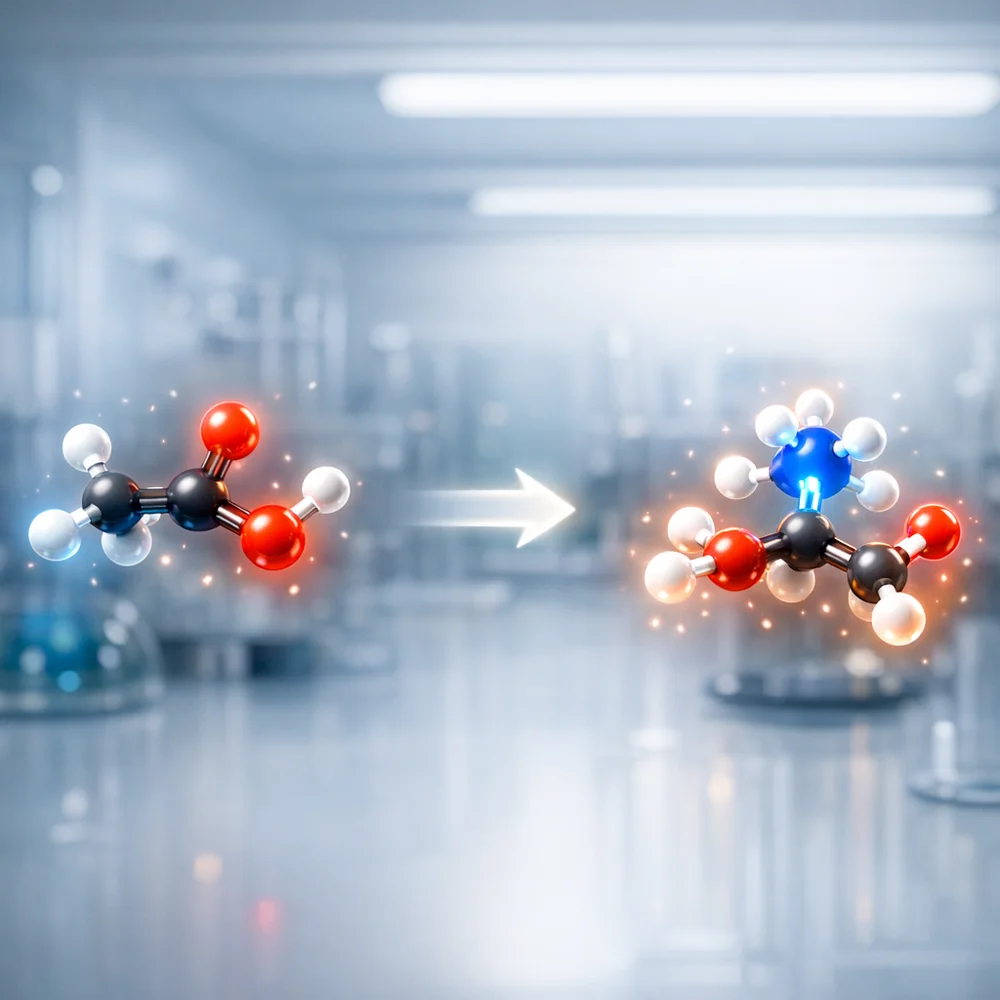
Ammonia is the primary odor-causing component in urine, produced when bacteria break down urea. Ammonia is a base with high pH. Acetic acid creates an immediate neutralization reaction.
The acid donates a proton to ammonia, converting it into ammonium acetate. This salt is odorless, chemically stable, and water-soluble. The volatile odor molecule gets locked into a solid form that washes away completely.
This mechanism makes vinegar essential for washing pet bedding and toys or cloth diapers. Unlike enzymatic cleaners that digest odor sources over time, the acid-base reaction is instantaneous. For deep-set odors in items like removing yellow armpit stains, a pre-soak in diluted vinegar penetrates the fabric to reach the core of the odor source before the wash cycle begins.
The Bottom Line Vinegar converts volatile ammonia into odorless ammonium acetate through instant acid-base neutralization. This is its most effective application for odor control.
The Disinfection Myth
A prevalent myth in eco-friendly cleaning is that vinegar is a hospital-grade disinfectant. This is chemically inaccurate.
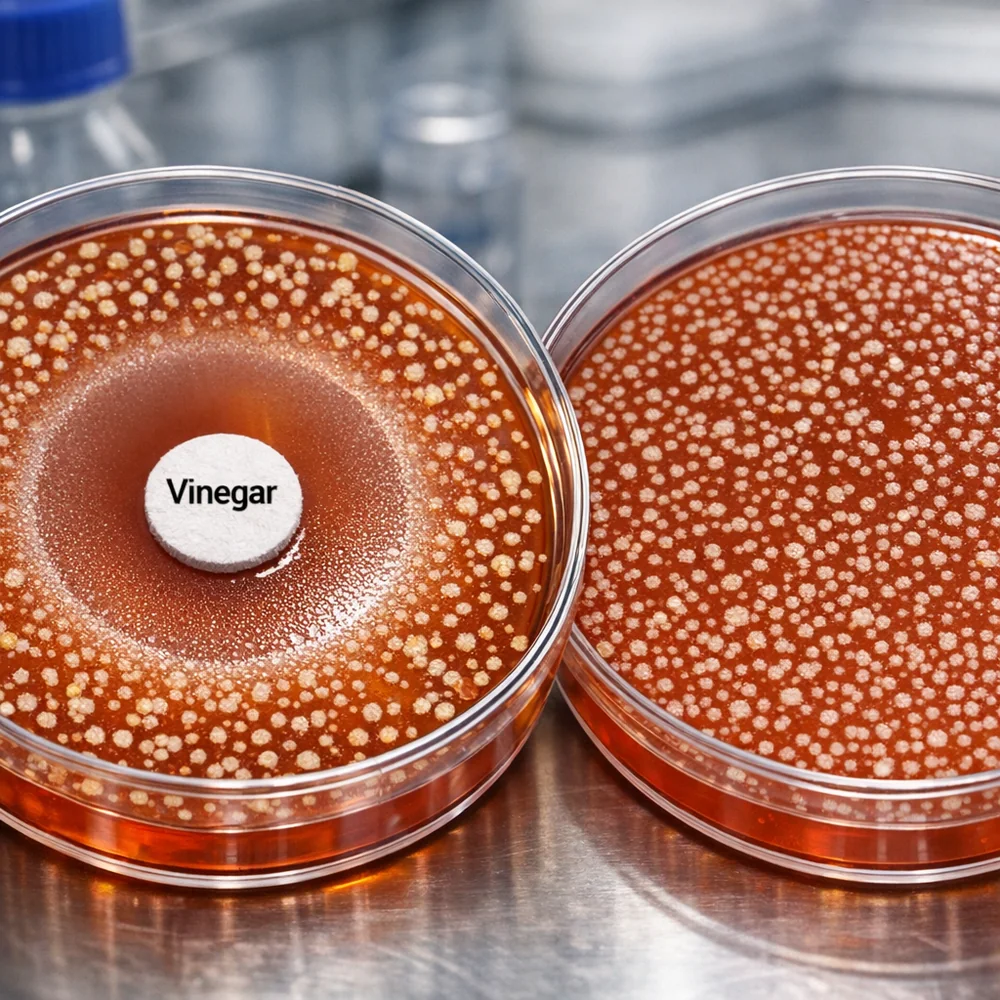
While 5% acetic acid does have some antimicrobial properties against gram-negative bacteria like Salmonella and Pseudomonas, it is not a broad-spectrum killer. It is largely ineffective against Staphylococcus aureus and most non-enveloped viruses. Relying on vinegar to sanitize laundry from a sick household member may spread contamination rather than eliminate it.
True disinfection requires thermal or oxidative methods. Sanitizing laundry for a sick family demands hot water above 60°C or chlorine bleach. Vinegar creates an environment hostile to bacterial growth (bacteriostatic) rather than actively killing all pathogens (bactericidal). Its hygienic contribution is removing the soap scum and body soil that bacteria thrive on.
The Color-Setting Myth
Folklore often suggests adding vinegar to wash water to “set” colors in new garments. This advice is a relic from historical textile chemistry.
Historically, acid dyes used on wool and silk required acidic conditions to bond to fiber. For those specific protein fibers and dye classes, acid is indeed part of the fixation process. However, modern cotton and synthetic fabrics use fiber-reactive dyes or disperse dyes that are not stabilized by acid. For some reactive dyes on cotton, lowering pH can actually destabilize the bond and increase bleeding.
Soaking new jeans in vinegar will not prevent fading. The most effective way to protect dark colors is using a detergent for dark fabrics containing chlorine scavengers and cellulase enzymes. The perceived benefit from vinegar likely comes from removing detergent haze, which makes colors appear brighter and deeper, rather than chemically locking dye molecules to fiber.
The Bottom Line Vinegar does not “set” modern dyes. Any color improvement comes from removing residue that dulls appearance, not from chemical fixation.
Risks to Rubber Gaskets and Machine Components
The acidic nature of acetic acid poses long-term risks to washing machine components, especially rubber seals and hoses.
Some synthetic rubbers, particularly certain NBR (nitrile butadiene rubber) formulations used in gaskets, are susceptible to acid degradation. Continuous exposure to undiluted vinegar causes these components to dry out, crack, and eventually fail. A single use is harmless, but daily use over years accelerates material fatigue.
Vinegar should never be poured directly onto seals or left sitting in the dispenser drawer. It must be diluted with water or added to the drum during the rinse cycle where water volume provides immediate buffering. Smart washer auto-dosing systems are generally not designed for acidic additives in their reservoirs. Some manufacturers explicitly void warranties if vinegar damage is detected.
The Deadly Mix: Vinegar and Bleach
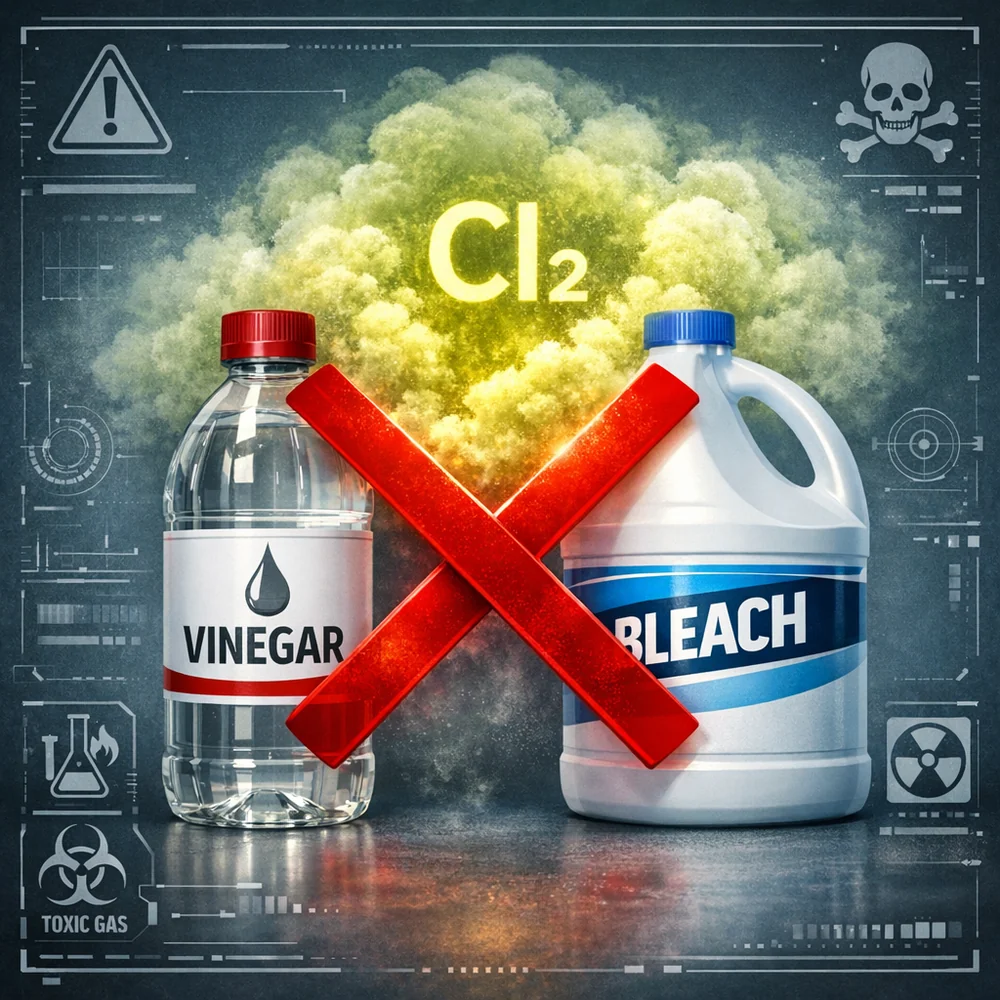
Mixing vinegar and chlorine bleach produces chlorine gas, which causes severe respiratory damage and can be fatal at high concentrations.
When sodium hypochlorite (bleach) contacts acetic acid, the acid protonates the hypochlorite ion and drives the release of chlorine gas. The reaction is immediate and vigorous. Chlorine bleach chemistry requires alkaline conditions to remain stable. Even adding vinegar to a load that contains residual bleach from a previous step can trigger dangerous off-gassing.
Strict isolation is the only safe protocol. Never use these two chemicals in the same cycle or even the same day without an intermediate empty rinse to clear the machine’s sump completely.
The Bottom Line Never combine vinegar and bleach. The reaction produces toxic chlorine gas that can cause serious injury or death.
When to Add Vinegar in the Wash Cycle
Timing determines whether vinegar helps or hinders cleaning.
Adding vinegar to the main wash cycle with detergent is counterproductive. Because detergent is alkaline and vinegar is acidic, they neutralize each other. This reduces the cleaning power of the detergent and consumes the vinegar before it can perform any descaling. The result is a wash liquor with messy neutral pH that cleans poorly and rinses poorly.
The correct placement for vinegar is in the fabric softener compartment. This ensures it dispenses during the final rinse cycle after detergent has drained away. In this phase, vinegar can work on residual alkalinity and mineral deposits without interference. It acts as a finishing agent, not a cleaning agent.
Conclusion
Vinegar is a useful laundry tool when applied with accurate understanding of its chemistry. It excels at pH correction, mineral dissolution, and residue stripping. Its ability to rejuvenate towels and neutralize ammonia odors makes it genuinely valuable.
However, it must be separated from myths. It is not a disinfectant. It does not set modern dyes. It can damage rubber components with prolonged undiluted use. And it absolutely must never be combined with chlorine bleach.
Used correctly in the final rinse, vinegar ensures fabrics remain soft, mineral-free, and clean of invisible detergent buildup. It represents a return to simple, single-ingredient solutions that solve specific chemical problems through basic acid-base interactions.
References
- Journal of Surfactants and Detergents. “Interaction of Acidic Rinse Aids with Anionic Surfactants on Cotton Films.” Springer
- Environmental Science & Technology. “Acetic Acid Efficacy in Mineral Deposit Removal from Hydrophilic Textiles.” ACS Publications
- Textile Research Journal. “pH Influence on Cotton Fiber Swelling and Surface Friction.” Sage Journals
- Journal of Environmental Health. “Comparative Antimicrobial Efficacy of Natural Acids vs. Sodium Hypochlorite.” NEHA
- Appliance Engineering. “Elastomer Degradation in Acidic Laundry Environments.” IEEE Xplore