Detergent for Dark Fabrics: The Science of Color Preservation
Table of Contents
Things You'll Learn From This Article:
- Washing dark clothes with regular detergent can make them look faded fast because it’s built to boost brightness, not protect color.
- Dark clothes often look gray because tiny fibers on the surface get rough and scatter light, not because all the dye is gone.
- Detergents made for dark fabrics smooth those tiny fibers, which helps black and navy look deeper again.
- Enzymes in dark-care detergents work like microscopic trimmers that reduce fuzz, pilling, and the ashy look.
- Some detergents can catch loose dye in the wash water so it doesn’t stain other clothes or dull the same garment.
- Optical brighteners, which make whites glow, leave a blue-gray haze on dark fabrics and can stick around permanently.
- Checking the label for “no optical brighteners” is one of the easiest ways to protect dark clothes.
- High-alkaline detergents weaken dye bonds, while near‑neutral formulas help colors stay locked into the fabric.
- Cold water washing helps prevent dye loss because heat makes fibers swell and release color.
- Modern dark detergents are designed to clean well in cold water, so heat isn’t necessary.
- Using cold water also cuts most of the energy used in laundry since heating the water uses the most power.
- Dark-care detergents reduce friction between clothes, which helps prevent pilling and fabric wear.
- Sunlight can permanently fade dark clothes by breaking down the dye, especially when line-drying.
- Some dark detergents add UV-protective ingredients that act like sunscreen for fabric.
- Denim needs extra care because its dye sits mostly on the surface, making it easier to lose color if washed harshly.
- Specialized dark or denim detergents clean jeans while keeping the contrast and original look intact.
- Choosing the right detergent, washing cold, and avoiding brighteners can keep dark clothes looking new much longer.
If you have ever pulled a favorite black shirt out of the wash only to find it looks more like faded charcoal, you know the frustration of watching dark clothes lose their depth. That fresh-out-of-the-store richness seems to vanish over just a few wash cycles, replaced by a dull, grayish version of what you bought. It turns out this is not inevitable. It is actually a predictable chemical outcome of using the wrong detergent.
Standard laundry detergents are designed to make whites whiter and brights brighter. That is exactly the opposite of what dark fabrics need. When you wash black or navy clothing with a typical detergent, you are subjecting it to a triple attack: high alkalinity that weakens dye bonds, optical brighteners that create a hazy film, and aggressive surfactants that strip color along with the dirt. No wonder your black jeans turn gray after a few months.
Specialized detergents for dark fabrics take a completely different approach. They use targeted chemistry to preserve color rather than boost brightness. The formulations include enzymes that smooth fiber surfaces, polymers that trap escaped dye before it can redeposit, and carefully neutral pH profiles that keep pigments locked in place. Understanding these mechanisms helps you make smarter choices about how to care for your dark wardrobe.
The Real Reason Black Clothes Look Faded
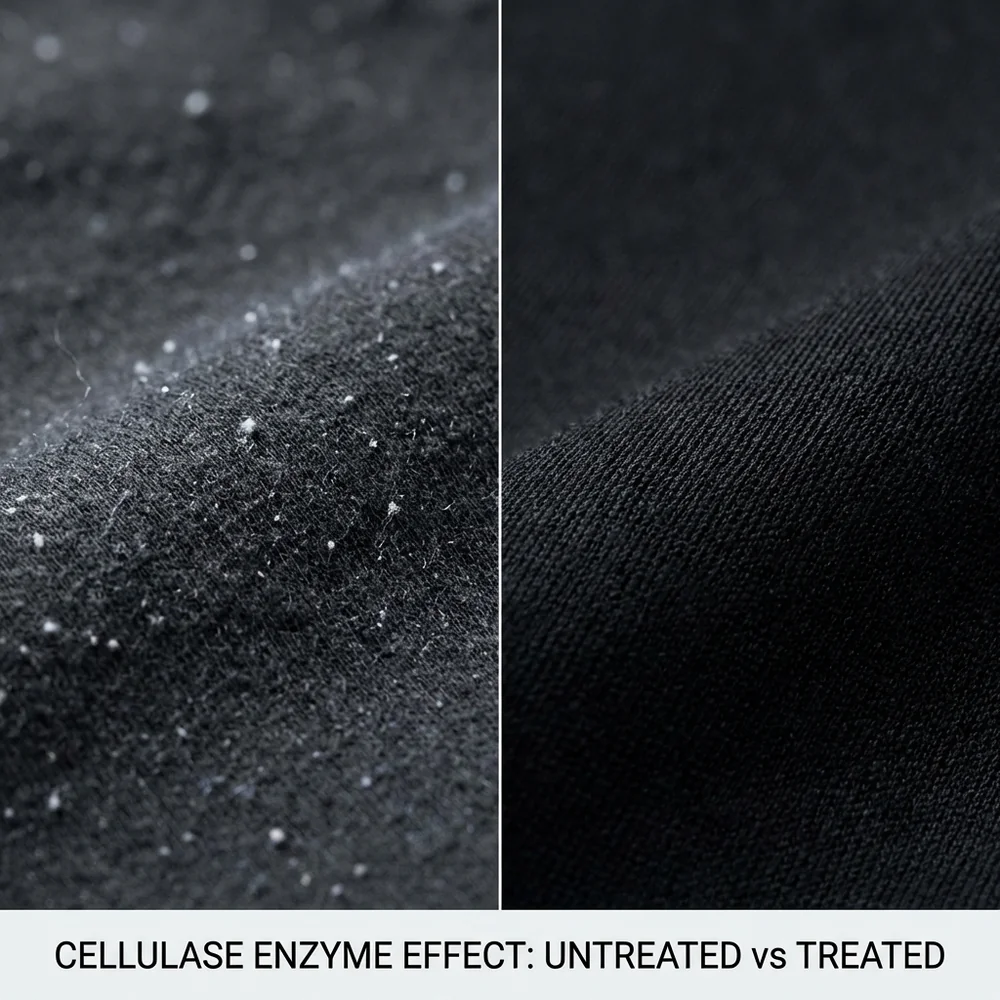
Before diving into solutions, it helps to understand what “fading” actually means at the molecular level. Interestingly, what you perceive as fading is often not about the dye itself being removed. It is about how light interacts with the fabric surface.
When cotton and linen garments age, the long cellulose chains on the surface of the yarns start to fray. These microscopic fibrils are incredibly tiny, less than a millimeter long, but they have an enormous impact on appearance. On white fabric, this fuzzy surface makes things look softer and more natural. On dark fabric, it is a disaster because these fibrils scatter light.
When light hits a smooth dark surface, it penetrates into the fabric and gets absorbed by the dye. That is what creates the deep, rich appearance of a brand-new black shirt. But when the surface is covered in microscopic fuzz, the light bounces off before it ever reaches the dye. The result is a white or gray “haze” that masks the underlying color. Your shirt still has the same amount of dye in it, but the fiber damage prevents you from seeing it.
This is why truly restoring faded darks requires more than just “gentle” washing. You need something that actively fixes the fiber surface.
The Bottom Line Most perceived fading in dark clothes is caused by surface fiber damage that scatters light. The dye is often still intact, but microscopic fuzz prevents light from reaching it.
Cellulase Enzymes: The Molecular Barbers
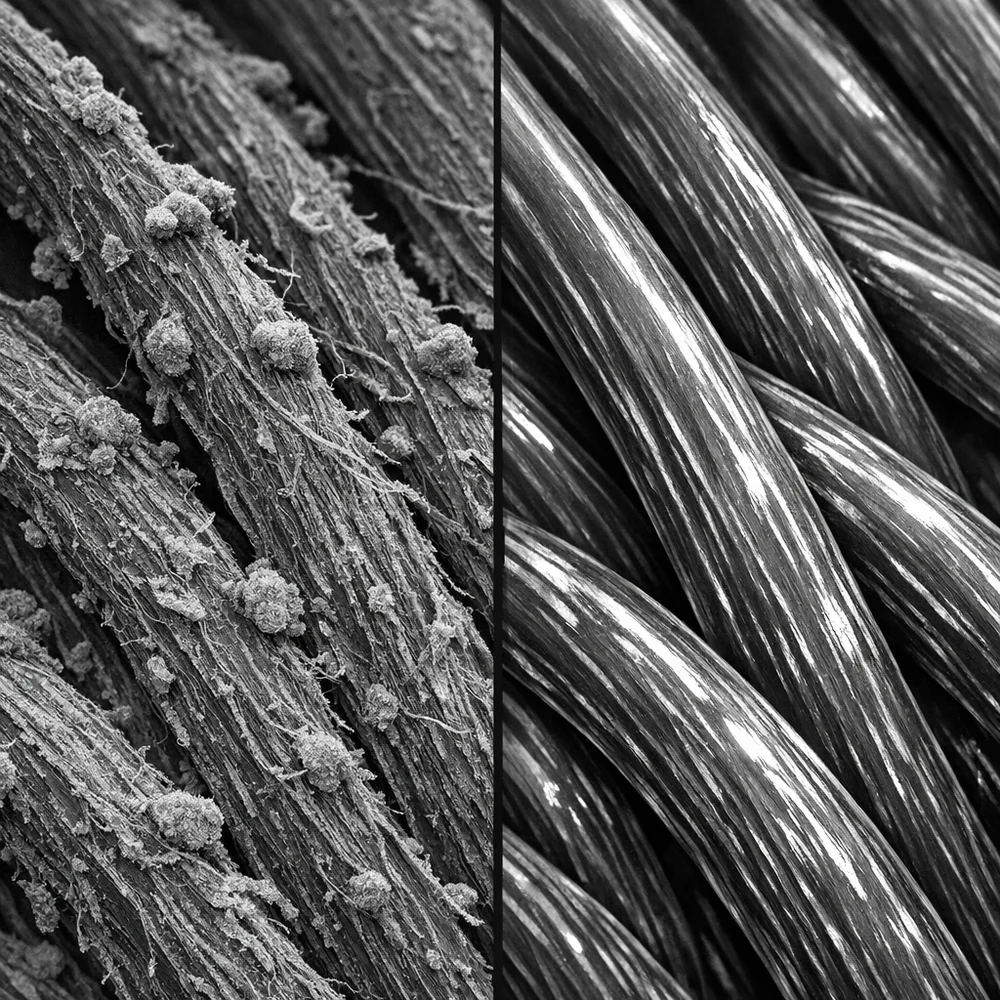
The most effective tool for restoring the “true black” appearance of cotton fabrics is an enzyme called cellulase. This protein works by selectively breaking down the damaged microfibrils on the fiber surface, essentially giving the fabric a molecular haircut.
Cellulase targets the chemical bonds that hold cellulose chains together. When it encounters a protruding fibril, it snips it off at the base. The result is a smooth, flat fiber surface that allows light to penetrate deep into the fabric and be absorbed by the dye rather than bouncing off the surface fuzz.
This “bio-polishing” effect has several benefits beyond just color restoration. A smoother surface traps less dirt and dust, so clothes stay cleaner longer between washes. It also reduces pilling because there are fewer loose fibrils to tangle together. Regular use of a cellulase-enriched detergent (as covered in detergent ingredients overview) is really the only way to reverse the ashy look of neglected black cottons. No amount of careful washing with regular detergent will fix fiber damage that has already occurred.
Dye Transfer Inhibitors: Catching Loose Color
Even with careful washing, some dye molecules inevitably escape from the fabric. This “dye bleed” is especially noticeable with dark or heavily saturated colors. The problem is not just that the garment loses color but that the escaped dye can land on other clothes or even redeposit unevenly on the same garment.
Dark fabric detergents address this with chemicals called dye transfer inhibitors, most commonly a polymer called polyvinylpyrrolidone (PVP). This synthetic molecule has a special affinity for textile dyes. When a dye molecule escapes into the wash water, the PVP polymer wraps around it and forms a stable complex that stays dissolved and eventually rinses away.
By capturing fugitive dyes before they can reattach to anything, PVP prevents the “muddying” effect where different shades contaminate each other. You can safely wash multiple dark colors together without worrying that your navy pants will leave a blue tint on your black shirt. This technology is far more effective than old home remedies like adding salt or vinegar to the wash. Those approaches might slightly reduce dye bleed, but they cannot actively capture and remove loose pigment the way PVP does.
The Bottom Line PVP polymers act as molecular traps for escaped dyes. They capture loose pigment in the wash water and prevent it from redepositing on fabrics, protecting against color contamination.
The Problem with Optical Brighteners
Perhaps the single biggest difference between dark-care detergents and regular formulas is the absence of optical brightening agents (OBAs). These chemicals are specifically designed to make whites look whiter by converting invisible UV light into visible blue light. On white sheets and towels, this creates a brilliant, almost glowing appearance.
On dark fabrics, optical brighteners are a disaster. The blue fluorescence creates a visible hazy film that sits on top of the natural color. Black looks washed out. Navy looks gray-blue instead of deep and rich. The effect is especially noticeable in direct sunlight, which is rich in the UV radiation that activates the brighteners.
Making matters worse, optical brighteners are “substantive” meaning they bind to fabric fibers and stay there. Washing a black shirt just once with a brightener-heavy detergent can cause permanent color distortion. The fluorescent chemicals will continue emitting blue light every time the garment is exposed to UV, masking the true depth of the dye.
This is why true dark-care detergents are formulated with zero optical brighteners. They are also often recommended for activewear care because high-performance synthetics can develop problems when brightener molecules build up on their surfaces. Checking whether your detergent contains brighteners should be the first step in any dark fabric preservation routine.
Why pH Matters for Color Retention
The alkalinity of your detergent has a direct impact on dye stability. Standard heavy-duty detergents typically run at pH 9 to 11, which is highly alkaline. This high pH is great for saponifying oils and breaking down protein stains, but it puts serious stress on the chemical bonds holding dyes to fabric fibers.
For certain dye classes, especially those used on denim and silk, high alkalinity triggers “hydrolysis” of the dye-fiber link. The bond breaks and the dye escapes into the water. This is why your brand-new dark jeans can turn the wash water blue after a single cycle in regular detergent.
Detergents formulated for darks use a near-neutral pH profile, typically between 7 and 8. This dramatically reduces the chemical pressure on dye bonds. The trade-off is that a neutral pH detergent needs more sophisticated laundry enzyme biology to achieve the same cleaning power, but the result is significantly better color retention over the life of the garment. This pH consideration is especially critical when washing dark jeans where preserving the original indigo saturation is the main goal.
The Bottom Line High pH detergents attack the chemical bonds holding dyes to fibers. Near-neutral formulas protect these bonds, keeping pigments anchored in the cloth rather than dissolving into the wash water.
Preventing Pilling While Protecting Color

Pilling is essentially the macroscopic version of the same fiber damage that causes light scattering. When loose microfibrils tangle together during the mechanical tumbling of the wash cycle, they form those annoying little balls that make clothes look old and worn.
On dark fabrics, pilling is particularly visible because the pills trap light-colored lint and dust. A black sweater covered in pills looks not just worn but dirty even immediately after washing. This is why addressing fiber smoothness is so important for dark clothes.
Cellulase enzymes handle existing pills and prevent new ones from forming by eliminating the loose fibrils that would otherwise tangle. Dark-care detergents also often include specialized non-ionic surfactants that provide lubrication during the wash cycle. This reduces friction between garments, minimizing the mechanical stress that causes fiber breakage in the first place.
For anyone concerned with preventing pilling on sweaters, a dark-care detergent provides a genuinely gentler washing environment compared to standard formulas. The combination of enzymatic smoothing and reduced friction addresses both the cause and the symptoms of pilling.
Why Cold Water Is Essential
Temperature is one of the biggest factors in dye stability. High temperatures (40°C and above) dramatically increase the rate of dye bleed because heat causes cotton fibers to swell. When the fiber structure opens up, dye molecules that were previously locked in place can escape through the enlarged pores.
This is why dark fabric detergents are almost always optimized for cold-water performance. Modern formulations use enzymes and surfactants specifically engineered to work efficiently at temperatures as low as 15°C. You get serious cleaning power without the thermal stress that causes color loss.
Cold washing also has a significant environmental benefit. Approximately 90% of the energy consumed by a typical washing machine goes toward heating the water. By switching to a cold wash routine with a properly formulated dark detergent, you drastically reduce your carbon footprint while actually improving your results. The chemistry handles what heat used to do, and your clothes last longer in the process.
The Bottom Line Heat accelerates dye bleed by swelling fibers and opening escape routes for pigment molecules. Cold-water dark detergents use advanced enzymes to replace thermal energy, protecting color while saving electricity.
Protecting Against Sun Fading
The chemical stresses of washing are only part of the color preservation challenge. Dark fabrics also face attack from ultraviolet radiation when they are worn or dried outdoors. This is why black clothes forgotten on a sunny clothesline develop those distinctive bronze or orange patches.
Some premium dark-care detergents include UV absorbers, such as triazines, that deposit onto the fiber surface during washing. These molecules work like a microscopic sunscreen for your clothes. They absorb UV radiation and dissipate the energy as harmless heat before it can break the chemical bonds within the dye molecules themselves.
Without this protection, UV energy causes “photo-oxidation” where the dye structure physically falls apart. Unlike washing damage which mostly affects surface appearance, photo-oxidation destroys the pigment itself. The fading is permanent and no amount of treatment can restore it.
For anyone who line-dries their clothes or spends significant time outdoors, these UV-protective additives provide an extra layer of defense. Managing both the aqueous stresses of the wash and the radiative stresses of the environment is what separates basic dark care from truly expert textile preservation.
The Special Case of Denim
Denim deserves special mention because its construction creates unique challenges for color preservation. Classic denim uses a technique called “ring dyeing” where only the surface of the cotton yarn is dyed indigo while the core stays white. This is what creates the distinctive fading patterns at wear points.
The problem is that uncontrolled cellulase activity can cause “back-staining” where released indigo molecules penetrate into the white core of the yarn. Instead of clean, crisp contrast, the denim develops a muddy appearance.
Modern dark-care detergents for denim use specific “neutral” cellulases engineered to work at lower kinetic rates and safer pH levels. They remove surface fuzz without triggering massive dye release. This precision allows raw denim care enthusiasts to maintain hygiene and fabric smoothness without destroying the carefully cultivated evolution of their pieces.
The Bottom Line Denim requires precision enzyme management. Neutral cellulases remove surface damage while preventing back-staining, preserving the high-contrast aesthetic across many wash cycles.
Conclusion
Caring for dark fabrics is really about respecting the delicate equilibrium between fiber structure and dye chemistry. Standard detergents ignore this balance in favor of maximum cleaning power for whites. The result is accelerated color loss that makes dark wardrobes look old before their time.
Specialized dark-care formulas flip the priorities. They use cellulase enzymes to restore smooth fiber surfaces. They deploy PVP polymers to capture escaped dyes. They avoid optical brighteners that would mask true color depth. And they maintain neutral pH profiles that preserve dye-fiber bonds through hundreds of wash cycles.
For the home launderer, implementing a science-based approach to dark care means thinking beyond simple “gentle” settings. Choose detergents specifically formulated for darks. Wash in cold water. Check for brightener-free labels. The chemistry exists to keep your black clothes truly black. All you need to do is use it.
References
- Journal of the Optical Society of America. “The Effect of Surface Microfibrils on the Reflectance and Color Perception of Dark Textiles.” Optica
- Detergents and Surfactants. “Polyvinylpyrrolidone as a Dye-Transfer Inhibitor in Domestic Laundering.” Springer
- Textile Research Journal. “Enzymatic Bio-Polishing of Cotton: Impact on Color Depth and Pilling Resistance.” Sage Journals
- Chemistry in Context. “The pH Sensitivity of Reactive and Direct Dyes on Cellulosic Fibers.” ACS
- Consumer Engineering. “Energy Savings and Performance Metrics of Cold-Water Specialized Detergents.” IEEE Xplore