Oxygen Bleach Chemistry: The Science of Sodium Percarbonate
Table of Contents
Things You'll Learn From This Article:
- Hot water makes oxygen bleach work much faster; warm-to-hot washes clean better than cold ones unless you soak longer.
- Long soak times matter—leaving items in oxygen bleach for a few hours can remove stains that a short wash won’t touch.
- Oxygen bleach works best on food, drink, plant, and body stains like wine, coffee, grass, and sweat.
- Rust and other mineral stains won’t come out with oxygen bleach; those need acidic cleaners instead.
- Colored clothes are usually safe because oxygen bleach targets stains more than dyes, unlike chlorine bleach.
- Silk, wool, and vintage or naturally dyed fabrics can still be damaged, so testing a hidden spot first prevents surprises.
- Cold water should be used first on fresh blood or egg stains to avoid “cooking” them into the fabric.
- Oxygen bleach cleans by breaking stain color molecules apart, not by covering them up with brightening dyes.
- Soaking dingy whites removes built-up oils and grime, bringing back real whiteness instead of a fake bright look.
- The powder turns into hydrogen peroxide and washing soda in water, which helps both cleaning power and stain removal.
- It’s safer for septic systems and waterways because it breaks down into water, oxygen, and a common mineral.
- For everyday laundry and odors, oxygen bleach sanitizes well, but for illness-related disinfection, chlorine bleach works faster on whites.
Oxygen bleach has earned its reputation as the gentler alternative to chlorine bleach, but “gentle” does not mean weak. Sodium percarbonate, the active ingredient in most oxygen bleach products, is a powerful oxidizer that can eliminate tough organic stains without the harshness of chlorine. It breaks down into hydrogen peroxide and soda ash, attacking stain molecules while leaving fabrics and the environment unharmed.
Unlike chlorine bleach, which works through aggressive halogen chemistry, oxygen bleach functions by releasing active oxygen species. This chemical distinction allows safe treatment of colored fabrics and organic materials that chlorine would destroy. Understanding when and how oxygen bleach works best requires knowing its temperature requirements, its time demands, and its limitations.
The efficacy of oxygen bleach depends heavily on solution parameters. Temperature, pH, and concentration all affect how quickly and effectively the hydrogen peroxide does its work. When you understand these variables, you can achieve professional-grade stain removal at home.
How Sodium Percarbonate Breaks Down
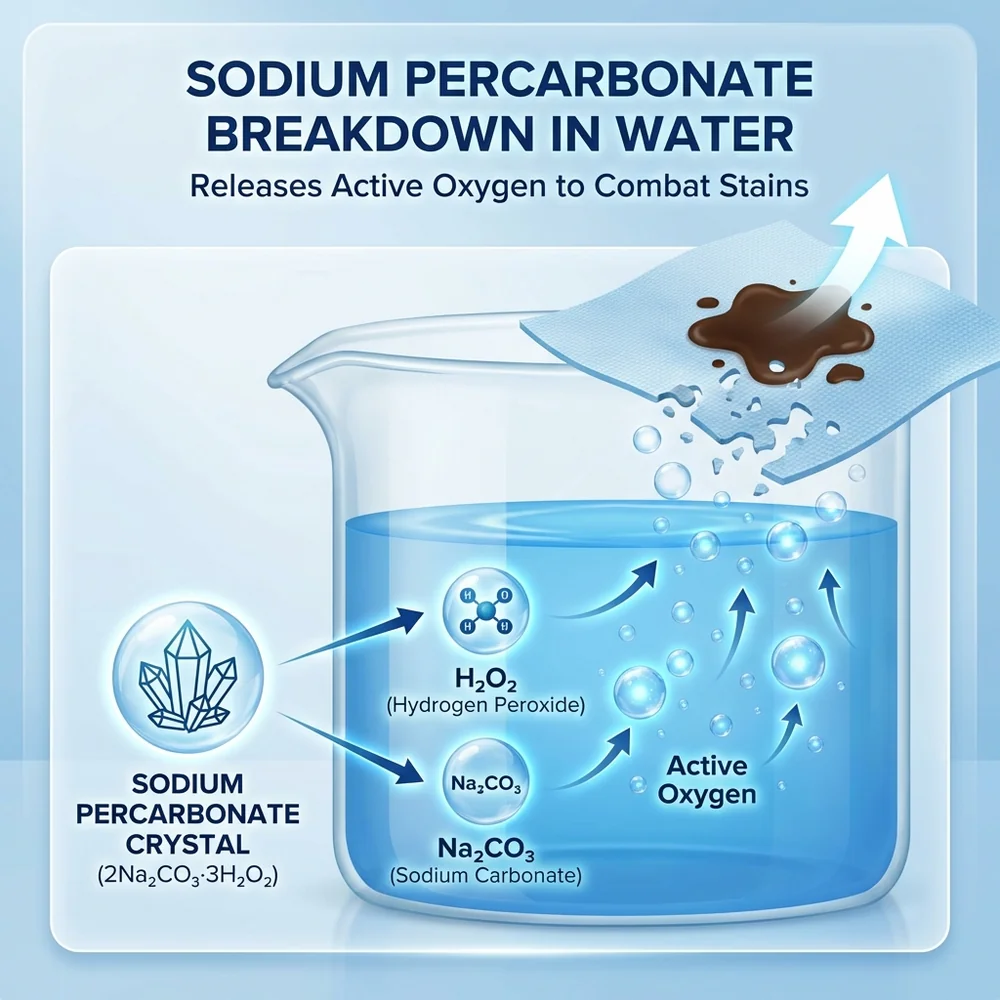
The fundamental chemistry begins when sodium percarbonate dissolves in water.
Upon contact with water, the crystal structure of the sodium percarbonate adduct collapses, releasing sodium carbonate (soda ash) and hydrogen peroxide in a fixed ratio. This immediate release raises the pH of the wash water to approximately 10.5, creating an alkaline environment that favors both detergency and the bleaching reaction itself.
The sodium carbonate acts as a water softener, precipitating calcium and magnesium ions that would otherwise interfere with surfactant activity. The hydrogen peroxide is the active bleaching agent, but it requires specific conditions to work effectively.
In solution, hydrogen peroxide exists in equilibrium with the perhydroxyl anion, which is the species actually responsible for the bleaching action. The formation of this anion is favored at higher pH levels, which is conveniently provided by the concurrent release of sodium carbonate. This built-in synergy means the solution automatically optimizes itself for bleaching simply by dissolving the powder.
The Bottom Line Sodium percarbonate releases both hydrogen peroxide and soda ash simultaneously. The soda ash boosts pH to optimize peroxide activity, creating a self-optimizing bleaching system.
How the Bleaching Chemical Attack Works
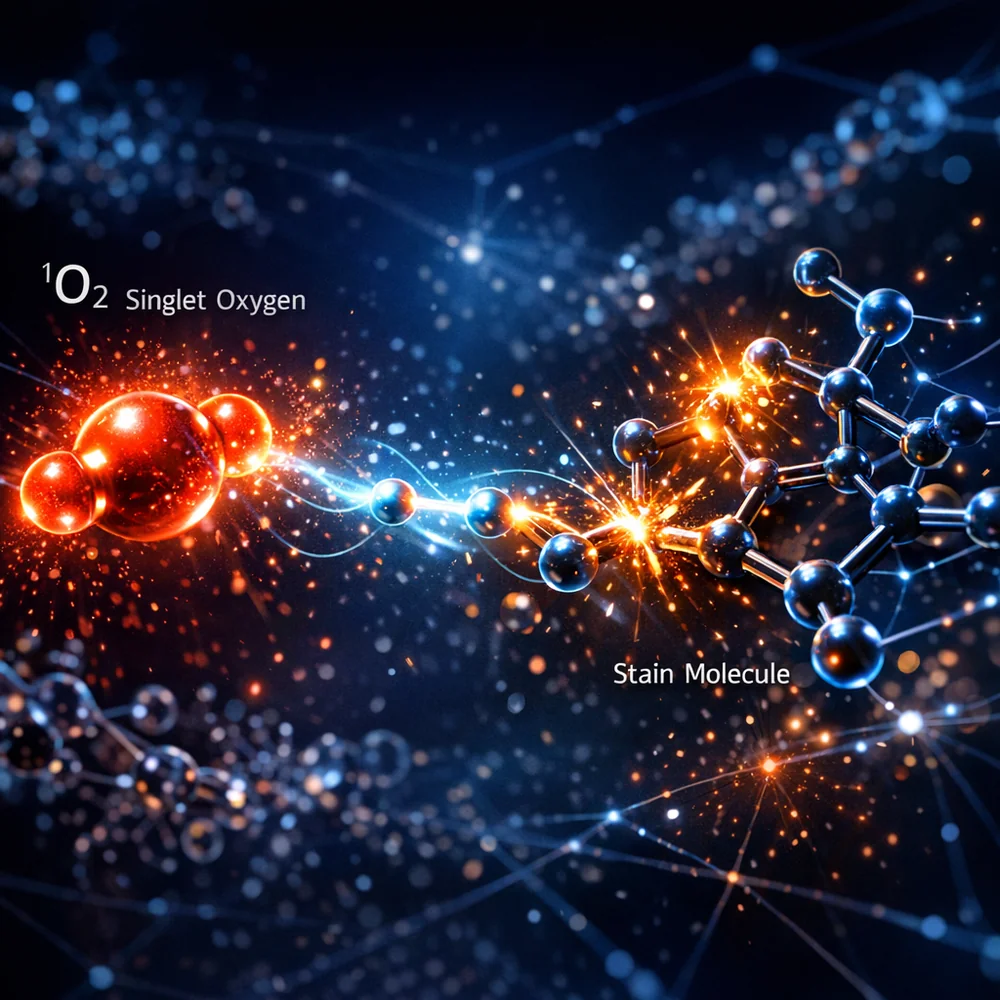
The cleaning power of oxygen bleach comes from oxidation, a chemical process where electrons are removed from a substrate.
When the perhydroxyl anion encounters a stain molecule, it attacks the electron-dense regions of the chromophore. A chromophore is the specific part of a molecule responsible for its color, usually characterized by a system of conjugated double bonds. The oxidative attack breaks these double bonds, disrupting the conjugation and destroying the molecule’s ability to absorb visible light. The stain becomes colorless and usually more water-soluble, allowing it to be rinsed away.
This mechanism differs fundamentally from chlorination. While chlorine bleach often substitutes chlorine atoms into stain molecules, potentially creating toxic organochlorines, oxygen bleach simply adds oxygen or removes hydrogen. The breakdown products are generally innocuous: water, oxygen, and small organic fragments.
The perhydroxyl anion is specific in its targeting. It attacks the double bonds in organic pigments effectively while being less aggressive toward the single bonds that hold cotton and linen fibers together.
Temperature Requirements
Thermodynamics plays a critical role in how fast and effectively oxygen bleach works.
Sodium percarbonate is relatively stable in cool water, meaning the liberation of active oxygen species is slow at temperatures below 40°C. To achieve rapid stain removal, wash water needs to be hot, ideally between 50°C and 60°C. At these temperatures, kinetic energy accelerates the decomposition of hydrogen peroxide into the reactive species that do the actual bleaching work.
This temperature dependence explains why cold water soaking with oxygen bleach requires significantly longer to achieve the same results as a hot water treatment. For delicate fabrics that cannot withstand high temperatures, you either need a chemical activator or extended time.
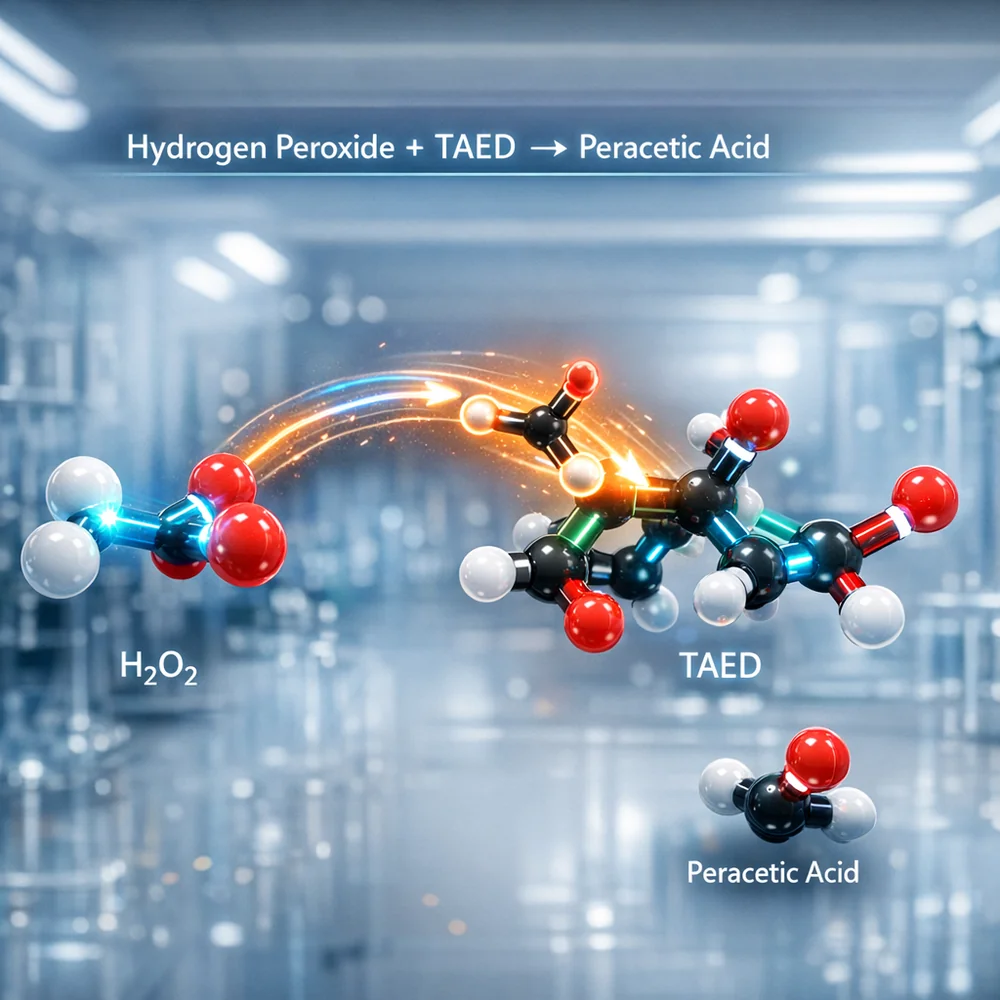
Some commercial formulations include TAED (tetraacetylethylenediamine), a bleach activator that reacts with hydrogen peroxide to form peracetic acid. Peracetic acid is a more potent oxidizer at lower temperatures, enabling effective bleaching even at 30°C. Without an activator, pure sodium percarbonate users must commit to longer soak times to compensate for slower reaction rates in cooler water.
The Bottom Line Oxygen bleach activation is suppressed in cold water. Effective stain removal requires either high temperature (above 50°C) or a chemical activator like TAED to overcome the energy barrier.
Which Stains Respond Best
The primary target of oxygen bleach is the conjugated electron system found in organic pigments.
Stains from biological sources like red wine, berries, grass, and coffee derive their color from these complex molecular structures. The perhydroxyl anion specifically targets alkenes (carbon-carbon double bonds) within these structures, converting them into single bonds or cleaving the molecule entirely. Once conjugation is interrupted, the molecule can no longer interact with visible light, effectively rendering the stain invisible.
Different stains require different oxidative potentials. Tannins found in tea and wine are particularly susceptible and respond well to oxygen bleach. However, mineral-based stains or those involving transition metal complexes (like rust) are largely immune to this mechanism and require acid-based treatments instead.
Understanding the chemical nature of a stain is crucial. Oxygen bleach is a scalpel for organic double bonds, not a universal solvent for all discoloration.
Environmental Safety
One of the most compelling arguments for oxygen bleach is its exceptional environmental compatibility.
The decomposition products of sodium percarbonate are water, oxygen, and soda ash. None of these byproducts threaten aquatic ecosystems or groundwater quality when released in domestic quantities. Sodium carbonate is a naturally occurring mineral. Oxygen is obviously benign.
This stands in stark contrast to chlorine bleach chemistry, which can react with organic matter in wastewater to form dioxins and other persistent organic pollutants. Sodium percarbonate is safe for septic systems. The released oxygen can actually benefit the aerobic bacteria that break down waste. There is no risk of sterilizing a septic tank with normal usage.
The Bottom Line Oxygen bleach breaks down into water, oxygen, and soda ash. All three are environmentally benign, making it safe for waterways and septic systems.
Sanitizing Power Compared to Chlorine
While oxygen bleach is an effective cleaner, its disinfecting properties differ from chlorine bleach.
Hydrogen peroxide is a known antiseptic, capable of killing bacteria, viruses, and fungi by oxidizing their cell walls and proteins. However, at the concentrations typically generated in a laundry load (less than 3%), it acts more as a sanitizer than a hospital-grade sterilant. It significantly reduces microbial load, which is sufficient for general hygiene and odor removal, but may not meet standards for highly infectious pathogen decontamination.
Chlorine bleach is a more aggressive broad-spectrum disinfectant effective at lower temperatures and concentrations. For sanitizing laundry for a sick family, chlorine is often superior for white cottons due to its rapid kill rate. Oxygen bleach requires longer dwell times and higher temperatures to achieve comparable bacterial log reductions.
Oxygen bleach excels for daily sanitization and deodorizing, but should not be the sole defense in biohazard scenarios without extended exposure times.
Color Safety
The major advantage of oxygen bleach over chlorine is its color safety for most fabrics.
Most modern textile dyes are designed to resist mild oxidation. Because hydrogen peroxide’s oxidation potential is lower than hypochlorite’s, it usually lacks the energy to break bonds of synthetic reactive dyes. This selectivity allows oxygen bleach to attack foreign organic matter (the stain) without stripping dye molecules from the fiber. This makes it the only safe bleaching option for colored and patterned garments.
However, caution is still required with certain natural dyes and vintage clothing. Organic dyes used in artisanal or antique textiles can be susceptible to oxidation, leading to fading or color shifting. Additionally, delicate protein fibers like silk and wool can be damaged by the high alkalinity (pH 10.5) of the sodium carbonate component rather than the peroxide itself. Always test a hidden seam on items like silk before full immersion.
The Bottom Line Oxygen bleach’s lower oxidation potential makes it safe for most colored fabrics. It attacks organic stains without stripping modern dyes, but test delicate natural dyes first.
Handling Blood and Protein Stains
Protein-based stains like blood, egg, and dairy present a unique challenge for oxidative cleaners.
Hot water applied directly to fresh protein stains can cause proteins to denature and coagulate, essentially “cooking” the stain into fibers. While oxygen bleach works best in hot water, this creates a conflict when treating fresh blood.
The solution is a two-step process. First, rinse the fabric thoroughly with cold water to remove bulk plasma and prevent coagulation. Only after the heme proteins have been significantly reduced should the garment be introduced to a hot oxygen bleach solution.
Once pre-treated, the oxidative action tackles remaining iron-porphyrin complexes. Hydrogen peroxide breaks down peptide bonds and the heme structure, decolorizing the residual mark. This is often more effective than enzymes alone because oxidation works on the molecular pigment while laundry enzyme biology focuses on hydrolyzing peptide chains. For old set-in blood stains, a long soak in warm oxygen bleach is often the only way to reverse the oxidation of iron that causes the rusty color.
Real Whitening Versus Optical Tricks
Standard detergents often use optical brighteners, synthetic dyes that absorb UV light and re-emit it as blue light, to create the illusion of whiteness.
Sodium percarbonate takes a different approach by actually removing the yellow and gray organic residues that accumulate on fibers. Body oils, sebum, and environmental dust gradually coat cotton, causing it to absorb blue light and appear yellow. Oxygen bleach oxidizes these lipid-based films and breaks them down so they wash away, revealing the true white color of the fiber.
This physical removal is superior to the masking effect of optical brighteners. Optical brighteners science reveals that these additives can cause skin irritation and are persistent environmental pollutants. By stripping away dingy buildup chemically, oxygen bleach restores original reflectance without depositing additional chemicals on the surface. The result is a “natural” white that is genuinely clean at the microscopic level.
Why Soak Time Matters
Time is a crucial variable in the oxygen bleaching equation, often functioning as a substitute for concentration or heat.
The oxidative reaction of hydrogen peroxide is not instantaneous. It is a gradual process that continues as long as active oxygen is present. For heavily soiled items or dingy whites, a short wash cycle often provides insufficient contact time for perhydroxyl anions to find and react with every chromophore. Extended soaking allows diffusion of the oxidant deep into fiber bundles where mechanical agitation cannot reach.
A minimum of one to six hours is recommended for significant stain removal. Because sodium carbonate buffers the solution and maintains activity, soaks can be effective for up to 24 hours. This extended soaking duration is particularly important when working at lower temperatures, as it compensates for reduced reaction rates. The rule in laundry chemistry is clear: if the stain remains, the oxidation simply needs more time.
The Bottom Line Oxygen bleach works gradually. For stubborn stains, extend soak time to allow the oxidant to penetrate deeply and complete its work.
Conclusion
Oxygen bleach stands as a pillar of modern sustainable laundry, bridging effective chemistry with environmental responsibility.
By harnessing the predictable breakdown of sodium percarbonate, you can utilize the oxidative power of hydrogen peroxide to eliminate stains without the collateral damage of chlorine. Success lies in controlling temperature, maintaining alkaline pH, and being patient with soak times.
The shift toward oxygen-based bleaching represents sophisticated understanding of molecular interactions. It moves away from the “destroy everything” approach of halogens to surgical targeting of chromophores. Whether restoring vintage linens or maintaining bright whites, proper application of this chemistry ensures textiles remain clean, intact, and safe for continued use.
References
- Journal of Surfactants and Detergents. “Stability and Bleaching Performance of Sodium Percarbonate in Powder Detergents.” Springer
- Textile Research Journal. “Oxidative Degradation of Cotton Cellulose by Sodium Percarbonate.” Sage Journals
- Environmental Science & Technology. “Environmental Impact of Peroxygen Bleaching Agents vs. Hypochlorite.” ACS Publications
- American Oil Chemists’ Society. “Chemistry of Bleaching and Brightening.” AOCS
- Journal of Hazardous Materials. “Kinetics of Hydrogen Peroxide Decomposition in Aqueous Solutions.” ScienceDirect