Static Cling Physics: The Science of Electron Transfer in the Dryer
Table of Contents
Things You'll Learn From This Article:
- Static cling happens because clothes rub together and swap tiny particles called electrons, leaving some items positively charged and others negatively charged.
- Dry air makes static worse, so overdrying clothes or drying in low humidity leads to more sticking.
- A little leftover moisture in clothes helps bleed off electrical charge, which is why static is rare during washing but common at the end of drying.
- Mixing synthetic fabrics (like polyester or nylon) with natural ones (like cotton) increases static because synthetics hold onto charge much better.
- All-cotton loads usually have less static since natural fibers keep a bit of moisture and don’t trap charge as easily.
- Wool dryer balls reduce static by keeping clothes from clumping together and by releasing small amounts of moisture as they tumble.
- Aluminum foil balls work by giving built-up charge a place to flow, helping even out electrical differences between clothes.
- Running a metal hanger over a clingy garment drains static by letting excess charge move from the fabric into the metal.
- Lotion on your skin reduces cling by lowering friction and making your skin slightly conductive so charge can escape.
- Anti-static sprays work by leaving a thin, moisture-attracting layer on fabric that helps prevent charge buildup.
- Dryers with moisture sensors help reduce static by stopping the cycle before clothes become too dry.
- Preventing static is mostly about reducing friction, avoiding overdrying, and giving electrical charge an easy path to disappear.
That annoying sock stuck to the inside of your shirt is not just an inconvenience. It is a physical phenomenon rooted in atomic-level electron transfer, a manifestation of the same forces that create lightning and power electric motors.
Static cling occurs because of the triboelectric effect, where certain materials become electrically charged after coming into frictional contact with different materials. In the chaotic environment of a clothes dryer, garments are subjected to constant agitation and collisions. This mechanical energy facilitates the migration of electrons from one surface to another, creating a voltage potential between fabrics. When the dryer cycle ends and the protective layer of moisture has evaporated, these oppositely charged items adhere to one another with surprising force.
Understanding the physics of static requires looking at material science and atmospheric conditions. From the role of humidity in charge dissipation to the specific electron affinity of various polymers, the management of static is fundamentally a lesson in electrostatics. Knowing how charges build and how they can be neutralized gives you practical tools to eliminate cling from your laundry routine.
How the Triboelectric Effect Creates Charges
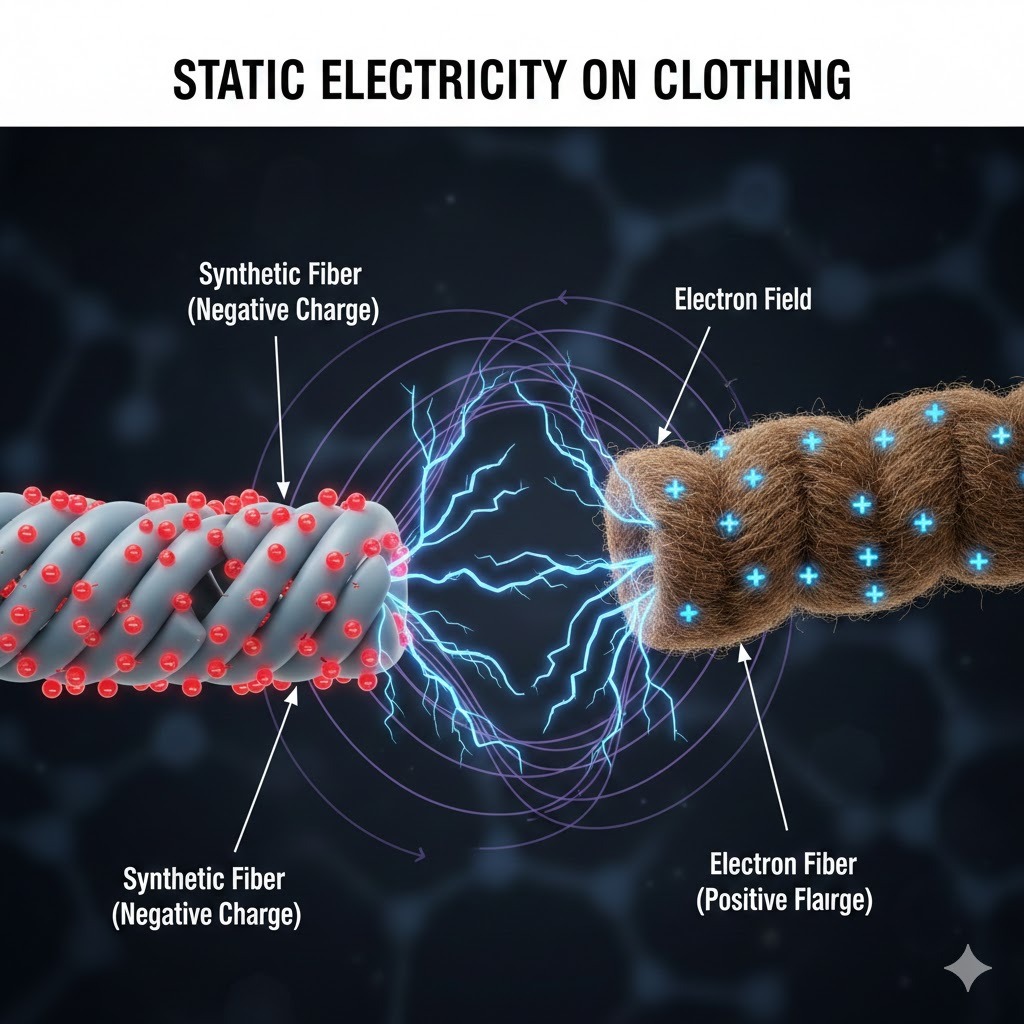
The triboelectric effect is the fundamental driver of the electrostatic charges observed in laundry.
When two different materials rub against each other, the chemical bonds at the interface are temporarily disrupted. Depending on the relative electron affinity of the materials, one surface will strip electrons away from the other. This creates a charge imbalance where the material that loses electrons becomes positively charged, while the one that gains electrons becomes negatively charged. In a laundry load, this occurs millions of times per minute as cotton, polyester, and nylon tumble together.
The magnitude of this charge transfer is determined by the position of the materials on the triboelectric series, a ranking of materials by their tendency to gain or lose electrons. Nylon and wool are toward the positive end of the series, meaning they frequently lose electrons. Polyester and acrylic are toward the negative end, meaning they are electron-grabbers. When a nylon stocking and an acrylic sweater tumble together, they create a significant electrostatic potential, ensuring they will be firmly stuck together when the drying cycle is complete.
The Bottom Line Different materials exchange electrons when they rub together. The triboelectric series determines which fabrics become positive versus negative, and those opposite charges cause attraction (static cling).
Why Humidity Prevents Static Buildup
Water molecules are the most effective natural mitigators of static electricity.
Water is a polar molecule and a relatively good conductor of electricity compared to dry air. In a humid environment, a microscopic layer of water vapor coats the surface of fibers. This water film provides a conductive path for the accumulated electrons to move back to their source or dissipate into the atmosphere. This is why static cling is almost non-existent in the wash cycle but becomes rampant in the final stages of the dryer cycle when the humidity drops below a critical threshold.
Modern dryers that utilize moisture sensors often perform better in static management by preventing overdrying. If a dryer continues to run after the clothes are bone-dry, the absence of humidity creates a perfect insulator environment, allowing charges to build to thousands of volts. Maintaining a residual humidity of just 3 to 5 percent within the fiber matrix is often sufficient to keep the electrostatics at bay by facilitating constant charge leakage.
Synthetic Versus Natural Fiber Behavior
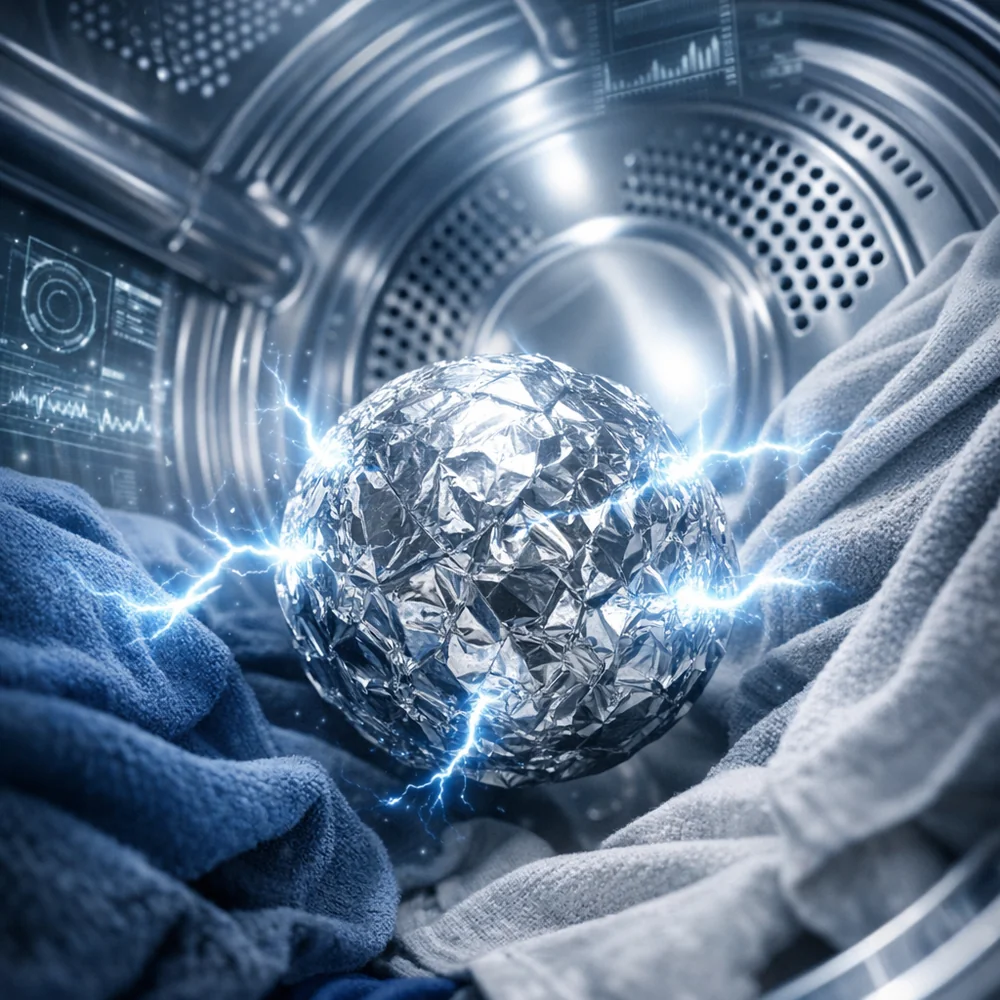
The chemical composition of a fiber dictates its role in the electrostatic drama of the dryer.
Natural fibers like cotton and linen are relatively neutral on the triboelectric series. Furthermore, they are hydrophilic, meaning they naturally retain a trace amount of moisture even when they feel dry. This residual moisture makes them poor insulators, preventing the buildup of large static charges. Consequently, an all-cotton load rarely exhibits severe static cling unless it is aggressively overdried in an extremely arid climate.
Synthetic fibers like polyester, nylon, and spandex are a completely different story from a physical perspective. These polymers are hydrophobic, meaning they repel water and possess very high electrical resistivity. They act as excellent insulators that can hold onto a massive electrostatic charge for hours or even days because the electrons have no conductive escape path.
When these synthetics are mixed into a load of natural fibers, they effectively steal electrons from the cotton and wool, creating a polarized and highly charged environment. This fundamental material mismatch is the primary reason why high-performance activewear often involves the most frustrating and persistent static issues in a domestic setting.
The Bottom Line Natural fibers hold moisture and conduct small charges away. Synthetic fibers are hydrophobic insulators that trap static for hours, making mixed loads the worst for cling.
How Wool Dryer Balls Work
Wool dryer balls are a mechanical solution to a physical and electrical problem.
They function primarily by creating a physical barrier between garments as they tumble throughout the cycle. By preventing large, flat pieces of fabric from wrapping around one another in a clump, they reduce the specific surface area of direct frictional contact, thereby limiting the opportunity for the triboelectric effect to occur. The more the clothes are kept separate and fluffed by the balls, the fewer the high-velocity collisions that lead to electron transfer.
Beyond simple separation, wool dryer balls also contribute to internal humidity management. Being slightly hygroscopic, the wool fibers absorb moisture early in the cycle and release it slowly in the form of vapor as the load dries. This creates a localized micro-climate of higher humidity within the dryer drum, which helps bleed off excess charges as they form.
Furthermore, the chaotic bouncing of the balls provides a constant, gentle scrubbing action that can help equalize small charge imbalances before they reach a macroscopic level. Some users even advocate for pinning a metal safety pin to a wool ball, a trick that likely provides a localized point of sharp discharge to bleed off excess voltage into the air.
The Science Behind Aluminum Foil Balls
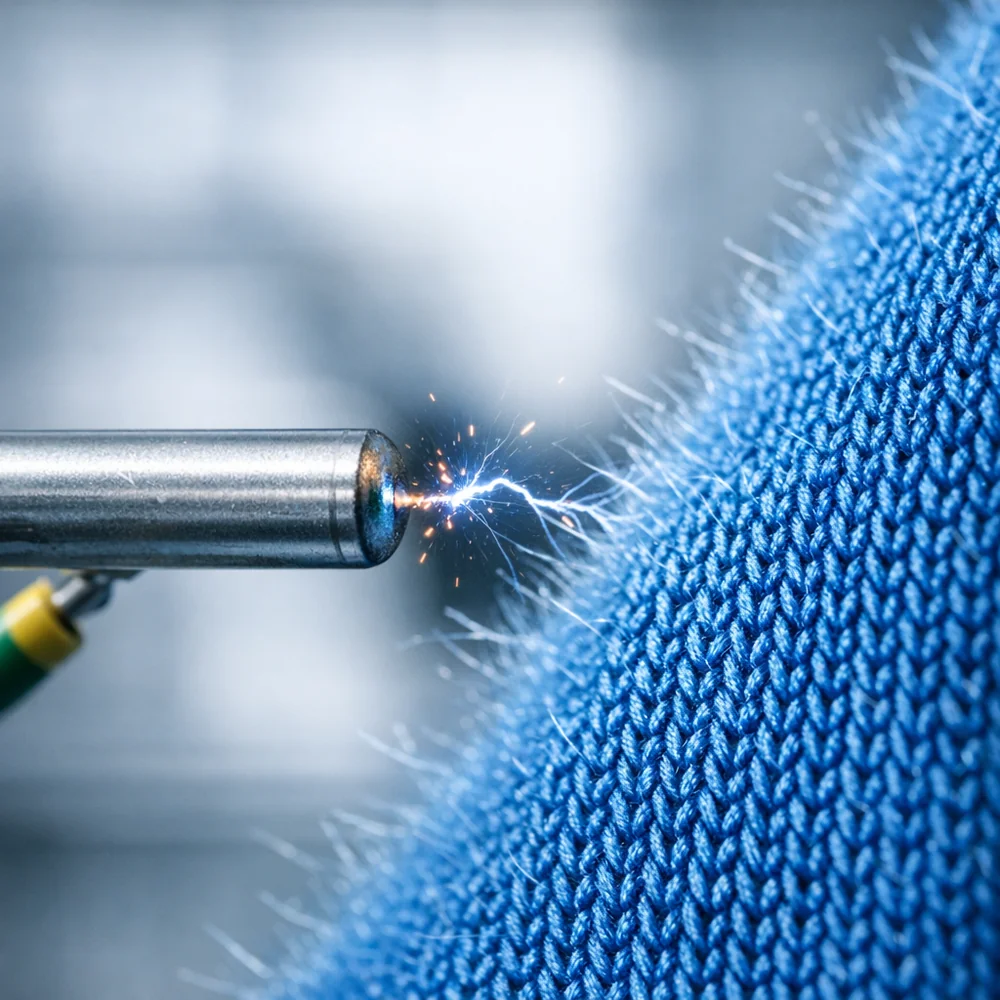
The use of an aluminum foil ball is a direct application of conductive material physics in a laundry dryer.
Aluminum is an excellent conductor of electricity with very low resistance. In theory, as the foil ball tumbles with the clothes, it acts as a grounding target or a localized mobile lightning rod. When a charged synthetic garment makes contact with the conductive aluminum surface, the excess electrons are quickly distributed across the ball. This helps to equalize the voltage potential between different items in the load, preventing the high-voltage imbalances that cause the characteristic attraction.
The effectiveness of this method depends on frequent and random contact during the cycle. Because the foil ball is relatively small compared to the total volume of the load, it cannot neutralize every single charge instantly. However, as it bounces through the drum, it provides a consistent, low-resistance path for discharge that would not otherwise exist in the insulating air of the dryer.
It is a cost-effective and chemically-neutral way to introduce a conductive element into a system otherwise dominated by non-conductive polymers. Over time, the ball may become smooth and lose some surface area, so replacing it periodically ensures the maximum number of potential contact points for electron transfer.
The Bottom Line Aluminum is highly conductive and provides a path for electrons to flow away from charged fabrics. A foil ball acts as a mobile discharge point that helps neutralize static as it bounces through the load.
Why Running a Metal Hanger Over Clothes Works
The practice of running a metal clothes hanger over a garment to remove static is a classic example of charge neutralization.
High-voltage static on a garment creates an electric field around the fibers. When a grounded metal object, like a hanger or a metal rod, is brought near the surface, the electric field causes the electrons to jump the gap (often felt as a tiny spark) or flow directly into the metal. This transfers the excess charge from the cloth to the metal, effectively draining the static.
This trick is particularly useful for silk or synthetic dresses that cling to the body. To maximize the effect, the metal should be grounded, which happens when the user is touching the metal and standing on the floor. This provides a sink for the electrons to escape the system entirely. It is a temporary fix, as the garment can easily build up a new charge through friction as the person moves, but it provides immediate relief from the initial cling.
How Lotion Reduces Static on Skin

Applying lotion to the skin to prevent clothes from clinging is an application of surface tension and conductivity principles.
Static cling between clothing and the body is often caused by the same triboelectric principles as in the dryer. Friction between the skin (which is relatively positive) and synthetic clothing (which is relatively negative) creates attraction. Lotion works in two ways: first, it provides a layer of lubrication that reduces the mechanical friction between the skin and the fabric, lowering the rate of electron transfer.
Second, most lotions are water-based and contain electrolytes. This increases the conductivity of the skin surface, allowing any accumulated charge on the clothing to dissipate more easily through the body and into the ground. By eliminating the insulating barrier of dry skin, the lotion facilitates a constant, low-level discharge that prevents the voltage from reaching levels where macroscopic attraction is noticeable.
The Bottom Line Lotion reduces friction and increases skin conductivity. This allows static charges to dissipate through the body instead of building up between clothing and skin.
How Anti-Static Sprays Work
Commercial anti-static sprays are chemical formulations designed to bridge the gap between conductivity and aesthetics.
These sprays typically contain a mixture of alcohol, water, and a surfactant or quaternary ammonium compound (commonly called a quat). When sprayed onto a garment, the alcohol evaporates quickly, leaving behind a microscopic layer of the surfactant. These surfactants are specialty molecules with a hydrophilic tail that attracts moisture from the air. This essentially coats the garment in a permanent, microscopic conductive film that constantly pulls humidity from the atmosphere.
While effective, these chemicals must be used with caution on delicate fabrics. Some scent chemistry additives used in these sprays can leave residues that cause staining or alter the hand (feel) of the fabric. Additionally, the surfactants can attract dust over time, making the garment look dingy. For those with sensitive skin, the residual quats can sometimes act as a mild irritant, necessitating a judicious approach to application.
Conclusion
The physics of static cling is a reminder that laundry is a dynamic electrical system governed by the fundamental laws of electrostatics.
From the initial electron transfer of the triboelectric effect to the final adherence of garments, every step is a result of material interaction and environmental variables. Humidity is the most powerful natural defense, while conductive tools like aluminum and metal hangers provide a reliable sink for excess voltage. Understanding the difference between natural and synthetic fiber behavior allows you to manage laundry loads more effectively to minimize friction.
Ultimately, preventing static is about breaking the insulating cycle of the dryer. By utilizing moisture sensors, mechanical separators like wool balls, or chemical surfactants, you can facilitate the constant dissipation of charge. This technical approach transforms the frustrating experience of static cling into a manageable variable of textile maintenance. By respecting the atomic-level forces at play, you ensure clothes remain free, comfortable, and ready for use.
References
- Journal of Electrostatics. “Triboelectric Charge Transfer Between Synthetic and Natural Fibers.” Elsevier
- Textile Research Journal. “The Role of Ambient Humidity in the Dissipation of Static Charges on Textiles.” Sage Journals
- Physics Reports. “Mechanisms of Contact Electrification in Insulating Polymers.” ScienceDirect
- American Journal of Physics. “The Physics of Static Cling and Household Electrostatics.” AIP Publishing
- Industrial & Engineering Chemistry Research. “Formulation and Efficacy of Quaternary Ammonium Anti-Static Agents.” ACS Publications