Removing Yellow Armpit Stains: The Aluminum Reaction
Table of Contents
Things You'll Learn From This Article:
- Yellow armpit stains aren’t dirt or bad hygiene—they come from a chemical reaction between aluminum in antiperspirant and proteins in sweat.
- Regular detergent often can’t remove these stains because they’re partly made of minerals, not just grease or dirt.
- Heat from the dryer can lock the stain in, so drying a stained shirt before treating it makes the problem worse.
- Deodorant leaves a waxy, water‑repelling layer on fabric, which is why stains feel stiff and resist washing.
- Breaking the stain works best in stages: first remove the wax, then break the aluminum bond, then deal with leftover yellowing.
- Dish soap is useful because it cuts through deodorant wax so other treatments can actually reach the stain.
- Aspirin can help loosen old pit stains because its acid breaks down the protein “glue” holding aluminum in the fabric.
- Hydrogen peroxide and baking soda can whiten stubborn stains by breaking apart the yellow color, but they act like mild bleach.
- Chlorine bleach usually makes yellow pit stains darker, not cleaner.
- Enzyme detergents help by digesting sweat proteins and oils that trap odor and aluminum in fabric.
- Cotton traps stains deep inside its fibers, so it often needs longer soaking than synthetic fabrics.
- Synthetic workout clothes hold oils on the surface, so enzyme soaking matters more than acid treatments.
- Silk and wool need gentler care because enzymes can damage these protein-based fabrics.
- Washing shirts inside out helps the machine scrub armpit areas more effectively.
- Letting deodorant dry fully before dressing reduces how much residue transfers to your shirt.
- Switching to aluminum‑free deodorant prevents yellow pit stains from forming in the first place.
- Bluing products can make whites look brighter by visually canceling leftover yellow tones, even after stains are gone.
It’s the most embarrassing stain in your wardrobe.
You put on a crisp white shirt, lift your arm to wave at someone, and suddenly realize you are flashing a crusty, yellow patch to the world. It feels stiff, it looks dirty, and worst of all, it makes you look like you don’t wash your clothes.
But here is the truth: that yellow stain isn’t actually “dirt,” and it isn’t just sweat. It is a chemical reaction—a literal rusting of the fabric—caused by the very thing you use to stay fresh.
Because this is a chemical bond and not a normal stain, your regular laundry detergent can’t touch it. To fix it, you need to break the bond using targeted acids and enzymes. This guide covers the complete molecular disassembly of the “pit stain,” from the waxy outer shell to the mineralized core.
The Chemistry of the Stain: Why It’s Yellow
Most people think yellow pit stains are just “concentrated sweat.” They aren’t. Sweat itself is clear and mostly odorless.
The villain here is Aluminum.
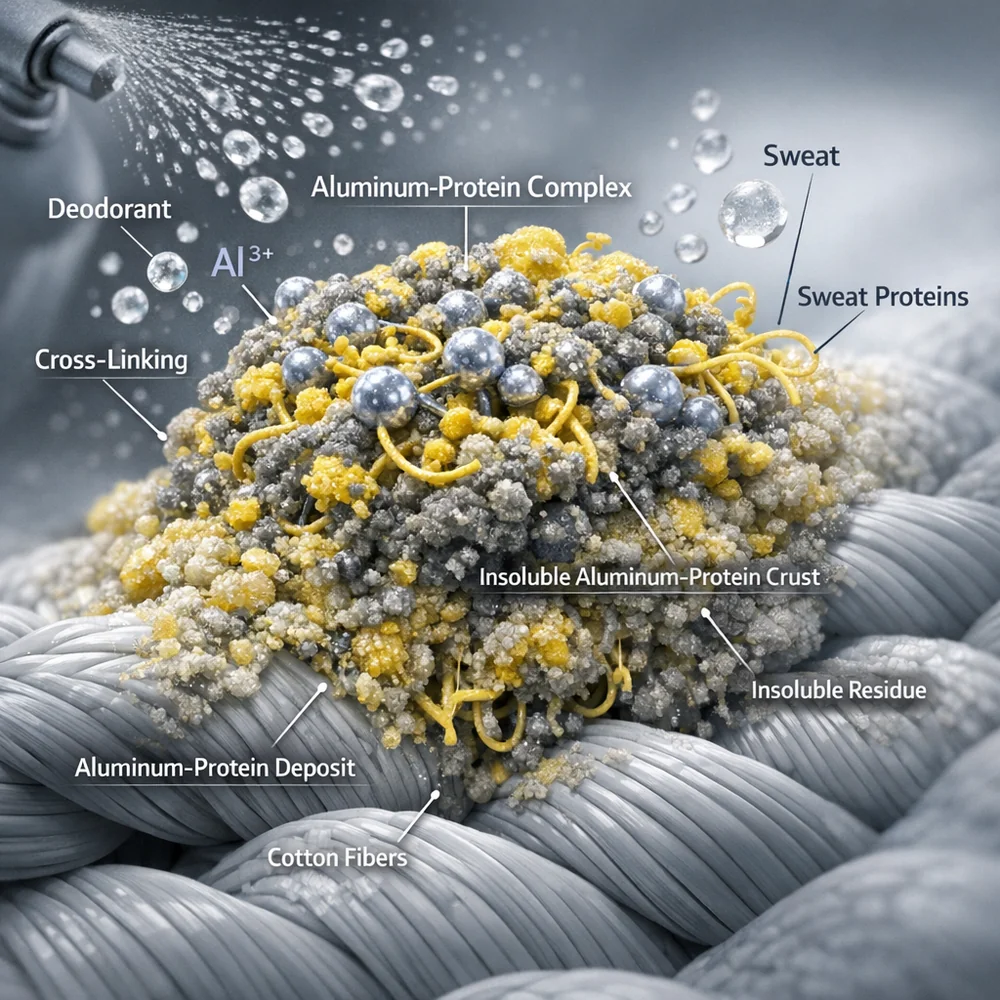
Most antiperspirants use aluminum salts (like aluminum chloride, aluminum chlorohydrate, or aluminum zirconium) to plug your sweat ducts. These salts swell inside the pore, physically blocking the escape of moisture. When these aluminum salts mix with the proteins in your sweat (specifically the sebum from your apocrine glands), they create a chemical reaction. Over time, this mixture hardens and oxidizes (reacts with air), turning yellow.
It is essentially a mineral cement. That is why the armpits of your old t-shirts feel stiff or “crunchy.” You are feeling the fossilized remains of years of deodorant and protein.
This aluminum-protein complex is chemically similar to a kidney stone attached to your shirt. Standard detergents are designed to remove grease and dirt, not minerals. This is why washing the shirt often makes the stain worse—the heat of the dryer “bakes” the chemical paste, turning it into a permanent varnish. The heat causes the aluminum to polymerize, forming long, unbreakable chains that weave themselves into the cotton fibers.
The Biology of Sweat: Apocrine vs. Eccrine
To understand the stain, you must understand the source. The human body has two types of sweat glands:
- Eccrine Glands: Finding all over the body, these secrete mostly water and salts to cool you down. This sweat is clear and does not stain.
- Apocrine Glands: Found in high concentrations in the armpits and groin. These glands secrete a milky fluid rich in proteins and lipids (fats).
It is these apocrine secretions that cause the problem. The proteins act as a “glue” for the aluminum salts, while the lipids provide food for bacteria (causing odor). When you scrub your armpits in the shower, you are removing the surface bacteria, but the aluminum plug often remains deep in the pore, ready to leak out onto your shirt the moment you start sweating again.
The Wax Barrier: Why Detergents Fail
To make matters worse, deodorants are packed with “carrier” ingredients to help the active aluminum stick to your skin. Common carriers include:
- Stearyl Alcohol: A fatty alcohol that feels waxy.
- Cyclomethicone: A silicone that makes the product feel silky.
- Hydrogenated Castor Oil: A thick, sticky wax.
These ingredients transfer to your shirt friction, creating a waterproof seal over the aluminum stain. When you throw the shirt in the wash, the water and detergent molecules just bounce off this hydrophobic (water-hating) shield. The mineral stain beneath remains untouched, protected by a layer of cosmetic wax.
To remove the yellow, you have to peel back these layers in a specific order:
- Degrease the wax.
- Dissolve the mineral bond (the aluminum).
- Bleach the yellow color.
Step 1: Degreasing (The Dawn Phase)
Before you can attack the yellow color, you must remove the waterproof wax layer. If you apply acid or bleach to a waxy stain, it will simply bead up and roll off.
Take a high-quality grease-cutting dish soap (like Dawn or Palmolive) and apply it directly to the stiff, yellowed area. Rub it in vigorously with your fingers or a soft nylon brush. You want to physically break up the waxy matrix.
Let it sit for at least 20 minutes. This allows the surfactants (the soap molecules) to wedge themselves between the wax and the fabric. The hydrophilic (“water-loving”) tails of the soap pull the wax away from the cotton, exposing the “rust” underneath. This step is crucial; if you skip it, the acids in the next step will never reach the stain.
The Bottom Line Laundry detergent cannot penetrate the waxy buildup of deodorant. Use dish soap to strip the silicone/wax layer first, exposing the chemical stain underneath.
Step 2: The Acid Soak (The Aspirin Trick)
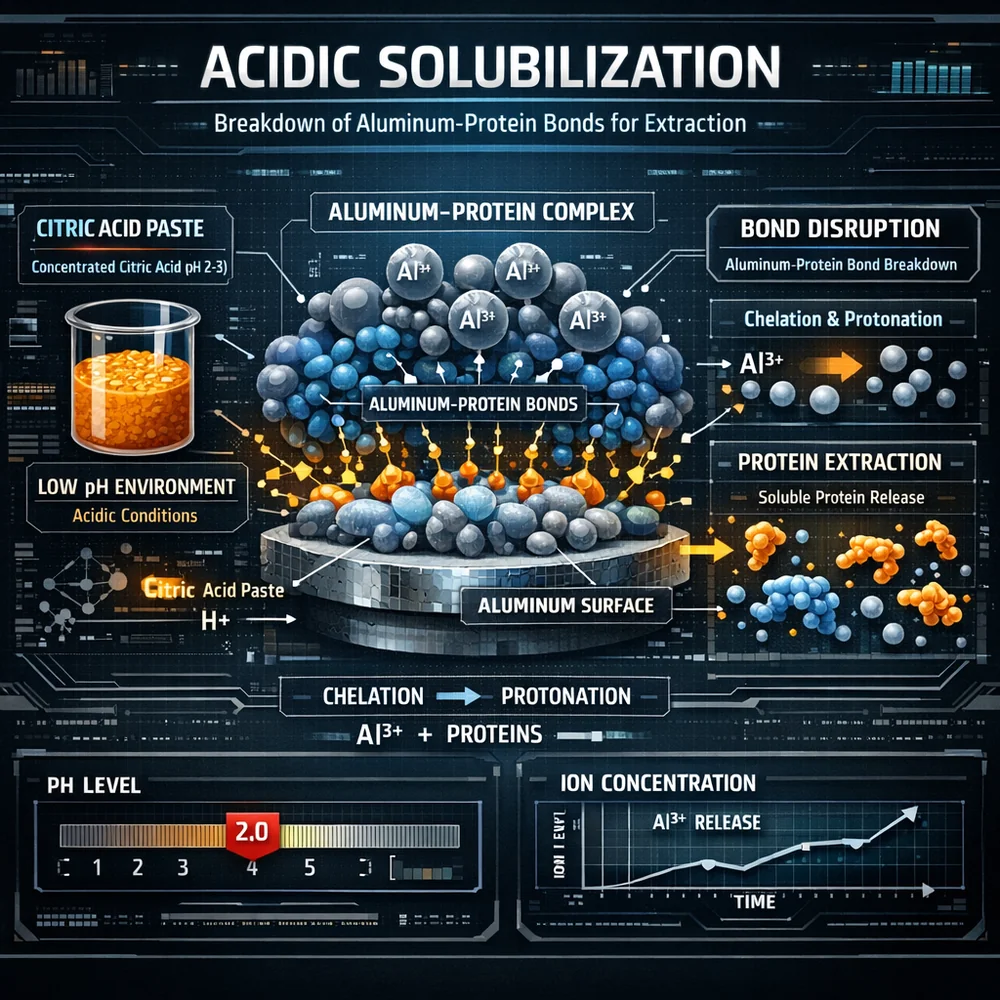
Now that the wax is gone, you need to attack the protein-aluminum bond. The best tool for this is Salicylic Acid, which is found in a common medicine cabinet staple: Aspirin.
Aspirin is technically Acetylsalicylic Acid. In the world of dermatology, salicylic acid is used to dissolve dead skin cells and calluses. In the laundry room, it does the exact same thing to the “skin” of the stain.
The Protocol:
- Crush 4-5 uncoated aspirin pills into a fine powder. Do not use gel caps or coated pills, as the coatings can leave their own colored stains.
- Mix the powder with a tablespoon of warm water to make a gritty paste.
- Spread this paste generously over the stain.
The salicylic acid works chemically to hydrolyze (break down with water) the protein “glue” that is holding the aluminum to the fabric. It is a targeted acid that eats the bond without damaging the cellulosic fibers of the cotton.
Let it sit for at least an hour. You will notice the “crunchy” feeling of the fabric starting to soften as the mineral cement dissolves. For extreme cases, you can add a splash of white vinegar to the paste to increase the acidity.
The Bottom Line Salicylic acid (found in aspirin) chemically dissolves the protein-aluminum bond. It is a safe, targeted acid that breaks down the “crusty” feeling of pit stains.
Step 3: The Whitening Paste (Peroxide and Baking Soda)
If the aspirin doesn’t get it all, or if the stain is very old and dark, you need the “Nuclear Option.” This step uses oxidation to destroy the yellow chromophores.
Mix:
- 1 part Hydrogen Peroxide (3%)
- 1 part Baking Soda
- 1 part Dish Soap
This creates a bubbling, oxidative paste. The chemical reaction is twofold:
- Mechanical Action: The release of oxygen gas creates millions of microscopic bubbles that physically agitate the fibers, lifting trapped debris.
- Chemical Oxidation: The peroxide releases free radicals that attack the double bonds in the yellow pigment molecules, shattering them into colorless fragments.
Apply it to the pit stains and work it into the fabric with an old toothbrush. Let it sit for another hour. Then, toss the shirt in the wash as normal. For more on how oxidation works, see our guide on whitening-without-bleach.
Warning: Peroxide is a mild bleach. It is safe for white cottons, but test it on a hidden seam for colored garments. Never use chlorine bleach on these stains, as the chlorine will react with the proteins to create an even darker, permanent yellow-brown mark.
Step 4: Enzymatic Digestion of Sweat Proteins
For the biological side of the stain (the dead skin and sweat proteins), nothing beats enzymes.
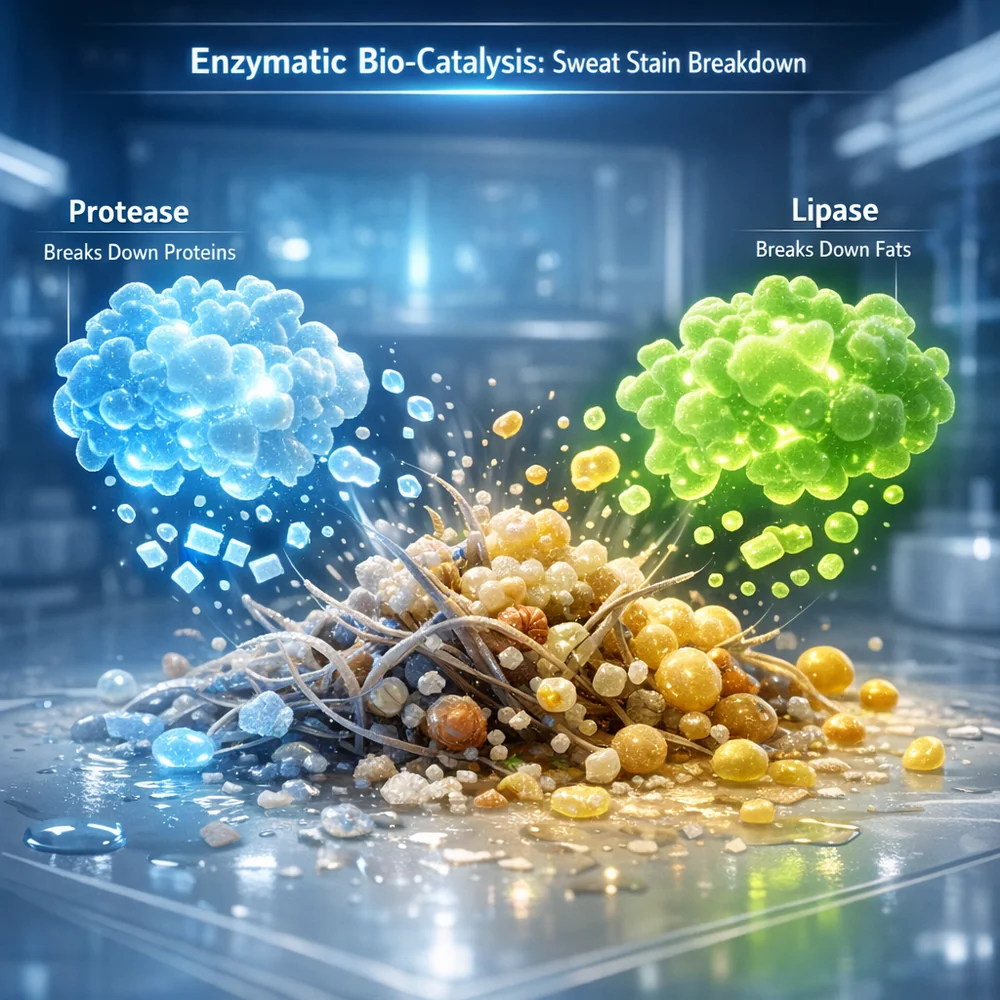
Using a detergent with “Protease” and “Lipase” enzymes (check the label for “bio” or “enzyme”) helps digest the organic matter that trapped the aluminum in the first place. Enzymes are large protein molecules that act as biological catalysts—they speed up chemical reactions without being consumed themselves.
- Protease: Targets peptide bonds in proteins (sweat, skin cells).
- Lipase: Targets ester bonds in fats (sebum, deodorant oils).
For heavy sweaters, soaking your shirts in an enzyme cleaner (like Biz, Puracy, or Defunkify) before washing can prevent the buildup from ever happening. The enzyme soak effectively “pre-digests” the food source for the bacteria, eliminating both the stain and the smell. See our guide on enzyme-detergents-for-sweat for brand recommendations.
The “Blue” Trick: Optical Brighteners
Sometimes, even after the stain is gone, the fabric looks a little dull or off-white. This is because the cotton has yellowed with age or because the factory-applied brighteners have washed out.
To fix this, use Laundry Bluing.
Bluing adds a microscopic trace of blue pigment to the water. Since blue cancels out yellow on the color wheel, it tricks the human eye into seeing “bright white.” It is an optical illusion, but it makes old dress shirts look brand new.
Follow the bottle instructions carefully—a little goes a long way! If you overuse it, your shirts will look baby blue. For a deep dive into this optical science, check out optical-brighteners-vs-bluing.
The Bottom Line Laundry bluing agents use color theory to cancel out yellow tones. Adding a trace of blue pigment makes dingy white cotton appear “factory white” to the human eye.
Cotton vs. Synthetic: Treating Different Fabrics
The removal strategy depends on your fabric type.
Cotton: Cotton fibers are hollow, cellulosic tubes. They suck the sweat and aluminum deep into the core of the yarn (the lumen). This is why cotton shirts get “pit stains” so easily. They require longer soak times (aspirin/peroxide) to draw the minerals out of the hollow fibers. You can also use hotter water with cotton, which helps to liquefy the waxy deodorant residue.
Synthetics (Polyester/Activewear): These fibers are solid plastic filaments. The stain sits on the surface, but it bonds chemically with the oil because both plastic and oil are hydrophobic. For activewear, the enzymatic soak is more important than the acid soak because you are fighting lipids (oils) more than minerals. Avoid using baking soda on specialized wicking fabrics, as the grit can damage the intricate weave that allows the fabric to breathe.
Silk and Wool: These are protein fibers. Never use enzymes (Protease) or ammonia on silk or wool. The enzymes will literally eat the fabric, causing holes. For these delicate items, stick to the mild acid method (white vinegar) and avoid aggressive scrubbing.
Prevention: The Aluminum-Free Lifestyle

The only way to permanently stop yellow pit stains is to remove the aluminum.
Switching to an aluminum-free deodorant stops the chemical reaction before it starts. You might sweat a little more (since your ducts aren’t being plugged and inflammation is reduced), but your shirts will last forever. Modern aluminum-free deodorants use ingredients like arrowroot powder and baking soda to absorb moisture, and essential oils to kill bacteria.
If you must use antiperspirant, follow the “Dry Before Dress” rule. Let your deodorant dry completely for 2 minutes before putting on your shirt. This prevents the transfer of the chemical paste to the fabric.
Also, consider washing your shirts inside out. This exposes the armpit area directly to the mechanical agitation of the washing machine, helping to scrub away residues before they can build up.
The Bottom Line Yellow stains are caused by aluminum. Switching to aluminum-free deodorant eliminates the root cause. If you must use aluminum, let it dry completely before dressing.
Conclusion
Yellow armpit stains are a chemistry problem, not a hygiene problem.
They happen because of a specific reaction between aluminum salts and sweat proteins. By treating them with the right chemical sequence—degreaser, acid, and oxidizer—you can reverse the reaction and save your favorite shirts.
Don’t throw them away. Dissolve the rust. And remember, if you really want to protect your wardrobe investment, look at the ingredient label on your deodorant stick. If “Aluminum” is the first word, you are essentially applying future stains to your body every morning. Treat the fabric with respect, use the right molecules, and you can keep your white shirts looking pristine for years.
References
International Journal of Cosmetic Science. “Mechanism of staining by antiperspirants.” Wiley Online Library
Textile Chemist & Colorist. “Removal of Aluminum Salts from Cotton Fabrics.”
American Cleaning Institute. “Removing Perspiration Stains.” https://www.cleaninginstitute.org/
Journal of Surfactants and Detergents. “Efficacy of Oxidative Bleaching Systems.” Springer Link
Consumer Reports. “How to Get Yellow Stains Out of White Shirts.” https://www.consumerreports.org/
Journal of Biological Chemistry. “The interaction of urea and sweat proteins on cellulose.” ASBMB
Dermatologic Clinics. “Hyperhidrosis and the Role of Aluminum Salts.” PubMed