Pet-Safe Floor Cleaners: Toxicology and Chemical Residue Management
Table of Contents
Things You'll Learn From This Article:
- Floors affect pets differently than people because pets walk barefoot, lie on the floor, and lick their paws, so leftover cleaner can end up inside their bodies.
- Cats can’t safely process certain common chemicals, which means small exposures over time can slowly build up and cause serious harm.
- Pine-scented cleaners, phenols, ammonia, and bleach are especially risky around pets and can cause breathing issues, burns, stomach damage, or repeated marking accidents.
- “Natural” doesn’t always mean safe—essential oils like tea tree, pine, and peppermint can be toxic when they soak into paws and get licked off later.
- Enzymatic cleaners work better for pet accidents because they actually break down urine and waste instead of leaving scent traces behind.
- Enzymatic cleaners need time to work, so letting them sit for 10–15 minutes matters more than scrubbing harder.
- Rinsing with plain water after cleaning is critical, because letting cleaner dry on the floor concentrates residue where paws make contact.
- Keeping pets off wet floors and wiping paws if they step on them prevents cleaners from being ingested during grooming.
- Steam cleaning avoids chemical risks entirely since it uses only heat and water, leaving nothing behind for pets to absorb.
- Some floors can’t handle high heat, so steam settings and constant movement matter to avoid damaging vinyl or wood.
- “Pet-friendly” labels aren’t regulated, so checking ingredient lists and Safety Data Sheets gives more reliable information than marketing claims.
- Fragrance-free, neutral‑pH cleaners are generally safer for pets than strongly scented or acidic products.
- White vinegar is usually safe for pets but can permanently damage stone and wood floors, creating a different kind of long-term problem.
- Isopropyl alcohol evaporates fully and can be a safer option for certain floors once it’s dry and off-gassing is complete.
- Outdoor toxins on paws—like pesticides, road salt, and oil—can be more dangerous than indoor cleaners if they’re tracked inside.
- A simple paw-wiping routine at the door reduces how much contamination spreads across your floors and lowers the need for harsh cleaning.
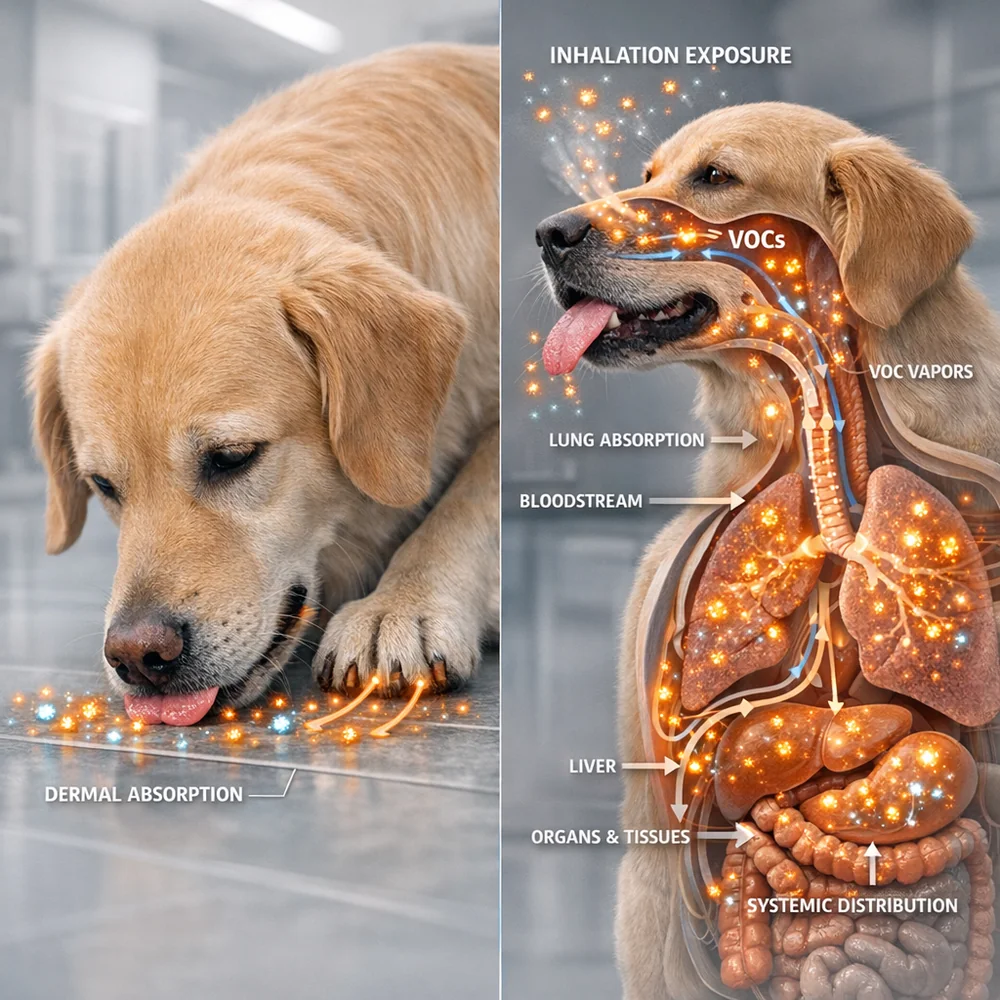
Most floor cleaners are formulated with human safety in mind, but your pets interact with floors completely differently. Dogs and cats walk barefoot across every surface, then lick their paws during grooming. They lie directly on the floor, pressed against whatever chemical residue remains after the water evaporates. A cleaning product that’s perfectly safe for your hands can be toxic when absorbed through paw pads or ingested during a grooming session.
The metabolic differences between humans and companion animals create unexpected hazards.
Cats lack certain liver enzymes that humans use to process common cleaning chemicals. This means substances that your body breaks down easily can accumulate in your cat’s system over months of low-dose exposure. Even “natural” cleaners containing essential oils can be seriously dangerous. This guide covers the toxicology of pet-safe floor cleaning, from understanding which ingredients to avoid entirely to implementing rinse protocols that leave surfaces chemically inert and safe for paws.
Phenols and Ammonia: Seriously Dangerous
Phenolic compounds are coal-tar derivatives found in many pine-scented and hospital-grade disinfectants. They’re highly effective at killing germs but also potent cellular toxins. In cats specifically, the absence of the liver enzyme glucuronosyltransferase means they can’t break down and excrete phenols. Instead, these chemicals accumulate in the system and cause progressive central nervous system damage.
Even the aroma of concentrated phenolic cleaners can cause respiratory distress in sensitive animals.
Ammonia presents a dual hazard for pet households. First, it’s a powerful respiratory irritant, and pets are physically closer to the floor where fumes concentrate. Second, ammonia smells strikingly similar to urine to your pet’s nose. When a dog or cat detects ammonia on a freshly cleaned floor, their instinct may be to “mark” that spot to cover the rival scent. This creates a frustrating cycle of accidents and cleaning.
Chlorine bleach is also problematic in pet homes. Contact with undiluted bleach can cause chemical burns to paw pads. Ingestion of bleach residues during grooming damages the esophagus and gastrointestinal tract. Bleach can also combine with organic soils to create toxic chloramine gases. If you must use bleach, always follow with a thorough plain-water rinse.
Key Insight: Phenols and ammonia are potent metabolic toxins for pets, causing everything from liver failure in cats to respiratory distress and inappropriate marking behaviors in dogs. A truly pet-safe floor cleaning routine must explicitly exclude these high-risk industrial compounds.
Essential Oils Aren’t Always Safe
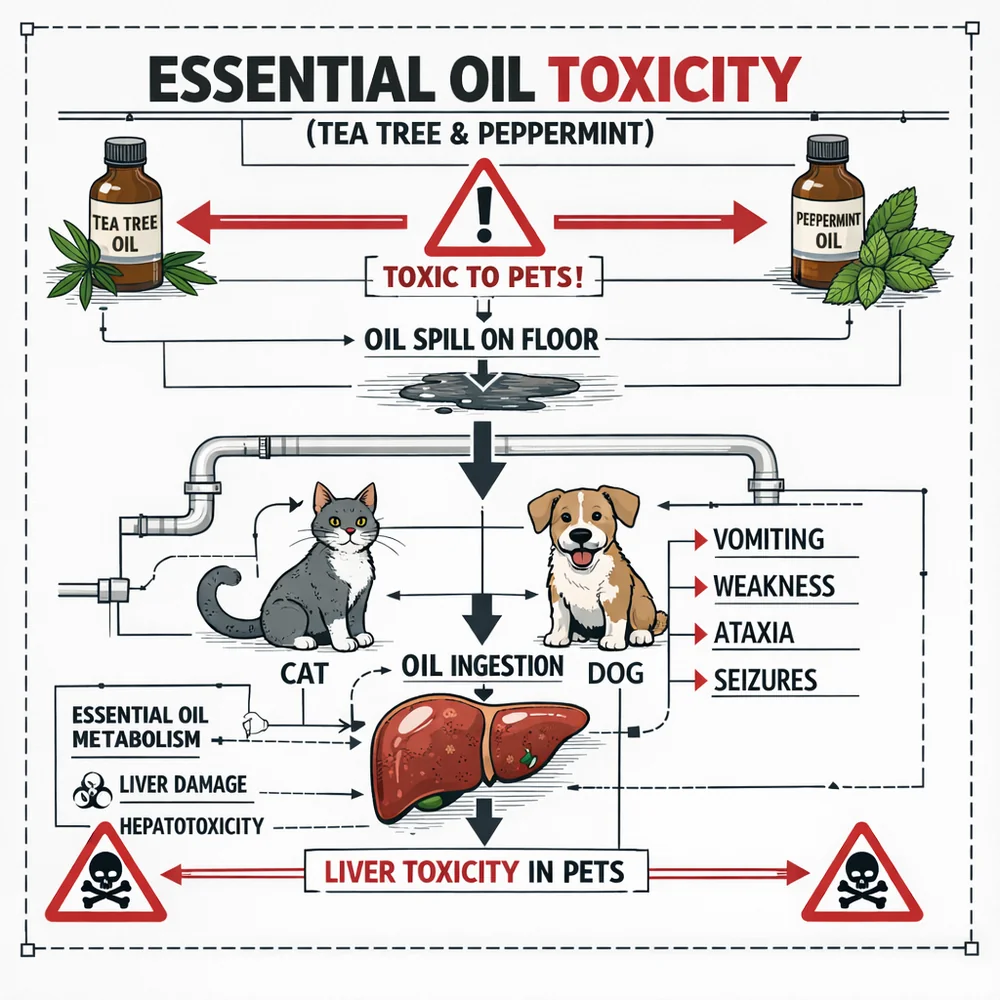
The trend toward “natural” cleaning has introduced a new category of pet hazards. Many people assume natural means safe, but plants have evolved countless chemical defenses that are specifically designed to be toxic. Tea tree oil, peppermint oil, and pine oil frequently appear in floor cleaners marketed as eco-friendly alternatives.
In concentrated form, these oils are highly toxic to pets through both skin absorption and ingestion.
Tea tree oil is particularly notorious in veterinary medicine for causing ataxia and tremors in small dogs and cats. Here’s the problem: a floor cleaner might contain only one percent tea tree oil, but as the water evaporates, that concentration increases dramatically. A pet walking across the drying floor gets an effective dermal patch of toxin, which they then lick off during their next grooming session.
Pine oil irritates the gastrointestinal tract and can cause vomiting and severe abdominal pain. The strong scents also overwhelm pets’ sensitive olfactory systems and cause stress. Reference our essential oils laundry safety guide for more on botanical chemical risks. The safest path for multi-pet households is fragrance-free, additive-free surfactants.
Key Insight: Concentrated essential oils like tea tree and pine act as neurotoxins and gastrointestinal irritants for companion animals. The evaporation of cleaning water concentrates these oils on the floor, posing a significant risk of cumulative toxicity through accidental ingestion during grooming.
Enzymatic Cleaners for Pet Accidents
When dealing with biological waste from pet accidents, traditional surfactant cleaning often falls short. Urine contains complex proteins and uric acid crystals that bond to surfaces, especially porous materials like grout lines. Regular soap lifts the visible dirt but leaves behind molecular scent markers that your pet can still detect.
To truly clean a bio-accident and prevent repeat offenses, you need enzymatic cleaners.
These products contain biological catalysts that digest organic matter into water-soluble components. Proteases break down proteins, lipases target fats, and amylases handle starches. Instead of pushing the mess around, enzymes chemically disassemble the large molecules at their source. Reference our probiotic versus enzyme cleaners guide for the specific mechanics.
The secondary benefit of enzymatic cleaners is their excellent safety profile. Most are formulated with non-toxic, biodegradable ingredients that are safe for pets once dry. Because they don’t rely on harsh acids or bases, they work on natural stone and hardwood without damage. The key requirement is dwell time: spray and immediate wipe doesn’t give enzymes enough time to work. Let the cleaner sit for 10 to 15 minutes before wiping.
Key Insight: Enzymatic cleaners represent a clinical solution for biological waste removal, utilizing catalysts to digest proteins and uric acid crystals at a molecular level. This permanent neutralization prevents cross-contamination and discourages repeat marking behaviors without the use of toxic oxidizers.
The Rinse Pass Is Non-Negotiable

With dangerous chemicals identified, let’s talk about the most important step in any pet-safe cleaning routine: the rinse pass. Most cleaning failures happen because product is allowed to dry into a concentrated film on the floor. Even a relatively safe surfactant becomes a dermal irritant when your pet’s paws contact it continuously.
A thorough plain-water rinse is the only way to ensure the surface is chemically inert.
After mopping with your cleaning solution, go over the floor again with plain water to dilute and lift any remaining detergent. This follows the same principle as the two-bucket mopping method used in professional settings. For households with very sensitive pets, a third pass with a dry microfiber mop can reduce residue even further.
During the cleaning process, keep pets out of the cleaned area until the floor is completely dry. If a pet does walk across a wet floor, wipe their paws immediately with a damp cloth to prevent them from ingesting surfactant during their next grooming session. Managing this contact window is a key part of pet-safe cleaning logistics.
Key Insight: Chemical residues left on dried floors pose a risk of dermal irritation and accidental ingestion for pets. Implementing a dedicated “plain-water rinse” pass ensures that the final floor surface is chemically inert and safe for immediate biological contact.
Steam Cleaning: Zero Chemicals Required
Steam cleaning is the gold standard for pet-safe floor care because it uses no chemical additives whatsoever. A steam mop heats water past boiling and releases it as pressurized vapor that melts lipids, denatures bacterial proteins, and kills mold and dust mites. As discussed in our cleaning-cleaning tools guide, this superheated steam achieves effective sanitization through physics alone.
For pet owners, steam eliminates the entire residue concern.
There’s no detergent to leave behind, no film to concentrate as water evaporates. The floor is left biologically inert and safe for immediate paw contact. Steam also denatures the dander and saliva proteins that trigger allergies in humans, reducing the overall allergen load in your home.
One technical caution: steam can damage certain floor materials. While safe for most tile, high heat may warp vinyl planks or damage some hardwood finishes. Use low-steam settings for sensitive materials and keep the mop head moving to prevent concentrated heat exposure. Follow steam with a dry mop pass on textured floors to prevent moisture pooling.
Key Insight: Steam cleaning provides professional-grade sanitization using thermal energy rather than chemical reactions. This eliminates the risk of toxic residue ingestion while effectively denaturing the dander and saliva proteins that act as household allergens.
Verifying “Pet-Friendly” Claims
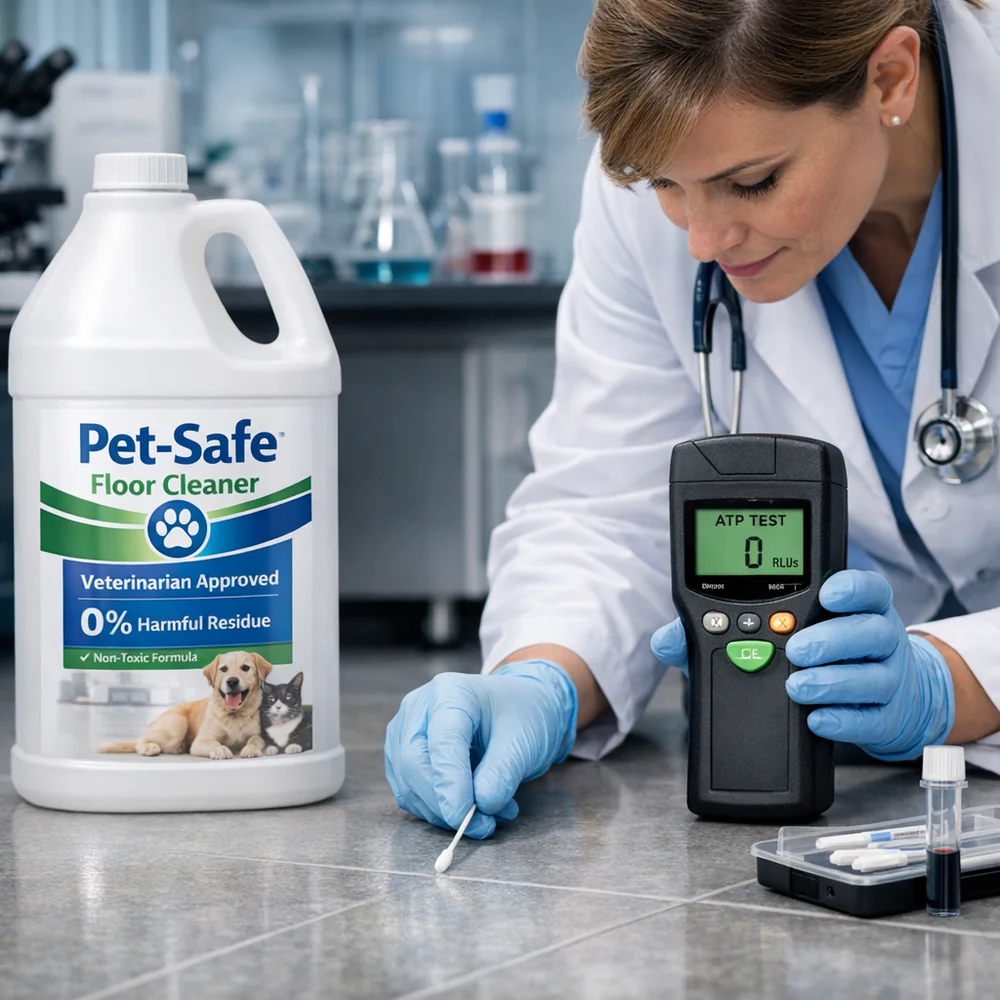
Here’s an important reality check: “pet-friendly” is not a legally regulated term. Manufacturers can use it based on their own internal standards, which may or may not align with actual veterinary toxicology. A product labeled “natural” might still contain high concentrations of citrus oils or undisclosed surfactant blends that irritate animals.
To truly protect your pets, you need to verify ingredient lists independently.
Look for the Safety Data Sheet for any product, usually available on the manufacturer’s website. The SDS lists chemical components and their hazard classifications. Choose products that are fragrance-free with neutral pH around 7. Avoid anything listing “proprietary blend” without specifying what surfactants are actually used. Reference our greenwashing cleaning labels guide for more on decoding marketing claims.
Third-party certifications provide more reliable guidance. The EPA Safer Choice label and EWG Verified rating both involve independent toxicological review. While designed for human safety, the strict limits these programs enforce often result in products that are safer for pets too. Being a skeptical consumer is part of being a responsible pet owner.
Key Insight: “Pet-friendly” marketing claims are often unregulated and can be misleading. Veterinary-grade safety requires independent verification of ingredient lists and a preference for fragrance-free, pH-neutral products endorsed by recognized third-party environmental certifications.
White Vinegar: Safe for Pets, Not Always for Floors
White vinegar is often recommended as a pet-safe cleaning solution, and from a toxicological perspective, diluted vinegar is relatively benign if ingested in small amounts. However, while safe for your pets, vinegar is not always safe for your floors. This is a classic case of competing safety requirements.
As covered in our natural stone care guide, the acidity of vinegar permanently etches marble and calcium-based stone.
The acid dissolves the mineral surface and creates dull, rough spots that trap even more dirt in the future. On hardwood floors, repeated vinegar use can strip the polyurethane coating and make wood more susceptible to water damage. If you must use vinegar on wood, dilute heavily and apply with a damp rather than wet mop.
For pet-safe cleaning on acid-sensitive surfaces, 70 percent isopropyl alcohol is a better choice. It’s safe for pets once evaporated, safe for stone and sealed wood, and provides effective sanitization. Balance your pet safety goals with material preservation for a complete solution.
Key Insight: While chemically safe for pets, the acidity of white vinegar can cause irreparable etching on natural stone and degrade hardwood finishes. Pet-safe cleaning must be balanced with material-safe protocols to protect the home’s architectural investment.
Paw Washing at the Door
Beyond floor chemistry, consider what your pets bring indoors on their feet. When dogs and cats come in from outside, their paw pads carry environmental contaminants: pesticides from lawns, road salts, petroleum residues from asphalt. These substances are often more toxic than anything in your cleaning cabinet.
If pets walk across clean floors with contaminated paws, they’re redistributing outdoor toxins throughout your house.
A paw-station at your entryway creates a mechanical filter for this contamination. Keep a dedicated basin of plain water and a microfiber cloth near the door. Wiping paws before entry prevents outdoor chemicals from ever contacting your indoor floor surfaces. This simple habit dramatically reduces the overall toxin load in your home and decreases the frequency of intensive floor cleaning.
For times when your pet has stepped in their own waste outdoors, a more thorough paw wash prevents them from tracking biological contamination inside or ingesting it during grooming. This level of hygiene detail separates basic pet care from truly comprehensive household safety.
Key Insight: Paw pads act as environmental vacuums, bringing external pesticides and road salts into the home. Establishing a “paw-wash” protocol at entry points prevents the redistribution of external toxins and maintains the integrity of the indoor floor environment.
Conclusion
Pet-safe floor cleaning requires understanding the unique vulnerabilities of companion animal metabolism. Phenols, ammonia, and chlorine bleach pose serious risks through inhalation, skin absorption, and grooming ingestion. Even “natural” essential oils like tea tree and pine can be toxic, especially as cleaning water evaporates and concentrates these compounds on floor surfaces.
Safe alternatives include enzymatic cleaners for biological waste, pH-neutral fragrance-free surfactants for general cleaning, and steam for chemical-free sanitization. The rinse pass after any chemical cleaning is non-negotiable: a plain-water mop pass ensures no residue remains for paws to contact. Verify “pet-friendly” claims through ingredient lists and third-party certifications rather than trusting marketing labels.
Balance pet safety with material safety. Vinegar is safe for pets but damages stone and wood. Establish a paw-washing routine at entry points to prevent outdoor toxins from contaminating your clean indoor environment. This comprehensive approach protects both your animals and your home investment.
References
- Wismer, T. (2012).
“Common Household Cleaning Product Pet Toxicities.” Veterinary Clinics: Small Animal Practice. 42(2). 225-231.
- International Fabric Institute. (2015).
“Environmental Residues and Animal Metabolism: The Chemistry of Floor-Pet Interactions.” IFI Technical Bulletin. 964. 1-14.
- Smith, J. A., et al.
(2011). “Enzymatic Catalysts in Domestic Cleaning: Efficiency vs. Safety for Companion Animals.” Journal of Cleaning Science.
- World Health Organization (WHO). (2019).
“Indoor Hygiene and Animal Welfare: Managing Chemical Loads in Multi-Species Households.” WHO Technical Guidance. 5. U.S. Environmental Protection Agency (EPA).
(2020). “Evaluating the Toxicological Profile of Household Disinfectants for Animal Safety.” EPA Technical Bulletin.