Probiotic vs Enzyme Cleaners: The Biology of Deep Cleaning
Table of Contents
Things You'll Learn From This Article:
- Enzyme cleaners work fast on specific messes, but only if the enzyme matches the stain, and they stop working once they dry out.
- Probiotic cleaners don’t just clean once; they keep working by living on the surface and using up the food harmful germs need.
- Killing everything with bleach can actually let tougher germs come back faster, because there’s nothing left to compete with them.
- Letting “good” bacteria take up space on surfaces helps crowd out odor-causing and harmful microbes over time.
- Stubborn smells in grout, drains, and pet areas often come from biofilms, which probiotics can break down better than harsh chemicals.
- The bacteria in probiotic cleaners stay dormant in the bottle and only activate when sprayed onto a moist surface.
- Shaking a probiotic cleaner matters, because the active spores can settle at the bottom.
- These cleaners work best when you spray them on a cool surface and let them stay wet for a minute instead of wiping right away.
- Heat, steam, and strong disinfectants can kill probiotic bacteria, so they shouldn’t be used together at the same time.
- If you need to disinfect for safety, do it first, let the surface dry, and then use probiotics to repopulate it.
- Synbiotic cleaners include a built‑in food source, which helps the bacteria start working even on surfaces that look clean.
- Probiotic cleaners tend to be easier on lungs and allergies because they rely less on harsh fumes and solvents.
- Pet urine smells that keep coming back usually need long, wet treatments so bacteria can reach deep into porous materials.
- Soaking smelly activewear gives bacteria time to break down trapped body oils that regular washing can’t reach.
- Using probiotics in drains can slowly reduce grease buildup instead of just pushing it further down the pipes.
- What goes down your drain matters—probiotic cleaners can support septic systems instead of disrupting them.
- These cleaners are better suited for “lived‑in” areas like floors, counters, and drains than for streak‑free glass.
- Cleaning with biology is more about long‑term balance than instant sterilization.
If you’ve walked down the cleaning aisle lately, you’ve probably noticed a bunch of bottles promising “active cultures” and “microbial balance.” It’s like the yogurt section crashed into the bleach aisle. And if you’re anything like us, you’ve got questions. Do these things actually work? Are they safe? What’s even going on in there?
You’re probably already familiar with enzyme cleaners if you’ve ever had to deal with pet accidents. Those products use specific proteins to break down organic gunk. Probiotic cleaners, though? They’re a whole different animal. Instead of just giving you the tool, they’re giving you the entire factory that makes the tool.
So let’s break down how these two technologies actually work. We’ll get into competitive exclusion, spore science, and why “sterile” isn’t always the best goal for a healthy home anymore.
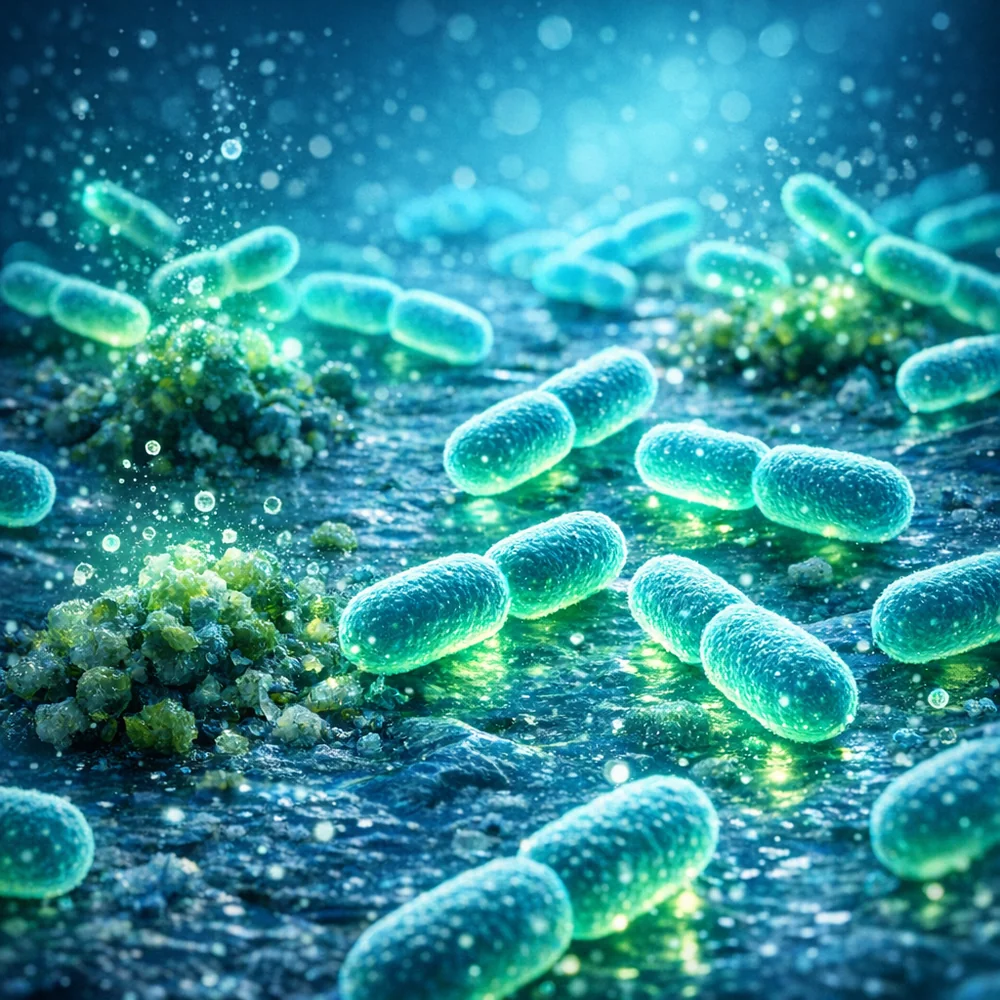
The Enzymatic Mechanism: Targeted Catalysis
Before we can talk probiotics, you’ve got to understand what came before them. Enzyme cleaners work on a simple lock-and-key idea. An enzyme is basically a protein that speeds up one specific chemical reaction.
Specificity and Limitation
In your typical enzyme cleaner bottle, you’ll find a mix of three main enzyme types. Proteases go after protein stains like blood and sweat. Lipases attack the bonds in fats and oils, so they’re your go-to for grease and body oils. Amylases break down starches and carbs into simple sugars.
Here’s the catch, though: enzymes are super specific. If you spray a lipase on a protein stain, nothing happens. The key just doesn’t fit that lock.
And enzymes don’t last forever. Once they dry out or get messed up by temperature or pH changes, they’re done. They can’t reproduce. They can’t adapt. They’re just chemical tools that do one job until they’re spent.
The bottom line: Enzymes are “chemical keys” that do one specific job and die; Probiotics are “living factories” that adapt and reproduce to continue cleaning.
The Probiotic Mechanism: Competitive Exclusion
Probiotic cleaners work totally differently. They introduce live, beneficial bacteria, usually from the Bacillus family, onto your surfaces. These aren’t just tools; they’re active little agents doing work on your behalf.
Instead of just killing bacteria, probiotics use something called competitive exclusion. They take up the physical space and eat all the available food sources, basically starving out the harmful bugs like Salmonella and E. coli.
Think about what happens when you sanitize a counter with bleach. Sure, you kill most of the bacteria, but the survivors? They’re often the toughest, most resistant pathogens. With no competition, they bounce back fast and repopulate the surface within hours. Probiotics prevent this by claiming the territory first. It’s more like an ecological approach to cleaning rather than a scorched-earth policy.
The bottom line: Probiotics starve bad bacteria by eating their food and taking their space, a process called “Competitive Exclusion.”
Biofilms and Quorum Sensing
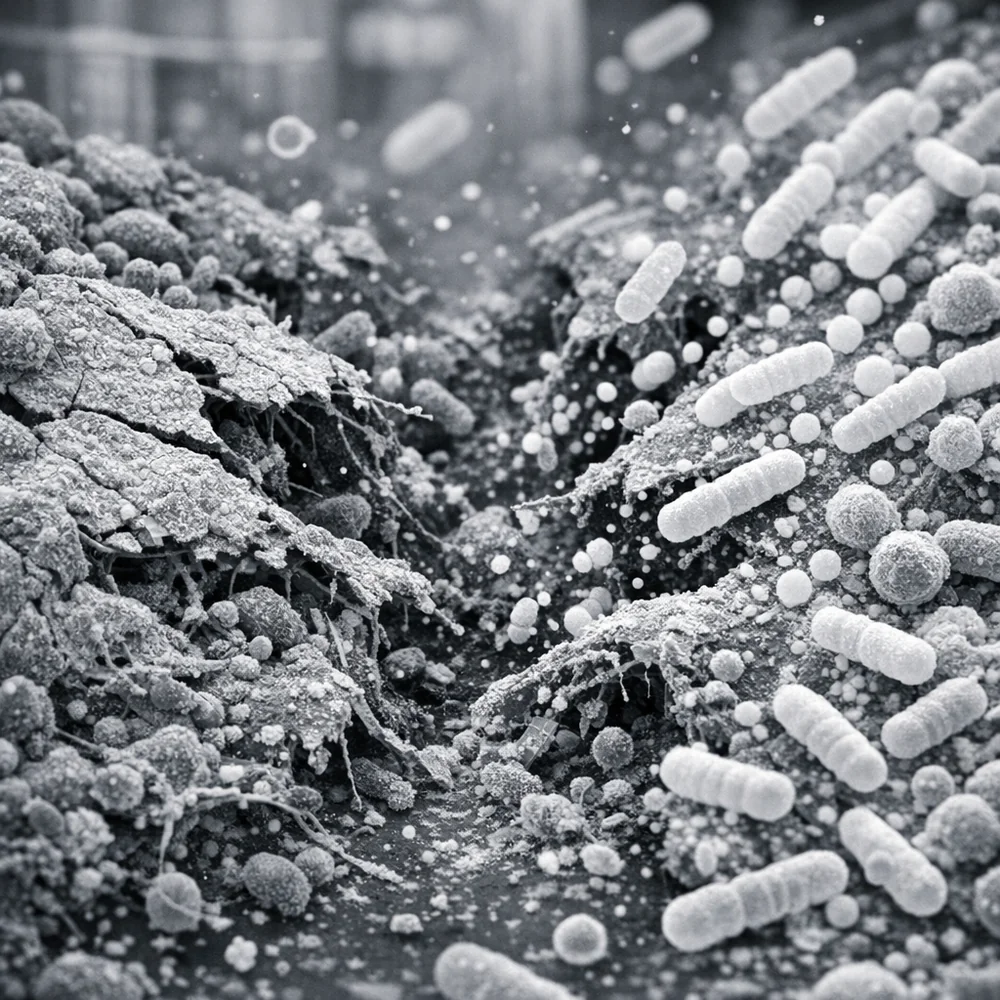
One of the coolest things about probiotic cleaners is how they handle biofilms. A biofilm is basically a colony of microorganisms growing on a surface. You know the plaque on your teeth? That’s a biofilm. That gross pink slime in your shower grout? Also a biofilm.
Here’s where it gets interesting: bacteria in biofilms communicate with each other through something called quorum sensing. They release chemical signals, and when there’s enough of those signals floating around, the whole population changes behavior together. That’s how they build that protective slimy fortress that bleach and antibiotics often can’t even penetrate.
Probiotic cleaners mess with this communication network, stopping the pathogens from organizing. This quorum quenching ability is why probiotics work so well against those persistent odors hiding in grout and drains.
The probiotics produce enzymes that break down those signaling molecules, or they make fake versions that block the receptors. Without the ability to coordinate, the biofilm structure falls apart and becomes much easier to remove.
The bottom line: Biofilms use chemical signals to build shields; Probiotics jam these signals (Quorum Quenching), leaving pathogens vulnerable.
Shelf Life and Spore Dormancy
You might be wondering: how can living bacteria survive in a bottle sitting on a shelf for two years? Fair question.
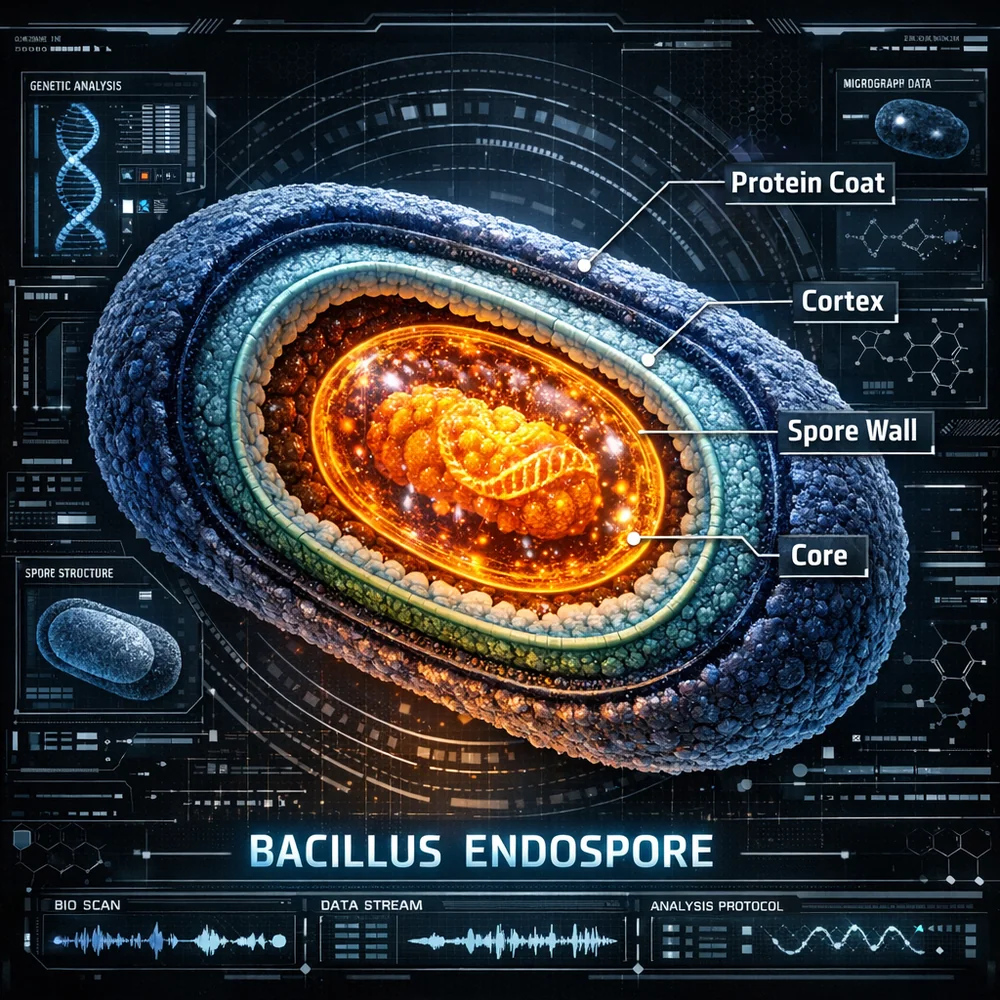
Here’s the trick: in the bottle, these bacteria exist as endospores. It’s a dormant, armored state that lets them survive extreme temperatures without needing food or oxygen. They only “wake up” when they’re sprayed onto a surface where there’s moisture and something to eat.
The endospore is one of the toughest structures in biology. It’s basically a stripped-down DNA core wrapped in protective layers. In this state, the bacteria don’t use any energy. They don’t reproduce. They just wait.
That’s actually why real probiotic cleaners often look a bit cloudy or have sediment at the bottom. You’ve got to shake the bottle to spread out all those spores before spraying. Once a spore hits a food source, like a tiny crumb or a drop of urine, it rehydrates and gets back to work within minutes.
The Synbiotic Evolution
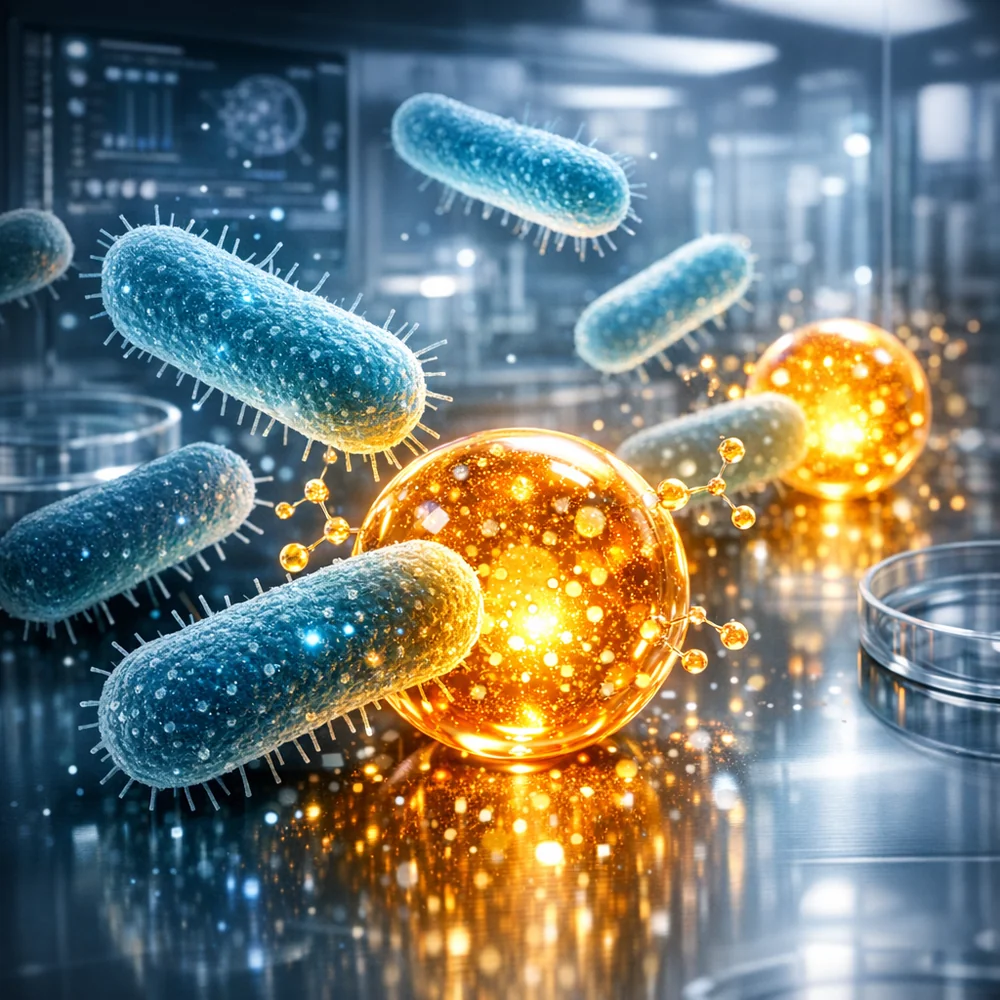
The newest generation of microbial cleaners takes things even further with synbiotics. This is a formula that combines live bacteria (the probiotics) with a sugar-based fuel source (the prebiotics).
This way, the bacteria have immediate energy to colonize and clean, even on surfaces that are already pretty clean. This extends their cleaning action up to five days.
Without prebiotics, probiotics are kind of like paratroopers dropped into unknown territory. They’ve got to scavenge for food right away or they’ll die. With prebiotics, they drop in with a survival kit. This means higher germination rates, faster colonization, and more consistent cleaning regardless of how dirty or clean the surface was to start.
The bottom line: Synbiotics include a “lunchbox” (prebiotics) for the bacteria, ensuring they survive and work even on relatively clean surfaces.
Safety Profile: Asthma and Allergies
If you’ve got asthma or allergies in your household, switching from chemical to biological cleaning is a pretty big deal. Traditional cleaners rely on volatile organic compounds and harsh surfactants to dissolve dirt. Those chemicals are known respiratory irritants.
Probiotic cleaners depend on biological activity instead of chemical solvent power. They usually use mild, sugar-derived surfactants to help wet the surface, but the real work is done by the bacteria. This drastically cuts down on the VOC load in your home.
There’s also some evidence that having a diverse home microbiome might actually protect against allergy development. The hygiene hypothesis suggests that overly sterile environments confuse the immune system and lead to allergic reactions. By bringing back harmless environmental bacteria, we might be helping to calibrate our immune responses.
Optimizing Germination Dynamics
If you want to get the most out of your probiotic cleaner, it helps to understand what makes those spores wake up. Since they’re dormant in the bottle, they need specific triggers to activate and start cleaning.
Moisture is the big one. A spore can’t germinate on a bone-dry surface. When you spray the solution, the water kicks off the activation process.
But here’s the catch: if the surface dries out too fast, like on a hot stovetop or in direct sunlight, the water might evaporate before the spore fully activates. That’s why it’s best to apply these cleaners to cool surfaces and let them sit for a minute or two to soak in.
Temperature matters too. Most Bacillus strains used in cleaners are mesophilic, meaning they like moderate temperatures, the kind you’d find in a normal home. Extreme heat, like from a steam mop, will kill the active bacteria instantly and wipe out the benefit. On the flip side, near-freezing temps will push the bacteria back into dormancy until things warm up.
And then there’s food. The bacteria need carbon and nitrogen to multiply. On a dirty surface, the grime itself provides that. On a cleaner surface, the prebiotic sugars in synbiotic formulas act as bridge fuel. This is why probiotic cleaners tend to work better on “lived-in” surfaces like floors and counters than on sterile surfaces like glass windows.
Chemical Incompatibility and Cotoxicity
Here’s a mistake lots of people make: mixing biological cleaners with traditional disinfectants. This completely defeats the purpose. If you spray a probiotic cleaner and then immediately follow up with a bleach wipe, you’re basically murdering the colony you just planted.
The reason is simple. Bleach, ammonia, and high-concentration alcohols kill pretty much everything. They destroy the proteins in bacterial cell walls and wreck the DNA. While the spore form has some resistance to chemical attack, the active vegetative form that actually does the cleaning is super vulnerable.
So you’ve got to separate your duties. If you absolutely need to disinfect, like after handling raw chicken, use a disinfectant first and let it dry completely. Once the chemical residue has evaporated, you can apply the probiotic cleaner to recolonize the surface with good bacteria. This “sanitize then colonize” approach lets you handle acute pathogens while still building a healthy long-term microbiome.
The bottom line: Bleach murders probiotics. Sanitize with chemicals if you must, let it dry completely, and then apply probiotics to recolonize.
Environmental Impact of Greywater
The benefits of probiotic cleaning go beyond your home and into the wastewater system. When you rinse a chemical cleaner down the drain, it hits the municipal water treatment system or your septic tank. Harsh chemicals can throw off the delicate bacterial balance these systems need to work, especially in septic tanks that rely entirely on bacterial digestion.
Probiotic cleaners actually give these systems a boost. The Bacillus strains in these products are often the exact same strains sold as septic tank additives. So when you mop your floors with probiotics, you’re passively helping maintain your plumbing. These bacteria keep breaking down grease, fats, and organic solids as they travel through the pipes, cutting down on sludge buildup and reducing how often you need to pump.
Protocol for High-Load Environments
Understanding the science is great, but using these cleaners the right way is what really makes the difference. Biological cleaners need a different approach than chemical ones, especially in places with lots of organic matter, like gyms, pet kennels, or commercial kitchens.
Technical Apparel and Activewear
Synthetic fabrics in activewear are notoriously hard to clean because they’re oleophilic, meaning they attract oils. Body oils and sweat get trapped in the tight weave of polyester, creating a perfect breeding ground for bacteria that produce smelly fatty acids.
Regular detergents often can’t get into those tiny spaces. For these items, a pre-soak works best.
Submerge the clothes in a solution of warm water and probiotic concentrate, and let the bacteria work their way into the fiber weave. Give them at least two to four hours so the spores have time to wake up and start breaking down the trapped oils. After the biological soak, wash the clothes in a normal cycle to flush out all the loosened gunk and the bacteria themselves.
Pet Urine and Porous Substrates
When a pet pees on something porous like concrete or unsealed grout, the liquid wicks deep into the material. Chemical cleaners only touch the surface. As the liquid evaporates, uric acid crystals form deep inside those tiny pores.
Here’s the annoying part: those crystals attract moisture from the air. On humid days, they soak up water and release ammonia gas, which is why you get those phantom odors that come back months after you thought you cleaned everything.
Probiotics are really the only thing that works for this. Soak the area with a bio-enzymatic solution and keep it moist (cover it with plastic wrap if you need to) for 24 to 48 hours. This gives the bacteria time to travel down the same paths the urine took. When they reach those uric acid crystals, they digest them completely, permanently removing the odor instead of just covering it up.
Drains and Grease Traps
Kitchen drains are classic biofilm territory. Grease, fat, and food bits pile up on the pipe walls, creating layers of food for harmful bacteria and drain flies. Pouring bleach down there only gives you a temporary fix and usually doesn’t even touch the physical mass of the clog.
A daily dose of fat-eating (lipolytic) probiotics sets up a colony right on the pipe walls. These bacteria constantly release lipase enzymes that break down the grease sticking to the inside of the pipes.
Over weeks, this biological activity can actually restore the original flow diameter of the pipe by digesting the hardened grease layers that even mechanical snakes miss.
The bottom line: Uric acid crystals hide deep in concrete; cover probiotics with plastic to keep them wet for 48 hours so they “swim” down to the source.
Conclusion
The shift from killing everything to balancing everything is where home hygiene is headed. Probiotic cleaners let you put billions of microscopic helpers to work for you. They keep cleaning long after you’ve put the spray bottle down. By understanding the biology of spores, quorum sensing, and competitive exclusion, you’ll be able to pick the right tool for every job.
References
-
Journal of Applied Microbiology. (2018). Competitive exclusion of pathogens by Bacillus species in surface cleaning.
-
Nature Reviews Microbiology. (2020). Quorum sensing and biofilm formation in household environments.
-
International Journal of Food Microbiology. (2019). Efficacy of enzymatic vs probiotic cleaners on porous surfaces.
-
Clinical & Experimental Allergy. (2021). The impact of household cleaning products on the development of asthma.
-
Applied and Environmental Microbiology. (2017). Spore germination mechanics in commercial probiotic formulations.
-
Water Research. (2019). Impact of household chemicals on septic tank microbial communities.
-
Journal of Hospital Infection. (2016). The role of probiotics in hospital environment cleaning.