Dish Brush vs. Sponge Hygiene: Microbiology of Kitchen Sanitization
Table of Contents
Things You'll Learn From This Article:
- Sponges stay wet inside for hours, which makes them a perfect place for bacteria to grow fast, even if they look clean on the outside.
- A sponge can spread germs around your kitchen instead of removing them, especially once it starts to smell sour.
- Dish brushes dry faster because air can move between the bristles, which makes them more hygienic for daily use.
- Silicone scrubbers don’t absorb water at all, so bacteria have a much harder time settling in and sticking around.
- Silicone tools are easy to sanitize in the dishwasher, but you’ll need to add soap more often since they don’t hold any.
- Wooden dish brushes need proper care, but boiling the bristles for a few minutes is an effective, chemical-free way to sanitize them.
- Storing brushes with the bristles facing down helps water drain out and prevents mold from growing where the bristles meet the handle.
- Natural bristles like tampico and union fiber give strong scrubbing power and work especially well on burnt-on food and cast iron.
- Different water temperatures change how natural fibers behave, letting one brush handle both tough and gentle cleaning jobs.
- Horsehair brushes are soft enough for delicate glass and crystal and won’t scratch narrow or fragile items.
- Sponges should be replaced every one to two weeks, even if they still look usable, because bacteria build up inside invisibly.
- Dish brushes last longer than sponges but should be replaced once the bristles stay bent or any mold appears.
- Synthetic sponges and scrub pads shed tiny plastic pieces during use, which end up in waterways as microplastics.
- Natural fiber brushes avoid microplastic pollution because any worn-off fibers break down naturally.
- Using the right tool for each task—soft for glass, stiff for cast iron, non-porous for everyday dishes—reduces contamination and keeps your kitchen cleaner.
Your kitchen sink is one of the dirtiest places in your home, which makes the tools you use there critically important for food safety. Both sponges and dish brushes are designed to remove bacteria from dishes, but their structures interact with moisture and germs in completely different ways. That porous sponge that feels so satisfying to squeeze? It’s also a near-perfect environment for bacterial colonies to thrive.
Cellulose sponges stay damp for hours, providing exactly what bacteria need to multiply.
Understanding these differences helps you make smarter choices about your cleaning tools. Sponges trap food particles deep in their pore networks where rinsing can’t reach. Brushes with stiff bristles allow water to flow past and air to circulate for faster drying. Silicone scrubbers offer a completely non-porous alternative that doesn’t absorb anything. This guide covers the microbiology of each option and how to keep whatever you choose hygienically safe.
The Sponge Problem: Billions of Bacteria
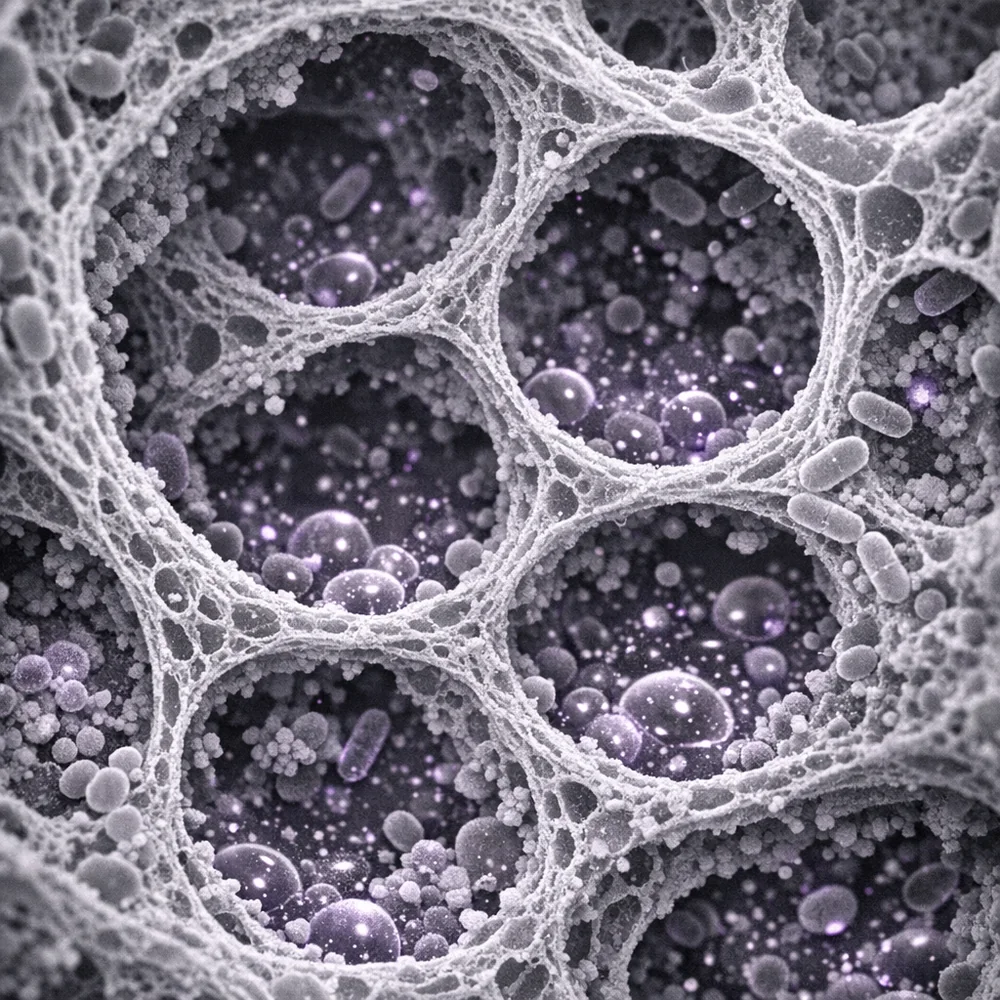
Cellulose sponges are engineered marvels of absorption, designed to hold many times their weight in water. That same absorbency is also their biggest hygiene liability. The dense network of internal pores creates a massive hidden surface area that stays perpetually damp. When food particles get pulled into these pores, they provide a nutrient-rich feast for any bacteria present.
Within just 24 hours of first use, a single sponge can host billions of bacteria.
These bacteria don’t just sit there; they form organized communities called biofilms. A biofilm is essentially a protective layer of biological glue that microorganisms secrete around themselves. This matrix shields the bacteria from desiccation and even from chemical disinfectants. When you wipe a countertop with a contaminated sponge, you’re often spreading rather than removing germs. High-resolution DNA studies have identified up to 362 different bacterial species living in kitchen sponges.
One particularly problematic resident is Moraxella osloensis, the bacterium responsible for that distinctive sour smell when a sponge goes bad.
Key Insight: The high porosity and slow drying rate of cellulose sponges facilitate the rapid formation of complex, multi-species biofilms. These biofilms protect bacteria from desiccation and mechanical rinsing, transforming the sponge into a persistent vector for cross-contamination.
Silicone Scrubbers: The Non-Porous Alternative
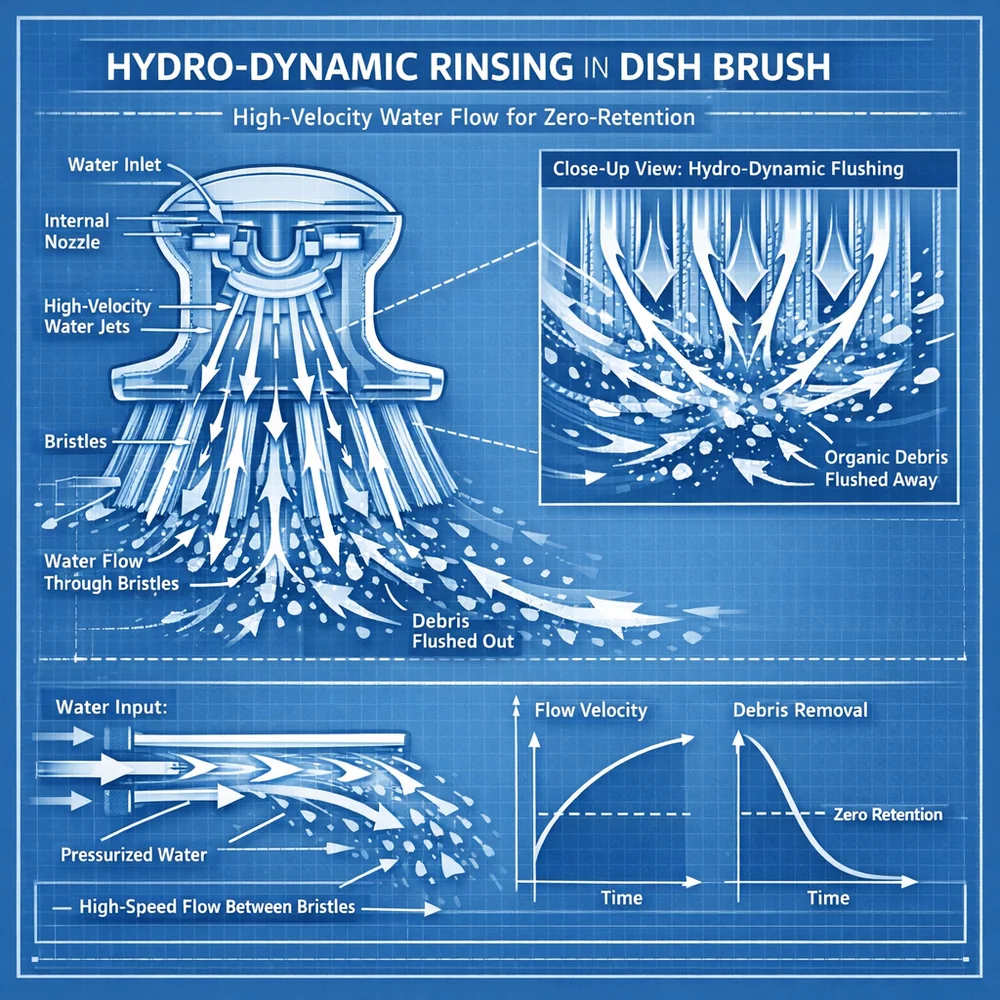
Given the sponge’s biofilm problem, silicone scrubbers have become a popular alternative. These tools are typically molded from food-grade silicone into a disc with thousands of flexible fingers. The critical difference: silicone doesn’t absorb water at all. Moisture sits on the surface and evaporates rapidly rather than soaking into internal pores.
Without a permanent wet zone, bacteria can’t establish the stable colonies that characterize sponge biofilms.
The flexible silicone bristles provide good surface contact for removing light oils from glassware and smooth dishes. However, they lack the scraping power needed for burnt-on residue or heavy proteins on cast iron. Any bacteria that do land on the silicone surface are easily dislodged because silicone has low surface energy. Heat resistance up to 230 degrees Celsius means you can run silicone scrubbers through the dishwasher’s sanitize cycle regularly.
The tradeoff is that silicone isn’t absorbent, so you need to apply soap more frequently during use rather than having it stored in the tool. Consider silicone scrubbers for everyday dishes and save tougher tools for heavy-duty work.
Key Insight: Silicone’s non-porous, hydrophobic surface prevents the formation of internal biofilms and allows for rapid desiccation between uses. Its heat resistance facilitates clinical-grade thermal sanitization, though its low absorbency requires a more disciplined soap application strategy.
Sanitizing Wooden Dish Brushes
Wooden dish brushes offer traditional durability and effective scrubbing power from stiff natural bristles. They’re particularly good for heavy-duty work because the bristles don’t melt or deform under pressure like cheap synthetics. However, both the wood body and the dense bristle bundles are susceptible to mold growth if they stay damp.
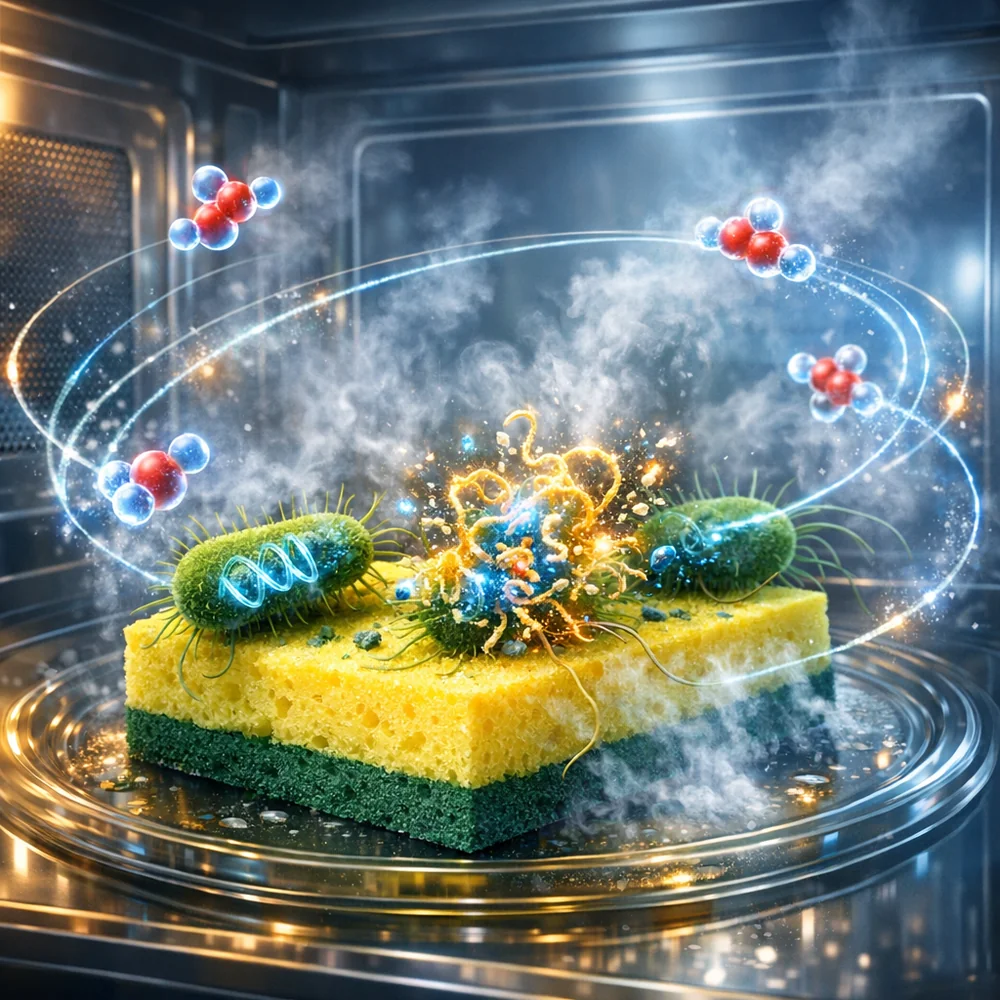
The most effective sanitization method for natural brushes is boiling.
Submerge the bristle end in boiling water for three to five minutes. The high thermal energy denatures bacterial proteins and kills organisms trapped deep at the base of the bristle clumps. Be careful with duration: prolonged boiling can cause wooden handles to expand, crack, or warp. After boiling, move the brush immediately to a well-ventilated spot and hang it with bristles facing down so gravity helps drainage.
This chemical-free sanitization respects the material while achieving high-level hygiene. Regular boiling significantly extends the useful life of a wooden brush while keeping it safe for food-contact surfaces.
Key Insight: Periodic boiling provides high-level thermal sanitization for natural fiber dish brushes, eliminating microbial reservoirs without harsh chemicals. Hanging the brush “bristles-down” after boiling utilizes gravity to facilitate rapid desiccation and protect the wooden block from structural rot.
Tampico and Union Fibers: Natural Bristle Options
With sanitization covered, let’s talk bristle materials. Tampico fiber comes from the Agave plant and has an interesting property: it’s stiff in cold water but softens in hot water. This thermal adaptability means a single brush can handle different cleaning tasks depending on water temperature. Stiff for scrubbing, softer for more delicate work.
Union fiber is a blend of tampico and palmyra that stays significantly stiffer.
This makes Union the superior choice for removing burnt-on food from cast iron and other heavy cookware. Both natural fibers outlast cheap synthetic alternatives because they don’t melt or lose shape. The downside of natural origin is that these fibers can provide a carbon source for bacterial growth, which is why the air-drying protocol becomes even more critical.
One environmental advantage: natural fiber fragments are fully biodegradable. As any brush wears down, tiny bristle fragments inevitably break off. With natural fibers, these reintegrate harmlessly into the environment rather than becoming microplastic pollution.
Key Insight: Natural fibers like Tampico and Union offer unique thermal adaptability and superior abrasive strength for pot restoration. Their structural integrity outlasts most synthetics, though their biological origin necessitates a strict air-drying protocol to prevent fungal colonization.
Horsehair for Delicate Glassware
Cleaning narrow-necked carafes and wine decanters requires something much softer than typical dish brushes. Horsehair is the premier natural fiber for these applications because of its natural taper and flexibility. Each hair has microscopic scales that provide surface area for wiping without being abrasive.
Horsehair won’t scratch even thin crystal or delicate glass.
The mechanical design typically features a wire core with dense horsehair bristles that reach into every curve of a carafe. For removing light mineral deposits from fine crystal, horsehair is the safest choice that protects the integrity of valuable glassware. Since horsehair is a natural protein fiber, it can be damaged by high-heat boiling. Instead, sanitize horsehair brushes with a warm-water soak in hydrogen peroxide.
After use, shake the brush thoroughly to remove excess water. If horsehair loses its loft over time, washing with mild shampoo restores its natural properties. A well-maintained horsehair bottle brush is a precision instrument for high-value kitchenware.
Key Insight: Horsehair bottle brushes provide a non-abrasive, high-surface-area “wipe” that is safe for precision glassware. Their protein-based fibers require pH-neutral sanitization and careful moisture management to maintain their unique flexibility and cleaning properties.
Store Bristles Down
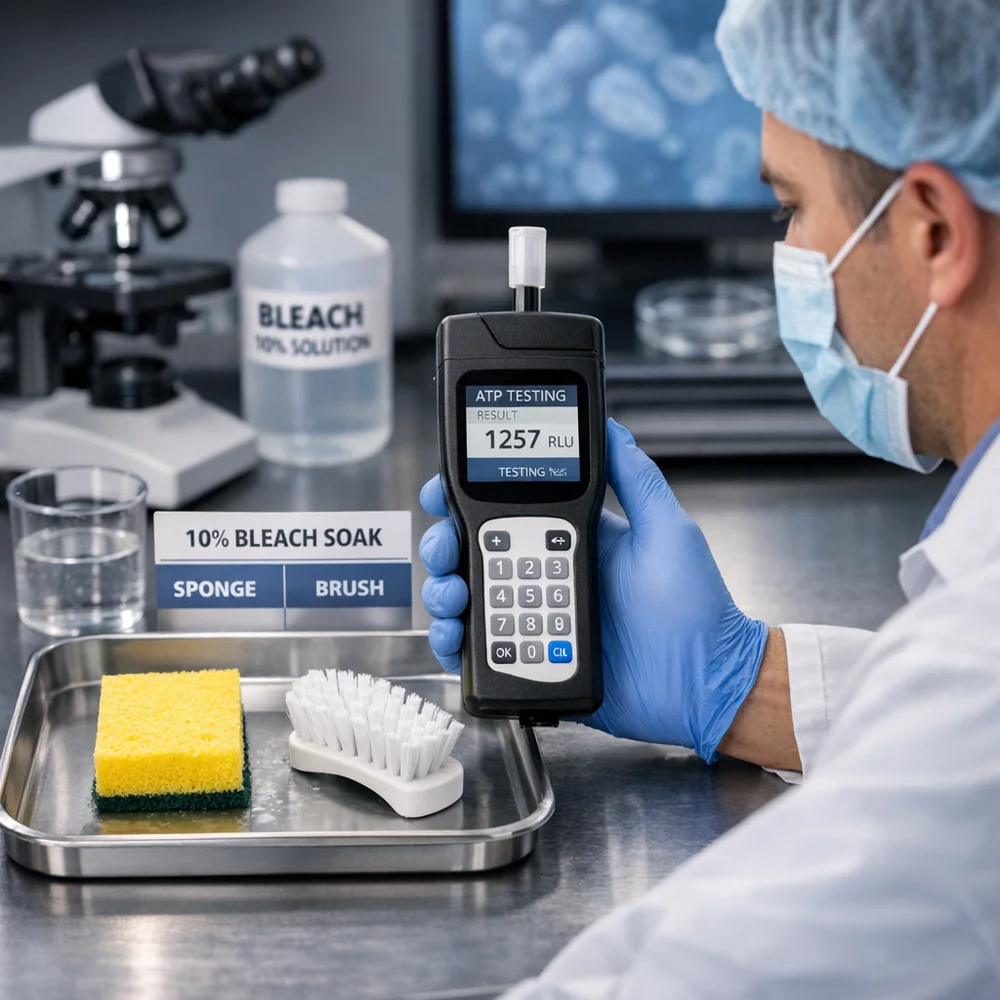
The connection point where bristles enter the handle is the most vulnerable area of any dish brush. This zone stays almost perpetually damp because water gets pulled into the crevices by capillary action. Food particles and soap residue also accumulate in these spaces. The result is a hidden breeding ground for bacteria and mold.
Preventing this colonization requires proper storage orientation.
Brushes should always be stored with bristles facing down. This allows water to drain away from the handle rather than pooling inside the bristle block. If you have a wooden handle, this orientation is especially critical because wood absorbs water and can rot from the inside. Plastic handles resist rot but can still host biofilms in the crevices.
Applying a food-safe mineral oil to wooden handles creates a water barrier that prevents moisture penetration. If you see visible mold growing in or around the handle, the brush needs immediate replacement.
Key Insight: Capillary action pulls moisture and organic matter into the brush’s “block” zone, facilitating mold growth at the bristle attachment point. Utilizing vertical, bristles-down storage and applying hydrophobic coatings to wooden handles effectively suppresses this localized colonization.
When to Replace Your Tools
Every cleaning tool reaches a point where it can’t be sanitized back to safe condition. Knowing when to retire a tool is crucial for food safety. Continuing to use a dead sponge or splayed brush is like using a dull knife: more effort for worse results, plus increased contamination risk.
Sponges should be replaced every one to two weeks regardless of appearance.
The internal biofilm formation is invisible but inevitable in any porous material. If a sponge develops a sour odor, it’s already past its safe limit. For those who use sponges for heavy scrubbing, physical breakdown happens even faster as the material tears and creates new bacterial niches. Dish brushes have significantly longer lifespans, typically three to six months. The primary indicator for brush replacement is bristle splaying.
When bristles are permanently bent outward, they can’t reach into corners or provide consistent scrubbing force. Any visible mold anywhere on the brush should trigger immediate replacement. Treating these tools as consumable assets with planned replacement schedules is a professional hygiene standard.
Key Insight: Tool fatigue represents a significant hygiene liability in the kitchen. Replacing sponges bi-weekly and brushes when bristles begin to splay ensures a “cleanliness baseline” is maintained and prevents the use of compromised cleaning assets.
The Microplastic Problem
A growing concern with synthetic cleaning tools is the environmental impact of microplastic shedding. Most common sponges have a scrubby side made from non-woven nylon. Every time you scrub, mechanical abrasion breaks off microscopic plastic fragments. These particles go down the drain and eventually into waterways.
A single synthetic sponge can lose up to twenty percent of its mass over its lifetime.
Transitioning to natural fiber brushes eliminates this pollution source entirely. Natural fibers biodegrade harmlessly when fragments break off. If you prefer synthetic tools, choosing high-density monofilament brushes reduces shedding compared to non-woven pads. Using pH-neutral cleaners also helps by slowing chemical degradation of the polymer material.
The shift toward natural materials in the kitchen mirrors broader zero-waste laundry routines. Every cleaning choice has downstream environmental effects worth considering.
Key Insight: Mechanical abrasion of non-woven synthetic scrubbers releases millions of non-biodegradable microplastic fragments into the wastewater stream. Transitioning to natural-fiber brushes eliminates this environmental pollutant while maintaining equivalent scrubbing power.
Cleaning Cast Iron with the Right Tool
Cast iron cookware presents a specific cleaning challenge. Soft sponges are often ineffective against carbonized food residue. Metal scrapers and chainmail can be too aggressive for daily use. The ideal tool for cast iron is a stiff natural fiber brush.
Natural bristles provide enough mechanical force to remove stuck particles without gouging the seasoning layer.
When used with hot water, natural fibers soften slightly for a thorough but gentle clean that preserves the polymerized oil surface. Because the brush is non-porous unlike a sponge, it won’t absorb fats that could go rancid. After cleaning cast iron, wash the brush with lipid-emulsifying soap to prevent grease buildup on the bristles themselves.
The combination of appropriate stiffness and proper after-care makes natural bristle brushes the superior partner for cast iron maintenance. By avoiding the absorptive trap of sponges, you also prevent cross-contamination between delicate glassware and heavy cookware.
Key Insight: Cast iron maintenance requires stiff, non-absorptive bristles that physically dislodge carbonized residues without gouging the polymerized seasoning. Natural-fiber brushes provide the optimal balance of mechanical force and surface safety for seasoned metal.
Conclusion
The choice between sponges and brushes is really about understanding porosity and moisture. Cellulose sponges create ideal conditions for bacterial biofilms because their internal pore networks stay perpetually damp. Brushes allow air circulation and faster drying, which suppresses microbial growth. Silicone scrubbers eliminate the internal absorption problem entirely.
For natural fiber brushes, proper care extends their lifespan: boil periodically for sanitization, store bristles-down for drainage, and oil wooden handles to prevent water absorption. Replace sponges every one to two weeks, brushes when bristles splay. Natural fibers like tampico and union provide excellent scrubbing power without the microplastic pollution of synthetic alternatives.
Match your tools to your tasks: horsehair for delicate crystal, stiff union fiber for cast iron, silicone for everyday dishes. A clean dish starts with clean tools, and understanding the microbiology of your cleaning implements is the foundation of kitchen food safety.
References
- Cardinale, M., et al. (2017).
“Microbiome Analysis and Confocal Microscopy of Used Kitchen Sponges.” Scientific Reports. 2. International Fabric Institute.
(2014). “The Engineering of Cleaning Implement Surfaces: Porosity and Biofilm Suppression.” IFI Technical Bulletin. 882.
1-15. 3. Smith, J.
A., et al. (2012). “Effectiveness of Home Sanitization Methods for Dishbrushes and Sponges.” Journal of Environmental Health.
- World Health Organization (WHO). (2019).
“Food Safety in the Kitchen: Managing the Cross-Contamination of Cleaning Tools.” WHO Technical Guidance. 5. U.S. Environmental Protection Agency (EPA).
(2020). “Microplastics and the Domestic Wastewater Stream: The Impact of Synthetic Cleaning Abrasives.” EPA Technical Bulletin.