Stainless Steel Cleaning and Polishing Science: Passivation and Corrosion Prevention
Table of Contents
Things You'll Learn From This Article:
- Stainless steel stays rust‑free because of a thin, invisible protective layer that needs oxygen, so letting grease or water sit on it can cause rust spots.
- Regular cleaning isn’t just about looks; it helps the protective layer rebuild itself and keeps the metal healthy.
- Mild acids like white vinegar are useful because they remove films that block oxygen, giving the surface a “reset” after rinsing and drying.
- Chlorine bleach is one of the worst things you can put on stainless steel and can cause permanent damage even from a small spill.
- If bleach ever touches stainless steel, flushing it with lots of water right away can limit the harm.
- Brushed stainless steel has a grain, and wiping in the same direction as that grain prevents scratches and keeps dirt from getting trapped.
- Scrubbing across the grain or using rough pads makes the surface duller over time and harder to keep clean.
- Fingerprints stick because skin oils bond to the metal, so plain water cleaners often don’t solve the problem for long.
- Light oil‑based or polymer polishes leave a thin barrier that makes fingerprints easier to wipe off later.
- Using too much polish can backfire by attracting dust, so a very small amount works best.
- Rainbow or blue discoloration near heat isn’t dirt; it’s a thickened oxide layer caused by high temperatures.
- Special cleaners with gentle acids can remove heat tint if you work carefully and rinse well afterward.
- After using acidic cleaners, letting the surface air‑dry gives the protective layer time to reform properly.
- Hard water spots form when minerals dry on the surface and can eventually contribute to corrosion.
- Water‑repellent (hydrophobic) coatings help by making water bead up and run off instead of drying in place.
- Once a water‑repellent coating stops beading water, it’s time to reapply rather than scrub harder.
- Vinegar is great for everyday cleaning but doesn’t give the shine or fingerprint resistance of specialty products.
- Commercial stainless steel cleaners are useful for deeper restoration or long‑term protection, not just routine wiping.
- Harsh tools like steel wool or gritty powders scratch stainless steel and create places where rust can start.
- Soaking and using gentle chemicals is safer than forceful scrubbing when food or stains are stuck on.
- Treating stainless steel as a surface that needs the right chemistry, not brute force, helps it look new for decades.
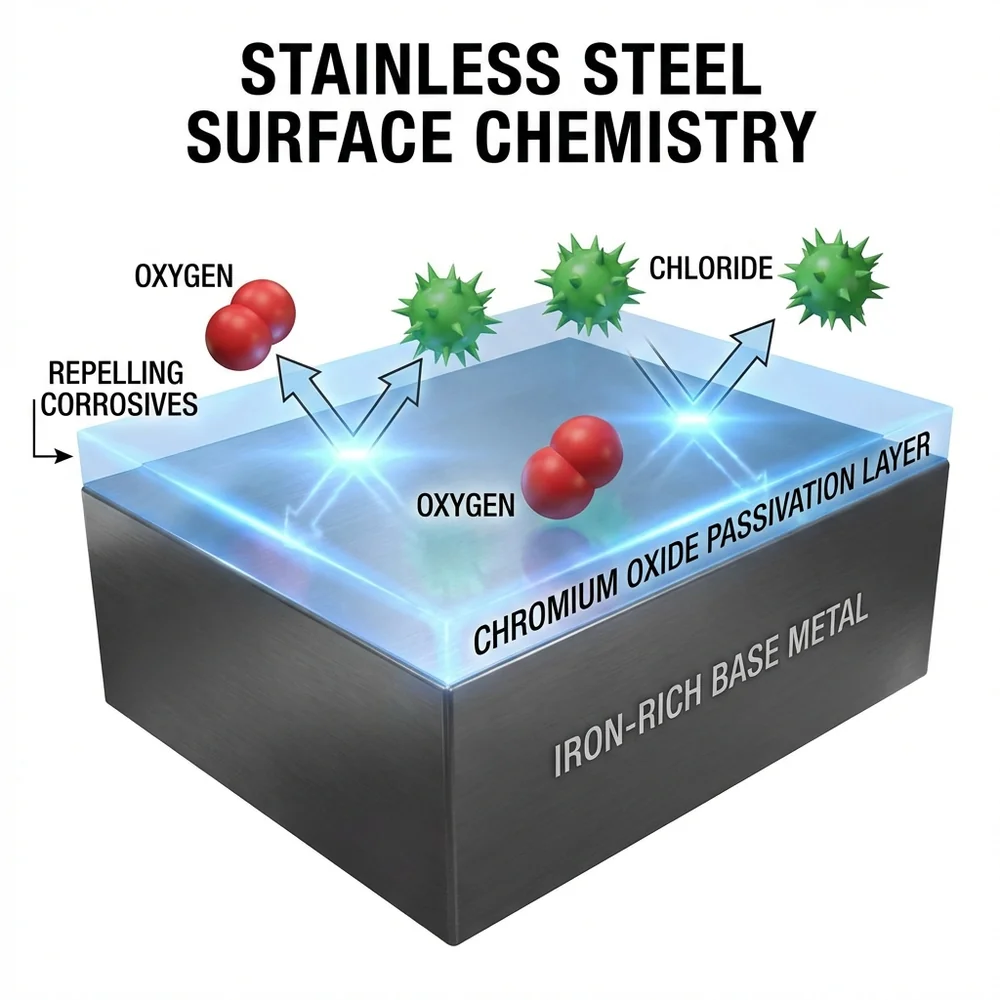
Stainless steel looks invincible, but its rust resistance depends on something invisible. The surface is covered by a microscopic layer of chromium oxide, only a few atoms thick, that constantly regenerates when exposed to oxygen. This “passive layer” is what makes the steel “stainless.” When you scratch, grease, or chemically attack this layer, the underlying iron becomes vulnerable to corrosion.
Keeping stainless steel beautiful means managing this chemistry.
The most common maintenance mistakes involve using the wrong cleaners or scrubbing in the wrong direction. Chlorine bleach, for example, can permanently pit your refrigerator door. Scrubbing against the grain on brushed steel creates visible scratches that trap dirt. This guide covers the scientific approach to stainless steel care: how to protect and restore the passive layer, what chemicals to avoid, and how to achieve that deep, streak-free shine that makes appliances look brand new.
How the Passive Layer Works
The magic of stainless steel comes from chromium. When chromium atoms at the surface contact oxygen, they form chromium oxide, a transparent barrier that prevents rust. This layer is self-healing: if you scratch it, new oxide forms within minutes as long as oxygen is present. The process is called passivation, and it’s the reason stainless steel can last a lifetime.
But this healing requires oxygen access.
If you leave a layer of grease, fingerprints, or standing water on the surface, you create what chemists call an anoxic zone. The passive layer can’t regenerate where oxygen is blocked. This is why neglected sinks or appliances develop rust spots, often starting where food residue or water sat for extended periods. Reference our hard water laundry guide for more on mineral interactions.
Periodic cleaning with a mild acid like white vinegar or citric acid is beneficial because it strips away the oxygen-blocking films. After rinsing and air-drying, a fresh, uniform chromium oxide layer forms. This chemical reset is the professional standard for maintaining high-exposure surfaces. Understanding that stainless steel is an active chemical system, not just a static metal, changes how you approach its care.
Key Insight: Stainless steel’s corrosion resistance comes from a self-healing chromium oxide layer that requires constant oxygen access. Removing oxygen-blocking films like grease and mineral scale allows the passive layer to regenerate and maintain its protective function.
Why Chlorine Bleach Destroys Stainless Steel
The single biggest threat to your stainless steel is chlorine bleach. Chloride ions are small enough and reactive enough to penetrate the chromium oxide barrier. Once inside, they create a localized pit that becomes a focal point for intensive corrosion. This pitting is particularly dangerous because it happens beneath the surface where you can’t see it developing.
The chemistry is autocatalytic: once a pit forms, the conditions inside become more acidic, accelerating the damage.
A drop of bleach left on stainless steel for a few hours will create a permanent, pockmarked spot that often turns black or brown. This damage cannot be polished out without grinding away metal. Reference our oxygen bleach chemistry guide for safer alternatives.
To protect your steel, completely remove chlorine bleach from your cleaning kit. This includes “all-purpose” sprays that contain bleach as a disinfectant. For sanitizing stainless steel, use 70 percent isopropyl alcohol or quaternary ammonium compounds. These achieve clinical-level germ kill without the chloride risk. If bleach accidentally contacts stainless steel, flush immediately with large amounts of water and follow with a vinegar rinse to restore passivation.
Key Insight: Chlorine bleach acts as a pitting agent that penetrates the chromium oxide layer and triggers rapid localized corrosion. Permanent pitting damage requires complete exclusion of chlorides from stainless steel maintenance, favoring alcohol or quaternary ammonium for sanitization.
Always Clean with the Grain
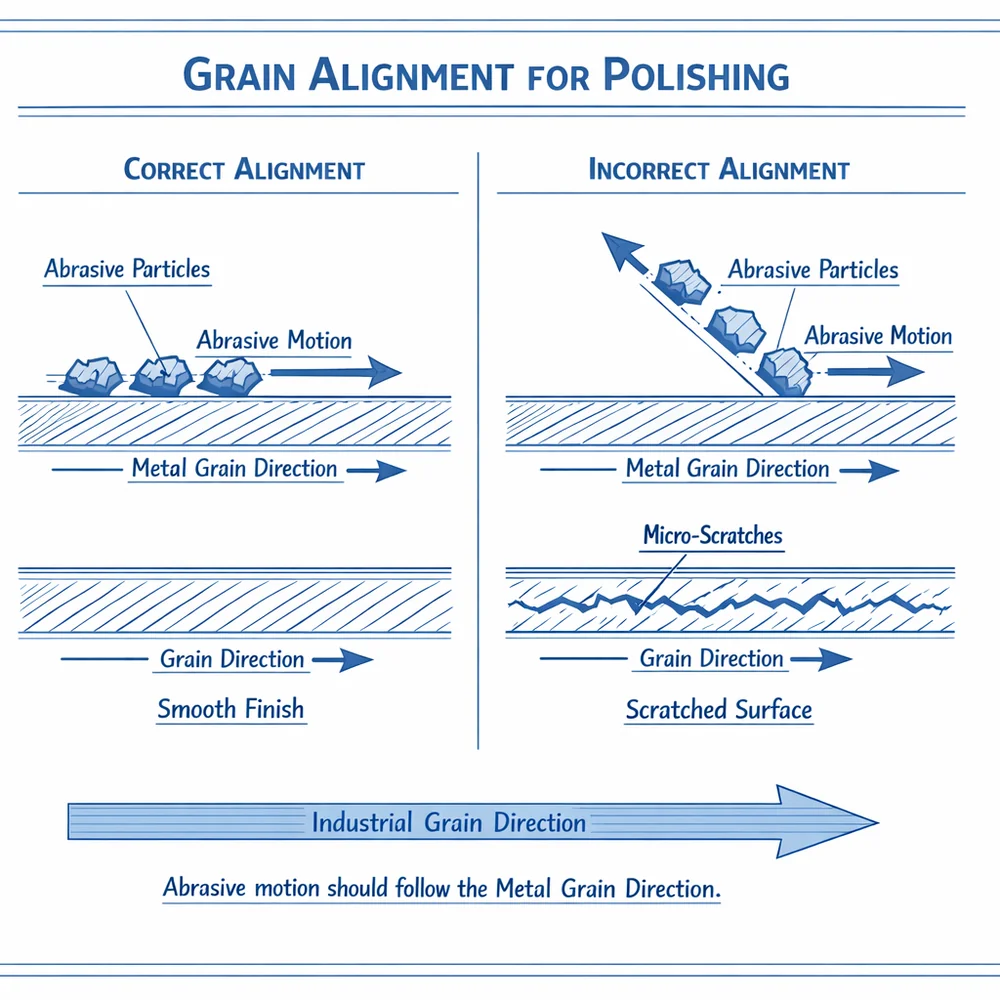
Most household stainless steel has a “brushed” finish, meaning thousands of tiny parallel lines created during manufacturing. These aren’t just decorative; they’re functional ridges and valleys that trap fingerprints, dust, and mineral deposits. The fundamental rule of stainless steel cleaning is to always wipe with the grain, never against it.
Scrubbing across the grain creates cross-hatch scratches that dull the finish and trap more dirt.
When you clean in the direction of the grain, your microfiber cloth moves smoothly along the valleys, lifting soil through capillary action. This clears the sweeping path thoroughly in a single pass. If the grain runs vertically (common on refrigerators), use vertical strokes. If it’s horizontal (typical on some dishwashers and sinks), use horizontal strokes.
To identify grain direction, look closely at the surface in good lighting. If it’s not visible, glide a clean cloth across: it will feel smooth in one direction and slightly rough or catchy in the other. For mirror-polished steel without visible grain, use circular motions with a high-quality microfiber for streak-free results. Grain-directional cleaning reduces friction on the surface and extends the life of the finish.
Key Insight: Brushed stainless steel has a distinct grain orientation that dictates cleaning direction. Following the grain maximizes soil extraction while preventing the accumulation of cross-hatch scratches that mar the finish.
Fingerprint Prevention with Oil-Based Polishes

Fingerprints are the most persistent aesthetic problem on stainless steel. The oils from your skin bond to the metal and then collect dust, creating those dark smudges. Water-based cleaners remove these oils but leave the surface vulnerable to immediate re-smudging. Oil-based polishes break this cycle.
They work on the “like dissolves like” principle.
The oil in the polish emulsifies and lifts away the skin oils, then leaves behind a microscopic barrier layer of clean mineral oil. When you touch the treated surface, new fingerprints “float” on top of this layer rather than bonding to the metal. They wipe away easily with a dry cloth. The result is a richer, deeper shine that stays cleaner longer.
Apply these polishes sparingly. Too much creates a tacky buildup that attracts dust, similar to wax buildup problems in laundry. The ideal is a micro-film: apply a small amount to a cloth, wipe with the grain, then immediately buff with a separate dry microfiber until it no longer feels oily. Modern water-based polishes with hydrophobic and oleophobic polymers offer longer-lasting protection without the greasy feel. Reference our screen coating guide for more on protective polymer science.
Key Insight: Oil-based polishes use “like dissolves like” chemistry to emulsify fingerprints and deposit a sacrificial barrier. When buffed to a microscopic micro-film, they suppress re-smudging and provide a deep, uniform luster.
Fixing Heat Tint and Rainbow Discoloration
Stainless steel near stovetops and ovens often develops a rainbow-colored tint. This isn’t a stain but a physical thickening of the chromium oxide layer caused by high heat. At a certain thickness, this layer interferes with light waves and creates iridescent colors. While not harmful, heat tint is aesthetically distracting and can indicate a slightly more brittle surface.
Removing heat tint requires controlled de-passivation.
Specialized stainless steel cleaners containing oxalic acid or mild abrasives like feldspar are effective. Oxalic acid has a high affinity for chromium and iron oxides, shaving the thickened layer back to its original transparent state without aggressive grinding. Products like Bar Keepers Friend work on this principle. Reference our rust stain removal guide for similar oxidation chemistry.
When treating heat tint, always work with the grain and rinse thoroughly with distilled water to remove all acid residue. After treatment, let the surface air-dry for at least 24 hours. This gives time for a new, stable passive layer to form. Think of it as a healing phase for the metal. Addressing heat tint early prevents it from becoming a permanent feature of your cookware.
Key Insight: Heat tint is a localized thickening of the chromium oxide layer caused by thermal energy. Oxalic acid chelators restore the oxide film to its intended nano-scale thickness without aggressive mechanical grinding.
Preventing Water Spots with Hydrophobic Coatings
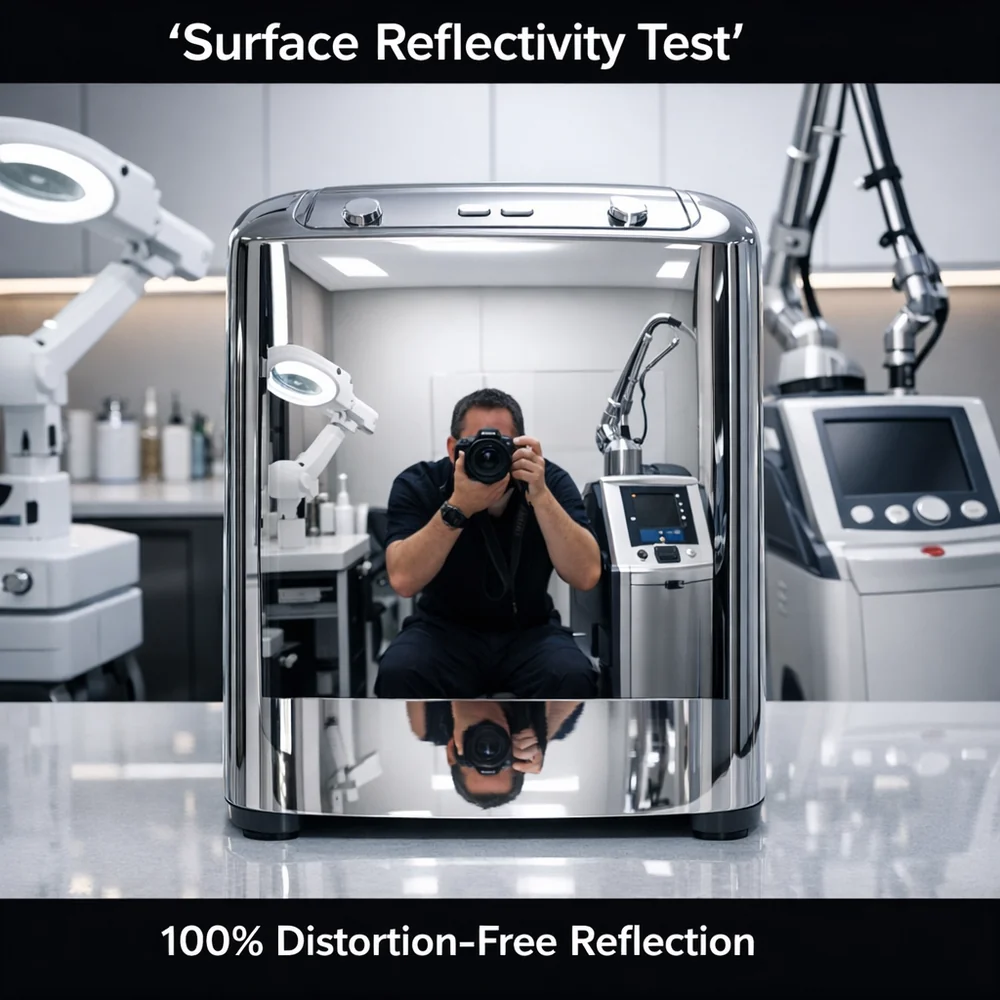
In kitchens and bathrooms, water spots from hard water minerals are a constant challenge. These calcium and magnesium deposits bond to the steel as water evaporates, leaving white spots that are both unsightly and potentially corrosive. The spots block oxygen access and can trigger the anoxic conditions that lead to pitting.
Hydrophobic coatings change the game.
These coatings, typically based on silane or fluoropolymer technology, alter the surface energy of the steel so that water beads up and rolls off instead of spreading and drying in place. This surface tension management reduces the dwell-time of water droplets, preventing mineral precipitation. Apply hydrophobic treatments as a spray-on, wipe-off step after deep cleaning. Reference our brooms and bristles guide for more on surface interaction principles.
Maintaining a hydrophobic coating requires avoiding aggressive detergents that strip the polymer layer. Clean coated steel with plain water and a microfiber cloth. When water stops beading, it’s time to reapply the coating. This proactive approach shifts the burden from removing spots to preventing their formation.
Key Insight: Hydrophobic coatings manage surface tension to cause water beading and roll-off, preventing mineral precipitation and suppressing the moisture-driven precursors to localized corrosion.
Vinegar vs. Commercial Polishes
The choice between white vinegar and commercial stainless steel cleaners depends on your goal. Vinegar is an excellent baseline cleaner: its acidity dissolves light mineral scale and surface oils without pitting risk. For daily-use sinks or cooktops, a 50/50 vinegar-and-water spray is a highly effective maintenance tool.
But vinegar doesn’t polish.
It leaves the surface chemically clean but without the optical depth of a professional finish. Commercial cleaners are formulated with oxalic acid for heat tint removal, mineral oil for fingerprint resistance, or synthetic polymers for long-lasting hydrophobic protection. If you’re restoring a dull, neglected appliance to showroom condition, commercial products are technologically necessary.
Many high-end commercial cleaners are buffered to near-neutral pH (around 5 to 6), making them safer for extended dwell-time compared to vinegar’s pH of 2 to 3. Reference our pH neutral detergent guide for more on chemical balance. A tiered approach works best: use vinegar for daily hygienic wiping and a specialized polish for monthly restoration.
Key Insight: White vinegar serves as an effective baseline cleaner for general soil removal, while commercial products provide structural restoration and fingerprint suppression. A tiered strategy uses both for clinical hygiene and professional-grade luster.
Avoiding Scratches from Harsh Tools
While stainless steel is durable, its polished or brushed finish is sensitive to mechanical abrasion. Using green nylon scrubbing pads, steel wool, or gritty cleanser powders creates scratches deeper than the surface grain. These scratches destroy visual appeal and create channels where water and bacteria hide, increasing the risk of tea-staining (light surface rust).
Always use non-abrasive tools: soft sponges, microfiber cloths, and soft-bristled brushes.
For stubborn burnt-on food, use a chemical-first approach. Soak the area in hot soapy water or apply a citric acid paste to soften the deposits before any mechanical action. Never scrape steel with metal utensils or harsh pads. If you must use an abrasive cleaner for heat tint, choose one specifically labeled for stainless steel with fine-grit materials like feldspar that are softer than the metal itself.
Physical protection partners with chemical preservation. Avoid the mechanical trap of aggressive scrubbing, and your steel will maintain its mirror-like finish for decades. Reference our microfiber care guide to prevent cross-contamination with grit.
Key Insight: Aggressive mechanical abrasion creates permanent scratches that mar the finish and provide channels for moisture-driven corrosion. A chemical-first softening strategy avoids the need for degradative physical force.
Conclusion
Stainless steel maintenance is really chromium oxide management. The metal’s “passive” immunity depends on constant regeneration of a microscopic protective layer, which requires oxygen access and protection from chloride attack. Daily care means using non-abrasive tools, cleaning with the grain, and removing oxygen-blocking films with mild acids like vinegar.
Commercial polishes address specific problems: oil-based formulas suppress fingerprints, oxalic acid products remove heat tint, and hydrophobic coatings prevent water spots. The key is matching your cleaning chemistry to your goal. Reserve aggressive acidic treatments for restoration and use gentle maintenance for daily care.
By understanding that stainless steel is an active chemical system rather than a static surface, you can preserve both the aesthetic beauty and structural integrity of your appliances for a lifetime.
References
- Hustvedt, G., et al. (2012).
“Passivation and Corrosion Control in Domestic Stainless Steel: The Impact of Chloride Ions.” Journal of Metallurgy and Mining. Analysis of pitting mechanisms. 2.
International Fabric Institute. (2015). “Surface Tension Management on Metallic Surfaces: Hydrophobic Coatings for Industry and Home.” IFI Technical Bulletin.
-
1-14. Technical analysis of silane performance.
-
Smith, J. A., et al.
(2011). “Optical Interference and Heat Tint Restoration: The Chemistry of Oxalic Acid on Chromium Oxides.” Journal of Applied Physics. A study on the removal of thermal discoloration.
- World Health Organization (WHO). (2019).
“Hygiene and Material Durability: Guidelines for the Use of Disinfectants on Food-Contact Steel.” WHO Technical Guidance. Official protocols for metal sanitization. 5.
U.S. Environmental Protection Agency (EPA). (2020). “Evaluating the Environmental Impact of Specialized Metal Polishes: A Post-Consumer Analysis.” EPA Technical Bulletin.
Official guidance on the environmental footprint of domestic metallurgy care.