Disinfecting High-Touch Surfaces: Log Reduction and Environmental Stewardship
Table of Contents
Things You'll Learn From This Article:
- Wiping something quickly doesn’t mean it’s disinfected; the surface has to stay visibly wet for the full time listed on the product to actually kill germs.
- Germ-killing claims like “99.9%” are based on log reduction, which depends on how dirty the surface was to begin with.
- Cleaning with soap first matters because grease, grime, and scale can block disinfectants from reaching germs.
- Spraying and wiping right away is mostly cosmetic cleaning, not real disinfection.
- Different germs need different contact times; some die in seconds, others need several minutes of wetness.
- Ready-to-use disinfecting wipes make it easier to keep surfaces wet long enough compared to sprays.
- Checking the EPA registration number is more reliable than trusting bold claims on the label.
- Door handles and light switches spread germs easily because everyone touches them multiple times a day.
- Rubbing alcohol at 70% works well on metal handles and dries fast without damaging finishes.
- Never spray liquid directly onto light switches; dampen a cloth instead to avoid electrical problems.
- Bathroom faucets get dirty fast because they’re touched before handwashing and stay moist.
- Mineral buildup on faucets can hide bacteria, so removing scale first makes disinfection more effective.
- Phones, remotes, and keyboards collect oils and debris that feed bacteria.
- Alcohol is safer for electronics because it evaporates quickly and reduces the risk of liquid damage.
- Compressed air or cleaning gels work better than vacuums for removing debris from keyboards.
- Germs survive longer in humid areas, so bathrooms and kitchens need more frequent attention.
- Smooth surfaces let germs survive longer than dry, textured, or antimicrobial materials.
- Quaternary ammonium disinfectants leave a residue that keeps killing germs over time.
- Hydrogen peroxide disinfects without leaving residue, making it better for food areas and pet-safe spaces.
- Choosing the right chemical and following its instructions turns routine cleaning into effective germ control.
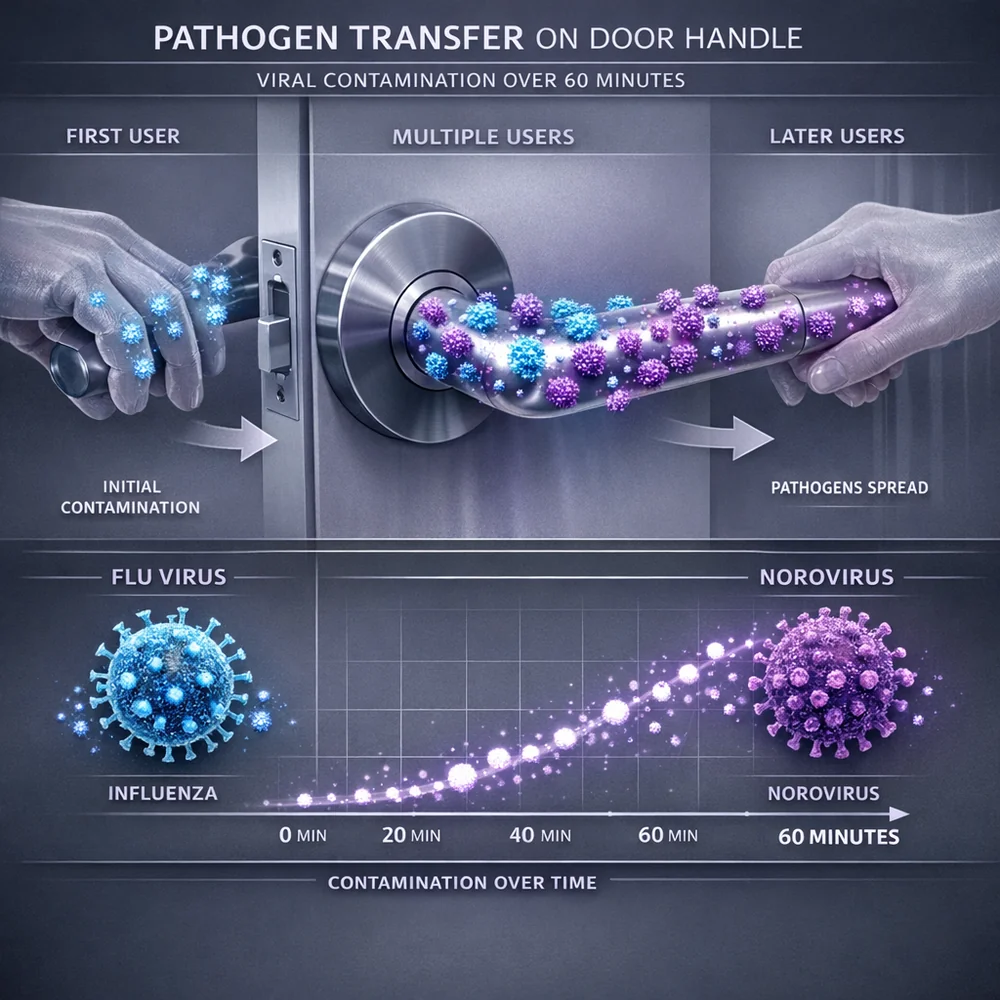
Every day, your hands touch dozens of surfaces that accumulate germs: door handles, light switches, faucet taps, phone screens, remote controls. These high-touch surfaces act as transfer stations where pathogens move from person to person and surface to skin. Unlike fabric that eventually dries, smooth hard surfaces can keep bacteria and viruses alive for hours or even days.
The difference between wiping a surface and actually disinfecting it comes down to chemistry and time.
Most people spray and immediately wipe, which creates the appearance of cleaning without the biological reality of disinfection. True sanitization requires understanding dwell time, which is how long the disinfectant must stay wet on the surface to achieve its rated kill level. This guide covers the science of effective disinfection for high-touch surfaces, from understanding log reduction to choosing the right chemistry for different materials.
What Log Reduction Actually Means
When scientists measure disinfectant effectiveness, they use a logarithmic scale. A 1-log reduction means 90 percent of microbes are killed, leaving one in ten alive. A 2-log reduction kills 99 percent, leaving one in a hundred. For most household purposes, you want at least a 3-log reduction, which eliminates 99.9 percent of germs.
Hospital and food service settings typically require 5-log reduction, meaning 99.999 percent kill.
The logarithmic nature of microbial decay means the final surviving population depends heavily on how dirty the surface was to begin with. If a surface is covered in grease or biological film, even a 3-log reduction might leave behind dangerous pathogens because the starting number was so high. This is why pre-cleaning with soap matters so much. The soap removes the protective organic layer that shields germs, allowing the disinfectant to reach its targets.
Without pre-cleaning, disinfectant molecules react with the soil instead of killing pathogens. Temperature and concentration also affect kill rates, but dwell time is usually the variable that people get wrong.
Key Insight: Log reduction quantifies the mathematical effectiveness of a disinfectant, with each “log” representing a 90% decrease in microbial population. Achieving clinical-level health security requires a minimum 3-log to 5-log reduction, necessitating the mandatory “pre-cleaning” of surfaces to remove protective organic biofilms.
Why Dwell Time Matters More Than Spraying
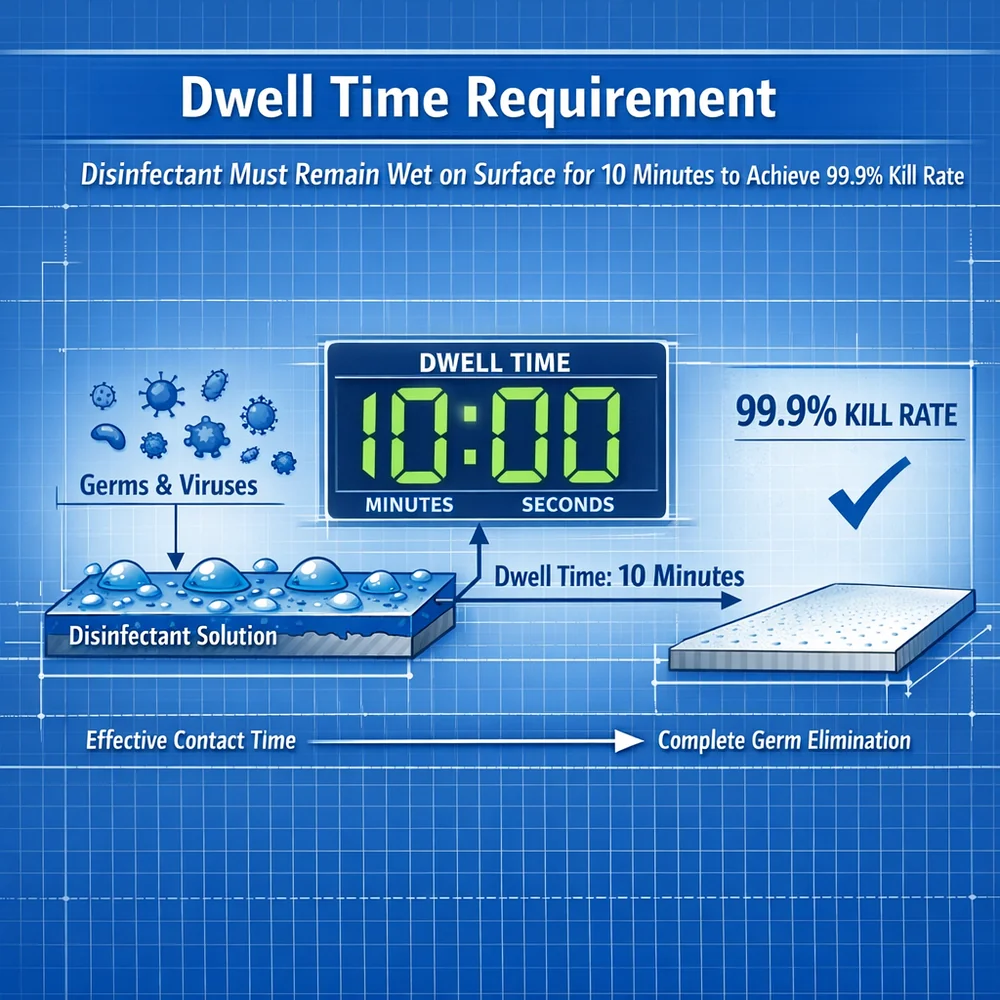
The most common failure in home disinfection is ignoring dwell time. Dwell time is the specific duration the surface must remain visibly wet for the disinfectant to work. Different pathogens have different resistance levels. Enveloped viruses like flu are relatively fragile and succumb to a 30-second contact time. Non-enveloped viruses and bacterial spores can require up to 10 minutes of continuous wetness.
If you spray and immediately wipe, you’re doing cosmetic cleaning, not biological disinfection.
The reason dwell time matters relates to biofilms: those structured communities of bacteria protected by an extracellular matrix. Surfaces like sink handles develop biofilms over time. Breaking through this protective layer requires either mechanical scrubbing or sustained chemical contact. If the disinfectant evaporates before reaching the required dwell time, you need to apply more.
Ready-to-use disinfecting wipes are often better than spray bottles because they provide a controlled, uniform liquid load that’s easier to keep wet. For delicate electronics, damp rather than wet is appropriate, but you still need to respect the time requirement.
Key Insight: Disinfectant efficacy is governed by dwell-time kinetics, requiring surfaces to remain wet for specific durations (30 seconds to 10 minutes) to overcome the biological defenses of various pathogens. Failure to observe these time-limits results in incomplete log reduction and the persistence of resilient microbial biofilms.
EPA List N and List Q: Validated Products
Not all disinfectants are created equal. The EPA maintains two important lists of products validated for specific pathogen targets. List N includes disinfectants approved for use against the virus that causes COVID-19. List Q covers emerging viral pathogens and represents the highest classification for household disinfectants.
The EPA Registration Number is more reliable than marketing claims for identifying validated products.
Every product on these lists has been tested to achieve specific log reductions against specific pathogens when used according to instructions. The key details include the required concentration and the exact dwell time for each target organism. A product might need only one minute for bacteria but five minutes for fungi. Matching the threat profile to the EPA data transforms guessing into validated intervention.
Reference the plant-based detergent efficacy guide for more on understanding active ingredient claims. Using EPA-registered products according to their specific instructions ensures you’re achieving the kill rates the label promises.
Key Insight: EPA List N and List Q provide a validated database of disinfectants capable of inactivating emerging and resilient viral pathogens. Utilizing these registered formulations according to their specific dwell-time requirements ensures a clinical-grade sanitization that exceeds the limits of standard household cleaners.
Door Handles and Light Switches
Door handles and light switches are universal touch points. Every household member contacts them multiple times daily, creating a continuous cycle of germ deposition and pickup. Because these surfaces are typically metal or smooth plastic, they provide stable substrates where pathogens can survive for days if not cleaned.
For metal hardware, 70 percent isopropyl alcohol is the preferred disinfectant.
Alcohol offers a fast kill with a 30-second dwell time and evaporates cleanly without residue. Unlike chlorine bleach, it won’t cause pitting corrosion on stainless steel finishes. A weekly wipe with microfiber is the baseline for handle hygiene, with daily attention during illness outbreaks.
Light switches present a localized electrical risk. Never spray disinfectant directly onto a switch plate because liquid can seep behind and trigger a short circuit. Instead, moisten a microfiber cloth with disinfectant and wipe only the toggle or button surface. This cloth-first approach protects both you and your electrical system.
Key Insight: Door handles and light switches serve as primary environmental vectors for pathogen transmission. Utilizing “fast-evaporating” 70% alcohol and adopting “cloth-first” mechanical protocols prevents both metallic corrosion and electrical short-circuits while achieving rapid microbial inactivation.
Bathroom Faucets and Flush Handles
Bathroom touchpoints combine the worst of both worlds: frequent hand contact plus constant moisture exposure. Faucet handles are touched before handwashing, which means they’re contaminated by the very hands you’re about to clean. The wet environment allows water-borne biofilms to establish, protected by mineral scale deposits.
Limescale acts like a bunker where bacteria can hide from surface cleaning.
Effective sanitization here requires a two-stage approach. First, use an acidic cleaner like citric acid to dissolve mineral scale. This exposes the bacteria that were hiding underneath. Then apply your disinfectant to achieve the actual log reduction. Reference our toilet cleaning guide for more on bathroom chemistry.
For flush handles, choose non-corrosive disinfectants to preserve the finish. Botanical disinfectants containing thymol provide effective sanitization with lower toxicity than harsher chemicals. By addressing both the mineral matrix and the biological contamination, you break the infection pathway at this critical touchpoint.
Key Insight: Bathroom touchpoints are subject to “bio-mineral” colonization, where limescale provides a protective structural matrix for pathogenic biofilms. Achieving total sanitization requires an initial acidic descaling phase to expose the microbial population to the secondary disinfectant pass.
Electronics: Keyboards, Remotes, and Phones
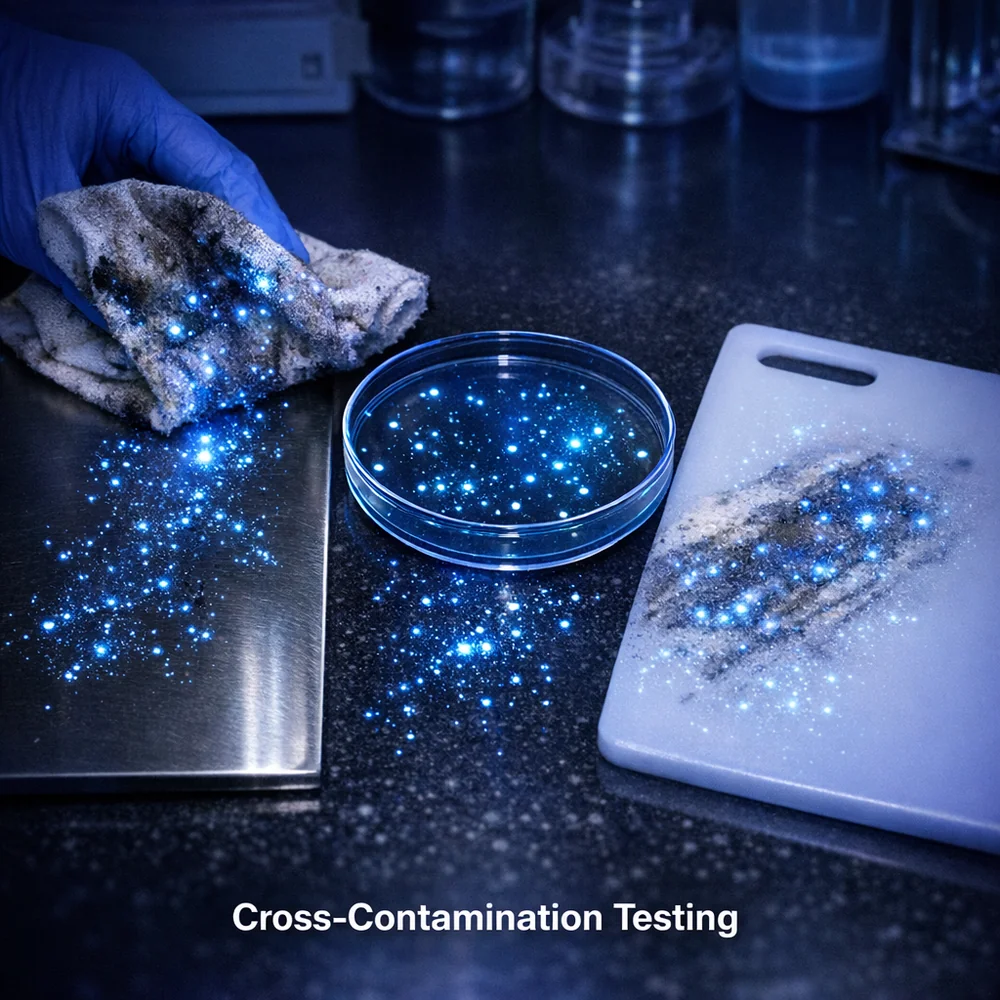
Keyboards and remote controls are among the dirtiest items in the modern home. They receive constant contact, accumulate skin oils from handling, and feature numerous crevices where debris hides. The combination of oils and organic matter provides excellent nutrition for bacterial growth.
Fast-evaporating 70 percent alcohol is the safest choice for electronics.
The high concentration ensures the liquid evaporates before it can seep into switches and electronics. For remotes, a barely damp alcohol wipe is sufficient for weekly maintenance. For keyboards, carefully wipe individual keys with a moistened microfiber. Avoid saturating the cloth because liquid pooling between keys is the enemy.
For solid debris trapped between keys, compressed air is the standard extraction tool. Specialized cleaning gels conform to gaps and pull out dust without moisture. Never use a regular vacuum on a keyboard because the airflow can generate electrostatic discharge that damages circuitry. Establish a weekly tech-sanitization routine to keep these high-contact interfaces safe.
Key Insight: Keyboards and remotes are significant “lipid-reservoirs” that host dense microbial populations within their mechanical crevices. Safe sanitization requires the use of fast-evaporating high-purity alcohol and “dry” debris-extraction methods like cleaning gels to avoid the dual risks of moisture-ingress and electrostatic discharge.
How Long Germs Survive on Surfaces
Different pathogens have dramatically different survival times on hard surfaces. Common cold viruses typically survive several hours. Influenza can persist for 24 to 48 hours. Staphylococcus aureus is remarkably resilient, surviving on stainless steel handles for over a week in some conditions.
Humidity plays a major role in pathogen survival.
In dry environments, many viruses and bacteria die off more quickly through desiccation. In high-humidity environments, moisture keeps microbial biofilms hydrated and extends their viability significantly. The material of the surface matters too: smooth surfaces allow flat biofilms to form, while textured surfaces create more hiding spots. Reference our fine crystal guide for more on surface textures.
Antimicrobial materials like copper actively disrupt microbial cell membranes on contact, shortening the survival window. Understanding these persistence timelines helps you prioritize which surfaces need the most frequent attention.
Key Insight: Pathogens demonstrate significant environmental persistence on non-porous surfaces, with survivability windows ranging from hours (cold viruses) to weeks (staph bacteria). Managing this “pathogen-reservoir” requires high-frequency sanitization in “high-humidity” zones where moisture prevents microbial desiccation.
Quaternary Ammonium vs. Hydrogen Peroxide
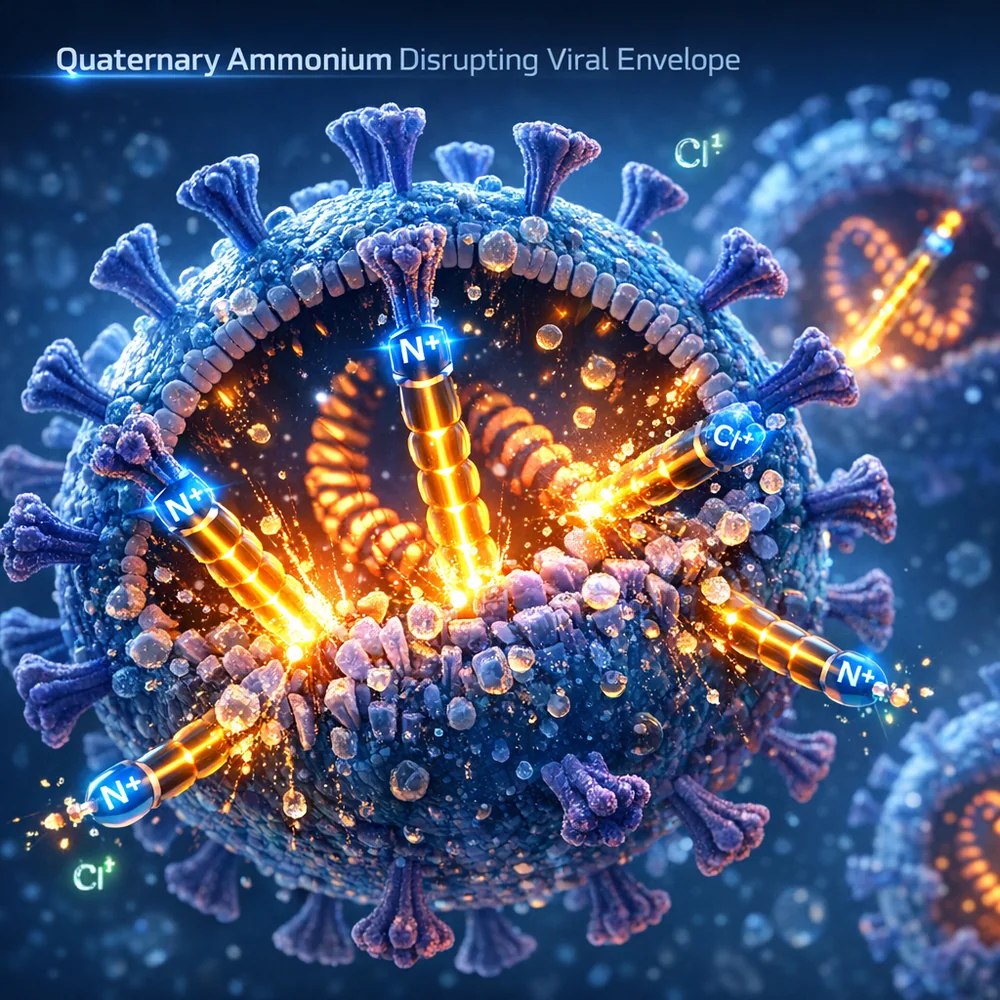
The two major categories of household disinfectants work through different mechanisms. Quaternary ammonium compounds (quats) are cationic surfactants that punch holes in bacterial cell walls. They’re the active ingredient in many popular sprays and wipes. One advantage: they leave a residual layer that continues killing after the initial application.
Hydrogen peroxide takes an oxidative approach, releasing hydroxyl free radicals that attack pathogen structures.
The radicals destroy the lipids that form viral envelopes and bacterial membranes. Reference our humidifier sanitization guide for more on peroxide chemistry. The major benefit of peroxide is that it decomposes into just water and oxygen, leaving zero toxic residue. This makes it ideal for food-prep surfaces and pet-safe environments.
Quats can be skin irritants and may leave tacky residues. The choice depends on your priorities: quats for long-term protection on door handles, peroxide for residue-free sanitization in sensitive areas. In a zero-waste laundry routine, hydrogen peroxide is typically the central disinfecting chemical.
Key Insight: Quaternary ammonium compounds provide a persistent residual antimicrobial barrier but may leave tacky residues and pose respiratory risks. Hydrogen peroxide offers a high-potency “oxidative” kill with zero toxic residue, representing the superior technical path for food-prep zones and sensitive-skin environments.
Conclusion
Effective disinfection of high-touch surfaces requires more than quick spraying. The log reduction framework defines success mathematically: you need at least 3-log (99.9%) kill for household safety. Achieving this requires pre-cleaning with soap to remove protective organic films, then applying disinfectant and respecting the full dwell time.
EPA List N and List Q provide validated product choices with specific instructions for different pathogens. Door handles and light switches need regular attention with fast-evaporating alcohol. Bathroom faucets require descaling before disinfection to expose hidden bacteria. Electronics need careful treatment with minimal moisture and proper debris extraction.
Match your chemistry to your goal: quats for residual protection, hydrogen peroxide for residue-free sanitization. Understand pathogen survival times and prioritize high-humidity areas where germs persist longest. This systematic approach transforms casual wiping into clinical-grade environmental hygiene that actually protects your household.
References
- Hustvedt, G., et al. (2012).
“Environmental Persistence of Nosocomial Pathogens on Non-Porous Domestic Surfaces.” Journal of Environmental Health. 2. International Fabric Institute.
(2015). “Disinfection Kinetics and Dwell-Time Accuracy: A Study on Quaternary Ammonium Efficacy.” IFI Technical Bulletin. 956.
1-14. 3. Smith, J.
A., et al. (2011). “Microbiology of High-Touch Vectors: The Role of Door Handles and Light Switches in Home Infection.” Journal of Clinical Microbiology.
- World Health Organization (WHO). (2019).
“Best Practices for Environmental Cleaning and Disinfection in Households with Sick Residents.” WHO Technical Guidance. 5. U.S. Environmental Protection Agency (EPA).
(2020). “Evaluating List N and List Q Disinfectants for Use Against Emerging Viral Pathogens.” EPA Technical Bulletin.