Cleaning and Sanitizing Humidifiers: Biofilm Kinetics and Mineral Management
Table of Contents
Things You'll Learn From This Article:
- That pink or orange slime in a humidifier tank is usually bacteria, not mold, and it can get blown straight into the air you breathe.
- Mineral buildup from tap water gives bacteria a place to stick and hide, so just rinsing with water doesn’t really clean the machine.
- Cleaning works best in two steps: first dissolve mineral scale with white vinegar, then kill bacteria with hydrogen peroxide.
- Vinegar is for removing hard, chalky deposits; it doesn’t fully sanitize on its own.
- Hydrogen peroxide is good for killing germs because it breaks down into water and oxygen and doesn’t leave a strong chemical residue.
- Ultrasonic humidifiers spray everything in the water into the air, including minerals and bacteria, which makes distilled water the safest choice.
- Evaporative humidifiers trap minerals in a wick filter, so keeping that filter clean, dry at times, and replaced when stiff or discolored is key.
- White dust on furniture is a sign that minerals from tap water are being aerosolized by an ultrasonic humidifier.
- Letting an evaporative humidifier run dry occasionally helps stop mold and bacteria by drying out the filter.
- UV-C features help kill germs in the water but don’t clean slime or scale stuck to the tank walls, so manual cleaning is still needed.
- Mineral scale can coat UV-C parts and block the light, which means they also need vinegar cleaning to stay effective.
- Keeping room humidity between about 30% and 50% makes it harder for bacteria and mold to grow, both inside and outside the machine.
- A musty smell often means either the humidifier is dirty or the room humidity is set too high.
- The ultrasonic transducer plate needs gentle cleaning with vinegar and a soft swab, not scraping, to keep mist output strong.
- Using distilled water reduces cleaning time, prevents scale, protects the machine, and lowers what gets released into your air.
Humidifiers are supposed to make your air healthier, but without proper cleaning they become incubators for some pretty nasty stuff. That standing water in the tank? It’s a perfect breeding ground for bacteria, mold, and mineral scale. The combination of warmth, moisture, and dissolved minerals creates exactly what microorganisms need to thrive.
The worst part is when the humidifier sprays those contaminants directly into the air you breathe.
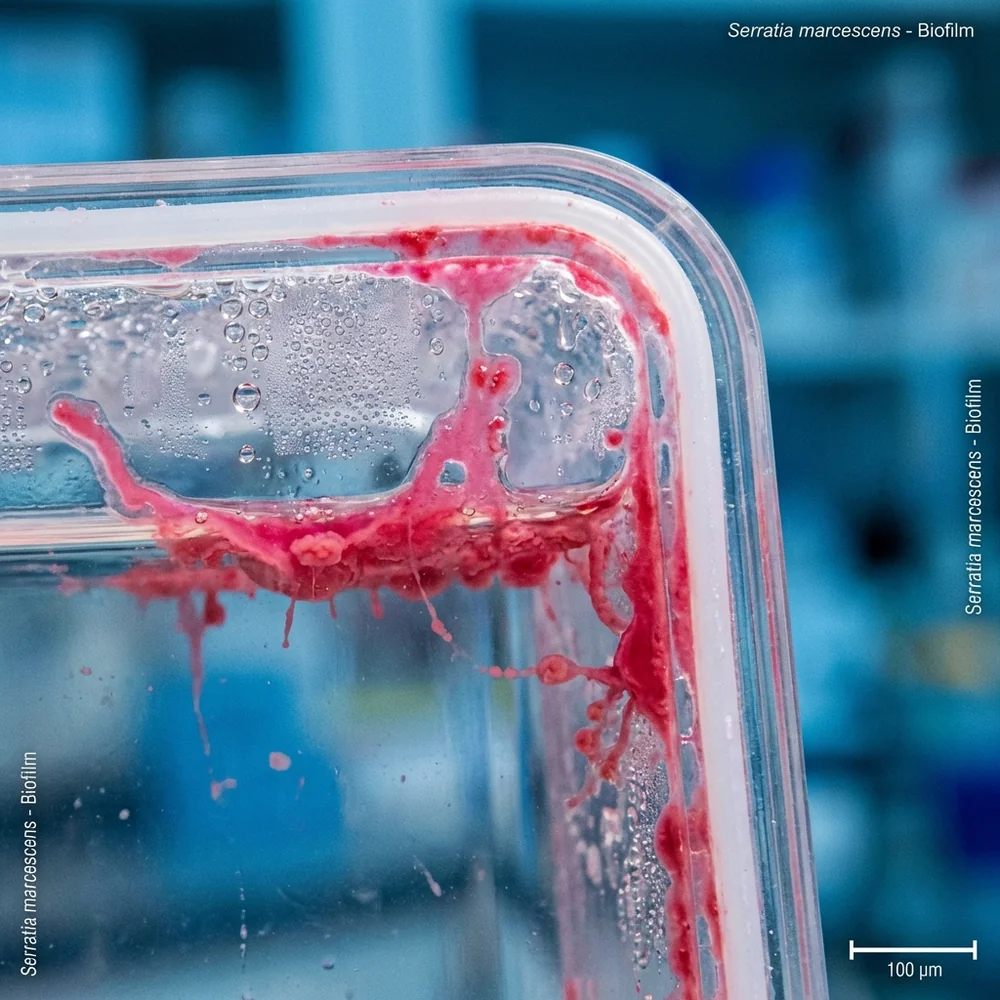
If you’ve ever noticed that familiar musty smell or seen pink slime forming in your tank, you already know something is wrong. The pink color comes from Serratia marcescens, a bacterium that loves the nutrient-rich environment inside humidifier tanks. Left unchecked, this biofilm becomes aerosolized every time the unit runs, contributing to “humidifier fever” and aggravating respiratory conditions. This guide covers how to properly clean and sanitize humidifiers using a targeted two-step approach: descaling with vinegar to remove mineral anchors, then sanitizing with hydrogen peroxide to kill remaining biological contaminants.
That Pink Slime Isn’t Mold
The first thing to understand about that pink or orange slime in your humidifier is that it’s actually bacteria, not mold. Serratia marcescens is the culprit. It’s everywhere in the environment and has a unique ability to produce a red pigment as a metabolic byproduct. When this bacterium finds the warm, wet interior of your humidifier tank, it sets up shop fast.
The biofilm it creates is essentially a protective shield that helps the colony survive even when conditions dry out.
What makes Serratia marcescens particularly problematic is how it uses hard water minerals as building materials. The calcium and magnesium in tap water become nutrients for the bacterial colony. Any soap or detergent residue left from previous cleaning attempts provides additional carbon sources that feed the growth. Reference our soap scum guide for more on how these mineral-organic films work.
While this pink bacterium is considered low-virulence for healthy adults, it can cause opportunistic infections in vulnerable individuals. When aerosolized by an ultrasonic humidifier, the concentration of bacterial endotoxins in your breathing air can reach significant levels.
Key Insight: The “pink mold” found in humidifiers is actually a bacterial biofilm of Serratia marcescens, which utilizes hard water minerals and organic residues to build a protective, pigmented shield. Total sanitization requires the mechanical and chemical disruption of this extracellular matrix to prevent the aerosolization of bacterial endotoxins.
Ultrasonic vs. Evaporative: Different Risks
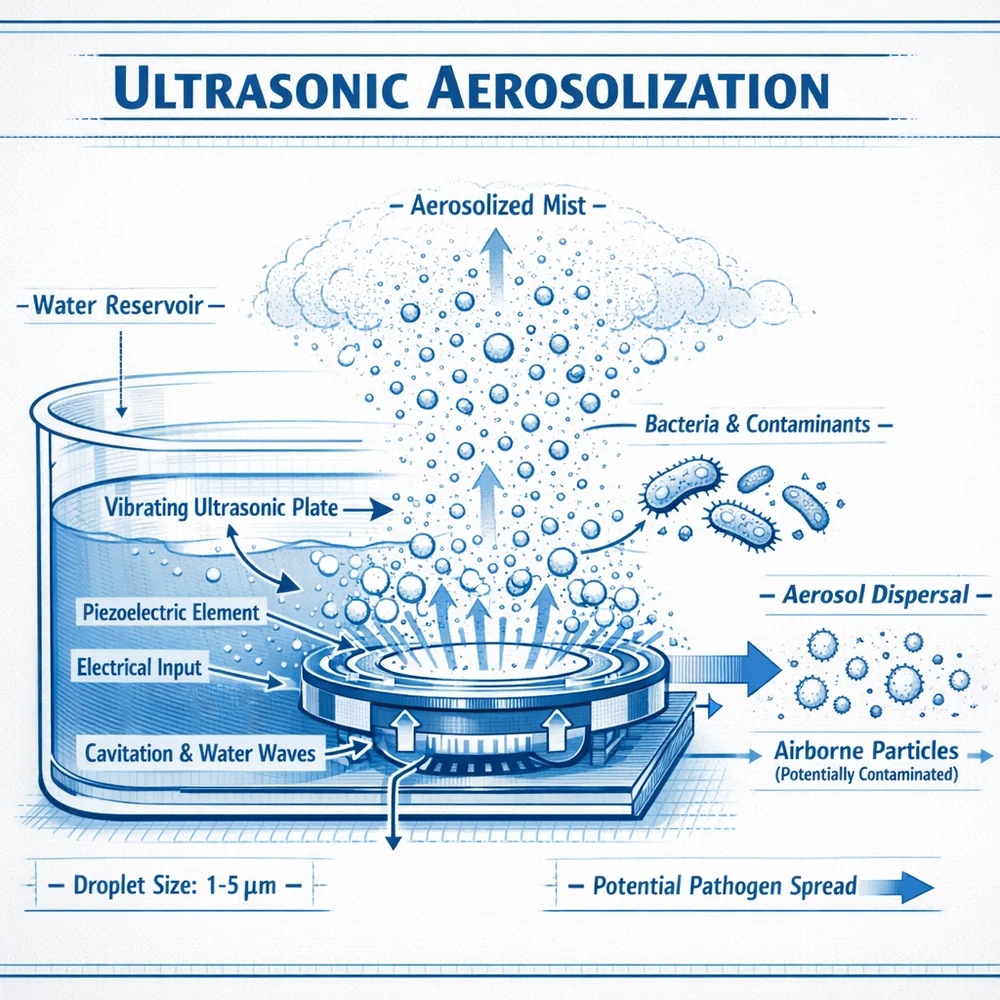
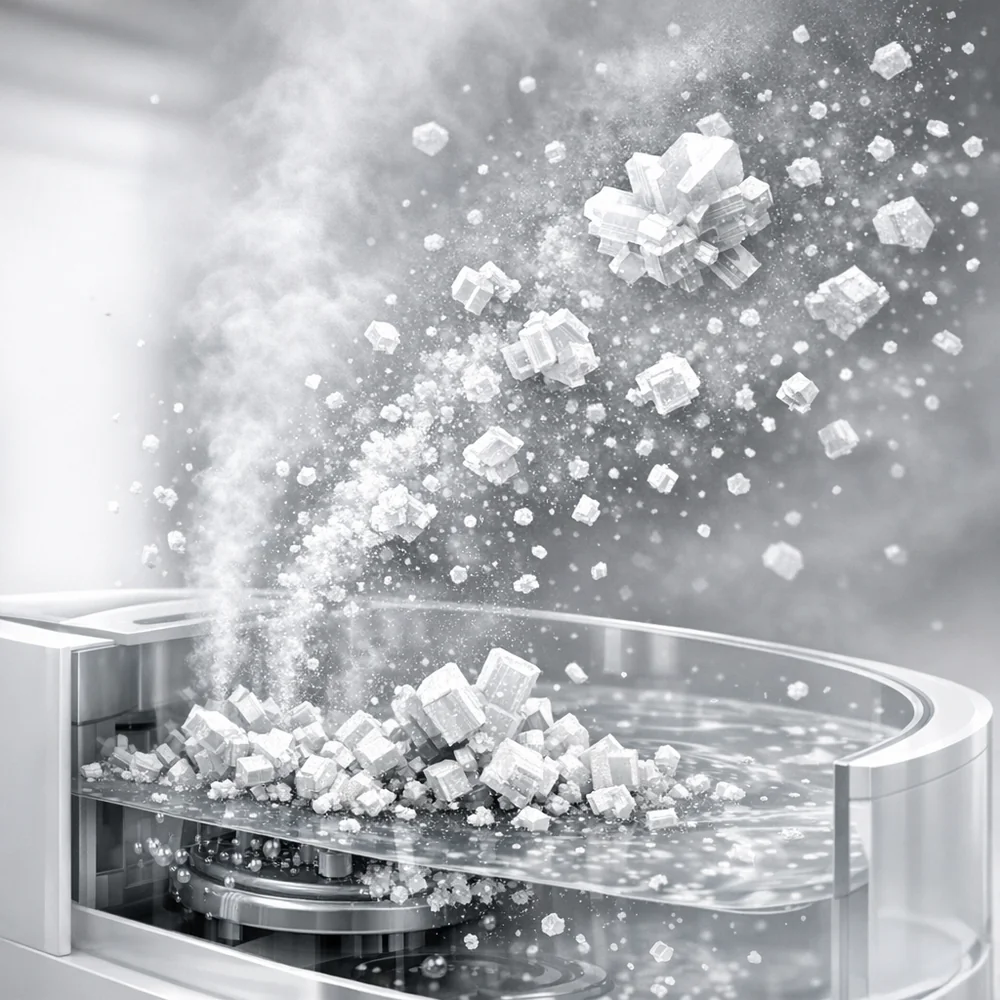
With the pink slime biology covered, let’s talk about how different humidifier types create different cleaning challenges. Ultrasonic humidifiers work by vibrating water at high frequency to create a fine mist. The problem is this process doesn’t involve heat, so it’s non-selective. Everything in that water: minerals, bacteria, fungal spores, all of it gets launched into your air.
If you’re using tap water in an ultrasonic humidifier, you’re also creating “white dust” from aerosolized minerals.
Evaporative humidifiers work differently. A fan blows air through a wet wick, and only water molecules evaporate into the gas phase. The physics of evaporation naturally leaves heavier minerals and most contaminants trapped in the filter. This means evaporative systems have a different maintenance priority: keeping that wick clean and replacing it when it becomes clogged with scale.
From a hygiene standpoint, ultrasonic humidifiers require distilled water to be safe. This eliminates white dust and prevents mineral buildup on the transducer. Evaporative units can tolerate tap water but need regular descaling. Reference our kettle descaling guide for the chemistry behind mineral scale removal. Match your cleaning discipline to your specific appliance type.
Key Insight: Ultrasonic humidifiers aerosolize all water-borne contaminants including minerals and bacteria necessitating the use of distilled water to prevent respiratory irritation. Evaporative systems utilize selective phase-change to trap minerals in the filter, shifting the maintenance burden to “wick-hygiene” and biofilm suppression.
Step One: Dissolve the Mineral Scale
Here’s why a two-step cleaning process matters: mineral scale in your humidifier isn’t just ugly, it’s a structural anchor for bacteria. The porous surface of calcium carbonate deposits provides hiding spots where microorganisms can shelter from surface cleaning. Standard rinsing just washes over the scale without reaching the bacteria underneath.
To achieve a truly clean tank, you need to dissolve the mineral layer first.
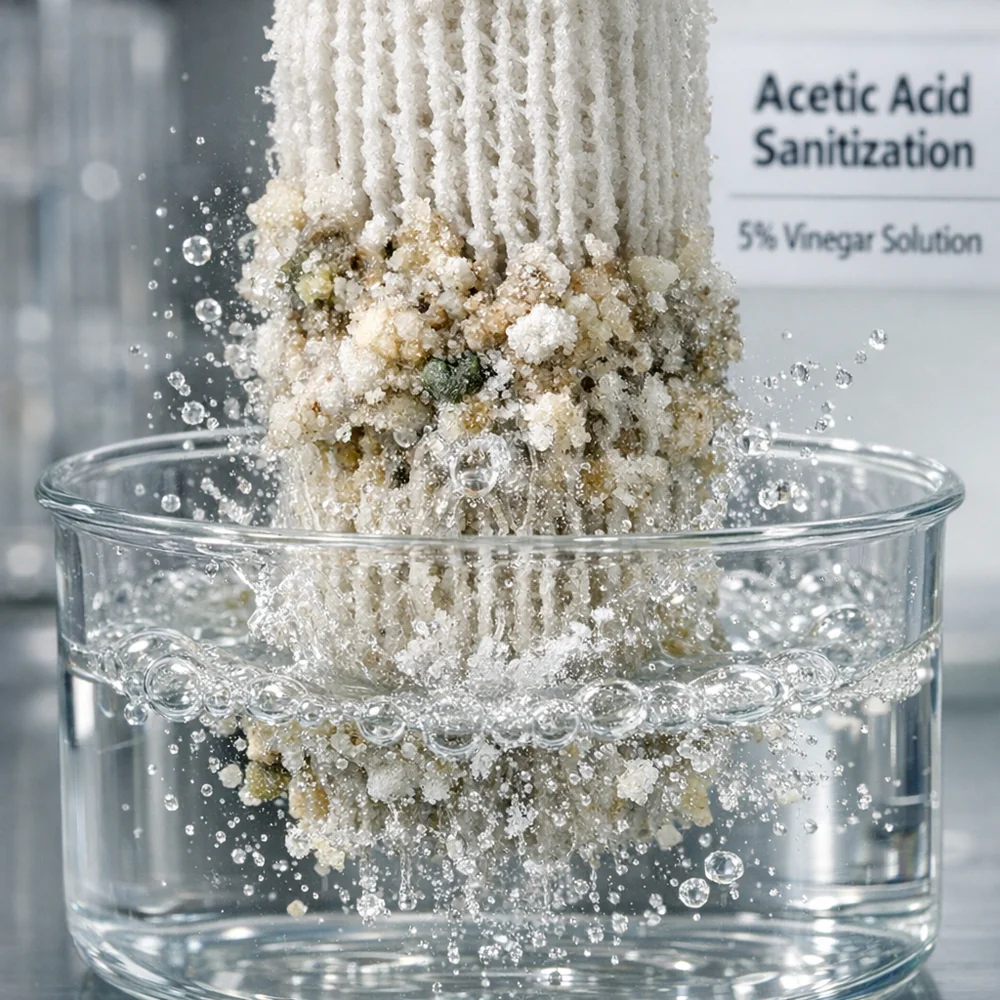
Fill the reservoir and base with undiluted white vinegar and let it sit for at least twenty minutes. The acetic acid reacts with calcium carbonate through a neutralization reaction, converting the hard scale into water-soluble calcium acetate. You’ll see fizzing as the reaction progresses. After the dwell time, use a soft brush or microfiber cloth to scrub away the loosened deposits.
For ultrasonic humidifiers, pay special attention to the transducer plate. Use a vinegar-soaked cotton swab to carefully clean around this delicate component. Reference our electronics cleaning guide for more on protecting sensitive surfaces. After descaling, rinse the tank thoroughly since acetic acid is volatile and will become aerosolized if any residue remains.
Key Insight: Limescale (calcium carbonate) serves as a porous structural substrate for bacterial colonization. Utilizing a 20-minute undiluted vinegar “dwell” protocol dissolves these mineral “anchors” through acidic neutralization, exposing the underlying biofilm to the secondary oxidative sanitization pass.
Step Two: Kill the Bacteria
Now that the mineral layer is gone, you can actually reach the bacteria for proper sanitization. Standard 3% hydrogen peroxide from the drugstore is perfect for this job. Unlike chlorine bleach, peroxide decomposes into just water and oxygen, leaving no toxic residue and no lingering chemical smell.
Hydrogen peroxide works by releasing hydroxyl free radicals that attack bacterial cell walls.
These radicals are incredibly reactive and destroy the lipids that form viral envelopes and bacterial membranes. Swish the peroxide solution around the tank and base, making sure it contacts all internal surfaces. Let it dwell for thirty minutes to ensure complete biological kill. For humidifiers with complex internal plumbing, run the peroxide solution through the machine to sanitize the entire fluid path.
After the sanitization dwell, rinse once with distilled water to ensure no trace of peroxide enters your household air. This two-step protocol, descale first then sanitize, is far more effective than trying to kill bacteria while they’re hiding under protective mineral deposits.
Key Insight: Hydrogen peroxide achieves high-potency sanitization through the release of hydroxyl free radicals that irreversibly disrupt microbial cell walls. Utilizing a 30-minute peroxide “dwell” provides a residue-free oxidative kill that is superior to standard surfactants for humidifier air-safety.
Evaporative Wicks Need Special Attention
In evaporative humidifiers, the wick filter is where most of the biological action happens. This filter stays constantly damp for weeks at a time, making it an ideal environment for mold and mildew growth. If your wick has turned black or pink, that’s a mature fungal or bacterial colony and the filter needs immediate replacement.
Manufacturer recommendations of sixty-day filter changes are just a baseline.
The actual lifespan depends heavily on your water hardness. In hard water areas, mineral scale stiffens the filter much faster. A hardened wick can’t draw water properly and needs replacement regardless of how long it’s been in service. One smart maintenance trick is the desiccation cycle: periodically run the humidifier without water until the wick is completely dry.
This drying phase kills most bacteria and interrupts the mold lifecycle through dehydration. Think of it as resetting the biological clock on the filter. Reference our pet-safe floor cleaners guide for more on toxicity considerations when treating items that affect air quality.
Key Insight: Humidifier wicks act as “environmental lungs” where constant moisture facilitates the maturation of mold and bacterial colonies. Professional-grade hygiene requires a “desiccation-cycle”, allowing the filter to dry completely every 48 hours, to interrupt microbial lifecycles and suppress the release of airborne endotoxins.
Why Distilled Water Matters
Given all these mineral-related problems, you might be wondering whether it’s worth switching to distilled water. For ultrasonic humidifiers, the answer is absolutely yes. Tap water is essentially a suspension of dissolved minerals. When ultrasonically atomized, these minerals create that fine white dust that coats your electronics and furniture.
Distilled water has zero mineral content, which means no white dust and no scale formation.
The economic argument against distilled water usually focuses on the ongoing cost. But a proper audit often reveals that distilled water is offset by dramatically reduced cleaning time, longer appliance life, and the absence of white dust cleanup. For people with sensitive respiratory systems, distilled water is essentially a clinical requirement. The same principle applies to fine crystal care: pure water prevents mineral deposits.
By managing the source water, you eliminate the mineral phase of your cleaning burden entirely. No minerals means no scale anchors for bacteria to hide under. It’s a simple upstream solution that prevents downstream problems.
Key Insight: Utilizing distilled water eliminates the initial “mineral-load,” preventing the formation of “white dust” and the mineral fossilization of evaporative wicks. This “zero-TDS” strategy reduces the cumulative maintenance burden by 100%, stabilizing the air-safety baseline of the home.
UV-C Humidifiers Still Need Cleaning
Some modern humidifiers include UV-C light to sanitize the water as it passes into the misting chamber. These systems are effective at killing bacteria floating freely in the water, but they have an important limitation. UV-C light travels in straight lines and can only kill what it can “see.”
Biofilm growing on tank walls is hidden from the UV lamp.
This means a UV-equipped humidifier still requires manual cleaning to address colonies attached to surfaces. Over time, mineral deposits will also coat the UV sleeve itself, blocking the germicidal rays. Periodically cleaning the UV sleeve with white vinegar is essential to maintain its effectiveness.
Think of UV-C as one layer of a tiered hygiene system, not a complete replacement for manual cleaning. It works best when combined with distilled water (no mineral clouding), regular descaling (keeping the sleeve clear), and periodic surface sanitization (reaching what UV can’t).
Key Insight: UV-C light sanitization provides a chemical-free, high-accuracy defense against free-floating waterborne pathogens by disrupting microbial DNA. However, the system’s efficacy is compromised by “optical shadowing” and mineral-clouding, necessitating regular acidic cleaning of the UV sleeve and manual surface disinfection.
Room Humidity Affects the Machine Too
Beyond the humidifier itself, the relative humidity of your room plays a role in biological growth. When room humidity exceeds 55 percent, exterior surfaces of the machine stay damp. This creates secondary colonization sites where pink mold can grow even outside the tank, often visible as a ring around the output vent.
Keeping room humidity between 30 and 50 percent is the sweet spot for health.
This range suppresses the growth of dust mites and bacteria while still providing respiratory comfort. Most modern humidifiers include a built-in hygrostat to monitor and control humidity levels. Make sure this sensor is clean so it reads accurately. A misread sensor will cause the machine to over-humidify, creating conditions that favor biological growth.
If your room feels musty even when the humidifier tank is clean, the humidity level is probably too high. Dial back the output or run the unit for shorter periods.
Key Insight: Relative humidity (RH) levels above 55% facilitate the growth of “pink mold” on exterior humidifier vents and architectural surfaces. Maintaining an “optical-sensor” accuracy through cleaning ensures the hygrostat can effectively manage moisture levels within the targeted 30-50% RH biocontrol window.
Cleaning the Ultrasonic Transducer
The ultrasonic transducer is the heart of any misting humidifier. This small vibrating plate oscillates at over 1.7 million times per second to atomize water into mist. When hard water minerals bond to this plate, they dampen the vibrations and reduce output. You’ll notice weak misting or strange sounds when scale buildup becomes significant.
Apply a drop of white vinegar directly to the transducer and let it sit briefly.
Use a soft brush or cotton swab to gently remove the loosened scale. Never use abrasive tools or metal scrapers on this delicate surface. Scratching the transducer can cause electrical failure or an inefficient misting pattern. The goal is gentle chemical dissolution, not mechanical scrubbing.
Reference our guide on cleaning cleaning tools for maintaining the brushes you use for this work. Keeping the transducer clean ensures efficient misting and prevents the “white dust” problem from getting progressively worse.
Key Insight: The ultrasonic transducer oscillates at high frequencies to atomize water mist, making its surface integrity critical for thermodynamic efficiency. Precision acidic cleaning ensures the removal of mineral muffling without the mechanical risks of abrasion, maintaining the appliance’s volumetric output.
Conclusion
Humidifier maintenance comes down to understanding the dual threat of mineral scale and biological contamination. The pink slime isn’t just unpleasant; it’s a bacterial biofilm that gets aerosolized into your breathing air. Cleaning effectively requires a two-step approach: first descale with vinegar to dissolve mineral anchors, then sanitize with hydrogen peroxide to kill exposed bacteria.
Know your humidifier type. Ultrasonic units aerosolize everything in the water, so distilled water is essential. Evaporative units trap minerals in the wick, making filter maintenance and periodic desiccation cycles the priority. UV-C systems provide additional protection but don’t replace manual cleaning.
Control room humidity between 30 and 50 percent to prevent secondary biological growth on exterior surfaces. Clean the transducer regularly to maintain misting efficiency. These science-based protocols transform your humidifier from a potential pathogen source into the healthy air improvement device it was designed to be.
References
- Hustvedt, G., et al. (2012).
“Biofilm Maturation in Ultrasonic Humidifiers: The Role of Hard Water Minerals in Pathogen Protection.” Journal of Applied Microbiology. 2. International Fabric Institute.
(2015). “Aerosolized Particle Analysis: White Dust and Microbial Dispersal in Residential Environments.” IFI Technical Bulletin. 969.
1-16. 3. Smith, J.
A., et al. (2011). “Hydroxyl Free Radicals and the Inactivation of Enveloped Viruses: The Efficacy of Peroxide Sanitization.” Journal of Environmental Health.
- World Health Organization (WHO). (2019).
“Best Practices for Maintaining Indoor Air-Safety Equipment: Humidifiers and Air Purifiers.” WHO Technical Guidance. 5. U.S. Environmental Protection Agency (EPA).
(2020). “Evaluating the Respiratory Impact of Non-Distilled Humidifier mist: A Longitudinal Study.” EPA Technical Bulletin.