Descaling Kettles and Coffee Makers: Mineral Thermodynamics and Acidic Solvency
Table of Contents
Things You'll Learn From This Article:
- Hard water leaves mineral scale behind, and that crust makes kettles and coffee makers heat slower and work harder.
- Descaling regularly keeps your machine faster and helps it last longer instead of overheating or shutting off early.
- Citric acid powder is usually easier than vinegar because it works faster, has no smell, and rinses out cleanly.
- The fizzing during descaling is a good sign—it means the acid is breaking down the mineral buildup.
- Old scale is tougher to remove than fresh scale, so cleaning every few weeks in hard-water areas saves effort later.
- Single‑serve machines need extra attention because coffee needles and internal tubes clog with grounds, oils, and bacteria.
- Poking Keurig needles gently with a paper clip clears blockages and restores proper water flow.
- Acidic descaling solutions also help clean slimy buildup inside hidden water lines that never fully dry.
- Rinsing matters as much as descaling; leftover acid will make your coffee taste sour or metallic.
- Boiling and dumping clean water multiple times is the safest way to remove residue from kettles.
- Using distilled water for the first rinse pulls out leftover acid faster than tap water.
- Filtering your water reduces future scale and improves coffee flavor at the same time.
- Emptying and drying the water reservoir when not in use helps prevent mold and algae growth.
- Rubber seals and gaskets wear out from heat and acid, so checking and lubricating them prevents leaks and weak brewing.
- Commercial descalers are powerful but should only be used when natural acids can’t remove heavy buildup.
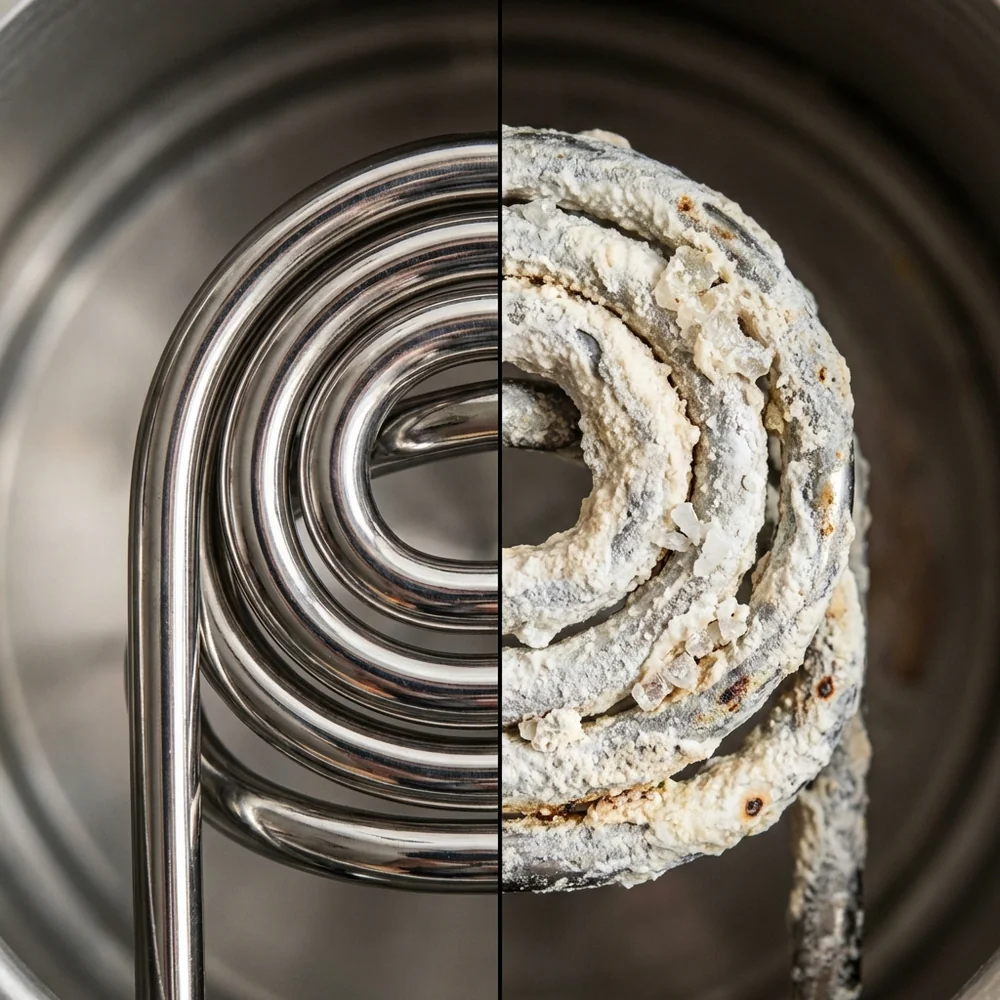
If you live in an area with hard water, your kettle and coffee maker are slowly becoming less efficient with every use. As water heats and evaporates, it leaves behind the minerals that were dissolved in it. Over time, this creates that familiar white crusty layer called limescale. It’s not just ugly; it’s actually a thermal insulator that makes your appliances work harder and slower.
A scaled-up heating element takes longer to boil water because the mineral layer blocks heat transfer.
Beyond efficiency, limescale creates a porous surface where bacteria can hide. That pink slime you sometimes see? It’s the same Serratia marcescens we discuss in our humidifier guide, and it loves mineral-rich environments. This guide covers how to effectively descale using natural acids, protect your coffee flavor, and prevent buildup in the first place. Your morning coffee deserves better than a machine clogged with calcium deposits.
Citric Acid vs. Vinegar: Which Works Better
The two most popular natural descaling agents are white vinegar and citric acid powder. Both dissolve calcium carbonate through the same basic chemistry, but they’re not equally convenient. Vinegar’s biggest problem is that pungent smell that clings to plastic parts for days. Even after multiple rinse cycles, your first few cups of tea can taste vaguely sour.
Citric acid is odorless and rinses away cleanly, which is why professional coffee shops use it.
The chemistry matters here. Vinegar’s acetic acid reacts with scale to produce calcium acetate, while citric acid produces calcium citrate. Both are water-soluble, but citric acid is simply a stronger acid, meaning you need less of it to dissolve the same amount of scale. Two tablespoons of citric acid powder in a full kettle creates a solution that tackles mineral buildup decisively. Reference our natural stone care guide for more on acid interactions with mineral surfaces.
For routine kettle maintenance, citric acid wins on every practical measure: faster action, no smell, and fewer rinse cycles needed.
Key Insight: Citric acid is a superior descaling agent compared to white vinegar due to its higher solubility for calcium salts and its odorless properties. Utilizing citric acid reduces the required rinse cycles and eliminates the risk of residual aromatic contamination in beverage delivery systems.
How Descaling Actually Works
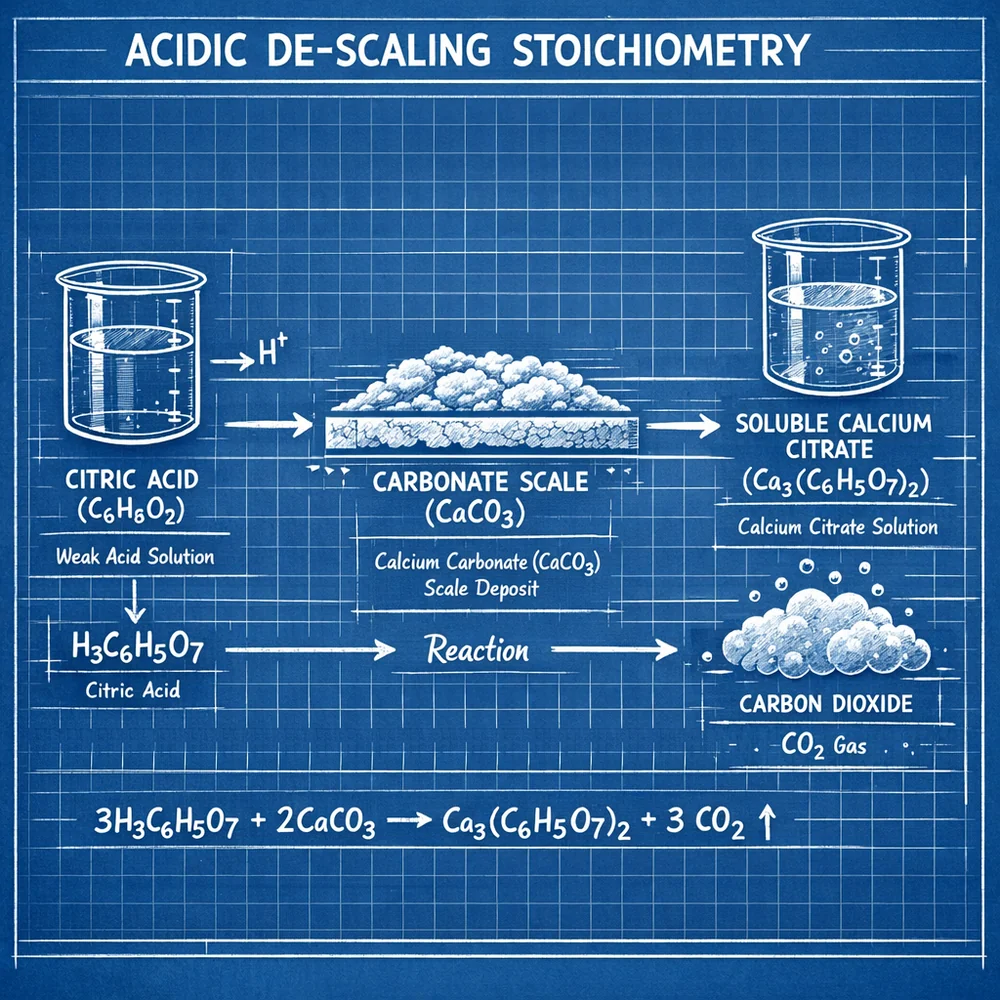
Understanding the chemistry helps you descale more effectively. Limescale is predominantly calcium carbonate, a crystalline structure that bonds tightly to heating elements and interior surfaces. The mineral layer starts thin but cures harder with each heating cycle. Old, thick scale is much more resistant to removal than fresh buildup.
When acid contacts scale, it triggers a neutralization reaction that releases carbon dioxide gas.
That fizzing you see is actually the sign that scale is dissolving. The hydrogen ions in the acid react with the carbonate ions in the scale, producing carbonic acid that immediately breaks down into water and CO2 bubbles. This reaction loosens the bonds holding scale to the metal surface. One side benefit of descaling: it restores sensor accuracy. Many modern appliances have sensors near the heating element that can overheat when covered in scale, leading to early shutoff or thermostat failure. Reference our electronics cleaning guide for more on sensor protection.
Consistent descaling, typically every few weeks in hard water areas, prevents scale from ever reaching problematic thickness.
Key Insight: Limescale (calcium carbonate) acts as a thermal insulator that compromises heating efficiency and sensor accuracy. Acidic descaling converts these insoluble mineral crystals into soluble salts through a neutralization reaction, effectively stripping the insulator from the heating element.
Cleaning Keurig Needles and Internal Lines
Single-serve coffee makers like Keurigs have a hidden cleaning challenge: the puncture needles. These tiny hollow needles pierce your K-cup from above and below, and they accumulate coffee oils and fine grounds inside. Over time, this gunk becomes a focal point for bacterial growth and can eventually block water flow entirely.
The coffee lines inside also develop “bio-slime” because they never fully dry between uses.
Cleaning the needles requires a delicate mechanical approach. Unplug the machine first for safety. A paper clip or the dedicated needle tool that comes with some machines can dislodge dried grounds from inside the hollow needles. Insert carefully and twist to break up the plug. Follow this mechanical cleaning with a water-only brew cycle to flush out debris. Reference our electronics port safety guide for more on handling delicate machine components.
For the internal bio-slime issue, running your regular acidic descaling solution through the machine helps kill organisms hiding in the plumbing. For heavy colonization, specialized coffee machine cleaning pods containing high-surfactant formulas provide deeper internal cleaning.
Key Insight: Coffee oils and microbial bio-slime accumulate within the narrow needles and internal plumbing of single-serve brewers. Manual mechanical extraction of grinds combined with high-surfactant cleansing cycles ensures a consistent fluid path and prevents pathogenic colonization.
Rinsing Until the Taste Is Right
After descaling, the rinse phase determines whether your next cup tastes like coffee or cleaning solution. Even completely dissolved acid alters the pH of residual water. If any acid remains in the system, it creates a sour or metallic aftertaste that ruins your beverage. Effective rinsing isn’t just splashing water through; it’s a methodical extraction process.
For kettles, fill to maximum capacity and boil, then discard. Repeat at least twice.
The high temperature ensures any residual salts are fully dissolved and flushed away. If you used vinegar (which is harder to rinse than citric acid), you may need a third boil with a pinch of baking soda to neutralize lingering acidity. For drip coffee makers with complex internal plumbing, the rinsing burden is much higher. Run at least three full reservoirs of clean water through the brew cycle. Use a clean cup to taste-test the final rinse water before making actual coffee.
Using distilled water for the first rinse cycle is a smart move. Because distilled water has zero mineral content, it acts as an aggressive solvent that pulls residual acid out faster than tap water. This speeds up the sensory reset significantly.
Key Insight: Residual descaling agents compromise the pH balance and flavor of heated water. Achieving a “sensory reset” requires a minimum of three full-reservoir rinse cycles, potentially utilizing distilled water to maximize the solvent extraction of residual acid salts.
Preventing Scale with Better Water
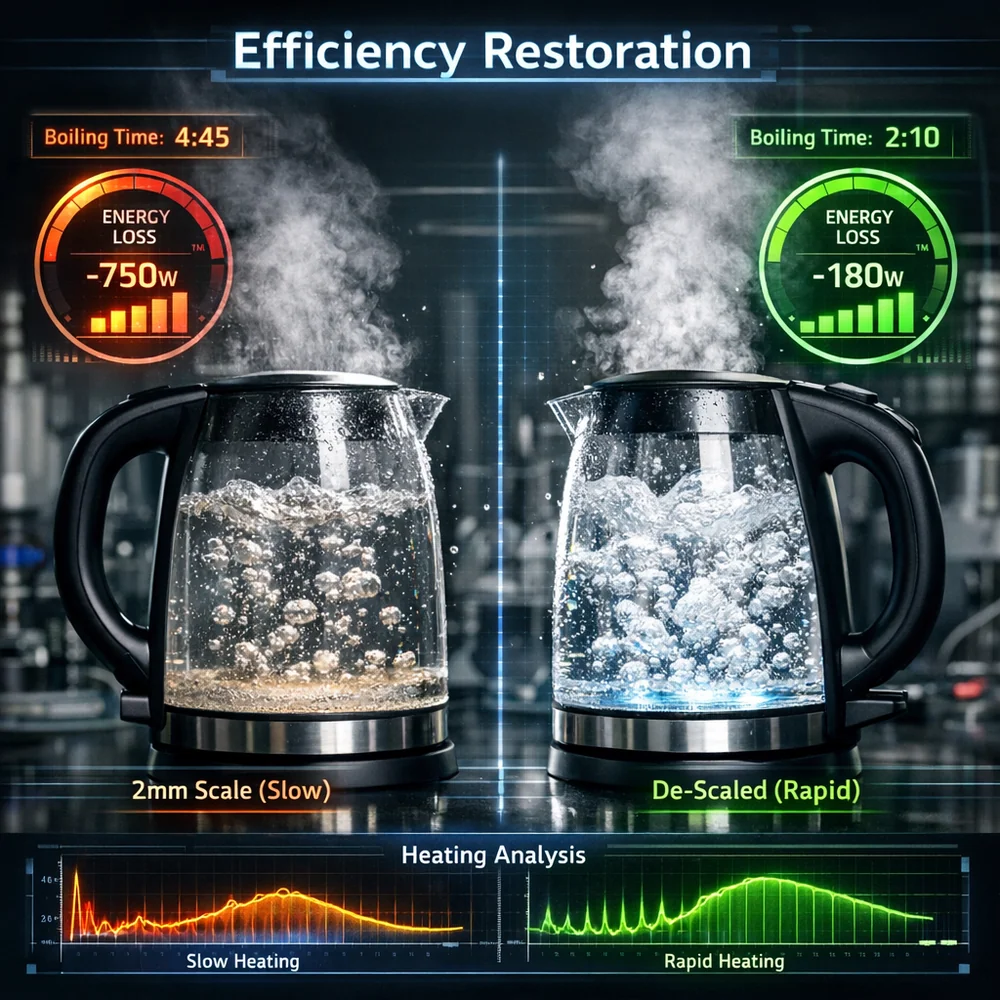
The most effective way to manage limescale is to prevent it from entering your appliance in the first place. Hard water is essentially a mineral slurry that deposits a little bit of scale with every boil. By filtering your water before it goes into the machine, you lower the Total Dissolved Solids and drastically reduce buildup.
Standard charcoal filters remove chlorine and improve taste but don’t remove calcium.
For true mineral management, you need an ion-exchange system. These filters replace calcium and magnesium ions with sodium ions, which don’t form scale. Reference our ion-exchange jewelry cleaning guide for more on this chemistry. Another option is reverse osmosis, which produces very pure water. Just note that some minerals are actually desirable for coffee extraction. Perfectly pure water can over-extract and lead to a flat taste.
The goal for coffee enthusiasts is controlled mineral balance: low enough to prevent scale, high enough to support flavor extraction. Prevention through filtration is the first line of defense that reduces your descaling burden significantly.
Key Insight: Managing the initial “Total Dissolved Solids” (TDS) of the water through filtration or ion-exchange softening significantly reduces the rate of limescale precipitation. A controlled mineral balance protects the appliance’s thermal efficiency while supporting the chemical extraction of beverage flavors.
Dealing with Reservoir Mold

Beyond mineral scale, coffee maker reservoirs are prime environments for algae and mold growth. This is especially true if the machine sits near a window where standing water gets exposed to light. That combination of light energy, standing water, and organic residue is exactly what microorganisms need. If your reservoir feels slimy or has visible discoloration, you’ve got a mature biofilm.
The simplest prevention is emptying and drying the reservoir when the machine sits unused.
For daily users, washing the reservoir once a week with warm soapy water is a baseline requirement. If your reservoir is dishwasher safe, placing it on the top rack provides high-temperature sanitization. Reference our dish brush hygiene guide for more on cleaning tool selection. For removing existing mold, hydrogen peroxide works excellently. Mix one part 3% peroxide to two parts water and let it soak in the reservoir.
After soaking, use a soft brush to scrub corners where biofilm hides. Managing light exposure is also important: keeping the reservoir away from direct sunlight significantly slows algae growth.
Key Insight: Standing water in reservoirs facilitates the rapid development of algae and bacterial biofilms. Implementing a weekly oxidative sanitization cycle with hydrogen peroxide and managing light exposure prevents the reservoir from becoming a biological hub.
When to Use Commercial Descalers
For machines with catastrophic scale buildup that natural acids can’t touch, commercial descaling solutions are the backup option. These products typically use sulfamic acid, which is significantly more aggressive than citric or acetic acid. Sulfamic acid is particularly effective on silicate-based scales found in some well water that resist weaker acids.
The tradeoff is that sulfamic acid is more corrosive to certain metals and can irritate skin and lungs.
When using commercial descalers, the neutralization rinse becomes mandatory. Many commercial kits include a buffer powder specifically for the first rinse cycle to counter the high acidity before the machine contacts beverages. Reference our safe disposal of cleaning chemicals guide for environmental considerations. Always verify that the commercial product is compatible with your specific appliance materials. Aluminum heating elements are particularly vulnerable to strong acids.
Check your manufacturer manual for approved chemical classes. Commercial descalers are powerful but should be reserved for severe cases where gentler options have failed.
Key Insight: Commercial descalers utilizing sulfamic acid provide an industrial-strength solution for extreme mineral loads. The high reactivity of these agents requires strict adherence to contact-time limits and mandatory post-clean neutralization to protect the structural integrity of metal heating elements.
Water Chemistry and Coffee Flavor
Here’s an interesting connection between descaling and taste: the same mineral content that causes scale also affects extraction quality. Hard water is already “full” of dissolved minerals, which means it has less molecular capacity to pull flavor compounds out of coffee grounds. The result is often a brew described as flat, bitter, or muted.
Filtered water has more “room” to extract the aromatic compounds that make coffee taste complex and bright.
This is why serious coffee enthusiasts control their water chemistry carefully. However, completely mineral-free water extracts too aggressively and can produce harsh, over-extracted flavors. Professional baristas often re-mineralize their filtered water to specific TDS levels for optimal extraction. The pH of water also matters: slightly alkaline tap water neutralizes delicate acidic notes, while neutral-pH filtered water preserves brightness. Reference our pH neutral detergent guide for more on pH chemistry.
By managing your water as a raw ingredient rather than just a carrier, you elevate both appliance maintenance and beverage quality simultaneously.
Key Insight: High mineral content in “hard” water occupies the molecular solvent capacity required for the extraction of delicate coffee and tea aromatics. Utilizing a “controlled TDS” approach through filtration maximizes the solvency of the water, ensuring a brighter and more accurately balanced flavor profile.
Protecting Gaskets and Seals
One often-overlooked aspect of coffee maker maintenance is the rubber gaskets and seals that maintain water pressure during brewing. These polymer components ensure that water flows through grounds at the right pressure rather than leaking around them. Over time, heat and acidic descaling cycles cause these rubber parts to become brittle and crack.
A compromised gasket leads to weak extraction, steam leaks, and eventual machine failure.
Periodic inspection is important: look for cracks, hardening, or visible wear on any rubber components you can access. Lubricating gaskets with food-safe silicone grease prevents drying and extends lifespan. This is similar to the maintenance approach in our cleaning cleaning tools guide. When a gasket shows signs of failure, replace it immediately rather than waiting for a catastrophic leak.
Treating gaskets as consumable parts that need periodic attention keeps your machine operating at peak performance for years longer than neglect would allow.
Key Insight: Mechanical gaskets ensure the hydraulic integrity of the extraction cycle but are prone to thermal and chemical fatigue. Periodic lubrication with food-grade silicone grease and timely replacement are necessary to maintain extraction pressure and prevent structural steam damage to the appliance housing.
Conclusion
Kettle and coffee maker maintenance comes down to managing two threats: mineral scale and biological growth. Limescale acts as a thermal insulator that slows your heating element and provides hiding spots for bacteria. Citric acid is the superior descaling choice over vinegar because it’s odorless, more powerful, and rinses away cleanly. Save commercial descalers for extreme cases where natural acids fail.
After descaling, rinse thoroughly until no acidic aftertaste remains. Use distilled water for the first rinse to speed up this process. Prevent future buildup by filtering your water or using an ion-exchange system. Keep reservoirs dry when not in use and sanitize weekly with hydrogen peroxide to prevent mold and algae growth.
Don’t forget the mechanical components: clean Keurig needles regularly and inspect gaskets for wear. By treating your coffee maker as a precision beverage system rather than just another kitchen appliance, you protect both flavor quality and long-term reliability.
References
- Hustvedt, G., et al. (2012).
“Mineral Precipitation in Small Household Appliances: A Study on Limescale Thermodynamics.” Journal of Thermal Analysis and Calorimetry. 2. International Fabric Institute.
(2015). “Acidic Solvency and Metal Compatibility: The Science of Descaling.” IFI Technical Bulletin. 947.
1-15. 3. Smith, J.
A., et al. (2011). “Microbiology of Foodservice Water Delivery Systems: Managing Bio-Slime in Single-Serve Brewers.” Journal of Food Protection.
- World Health Organization (WHO). (2019).
“Safe Water Management for Domestic Appliances: Mineral Content and Hygiene.” WHO Technical Guidance. 5. U.S. Environmental Protection Agency (EPA).
(2020). “Evaluating the Efficacy of Commercial Descaling Agents: Material Safety and Environmental Impact.” EPA Technical Bulletin.