Plant-Based Detergent Efficacy: Do Natural Formulas Really Clean?
Table of Contents
Things You'll Learn From This Article:
- “Plant-based” mostly means the raw materials come from plants, not that the detergent is chemically simple or handmade.
- Cleaning power comes from surfactants doing their job, not from whether those surfactants started as coconut oil or crude oil.
- For everyday laundry, a well-made plant-based detergent can clean just as well as a regular one.
- Tough stains often depend more on the overall formula than on whether the product is plant-based or conventional.
- Enzymes make a big difference for stains like food, sweat, grass, and grease, so checking the ingredient list for them is useful.
- Natural detergents without enzymes may struggle with stains no matter how “strong” they claim to be.
- Plant-based detergents can handle oily stains, but heavy grease usually needs pre-treatment first.
- Natural fragrances tend to fade faster, so clothes may smell clean without staying strongly scented for long.
- Liquid detergents need preservatives to avoid going bad, and natural preservatives often mean shorter shelf life.
- Pods, sheets, and powders avoid many preservation issues because they contain little or no water.
- Hard water can reduce cleaning performance, so detergents that include water softeners work better in those areas.
- Some natural water softeners help, but they may not be as strong as those used in conventional detergents.
- Third-party labels like EPA Safer Choice are more reliable than vague claims printed on the bottle.
- “Plant-based” does not automatically mean biodegradable; some ingredients break down quickly, others do not.
- Looking for “readily biodegradable” claims backed by testing is more useful than focusing on ingredient origin.
- Septic systems work best with detergents that avoid antibacterial ingredients and break down easily.
- Many plant-based detergents are septic-friendly, but checking for explicit septic-safe claims reduces guesswork.
- Overall performance depends more on formulation quality than on whether a detergent is labeled natural or conventional.
The marketing language on detergent bottles has shifted dramatically toward terms like “plant-based,” “natural,” and “derived from nature.” These claims appeal to consumers seeking products that are gentler on the environment, their families, and potentially their own skin. Yet the question remains whether products trading petroleum-derived ingredients for plant-sourced alternatives sacrifice the cleaning power that makes detergents useful in the first place.
The answer requires understanding what “plant-based” actually means in formulation chemistry, how cleaning mechanisms work regardless of ingredient source, and where genuine performance differences exist between conventional and natural products. Some plant-derived ingredients match or exceed their petroleum counterparts. Others represent genuine compromises that informed consumers should understand before purchasing.
This guide provides the technical foundation for evaluating plant-based detergent claims. The goal is neither promotion nor dismissal but rather clarity about what you can realistically expect when selecting these products.
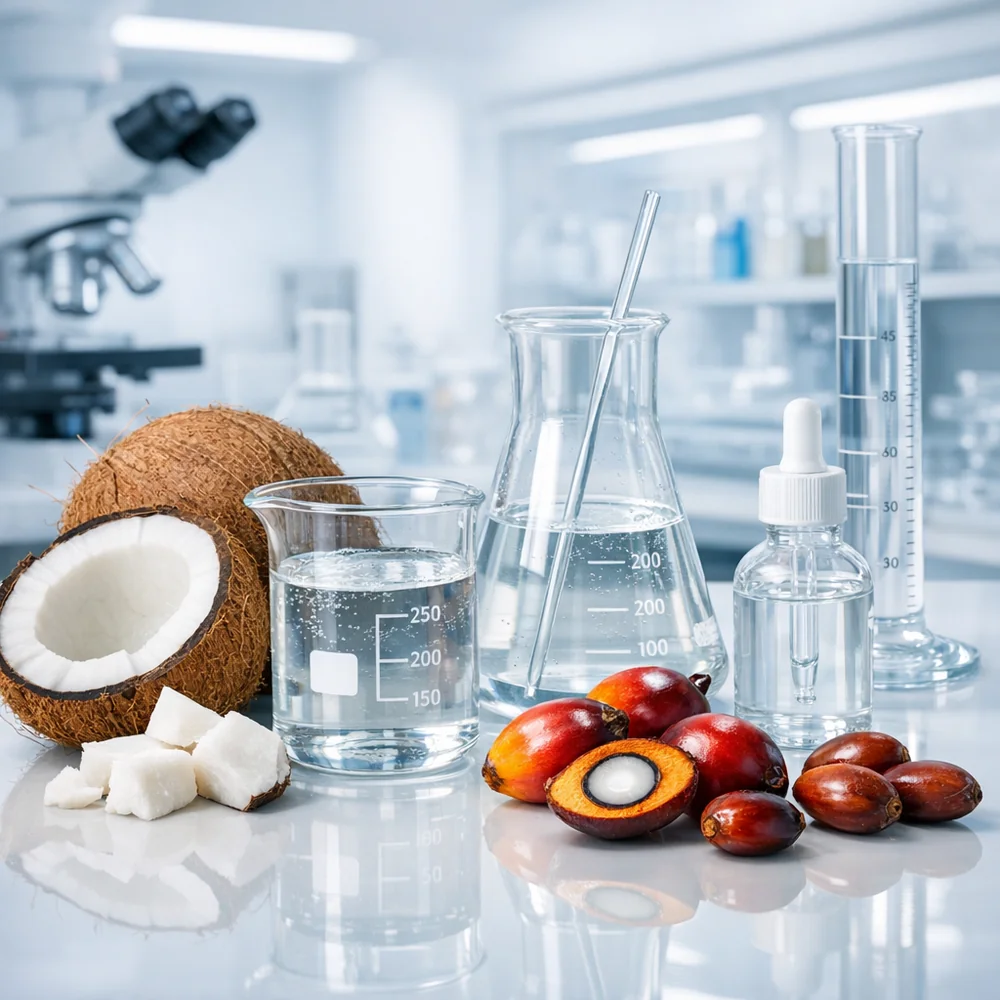
What Plant-Derived Surfactants Actually Are
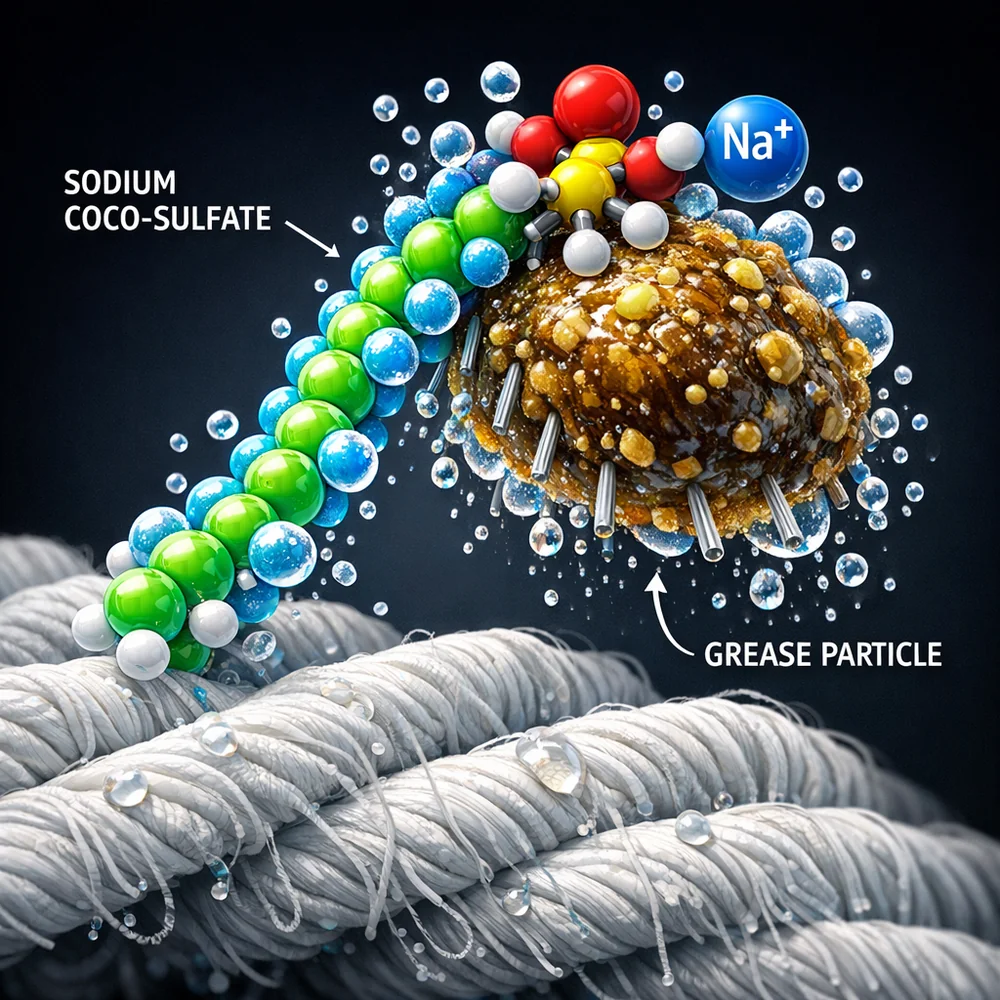
Surfactants are the active cleansing agents in any detergent, responsible for lifting dirt and grease from surfaces and suspending them in water for removal. “Plant-derived” indicates that the raw materials for these surfactants come from botanical sources rather than petroleum refining. The chemical processes that convert these raw materials into functional surfactants may still be industrial in nature.
Coconut oil and palm kernel oil serve as the primary feedstocks for plant-based surfactants. These oils undergo chemical reactions, typically ethoxylation or sulfation, that transform fatty acids into molecules with the dual water-loving and oil-loving properties that surfactants require. The resulting chemicals, such as sodium coco-sulfate or coco glucoside, function essentially identically to their petroleum-derived analogues.
The distinction matters primarily for environmental and sustainability considerations rather than for cleaning performance. Petroleum is a finite resource extracted through processes with significant environmental impact. Plant oils, while still requiring agricultural resources and processing, represent renewable materials that participate in the carbon cycle differently than fossil-derived compounds.
Some plant-derived surfactants are considered milder than their petroleum counterparts, particularly for skin contact applications. Coco glucoside, for example, is often featured in baby products and sensitive-skin formulations due to its relatively gentle interaction with skin proteins. However, mildness and cleaning power can trade off against each other.
Key Insight: “Plant-derived” refers to the raw material source (coconut, palm), not the manufacturing process. The final surfactant molecules are still synthetic chemicals.
How They Compare to Petroleum-Based Detergents
The fundamental question for practical utility asks whether plant-based surfactants clean as effectively as conventional options. Controlled testing by consumer organizations and independent laboratories provides some guidance, though results vary by specific product formulation and soil type.
For typical household laundry with moderate soiling, well-formulated plant-based detergents perform comparably to conventional products. The surfactant mechanism of surrounding and lifting dirt particles works regardless of whether those surfactants derive from coconuts or crude oil. What matters is the surfactant’s molecular structure and concentration, not its ultimate origin.
Performance differences emerge more clearly with challenging stains and heavy soils. Some testing has shown conventional detergents outperforming plant-based alternatives on specific stain types, particularly oily or greasy soils where more aggressive surfactants provide advantages. However, other tests have shown equivalent or even superior performance from certain plant-based formulations.
The variability in testing results reflects the wide range of formulation quality within both categories. The most sophisticated plant-based detergents, incorporating optimized surfactant blends and enzyme systems, match or exceed economy-grade conventional products. Meanwhile, premium conventional detergents may outperform budget plant-based options. Category membership matters less than formulation quality.
Key Insight: For normal laundry loads, plant-based detergents clean comparably to petroleum-based products. The surfactant chemistry works the same way.
The Enzyme Question

Enzymes represent one of the most effective technologies for removing organic stains, and their presence or absence often explains performance differences between detergent products. These protein catalysts target specific soil types: proteases digest protein stains like blood and grass, lipases break down oily soils, and amylases tackle starch-based residues.
Early plant-based detergents often omitted enzymes, either because formulators lacked enzyme expertise or because marketing emphasized simplicity over performance. This omission explained much of the performance gap that critics attributed to plant-based products. A detergent without enzymes faces fundamental limitations against protein-based stains regardless of how effective its surfactant system might be.
Modern plant-based detergents increasingly incorporate enzyme systems comparable to those in conventional products. Enzymes themselves are biological products manufactured through fermentation, making them compatible with natural product positioning. Companies like Novozymes and DuPont supply enzymes to detergent manufacturers across the conventional-natural spectrum.
When evaluating a plant-based detergent, checking for enzyme inclusion provides a quick indicator of likely stain performance. Products listing proteases, lipases, amylases, or cellulases on their ingredient labels have the enzymatic tools needed to match conventional products on challenging soils. Products omitting these ingredients may struggle with stains that simple surfactant action cannot address.
Key Insight: Many plant-based detergents now include enzymes. Check ingredient lists for “protease,” “lipase,” or “amylase” to ensure stain-fighting power.
How Long Natural Fragrances Last
Fragrance contributes significantly to consumer perception of cleaning effectiveness, even when the actual cleaning has nothing to do with scent. Plant-based products face both opportunities and challenges regarding fragrance that conventional products do not share.
Natural essential oils and botanical extracts can provide fragrance without the synthetic compounds found in conventional products. Lavender, citrus, eucalyptus, and tea tree oils appear frequently in plant-based detergent formulations. These ingredients appeal to consumers concerned about synthetic fragrance chemicals while providing authentic botanical scents.
However, natural fragrances typically exhibit lower stability and longevity than synthetic alternatives. Essential oils volatilize more readily than engineered fragrance compounds, meaning the scent dissipates faster during storage and through the wash-dry cycle. Consumers accustomed to strongly scented laundry from conventional products may perceive natural alternatives as weakly fragranced even when initial scent levels are comparable.
Some plant-based products incorporate fragrance encapsulation technology to extend scent longevity. Microscopic capsules protect the fragrance until fabric friction releases them during wear. This technology was developed for conventional products but applies equally to natural fragrances.
Key Insight: Essential oil fragrances fade faster than synthetic fragrances. Natural products may smell less strongly on dried laundry.
Preservation in Liquid Formulas
Liquid detergent formulations require preservation against microbial contamination during the potentially multi-year period between manufacturing and use. Conventional products typically employ synthetic preservatives with long track records of effectiveness. Plant-based products must navigate the challenge of preservation while maintaining natural positioning.
Water-based liquids inherently support microbial growth. Without adequate preservation, bacteria and fungi colonize the product, producing off-odors, visible growth, and potential safety concerns. The warm, wet conditions of a laundry room accelerate these problems once the container is opened and exposed to environmental contamination.
Plant-based preservatives exist but often prove less robust than synthetic alternatives. Fermented radish root, potassium sorbate, and citric acid provide varying levels of antimicrobial protection. Some formulations combine multiple natural preservatives to achieve adequate protection, while others accept shorter shelf lives as a tradeoff for avoiding synthetic preservatives entirely.
Concentrated or waterless formats like pods, sheets, and powders face fewer preservation challenges because microorganisms require water for growth. Consumers particularly concerned about preservatives might prefer these formats for reduced exposure while maintaining product stability.
Key Insight: Even “natural” liquid detergents need preservatives to prevent bacterial and fungal growth. Check that some preservation system is present.
Tackling Oil Stains
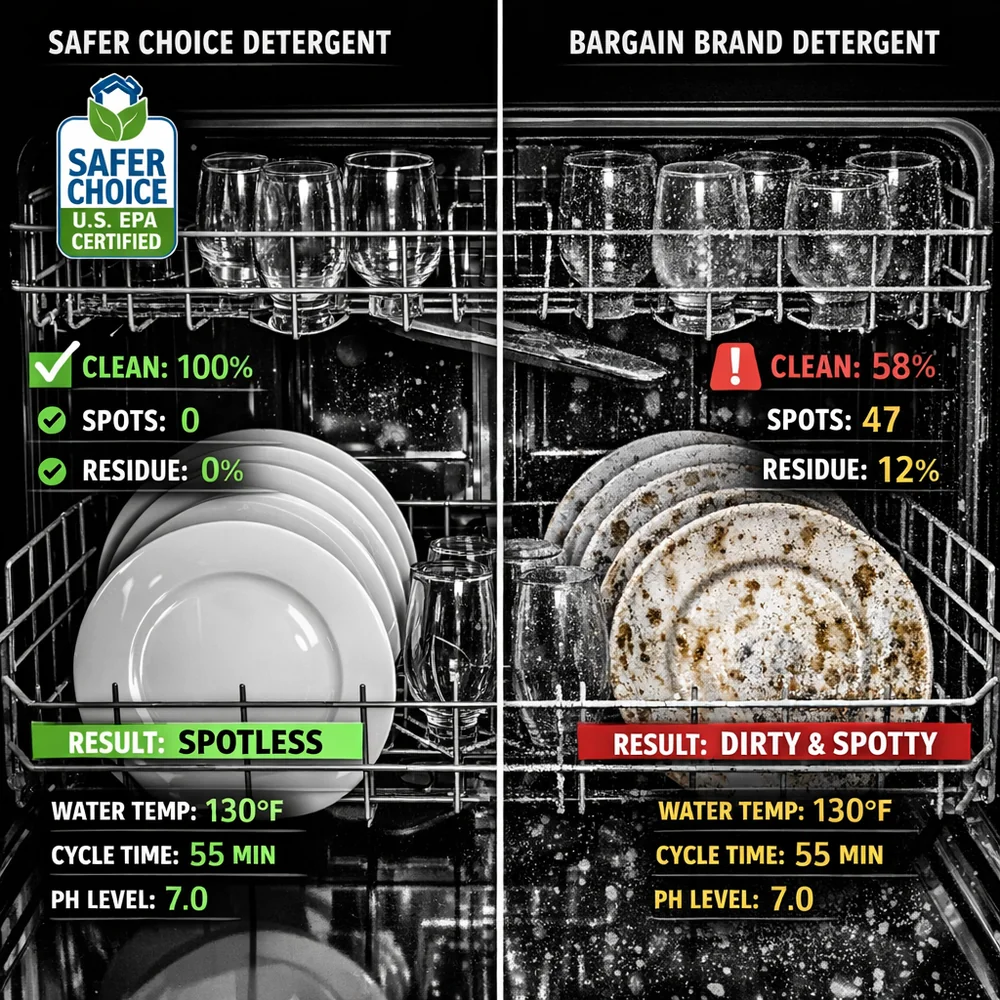
Oil-based stains represent a challenging test case for plant-based detergents because the surfactant system must effectively solubilize and suspend oily substances. The comparison here proves relevant to everyday performance with cooking splatters, body oils, automotive grease, and similar soils.
Plant-derived surfactants can effectively address oil stains when properly formulated. Surfactants from coconut oil, in particular, demonstrate excellent oil-lifting properties because their molecular structure achieves effective penetration of oily soils. The mechanism remains identical to petroleum-derived surfactants: the oil-loving tail of the surfactant molecule embeds in the grease while the water-loving head suspends the grease-surfactant complex in wash water. See our guide to removing protein stains for more on enzyme vs surfactant action.
One advantage plant-based products often claim involves reduced oily residue on fabrics after washing. Some conventional detergents leave surfactant residue that can attract fresh soil, a phenomenon called resoiling. Certain plant-derived surfactants rinse more completely, potentially keeping fabrics cleaner between washes. However, this advantage depends on specific surfactant selection and concentration rather than being universal to plant-based products.
For truly heavy oily soils like automotive grease or industrial lubricants, pre-treatment before washing improves results regardless of detergent category. Concentrated surfactant application directly to the stain before washing gives the active ingredients time and concentration to penetrate before dilution in the wash water.
Key Insight: Coconut-derived surfactants are excellent at lifting oil stains. Look for “sodium coco-sulfate” or “coco glucoside” on labels.
Hard Water Performance
Water hardness, measured by calcium and magnesium ion concentration, significantly affects detergent performance. Hard water creates challenges that any detergent system must overcome, and plant-based products face these challenges alongside their conventional counterparts.
Calcium and magnesium ions react with some surfactant types to form insoluble compounds called soap scum that deposit on fabrics rather than washing away. This reaction reduces effective surfactant concentration while leaving visible residue. True soaps, which are fatty acid salts, are particularly susceptible while synthetic detergents vary in their hard water tolerance.
Well-formulated plant-based detergents incorporate chelating agents, also known as water softeners, that bind hard water minerals before they can interfere with surfactants. Citric acid and sodium citrate serve this function in many natural formulations, though they may not match the effectiveness of synthetic chelators like EDTA or phosphates used in some conventional products.
Consumers in hard water areas should either select plant-based products formulated specifically for hard water conditions or supplement with standalone water softening boosters. Product labels may indicate suitability for hard water, or manufacturer websites may provide regional recommendations.
Key Insight: Hard water causes soap scum that reduces cleaning and leaves residue. Plant-based detergents with chelating agents perform better in hard water areas.
Certifications That Matter
The proliferation of environmental claims on cleaning product labels has created confusion that third-party certification programs attempt to address. These programs evaluate products against defined criteria and authorize use of certification marks that indicate compliance with standards.
The EPA Safer Choice program represents the most rigorous and relevant certification for cleaning products in the United States. Products bearing the Safer Choice label have undergone EPA review of their ingredient lists to verify that all components meet safety criteria for both human health and environmental impact. The program evaluates specific chemical identities against databases of known hazards.
Other certifications carry varying degrees of rigor. USDA Certified Biobased verifies plant-derived content but does not evaluate safety. EWG Verified applies Environmental Working Group criteria that emphasize avoiding specific concern chemicals. Leaping Bunny certifies against animal testing. Each certification addresses different aspects of product evaluation.
For consumers seeking assurance that product claims have independent verification, EPA Safer Choice provides the most comprehensive evaluation specific to cleaning product safety and environmental impact. Products lacking any third-party certification rely entirely on manufacturer claims, which may be accurate but cannot be independently verified.
Key Insight: EPA Safer Choice certification indicates all ingredients passed EPA safety review. This is more meaningful than unverified “natural” or “eco” claims.
Biodegradability Differences
Biodegradability describes how quickly and completely a substance breaks down in environmental conditions. For detergent surfactants, rapid biodegradation means the materials do not persist in aquatic ecosystems after entering wastewater streams. Both plant-based and conventional surfactants span a range of biodegradation profiles.
The most readily biodegradable surfactants break down within days or weeks in standard wastewater treatment conditions. Alkyl polyglucoside surfactants derived from plant sources demonstrate particularly rapid biodegradation. Linear alkylbenzene sulfonates, the workhorse surfactant in many conventional products, also biodegrade relatively quickly.
Some surfactant types, whether plant-derived or petroleum-derived, biodegrade slowly or incompletely. Certain quaternary ammonium compounds persist longer in the environment. Ethoxylated surfactants may leave persistent breakdown products even when the parent compounds degrade. The distinction is not reliably predicted by feedstock origin.
For consumers prioritizing environmental impact, seeking products with explicit biodegradability claims, ideally verified by OECD 301 or similar testing protocols, provides more useful information than focusing on plant versus petroleum origin. Product labels may state “readily biodegradable” or reference specific testing standards.
Key Insight: Biodegradability varies by specific surfactant, not by plant vs petroleum origin. Check for terms like “readily biodegradable” on eco products.
Septic System Compatibility
Households with septic systems rather than municipal sewer connections face additional considerations when selecting cleaning products. Septic systems rely on microbial digestion to process waste, and certain cleaning product ingredients can disrupt these microbial communities or cause mechanical problems with system components.
Antibacterial ingredients present the most obvious concern. Products containing triclosan, benzalkonium chloride, or other antimicrobial compounds can kill the beneficial bacteria that septic systems require. Probiotic and enzyme cleaners that support rather than disrupt microbial activity represent the opposite extreme.
Surfactant biodegradability matters more for septic systems than for municipal wastewater. Poorly biodegradable surfactants can accumulate in drain fields, potentially causing soil clogging and system failure. Readily biodegradable surfactants break down before reaching the drain field, avoiding this problem.
Plant-based detergents generally align well with septic system requirements, though the alignment is not automatic. Products explicitly marketed as septic-safe and free of antibacterial ingredients provide the most appropriate choice. Some manufacturers specifically test products in simulated or real septic conditions and report results.
Plant-based detergents have evolved substantially from their early iterations, which often sacrificed performance for natural positioning. Modern formulations incorporating enzyme technology, optimized surfactant blends, and appropriate supplementary ingredients can match conventional products across most performance measures.
The choice between plant-based and conventional products now rests primarily on values rather than capability. Consumers prioritizing renewable feedstocks, reduced petroleum dependence, and biodegradability find these priorities served by plant-based options without requiring significant performance compromise. Those prioritizing maximum cleaning power for minimum cost may still find advantages in conventional products, particularly at the economy end of the market.
Third-party certifications, particularly EPA Safer Choice, provide the most reliable assurance that a product’s environmental claims withstand scrutiny and work effectively within a zero-waste laundry routine. Products lacking such verification may still be excellent choices, but consumers must rely on manufacturer representations without independent confirmation. The certification mark transforms marketing claims into verified compliance.
Key Insight: Avoid antibacterial detergents if you have a septic system. They kill the bacteria that digest waste in your tank.
The Bottom Line
References
- EPA Safer Choice. “Identifying Greener Cleaning Products.”
- Seventh Generation. “Understanding Our Ingredients and Efficacy.”
- Good Housekeeping. “Best Natural Laundry Detergent Recommendations.”
- Treehugger. “The Top Eco-Friendly Laundry Detergents.”
- ScienceDirect. “Biosurfactants: Types and Environmental Impact.”