Whitening Without Bleach: Technical Protocols for Brighter Textiles
Table of Contents
Things You'll Learn From This Article:
- Chlorine bleach makes whites look worse over time by weakening fibers and causing yellowing, even if it looks good at first.
- Oxygen bleach works best when you use hot water and give it hours to soak, not a quick wash cycle.
- Heat matters because it opens up cotton fibers and activates oxygen bleach so it can actually lift grime.
- Long soaks are often more effective than stronger chemicals when whites look dull or gray.
- Liquid hydrogen peroxide can brighten and disinfect fabrics, especially delicate ones that can’t handle harsh cleaners.
- Bluing doesn’t clean fabric; it adds a tiny hint of blue that cancels yellow tones so whites look crisper.
- Bluing must always be diluted and used in the final rinse to avoid permanent blue stains.
- Sunlight can naturally bleach organic stains when you lay clean, wet fabric in direct sun.
- Lemon juice can speed up sun whitening on cotton and linen, but it’s risky for silk.
- Gray-looking whites often mean body oils are stuck in the fabric, not that the fabric is truly dirty.
- Enzyme detergents break down sweat, oils, and buildup so dirt can rinse away instead of redepositing.
- Some enzymes even remove tiny fuzz from cotton, making fabric smoother and brighter-looking.
- Hard water can coat fabrics with minerals, making towels stiff and whites look dingy.
- Washing soda or borax helps by neutralizing hard-water minerals so detergent can clean properly.
- Laundry stripping is a deep reset that removes years of buildup when regular washing no longer works.
- The dark water after stripping shows how much residue can stay trapped in fabric.
- Washing whites separately prevents invisible dye transfer that slowly turns them gray.
- Hot water is better for whites because it melts body oils instead of spreading them around.
- Overloading the washer reduces cleaning because clothes need space to rub and release dirt.
- Keeping whites bright is mostly about gentle chemistry, time, heat, and good habits—not harsh bleach.
We have all been there. You pull your favorite white t-shirt or crisp linen sheets out of the closet, ready to use them, and… they look gray. Or yellow. Or just sad.
So, you do what your parents taught you: you grab the jug of Clorox and pour a cup of Chlorine Bleach into the wash.
Big mistake.
Chlorine bleach is a sledgehammer. Yes, it whitens, but it does so by chemically stripping the surface of the fiber. Over time, it actually causes cotton to yellow (because it eats the optical brighteners) and weaken. It turns your durable linens into fragile cheesecloth.
If you want brilliant, hotel-quality whites that last for years, you need to stop using chlorine and start using oxygen, enzymes, and a little bit of physics. This guide explores the advanced protocols for whitening textiles without destroying them.
The Chlorine Myth: Why Bleach Fails
Chlorine bleach (Sodium Hypochlorite) is an aggressive oxidizer.
When it hits a stain, it destroys the color molecule (the chromophore). Great, right? The problem is that it is non-selective. It also attacks the cellulose in cotton and the polymers in synthetic blends. This “pitting” of the fiber creates microscopic trap-doors where dirt can hide in future washes, making your clothes turn gray faster.
Even worse, chlorine reacts with certain substances to make them worse:
- Proteins: It “tans” sweat and blood stains, locking them in permanently.
- Sunscreen: It reacts with Avobenzone to create a reddish-pink rust stain.
- Antiperspirant: It reacts with the aluminum to create dark yellow/brown stains.
Furthermore, almost all white textiles are treated with “Optical Brighteners” at the factory. These are invisible dyes that reflect blue light to make the fabric look whiter. Chlorine bleaches these brighteners away, leaving the nude cotton underneath, which is naturally yellowish.
You don’t need a sledgehammer; you need a scalpel.
The Hero: Oxygen Bleach (Sodium Percarbonate)
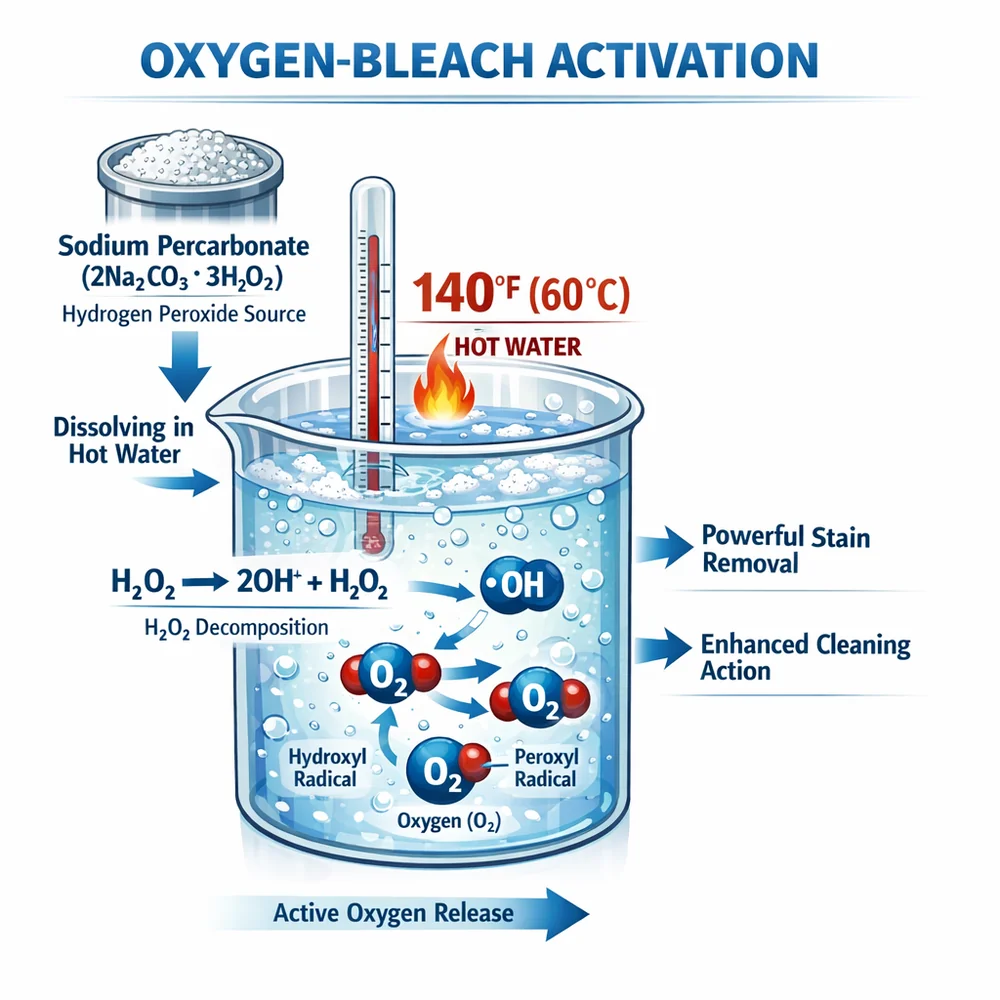
Meet Sodium Percarbonate, also known as “Oxygen Bleach” (the active ingredient in OxiClean).
This powder is chemically brilliant. When dissolved in hot water, it breaks down into two things:
- Soda Ash (Sodium Carbonate): This boosts the pH of the water to about 10-11. High pH helps to swell the cotton fibers, opening them up to release trapped dirt. It also neutralizes fatty acids.
- Hydrogen Peroxide: This releases active oxygen species. These oxygen bubbles hunt down organic stains and lift them gently from the fabric.
It whitens without not eating the cloth. Unlike chlorine, it is color-safe, meaning you can use it on patterns and stripes without fear.
The Protocol:
- Heat is Key: Fill a tub or your washer with hot water (at least 104°F/40°C). Oxygen bleach needs heat to “activate” and release the oxygen. In cold water, it does almost nothing.
- Dissolve: Add a generous scoop of Sodium Percarbonate. Ensure it is fully dissolved.
- The Long Soak: Soak your dingy whites for 4–6 hours, or overnight. This is the most important step. The oxygen needs time to navigate the deep geography of the fiber matrix and oxidize the gray film. A quick 15-minute wash cycle isn’t enough active time.
The Bottom Line Oxygen Bleach (Sodium Percarbonate) whitens by releasing active oxygen bubbles. It is safer, more effective, and gentler on fabrics than chlorine bleach. Always use hot water to activate it and allow for a long soak.
The “Bubble” Method: Hydrogen Peroxide Soak
If you don’t have powdered oxygen bleach, check your medicine cabinet. Liquid Hydrogen Peroxide (3%) is the same active ingredient, just suspended in water instead of soda ash powder.
It is perfect for delicate items (like silk or wool) that can’t handle the high pH of the soda ash in powdered oxygen bleach. Silk, for example, is dissolved by high alkalinity.
The Protocol: Add 1 cup of peroxide to your wash cycle, or soak a small item in a 50/50 mix of water and peroxide. It will fizz and bubble as it attacks body oils and bacteria, leaving the fabric brighter and sterile. It is a fantastic disinfectant as well, perfect for period-stain-removal-mattress-clothing or handling gym clothes with bacterial odor.
Optical Magic: Using “Bluing” Agents
Sometimes, white fabric isn’t actually dirty; it has just lost its “cool” tone.
Natural cotton is slightly yellow (think raw cotton or muslin). Manufacturers add “optical brighteners” (blue dyes) to make it look bright white. Over time, these wash out.
You can add them back with Laundry Bluing (like Mrs. Stewart’s Bluing).
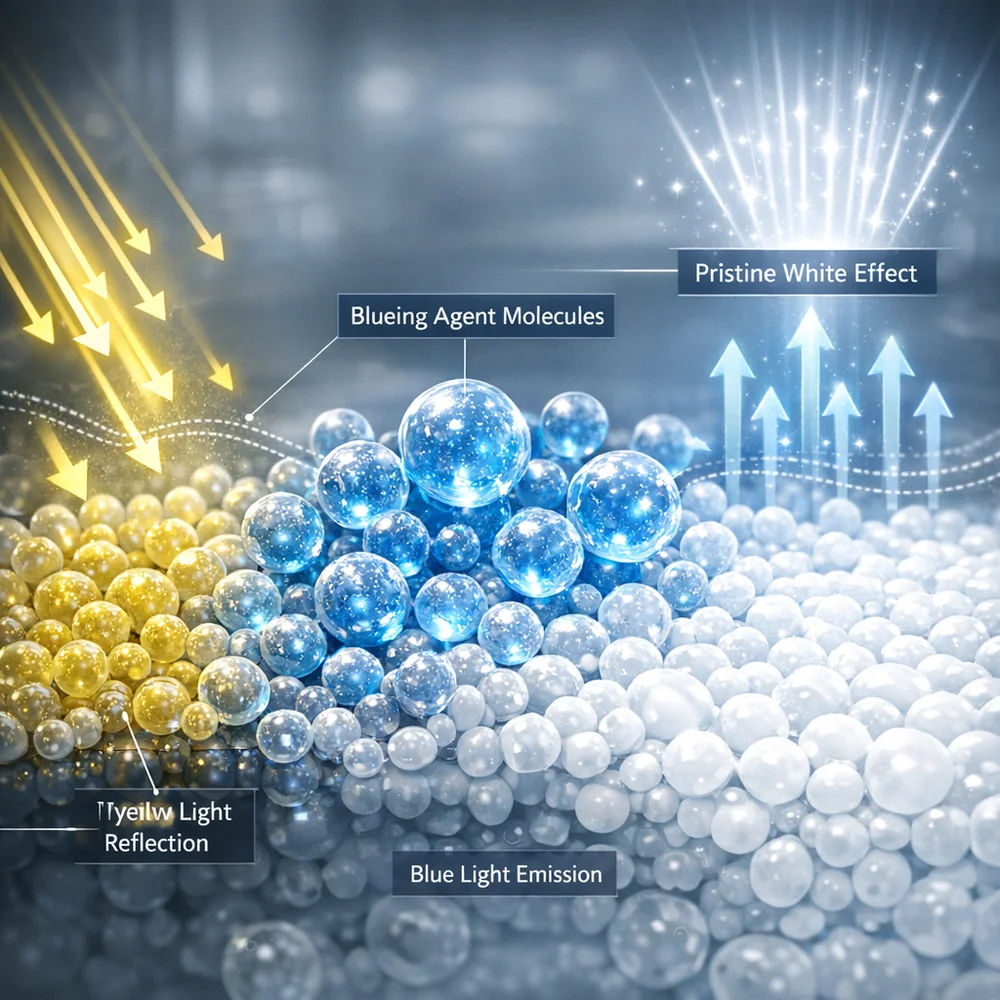
Bluing liquid is a colloidal suspension of extremely fine blue iron powder. It adds a microscopic trace of blue pigment to the water. In color theory, blue is the opposite of yellow. By adding a tiny bit of blue, you cancel out the yellow, and the human eye perceives the result as a crisp, icy white. It is an optical illusion, but it is effectively how all “white” paper and fabric is made.
Caution: Bluing is potent.
- Dilute First: Always dilute the bluing in a gallon of cold water before pouring it into the machine. If you pour it directly onto clothes, you will end up with permanent blue tie-dye spots.
- Last Phase: Add it to the final rinse cycle. It is a finishing agent, not a cleaner.
The Bottom Line “Bluing” is an optical illusion. It adds blue pigment to neutralize natural yellowing, tricking the eye into seeing bright white. Use sparingly and always dilute.
Solar Bleaching: The Oldest Trick in the Book
Before chemicals, we had the sun. This is why “bleachers” at sports games are called bleachers—because the wood planks sit in the sun all day and turn white.
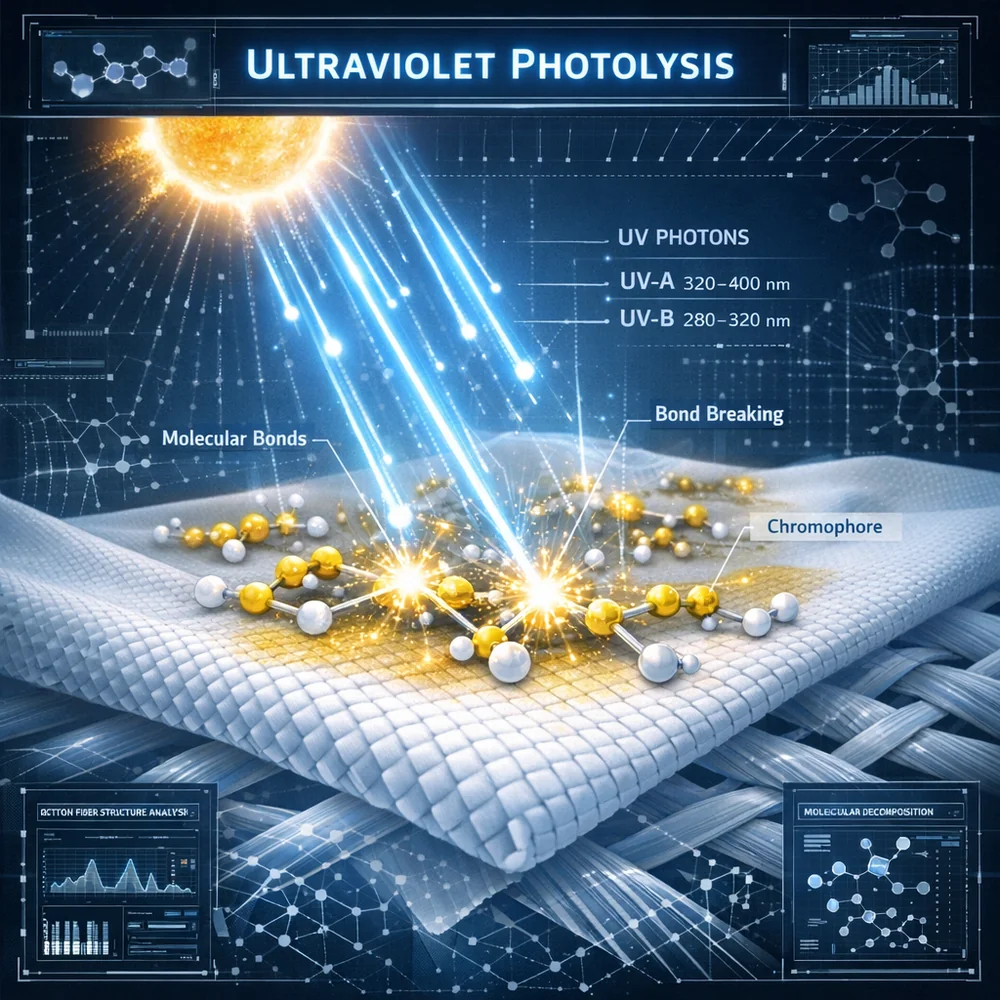
UV radiation (specifically UV-B) is a potent variation of “bleach.” It breaks down the molecular bonds of dyes and stains (photolysis). High-energy photons strike the stain molecule and shatter its structure, rendering it colorless.
For organic stains (tomato, grass, baby formula), washing the item and laying it wet in direct sunlight is more effective than any store-bought chemical.
Pro Tip: Squeeze lemon juice on the stain before sunning it. The citric acid acts as a “photosensitizer” or catalyst, speeding up the reaction. This is safe for cotton and linen but avoid it on silk, as the sun can yellow the protein fibers of silk.
Graying Whites: The Enzyme Solution
If your whites are uniformly gray, it usually means dirt is re-depositing on them during the wash.
This happens because body oils form a sticky “bio-film” on the fabric. This oil acts like a magnet, grabbing floating dirt and lint from the wash water and holding it against the shirt. To fix this, you need Enzymes.
Switch to a high-quality detergent containing “Protease” (protein eater) and “Lipase” (fat eater). These biological catalysts dig into the fiber and eat the protein and fat binders that hold the gray film to the shirt. Once the glue is gone, the dirt washes away.
Also, look for “Cellulase.” This enzyme is fascinating—it eats cellulose. Specifically, it eats the tiny, damaged micro-fibrils (fuzz) that stand up on old cotton. This fuzz traps dirt and casts microscopic shadows, making the fabric look dull. By “shaving” off this fuzz, Cellulase makes the fabric smoother and more reflective, restoring its bright white appearance.
Hard Water: The Invisible Film
Do your towels feel stiff and scratchy? Do your whites turn orange or gray? You probably have hard water.
Minerals (calcium and magnesium) in the water bind to detergent molecules, preventing them from cleaning. Instead, they form a sticky precipitate called “soap scum.” This scum coats the fibers, trapping dirt and turning the fabric gray.
The Fix: You need a “chelating agent” or water softener. Add Washing Soda or Borax to every load. These powders react with the minerals in the water, “wrapping” them up so they can’t interfere with the soap. This allows your detergent to clean the clothes instead of fighting the water.
The “Deep Strip”: Laundry Stripping
When all else fails, hit the reset button.
Laundry Stripping is a deep-clean method where you soak clean clothes in a tub of hot water, washing soda, borax, and detergent for 4 hours.
You turn the water into a hyper-alkaline solution that swells the fibers to their maximum limit, releasing everything trapped inside. You will be disgusted by the water that comes out—usually dark brown or gray. That is the years of built-up detergent, fabric softener, body oil, and minerals leaving the fabric.
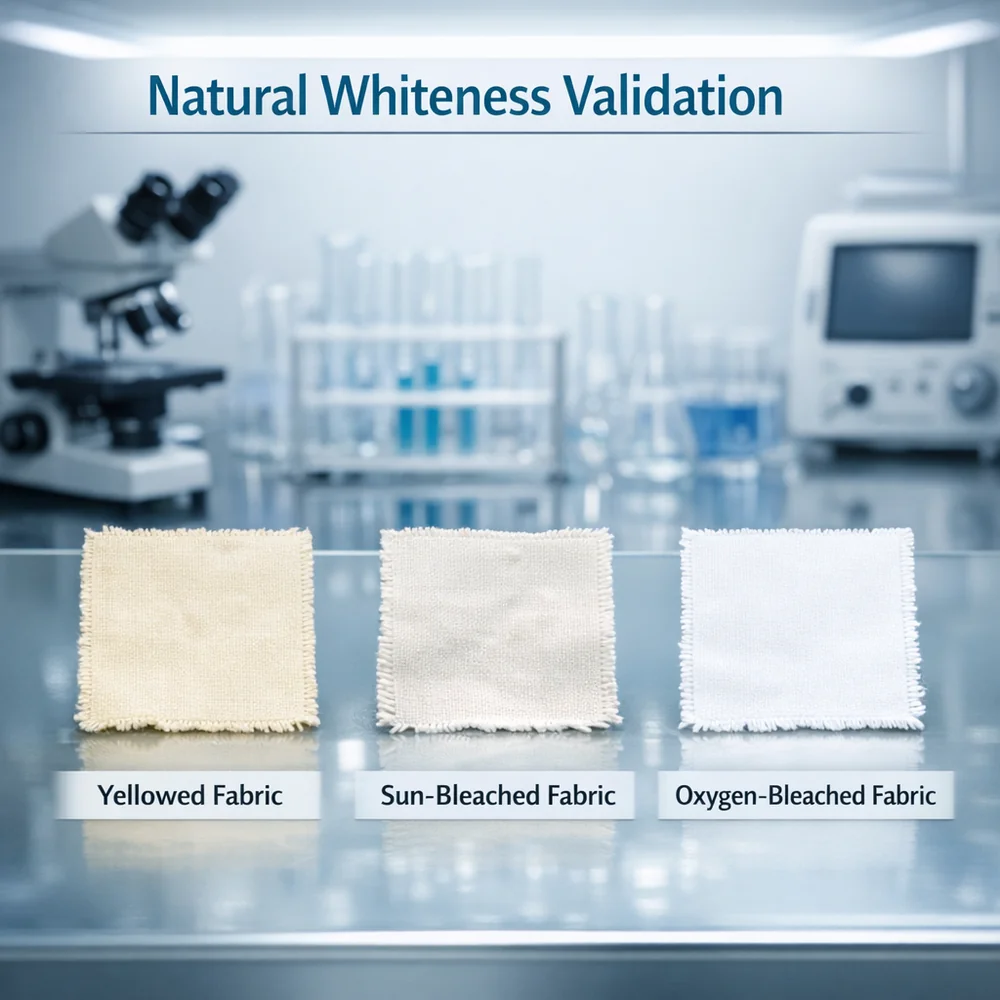
After a strip, your towels will be fluffy and absorbent again, and your whites will be blindingly bright. See our guide on laundry-stripping-protocols for the exact recipe.
The Bottom Line Laundry Stripping is a deep-cleaning “reset” that removes years of mineral and detergent buildup. Use it once a year to restore dingy whites.
Prevention: The “Separate and Hot” Rule
Whitening isn’t just about fixing; it’s about not breaking.
- Sort: Never wash whites with colors. Ever. Even older colors bleed microscopic amounts of dye (“fugitive dye”) that settle on whites, turning them gray. A single red sock really can ruin a whole load, but a thousand blue socks will slowly ruin it too.
- Heat: Wash whites in hot water (unless the tag forbids it). Heat liquefies body oils so they can be rinsed away. Cold water often just smears the oil around, locking it in.
- Don’t Overload: Clothes need room to tumble. The mechanical action of cloth rubbing against cloth is what cleans. If you pack the washer tight, the dirt just rubs back into the fabric.
Conclusion
Whitening is simple: Oxy-Clean to lift dirt, Enzymes to eat oil, and Bluing to trick the eye.
Put the chlorine bleach down. It’s ruining your clothes and turning them yellow. Chemistry has evolved; your laundry routine should, too. By respecting the textile and using selective cleaners, you can keep your sheets and shirts looking hotel-fresh for a decade. Treat the fabric like a science experiment, and you will get predictable, brilliant results every time.
References
Journal of Agricultural and Food Chemistry. “Evaluation of Sodium Percarbonate as a Sustainable Bleaching Agent for Natural Fibers.” ACS Publications
American Cleaning Institute. “Oxygen Bleach vs Chlorine: A Technical Comparison of Oxidative Potentials.” https://www.cleaninginstitute.org/
Textile Coloration and Finishing. “The Optical Mechanisms of Bluing Agents on Cellulosic Textiles.” ScienceDirect
Consumer Reports. “Alternative Whitening Methods: Comparative Efficiency of Peroxides and Solar Bleaching.” https://www.consumerreports.org/
Dyes and Pigments. “pH-Dependent Stability of Optical Brighteners and the Effects of Chlorine Exposure.” Elsevier
Journal of Surfactants and Detergents. “Enzymatic hydrolysis of cotton: The role of cellulase in fabric care.” Springer Link