Washing Silk at Home: The Chemistry of Protein Lustre and pH
Table of Contents
Things You'll Learn From This Article:
- Silk stays shiny because its fibers are smooth, so anything that roughs them up (harsh detergent, friction, heat) makes it look dull.
- “Dry clean only” doesn’t always mean water is bad; careful hand washing with the right detergent can actually be gentler on silk.
- Regular laundry detergents are a problem because they’re too alkaline and often contain enzymes that slowly eat away at silk fibers.
- A pH‑neutral, enzyme‑free detergent is essential; in a pinch, a mild hair shampoo works because it’s made for protein fibers.
- Silk is weaker when wet, so even a gentle washing machine cycle can cause damage from rubbing and tumbling.
- True hand washing means cool water, fully dissolved detergent, gentle swishing, and no scrubbing, twisting, or wringing.
- Keeping soak time short (about 5 minutes) helps prevent dye bleeding and color loss, especially in dark or bright silks.
- Wringing silk can permanently break the fibers; rolling it in a towel is the safest way to remove excess water.
- Air‑drying in a cool, shaded place protects silk from yellowing, fading, and shape distortion caused by heat and sunlight.
- Steaming is safer than ironing because it removes wrinkles without pressing or crushing the fibers.
- If you must iron, doing it on the inside, on low heat, while the fabric is slightly damp reduces the risk of scorch marks and shine.
- Spraying water directly onto dry silk can leave permanent water rings, often forcing you to rewash the whole garment.
- Spot cleaning usually backfires on silk; washing the entire garment avoids rings, streaks, and uneven texture.
- For greasy stains, absorbing the oil with powder before washing works better than rubbing or using stain removers.
- Silk pillowcases need frequent washing because they collect oils and skincare products, but turning them inside out and using a mesh bag reduces wear.
- Occasional vinegar soaks can help remove built‑up body oils and restore brightness without harming the silk.
Silk is physically the strongest natural fiber known to man, with a tensile strength rivaling steel wire of the same diameter. Yet, paradoxically, it is chemically one of the most fragile materials in the laundry environment. Structurally, silk is a continuous filament of fibroin, a protein extruded by the Bombyx mori silkworm. This filament has a triangular prism cross-section that refracts incoming light at 20-degree angles, creating the optical phenomenon we know as lustre or shimmer.
Washing silk is effectively an exercise in preserving this triangular prism structure. Any chemical or mechanical action that roughens the smooth surface of the filament will scatter light, causing the fabric to appear dull and chalky.
The Dry Clean Only label found on most silk garments is often a liability shield for manufacturers rather than a technical necessity. In reality, water washing can be superior for silk preservation. Industrial dry cleaning solvents (like PERC) strip the natural oils from the fiber and can cause white silk to yellow over time due to solvent oxidation. However, washing with water requires strict adherence to pH balance, friction control, and enzymatic exclusion. Deviating from these thermodynamic parameters results in shattered fibers, shrinkage, and permanent loss of sheen.
Why Detergent Dulls Silk Shine
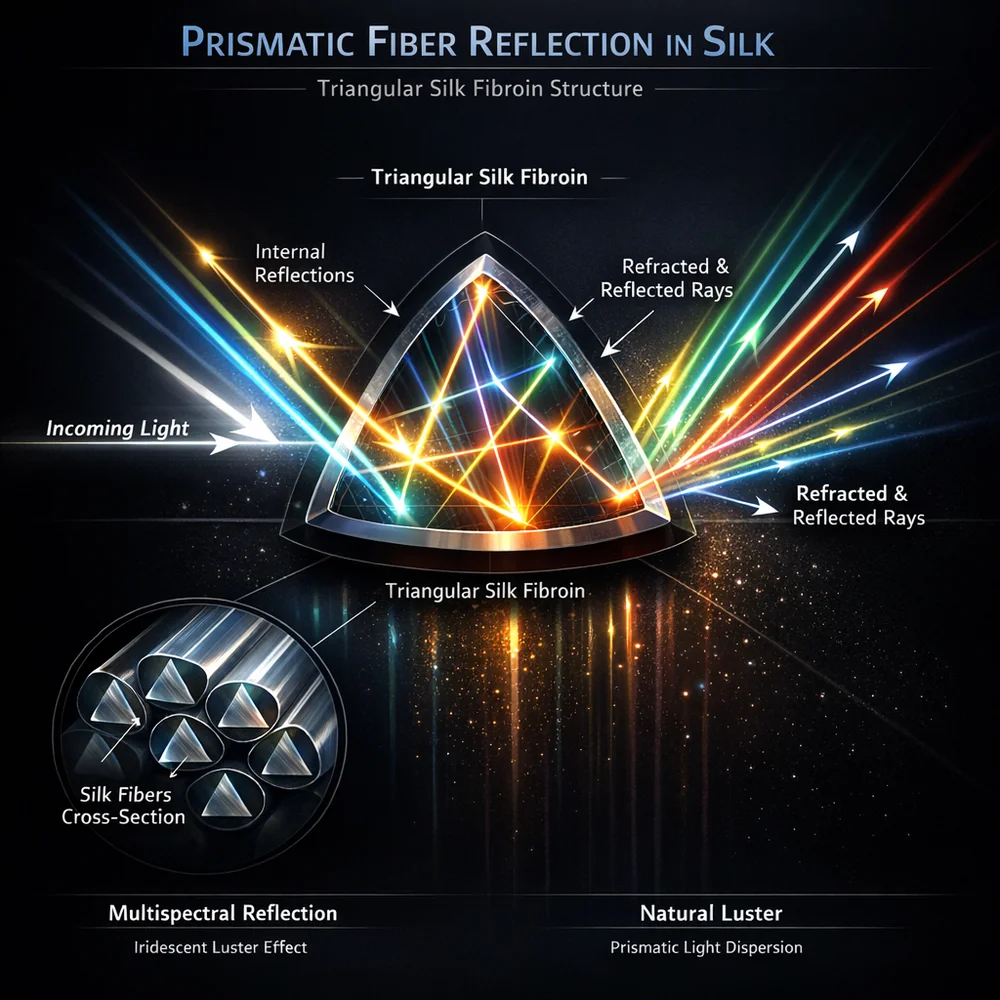
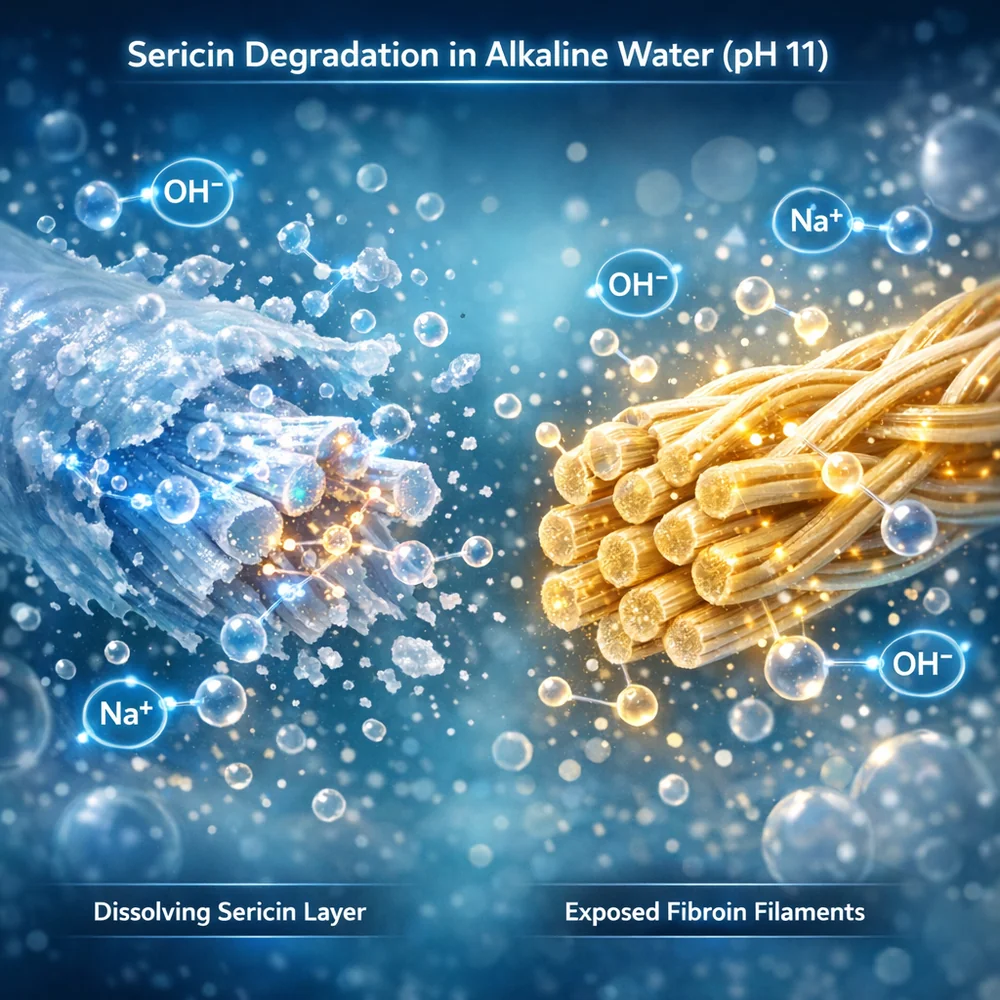
The distinctive shine of silk is directly linked to the smoothness of the fiber’s outer cuticle. In a high-alkaline environment (pH greater than 8), the outer layers of the silk filament swell and the scales of the cuticle lift up. This surface roughness turns the prism into a jagged mirror, scattering light in random directions. The visual result is a loss of depth and lustre.
Unfortunately, most standard biological laundry detergents are formulated with a high pH (9-11) to effectively saponify grease and oils on cotton. Furthermore, modern detergents rely heavily on protease enzymes to digest protein-based stains (blood, sweat, egg). The fundamental problem is that silk is a protein. Proteases cannot distinguish between the protein of a stain and the protein of the fabric. They will chemically digest the surface of the silk fiber, slowly consuming the garment wash by wash. This enzymatic degradation weakens the structural integrity, leading to holes at stress points like underarms and seams.
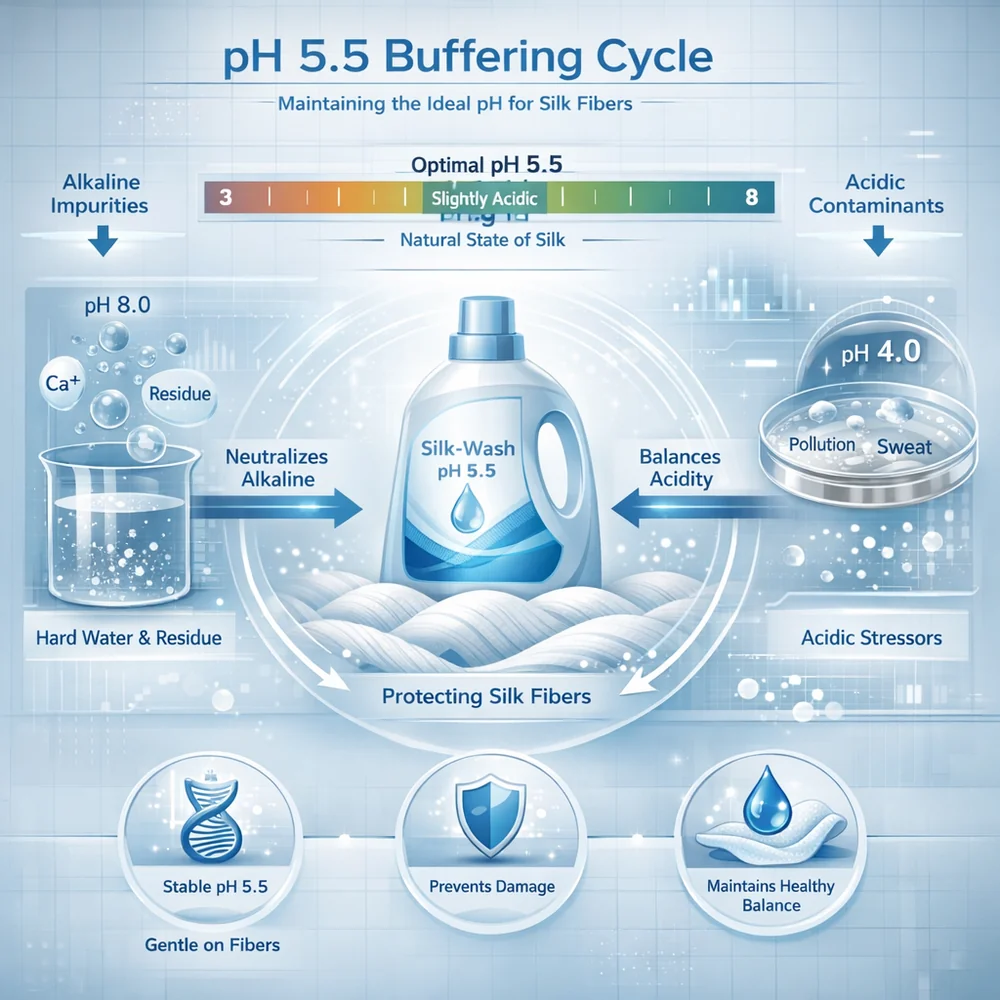
The technical requirement is a pH-neutral, enzyme-free detergent. Specialized delicate formulations (such as Tenestar, The Laundress Delicate Wash, or Eucalan) are buffered to a neutral pH of 7. They clean via gentle surfactants without swelling the cuticle or digesting the fibroin.
In an emergency, high-quality human hair shampoo can serve as a substitute. Human hair is keratin (protein), and shampoos are designed to smooth the cuticle for shine, the exact outcome required for silk.
The Bottom Line Alkaline detergents roughen the silk fiber surface, destroying its shine (lustre). Protease enzymes chemically digest the protein structure. Only pH-neutral, enzyme-free detergents preserve the optical and structural integrity of silk.
How to Hand Wash Silk
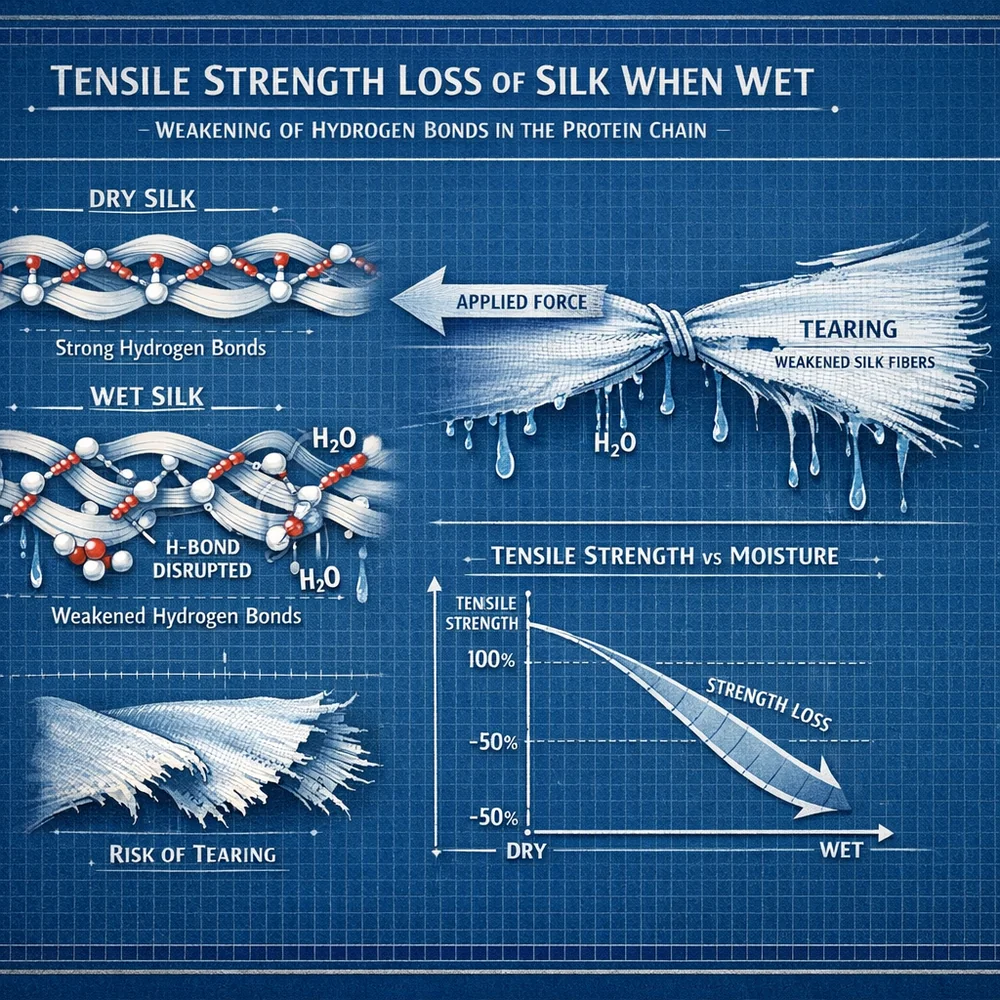
Silk exhibits a unique property called wet tenacity loss. It loses up to 20 percent of its tensile strength when saturated with water. This wet fragility means that the mechanical tumbling action of a washing machine, even on a Hand Wash cycle, poses a significant risk. The friction of the fabric rubbing against itself, the metal drum, or other garments can cause chafing. Chafing manifests as fuzzy, whitish patches on the surface of the fabric, particularly visible on dark satin weaves. This is not a stain. It is microscopic fiber breakage (fibrillation).
True hand washing is the only method that offers the necessary zero-friction control. Fill a basin with cool water (below 85°F or 30°C). Dissolve the detergent fully in the water before adding the garment. Concentrated detergent poured directly on silk can cause spotting.
Submerge the item. Gently move the garment through the water with a swishing motion. Imitate the movement of kelp in the ocean. Do not scrub, rub, wring, or twist the fabric. The hydrodynamic movement alone is sufficient to release localized soil.
Limit soaking time to 5 minutes or less. Prolonged soaking can destabilize ionic dyes, especially in saturated colors like intense reds or navy blues. Silk dyes are often less colorfast than cotton dyes, and extended water exposure increases the probability of bleeding.
The Bottom Line Wet silk is 20 percent weaker than dry silk and prone to friction damage (chafing). Hand washing via gentle swishing, avoiding scrubbing or twisting, minimizes mechanical stress on the weakened wet fibers.
How to Dry Silk Without Damage
Wringing out wet silk is structurally catastrophic. Twisting the fibers creates extreme torque shearing forces that fracture the fibroin filaments. This damage results in permanent break creases, white lines or deep wrinkles that cannot be ironed out because the fiber itself has snapped. To remove excess water safely, you must utilize the towel roll method.
Lay a clean, white cotton towel flat on a table. Place the wet silk garment flat on top of the towel. Roll the towel up with the silk inside, creating a sausage shape. Gently press down on the roll with your hands. Do not twist. The dry cotton towel will wick the moisture away from the silk via capillary action, absorbing the bulk of the water without applying any shear force to the delicate silk fibers. Unroll immediately. Hang the garment to air dry on a padded hanger or drying rack.
Avoid direct sunlight and heat sources. UV radiation degrades the peptide bonds in the silk protein rapidly, causing white silk to yellow and colored silk to fade. Drying near a radiator or heater causes uneven drying tension, which can warp the fabric shape. The ideal environment is a shaded, cool, airy room.
The Bottom Line Wringing wet silk creates permanent break creases. The towel roll method uses capillary action to extract water safely without twisting the fragile fibers.
How to Iron and Steam Silk
Silk wrinkles easily because its molecular structure lacks the natural elasticity (crimp) found in wool fibers. To restore the smooth drape of a silk blouse or scarf, thermal energy is often necessary. This heat relaxes the hydrogen bonds that hold the wrinkles in place, allowing the polymer chains to realign into a straight configuration.
Steaming is universally safer than ironing. The steam provides moisture and moderate heat (212°F) without the crushing pressure of a metal plate. Hang the garment and steam from a distance of 6 inches. The weight of the damp fabric combined with gravity will pull the wrinkles out naturally.
If a crisp finish is required (e.g., for dress shirts), ironing is permissible under strict conditions. Iron while the silk is still uniformly damp. If the fabric is bone dry, the heat will not be effective and risks scorching. Use the lowest heat setting (often labeled Silk or Synthetic). Iron on the wrong side (inside) of the fabric. Ideally, use a pressing cloth (a clean white cotton handkerchief) between the iron surface and the silk. This prevents the iron from glazing the surface, a phenomenon where heat and pressure fuse the fibers, creating shiny burnish marks that ruin the matte texture of crepe de chine.
Never spray water from the iron onto dry silk. This causes water spots, rings where the water has locally swelled the fibers. These spots are optically distinct and are difficult to remove without re-washing the entire garment.
The Bottom Line Steaming is the safest method for wrinkle removal. If ironing, use a pressing cloth and low heat on slightly damp fabric to avoid water spots and surface glazing (burnishing).
How to Remove Stains from Silk
Spot cleaning involves a unique peril for silk: the water ring. Rubbing a stain on silk typically results in two forms of damage: chafing (fuzziness from friction) and tide lines (rings caused by the migration of sizing agents or dye to the edge of the wet area).
The most effective strategy for stains is full immersion. Rather than treating just the spot, wash the entire garment. This ensures that any fiber swelling or dye release happens uniformly across the entire surface, preventing the formation of distinct rings.
For oil-based stains (salad dressing, makeup), do not apply water first. Apply a small amount of talcum powder, cornstarch, or French chalk to the dry stain. Let it sit for 20 minutes to absorb the lipid. Gently brush the powder off, then proceed to the hand wash protocol. This draws the grease out of the fiber core without wetting it.
Avoid enzyme sticks or biological stain removers at all costs. Just as with detergents, applying a concentrated enzyme paste to a silk stain effectively burns a hole in the fabric chemically by digesting the fiber itself.
The Bottom Line Spot cleaning silk causes water rings and chafing. Full garment immersion is the safer protocol for stain removal, ensuring uniform fiber swelling and preventing localized damage.
How to Care for Silk Pillowcases
The rise of silk pillowcases for hair and skin health introduces a higher frequency washing requirement. Unlike a blouse worn once a month, a pillowcase absorbs facial oils (sebum), retinol creams, and hair products every single night. This heavy biological load requires a more rigorous cleaning schedule, ideally every 3-4 days, to prevent acne and bacterial buildup.
Because pillowcases are washed so frequently, mechanical durability becomes the limiting factor. Turn the pillowcase inside out to protect the glossy satin face from abrasion. Use a mesh laundry bag even for hand washing to prevent snagging on rings or nails.
Over time, body oils can oxidize on silk, causing yellowing. An occasional vinegar soak (a half cup white vinegar in a basin of cool water) can help strip these oily residues and restore the shine without damaging the protein structure.
The Bottom Line Silk pillowcases accumulate heavy oils and require frequent washing (every 3-4 days). Turn inside out and use a vinegar soak to strip oxidized body oils that cause yellowing.
Conclusion
Mastering the washing of silk requires a conceptual shift from aggressive cleaning to fiber stewardship. The effectiveness of any protocol rests on the disciplined foundation of pH neutrality, friction avoidance, and enzymatic exclusion. By respecting the delicate nature of the fibroin protein and rejecting the harsh chemistry of modern industrial detergents, we can keep our silk garments lustrous, strong, and fluid for decades.
This technical approach respects the intrinsic value of the material while providing a practical, home-based solution that rivals dry cleaning. Every shimmering, un-chafed silk shirt is a testament to the synergy between gentle handling and chemical precision. Moving away from the anxiety of ruining silk allows for a more confident and economical wardrobe management. It prevents the yellowing associated with solvent-based cleaning and restores the natural, breathable hand of the fabric.
References
- Journal of Applied Polymer Science. “Effect of pH on the Surface Morphology and Lustre of Silk Fabrics.”
- American Cleaning Institute. “Enzymatic Hydrolysis of Natural Protein Fibers: A Study on Protease Activity.”
- Textile Research Journal. “Mechanical Properties of Wet vs Dry Silk Filaments.”
- Consumer Reports. “Silk Care Guide: Comparing Hand Washing vs Dry Cleaning Efficacy.”
- Journal of Cultural Heritage. “The Degradation of Silk by UV Radiation and Heat.”