Fabric Conditioner Science: The Chemistry of Softness
Table of Contents
Things You'll Learn From This Article:
- Softness comes from a thin chemical coating on fibers, not from changing the fabric itself.
- Fabric conditioner sticks to clothes because opposite electrical charges attract, which is why it’s added in the rinse, not the wash.
- The slippery feel is really reduced friction, so your skin glides over fibers instead of catching on them.
- Modern conditioners are designed to break down in the environment, unlike older formulas that polluted waterways.
- Conditioned clothes drape better and wrinkle less because fibers slide over each other more easily.
- Using conditioner on towels makes them worse at drying because the coating repels water.
- Athletic and moisture‑wicking clothes stop working properly if conditioner clogs their sweat‑pulling channels.
- Skipping conditioner helps towels, gym clothes, and microfiber cloths do their jobs better.
- Softener can make fluffy fabrics like fleece and flannel burn faster, which is why it’s unsafe for children’s sleepwear.
- Extra‑silky conditioners often contain silicone, which feels smooth but builds up over time.
- Silicone buildup can dull colors and whites, and it usually needs special washing to remove.
- Fabric softener drawers get moldy easily because the liquid feeds microbes, so regular cleaning matters.
- A vinegar rinse and monthly scrubbing can prevent musty smells coming from the dispenser.
- Long‑lasting “fresh” scent works because fragrance sticks to the same coating that makes fabric soft.
- That coating also traps bad smells, especially if clothes are stored in damp places.
- Old or badly stored conditioner may smell fine but no longer soften clothes.
- Heat and time can break down conditioner, so expiration dates and storage conditions matter.
- Conditioner works best when you use it selectively instead of adding it to every load by habit.
That fresh-out-of-the-dryer softness we all love is not magic. It is chemistry. When you add fabric conditioner to your wash, you are coating your clothes in a microscopic layer of specialized molecules that fundamentally change how the fibers feel against your skin. But like most conveniences in life, this softness comes with trade-offs that are worth understanding before you pour that blue liquid into the dispenser every single time.
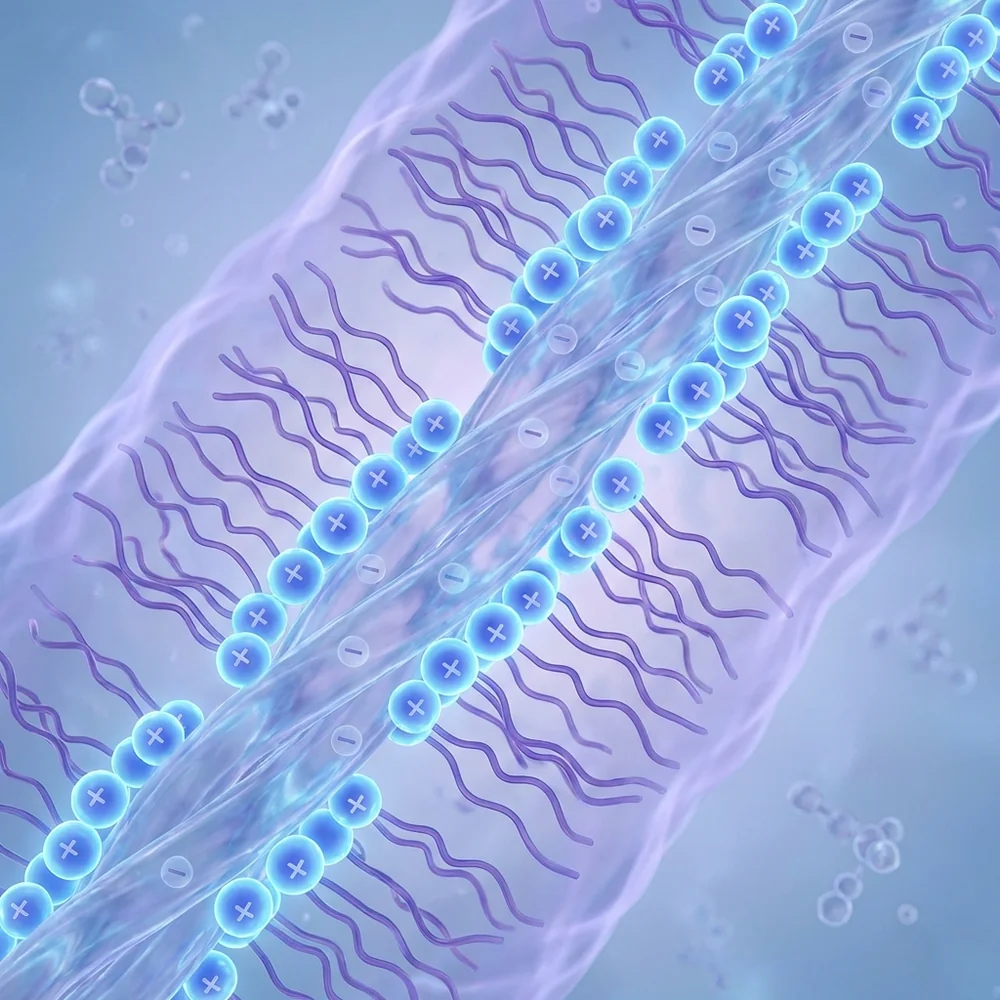
Fabric conditioners work through a process called cationic adsorption. During the main wash cycle, your detergent leaves a slight negative electrical charge on the fabric. In the final rinse, when you add the conditioner, its positively charged molecules are drawn to those negative sites like magnets. They latch on and stay put. Once anchored, these molecules have long, slippery “tails” that stick up from the fiber surface. When you touch the fabric, your fingers glide over these molecular tails instead of scraping against the raw, jagged edges of the fiber itself. That reduced friction is what our nervous system interprets as “soft.”
The science is elegant, but it introduces complications. Those same molecules that make your sheets feel silky can make your towels worse at drying you off. They can increase the flammability of fluffy fabrics. They can even create a perfect breeding ground for mold inside your washing machine. Understanding the chemistry helps you decide when conditioner is a wonderful finishing touch and when it is doing more harm than good.
How Cationic Surfactants Create That Soft Feeling
To understand fabric softeners, you first need to know a bit about electrical charges at the molecular level.
When you wash your clothes with a standard detergent, the surfactants leave behind a net negative charge on the fabric. This is just a side effect of how anionic (negatively charged) cleaning agents work. Fabric conditioners exploit this by using cationic (positively charged) surfactants, specifically molecules called quaternary ammonium compounds, or “quats” for short.
These quats have a central nitrogen atom that carries a permanent positive charge. When they hit the fabric in the rinse water, that positive charge is irresistibly attracted to the negative sites on the fibers. The quats literally stick to the fabric through electrostatic bonding. Once the hydrophilic “head” of the molecule is anchored to the fiber, the long hydrophobic “tail” extends outward into the air.
Picture your cotton shirt covered in millions of microscopic hairs, all standing up from the surface. When your skin touches the fabric, it slides over these slippery molecular tails rather than catching on the rough texture of the underlying cellulose. This phenomenon is called lubricity, and it is the entire basis of what we perceive as softness. The fabric itself has not changed at all. Your nervous system is just detecting less friction.
Key Insight: Softness is a friction illusion. Conditioner molecules anchor to fibers and present slippery tails that reduce the coefficient of friction between the fabric and your skin.
The Switch to Esterquats and Why It Matters
If you have been using fabric softener for decades, you might not realize that the chemistry has changed significantly since the 1990s.
The original softening agents, compounds like DSDMAC (distearyldimethylammonium chloride), worked incredibly well. The problem was that they were environmental nightmares. Their strong carbon-nitrogen bonds made them extremely resistant to breakdown. They passed through wastewater treatment plants almost unchanged and accumulated in rivers and lakes, where they proved toxic to aquatic life.
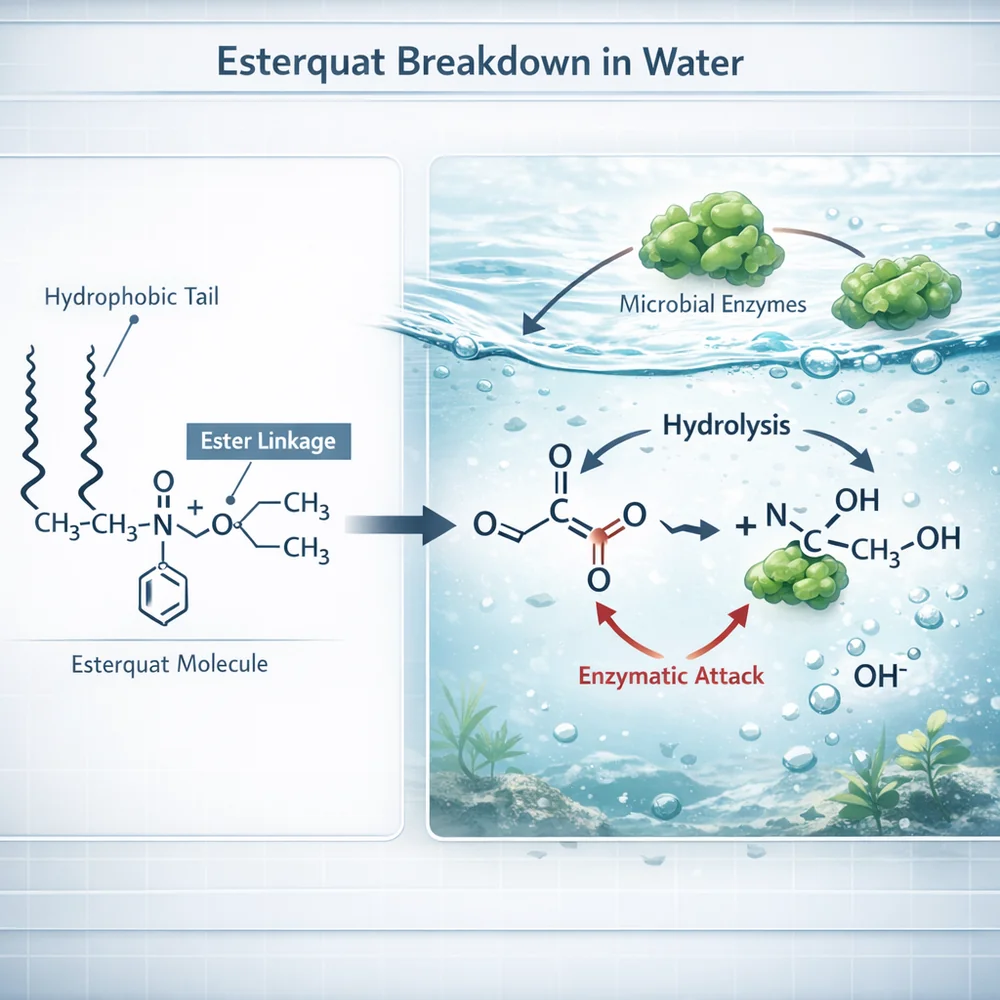
Modern conditioners have largely switched to a new class of molecules called esterquats. These provide the same softening performance but are built with a deliberate chemical weakness. Within the hydrophobic arms of the molecule, there are special ester linkages that are highly susceptible to hydrolysis. In plain language, water can break them apart.
Inside your washing machine, where conditions are stable, the esterquats work perfectly. But once they are discharged into the environment and encounter the varying pH levels and microbial enzymes of nature, those ester bonds snap. The molecule rapidly degrades into harmless fatty acids and alcohols. This “designed to fail” approach allows the conditioner industry to deliver softness without the long-term ecological harm of earlier formulas.
Key Insight: Esterquats are “intelligent” molecules with built-in obsolescence. They perform flawlessly during the rinse but are designed with weak chemical bonds that ensure rapid environmental breakdown.
Why Conditioned Fabrics Feel Different
The sensation of softness is not about changing the fabric itself. It is about changing how fibers interact with each other and with your skin.
When cotton dries without any conditioner, the individual cellulose chains tend to form hydrogen bonds with their neighbors. These bonds lock the fibers into a rigid, interlocked structure that makes the fabric feel stiff or “crunchy.” Anyone who has line-dried a towel knows this texture intimately.
The hydrophobic tails of conditioning molecules act as physical spacers. They wedge between fibers and prevent those hydrogen bonds from forming in the first place. By keeping the fibers separated and coated in a slippery film, the conditioner allows the yarns to slide over one another freely. This is why conditioned fabrics drape more elegantly and feel more pliable.
This reduced fiber-on-fiber friction also helps with preventing pilling on sweaters. Pilling happens when loose fibers tangle and knot together during tumbling. Lower friction means less tangling and a smoother surface for longer. However, there is a flip side. In very loosely woven fabrics, a certain amount of friction is what holds the weave together. Too much lubricity can actually destabilize the structure.
The Absorbency Problem with Towels and Activewear
Here is the big trade-off nobody mentions on the fabric softener bottle: the same chemistry that makes things feel soft also makes them repel water.
Those hydrophobic molecular tails are, by definition, water-hating. When you coat a fiber in them, you increase what scientists call the contact angle of water on the surface. In everyday terms, water droplets bead up and roll off instead of being absorbed. For dress shirts or bedsheets, this is not a problem. For towels, it is a disaster.
A heavily conditioned towel will often smear water across your skin rather than pulling it into the thirsty cotton core. You end up rubbing harder and longer to get dry, which is the exact opposite of what you want. The advice for washing linens and towels almost universally recommends skipping the conditioner entirely.
The same principle applies to athletic wear. Moisture-wicking fabrics are engineered with tiny capillary channels that draw sweat away from your body. Coating those channels in a hydrophobic quat film plugs them up completely. Your high-performance shirt stops wicking and starts trapping moisture against your skin, leaving you feeling clammy and uncomfortable. For anything designed to manage moisture, from gym clothes to microfiber cleaning cloths, conditioner is counterproductive. An enzyme detergent for sweat without any conditioning additives is the way to go.
Key Insight: Softness and absorbency are opposites. The hydrophobic coating that creates a pleasant feel on skin also creates a water-repellent barrier that ruins the performance of towels and moisture-wicking fabrics.
The Hidden Fire Risk on Fleece and Flannel
This one is genuinely alarming, and most people have never heard of it.
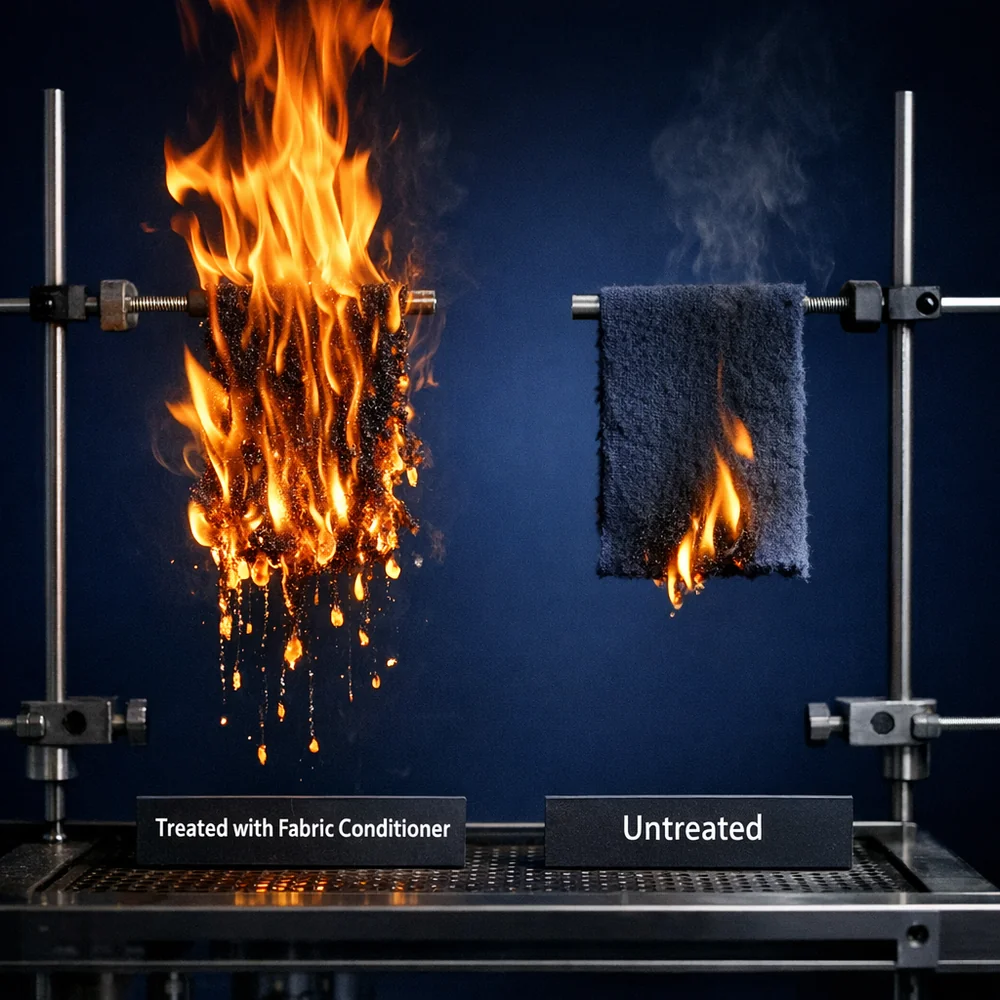
Studies have shown that the cationic surfactants in fabric softeners can significantly increase the rate at which certain fabrics burn. The effect is most pronounced on “fuzzy” high-pile materials like cotton terry, fleece, and flannel.
The mechanism is two-fold. First, the conditioner deposits a thin layer of fatty, waxy molecules that are themselves mildly flammable. Second, and more importantly, the conditioning process “fluffs up” the fibers. This increases the surface area exposed to atmospheric oxygen. More oxygen access means faster combustion.
Because of this risk, US federal regulations and many international safety standards explicitly warn against using fabric softeners on children’s sleepwear or any garment labeled as flame-resistant. The oily residue can interfere with fire-retardant treatments built into the fabric. For parents managing laundry for young children, especially those with sleepwear designed to resist flames, respecting this warning is essential. You can find guidance on safe laundry practices for sick family members that also applies here.
Silicone Additives for That “Super Silky” Feel
If you have ever used a premium conditioner and noticed an almost unnaturally silky texture, you have probably encountered silicone derivatives.
Beyond standard quats, high-end formulations often include polydimethylsiloxane (PDMS) or amino-modified silicones. These provide a different quality of lubricity. Where quats feel “soft” or “waxy,” silicones feel genuinely “silky” or “slick.” Amino-modified versions carry a slight positive charge that helps them bond to the fiber alongside the esterquats.
Silicones offer some practical benefits. They reduce the friction of an iron’s soleplate across the fabric, making ironing easier. They can also speed up drying by helping the spin cycle shed more water mechanically. But they have downsides too.
Silicones are even more hydrophobic than quats, so the absorbency reduction is more severe. They also tend to accumulate on fabric over repeated washes, creating a visible buildup that can make white fabrics look grayish or dull. This residue is difficult to remove with normal detergent. Periodically, a laundry stripping treatment is needed to dissolve the accumulated silicone and restore the original texture and brightness of the fabric.
The Moldy Dispenser Drawer Nobody Cleans
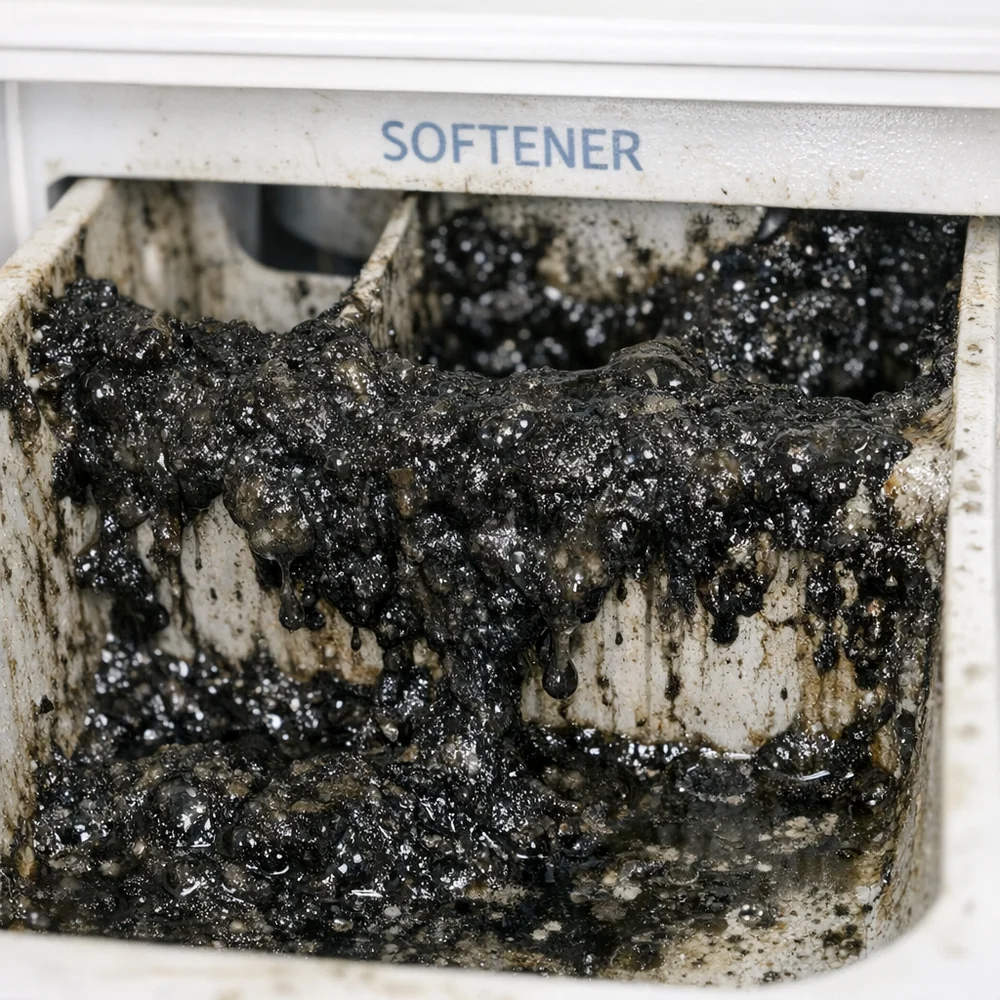
There is a reason your washing machine’s softener compartment is the grossest part of the whole appliance.
Fabric conditioners are formulated at a slightly acidic pH, typically between 3 and 5. This acidity is necessary to keep the esterquats stable and prevent them from breaking down in the bottle. But it also creates an environment that is far friendlier to microbial life than the alkaline, hostile conditions of detergent.
Combine that friendly pH with the fatty acids and organic waxes in the formula, and you have an ideal food source for mold and bacteria. If you look at a conditioner dispenser that has not been cleaned in a while, you will often find a black, slimy residue. This “scrud” is microbial biofilm, and it can transfer musty, sour odors to your supposedly clean laundry.
The fix is straightforward but requires regular attention. Periodically run a laundry vinegar flush through the conditioner compartment. The acetic acid dissolves the waxy residue and acts as a mild antibacterial agent. Pulling out the dispenser drawer and scrubbing it by hand once a month is also a good habit.
Key Insight: The conditioner dispenser is a microbe incubator. Its acidic, nutrient-rich environment requires regular cleaning with acidic agents like vinegar to prevent biofilm contamination of your laundry.
How Fragrance Sticks Around So Long
Ever wonder why conditioned clothes smell fresher longer? That is not an accident. It is engineered.
Delivering fragrance in a cationic system is tricky. Most fragrance oils are non-ionic or weakly polar, and some can destabilize the delicate emulsion that makes up liquid conditioner. To get around this, manufacturers often encapsulate fragrance in polymeric shells that only release their contents slowly over time. This is related to scent bead chemistry found in some laundry products.
Once the fragrance is released, the hydrophobic quat film on the fiber acts as a fixative. The scent molecules dissolve into the fatty coating and evaporate more slowly than they would from bare fabric. This synergy explains why conditioned garments can smell “fresh” for days in a closet.
The downside is that this same effect traps bad smells too. If there are any off-notes in the fragrance, or if the perfume oxidizes over time, those unpleasant aromas will also stick around. Storing conditioned clothes in humid environments can accelerate fragrance breakdown and create that musty “old softener” smell some people find unpleasant on vintage or secondhand items.
Why Your Old Bottle Might Not Work Anymore
Esterquats have a shelf life problem related to the same chemistry that makes them environmentally friendly.
Those hydrolytically sensitive ester bonds are vulnerable to attack by water molecules, especially if the pH drifts outside the narrow acidic window that stabilizes them. If a bottle of conditioner has been sitting in a hot garage for a year or is well past its expiration date, there is a good chance the esterquats have started to break down.
You can often tell by looking at the product. Hydrolyzed conditioner may become thin and watery, or it may develop clumps that will not dispense properly. More problematically, the molecules lose their positive charge when they break apart, which means they can no longer bind to fabric.
A bottle of degraded conditioner will still add scent to your laundry, but it will provide little to no actual softening. Understanding these laundry detergent ingredients and their stability requirements is especially important if you buy in bulk. Proper storage in a cool, dry place and attention to expiration dates ensures you are getting the performance you paid for.
Key Insight: The environmental benefit of esterquats comes from their chemical fragility. This same fragility means improperly stored or expired conditioner loses its softening ability while still delivering fragrance, a frustrating waste of money.
The Bottom Line
Fabric conditioner is a sophisticated surface chemistry product that delivers real, measurable benefits when used appropriately. Understanding how cationic adsorption works helps you appreciate why your dress shirts feel so smooth and why static clings disappear.
But it is equally important to understand the trade-offs. Conditioner reduces absorbency, so it should be skipped for towels and activewear. It can increase flammability on fluffy fabrics, making it inappropriate for children’s sleepwear or flame-resistant garments. It creates a hospitable environment for mold in your dispenser, requiring regular cleaning. And bottles that have been stored improperly may provide nothing but fragrance.
The smartest approach is selective application. Use conditioner on bedding, dress clothes, and everyday cottons where comfort is the priority. Skip it entirely for performance fabrics, absorbent towels, and safety-rated sleepwear. Clean your dispenser monthly. Check expiration dates on bulk purchases.
When you use conditioner with intention rather than habit, you get all the benefits of molecular lubricity without stumbling into the pitfalls.
References
- Journal of Surfactants and Detergents. “The Adsorption Kinetics of Esterquats on Cellulosic and Synthetic Fibers.” Springer
- Consumer Product Safety Review. “The Impact of Fabric Softener Residues on the Flammability of Children’s Sleepwear.” CPSC
- Textile Research Journal. “Friction and Tactile Perception: The Role of Cationic Lubricants in Fabric Softness.” Sage Journals
- Waste Management & Research. “Biodegradability of Quaternary Ammonium Compounds in Domestic Wastewater Treatment.” Sage
- Appliance Engineering. “Biofilm Formation and Microbial Contamination in Detergent and Conditioner Dispensers.” IEEE Xplore