Enzyme Detergents for Sweat: The Biochemistry of Odor Removal
Table of Contents
Things You'll Learn From This Article:
- Sweat smell sticks around because leftover proteins, oils, and product residue build up inside fabric, not because the clothes are still “dirty” on the surface.
- Regular detergent struggles with gym clothes because it relies on harsh chemistry, which doesn’t reach deep buildup and can damage synthetic fabrics over time.
- Enzyme detergents work by breaking sweat gunk into tiny pieces that can actually rinse away, instead of just loosening dirt.
- Protease enzymes handle the protein part of sweat, which is what feeds odor‑causing bacteria hiding in fabric.
- Lipase enzymes break down body oils that polyester grabs onto, removing the greasy layer that protects bacteria and causes yellow stains.
- Mannanase enzymes remove sticky residues from deodorant, lotion, sunscreen, and hair products that trap dirt and block moisture‑wicking.
- Cellulase helps cotton and cotton blends look better by shaving off fuzz that makes clothes look faded and collect dirt.
- Sport detergents work better because they contain more enzymes, use surfactants that can wet synthetic fibers, and avoid fabric‑clogging additives.
- Fabric softeners and optical brighteners can ruin moisture‑wicking by coating fibers, even if clothes feel clean at first.
- Pre‑soaking gives enzymes the time they need to reach deep odor buildup, especially when smells come back right after washing.
- A 30–60 minute soak (or overnight for bad odors) in lukewarm water lets enzymes break down biofilm that normal wash cycles miss.
- Biofilm is a protective slime made by bacteria, and it takes multiple enzyme types working together to fully break it apart.
- Washing too hot kills enzymes, so temperatures around 30–40°C (85–105°F) work best for enzyme detergents.
- Very cold water slows enzymes down, meaning you may need longer soak or wash times in winter.
- Liquid enzyme detergents don’t last forever; after about a year, they can lose cleaning power even if they look fine.
- Powder enzyme detergents last longer because enzymes stay protected until they hit water.
- Heat and sunlight shorten enzyme life, so storing detergent in a cool, dark place helps it stay effective.
- Enzyme detergents are safe for most antimicrobial fabrics, but very alkaline detergents can wear down silver treatments.
- Homemade enzyme tricks using fruit aren’t reliable and can cause fabric or hygiene problems.
- The two biggest things you control are time and temperature—give enzymes enough of both, and odor problems become much easier to fix.
Sweat is mostly water – like 99% of it. But that other 1%? That’s where all the trouble starts. That tiny fraction contains a mix of urea, lactic acid, proteins, salts, and oils that get left behind when the water evaporates from your workout clothes.
On a microscopic level, all that residue acts like biological glue. It sticks dirt, dead skin cells, and bacteria colonies to your fabric in layers that build up with every wear. Eventually, these deposits harden into something called “biofilm” – a stubborn matrix that regular detergent just can’t break through.
Standard detergents try to muscle through this problem using surfactants and high pH to basically force dirt off. But synthetic fabrics like polyester and nylon can’t handle the heat or harsh chemicals needed to strip these deposits the brute-force way.
The real solution is using biochemistry instead of just chemistry. Enzyme detergents use nature’s own molecular tools to take apart soil at the atomic level – way more precise than anything else out there.
This deep dive explains how modern “sport” detergents actually work. Once you understand what protease, lipase, and mannanase do, you’ll get why these products are so much better for gym clothes, and why giving them enough working time is the secret to killing permastink for good.
Protease: The Protein Cutters
Protein is the backbone of sweat buildup. The apocrine glands in your armpits and groin pump out sweat that’s especially loaded with proteins – very different from the watery stuff the rest of your body makes.
When these proteins dry on polyester, they basically weld themselves to the fabric at a molecular level. Regular alkaline detergents try to break these bonds by swelling the fibers and using chemical force. This approach damages fabric over time while often leaving the deepest gunk behind.
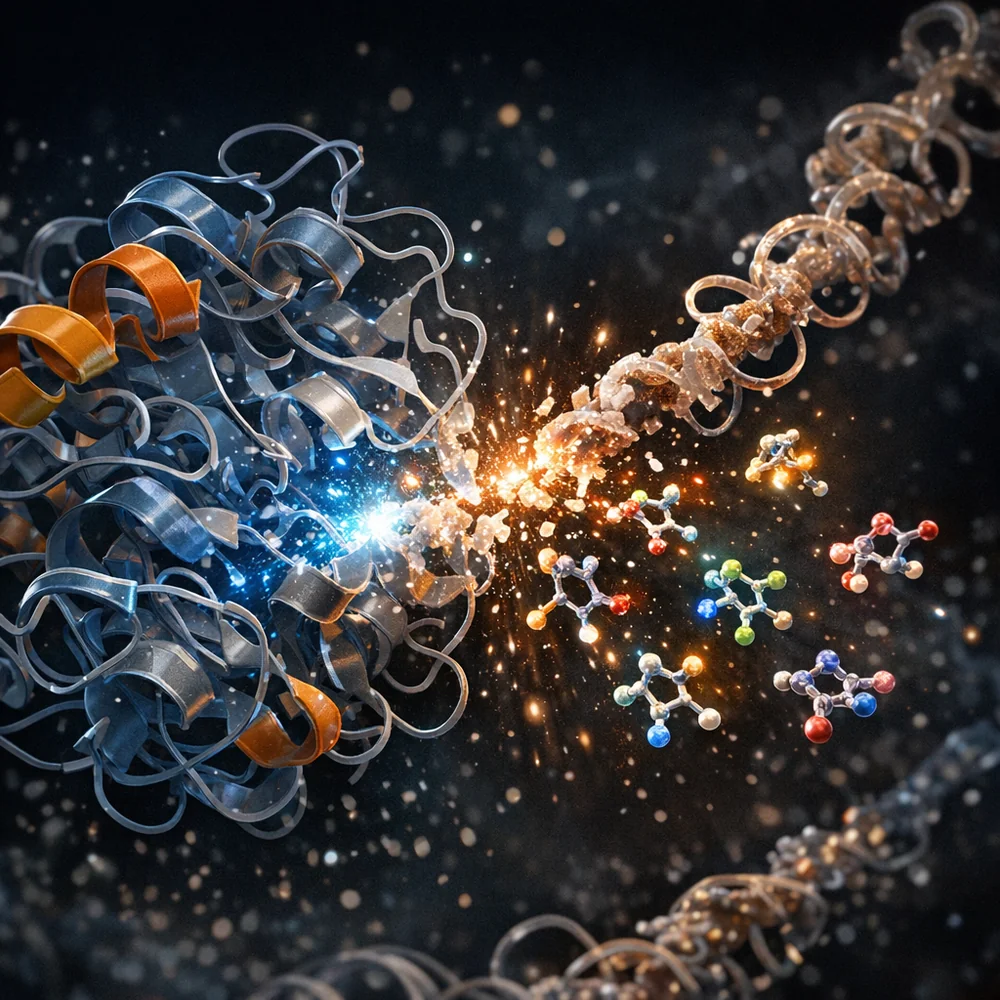
Protease enzymes evolved specifically to cut the bonds that link amino acids into protein chains. Think of them as molecular scissors – incredibly precise tools that snip long, tangled protein chains into tiny amino acid pieces that dissolve easily in water.
These tiny fragments rinse away when intact protein chains would have resisted. Without protease, the protein scaffold stays intact under the surface, feeding odor-causing bacteria. That’s why clothes can smell fine after washing but stink within minutes of putting them on – the bacteria were never removed, just temporarily masked by fragrance.
The bottom line: Protease enzymes work like molecular scissors, cutting protein bonds in sweat that regular detergents simply can’t break.
Lipase: The Oil Destroyers
While proteins provide the structure of sweat gunk, oils are what make it so sticky. Sebum – that oily stuff your skin produces – transfers onto any fabric touching your body.
Here’s the problem with polyester: it actually loves oil. Scientifically speaking, it’s “oleophilic,” meaning it has a chemical attraction to oils that makes it grab onto and hold sebum like crazy.
Lipase enzymes go straight for this oily component. They attack the bonds in oil molecules, splitting them into stuff that actually dissolves in water. This oil-targeting action is crucial for gym clothes because trapped oils act like a waterproof shield around bacterial colonies. Regular detergent surfactants can’t punch through this oily barrier to reach the smell-causing microbes underneath.
Lipase breaks down the shield first, letting other cleaning agents get to the contamination they need to remove. It’s also what you need to tackle that yellow discoloration in the armpit area of white workout shirts – that’s oxidized body oils that have baked into the fabric.
The bottom line: Synthetic fabrics are oil-loving (oleophilic), so they actively attract and bond with body oils, creating a protective barrier around bacteria.
Mannanase: The Gum Busters
If you use deodorant, antiperspirant, lotion, hair products, or sunscreen, you’re adding another layer of complexity to what your gym clothes deal with. Lots of these products use guar gum, xanthan gum, or similar thickeners. When these dry, they become powerful adhesives that trap lint, dust, and tiny debris on fabric.
Mannanase is a newer addition to sports detergents, specifically designed to break down these sticky polymer thickeners. It chops up the molecular chains, turning the glue into soluble sugars that wash away easily.
Having mannanase in your detergent is a key difference between budget products and premium sport-specific ones. Products without it will gradually build up cosmetic residue in the fabric, creating a sticky trap that catches more dirt with every wear.
This enzyme is also essential for keeping the moisture-wicking properties of technical fabrics working. The tiny channels that move sweat from your skin to the fabric surface clog up with gum-based residues, degrading performance over time.
The bottom line: Mannanase enzymes dissolve the sticky gum residues from deodorants and lotions that trap dirt on fabric.
Cellulase: The Fabric Polisher
Cellulase is less important for pure synthetics but essential for cotton-blend workout clothes like hoodies and joggers. Unlike the other enzymes, cellulase doesn’t target dirt – it actually works on the fabric itself, though in a helpful way.
Cotton fibers develop microscopic fuzz over time from friction during wearing and washing. These little fuzzy projections scatter light unpredictably, making colored fabrics look faded or dingy even when clean. They also give dirt something to grab onto.
Cellulase specifically breaks down these loose micro-fibers, essentially shaving them off to restore a smooth surface. This “enzymatic polishing” brings back color vibrancy because light reflects evenly again. It also prevents pilling by removing the baby fiber ends before they can tangle into visible balls.
The bottom line: Cellulase enzymes work like “fabric shavers,” removing microscopic fuzz to restore color vibrancy and prevent pilling on cotton blends.
Why Regular Detergent Fails on Gym Clothes
Ever wonder why grocery store detergent doesn’t cut it for activewear? It comes down to formulation philosophy.
Mass-market detergents are designed for average consumers washing mixed loads of cotton and synthetics with mostly food and environmental soils. They rely heavily on high pH chemistry, optical brighteners to make fabrics look whiter, and lots of fragrance to create the feeling of cleanliness.
Sport detergents work completely differently. They use more non-ionic surfactants, which are way better at wetting out plastic-based fibers than the ionic surfactants in regular detergent. Non-ionics can actually penetrate the tight weave of moisture-wicking fabrics where regular surfactants get blocked.
Enzyme content is another huge difference. Sport formulas pack way more protease and lipase because athletic clothes collect biological soils, not the food stains regular household laundry deals with.
Just as important is what sport detergents leave out. Optical brighteners and fabric softeners – standard stuff in regular products – are known to clog the microscopic channels that make moisture-wicking work. These additives coat fibers for visual effects or softness, but they sabotage the technical properties you paid extra for.
The bottom line: Sport detergents skip the optical brighteners and softeners that clog wicking channels, while boosting enzyme levels to target sweat.
The Power of Pre-Soaking
Pre-soaking is probably the most overlooked technique for getting enzyme detergent to actually work. Those quick 15-30 minute wash cycles don’t give enzymes nearly enough time to do their thing. They barely spread through the load before the rinse cycle flushes them down the drain.
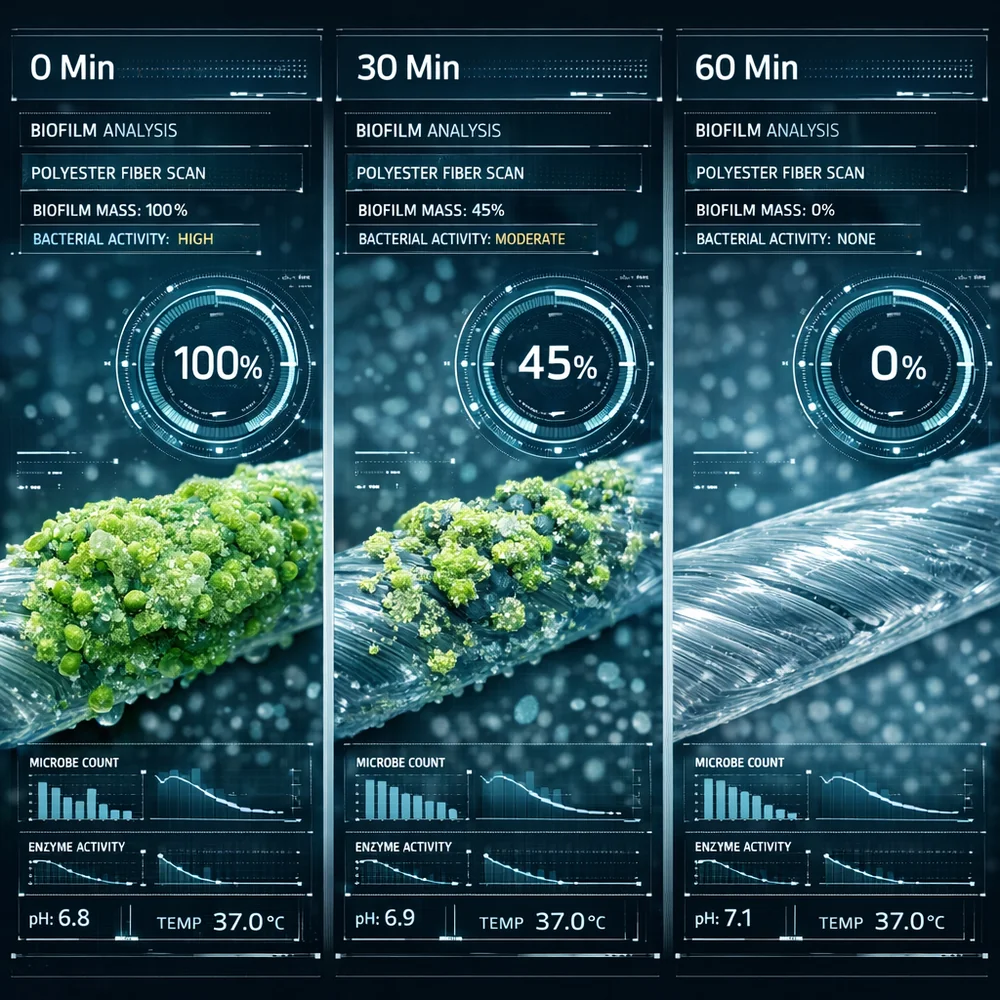
Here’s the deal: enzymes need time to find their targets and complete the chemical reactions that break down soil. A pre-soak of 30-60 minutes in enzyme solution lets them fully penetrate and react before any mechanical agitation even starts.
This technique is especially valuable for clothes with established permastink – when odor returns within minutes of wearing despite apparently thorough cleaning. That stubborn smell comes from biofilm hiding deep in the fiber structure where normal washing can’t reach. Extended enzyme contact time lets the catalysts migrate into these protected spaces and digest the bacterial hideout from the inside.
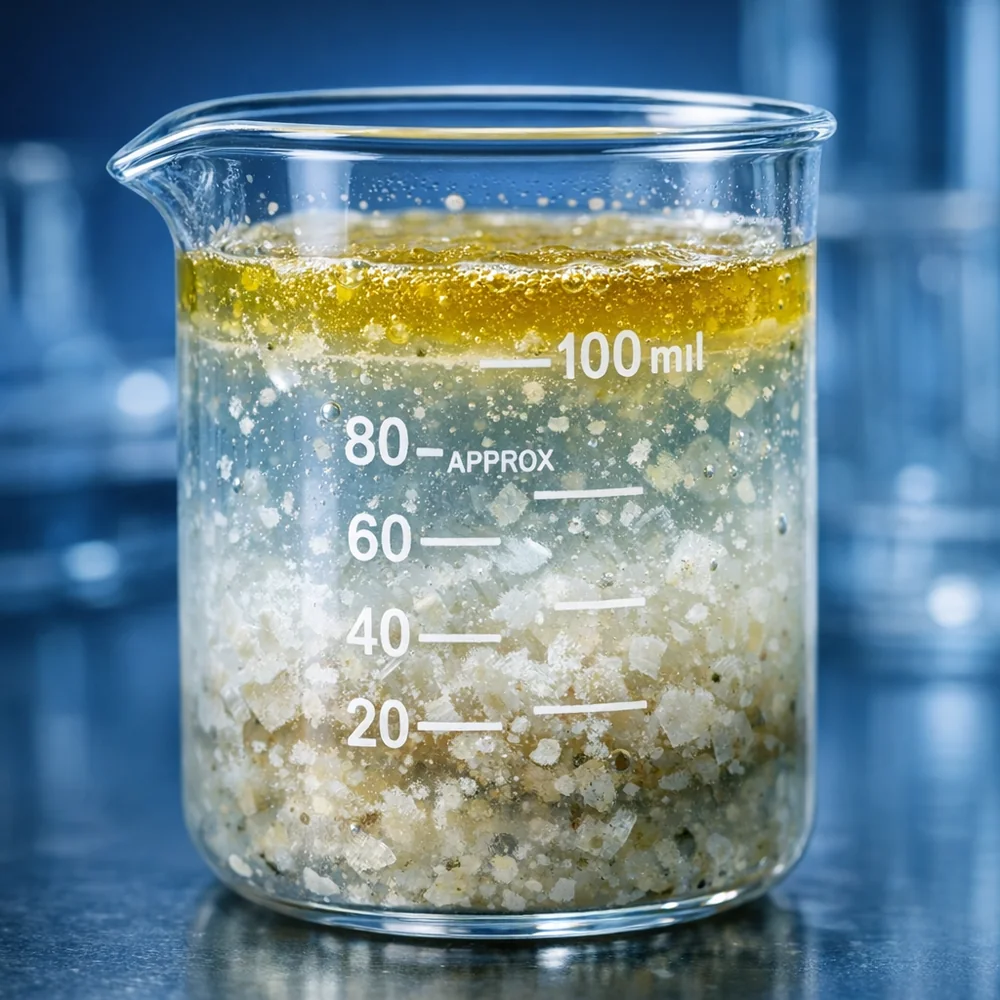
Fill a basin with lukewarm water, add detergent, submerge your smelly clothes completely, and knead gently to make sure they’re saturated. Let them sit at least 30 minutes – overnight often works even better for really contaminated stuff. Then transfer straight to the washing machine without rinsing and run a normal warm cycle with fresh detergent.
The bottom line: A 30-minute pre-soak gives enzymes time to penetrate fibers and eat biofilm before the wash cycle even begins.
Taking Down Biofilm
Biofilm is the ultimate cleaning challenge because it’s not just accumulated dirt – it’s a living ecosystem. Bacteria set up colonies within the protected spaces of your fabric, secreting a protective slime matrix of proteins and sugars that shields them from detergents and even mild antibiotics.
This protective matrix is exactly what enzyme detergents are designed to dismantle. Protease goes after the protein parts of the biofilm scaffold. Amylase and mannanase attack the sugar components that provide structural support. Lipase dissolves the lipid boundary layer that makes the biofilm water-resistant.
No single enzyme does the whole job, which is why premium sport detergents use multiple enzyme types working together. The combined attack gradually breaks down the biofilm from multiple angles at once, collapsing the protective structure and exposing the bacteria to lethal doses of detergent.
Regular detergents without this enzyme diversity might kill surface bacteria but leave the biofilm structure mostly intact. That’s why smell comes back so fast – the biofilm survives the wash, and surviving bacteria quickly repopulate the matrix and start producing stink compounds again within hours.
The bottom line: Biofilm is basically a bacterial fortress protected by protein walls. Multi-enzyme detergents dismantle these walls so bacteria can actually be killed.
Temperature: The Enzyme Sweet Spot
Enzymes are proteins, which means they’re temperature-sensitive. Just like how eggs solidify when you cook them, laundry enzymes lose their function when they get too hot.
The sweet spot for most laundry enzymes is 30-40°C (about 85-105°F). In this range, molecules move fast enough for efficient enzyme-target encounters, but temps stay cool enough to keep enzymes structurally intact.
Go above 60°C (140°F) and you’ll permanently kill most laundry enzymes. This is why those “sanitize” or “steam” cycles on fancy washing machines actually make your expensive enzyme detergent useless. By the time things get hot enough to kill bacteria via heat, the enzymes are already cooked.
On the flip side, really cold water under about 15°C slows enzymatic reactions to a crawl. Winter tap water in cold climates may need either warming or much longer contact times to work.
The bottom line: Heat above 60°C (140°F) literally cooks and kills enzymes, making expensive detergent worthless. Avoid sanitize or steam cycles.
Shelf Life Matters

The biological nature of enzyme cleaners means they have expiration dates that regular detergent chemicals don’t. Enzymes are delicate molecular machines that can lose activity through various degradation mechanisms over time, even just sitting on the shelf.
Liquid detergents are especially vulnerable. Water allows enzymes to move (which is good during use) but also allows degradation reactions to happen during storage. Manufacturers add stabilizers to keep enzymes dormant until use, but even with that, expect practical shelf life of 6-12 months for liquid enzyme products.
Powder detergents hold up way better because the dry state prevents most degradation. Enzymes in powder are usually microencapsulated, physically protected until they hit wash water. Properly stored powder can maintain enzyme activity for years.
Storage conditions also matter a lot. Heat accelerates enzyme breakdown, so hot garage or car storage is a bad idea. UV light damages enzyme structures too. Keep enzyme products in cool, dark spots away from heat and direct sunlight.
The bottom line: Liquid enzymes degrade faster than powder. Expect only 6-12 months of shelf life for liquid sport detergents.
What About Antimicrobial Fabrics?
Lots of premium athletic brands now build antimicrobial tech into their fabrics – usually silver ions or copper treatments. These metallic additives provide built-in bacterial resistance. People often wonder if enzymes play nice with these treatments.
Good news: enzyme detergents are generally compatible with metallic antimicrobial treatments. Enzymes target specific organic bonds (like proteins and lipids) and don’t interact with metallic ions in any way that would hurt antimicrobial effectiveness.
What matters more is the overall detergent pH. Highly alkaline detergents can accelerate corrosion of silver nanoparticles, gradually depleting the antimicrobial treatment through chemical dissolution. A pH-neutral or mildly alkaline enzyme formula is the safest choice for silver-treated gear.
One exception: natural antimicrobial treatments using chitosan (a biological polymer from crustacean shells). Since chitosan is a polysaccharide, the same mannanase enzymes that remove cosmetic residues will digest chitosan coatings too. Check care labels before using enzyme products on chitosan-treated stuff.
Skip the DIY Enzyme Boosters
You might see recommendations online about making homemade enzyme boosters from pineapple (bromelain) or papaya (papain). While these fruits do contain proteolytic enzymes, using them for laundry is problematic.
The enzyme concentration in fruit extracts is uncontrolled and all over the place, making dosing impossible. Too little does nothing; too much might damage protein-based fibers like wool or silk. Plus, fruit juice introduces sugars and acids that can mess with other detergent ingredients or encourage bacterial growth in stored solutions.
Commercial enzyme boosters offer standardized concentrations of stabilized enzymes designed to work with laundry chemistry. They’re a much safer and more effective way to add enzyme power to your routine, especially for heavily soiled athletic loads or stubborn biofilm.
The bottom line: DIY fruit enzyme boosters are unpredictable. Variable concentrations can damage fabrics or introduce sugars that actually feed bacteria.
The Bottom Line
Enzymes are the unsung heroes of modern cleaning science, delivering surgical molecular precision that regular chemistry can’t match. Understanding what proteases, lipases, mannanases, and cellulases each do gives you the power to troubleshoot persistent odor problems and optimize your activewear cleaning routine.
The key variables you control are dwell time and temperature. Give enzymes enough contact time through extended cycles or pre-soaking, and keep temperatures in that optimal 30-40°C range where enzyme activity peaks. Respect these biological constraints and let nature’s catalysts do the work that harsh chemicals can’t.
References
- Novozymes. (2019).
The biology of enzymatic laundry: Mechanisms of soil removal. 2. British Journal of Dermatology.
(2008). Investigation of enzymatic detergents as a cause of atopic dermatitis. https://onlinelibrary.wiley.com/journal/13652133 3.
Journal of Surfactants and Detergents. (2015). Stability of enzymes in liquid vs powder detergent formulations.
https://link.springer.com/journal/11743 4. Textile Research Journal. (2018).
Interaction of enzymatic cleaners with silver-nanoparticle treated textiles. https://journals.sagepub.com/home/trj 5. American Cleaning Institute.
Enzymes in laundry detergents. https://www.cleaninginstitute.org 6. Science in School.
Enzymes in biological detergents. https://www.scienceinschool.org