Baking Soda, Washing Soda, and Borax: Chemistry of Laundry Boosters
Table of Contents
Things You'll Learn From This Article:
- Baking soda, washing soda, and borax may look the same, but swapping them without thinking can lead to poor cleaning or damaged clothes.
- pH matters in laundry: mild powders are safer for fabrics, while highly alkaline ones clean harder but carry more risk.
- Baking soda works best for bad smells because it neutralizes odor molecules instead of covering them up.
- Baking soda is gentle enough for delicate fabrics but too weak to handle grease or heavy dirt.
- Washing soda is powerful at removing grease and heavy soil because it creates a very alkaline wash environment.
- In hard water areas, washing soda can help your detergent work better by tying up minerals that weaken cleaning power.
- Washing soda can leave chalky residue on clothes in very hard water if it’s not rinsed well.
- An acidic rinse like vinegar can remove leftover mineral residue caused by washing soda.
- Borax sits between baking soda and washing soda in strength, making it a general-purpose laundry booster.
- Borax softens hard water without leaving solid deposits on fabrics.
- Borax can slightly brighten whites and reduce bacteria because it releases small amounts of hydrogen peroxide in hot water.
- Enzyme detergents stop working in very high pH water, so washing soda can cancel out their stain-fighting benefits.
- Baking soda and borax are safer choices when using enzyme-based detergents for food or blood stains.
- Laundry stripping uses all three powders together but should only be done on sturdy cotton items.
- High-alkaline soaking can permanently damage wool, silk, and delicate synthetics.
- None of these powders replace true oxygen bleach when strong whitening is needed.
- All three boosters are generally safe for septic systems when used in normal laundry amounts.
- These powders don’t dissolve well in cold water, which can leave residue on clothes.
- Pre-dissolving boosters in hot water helps them work properly in cold washes.
- Washing soda can irritate skin and lungs, so gloves and careful handling are important.
- “Natural” products can still be harsh, and high pH chemicals will strip oils from skin and fabric alike.
You have probably seen all three of these powders sitting on store shelves somewhere between the bleach and the fabric softener. Baking soda, washing soda, and borax all look pretty similar at first glance. They are all white, they are all powdery, and they all promise to make your laundry cleaner. But here is the thing: they are absolutely not the same, and using them interchangeably can lead to some frustrating results or even damaged clothes.
These three compounds are mineral salts with very different chemical personalities. Think of them like three siblings who look alike but have completely opposite temperaments. Baking soda is the gentle one that gets along with everyone. Washing soda is the intense one that gets results but can be a bit aggressive. Borax is the middle child that tries to do a bit of everything. Understanding what each of them actually does at the molecular level is the key to getting the most out of your laundry routine without any nasty surprises.
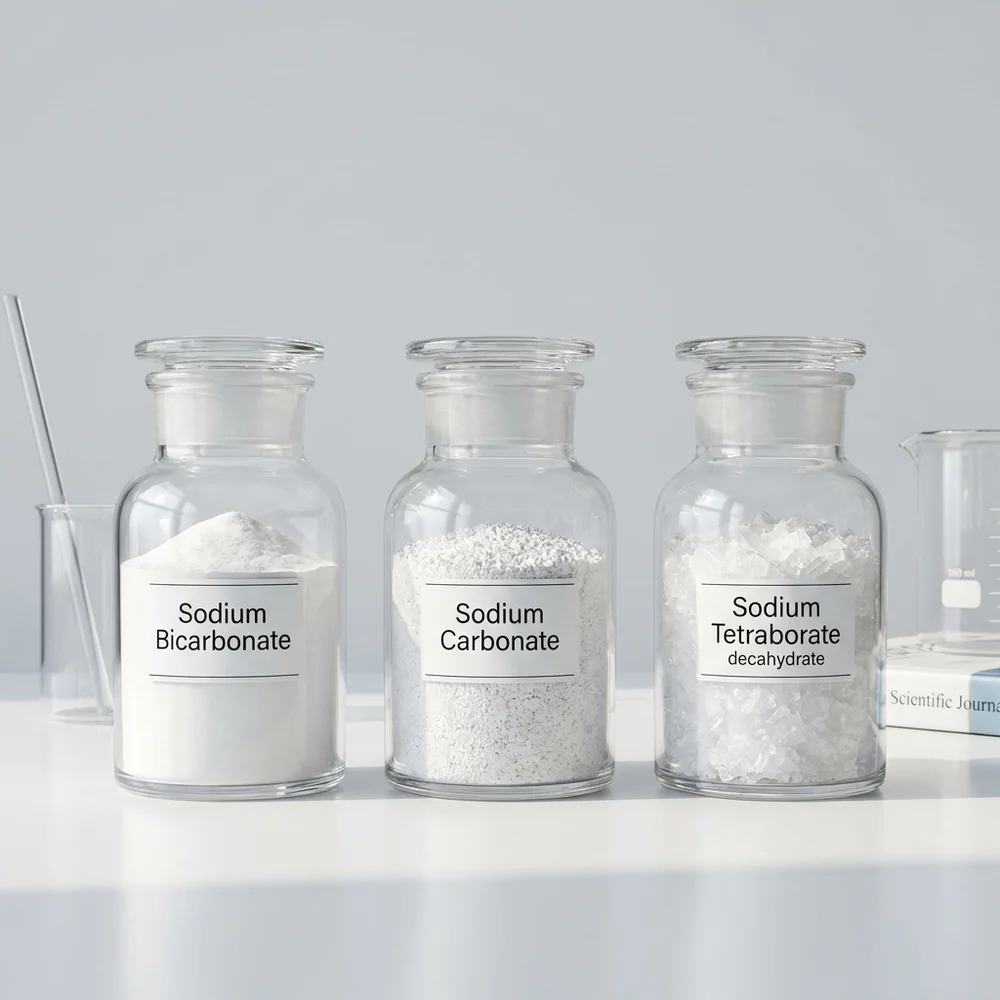
The pH Scale: Why the Difference Matters
The single most important thing that separates these three powders is their pH level which is how alkaline or basic they are. If you remember anything from high school chemistry, the pH scale runs from 0 to 14 with 7 being neutral. Everything above 7 is alkaline and everything below 7 is acidic.
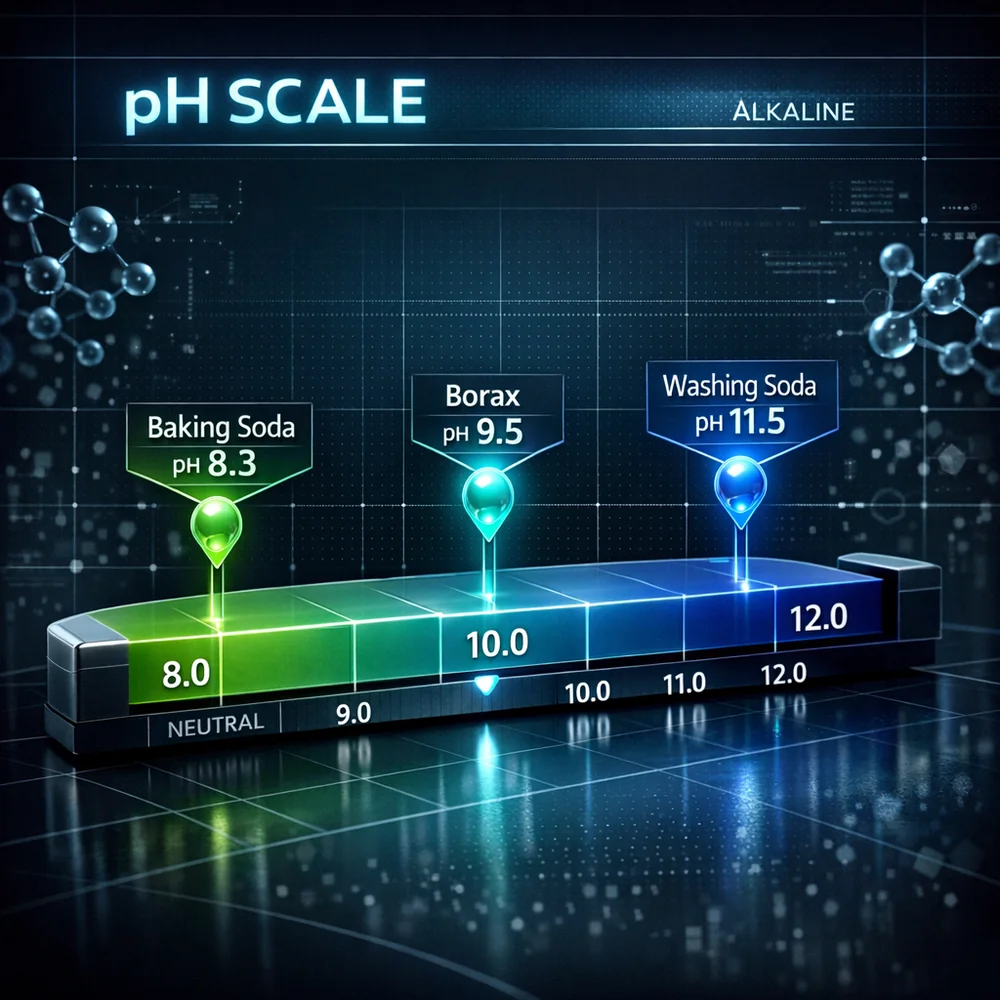
Baking soda, which chemists call sodium bicarbonate ($NaHCO_3$), dissolves in water to give you a solution around pH 8.3. That is only mildly alkaline, barely above neutral. This is why you can literally eat the stuff (it is what makes baked goods rise) and use it on your skin without any problems. It is gentle enough that it will not hurt even the most delicate fabrics.
Washing soda, or sodium carbonate ($Na_2CO_3$), is a completely different story. It sits around pH 11.5 when dissolved in water. Now here is the part that trips people up: the pH scale is logarithmic. That means a pH of 11 is not just “a little higher” than pH 8. It is actually a thousand times more basic. Washing soda is aggressive enough to be classified as a skin irritant by the same logic that makes drain cleaner dangerous. It can literally saponify the oils in your skin, which is a fancy way of saying it will turn the fats on your hands into soap.
Borax with its pH of about 9.5 sits right in the middle. It is stronger than baking soda but nowhere near as caustic as washing soda. This middle ground makes it incredibly versatile but also means it never quite excels at any one job.
The Bottom Line The thousand-fold difference in basicity between baking soda (pH 8.3) and washing soda (pH 11.5) is not a minor detail. Baking soda is gentle enough for daily use on anything while washing soda is a powerful industrial chemical that demands respect and caution.
Baking Soda: The Gentle Deodorizer
If your main laundry problem is smell rather than stains, baking soda is your best friend. The reason it works so well as a deodorizer comes down to basic chemistry. Most of the funky smells in your clothes (sweat, body odor, that musty hamper smell) are caused by acidic compounds. When bacteria on your skin break down sweat, they produce volatile fatty acids that stink when they evaporate.
Baking soda is a weak base which means it will react with these acidic odor molecules. When the acid hits the baking soda, it gets converted into an odorless salt that dissolves in water and rinses away. The smell is not masked or covered up; it is chemically neutralized. This is why baking soda is excellent for deodorizing smelly clothes like gym wear or that shirt you forgot in your locker for a week.
The catch is that baking soda is too gentle to tackle anything beyond odors. If you have grease stains or heavy soil, baking soda will barely make a dent. It lacks the alkalinity to break down fats or force dirt out of fabric fibers. Think of it as a supporting player rather than the star of your laundry routine.
Washing Soda: The Heavy Lifter
Washing soda is what you reach for when you need real cleaning power. Its high pH environment does two critical things that baking soda simply cannot do.
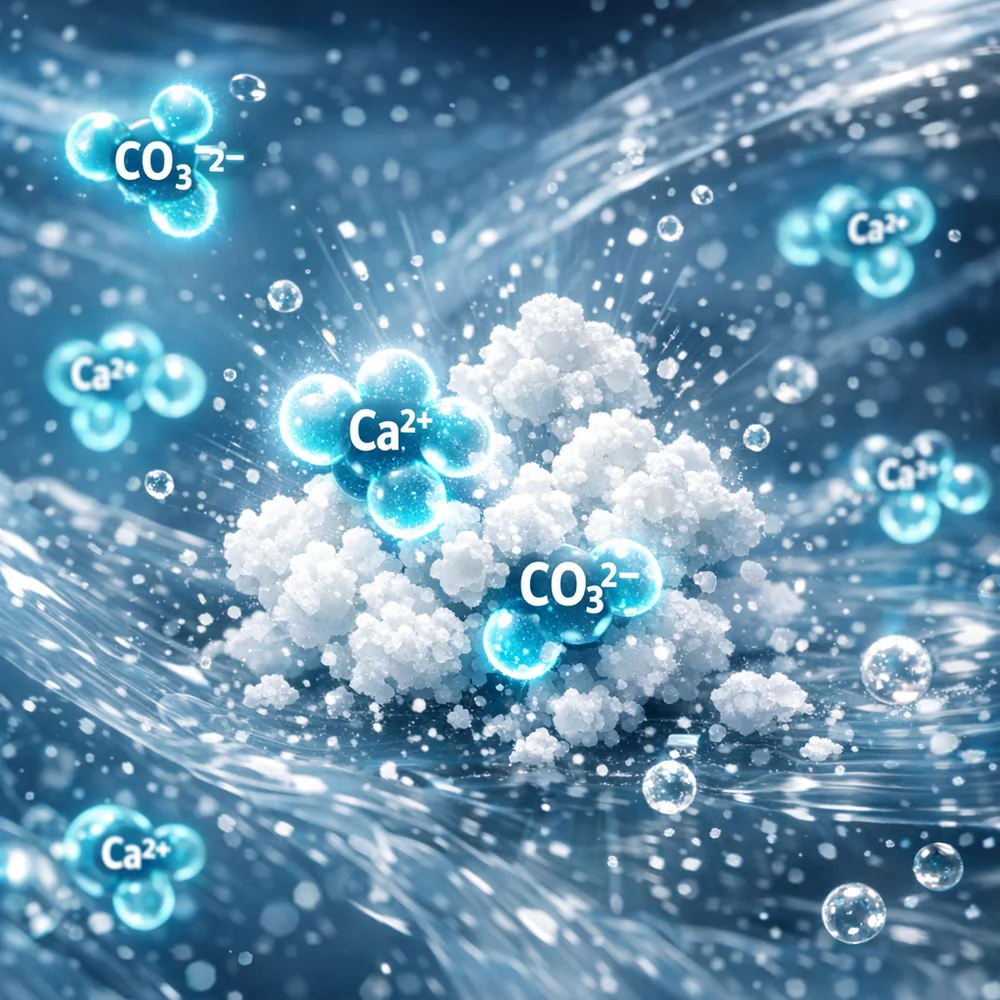
First, it acts as a water softener. If you live in an area with hard water laundry chemistry issues, your water is full of dissolved calcium and magnesium ions. These minerals love to bind with surfactant molecules in your detergent, effectively disabling them. Washing soda solves this problem by offering up its carbonate ions as bait. The calcium grabs onto the carbonate instead of your detergent forming solid calcium carbonate which is basically chalk. This removes the hardness from your water and lets your detergent do its job properly.
Second, the high pH of washing soda attacks grease directly. Fats and oils are made of molecules called triglycerides. In a highly alkaline environment, the chemical bonds holding these fats together break apart through a process called hydrolysis. The fat literally gets converted into soap right there in your washing machine. This makes washing soda indispensable for dealing with industrial grease stains or heavily soiled kitchen towels where regular detergent just is not cutting it.
The Bottom Line Washing soda is a true powerhouse that softens hard water and saponifies grease directly. However its high alkalinity makes it unsuitable for delicate fabrics like wool or silk where it can cause immediate fiber damage.
Borax: The Versatile Middle Ground
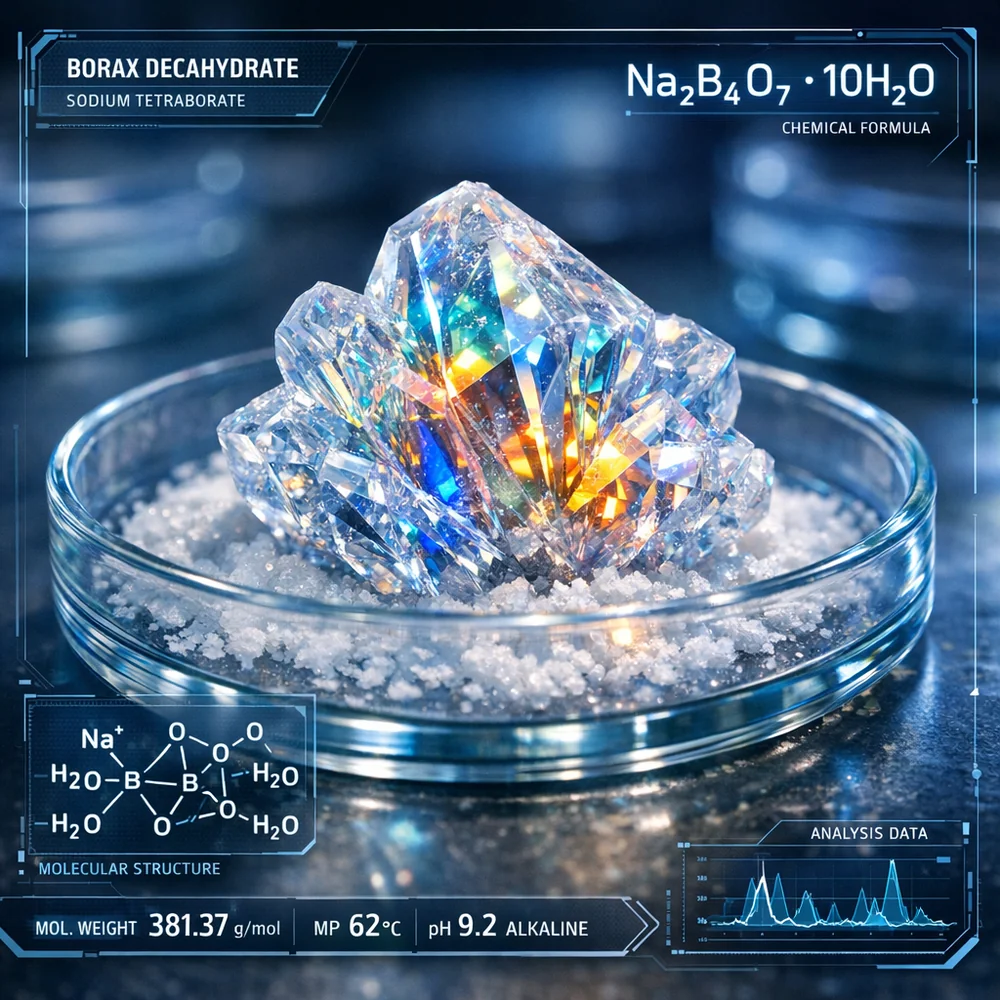
Borax is sodium tetraborate decahydrate and it occupies a sweet spot on the pH scale at around 9.5. This makes it more effective than baking soda but safer than washing soda. Its chemistry is also different in an important way. While washing soda precipitates hard water minerals (turning them into solid particles), borax sequesters them. This means it wraps around the calcium and magnesium ions keeping them dissolved and unable to interfere with your detergent but not creating solid particles that can deposit back onto your fabrics.
One of borax’s less publicized properties is that it releases small amounts of hydrogen peroxide when dissolved in hot water. This gives it mild bleaching and sanitizing capabilities that neither baking soda nor washing soda possess. It can brighten whites slightly and inhibit bacterial growth in your wash water.
The downside of borax is that it is technically a biocide. It has been used traditionally as an insecticide and fungicide because it is toxic to small organisms. While perfectly safe for adults and older children in household quantities, it does carry more handling considerations than plain baking soda. It is also the reason borax is sometimes restricted or banned in certain jurisdictions.
The Hidden Problem of Precipitation
When washing soda reacts with hard water, it creates calcium carbonate. That solid product has to go somewhere and sometimes “somewhere” ends up being your clothes. If you are using washing soda in very hard water without sufficient rinsing, you may notice a white chalky dust on dark fabrics or a strange stiffness in your towels. This is microscopic limestone deposited in the fabric weave.
Modern commercial detergents include anti-redeposition agents that prevent these precipitates from settling back onto clothes. When you use raw washing soda as a booster, you do not have that safety net. The solution is to use an acidic rinse like vinegar which will dissolve any calcium carbonate left behind and flush it out of your fabrics.
Borax avoids this problem because it sequesters rather than precipitates. It keeps the hard water minerals in solution where they rinse away cleanly. This is one reason why some people prefer borax over washing soda despite the slightly lower cleaning power.
Why Your Enzyme Detergent Might Stop Working
If you are using a biological detergent that contains enzymes (proteases for protein stains, amylases for starches, lipases for fats), you need to be very careful about adding washing soda. Enzymes are proteins that are folded into specific three-dimensional shapes. They work by physically fitting into the molecules they are trying to break down like a key fitting into a lock.
When the pH gets too high, enzymes start to unfold or denature. Their shape changes and they lose their ability to function. Most laundry enzymes work best in a pH range of 8 to 9.5 which happens to be exactly where borax and baking soda sit. Dumping a bunch of washing soda into the mix can spike your wash water to pH 11 or higher which will completely disable your expensive enzyme detergent.
This is particularly frustrating when you are trying to treat stubborn blood stains or food spills. The enzymes that would normally digest these proteins get destroyed before they can do anything. If you are using an enzymatic detergent, stick with baking soda or borax as your booster and save the washing soda for non-enzymatic cleaning tasks.
The Bottom Line Adding washing soda to a biological detergent can denature the enzymes and completely disable the most effective cleaning agents in the formula. Stick with borax or baking soda if you need to boost an enzymatic wash.
The Laundry Stripping Phenomenon
You have probably seen the viral laundry stripping videos where people soak their towels and sheets in a bathtub and the water turns a horrifying brown color. This technique uses all three boosters together to create an aggressive deep cleaning environment that strips out months or years of built-up residue.
A typical stripping recipe involves hot water, washing soda, borax, and a surfactant-based detergent. The washing soda provides the high pH needed to swell cotton fibers and cut through lipid buildups. The borax softens the water and inhibits bacterial growth. The heat accelerates dissolution and loosens trapped fabric softeners that have built up a waxy layer on your fabrics.
The result can be dramatic with the soaking water becoming visibly dirty even from items that looked clean. However, laundry stripping protocols should be reserved for durable items only. The pH shock of this treatment is extremely stressful for fabrics. Doing this to wool, silk, or delicate synthetics can cause immediate and irreversible damage. Cotton towels and sheets can handle it, your cashmere sweater cannot.
Whitening Power: A Practical Comparison
When it comes to making whites whiter, these three powders have very different abilities. Baking soda has essentially no whitening power. It will clean and deodorize but it will not make dingy whites look any brighter.
Borax provides mild chemical whitening because of the hydrogen peroxide it releases in hot water. It is sometimes marketed as a “color-safe” brightener and it can provide a subtle lift to faded whites without bleaching colored fabrics.
Washing soda whitens differently. It does not actually bleach the fabric fibers. Instead, it strips away the gray film of soil and oil that makes whites look dingy. If your whites are looking dull because of buildup rather than actual staining, washing soda can help restore their brightness.
For serious whitening, however, none of these compare to actual oxygen bleach which is sodium percarbonate. In fact, sodium percarbonate is essentially washing soda with hydrogen peroxide attached. Using washing soda alone is like using half the formula without the active bleaching agent.
Septic System Safety
If you are on a septic system, you might be wondering whether these boosters will kill the beneficial bacteria in your tank. The good news is that all three salts are generally considered septic-safe in normal laundry quantities.
Sodium carbonate and bicarbonate are inorganic minerals that can actually help maintain the alkalinity of your septic tank. This buffers against the acidity produced by the decomposition process and can support healthy bacterial activity. Borax is the one that requires a bit more caution because of its biocidal properties. In theory, large quantities could disrupt your bacterial colony.
In practice, the dilution factor of a septic tank is enormous. The amount of borax in a single laundry load is negligible compared to the volume of the tank. The real septic threats come from other sources like homemade laundry detergent risks that use large amounts of grated bar soap. Soap scum can coat the leaching field and cause serious clogs.
The Cold Water Problem
All three of these powders share one major weakness: they do not dissolve well in cold water. Washing soda and borax are particularly problematic because they have high lattice energies. Their crystal structures are very stable and require heat energy to break apart.
If you toss a scoop of washing soda into a cold wash, you may end up with clumps of undissolved powder that settle on your clothes. This acts like sandpaper on fabrics and fails to soften the water effectively because the chemicals are sitting in a pile at the bottom of the drum rather than dispersed throughout the water.
The solution is simple: pre-dissolve your boosters in a jar of hot water before adding them to a cold wash. This ensures the ions are fully dispersed and ready to work the moment they hit your laundry. Baking soda is more soluble but still performs better when fully dissolved. Ignoring wash temperature thermodynamics means wasted product and potential residue on dark clothes.
Handling Washing Soda Safely
While baking soda is benign enough to eat, washing soda demands proper handling. Its high pH can cause chemical burns with prolonged skin contact. The mechanism is the same one that makes it so effective at cutting grease: it saponifies fats and that includes the protective lipid barrier on your skin. Extended contact leads to dryness, cracking, and irritation.
Always wear gloves when handling washing soda directly and avoid breathing in the fine dust. It can irritate your nose, throat, and lungs. Store it in a sealed container because it is hygroscopic which means it absorbs water from the air. Left unsealed, your washing soda will eventually turn into a solid brick that is impossible to measure.
Do not be fooled by the “natural” marketing. Just because something is a simple mineral compound does not mean it is harmless. pH physics does not care whether a chemical is synthetic or natural. It will strip the oils from your skin just as readily as it strips the grease from your clothes.
Conclusion
Baking soda, washing soda, and borax are three distinct chemical tools that serve different purposes in your laundry routine. Sodium bicarbonate is the gentle buffer for deodorizing and light-duty cleaning that is safe for everything. Sodium carbonate is the heavy artillery for cutting grease and softening hard water but it carries real risks for delicate fabrics and requires careful handling. Sodium borate bridges the gap by offering moderate water softening and mild disinfection without the extreme alkalinity of its more aggressive cousin.
The key to using these boosters effectively is matching the right compound to the right problem. Need to freshen up gym clothes? Baking soda. Battling greasy kitchen towels in hard water? Washing soda. Looking for a general purpose booster that plays well with enzyme detergents? Borax. By understanding the pH implications and chemical behaviors of each, you can build a laundry routine that outperforms one-size-fits-all commercial products. These simple minerals when applied with precision offer a level of control that premixed formulas rarely deliver.
References
- Journal of Hazardous Materials. “Comparative Alkalinity and Solubility of Sodium Carbonate and Bicarbonate.” ScienceDirect
- American Journal of Infection Control. “Antimicrobial Efficacy of Borax against Common Household Pathogens.” AJIC
- Textile Chemist and Colorist. “The Effect of pH Builders on Detergency in Hard Water.” AATCC
- Water Research. “Precipitation Genetics of Calcium Carbonate in Laundry Environments.” IWA Publishing
- Journal of Surfactants and Detergents. “Formulating with Soda Ash: Kinetics and Performance.” Springer