Preventing Pilling on Sweaters: The Mechanics of Friction and Fiber Migration
Table of Contents
Things You'll Learn From This Article:
- Sweaters pill mainly because tiny fiber ends work their way to the surface and get rubbed into little balls, not because the sweater is automatically low quality.
- Soft, fluffy sweaters pill more easily because the yarn is loosely twisted, which makes fibers easier to pull out during wear and washing.
- Long fibers and tightly twisted yarns resist pilling better, so checking fabric type and feel before buying helps set realistic expectations.
- Friction is the main enemy, so reducing rubbing during wear, washing, and storage makes a big difference.
- Washing sweaters inside out protects the visible surface by letting most of the rubbing happen on the inside.
- Using a fine-mesh laundry bag keeps sweaters from stretching, tangling, and scraping against zippers, buttons, or rough fabrics.
- Gentle cycles and cold water reduce movement and impact, which slows down fiber damage over time.
- Washing sweaters separately from jeans, towels, and rough items prevents them from being abraded like sandpaper.
- Fabric softener can help natural fibers by making them slippery and reducing static, so fibers are less likely to snag and lift.
- Enzyme detergents can remove fuzz on cotton sweaters but should not be used on wool or cashmere.
- Pills should be cut off cleanly, not pulled, because pulling drags more fiber out and makes pilling worse later.
- Electric fabric shavers are safest for delicate knits because they slice pills off without tugging the fabric.
- Rough tools like sweater stones work only on sturdy fabrics and can damage fine wool if used carelessly.
- Folding sweaters instead of hanging them prevents stretching and reduces friction at stress points.
- Storing sweaters with tissue paper between layers cuts down on rubbing while they sit unused.
- Keeping knits away from Velcro and rough technical fabrics prevents instant and severe fiber damage.
- Synthetic sweaters often look worse when they pill because the pills don’t break off on their own.
- Polyester and other synthetics need regular mechanical pill removal since the pills stay firmly attached.
- Different fabrics need different care routines, so knowing the fiber content helps you choose the right washing, storage, and repair methods.
- Consistent gentle handling over time matters more than any single trick for keeping sweaters looking new.
Pilling is the bane of knitwear maintenance, transforming a pristine cashmere sweater into a worn-out textile. Contrary to popular belief, pilling is not always a sign of poor quality. It is a physical inevitability of short-staple fibers and low-twist yarns.
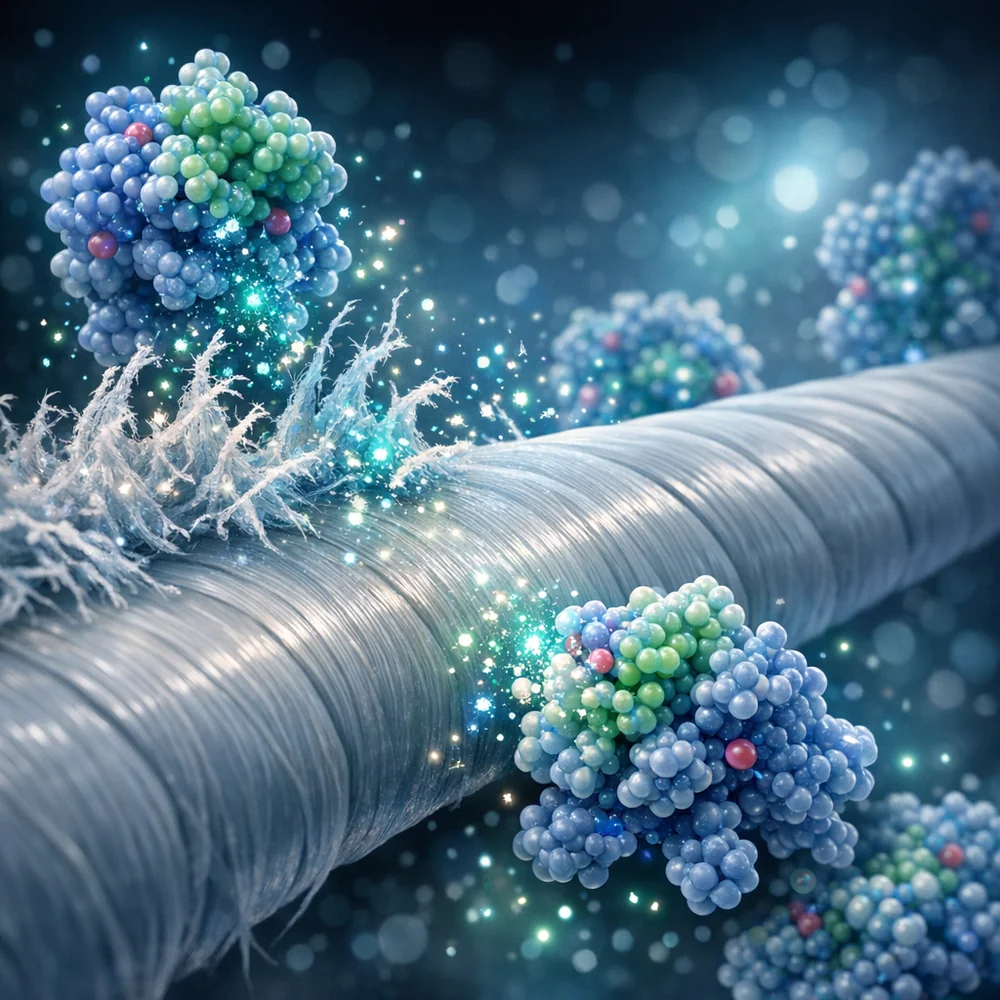
A pill forms when loose fiber ends migrate from the core of the yarn to the surface. Once exposed, these ends are twisted together by mechanical friction into a small and tight ball. This ball, the pill, remains anchored to the fabric by a tether of entangled fibers. This migration is driven by two main forces: mechanical abrasion during wear and hydrodynamic agitation during washing. Visualizing the sweater as a collection of loose ends provides the necessary context for care.
The key to preventing pilling is to minimize the kinetic energy that pulls these fibers loose. We must also manage the surface friction of the textile at a molecular level. This requires a holistic approach starting with the purchasing decision and extending to the laundry protocol. By understanding the physics of fiber migration, you can drastically reduce surface degradation.

Why Some Sweaters Pill More Than Others
The fundamental propensity of a garment to pill is determined by its engineering long before consumption. The two critical variables are staple length and the specific twist level of the yarn. Staple length refers to the length of the individual hairs that make up the yarn bundle. High-quality long-staple cottons have fewer ends, making them naturally resistant to pilling over time.
Cheap wools and lower-grade synthetics often use short fibers with millions of loose ends per square yard. These ends require very little kinetic energy to migrate to the fabric surface. However, the hand of the fabric also dictates the twist chosen by the manufacturer. Smooth and hard-wearing suit fabrics use a worsted spin with a very high twist.
To make a sweater feel soft and fluffy, manufacturers use a low twist level instead. This leaves the fibers relaxed and lofty to create air pockets for warmth. Unfortunately, this lack of internal tension allows fibers to slip out of the yarn bundle easily. This is a common engineering trade-off found in premium knitwear.
The halo effect of luxury fibers like Angora is a controlled form of fiber migration. In these cases, the fibers are intentionally meant to float above the surface. However, this intentional fuzz creates a high surface area for friction and matting. Understanding this trade-off is the first step in realistic garment stewardship.
The Bottom Line Softness often equals pilling. Low-twist woolen yarns feel fluffier but allow fibers to migrate easily. High-twist worsted yarns lock fibers in but feel harder. Pilling is often the price paid for a luxurious hand.
How to Wash Sweaters to Prevent Pilling
The washing machine is a chaotic environment characterized by intense friction and high-velocity impact. Washing a soft sweater with a pair of rough jeans is akin to rubbing it with sandpaper for forty minutes. The denim acts as an abrasive that actively teases ends out of the soft knit. Even a terry cloth towel contributes by providing seed material for pills to form around.
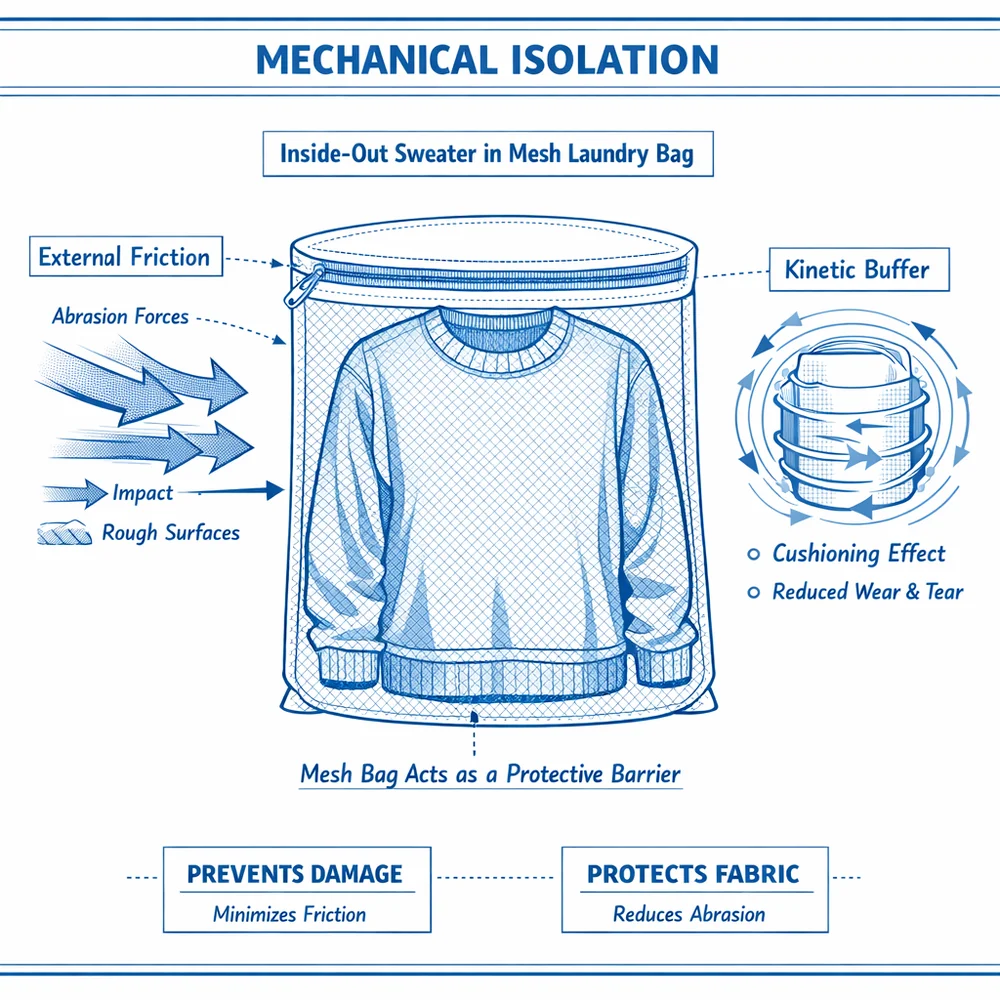
Isolating the knitwear is the first law of pilling prevention in the laundry room. To protect the visible surface, the friction must be legally moved to the garment interior. Turning a garment inside out ensures that mechanical abrasion occurs on the unseen wrong side of the fabric. This sacrificial layer approach reduces visible surface wear by over fifty percent.
The heavy artillery of pilling prevention is the dedicated fine-mesh laundry bag. The bag restricts the movement of the sweater and prevents it from being stretched by the agitator. It also creates a barrier against the zippers and buttons of other garments in the same load. The mesh should be fine enough to allow water flow but tight enough to prevent lint entry.
Cycle selection should prioritize low agitation to minimize the total cumulative friction on the fibers. The delicate cycle uses a slower tumble speed and a shorter duration. Combined with cold water, which keeps the fibers relaxed, this creates a safe hydrodynamic environment. Proper wash protocols are the most effective means of preventing premature textile aging.
The Bottom Line Mechanical isolation is critical. Turning sweaters inside out and washing them in fine-mesh bags shifts friction to the interior and restricts fiber movement, preventing the teasing action that starts a pill.
How Chemistry Can Prevent and Reduce Pilling
While mechanical force controls the pull, chemistry controls the slip of the individual fibers. Liquid fabric softener plays a specific and positive role in pilling prevention for natural fibers. Softener works by coating the fibers in a thin layer of electrically conductive lipids. This coating serves two critical functions: lubrication and static discharge.
First, it reduces the coefficient of friction between the individual fibers. This allows them to slide past each other rather than snagging and pulling out of the core. Second, it neutralizes the static electricity that causes fibers to stand up and repel each other. By grounding this charge, the softener keeps the sweater surface smooth.
Enzymatic detergents offer a more advanced biotechnology solution for pilling management. Certain detergents contain cellulase, an enzyme that specifically digests microscopic fuzz on cellulose fibers. These are highly effective for cotton and rayon knits specifically. The enzyme effectively shaves the fabric at a molecular level to remove weak surface tethers.
Note that cellulase does not work on protein fibers like wool or cashmere. It can actually damage silk if used incorrectly in a high-concentration wash. Chemical lubrication reduces the frictional forces that drive pill formation over time. By selecting the correct chemistry, we maintain the structural integrity of the knit.
The Bottom Line Liquid fabric softener acts as a lubricant (reducing friction) and an anti-static agent (preventing fuzz). Cellulase enzymes can chemically shave cotton fabrics by digesting micro-fibrils, preventing pill growth.
How to Remove Pills Without Damaging the Fabric
Once surface migration has occurred, the pills must be physically removed to restore the garment appearance. The selection of the tool depends entirely on the tensile strength of the fabric and the pill density. The goal is to sever the tether without pulling more fiber out of the core. Precision in tool usage prevents cumulative damage to the original weave.
The electric fabric shaver is the superior technical choice for delicate knits like cashmere. These devices use a rotating blade behind a perforated metal guard to protect the fabric. The pill enters the hole and the blade slices the tether cleanly with zero vertical force. This surgical removal preserves the structural integrity of the knit better than any other method.
For heavy and robust wools, a sweater stone containing pumice creates a controlled abrasive surface. As you drag the stone across the knit, it grabs the pills and rips them off. This is effective for large pills on hardy fabrics but is too aggressive for fine merino. The ripping action can pull more fiber out, potentially accelerating future pilling cycles.
Small sweater combs catch and sever the pills manually using fine-toothed mesh. They offer excellent control but are labor-intensive for larger garments. Always avoid plucking pills by hand because this draws a long length of fiber out of the core. This loose fiber remains on the surface and immediately forms a new and larger pill.
The Bottom Line Always cut, never pull. Electric shavers provide the safest surgical removal for delicate knits. Abrasive stones and manual plucking pull fibers out of the core, weakening the yarn and ensuring that the pilling returns even faster.
How to Store Sweaters to Prevent Passive Damage
Pilling can occur even when the garment is not being actively worn. A crowded closet acts like a slow-motion washing machine that induces subtle surface wear. Cramming sweaters into a drawer creates constant compression and friction as items are moved. This rub can raise the nap of soft wools and initiate pill formation during dormancy.
Fold knits with acid-free tissue paper to reduce friction between the various layers. This prevents the fibers from felting together during long-term storage in a dresser. Use shelf dividers to keep piles neat and prevent the toppling that requires constant restacking. Minimizing the handling of the fibers preserves the original factory finish.
Velcro is the ultimate enemy of fine knitwear and should be segregated entirely. Never store technical gear with velcro closures near open-knit sweaters. A single brush against the hook-side of velcro can pull hundreds of loops instantly. Segregate your wardrobe by texture so that smooth items only interact with other smooth materials.
Technical gear should be stored separately from delicate natural fibers. This prevents accidental mechanical damage that leads to massive pilling. Storage stewardship is a key component of the total lifecycle management of a wardrobe.
The Bottom Line Passive friction in a crowded drawer contributes to surface degradation. Storing knits with tissue paper interleaving and segregating them from abrasive fasteners like velcro preserves the surface finish during dormancy.
Why Synthetic Fabrics Pill Worse Than Natural Ones
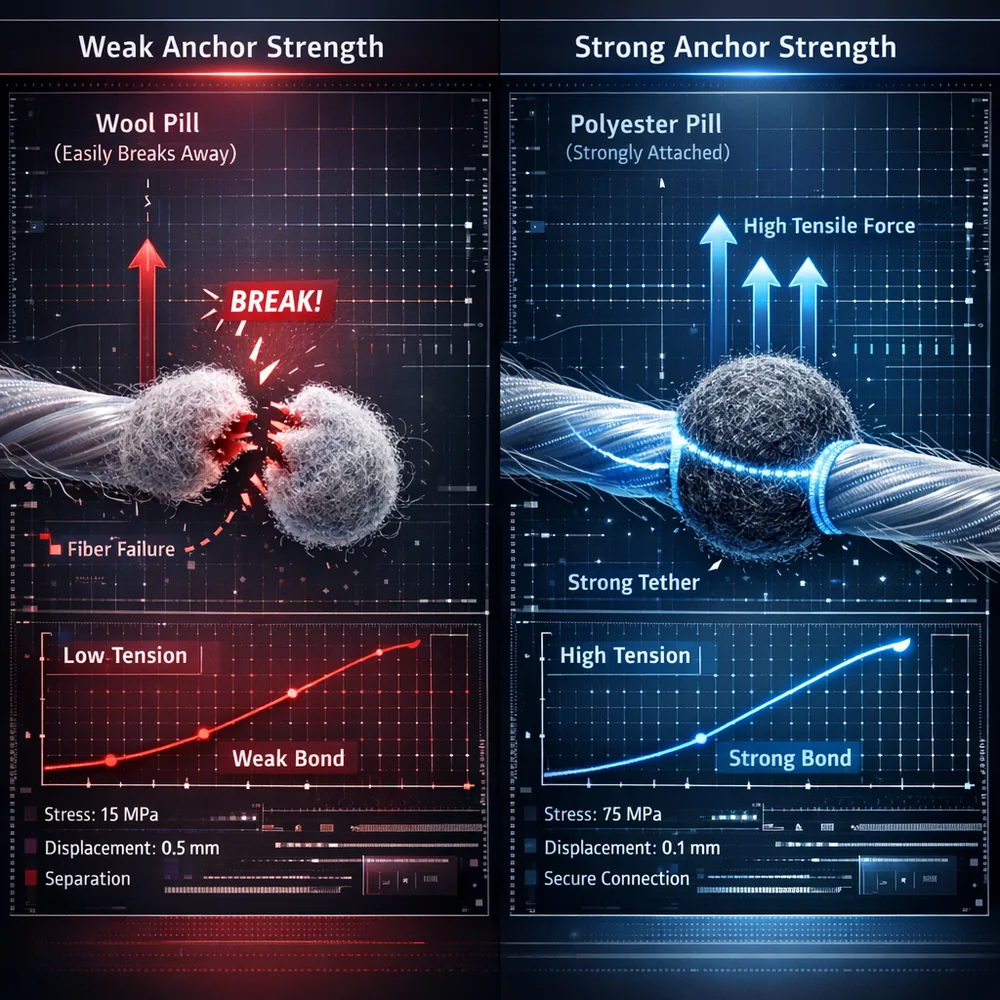
The tenacity of a pill depends on the tensile strength of the underlying fiber. Natural fibers like wool have relatively low tensile strength and often break off on their own. However, synthetic fibers like polyester are engineered for high strength and durability. When they pill, the tether is incredibly strong and resistant to breaking.
This phenomenon is known as anchor strength. Because the synthetic pill is anchored so securely, it does not fall off during normal wear. Instead, it continues to accumulate more lint and debris to grow larger and darker. This explains why an old polyester fleece looks so much worse than an old wool sweater.
For synthetics, mechanical removal is mandatory because the pills will never shed naturally. This requires the use of sharp electric shavers to cut the high-tenacity tethers. We must also be more vigilant about preventing the initial migration in synthetic blends. Managing anchor strength is a critical part of technical textile care.
By understanding the fiber chemistry, we can predict the pilling behavior of any garment. This allows us to customize our maintenance protocols for maximum efficiency. Every item in the wardrobe deserves a tailored plan based on its material science.
The Bottom Line Synthetic fibers have high tensile strength, resulting in pills with high anchor strength that do not shed naturally. These require aggressive mechanical shaving compared to the often self-limiting pills of weaker natural fibers.
Conclusion
Preventing pilling requires a disciplined approach to friction management and specialized laundry tools. The effectiveness of any protocol rests on the foundation of turning garments inside out and utilizing protective mesh bags to restrict the mechanical movement that initiates fiber migration to the surface.
By respecting the physics of yarn twist, we can extend the lifespan of our favorite knits by many years. This technical approach respects the delicate structure of the yarn while maintaining a pristine appearance. Consistency in these steps ensures a return on your investment in luxury textiles.
Every smooth sweater is a testament to the synergy between gentle handling and proper chemistry. Moving away from a wash and wear mindset allows for a proactive preservation routine. It prevents the premature aging of the textile and keeps the wardrobe looking premium. By treating the laundry room as a fiber laboratory, you maintain your knitwear at the highest standard.
Knowledge of fiber staple length allows for better purchasing decisions. This reduces the need for aggressive maintenance later in the garment lifecycle. Stewardship is a commitment to the long-term health of our material possessions. By applying these scientific principles, you ensure that your wardrobe remains a source of warmth and pride.
References
- Journal of Textile Institute. “Mechanisms of Pilling in Knitted Wool Fabrics.”
- American Cleaning Institute. “The Role of Softeners in Reducing Static and Pilling.”
- Textile Research Journal. “Comparative Analysis of Depilling Devices: Abrasive vs Cutting Mechanisms.”
- Consumer Reports. “Fabric Shavers Review: Safety and Efficiency on Cashmere.”
- Journal of Applied Polymer Science. “Enzymatic Biopolishing of Cotton Knits to Reduce Pilling Tendency.”