Types of Brooms and Bristles: A Guide to Manual Floor Mechanics
Table of Contents
Things You'll Learn From This Article:
- Matching the broom to the floor matters more than force; the wrong bristles just push dirt around or damage the surface.
- Soft horsehair works best indoors for fine dust on smooth, finished floors because it holds dust instead of scattering it.
- Stiff brooms are for rough jobs; using them on delicate floors can scratch finishes permanently.
- Rubber brooms are especially useful for pet hair because they grab and bundle hair instead of flicking it away.
- Outdoor messes like leaves, sand, and grit need stiff corn or synthetic bristles to break debris loose from rough surfaces.
- Flagged (split-end) bristles pick up more fine dirt than smooth bristles while still handling heavier debris.
- Wide push brooms save time in garages and large spaces by moving lots of material in one pass.
- Natural bristles last much longer if you wash them gently and let them dry completely after getting wet.
- Letting brooms stand on their bristles ruins them; hanging them keeps the bristles straight and effective.
- A dirty broom spreads grime and bacteria, so washing broom heads regularly is part of basic cleaning.
- Synthetic brooms can be rinsed and disinfected easily, while natural fiber brooms need gentler cleaning to avoid rot.
- Electrostatic dust mops reduce airborne dust and are better for allergies on polished floors than traditional sweeping.
- Fabric softener ruins dust mop performance by killing static, so skipping it keeps the mop working properly.
- Using the same broom in bathrooms and kitchens spreads germs; separating tools by area improves hygiene.
- Simple color-coding or labeling makes it easy to grab the right broom without thinking.
- Proper storage, washing, and correct use can turn a broom from a short‑term tool into something that lasts for years.
Sweeping is mechanical separation: using a brush to overcome the adhesive forces between dirt and floor. The efficiency of any broom depends on friction, electrostatics, and fiber elasticity working together. Choosing the wrong broom means debris gets redistributed rather than captured. Using bristles too harsh for your floor damages delicate finishes like polyurethane and wax. Using bristles too soft fails to dislodge heavy debris from crevices and textured surfaces.
Each broom type has specific physics working for or against it.
Horsehair excels at fine dust on polished surfaces because of its natural anti-static properties. Rubber brooms exploit friction to bundle pet hair into manageable rolls. Corn brooms provide the stiffness needed for outdoor debris on rough concrete. Understanding these mechanics transforms sweeping from a mindless chore into effective particulate management. This guide covers the science behind different bristle materials and how to maintain them for years of reliable performance.
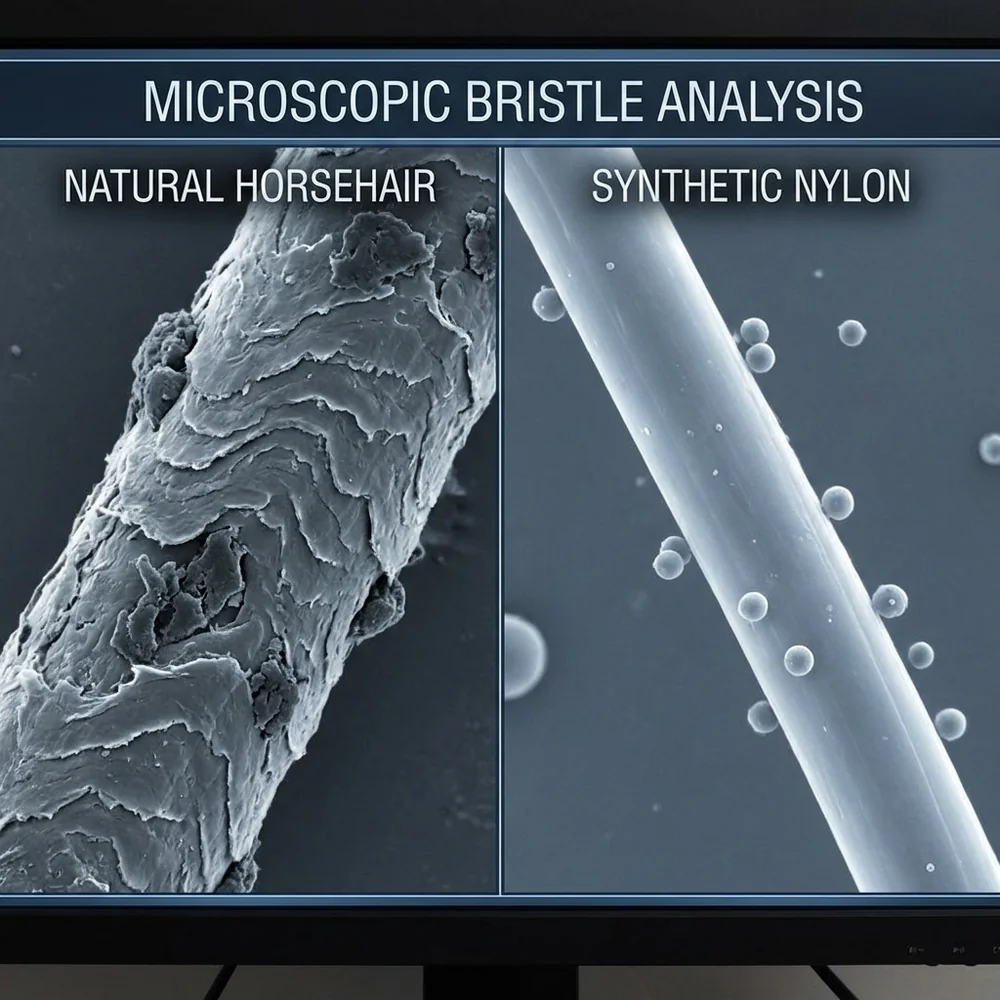
Horsehair Brooms for Fine Dust
Horsehair is the gold standard for interior sweeping on smooth surfaces like polished stone, sealed concrete, or finished hardwood. Under a microscope, horsehair bristles reveal natural scales along their length that trap fine dust, skin cells, pollen, and allergens through mechanical entanglement. Unlike synthetic fibers that can repel particles through static charge, horsehair is naturally anti-static, meaning it holds dust within the bristle mass rather than pushing it around.
The flexibility of horsehair is its primary mechanical advantage.
When pushed across a floor, the bristles deform easily, following microscopic surface topography and reaching into grout lines, wood grain patterns, and tiny surface irregularities. This conformability clears the entire path thoroughly in a single pass rather than skipping over low spots. The softness of horsehair also makes it completely safe for fragile finishes including waxed floors, French polished furniture surfaces, and delicate stone that would scratch under stiffer bristles.
However, this softness limits horsehair’s capacity for heavy or wet debris. Attempting to move packed dirt or damp leaves with a horsehair broom just pushes the bristles aside without moving the debris. Horsehair is a precision tool specifically designed for fine-dust management on prepared interior surfaces. Maintaining horsehair requires periodic washing with pH-neutral detergent to prevent the natural oils in the hair from becoming sticky and trapping grit. After washing, hang the broom upside down to prevent water from soaking into the wooden block and causing rot. A quality horsehair broom can last decades with proper care.
Key Insight: Horsehair’s microscopic surface scales and natural anti-static properties make it the premier material for capturing fine dust on smooth surfaces. Its extreme flexibility allows it to conform to surface irregularities without scratching delicate finishes.
Rubber Brooms for Pet Hair
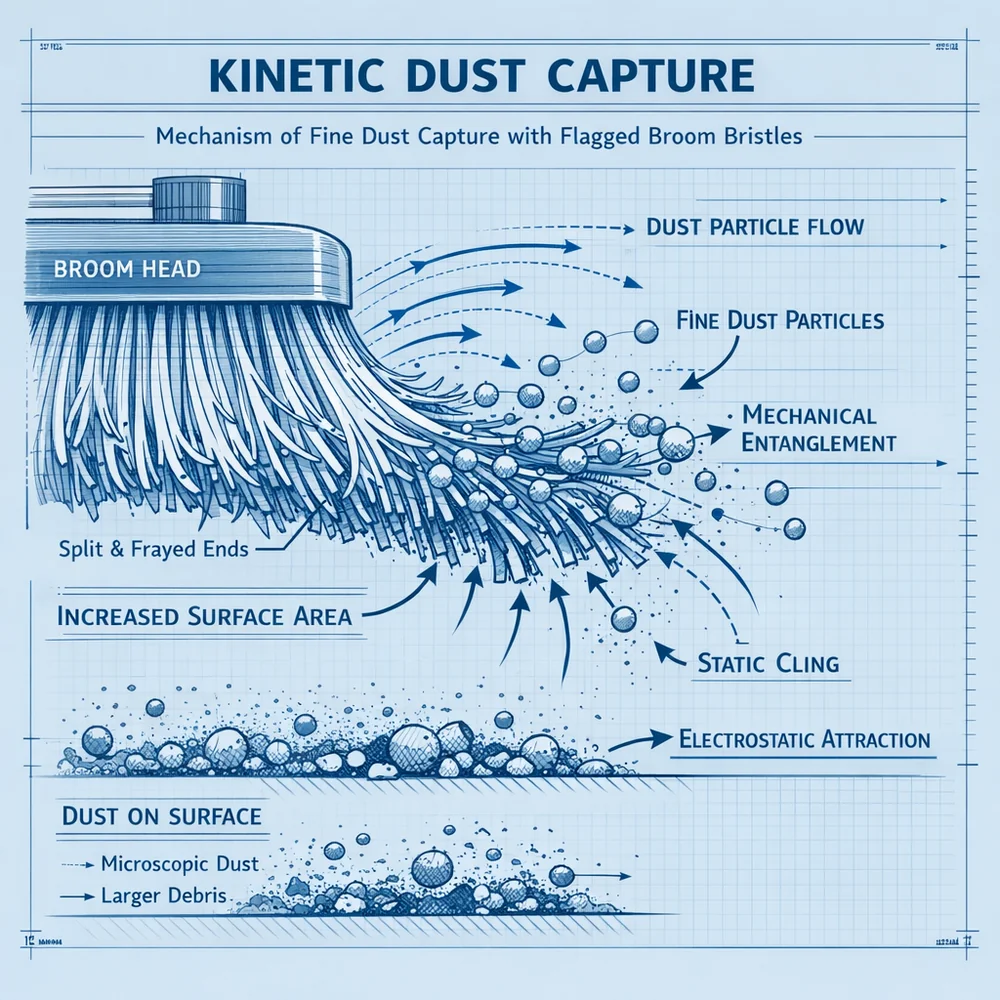
Rubber brooms exploit friction rather than the traditional flicking motion that propels debris forward with conventional brooms. Made of synthetic rubber or silicone with thick, flexible fingers instead of fine bristles, they create strong mechanical grip on hair and dander that resists the static cling binding these materials to carpet fibers. When pulled across surfaces, the rubber generates its own static electricity that causes pet hair to bundle into manageable rolls rather than scattering.
The primary benefit is exceptional effectiveness on carpets, rugs, and upholstered surfaces.
The thick rubber fingers reach deep into textile fibers, grabbing individual hairs and dander particles that even high-suction vacuums might miss because they’re mechanically entangled in the carpet pile. This shearing force overcomes the adhesive bond between hair and carpet that frustrates conventional cleaning. Reference our pet hair removal guide for more on managing dander in laundry.
Rubber brooms are also inherently hygienic because the non-porous material doesn’t absorb moisture or provide a habitat for bacteria. After use, you can rinse the entire head under a tap or submerge it in disinfectant solution without damaging the material. Most models feature a built-in squeegee blade for liquid removal on hard floors, making them excellent for bathroom cleanup where water and hair combine. This multi-functional design addresses the unique challenges of pet-centric households where conventional brooms fall short.
The main limitation is that rubber brooms don’t “flick” debris the way traditional bristle brooms do. They excel at gathering and bundling but require you to actively collect the gathered material rather than sweeping it across the floor into a dustpan.
Key Insight: Rubber brooms utilize high friction and self-generated static electricity to bundle pet hair through shearing force. Their non-porous construction makes them safe for sanitization and superior for wet environments with high biological loads.
Corn Brooms vs. Synthetic Bristles
The classic corn broom is made from broomcorn, a variety of sorghum specifically cultivated for its long, fibrous tassels. These natural bristles are inherently stiff with excellent “flick,” the mechanical energy stored in a flexed bristle that releases as the bristle snaps back, propelling debris forward. Corn brooms are traditional choices for heavy-duty exterior sweeping on textured surfaces like concrete, brick, and rough stone where their stiffness can dislodge embedded dirt.
Synthetic corn brooms made of polypropylene mimic this stiffness at a lower cost.
They offer superior chemical resistance and durability, remaining effective even when wet repeatedly without rotting or losing shape. However, many professional janitors and experienced users prefer natural broomcorn for its irregular surface texture that captures fine particles in tiny surface ridges that smooth synthetic plastic misses. The choice depends on environment: high-quality synthetic with flagged (split) ends for indoor kitchen use where spills are common, natural broomcorn for outdoor patios handling wet leaves and garden debris.
Flagged bristles deserve special attention. When bristle ends are mechanically split into multiple fine filaments, they create dramatically increased surface area for particle capture. A flagged synthetic broom can approach horsehair performance for fine dust while maintaining the stiffness needed for heavier debris. Both natural and synthetic brooms require proper storage to prevent “bristle-set” from being stored on their ends. Periodically strike the broom against a hard edge outdoors to release heavy grit trapped at the base where it wears fibers prematurely.
Key Insight: Natural broomcorn offers superior flick and particle entrapment on textured surfaces, while synthetic alternatives provide water resistance and durability. Flagged bristle ends increase fine-particle capture regardless of material.
Push Brooms for Large Areas

Push brooms move high volumes of debris over large areas using consistent plowing force rather than the back-and-forth flicking motion of traditional brooms. The wide head, typically 18 to 36 inches across, mounts at an angle to a long handle, allowing body weight to be applied efficiently for clearing garages, basements, warehouses, and workshops in far less time than a standard broom would require.
Quality push brooms feature dual-purpose bristle layouts engineered for maximum efficiency.
Stiff polypropylene bristles in the center provide structural strength for moving heavy sand, sawdust, metal shavings, and construction debris. Softer, flagged bristles on the outer perimeter create a “finishing zone” that captures the fine dust the coarse center stirs up. This tiered approach ensures a clean sweep in a single pass: the center moves the bulk material while the edges catch what’s left behind.
In garages exposed to automotive fluids like motor oil, transmission fluid, and gasoline, synthetic bristles are mandatory. Natural fibers absorb these petroleum products and retain them, creating both an accelerated wear issue and a fire hazard if the broom is stored near ignition sources. After use on oil-soiled floors, clean the broom head with heavy-duty degreaser to prevent buildup that makes bristles ineffective. Store push brooms suspended by the handle with heads facing up or mounted horizontally to prevent permanent bristle flattening under the weight of the head.
The handle length matters for ergonomic efficiency. For extended sweeping sessions, a handle slightly longer than standard allows a more upright posture that reduces back strain. Professional-grade push brooms feature replaceable heads that mount to a universal handle, allowing you to maintain a single comfortable handle while swapping bristle types for different tasks.
Key Insight: Push brooms optimize debris movement through tiered bristle systems combining coarse central plow fibers with fine outer capture filaments. Synthetic bristles are mandatory in automotive environments to prevent absorption of flammable petroleum products.
Caring for Natural Fibers
Natural bristle fibers like horsehair, broomcorn, and tampico (from the Agave lechuguilla plant) are biological materials susceptible to moisture rot, pest damage, and mechanical fatigue in ways that synthetic materials aren’t. When wet, these fibers absorb water through internal capillary structures, swelling and temporarily losing the stiffness that makes them effective. If not dried rapidly after washing or wet use, moisture promotes mildew and fungal growth that breaks down the fiber structure from within.
The gold standard for natural fiber maintenance is the wash-and-hang protocol.
Periodically bathe bristles in warm water with castile soap, which cleans effectively while preserving the natural oils that keep fibers supple. Avoid harsh detergents that strip these oils, leaving bristles brittle. After rinsing thoroughly to remove all soap residue, hang the broom bristles-up in a well-ventilated area with indirect sunlight for UV sanitization. Direct sunlight provides mild UV disinfection that kills surface bacteria and mold spores. Never store damp natural fiber brooms in enclosed closets where still air prevents evaporation and encourages mold colonization.
Pest prevention matters particularly for animal hair brooms like horsehair. Just as wool sweaters attract clothes moths, horsehair and other keratin-based bristles can be targeted by carpet beetles and their larvae. Inspect the bristle base periodically for shedding fibers or visible egg casings that indicate infestation. Light misting with diluted cedar or lavender essential oil provides natural pest deterrence, as these compounds repel fiber-eating insects. Store valued natural fiber brooms away from closets containing wool clothing to avoid cross-contamination.
Key Insight: Natural fibers are biological assets sensitive to moisture rot and pest colonization. A wash-and-hang protocol with thorough air-drying and occasional UV sanitization preserves fiber elasticity and prevents mold.
Storing Brooms Correctly
The most common cause of broom failure isn’t wear from use but damage from improper storage. Leaving a broom standing on its bristles causes permanent deformation called bristle-set, where the fibers take on a bent, curved shape that can never be fully reversed. Once set, the bristles can no longer make flat contact with floors, missing spots, creating uneven sweeping patterns, and frustrating users into throwing away a tool that could have lasted years longer.
The solution is simple: correct storage elevates the broom head off the floor entirely.
Wall-mounted racks or simple hooks allow hanging by the handle, leaving bristles completely free of pressure. If a broom must stand upright in a corner, turn it upside down to rest on the handle end with bristles pointing up. For wide push brooms, flip-brackets allow wall-parallel storage with the head mounted horizontally. This simple adjustment costs nothing but ensures fibers remain straight, springy, and ready for effective use.
Proper storage also improves hygiene in ways that aren’t immediately obvious. A broom hung in an airy spot dries faster after use on damp floors, and develops fewer bacterial biofilms than one standing in a corner where the bristles contact the floor continuously. This matters especially for brooms used in kitchen and bathroom zones where moisture and biological loads are high. Use color-coded handles or visible labels to ensure bathroom brooms never accidentally migrate to food preparation areas.
Key Insight: Storing brooms on their bristles causes permanent structural deformation that compromises cleaning effectiveness. Elevating broom heads through wall-mounted racks prevents mechanical fatigue and promotes rapid air-drying.
Washing Broom Heads
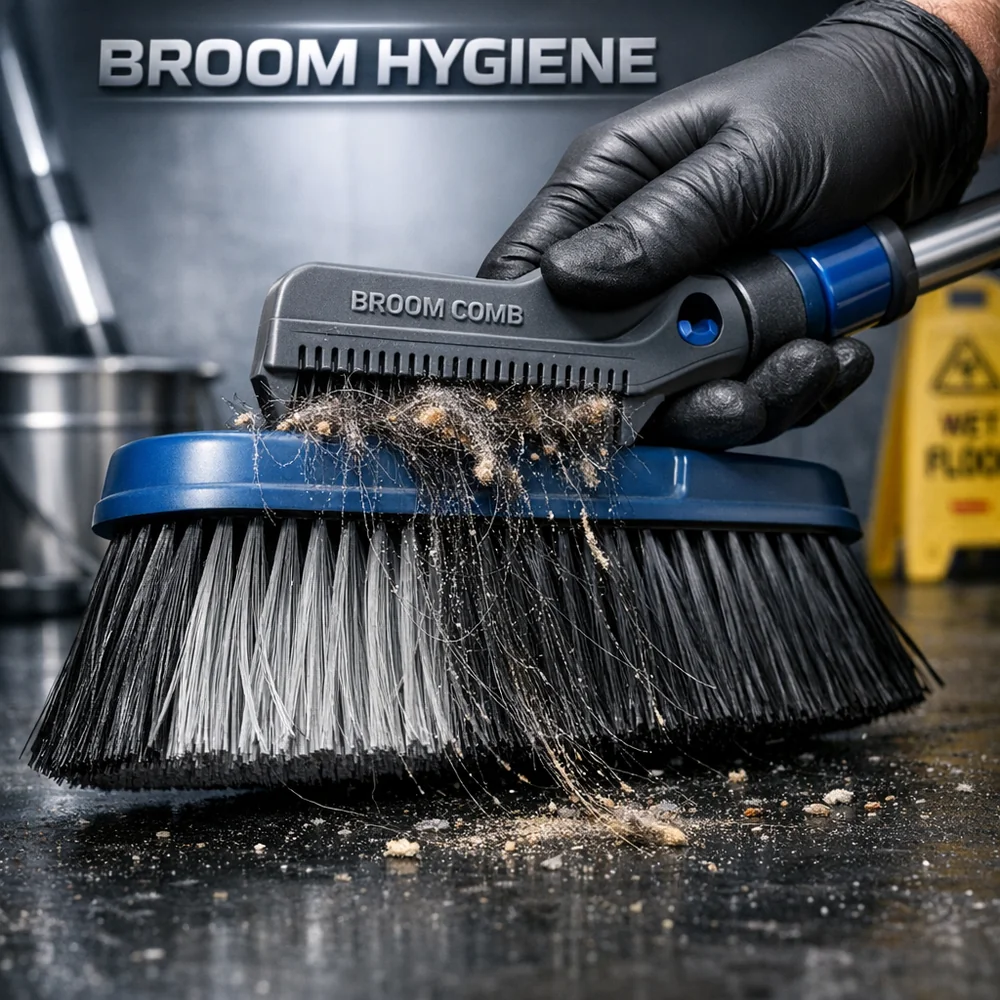
A broom used for weeks or months without washing becomes a transmitter of filth rather than a cleaning tool. Grease, hair, dust, food particles, and bacteria accumulate at the bristle base where they’re protected from light and air, creating a concentrated contamination zone. Monthly deep-washing is a baseline hygiene standard for regularly-used brooms.
For synthetic brooms, submerge the entire head in warm water with high-surfactant detergent.
Agitate vigorously to dislodge trapped dirt, flexing the bristles to release debris caught at the base. For thorough sanitization after cleaning bathrooms or handling raw meat spills, follow washing with a soak in diluted hydrogen peroxide which kills bacteria without leaving residue. Avoid chlorine bleach, which makes some synthetic polymers brittle over time and can discolor colored bristles. Rinse thoroughly and hang to air-dry completely before the next use.
For natural fiber brooms, apply cleaning solution only to the bristles using a soft brush, working the suds through the fiber mass without soaking the wooden block. Excess moisture reaching the wood promotes internal rot at the bristle mounting points, eventually causing bristles to shed. After washing, shake vigorously to remove excess water and dry quickly in a well-ventilated spot to restore elasticity. Some users maintain two brooms in rotation, allowing one to dry thoroughly while the other is in service.
Key Insight: Regular washing removes accumulated lipids and bacterial colonies at the bristle base that make brooms vectors for cross-contamination. Maintaining a clean bristle mass prevents redistribution of filth and maintains mechanical separation efficiency.
Electrostatic Dust Mops
On polished hardwood, marble, and other premium flooring where even minute dust particles are visible and potentially abrasive, electrostatic dust mops offer a superior alternative to traditional sweeping. These tools use the triboelectric effect: friction between the dry mop head and the floor generates a static electrical charge that actively attracts dust, pollen, dander, and other fine particles to the fiber surface.
Unlike brooms that can aerosolize dust by flicking it into the air, electrostatic mops hold debris within the fiber structure.
This containment is critical for people with allergies or respiratory sensitivities. The particles remain trapped until the mop head is washed, rather than being redistributed into the breathing zone. For optimal performance, glide the mop in a continuous Z or S pattern across the floor, keeping it in constant contact with the surface to maintain the electrostatic charge. Lifting the mop causes charge dissipation and releases captured debris back onto the floor.
Maintain electrostatic mops by washing without fabric softeners. These products coat fibers with a waxy residue that eliminates their ability to generate and hold static charge, effectively disabling the tool’s primary capture mechanism. Reference our microfiber care guide for detailed laundering protocols. After washing, a brief no-heat tumble dry helps fluff the fibers and builds initial static charge so the mop is ready to use immediately. Replace mop heads when fibers become matted or lose their ability to attract dust even after proper cleaning.
Key Insight: Electrostatic dust mops utilize the triboelectric effect to capture allergens and fine particles without aerosolizing them into the breathing zone. A no-softener laundry protocol ensures fibers maintain their ability to generate and hold static charge.
Color Coding for Hygiene Zones
Using the same broom for the kitchen (a food-safe zone requiring maximum hygiene) and the bathroom (a high-biological-load zone with fecal bacteria) is a severe hygiene error that can spread pathogens throughout your home. This cross-contamination silently transfers bacteria like E. coli and Salmonella from toilet areas into food preparation spaces where they can colonize surfaces and potentially cause illness.
Professional cleaning services and commercial kitchens implement color-coding systems to prevent this risk.
Standard international codes use red for toilet areas and fixtures, yellow for other bathroom surfaces like sinks and showers, blue for general living areas like hallways and bedrooms, and green for food-contact zones including kitchens and dining areas. Even a simplified two-color system distinguishing bathroom from everything else provides massive hygiene improvement over shared tools.
Implementation can be as simple as color-coded handle tape, dedicated hanging locations with colored labels, or purchasing brooms with differently-colored bristles or handles. The goal is making zone assignment visually obvious so family members and household staff instinctively reach for the correct tool. Labels can indicate intended surfaces specifically, protecting both family health and floor finishes that might be damaged by bristles appropriate for a different surface type. By treating the house as a collection of isolated hygiene zones, you contain microscopic threats rather than spreading them. Color coding translates clinical hygiene standards into practical daily domestic habits.
Key Insight: Color-coding brooms for specific zones prevents mechanical pathogen transfer between sanitary and food-safe environments. Localized tool sets are foundational principles of industrial-grade hygiene adapted for home use.
Conclusion
Broom selection and maintenance are critical components of effective floor hygiene that most households overlook. Horsehair captures fine dust on smooth surfaces through natural anti-static properties. Rubber exploits friction to bundle and contain pet hair. Broomcorn provides the stiff flick needed for outdoor debris on rough surfaces. Push brooms handle large volumes quickly through tiered bristle systems.
Natural fibers need periodic wash-and-hang protocols to prevent moisture rot and pest damage. All brooms require elevated storage to prevent the permanent bristle-set that compromises their effectiveness. Regular deep-washing prevents the bristle mass from becoming a bacterial reservoir that spreads contamination rather than removing it. Electrostatic mops offer allergen-friendly alternatives for polished surfaces where dust aerosolization must be minimized.
Color-coding prevents cross-contamination between hygiene zones. By treating brooms as precision instruments requiring proper selection, maintenance, and storage rather than disposable tools, you achieve dramatically higher standards of floor hygiene while extending tool life from months to years.
References
-
Daud, W. M. A. W., et al. (2014). “Bacterial Survival and Transfer via Manual Sweeping Tools: Implications for Domestic Hygiene.” Journal of Applied Microbiology.
-
International Fabric Institute. (2015). “The Physics of Manual Floor Cleaning: Bristle Mechanics and Particle Capture.” IFI Technical Bulletin. 956. 1-14.
-
Smith, J. A., et al. (2011). “Material Comparison of Natural vs. Synthetic Bristles for Domestic Cleaning Applications.” Textile Research Journal.
-
World Health Organization (WHO). (2020). “Infection Control in the Domestic Environment: Best Practices for Tool Hygiene.” WHO Technical Guidance.
-
U.S. Environmental Protection Agency (EPA). (2021). “Indoor Air Quality and Dust Management: The Role of Manual Cleaning Tools.” EPA Technical Bulletin.