pH-Neutral Detergent Science: Protecting Delicate Fibers
Table of Contents
Things You'll Learn From This Article:
- Washing wool or silk with regular alkaline detergent can damage the fibers, even if the garment looks fine at first.
- Choosing a pH‑neutral detergent helps keep delicate fabrics from shrinking, stiffening, or losing their shine.
- Neutral detergents clean gently instead of stripping the fabric, which helps clothes keep their softness and shape longer.
- Clothes washed at neutral pH are less likely to irritate your skin, especially if you have eczema or sensitive skin.
- Using pH‑neutral detergent is safer for baby clothes because newborn skin doesn’t handle alkaline residue well.
- Checking for “enzyme‑free” on delicate detergents matters, since some enzymes can slowly eat away at wool and silk.
- Neutral detergents rinse out more cleanly, so less soap stays trapped in the fabric after washing.
- If you have hard water, pH‑neutral detergents reduce mineral buildup that can make fabrics stiff or yellow over time.
- Built‑in lubricants in delicate detergents reduce friction, which helps prevent pilling and surface fuzz.
- Silk is especially sensitive to pH, so neutral detergent helps prevent dull spots and uneven texture after washing.
- A mild acidic rinse (like diluted vinegar) after washing can help wool and cashmere relax back into shape.
- Paying attention to detergent pH can extend the life of expensive garments and make everyday clothes more comfortable to wear.
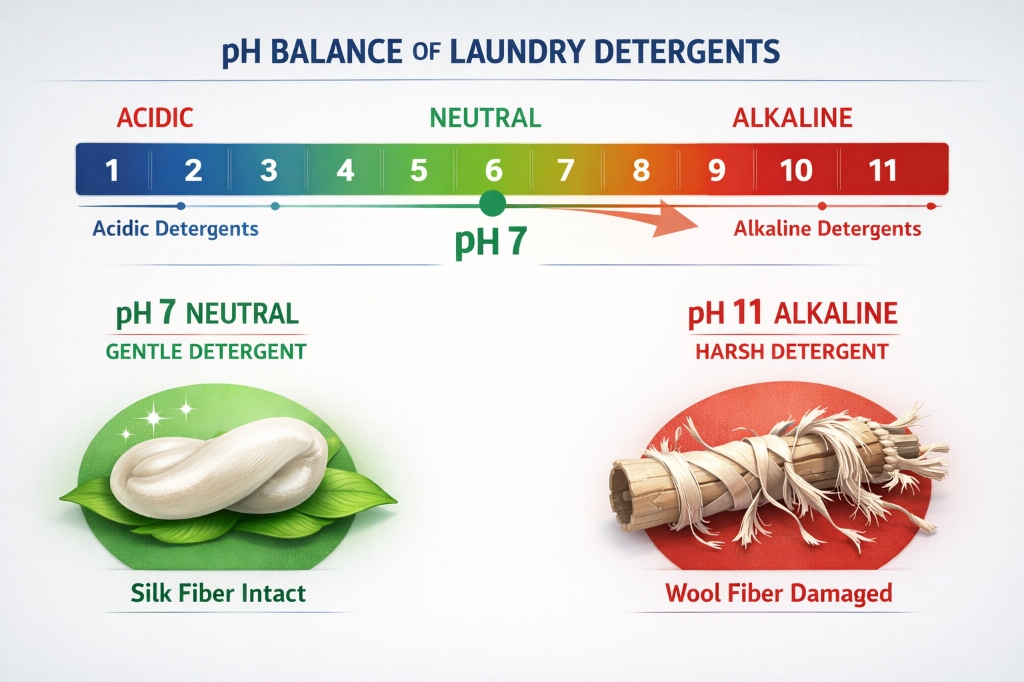
Standard laundry detergents are designed to be alkaline, typically running between pH 9 and 11. That high alkalinity is great for cotton and synthetics because it helps surfactants work better and swells fibers for improved cleaning. But for protein-based fibers like wool and silk, that same alkalinity is destructive. It attacks the molecular structure of the fiber itself.
pH-neutral detergents maintain a balance close to 7, protecting delicate protein matrices from chemical degradation. They also support human skin health by avoiding the alkaline residues that disrupt the skin’s acid mantle. Understanding when and why pH neutrality matters helps you make better decisions about caring for expensive garments and managing sensitive skin conditions.
Why Protein Fibers Hate Alkalinity
Wool and silk are biological polymers made of amino acid chains held together by disulfide bridges and hydrogen bonds. High-pH environments put chemical stress on these bonds.
In wool, this stress causes the protective scales on the fiber shaft to lift and interlock during agitation. This is the felting process that causes irreversible shrinkage. In silk, alkalinity dulls the natural luster of the fibroin filaments and can make the fabric stiff and brittle.
A pH-neutral detergent prevents this structural degradation by keeping the fiber at its isoelectric point, the pH at which the net charge on the protein molecule is zero. At this point, the fiber is at maximum chemical stability and is least reactive with the surrounding solution. By operating at pH 7, these detergents achieve soil removal through gentle emulsification rather than aggressive chemical stripping, preserving the softness and drape that define premium protein textiles.
The Bottom Line Protein fibers are chemically vulnerable to high pH. Neutral detergents keep wool and silk at their isoelectric point, preventing scale lifting, felting, and fiber degradation.
Your Skin Has a pH Preference Too
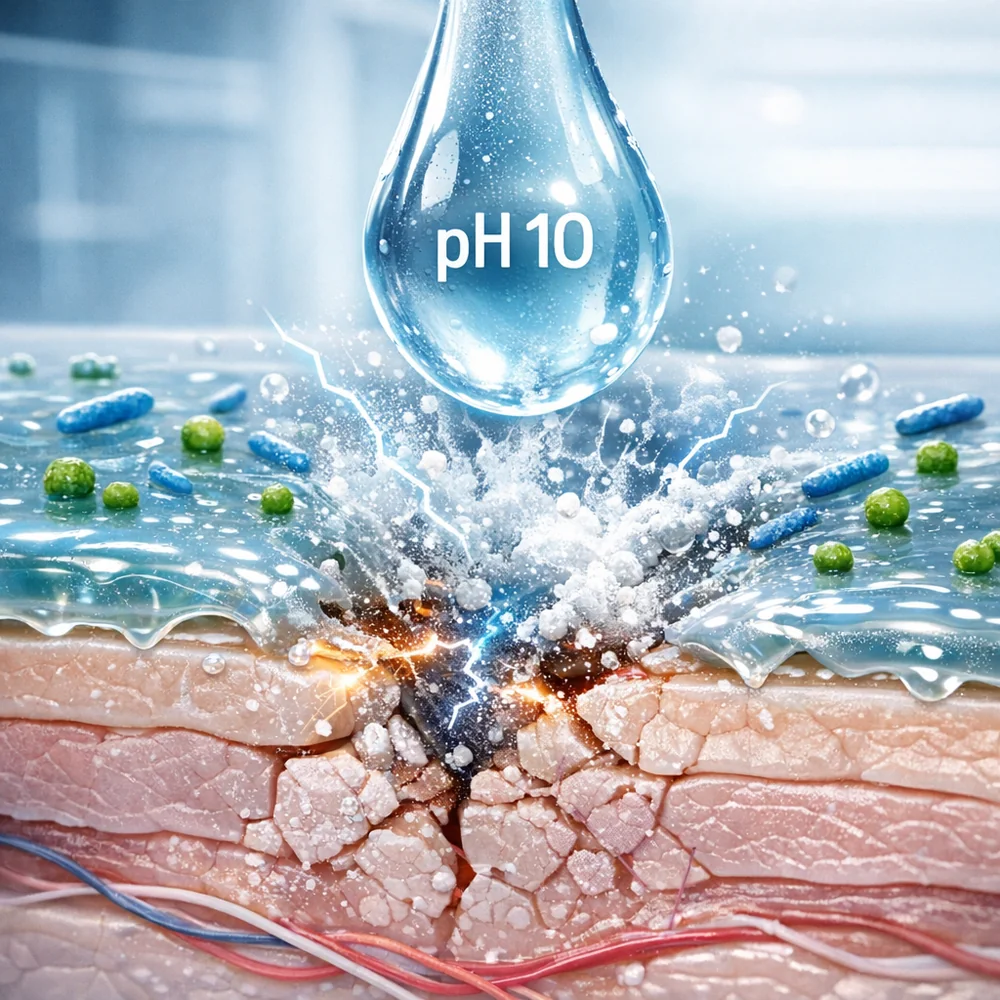
The chemical residue left on clothing by standard detergents can profoundly impact your skin’s acid mantle.
The acid mantle is a microscopic film of sebum and sweat that maintains skin at a pH of approximately 4.5 to 5.5. This acidity is vital for barrier function because it inhibits pathogen growth and supports healthy operation of the skin’s own lipid-producing enzymes. When you wear clothing washed in high-pH detergent, any residual alkalinity can neutralize the acid mantle, leading to disruption of the stratum corneum.
This disruption is a primary trigger for contact dermatitis and eczema. By using a pH-neutral detergent, you minimize the chemical transition between garment and skin. This is particularly important for laundry routine for eczema and for washing newborn clothes, where the skin barrier is either compromised or not yet fully developed.
Why Enzyme-Free Matters for Delicates
One of the most critical aspects of pH-neutral detergent science is the deliberate exclusion of certain biological enzymes.
As discussed in the laundry enzyme biology overview, proteases are highly effective at breaking down protein stains. The problem is that a protease enzyme cannot distinguish between the protein of a blood stain and the protein of your silk blouse or wool sweater.
In a neutral or slightly alkaline wash, these enzymes can slowly hydrolyze the garment itself, leading to mystery holes, fabric thinning, and complete loss of structural integrity over time. Specialized delicate detergents are almost always formulated without proteases. Instead, they rely on higher concentrations of non-ionic surfactants and gentle lipases to lift oils and general grime.
For those prioritizing silk and wool maintenance, checking for the “enzyme-free” label is as important as checking the pH.
The Bottom Line Proteases cannot distinguish between stain proteins and fiber proteins. Enzyme-free formulations protect delicate garments from being digested by the cleaning agents intended to help them.
Better Mineral Management
pH-neutral detergents provide significant advantages in managing hard water compared to traditional soaps.
Traditional soaps are naturally alkaline and react aggressively with calcium and magnesium in hard water to form insoluble soap scum. pH-neutral detergents are typically formulated using synthetic surfactants (syndets) engineered to remain soluble across a wider range of mineral concentrations. Because they do not rely on high alkalinity to function, they are less likely to trigger precipitation of metallic salts.
This reduction in soap scum is particularly beneficial for delicate knits, which have high surface area and can easily trap waxy precipitates. By maintaining neutral pH, the detergent supports a clean rinse, ensuring fibers are free from mineral residues that cause stiffness and yellowing. This is why hard water laundry chemistry for delicates often involves liquid syndets rather than powder soaps.
Low-Residue Rinse Profiles
The molecular architecture of pH-neutral detergents is optimized for rapid and complete rinsing.
Because these formulas are often used on items that are hand-washed or processed in delicate machine cycles with lower agitation, the surfactants must be highly soluble and have low substantivity. This means they do not stick to fiber as tenaciously as standard anionic surfactants. Even with minimal rinsing, fabric returns to a chemically clean state without leaving behind surfactant films that attract soil or irritate skin.
This low-residue profile is also supported by the absence of optical brighteners in most pH-neutral formulas. Optical brighteners are designed as permanent fiber coatings that can alter the feel of silk and wool. By excluding these dyes, pH-neutral detergents maintain natural luster and tactile properties of the original protein fibers.
The Bottom Line pH-neutral detergents rinse completely, leaving no surfactant films or optical brightener deposits. This preserves the natural hand and appearance of delicate fibers.
Built-In Lubricating Protection
To compensate for lower mechanical energy in delicate wash cycles, pH-neutral detergents often include specialized lubricants.
Additives like lanolin for wool or modified silicones provide a thin protective layer that reduces friction during washing. This helps prevent the surface fuzzing that leads to pilling and dull appearance. Unlike heavy fabric conditioner formulations which can be too hydrophobic for some silk pieces, these built-in lubricants are carefully calibrated to provide just enough slip to protect fiber without compromising breathability.
These lubricants also help restore some natural oils lost over the garment’s lifecycle. For wool, a replenishing neutral wash can help maintain natural water-repellency and elasticity of the yarns. This proactive approach to fiber maintenance keeps garments in like-new condition for years.
The Special Case of Silk
The unique requirements of silk care are rooted in the biological origin of the fiber, specifically the presence of sericin.
Silk is composed of two main proteins: fibroin (the structural core) and sericin (the “gum” that holds filaments together). During industrial processing, most but not all sericin is removed through degumming. Any remaining sericin is highly sensitive to wash water pH and temperature.
An alkaline detergent can initiate uncontrolled hydrolysis of residual gum, leading to uneven fiber texture and a splotchy appearance called water-marking. A pH-neutral detergent ensures the degumming process does not continue in your washing machine.
By keeping pH around 7, the detergent stabilizes structural fibroin and protects the delicate crystalline arrangement of the protein chains. This preservation of molecular density allows silk to retain its characteristic tensile strength and its ability to refract light into shimmering luster.
The Acidic Rinse Enhancement
The final stage of professional delicate care often involves a secondary pH adjustment through an acidic rinse.
While the detergent itself should be neutral to safely remove soil, many fiber specialists recommend a final rinse with dilute acetic or citric acid. This pH reset serves dual purposes: it neutralizes any trace alkaline soil released during the wash, and it helps re-contract the fiber scales of wool and cashmere.
This contraction is part of the laundry vinegar science that ensures garments return to original dimensions and smoothness. The synergistic approach of a neutral wash followed by an acidic rinse is the ultimate protocol for high-end textile maintenance.
The neutral wash provides the safe cleaning environment required for protein fibers, while the acidic rinse provides the final protective seal that locks in fibers and prevents long-term mineral buildup associated with hard water chemistry.
The Bottom Line A neutral wash followed by an acidic rinse is the gold standard for delicate care. The combination removes soil safely while stabilizing fiber structure and preventing mineral accumulation.
Conclusion
The science of pH-neutral laundering demonstrates the importance of chemical balance for preserving both human biology and high-end textiles.
By respecting the narrow pH tolerances of protein fibers and supporting the skin’s acid mantle, these detergents offer a more thoughtful and effective approach to wardrobe care. The deliberate avoidance of aggressive alkalines and destructive enzymes ensures precious garments are cleaned with precision rather than brute force.
A shift toward neutral pH routine is not about choosing mildness over effectiveness. A properly formulated pH-neutral detergent is a powerful chemical tool that ensures clothes remain as healthy as the skin they protect. Understanding this chemistry allows you to make informed choices that extend the life of delicate fabrics while maintaining skin comfort.
References
- Journal of Cosmetic Dermatology. “The Impact of Detergent pH on the Stratum Corneum and Acid Mantle Integrity.” Wiley
- Textile Research Journal. “Structural Degradation of Silk and Wool in Alkaline vs. Neutral Laundry Environments.” Sage Journals
- Enzyme and Microbial Technology. “The Kinetics of Protease Hydrolysis on Keratinous and Fibroin-Based Textiles.” ScienceDirect
- Dermatologic Therapy. “Skin Barrier Function and the Selection of pH-Neutral Cleaning Agents for Eczema Management.” Wiley Online Library
- Appliance Engineering. “Solubility and Rinsing Efficiency of Syndet Cleansers in Domestic Delicate Cycles.” IEEE Xplore