Removing Pet Hair in Laundry: The Electrostatic and Dissolution Protocols
Table of Contents
Things You'll Learn From This Article:
- Run pet-hair-covered clothes through the dryer **before** washing them, while everything is dry, to knock loose most of the hair.
- Use **Air Fluff or No Heat** in that pre-dryer cycle; heat isn’t needed and doesn’t help with hair removal.
- Always add **dryer sheets or wool dryer balls** in the pre-dryer cycle to reduce static and help beat hair out of the fabric.
- Clean the **lint trap right after** the dryer cycle, since that’s where most of the removed hair ends up.
- Shake clothes out after the dryer and before washing to drop any loose hair that’s left.
- Avoid washing heavy pet hair directly, because wet hair sticks more, clumps together, and can clog your washer.
- Use **pet laundry bags** for small or fuzzy items so hair stays contained and doesn’t circulate inside the machine.
- Check and clean your **washer’s drain pump filter** about once a month to prevent clogs and bad smells.
- For extreme cases (like pet bedding or towels), special pet-hair remover powders can break hair down, but only on **sturdy, heat-safe fabrics**.
- Don’t use hair-dissolving products on wool or silk, since they’re made of similar protein and can be damaged.
- Choose fabrics with **smooth, tight weaves** (like percale cotton or sateen) because hair can’t grip them easily.
- Avoid fabrics like fleece, flannel, velvet, and corduroy if you want less hair sticking in the first place.
- Anti-static sprays help synthetic clothes attract less hair during daily wear and washing.
- Vacuum pet beds and blankets before washing to remove a large amount of hair with less effort.
- Regularly grooming your pet removes loose hair at the source, which means far less hair ends up in your laundry.
Pet hair is more than just a surface cosmetic nuisance. It is a persistent biological contaminant that interlocks with fabric weaves through a complex combination of frictional mechanics and electrostatic forces. Unlike particulate soil, which can be suspended in a surfactant solution and flushed away, pet hair functions as a hooked barb. It physically embeds itself deeper into the textile matrix during the mechanical agitation of a standard wash cycle.
Furthermore, the wet environment of a washing machine often strengthens the bond between the hair shaft and the fabric surface, as moisture increases capillary adhesion and causes the hair to mat down into a felt-like layer. Successfully removing pet hair requires a counter-intuitive approach: mechanical separation must precede hydraulic cleaning.
We must remove the hair while it is dry and rigid before attempting to wash the fabric. This guide details the advanced protocols for handling pet-hair-laden laundry, ranging from the aerodynamics of pre-wash dryer cycles to the use of specialized keratin-dissolving alkaline additives. By reversing the standard wash then dry workflow, we can exploit the physics of static neutralization to our advantage.
Why Pet Hair Clings So Stubbornly
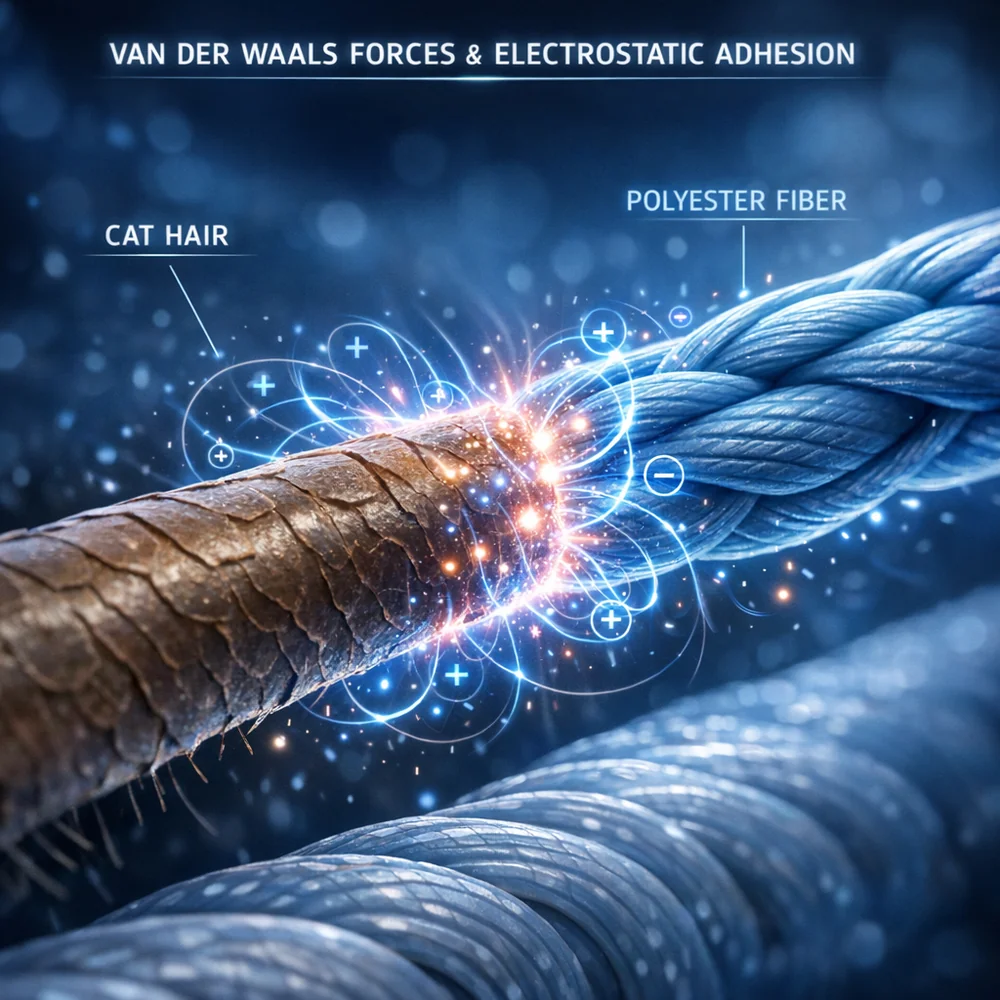
To effectively combat pet hair adhesion, one must first understand the forces holding it to the garment. The primary force is the triboelectric effect, a type of contact electrification in which certain materials become electrically charged after they come into frictional contact with a different material. Pet fur, being a protein fiber, typically donates electrons and acquires a positive charge. Synthetic fabrics like polyester, fleece, and nylon eagerly accept these electrons, acquiring a strong negative charge.
This resulting electrostatic attraction acts like a powerful magnet. It bonds the hair to the fabric with a force that far exceeds the fluid shear stress of a gentle wash cycle. This is why shaking a fleece jacket rarely dislodges the fur. The electrical bond holds it fast against the force of gravity.
The secondary force is mechanical interlocking. Under a microscope, a strand of pet hair is not smooth. It is covered in overlapping scales known as the cuticle. These scales act like the barbs on a zip-tie. When the hair is pressed against a looped fabric (like terry cloth or a knit sweater), these scales catch on the loops. Agitation drives the hair deeper into the weave, locking it in place.
Standard washing swells the cotton fibers of the garment, constricting the space between yarns and effectively clamping the hair barbs even tighter. The goal of any effective removal strategy is to break these bonds before the fabric becomes wet and swollen. Once the hair is wet, it transitions from a rigid static problem to a pliable friction problem. Wet hair clumps into a sludge that is hydrodynamically resistant to flushing and presents a severe clogging risk to pump filters.
The Bottom Line Pet hair adheres via the triboelectric effect (static magnetism) and cuticular interlocking (mechanical barbs). Wetting the fabric swells the fibers, clamping the barbs in place. Efficient extraction requires dry-state removal before hydration occurs.
The Dryer-Before-Wash Technique
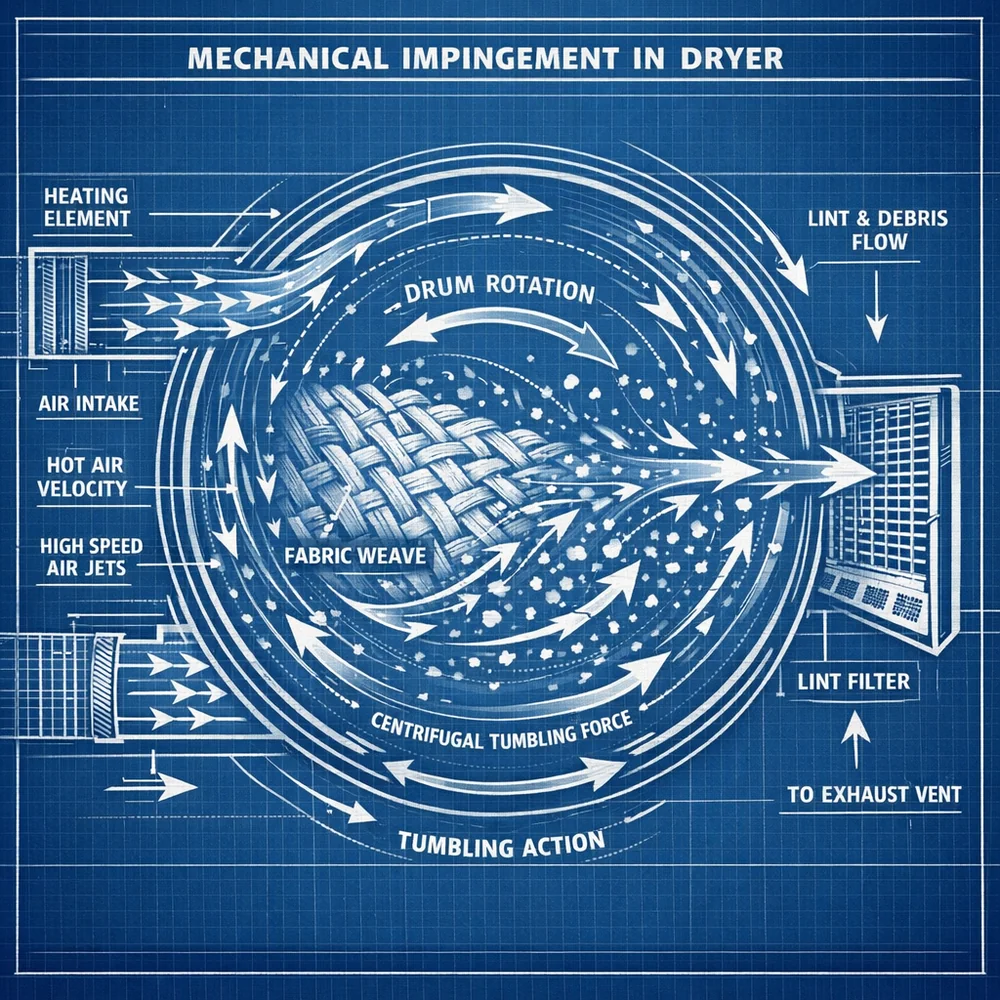
The most effective technique for removing heavy pet hair is to invert the laundry sequence. Run a pre-wash dryer cycle. Place the dry, hair-covered garments into the tumble dryer before putting them in the washing machine. This utilizes the dryer as a large-volume vacuum chamber.
Run the cycle on No Heat or Air Fluff for ten to fifteen minutes. Heat is unnecessary and potentially damaging at this stage. The goal is purely kinetic and aerodynamic. The tumbling action allows the garments to expand, maximizing their surface area. The high-velocity airflow through the drum acts to strip the hair from the fabric surface. Because the hair is dry, it remains rigid and does not stick to itself, allowing it to be entrained in the airstream and carried to the lint trap.
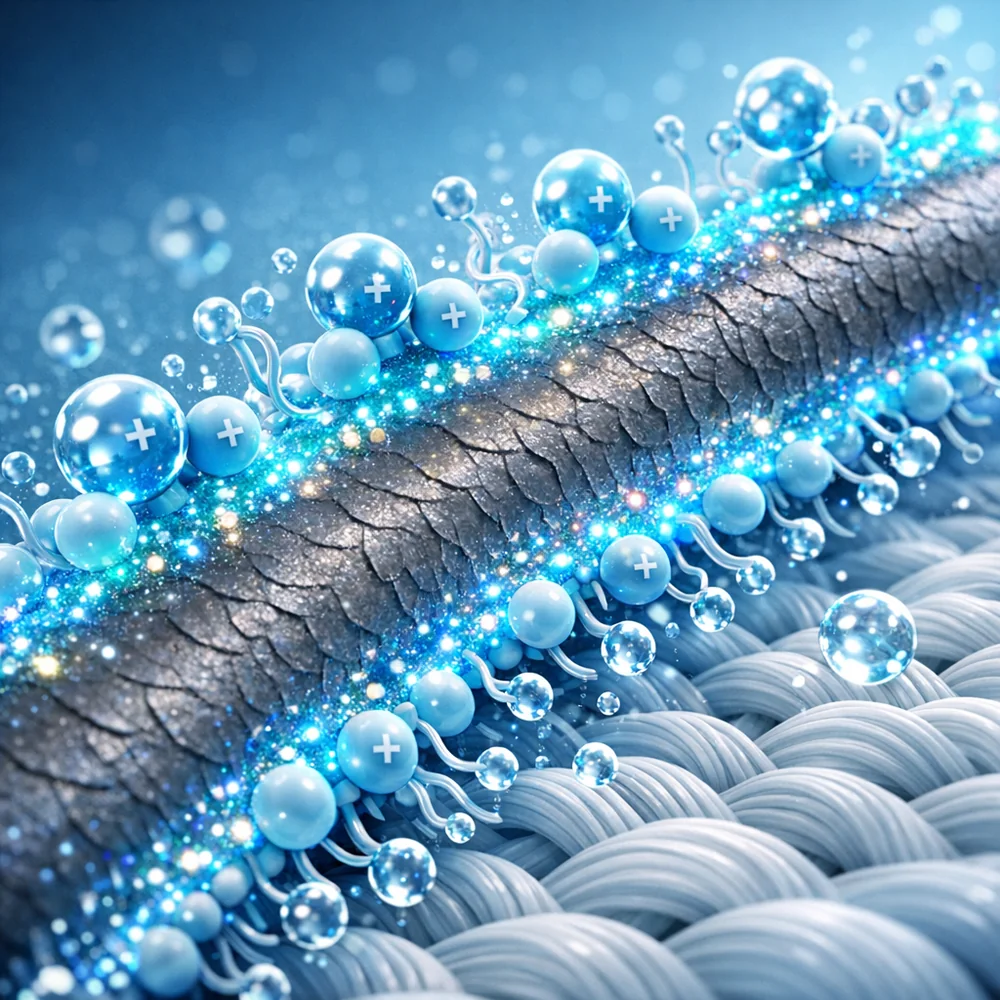
A shedding medium must be included in this cycle. A dryer sheet or wool dryer balls are mandatory. The dryer sheet deposits a microscopic layer of cationic surfactants (quaternary ammonium salts) that neutralizes the negative static charge on the synthetic fabric. This breaks the triboelectric bond, effectively turning off the magnet. Wool dryer balls provide physical impact, beating the clothes to dislodge mechanically locked hairs.
By engaging the lint filtration system while the debris is dry, you remove 70 to 80 percent of the hair burden. This protects the washing machine significantly. Instead of circulating clumps of wet fur through the delicate drain pump, the hair is safely captured in the dryer’s lint screen. After the cycle, shake out the clothes vigorously and proceed with the normal wash routine.
The Bottom Line Running a 10-minute Air Fluff dryer cycle with a dryer sheet neutralizes the static charge and creates an aerodynamic strip-stream. This captures 80 percent of the hair in the lint trap, protecting the washer pump from wet fur sludge.
How to Dissolve Pet Hair Chemically
For stubborn hair that survives the aerodynamic separation, chemical intervention is required to dissolve the protein structure itself. Pet hair, like human hair, is composed primarily of keratin, a fibrous structural protein. Keratin is incredibly tough and insoluble in water because of its high concentration of sulfur-containing amino acids, particularly cysteine. These amino acids form disulfide bridges, strong covalent bonds that cross-link the protein chains, giving hair its strength and resistance to degradation.
To wash away hair, we must break these disulfide bridges. Specialized pet hair dissolvers (such as Vamoosh) utilize a combination of active oxygen (sodium percarbonate) and high alkalinity (sodium carbonate) to target these bonds. This process is known as oxidative keratinolysis. When dissolved in hot water, sodium percarbonate releases hydrogen peroxide. In an alkaline environment, this activates to attack the sulfur-sulfur bonds.
The reaction turns the solid hair shaft into brittle fragments. As the structural integrity of the keratin collapses, the hair breaks into microscopic particles that are small enough to pass loosely through the fabric weave and flush down the drain. This method effectively digests the hair rather than just moving it around.
However, thermodynamics are the limiting factor. This chemical reaction has a high activation energy. It typically requires a wash temperature of at least 85 to 95°C to proceed at a useful rate. This limits its application to robust, colorfast fabrics like white cotton towels, pet bedding, and synthetic mats. It is unsuitable for delicate wools (which are also keratin and would be dissolved) or intricate silks.
The Bottom Line Chemical dissolvers use oxidative alkaline chemistry (hydrogen peroxide and high pH) to cleave the disulfide bonds in keratin. This requires high temperatures and fragments the hair into flushable particles, but it dissolves all protein fibers, including wool.
Protecting Your Washing Machine from Clogs
Protecting the appliance is just as important as cleaning the clothes. If the Dryer-Before-Wash method is skipped, wet hair will accumulate in the washing machine’s critical hydraulic components. Wet fur does not float. It sinks and clumps. It collects in the rubber door gasket (bellows), clogs the drain pump filter, and wraps around the drain impeller.
The drain pump is the heart of the machine. Most modern washers use a magnetic drive pump. If a clump of hair wraps around the impeller shaft, it creates drag. This drag can cause the pump to seize or the motor to overheat and burn out. Over time, hair accumulation also traps bacteria and mold, leading to the rotten egg smell associated with neglected machines.
The use of a pet laundry bag is a mandatory containment strategy for small items. These bags are made of a micromesh that allows water and detergent molecules to flow in but traps the macroscopic shed hair inside. After the wash, the bag can be turned inside out and the hair shaken into the trash. This keeps the drum completely free of debris.
For loose items, floating lint catchers offer a secondary line of defense. These mesh cones float on the water surface in top-loading machines, capturing hair as it circulates. However, the ultimate defense is regular maintenance. The drain pump filter (usually located behind a small door at the bottom of the front panel) must be checked and cleaned monthly. This protocol is identical to dishwasher filter preservation.
The Bottom Line Wet hair wraps around pump impellers, leading to motor burnout and drainage failure. Using micromesh containment bags for pet items and cleaning the bottom drain filter monthly are mandatory preventative maintenance steps.
Choosing Fabrics That Repel Pet Hair
The long-term solution to pet hair laundry is to choose fabrics that refuse to hold the hair in the first place. Certain weaves are naturally hair-repellent due to their surface topography. High-thread-count percale cotton, satin, and tightly woven canvas present a smooth, continuous surface. They lack the microscopic loops and texture that allow hair barbs to grip. Ideally, the pore size of the fabric weave should be smaller than the diameter of the hair shaft, preventing penetration.
In contrast, flannel, velvet, and corduroy are hair traps. Their pile construction essentially mimics the hook side of a velcro strip. They mechanically lock the debris in place, making vacuuming or washing nearly impossible. For pet owners, bedding selection is the single biggest variable in laundry volume. Switching to a high-density sateen weave allows hair to be brushed off easily before it even enters the hamper.
Surface energy modification is another vector. Treating synthetic clothes with an anti-static spray reduces the triboelectric attraction that draws hair from the air. By modifying the surface conductivity of the textile, you reduce the adhesion force required to keep the hair attached. This is particularly effective for synthetic athletic wear, which is prone to static cling.
The Bottom Line Tightly woven fabrics like percale and satin resist hair adhesion because they lack surface loops for barbs to grip. Choosing high-thread-count bedding effectively reduces the laundry burden by preventing mechanical interlocking.
Why Grooming Your Pet Reduces Laundry
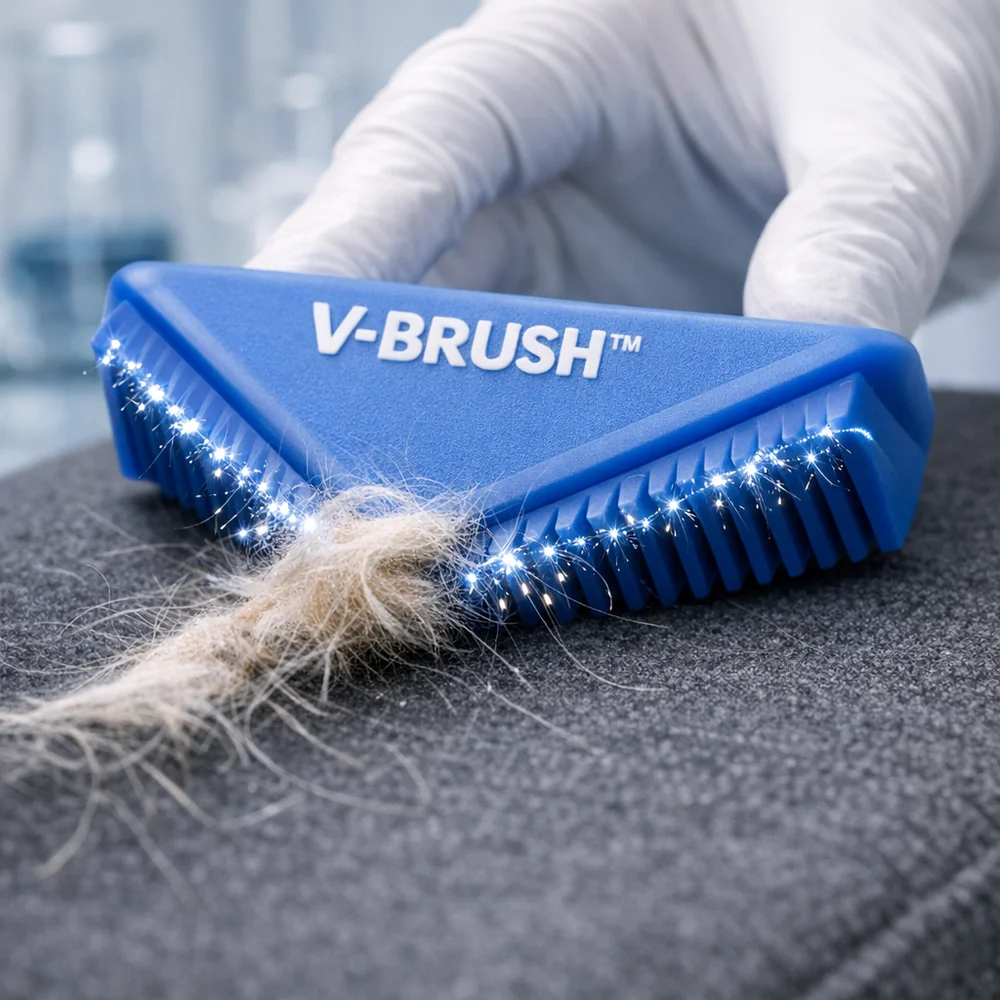
While this article focuses on laundry, the most efficient removal method is source control. Every hair removed by a brush is one less hair that clogs the washing machine. Regular grooming with a de-shedding tool (like a Furminator) removes the loose undercoat before it is shed onto the furniture. This should be viewed as a pre-laundry step.
Vacuuming the pet bedding before washing is also a critical protocol. Using a vacuum with a motorized brush roll (turbine tool) provides a level of mechanical agitation that a washing machine cannot match. The high-velocity airflow and beating action lift the stubborn hairs that are woven into the fabric. A quick 30-second vacuum of a dog bed can remove 50 percent of the hair load, significantly reducing the stress on your appliances.
Integration of grooming and textile care creates a holistic hygiene system.
Conclusion
Mastering the removal of pet hair requires a shift from passive washing to active extraction. The effectiveness of any protocol rests on the foundation of the aerodynamic pre-wash dryer cycle and the strategic use of static neutralization. By respecting the physics of adhesion, specifically the triboelectric effect and cuticular interlocking, we can break the bond between contaminant and textile. Furthermore, the judicious use of keratin-dissolving chemistry effectively digests the problem where mechanical means fail.
This technical approach respects the bonds between pet and owner while managing the biological debris that comes with it. Every hair-free garment is a testament to the synergy between airflow, chemistry, and mechanical discipline. Moving away from the lint roller mindset allows for a more systemic solution. It prevents the premature failure of drain pumps and ensures that your laundry hygiene remains uncompromised. By treating the laundry room as a decontamination zone, you can live comfortably with your shedding companions without surrendering your wardrobe to the fur.
References
- Journal of Electrostatics. “Triboelectric Series and the Adhesion of Keratin Fibers to Synthetic Textiles.”
- American Cleaning Institute. “Managing Pet Hair in Residential Washers: Pump Failure Analysis.”
- Textile Research Journal. “The Efficacy of Oxidative Dissolution on Keratin Structures in Laundry Environments.”
- Consumer Reports. “Pet Hair Removal Tools: Comparative Testing of Dryer Balls and Chemical Additives.”
- Journal of Surfactants and Detergents. “Active Oxygen and the Degradation of Disulfide Bonds in Protein Stains.”