Natural Stone Countertop Care: Mineralogy and Chemical Preservation
Table of Contents
Things You'll Learn From This Article:
- Marble and granite need totally different care, so you have to know which one you have before cleaning or sealing.
- Acidic things like lemon juice, vinegar, wine, and tomatoes can permanently dull marble in seconds.
- Granite won’t react to acids, but it can soak up oils and dark liquids through tiny pores.
- Sealing stone doesn’t make it spill-proof; it just gives you more time to wipe up messes before they soak in.
- You can check if your stone needs resealing by placing water drops on it and seeing if they bead or soak in.
- Oil stains and water-based stains need different treatments, so matching the cleaner to the stain matters.
- Poultices work by slowly pulling stains out of the stone, and they often need patience and repeat applications.
- Daily cleaning should be done with pH‑neutral products or mild dish soap diluted in water.
- Strong household cleaners, bleach, and anything acidic or highly alkaline can damage stone or strip the sealer.
- Dust and grit can scratch stone, so dry wiping before wet cleaning helps keep the surface shiny.
- Cutting boards and trivets aren’t optional if you want to avoid chips, cracks, and impact marks.
- 70% isopropyl alcohol is a safe way to disinfect stone without harming the surface or sealer.
- Buffing the surface dry after cleaning helps prevent streaks and keeps the polish looking bright.
- Coasters and trays prevent ring marks by stopping moisture from sitting on the stone for long periods.
Natural stone countertops look stunning and feel luxurious, but they’re surprisingly high-maintenance compared to solid surface alternatives. Despite appearing rock-solid, these surfaces are geochemically reactive and porous. Every substance they contact, from lemon juice to cooking oil, can potentially interact with the mineral structure. A splash of wine on marble or a puddle of olive oil on granite can become a permanent reminder of a moment’s inattention.
The key to stone care is understanding what your countertop is actually made of.
Marble and granite aren’t just different colors; they’re fundamentally different materials with opposite vulnerabilities. Marble is a metamorphic rock composed primarily of calcium carbonate, which reacts dramatically with acids. Granite is an igneous rock rich in silicates, which resists acids but absorbs oils through its microscopic pores. This guide covers the science of keeping both types beautiful, from proper sealing to safe cleaning chemistry.
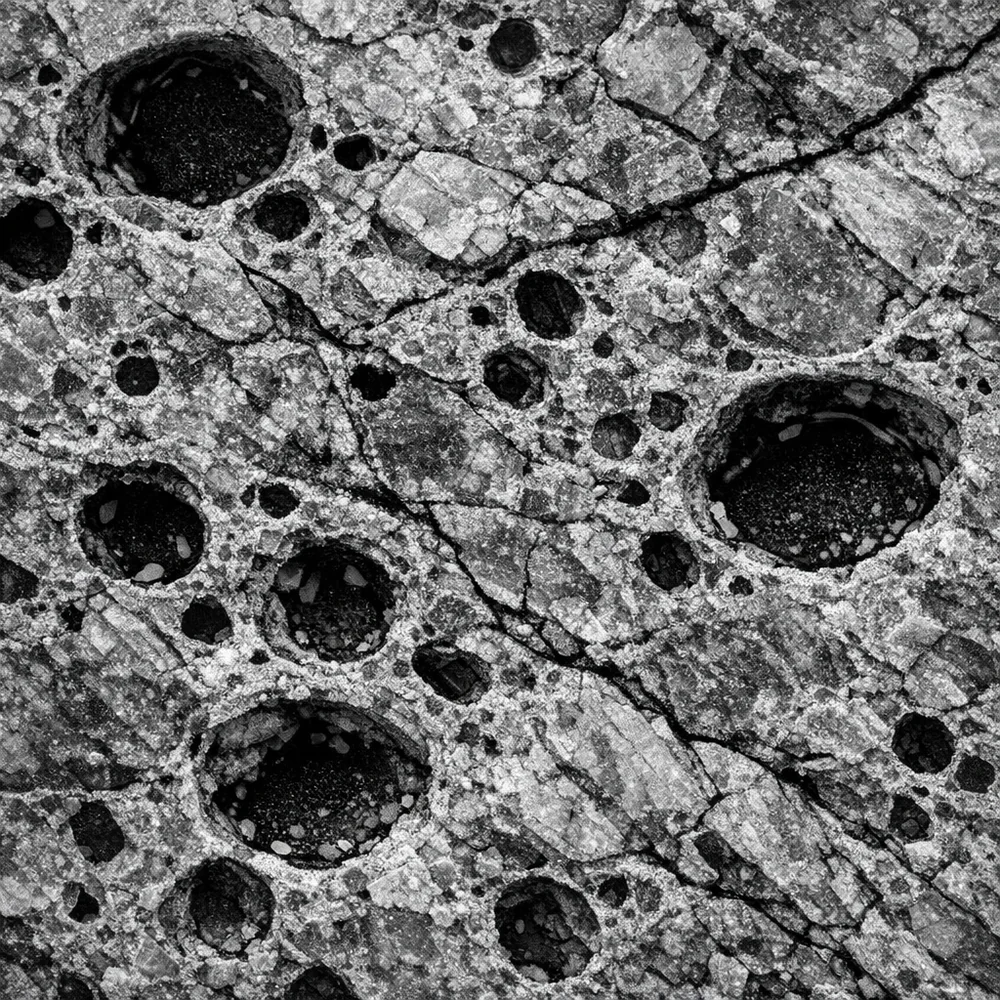
Granite vs. Marble: Completely Different Materials
To care for stone effectively, you need to understand its geological origin. Granite formed from slowly cooling magma deep underground. Its composition is primarily quartz, feldspar, and mica, all silicate minerals that make granite relatively hard and chemically stable. Acid from lemons or tomatoes won’t dissolve granite the way it attacks marble.
However, granite’s crystalline structure includes microscopic voids that act like tiny sponges.
These pores can absorb oils and pigmented liquids that then become trapped deep in the stone. A coffee spill or olive oil splash can create a dark shadow stain that no surface cleaning will remove. Managing this porosity through proper sealing is the primary defense for granite countertops.
Marble is a completely different beast. It formed from limestone that recrystallized under intense heat and pressure. Its primary component is calcite, which is chemically just calcium carbonate, the same stuff in antacids and chalk. While marble’s elegant veining is prized for its beauty, the calcium carbonate is highly reactive with any low-pH substance.
This means safe cleaners for granite can be catastrophic for marble. Understanding which type you have determines your entire care strategy.
Key Insight: Granite is a silicate-rich igneous rock prone to oil absorption, whereas marble is a carbonate-rich metamorphic rock highly sensitive to acid dissolution. Matching cleaning chemistry to the stone’s mineralogy is the primary prerequisite for surface preservation.
How Acids Destroy Marble
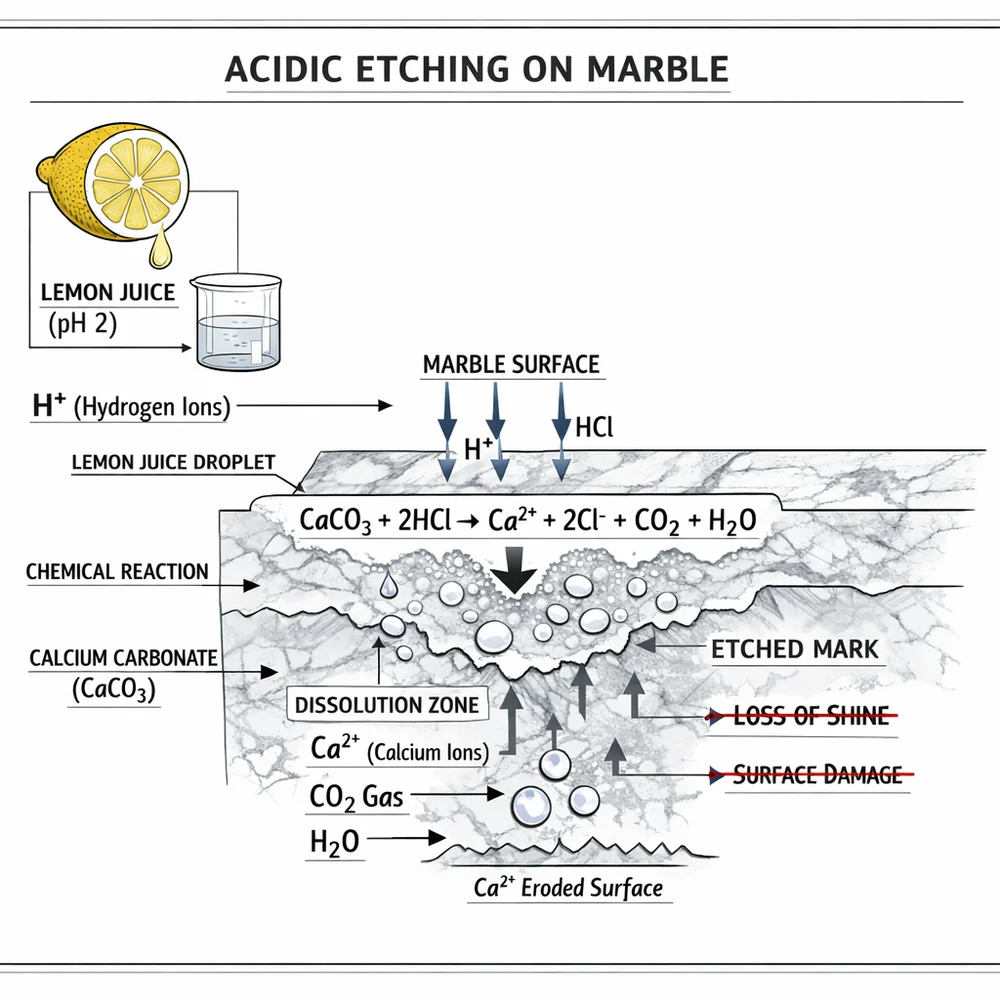
The most common form of marble damage is acid etching, and it happens faster than you might expect. Etching isn’t a stain that sits on the surface; it’s a permanent physical change to the stone’s mineral structure. When something acidic like lemon juice, vinegar, or even some wines contacts marble, it immediately begins dissolving the calcite crystals.
The result is a dull spot or whitish mark that can’t be wiped away.
The polished mirror finish is lost because the acid has physically altered the microscopic surface geometry of the stone. Even brief contact with acidic liquids can cause visible damage. This is why white vinegar, despite being excellent for many cleaning tasks, should never touch marble countertops. The acidity that makes vinegar effective elsewhere is a direct threat to the calcite matrix.
If an acidic spill happens, blot it immediately with a high-absorbency microfiber cloth and rinse with water to dilute any remaining acid. Once etching occurs, the only fix is mechanical resurfacing using diamond-impregnated polishing pads, which is labor-intensive and often requires professional help. Prevention through strict pH-neutral cleaning is far easier.
Key Insight: Acid etching is a chemical dissolution of the stone’s mineral surface, particularly in carbonate-based stones like marble. Preventing this permanent damage requires the complete exclusion of low-pH substances from the stone’s maintenance routine.
Sealing Your Stone Against Stains
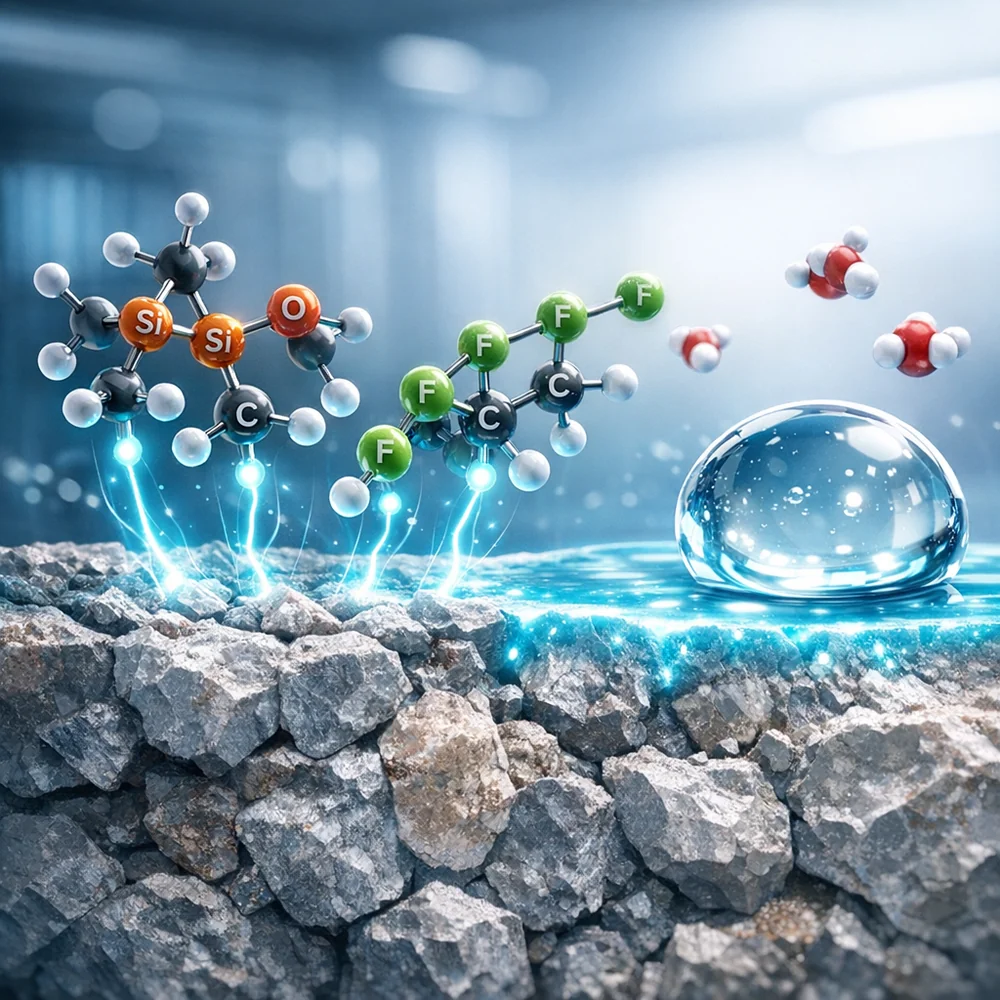
Natural stone contains a network of microscopic channels that can wick liquids deep into the material. This porosity is the primary mechanism for staining in both granite and marble. Professional maintenance relies on impregnating sealers that penetrate into these pores rather than just coating the surface.
These sealers use fluoropolymers that bond to the internal pore walls and create a water-repelling barrier.
The sealer doesn’t sit on top like paint; it works from inside the stone. Once the carrier liquid evaporates, the active molecules remain attached to the pore structure, increasing surface tension so that spills bead up rather than soaking in. The goal isn’t to make the stone waterproof but to slow absorption enough that you have time to wipe up spills before they penetrate.
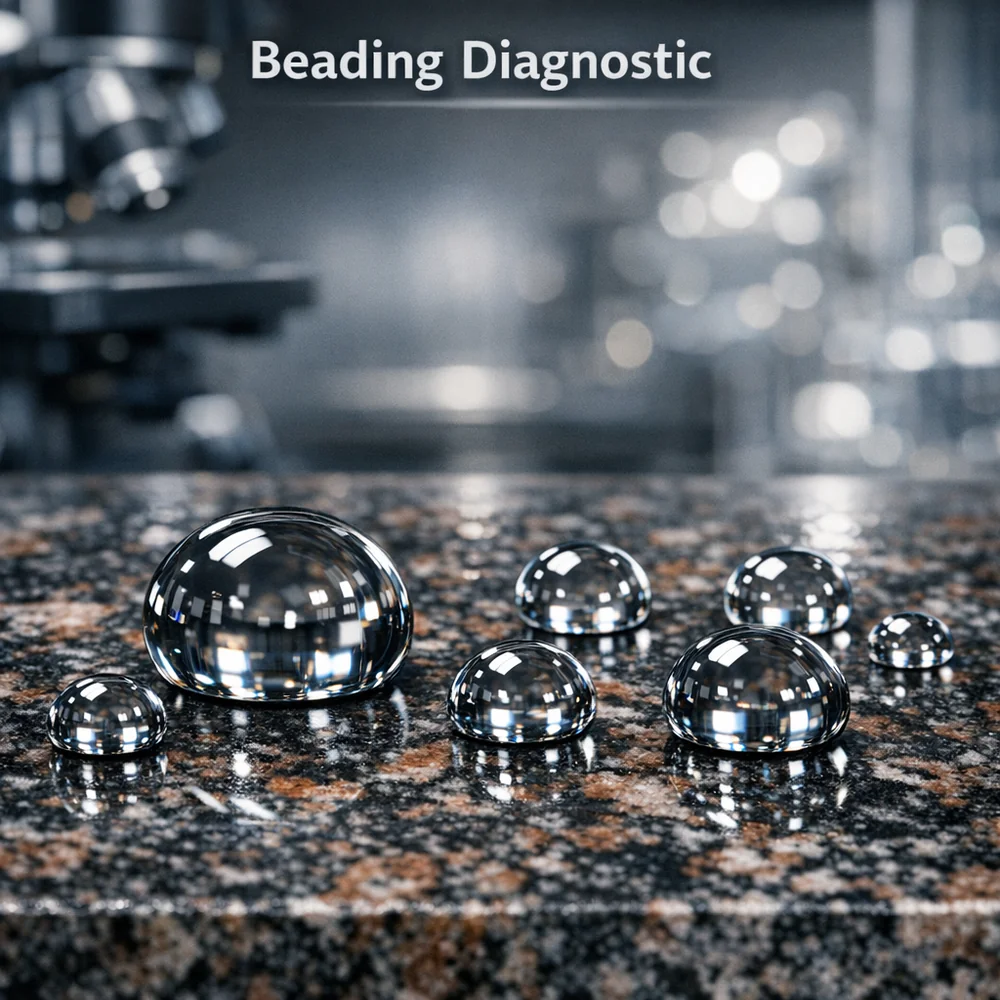
How often you need to reseal depends on your specific stone. Highly porous light-colored granite may need sealing every six to twelve months. Dense stones like black absolute granite go much longer between applications. The water drop test is your diagnostic: place a few drops on the surface and wait. If water beads up for several minutes, the sealer is working. If it absorbs quickly and leaves a dark spot, the porosity is unmanaged. Reference our diagnostic stain guide for more on identifying vulnerabilities.
Key Insight: Impregnating sealers manage stone porosity by depositing hydrophobic molecules within the pore network. Utilizing the “water drop test” ensures the surface tension remains high enough to slow the absorption of potential staining agents.
Removing Stains That Have Already Set
When a stain does get into natural stone, the treatment depends on what caused it. Stains fall into two categories: water-based and oil-based. Water-based stains from coffee, wine, or tea appear as dark colored shadows that tend to follow the stone’s grain pattern. Oil-based stains from cooking grease, cosmetics, or milk create translucent dark spots that feel greasy.
The extraction method is called a poultice, and it uses chemistry to pull contaminants back out the way they went in.
For oil-based stains, you need a degreasing solvent like acetone mixed with an absorbent powder. For water-based stains, hydrogen peroxide mixed with absorbent powder is more effective. Form the mixture into a paste, apply it over the stain about half an inch thick, and cover with plastic wrap. Leave it for 24 hours.
As the paste slowly dries, it creates capillary action that draws the stain up and out of the stone pores. This is a slow process that mimics how the stain entered, just in reverse. Multiple applications may be needed for deep stains. Understanding the “like dissolves like” principle (oil solvents for oil stains, water-based oxidizers for water stains) is key to matching your approach to the problem.
Key Insight: Effective stain removal requires identifying whether the contaminant is water-based or oil-based. Utilizing the “like dissolves like” principle and the capillary-action poultice method allows for the extraction of deep-seated pigments from the stone’s pore structure.
Choosing Safe Daily Cleaners
Routine cleaning of natural stone requires surfactants that won’t interfere with the mineral structure or strip away your protective sealer. Most all-purpose household cleaners contain solvents, acids, or fragrances that are too aggressive for stone. The ideal daily cleaner is a pH-neutral, fragrance-free surfactant solution.
Plain hand-washing dish soap without citrus acids or harsh grease-cutters often works well.
A few drops in warm water provides enough surface activity to lift cooking residues and fingerprints without leaving a film. Be careful not to overuse soap, though. Just like on floors, soap can build up and make stone surfaces look dull over time. This is similar to scent bead buildup in laundry: more isn’t better.
When shopping for dedicated stone cleaners, look for products labeled “sealer safe.” These formulas are designed to work without stripping the protective molecules from your stone’s pores. Avoid anything with high alkaline or acidic pH. Maintaining a neutral chemical environment is essential for preserving both the stone’s appearance and your sealer’s effectiveness.
Key Insight: PH-neutral, additive-free surfactants are the only safe option for routine natural stone maintenance. Selecting “sealer-safe” formulas prevents the chemical degradation of protective barriers and keeps the mineral surface free from film buildup.
Protecting Stone from Physical Damage
Chemical damage gets the most attention, but physical damage is equally important. Despite feeling hard, polished stone surfaces are surprisingly vulnerable to scratching. Grit dragged across the surface during cleaning acts like sandpaper, creating micro-abrasions that accumulate into visible dullness over time.
Always dust-wipe the surface before wet cleaning to remove loose particles that could scratch.
Use a clean microfiber cloth to lift grit rather than pushing it around. Avoid abrasive scrubbing pads like green nylon or steel wool because these are designed to be harder than many mineral surfaces including marble. Heavy impacts are another concern. Dropping a pot or pan can cause “stun marks,” small white spots where the stone has fractured from high-pressure impact.
Unlike surface scratches, stun marks are deep structural damage that often can’t be polished out. Using trivets under hot pans and cutting boards for food prep are non-negotiable requirements for stone longevity. Treat your countertop with the kind of care you’d give fine furniture.
Key Insight: Polished stone surfaces are susceptible to micro-abrasion from grit and physical impacts from heavy objects. Utilizing dry-dusting protocols before wet-cleaning and consistent shell-protection with trivets prevents the accumulation of dulling scratches and permanent stun marks.
Sanitizing Stone Safely
In kitchen and bathroom applications, sanitization is important, but many common disinfectants are dangerous for stone. Bleach can cause pigment fading and yellowing over time. Its high alkalinity can also strip away impregnating sealers. Acidic cleaners will etch marble on contact.
70 percent isopropyl alcohol is an excellent stone-safe disinfectant.
Alcohol has a neutral pH, evaporates quickly without residue, and kills most surface pathogens effectively. A simple spray followed by a wipe-down with a clean cloth handles daily sanitization needs. Alcohol also cuts through light grease, making it useful for kitchen applications beyond just germ-killing.
For more robust sanitization, quaternary ammonium compounds formulated specifically for stone provide broad-spectrum germicidal action at neutral pH. Always verify that any commercial disinfectant is labeled for natural stone use to avoid accidental etching from hidden ingredients. Reference our probiotic vs enzyme cleaners guide for more on safe sanitization chemistry.
Key Insight: Strong oxidizers and acids are incompatible with natural stone sanitization. Utilizing 70% isopropyl alcohol or quat-based, pH-neutral disinfectants provides effective pathogen control without risking mineral degradation or pigment bleaching.
Maintaining the Shine
The beautiful shine of polished stone comes from light reflecting off an extremely smooth surface. Maintaining this shine is about preventing the accumulation of anything that disrupts that smoothness. Daily maintenance should focus on immediately removing spills and wiping away dust before either can do damage.
A simple wipe-and-buff routine after every significant use keeps the surface in optimal condition.
Use a damp microfiber cloth with just a drop of neutral soap to remove residues, then immediately follow with a dry, clean microfiber to buff to a shine. This final buffing step removes any residual mineral streaks from water evaporation. If the surface feels tacky after cleaning, you used too much soap or didn’t rinse thoroughly enough.
For extra shine, weekly application of a stone gloss spray can enhance light reflection. Look for breathable formulas that don’t trap moisture underneath. Heavy wax buildup should be avoided because it can yellow over time and is difficult to remove.
Key Insight: Maintaining stone luster requires the immediate removal of residues and a consistent “wipe-and-buff” routine to prevent mineral streaks. Weekly application of breathable gloss enhancers supports light reflection without the suffocating risks of heavy wax build-up.
Use Coasters to Prevent Ring Marks
Even with a functioning sealer, constant fluid pressure can eventually bypass your protection. A glass or bottle sitting on stone exerts continuous downward force that slowly pushes liquid into the pores. Over time, this creates ring marks and shadow stains that become visible even on sealed surfaces.
The solution is simple: use coasters for every beverage container, every time.
This single habit eliminates the primary cause of dark rings on marble and lighter-colored granite. The same discipline applies in bathrooms. Soap dispensers and toothbrush holders often trap moisture underneath, leading to localized staining and mineral buildup. Consider using small trays under these items to isolate moisture contact.
Managing the moisture environment on your stone prevents problems before they require intensive restoration. It’s proactive protection that costs nothing but awareness.
Key Insight: Static fluid pressure from beverage containers and vanity items can bypass technical sealers over time, leading to “shadow-stains.” Consistent coaster discipline and the elevation of wet items prevent localized pigment infiltration and protect the stone’s refractive clarity.
Conclusion
Natural stone care is about respecting the geological reality of your countertops. Marble is chemically reactive with acids and will permanently etch from contact with common substances like lemon juice or vinegar. Granite resists acids but absorbs oils through microscopic pores, making sealing essential. Understanding which type you have determines your entire care approach.
Use only pH-neutral cleaners and avoid the temptation to use general-purpose products with hidden acidic or alkaline ingredients. Seal regularly according to your stone’s porosity, testing with water drops to verify protection. For stains that penetrate, use the poultice method matched to the stain type.
Protect physically as well as chemically: dust before wet cleaning, use trivets and cutting boards, and employ coasters to prevent ring marks. For sanitization, stick to 70 percent alcohol or stone-safe quaternary ammonium products. This combination of chemical awareness and mechanical discipline keeps natural stone beautiful for decades.
References
- Hustvedt, G., et al. (2012).
“Geochemical Reactivity of Carbonate Stones in the Domestic Environment.” Journal of Geology and Geoscience. 2. International Fabric Institute.
(2015). “Stone Care and Maintenance: The Science of Impregnating Sealers.” IFI Technical Bulletin. 911.
1-8. 3. Smith, J.
A., et al. (2010). “Principles of Stain Extraction in Porous Mineral Matrices.” Journal of Building Engineering.
- World Health Organization (WHO). (2019).
“Disinfectant Compatibility with Non-Porous Surfaces: A Guide for Home Health.” WHO Technical Guidance. 5. U.S. Environmental Protection Agency (EPA).
(2020). “Chemical Resistance of Natural Materials: Prevention of Etching.” EPA Technical Bulletin.