Removing Dust Mites from Bedding: Thermal Protocols and Allergen Control
Table of Contents
Things You'll Learn From This Article:
- Morning allergy symptoms often come from dust mite waste in your bedding, not from a cold or poor sleep.
- Washing sheets in warm water doesn’t kill dust mites; water needs to be at least 130–140°F (54–60°C) to actually eliminate them.
- Weekly washing matters because dust mites reproduce fast, and waiting longer lets allergen levels build back up.
- Hot dryers can kill dust mites even if your washer can’t reach high temperatures, especially with a 30‑minute high-heat cycle.
- Laundry additives for allergens are useful for delicate items, but they work best as a backup when heat isn’t an option.
- Mattress and pillow encasements block mites and their waste, but the covers themselves still need regular cleaning.
- Vacuuming a mattress helps a little on the surface, but it doesn’t remove mites living deep inside the mattress.
- Freezing items like stuffed animals kills dust mites, but you still need to shake or vacuum them afterward to remove the debris.
- Heat-based methods are cleaner and safer for bedding than chemical mite killers, especially if you have sensitive skin.
- Keeping bedroom humidity below 50% makes it hard for dust mites to survive and slows reinfestation.
- “Hypoallergenic” labels don’t guarantee protection; what matters is tight fabric weaves and the ability to wash items in hot water.
- Managing dust mites is about controlling their living conditions, not trying to make your bed perfectly sterile.
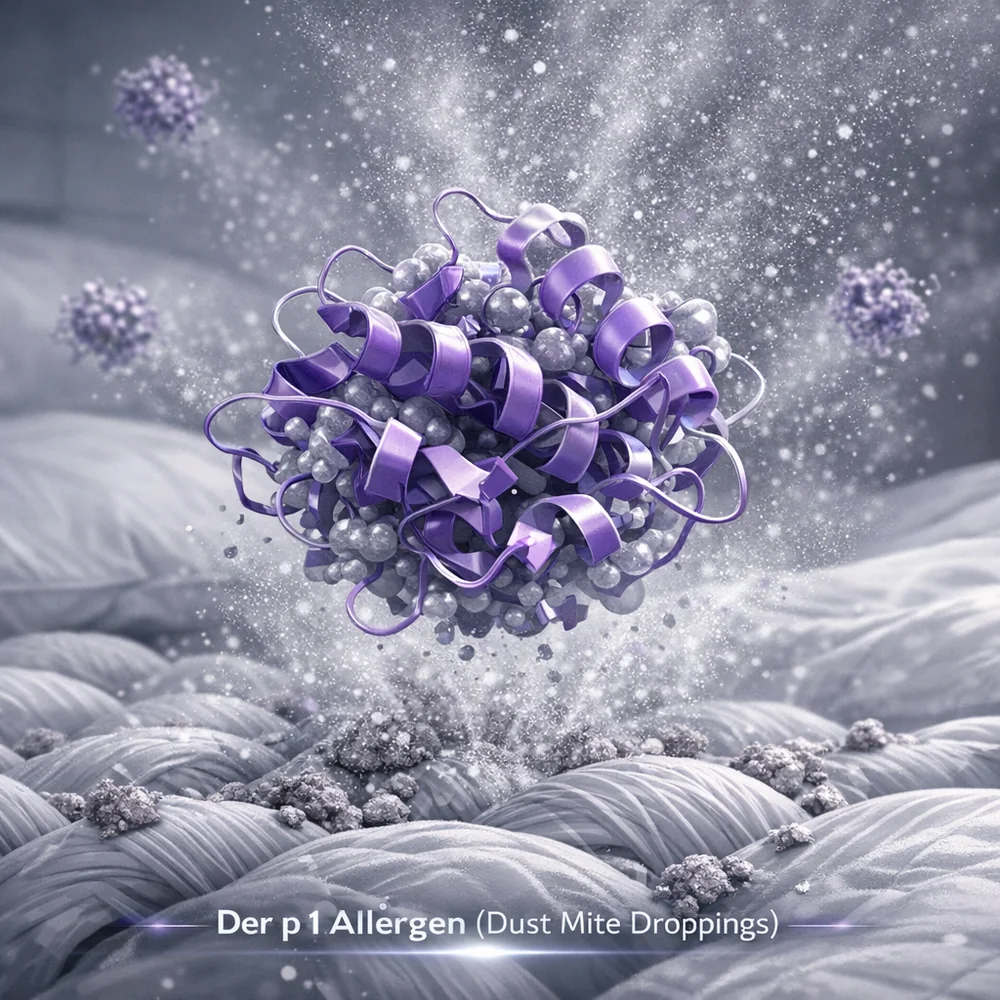
If you wake up every morning with itchy eyes, a stuffed nose, or a vague sense of congestion that mysteriously vanishes by lunchtime, you generally don’t have a cold. You have roommates. Millions of microscopic arachnids called dust mites are living, breeding, and dying in your mattress and pillows right now. They don’t bite, and they don’t carry disease. Instead, they produce a protein in their waste that acts as one of the most potent allergic triggers in the world.
The problem with dust mites isn’t just the living creatures; it’s the debris they leave behind. A single gram of house dust can accumulate thousands of mite fecal particles, each one capable of triggering an asthma attack or eczema flare. Simply “washing your sheets” isn’t enough to solve this biological problem. You need a strategy that targets the mites at every stage of their lifecycle, destroys the proteins they leave behind, and alters your bedroom environment to make it physically impossible for them to survive. This is not just cleaning; it is pest control through physics.
Temperature Required to Kill Dust Mites
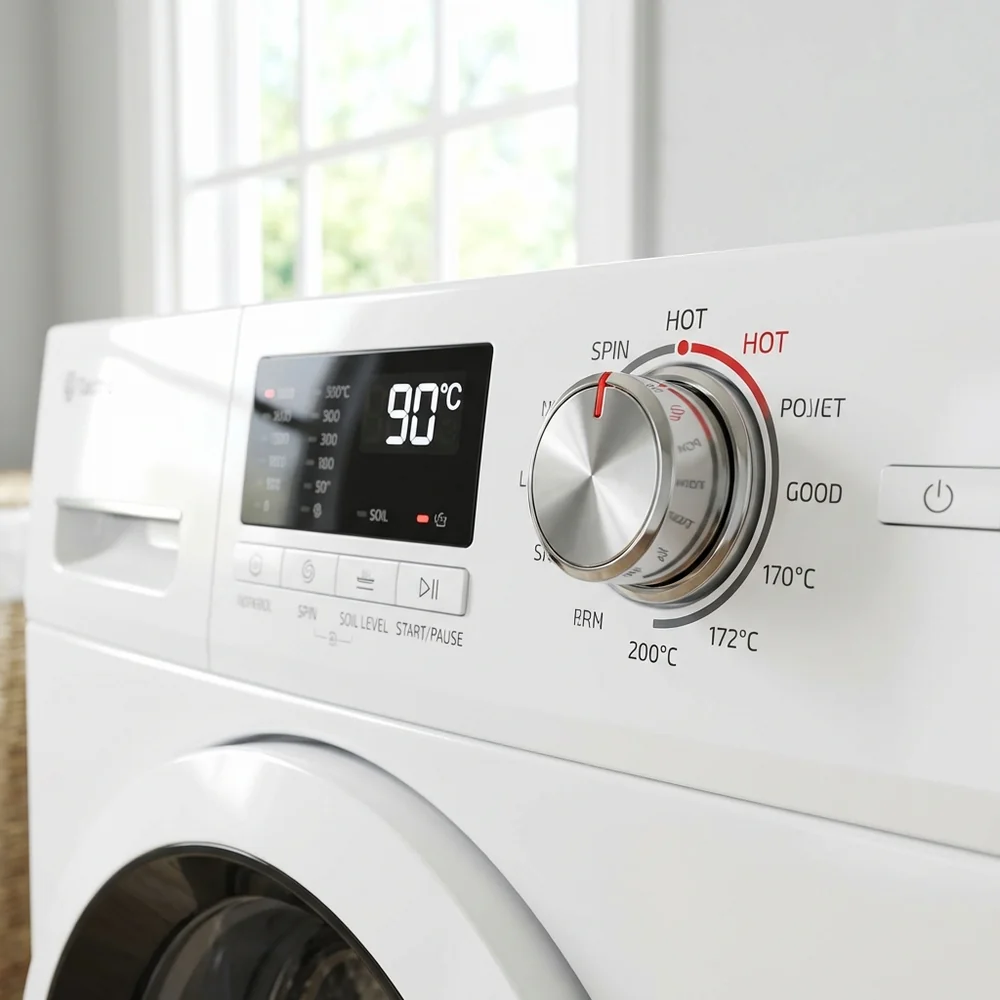
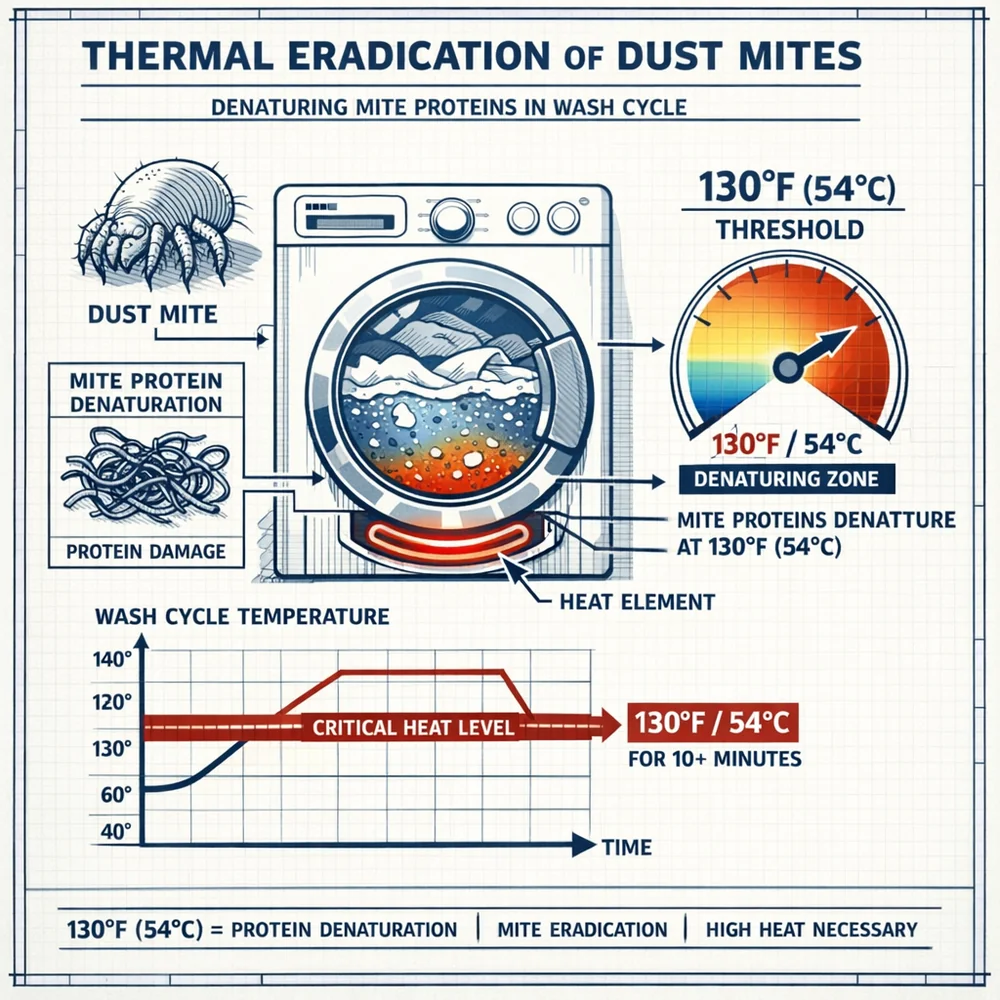
The primary weapon in the war against dust mites is heat. These creatures are remarkably resilient to soap and water, but they have a fatal weakness: they are comprised of proteins that denature, or cook, at a specific thermal threshold. If you wash your sheets in “warm” water (around 104°F/40°C), you are giving the mites a bath, not a death sentence. Studies show that at this temperature, fewer than 7% of mites are killed. They simply hold their breath, cling to the fibers, and wait for the spin cycle to end.
To actually eliminate a colony, you must cross the thermal death point of 130°F (54°C). At this temperature, the proteins inside the mite’s body coagulate, killing it instantly. The medical recommendation is often rounded up to 140°F (60°C) to account for heat loss as the water travels from your heater to the machine drum. If your washing machine has a “Sanitize” or “Allergen” cycle, this is designed to hit that target. If you wash in anything cooler, you are merely cleaning the dirt off the mites, not removing the mites themselves.
The Bottom Line 104°F is a spa day for mites. 140°F is an extinction event. You must wash hot to kill the colony.
Washing Frequency for Allergy Control
Once you have established the thermal weapon, the next variable is timing. Mites are rapid breeders. A small population can double in a matter of weeks given the right humidity and food supply (your dead skin). If you wait two weeks between washes, you allow the survivors, and the new hatchlings from deep within the mattress, to repopulate your sheets and deposit a fresh layer of allergens.
Clinical studies on allergen accumulation have identified seven days as the critical window. Weekly washing disrupts the lifecycle before the population can rebound to “symptom-triggering” levels. It’s a race against their reproductive clock. If you wash every 14 days, you lose the race. If you wash every 7 days, you keep the allergen load suppressed below the threshold that triggers your immune system. This applies to everything that touches your body: sheets, pillowcases, and duvet covers.
The Bottom Line Weekly washing resets the “Allergen Clock.” Anything longer than 7 days allows the mite population to rebuild to dangerous levels.
Using Allergen Laundry Additives
For delicate items that cannot survive a 140°F boil wash, you face a dilemma: preserve the fabric or kill the mites? This is where chemistry steps in as a substitute for physics. Acaricides are chemical additives designed to kill mites at lower temperatures. The most common active ingredient is benzyl benzoate. It acts as a neurotoxin to the mites, destroying their nervous system even in cold water.
Another class of additives targets the allergen rather than the mite. These products often contain tannic acid, which denatures proteins. Think of it as chemically scrambling the egg instead of cooking it. While these additives are useful tools, they are not magic wands. They do not remove the physical bodies of the mites as effectively as hot water, and they add a chemical load to your laundry that requires thorough rinsing. They should be viewed as a backup plan for delicates, not a replacement for the primary heat protocol.
The Bottom Line Chemical additives are a “Plan B” for items that can’t handle heat. They work, but heat is cleaner, cheaper, and safer.
Drying Heat Efficacy
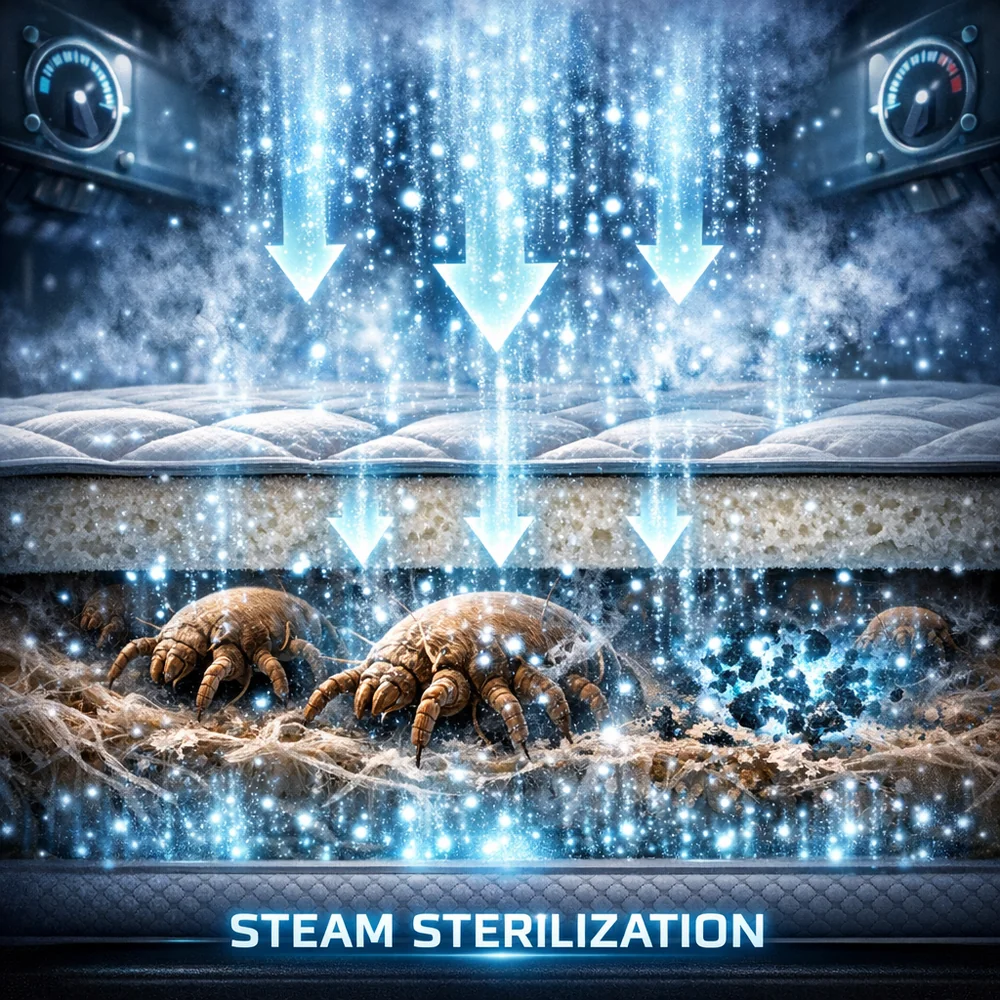
If your washing machine cannot reach 140°F, your dryer offers a powerful second chance. The environment inside a tumble dryer on “High Heat” is lethal on two fronts. First, the air temperature often exceeds 150°F, well above the kill zone. Second, the dryer creates a desert-like environment with effectively zero humidity. Mites are soft-bodied creatures that rely on absorbing moisture from the air; in a dryer, they desiccate (dry out) and die rapidly.
Research shows that even if you wash in cold water, saving the stains but sparing the mites, a subsequent 30-minute cycles in a hot dryer will kill 99% of the hitchhikers. This “Dry-First” method can also be used for items that don’t need washing but need sanitizing, like pillows or comforters. Throwing them in the dryer for a half-hour is a dry heat sterilization process that resets the biological clock without wetting the feathers or foam.
The Bottom Line The dryer is a mite cremation chamber. Heat plus dehydration kills everything. Even if you wash cold, dry hot to finish the job.
Barrier Covers Washing Routines
No matter how often you wash your sheets, you cannot wash your mattress. Over years of use, a mattress becomes a massive repository of dead skin, mite colonies, and years of accumulated biological waste. It is the “Geneva” of the mite world, a safe haven where they can retreat and breed, untouched by your laundry routine. The only solution is to seal the borders.
Allergen-barrier encasements are specialized covers with a pore size so small (often less than 6 microns) that mites and their waste cannot pass through. By zipping your mattress and pillows into these covers, you starve the mites inside (cutting off their food supply of skin) and block the allergens from getting out. However, the outside of the cover eventually collects dust too. You must wipe down or wash these covers monthly to keep the surface clean, otherwise, you simply build a new colony on top of the barrier.
The Bottom Line You can’t wash the mattress, so you must trap the mites inside. Encasements starve the colony and block the allergens. It’s a jail cell for your bed occupants.
Vacuuming Mattresses vs Washing
If you haven’t bought covers yet, you might be tempted to just vacuum the mattress. This logic seems sound, but the physics of standard vacuum cleaners often makes the problem worse. A typical vacuum sucks up dust and shoots the exhaust air out the back. Unless that vacuum is sealed and equipped with a high-efficiency HEPA filter, it acts as a “Sneeze Machine,” pulverizing the dried mite waste and blasting it into the air you breathe.
Even with a HEPA vacuum, you are fighting a losing battle against gravity and friction. Mites have sticky feet and cling tenaciously to fibers deep inside the foam. Vacuuming removes the surface layer of dust, which is helpful, but it does not penetrate deep enough to lower the population significantly. It is a surface cosmetic treatment, not a deep cure. Vacuuming is better than nothing, but it is a distant second to preventing them with covers.
The Bottom Line Standard vacuums just blow allergen dust into the air. Vacuuming effectively requires HEPA filtration, and even then, it only cleans the surface.
Freezing Items That Cannot Be Washed
For parents, the biggest challenge is often the beloved stuffed animal or the delicate heirloom quilt that can neither be boiled nor dried. For these items, we turn to cryogenics. Mites are tropical creatures; they cannot survive deep freezes. Placing a sealed bag containing the item into a household freezer (at 0°F/-18°C) for 24 to 48 hours is effectively a lethal winter for the colony.
However, freezing has a catch. It kills the mites, but it leaves their bodies and waste exactly where they were. You end up with a sterile but still dirty item. After freezing, you must vigorously shake the item outdoors or vacuum it to dislodge the frozen debris. It is a two-step process: freeze to kill, flush to clean.
The Bottom Line You can freeze delicate items to kill mites, but the allergens remain. You must shake or vacuum the item afterwards to remove the debris.
Chemical vs Thermal Killing Methods
We have discussed heat, poison, and freezing. Which is best? Thermal treatment (hot water/dryer) is superior because it is a “clean kill”, it destroys the organism and washes away the evidence without leaving any residue. It is pure physics. Chemical acaricides are effective “assassins,” but they introduce toxins into your bed that stay there.
For someone with sensitive skin or eczema, adding more chemicals to the bedding is counter-intuitive. Why risk a reaction to benzyl benzoate just to kill a mite? Thermal methods should always be the primary protocol. Reserve chemicals for the rare item that cannot be heated or frozen.
The Bottom Line Heat is the cleanest weapon. It kills and cleans simultaneously. Chemicals leave residue and should be a last resort.
Preventing Re-infestation
You have washed the sheets, covered the mattress, and frozen the teddy bear. The room is clean. But nature abhors a vacuum, and mites will return if the environment welcomes them. The single most critical environmental factor is humidity. Dust mites do not drink water; they absorb it from the air. If the relative humidity drops below 50%, they desiccate and die.
In this sense, a dehumidifier is more effective than a vacuum cleaner. By keeping your bedroom dry, crucially, below that 50% “Hydration Threshold”, you create a hostile desert where new colonies cannot establish themselves. Running an air conditioner or dehumidifier is effectively invisible pest control that works 24/7.
The Bottom Line Dry air is lethal. Keep your bedroom humidity below 50% and the mites simply wither away.
Hypoallergenic Bedding Materials
Finally, a word on the “hypoallergenic” bedding sold in every department store. Just like with detergents, this label is unregulated. A pair of polyester sheets might be called “hypoallergenic” simply because polyester is plastic and bugs don’t eat plastic. But if the weave is loose, mites will happily move in between the threads.
Do not be swayed by the material claims (bamboo, silk, copper-infused). Focus on the mechanics. You want a “barrier weave” or a material that can withstand weekly hot water washing. A $200 set of “hypoallergenic silk” sheets that can only be cold-washed is a mite hotel. A $20 set of cotton sheets that you boil every Sunday is a mite-free zone.
The Bottom Line “Hypoallergenic” sheets are marketing fluff. The only thing that matters is: Can you wash it hot? If yes, it’s safe.
Conclusion
Controlling dust mites is not about achieveing sterility; it is about managing a biological population. It requires a shift in thinking from “cleaning dirt” to “controlling habitat.” By establishing a Thermal Wall (weekly hot washing), a Physical Wall (mattress encasements), and an Atmospheric Wall (humidity control), you create a defense in depth that no colony can breach.
The payoff for this rigorous protocol is immediate and tangible. The morning congestion clears. The night-time itching subsides. By turning your bed into a fortress against allergens, you reclaim your sleep from the invisible roommates that have been disturbing it for far too long.
References
-
American Academy of Allergy, Asthma, and Immunology. “Dust Allergy Management.” https://www.aaaai.org/
-
Environmental Protection Agency. “Biological Pollutants and Indoor Air Quality.” https://www.epa.gov/
-
National Institutes of Health. “Effect of Washing Temperature on Dust Mite Mortality.” PubMed Central.
-
Annals of Allergy, Asthma & Immunology. “Efficacy of Allergen-Impermeable Covers.” American College of Allergy Publications.