Cleaning Shower Curtains and Liners: Material Science and Biofilm Control
Table of Contents
Things You'll Learn From This Article:
- That pink film on your shower curtain isn’t mold—it’s bacteria that feeds on soap residue, so removing soap buildup matters as much as disinfecting.
- Soap scum is a hard-water reaction that creates a sticky layer, and it has to be loosened with scrubbing, not just sprayed and wiped.
- Washing plastic liners in the machine works better when you add a couple of towels, because the towels create friction that actually scrubs the surface.
- Warm water is enough for cleaning liners; high heat can damage the plastic and make it brittle over time.
- Vinegar helps dissolve white, crusty mineral buildup and also rinses away detergent residue that can stiffen plastic.
- Harsh cleaners and chlorine bleach speed up cracking by pulling flexibility out of vinyl, so gentler detergents extend the liner’s life.
- Plastic liners should never go in the dryer, because dryer heat can warp or melt them and ruin both the liner and the machine.
- Hanging the liner back up right after washing lets gravity smooth it out and air dry it safely.
- Soaking a new liner in salt water before using it can slow down mildew growth by making the surface less friendly to microbes.
- Curtain rings and the shower rod collect soap scum too, and cleaning them helps the curtain slide smoothly and last longer.
- How often you clean should match use: busy showers need regular washing, while rarely used ones can go longer if they dry fully.
- Spreading the curtain out after every shower is one of the most effective habits for preventing mold, because dry surfaces don’t support growth.
Shower curtains and liners take a daily beating from humidity, temperature swings, soap residue, and water minerals. They’re the front line between your wet shower zone and the rest of your bathroom. Without regular cleaning, these surfaces quickly become covered in a combination of pink mold, soap scum, and that distinctive stiffness that makes old liners crack when you touch them.
The good news is that most liner problems are completely preventable with the right approach.
That pink slime isn’t actually mold; it’s a bacterium called Serratia marcescens that thrives on soap residue. The white crusty buildup is soap scum, which is calcium stearate formed when hard water minerals react with the fatty acids in your soap. And the stiffening? That’s the plasticizers slowly leaking out of vinyl as it ages. Understanding these different problems helps you target them with the right solutions. This guide covers how to clean and protect shower curtains using chemistry that actually works.
Pink Slime and Soap Scum: A Double Problem
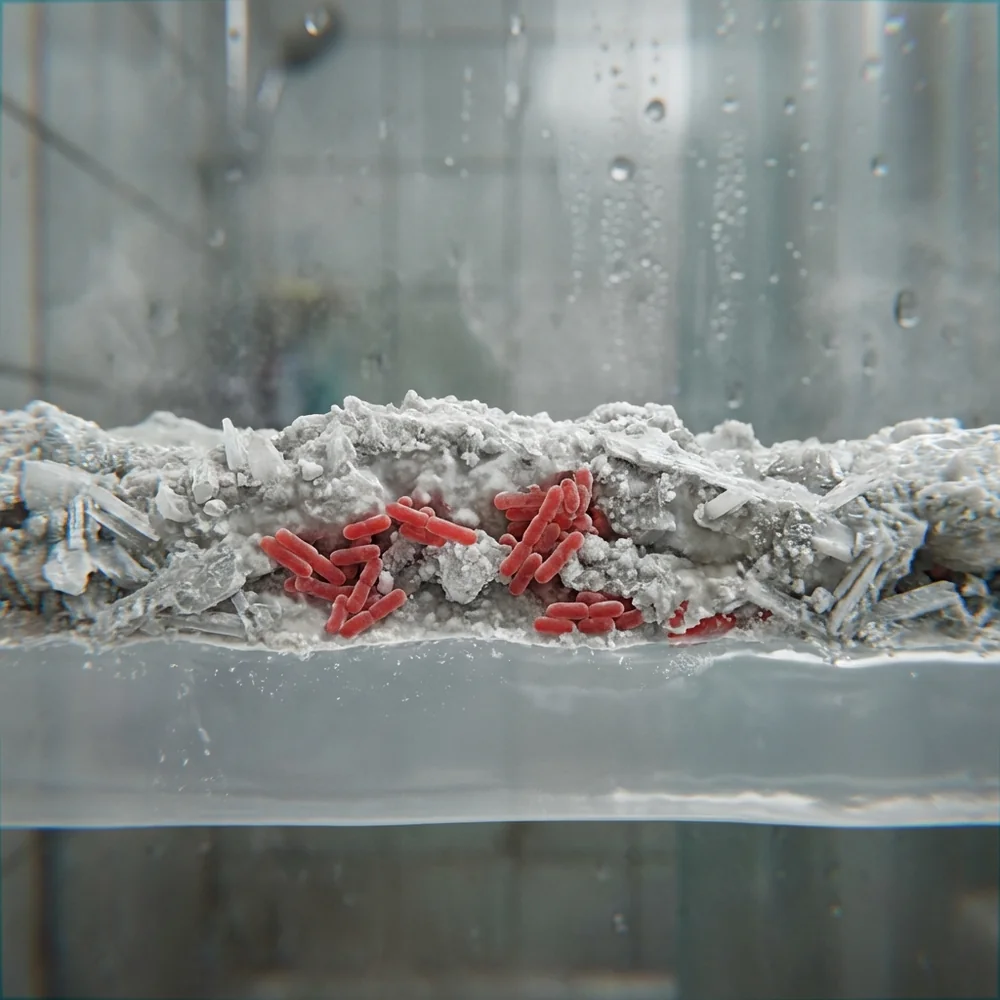
Let’s start with that pink or orange film that seems to appear out of nowhere. This is Serratia marcescens, a bacterium that loves the moist, nutrient-rich environment of your shower. It feeds on the fatty acids found in soap and shampoo residue. The pink pigmentation you see is actually a metabolic byproduct, and it can permanently stain porous materials if left too long.
Soap scum works with the bacteria to create a layered contamination problem.
Soap scum is a chemical precipitate that forms when minerals in hard water react with the fatty acids in soap. This creates a tacky film that traps dirt, bacteria, and everything else that touches it. Removing this dual-layer mess requires two types of intervention: chemical emulsification to dissolve the soap scum, and mechanical scrubbing to physically disrupt the bacterial biofilm underneath.
You can’t just spray and wipe. The biofilm is specifically designed to resist chemical penetration. Scrubbing with a soft brush physically breaks the protective matrix, allowing sanitizers to reach individual bacterial cells for actual killing. Reference our soap scum removal guide for more on tackling mineral-lipid films.
Key Insight: Pink mold is an opportunistic bacterium (Serratia marcescens) that feeds on soap residues. Removing it requires a combined chemical approach to dissolve mineral stearates and mechanical agitation to disrupt the protective biofilm structure.
Machine Washing with the Towel Trick
With the biology covered, let’s talk about practical cleaning methods. You can wash most plastic liners in a regular washing machine, but there’s a catch. Plastic liners tend to float and billow during the wash cycle, preventing proper cleaning. The detergent never actually scrubs the surface because there’s no friction.
The solution is adding two or three heavy cotton towels to the load.
These towels provide the mechanical mass that plastic liners lack. As the drum rotates, the looped cotton fibers constantly rub against the liner surface, acting like millions of tiny scrub brushes. This added friction is particularly effective for cleaning the bottom edge where mold tends to gather. The towels also balance the load and prevent the machine from becoming off-center.
Temperature control matters here. Understanding wash temperature science is important, but plastic has thermal limits. A warm cycle provides enough heat to soften soap scum without risking melting. Avoid high-heat settings unless your liner is specifically rated for them. The goal is maximum mechanical cleaning with minimum thermal stress.
Key Insight: Adding cotton towels to a plastic liner wash load provides the necessary mechanical friction to dislodge biofilms. This “scrubbing” action, combined with controlled warm water, effectively cleans transparent plastics without the need for aggressive chemicals.
Vinegar for Mineral Buildup
Beyond biofilms, hard water scale poses a persistent threat to liner clarity and flexibility. Those white crusty deposits provide a rough surface texture that anchors bacteria and makes future cleaning harder. An acid-based approach is required to dissolve this mineral layer.
White vinegar is perfect for this job.
The acetic acid in vinegar reacts with calcium carbonate to produce water-soluble calcium acetate. This neutralization reaction breaks the bonds holding scale to the plastic surface. Adding one cup of vinegar directly to your wash cycle helps dissolve scale throughout the cleaning process. For heavy buildup, a pre-soak in diluted vinegar solution tackles the worst areas first.
Vinegar has a secondary benefit: it neutralizes any residual alkaline detergent that might be stiffening the plastic. Most laundry soaps are slightly basic, which contributes to gradual plastic degradation over time. This same principle applies in hard water laundry management generally. Regular vinegar cycles keep liners clear, flexible, and scale-free.
Key Insight: Acetic acid (white vinegar) dissolves insoluble calcium and magnesium carbonates, converting them into water-soluble salts. Implementing regular vinegar rinses prevents mineral scaling and neutralizes alkaline residues that cause plastic stiffening.
Protecting the Plasticizers
That brings us to the biggest long-term threat to vinyl liners: plasticizer loss. Manufacturers add plasticizers to PVC to make it flexible. These molecules sit between polymer chains and act as internal lubricants, allowing the material to bend without cracking. The problem is that heat and harsh chemicals cause these plasticizers to evaporate over time.
As the plasticizers leave, the vinyl becomes progressively more rigid and brittle.
This is why old liners crack along fold lines and feel stiff compared to new ones. Extending liner life means protecting these internal lubricants. The first rule: avoid high-heat drying and aggressive solvent-based cleaners. Solvents like acetone literally dissolve the lubricant molecules out of the plastic matrix.
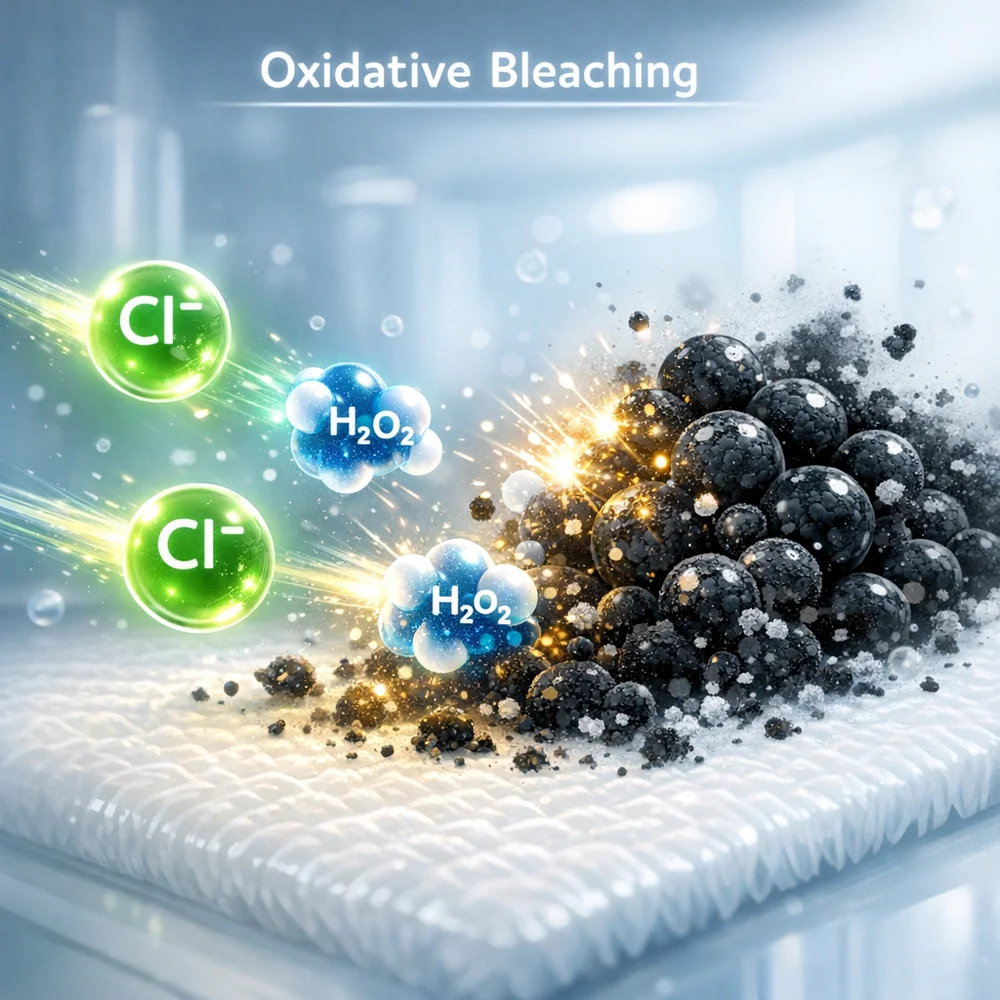
Using a pH-neutral detergent and lukewarm water provides effective cleaning without accelerating plasticizer loss. Chlorine bleach is particularly damaging because it’s a strong oxidizer that creates microscopic surface cracks. These cracks then accelerate plasticizer migration and invite microbial colonization. When possible, choose oxygen bleach over chlorine, or skip bleach entirely for routine cleaning.
Key Insight: Plasticizer loss causes vinyl liners to become brittle and crack over time. Protecting these internal lubricants requires avoiding high heat, harsh solvents, and oxidative agents like bleach while using pH-neutral cleaning protocols.
Never Machine Dry Plastic Liners
Understanding plasticizer chemistry leads directly to the most important rule of liner care: never put plastic liners in a mechanical dryer. Synthetic polymers like PEVA and vinyl have surprisingly low melting points. Some begin to deform at temperatures as low as 50 degrees Celsius, which is easily reached in a standard dryer cycle.
When plastic hits the hot metal drum, it can melt into a permanent mess that ruins both the liner and the dryer.
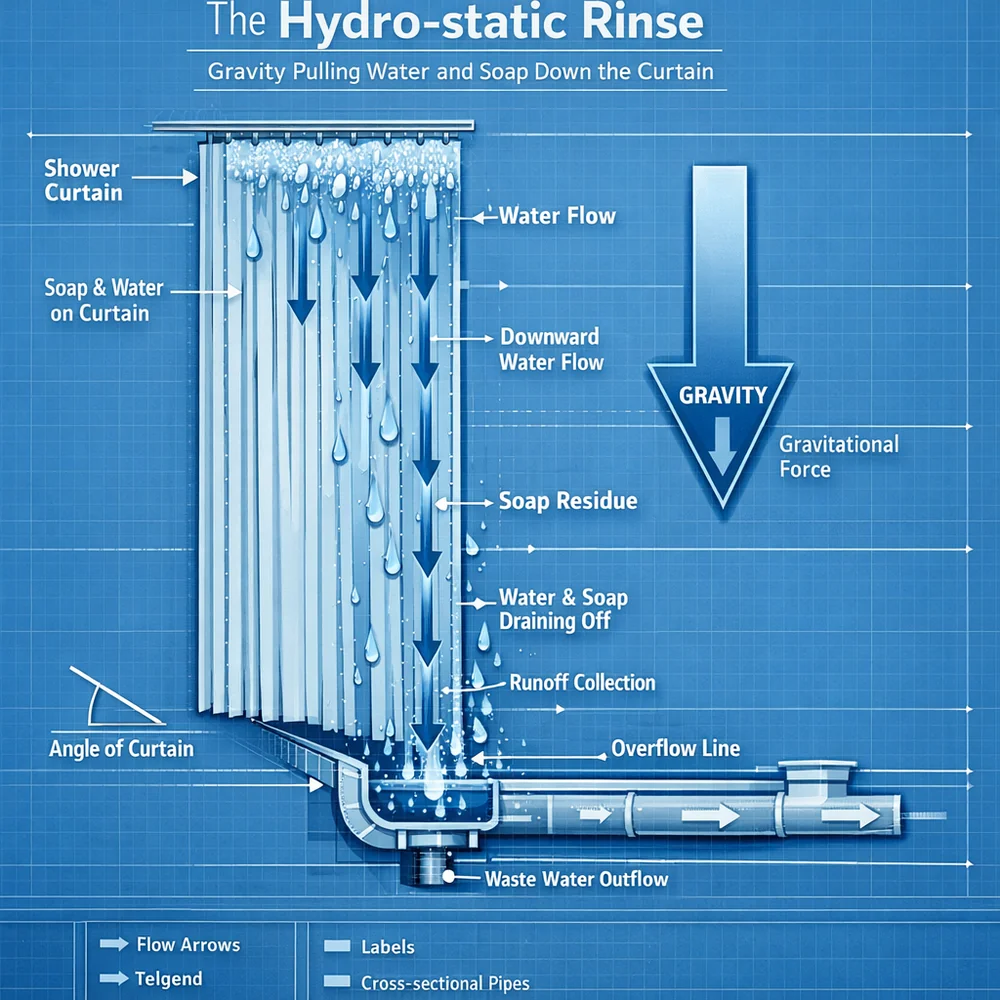
The only safe way to dry a plastic liner is hanging it right back on the shower rod. This allows gravity to act as a natural smoothing force. The weight of any remaining water pulls the material taut and removes minor wrinkles as it dries. Make sure the liner is fully extended to maximize airflow across the entire surface. Reference our guide on preventing mildew regrowth for more on rapid drying techniques.
Never attempt to iron a plastic liner for any reason. Direct thermal contact will instantly melt the material beyond repair. If wrinkles persist after hanging, a brief steam treatment from a handheld steamer can help relax the plastic without direct heat contact.
Key Insight: Synthetic liners have low melting points and should never be dried in a mechanical dryer or ironed. Hanging the damp liner back on the rod utilizes gravity for reshaping and prevents thermal fusion or shrinkage.
The Salt Water Prevention Trick
Now that we’ve covered cleaning and protection, let’s talk prevention. An old but scientifically effective method for preventing mildew is soaking new liners in salt water before first use. Sodium chloride creates an osmotic environment that’s hostile to microbial life.
When salt penetrates the microscopic pores of the liner material, it creates a lasting antifungal barrier.
The protocol is simple: dissolve half a cup of salt in a gallon of warm water, submerge the liner for several hours, then hang it to dry without rinsing. The residual salt on the surface inhibits fungal germination by binding available water to sodium ions, making moisture unavailable for mold metabolism.
This method works particularly well on woven fabric liners with high surface area. For people with sensitive skin, salt is a gentler alternative to synthetic antifungal treatments. The barrier will gradually wash away during normal shower use, so periodic reapplication is needed for continued protection. As an initial priming step for new curtains, it’s remarkably effective.
Key Insight: A concentrated salt water soak creates an osmotic barrier that inhibits fungal spore germination. This mineralized surface is a non-toxic alternative to synthetic antifungal treatments, providing a layer of protection through daily shower cycles.
Don’t Forget the Rings
Shower curtain rings often become hidden reservoirs for soap scum and mineral deposits. Because they’re rarely cleaned directly, they accumulate thick white residue over months. This not only looks bad but can interfere with smooth curtain movement along the rod. Friction between dirty rings and a rod can even damage metal finishes.
Metal rings are susceptible to corrosion when left in contact with damp soap scum.
Remove rings periodically and soak them in warm soapy water to break down the lipid component of scum. Follow with a brief vinegar soak to dissolve any remaining mineral scale. Plastic rings can go in the dishwasher along with scrub brushes, placed in a mesh bag to prevent them from falling through racks.
Don’t forget to wipe the shower rod itself while the rings are off. This removes dust and oils that cause rings to stick and adds tensile stress to curtain eyelets when you pull the curtain. Clean hardware means smooth operation and longer curtain life.
Key Insight: Shower curtain hardware accumulates soap scum and minerals that can cause corrosion and mechanical friction. Periodic chemical soaking and mechanical scrubbing of rings ensure smooth operation and prevent secondary bacterial hubs.
How Often to Clean Based on Use
The right cleaning frequency depends on how much your shower gets used. In households where multiple people shower daily, the organic load is extremely high. A bi-weekly wash is the optimal baseline for most situations. This frequency prevents soap scum from hardening into difficult scale and suppresses bacterial colonization before it becomes visible.
For bathrooms with poor ventilation, weekly washing may be necessary.
Conversely, guest bathrooms that see infrequent use can go months between deep cleans as long as the liner stays extended for drying. Regular washing also extends material lifespan by removing body oils before they can degrade plasticizers. A “little and often” approach reduces the need for aggressive deep-cleaning sessions that stress the material.
The key daily habit is never leaving the liner bunched up after showering. Spread it fully across the rod every time to minimize moisture trapped in folds. This single habit does more to prevent mold than any cleaning product.
Key Insight: A bi-weekly cleaning frequency prevents soap scum from curing and suppresses bacterial colonization before it becomes visible. Tailoring the maintenance schedule to usage patterns minimizes the need for degradative deep-cleaning sessions.
Spread the Curtain After Every Shower
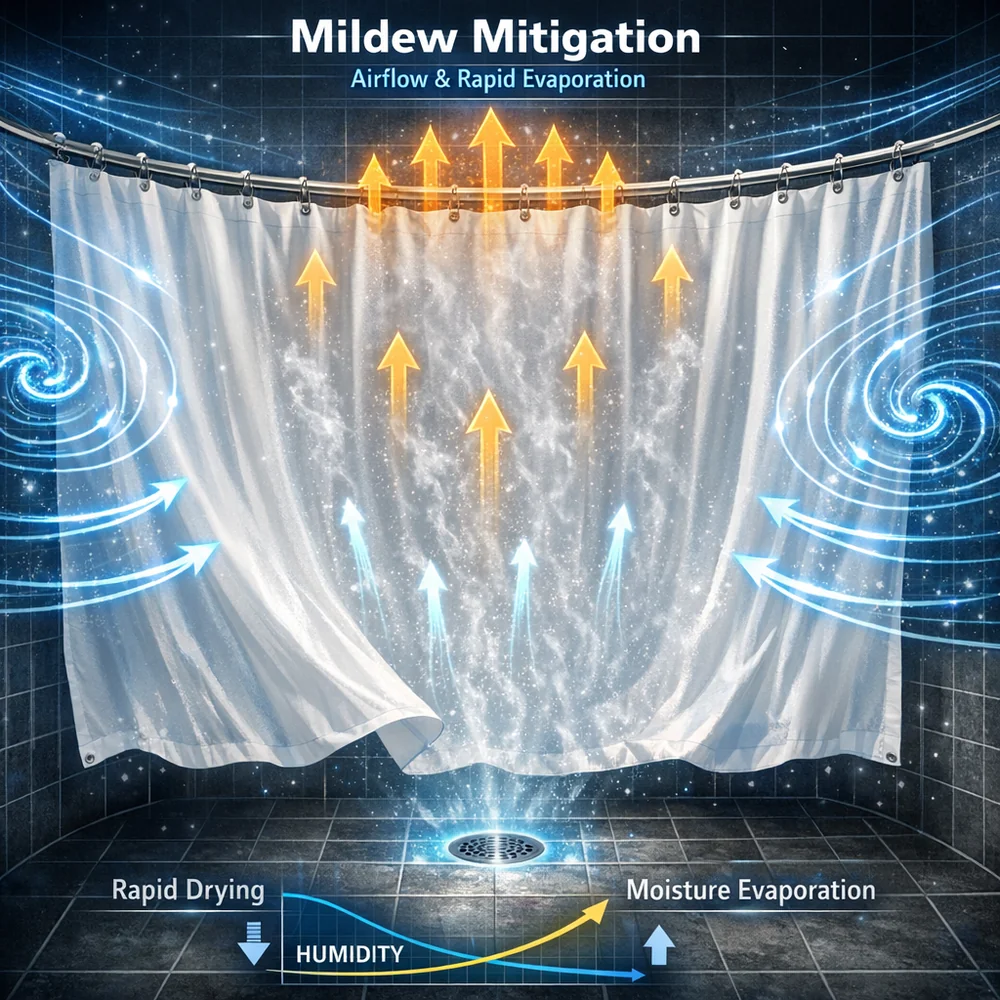
Speaking of daily habits, moisture management after showering is just as important as cleaning. Fungi and bacteria need persistent dampness to thrive. A bunched-up curtain with water trapped in the folds is a biological incubator. The simple act of fully extending the curtain maximizes surface area for rapid evaporation.
A fully extended curtain dries dramatically faster than one bunched to the side.
In bathrooms with poor natural ventilation, using an exhaust fan accelerates drying further. Refer to our washing linens guide for more on drying dynamics. Warmer air holds more moisture and speeds evaporation, but the air must be moving to carry moisture away from the liner surface.
This consistency in daily extension is the ultimate defense against biofilm regrowth. A dry liner is a biologically stable liner. By managing the thermodynamics of your bathroom through ventilation and extension habits, you reduce the chemical burden of cleaning and protect both material integrity and air quality.
Key Insight: Fully extending the shower curtain after use maximizes the surface area for evaporation, drastically reducing the time required for complete desiccation. Utilizing mechanical ventilation to move moisture-laden air away from the liner suppresses microbial growth through accelerated environmental drying.
Conclusion
Shower curtain maintenance is really about understanding three intersecting challenges: biological contamination, mineral scale, and material degradation. That pink slime is a bacterium feeding on soap residue, requiring both chemical dissolution and mechanical scrubbing. Mineral scale provides anchor points for bacteria and needs acidic treatment to dissolve.
Machine wash with cotton towels for friction, add vinegar to the cycle for descaling, and always air dry to protect the plastic from heat damage. Never use chlorine bleach or high-heat dryers on vinyl liners. The salt water soak provides a gentler preventive barrier for new liners, and cleaning your shower hardware prevents hidden contamination reservoirs.
Daily extension of the curtain after showering is the single most impactful habit for prevention. A liner that dries quickly doesn’t give bacteria and mold time to establish colonies. Combine proper cleaning, thermal protection, and daily moisture management for liners that stay clear, flexible, and hygienic for years.
References
- Cooper, R. A., & Jenkins, L.
(2003). “A Comparison of the Efficacy of Chemical and Natural Cleaning Agents on Bathroom Biofilms.” Journal of Applied Microbiology. 2.
International Fabric Institute. (2014). “Polymer Degradation in the Household Environment: The Science of Plasticizer Loss.” IFI Technical Bulletin.
- 1-10. 3.
Smith, J. G., et al. (2010).
“The Mechanics of Machine Agitation: Improving Soil Removal on Non-Textiles.” Textile Research Journal. 4. World Health Organization (WHO).
(2019). “Management of Biofilms in Domestic Water Environments.” WHO Guidelines for Indoor Air Quality. 5.
U.S. Environmental Protection Agency (EPA). (2021). “Cleaning and Disinfecting Your Home: Material Compatibility.” EPA Technical Guidance.