Washing Sports Bras Guide: Preserving Elasticity & Structural Integrity
Table of Contents
Things You'll Learn From This Article:
- Cold water is always the safest choice because heat slowly kills the stretch that keeps a sports bra supportive.
- The dryer does more damage than almost anything else, so letting bras air dry is non‑negotiable.
- Taking out removable pads before washing prevents permanent creases and reduces odor buildup.
- A mesh laundry bag protects bras from zippers, hooks, and rough fabrics that can snag or tear them.
- Using less detergent and an extra rinse helps prevent itchy rashes caused by leftover soap in thick bands.
- Washing after every workout actually helps bras last longer by removing sweat and body oils that weaken elastic.
- Fabric softener ruins moisture‑wicking and traps odor, so it should never be used on sports bras.
- Laying bras flat to dry prevents straps from stretching out under the weight of wet fabric.
- Gently reshaping cups while they’re damp helps them keep their original shape and fit.
- Gentle or delicate wash cycles reduce twisting, pulling, and stress on straps and elastic.
- Deodorant stains come off more easily with light rubbing or a simple vinegar soak before washing.
- Once elastic is truly stretched out, it can’t be fixed, which makes careful washing the only real way to protect support.
A high-quality sports bra isn’t just a piece of clothing—it’s critical biomechanical equipment, an investment in your performance, and a safeguard for long-term tissue health. It provides essential support, limits vertical displacement, and ensures comfort during your most intense activities. Yet ironically, it’s often the most mistreated item in the entire laundry pile.
We toss them in with heavy jeans, blast them with hot water, or—worst of all—throw them in the dryer. This negligence creates accelerated degradation. The elastic fibers providing that crucial “lock-down” feel are chemically fragile. They’re susceptible to thermal shock, chemical corrosion, and mechanical shearing.
When these fibers degrade, the bra doesn’t just look old—it stops working. The band loosens, straps dig in, bounce control evaporates. Once internal elastic filaments snap, they’re gone forever. No careful washing can resurrect dead elastic.
This guide outlines technical protocols for washing and maintaining high-impact sports bras. From the microbiology of foam padding to the thermodynamics of dryer heat, these steps will ensure your gear remains supportive, hygienic, and comfortable for the long haul.
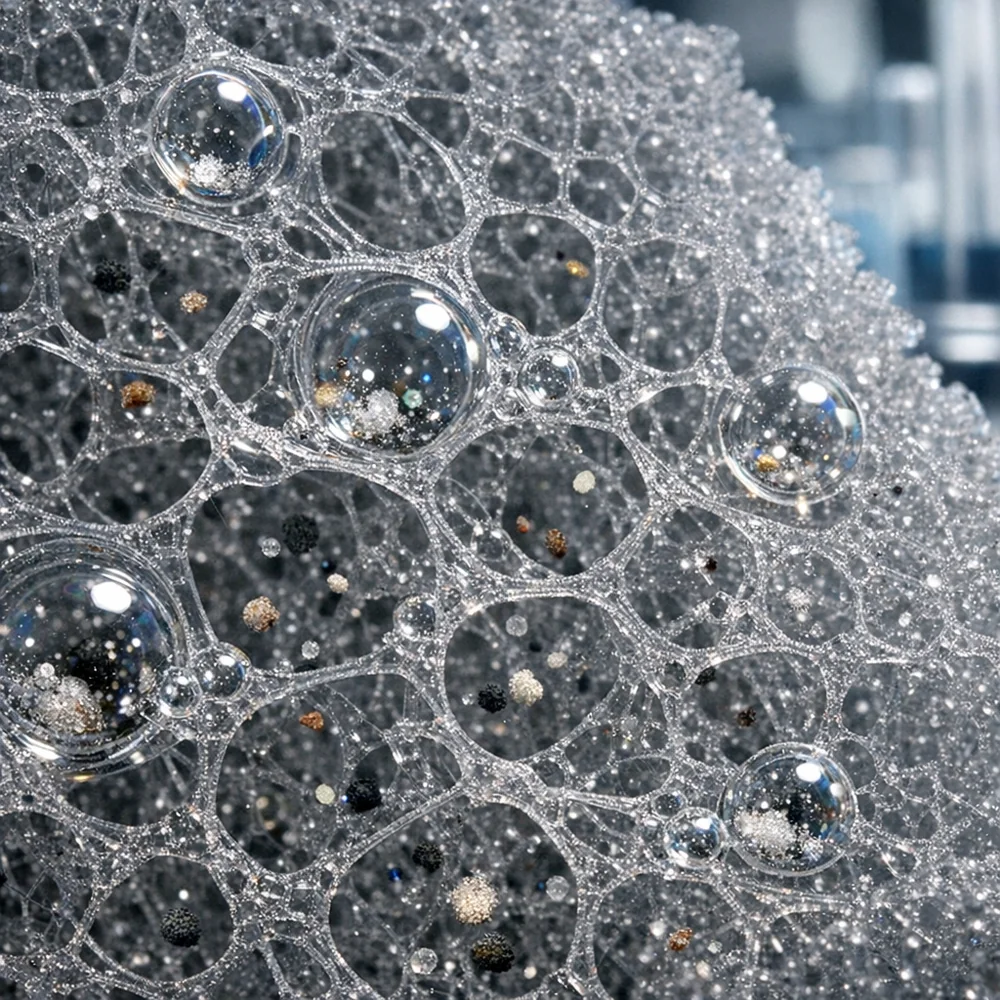
Protecting Elasticity and Spandex Fibers
The structural integrity of any sports bra relies entirely on a synthetic polymer scientifically known as polyurethane-polyurea copolymer—you probably know it as Spandex, Lycra, or elastane. This stuff is a marvel of chemical engineering, stretching to 500% of its resting length and snapping back with near-perfect recovery.
But this “snap” mechanism is finite. The polymer has “soft” segments (which stretch) and “hard” segments (which hold structure). Degradation happens when hard segments get attacked by three primary vectors: heat, body oils, and harsh chemicals.
When a bra feels “loose” or “baggy” after a few months, the chemical bonds in those hard segments have fractured. This is one-way. To preserve elasticity, your laundry protocol must focus on mitigating stress.
Avoid the tempting “snap test” where you aggressively stretch the band to check for life. Limit exposure to harsh “whitening” detergents stripping protective fiber finish. Most importantly, prevent sebum (skin oil) accumulation, which swells fibers and causes them to lose retractile force.
The bottom line: Elasticity loss is permanent. Once Spandex bonds break from heat or oils, the bra is dead; no amount of washing will tighten it again.
Removing Padding Before Washing
Removable cup pads (or “cookies”) are standard in modern sports bras. But leaving them inserted during the wash cycle is a fundamental error. Mechanical agitation acts like a centrifuge, twisting and contorting the bra.
Trapped inside the pocket, foam pads have nowhere to go. They crumple, fold, and migrate. This folding stress often creates permanent creasing in foam structure. Once a crease sets into polyurethane foam, it’s nearly impossible to smooth out—you’re left with visible, lumpy ridges under your shirt.
More critically, the pad pocket acts as a bacterial trap. Layers of fabric and foam create a dense sandwich water can’t easily penetrate. Detergent residue and organic matter settle in the center, creating a “sponge effect.”
Studies show this environment favors Staphylococcus and Corynebacterium—primary body odor drivers. The protocol is strict: always remove pads. Wash separately in a mesh laundry bag ensuring water flows through foam’s open cells.
The bottom line: Remove pads before washing. Trapped in the pocket, foam creates a “sponge effect” that traps bacteria and prevents detergent penetration.
Mesh Bag Usage to Prevent Snagging
A washing machine interior is a chaotic, hostile environment full of potential hazards: zipper teeth, metal buttons, velcro tabs. Any of these can catch delicate power-mesh panels or lace details.
A single snag can unravel a seam or tear a hole in compression fabric, instantly ruining the garment used for gym. Conversely, the bra itself poses risks—rigid metal hooks and clasps can act like grappling hooks, snagging other expensive activewear and causing pilling or tears.
A structured, fine-mesh laundry bag is mandatory. It acts as a physical quarantine zone, isolating the bra from friction and entanglement while allowing water and detergent to circulate freely.
Ideally, use a bag with some structure or cylindrical shape preventing the bra from being crushed by wet clothes. Never overstuff—the garment needs room to move slightly so mechanical water action can flush away soil.
The bottom line: Bra hooks act like grappling hooks in the wash; use a structured mesh bag to quarantine them from destroying other clothes.
Cold Water vs Hot Water for Elastics
Temperature control is the single most critical variable in activewear care. Elastane is extremely heat-sensitive. Thermal stability degrades at temperatures traditional laundry logic considers “sanitary.”
Exposure to hot water (above 105°F/40°C) causes polymer chains to relax and eventually break—“thermal shock.” Repeated exposure accelerates breakdown of cross-links providing elasticity. Result: a bra that feels permanently loosened, as if it sized up.
Cold water washing isn’t just safer—it’s sufficient. Modern enzyme detergents are formulated with proteases and lipases highly active in cold water down to 60°F (15°C). They break down sweat proteins and body oils without thermal energy.
Hygiene comes from chemical action (surfactants lifting soil), not thermal sterilization. Boiling gym clothes doesn’t make them cleaner—it just destroys the technology making them work. Stick to cold for every wash.
The bottom line: Hot water cooks elastane, causing permanent loosening. Cold water washing with enzyme detergents is just as hygienic.
Detergent Buildup in Thick Bands
The underband is the anchor—typically the thickest, densest part, with multiple fabric layers, heavy elastic housing, and plush brushing for skin comfort. This density makes it a magnet for detergent residue.
If your machine’s rinse cycle is insufficient, or you’re overdosing detergent, surfactants remain trapped deep within this multi-layered matrix. Upon drying, these crystallize into microscopic shards.
When you sweat, moisture reactivates this dried residue, dissolving it into a highly concentrated chemical solution held directly against skin by band compression.
This causes contact dermatitis and “chafing” under the breasts. It’s not friction—it’s chemical burn.
Adhere to “less is more.” Use half the recommended detergent. Utilize “Extra Rinse” to extract every trace of chemistry before drying.
The bottom line: “Chafing” is often a chemical burn from detergent residue trapped in the thick underband. Use less detergent and extra rinse.
Air Drying vs Tumble Drying Heat Damage
Diffused natural light, high-end athletic aesthetic, 8k.” loading=“lazy” />
If hot water is damaging, the tumble dryer is catastrophic. Dryer temps easily reach 135°F-150°F (57°C-65°C). For wet, stretched elastomer, this dry heat acts like a kiln—baking rubber, making it brittle and causing dry-rot.
You might notice small white cracker-crumb-like particles shedding from your bra. That’s Spandex disintegrating. Tumble action adds insult to injury—twisting straps and cups while hot and plasticized, locking in distortions.
Air drying is the only non-destructive method. But gravity must be managed. Hanging a wet, heavy sports bra by its straps puts enormous stress on strap elastic—water weight pulls fabric down, causing elongation.
Lay the bra flat on a mesh drying rack. This distributes weight evenly across the entire surface. If drying outside, ensure it’s in shade—direct UV is another elastane enemy, causing photo-oxidative degradation that yellows and weakens fabric.
The bottom line: The dryer is a kiln for wet rubber; it creates white “cracker crumbs” which is the sound of your elastic dying. Air dry flat.
Reshaping Cups While Damp
Molded cups are engineered with specific geometry to encapsulate and support breast tissue. The spin cycle exerts G-forces that flatten and distort this shape. If allowed to dry crushed, deformation can become permanent.
Immediately upon removing from the washer, manual reshaping is required. Place your fist inside the cup and gently pop it back into rounded form. Smooth out wrinkles in outer fabric and inner lining.
Ensure modesty pads (if washed inside against protocol) are unfolded and centered. This “blocking” ensures the bra dries in its intended anatomical shape, maintaining cup depth for proper containment and preventing the “uniboob” look from flattened cups.
The bottom line: “Block” your bras while damp; reshape the cups with your fist to prevent permanent creases and the “uniboob” look.
Frequency of Washing Sports Bras
Sports bras operate under “zero tolerance” hygiene policy. They’re worn in the highest-density sweat zones directly over apocrine glands producing protein-rich sweat. Even light yoga generates sebum and dead skin migrating into the weave.
Re-wearing allows bacteria to multiply unchecked, leading to rapid odor onset once body heat is reapplied. More importantly, it subjects skin to high bacterial load, increasing risk of body acne and folliculitis.
From a materials standpoint, body oils and sweat are chemically corrosive to elastane, causing fibers to swell and weaken. Washing after every single use is a preservation strategy removing corrosive agents before they degrade the polymer matrix.
Removing Deodorant Stains from Straps
Antiperspirants—especially those with aluminum zirconium—plug sweat ducts and often contain waxes helping product adhere. When transferred to bra straps, these waxes form stubborn white or yellow streaks that are water-repellent.
Standard detergent often fails to penetrate this waxy barrier. For removal, mechanical action is needed before wash. Take a section of bra fabric and rub it against the stained area—fabric-on-fabric friction is extremely effective at dislodging surface wax without damaging weave.
For embedded stains, acidic pre-treatment helps dissolve aluminum salts. White vinegar and water (1:1 ratio) applied for 20 minutes breaks down buildup. Alternatively, enzyme spray containing amylase targets the starch-like thickeners in stick deodorants.
Gentle Cycle Settings
The bag’s fine mesh is in sharp focus. High-tech medical visualization, 4k, sterile aesthetic.” loading=“lazy” />
“Normal” or “Permanent Press” cycles are designed for cottons and linens—high agitation and high-speed spins. For sports bras, this violence is unnecessary and harmful.
“Delicate” or “Hand Wash” cycles mimic gentle rocking of manual washing, using low agitation speeds preventing strap braiding and twisting. Selecting this cycle is non-negotiable for longevity.
Crucially, it uses low-speed spin. High G-force spins crush foam pads and snap wet elastic fibers. Always double-check temperature when selecting—some machines default to “Warm” for delicates. Manually override to “Cold” every time.
Restoring Elasticity to Stretched Bras
There’s a persistent myth that heat can “shrink” stretched clothes back to size. For 100% cotton, that’s partially true. For elastane, it’s false. Once cross-links are broken, they cannot heal.
A “stretched out” bra is a failed bra—support structure is compromised. However, sometimes a bra feels loose simply because fibers have relaxed, not broken. In this specific case, washing (cold) and drying (flat) can help fibers retract to resting state.
Don’t attempt to “boil” a loose bra to shrink it. You’ll only accelerate degradation of remaining intact fibers, turning slightly loose bra into a completely useless one crumbling to the touch. Prevention is the only real cure.
Hand Washing Protocols
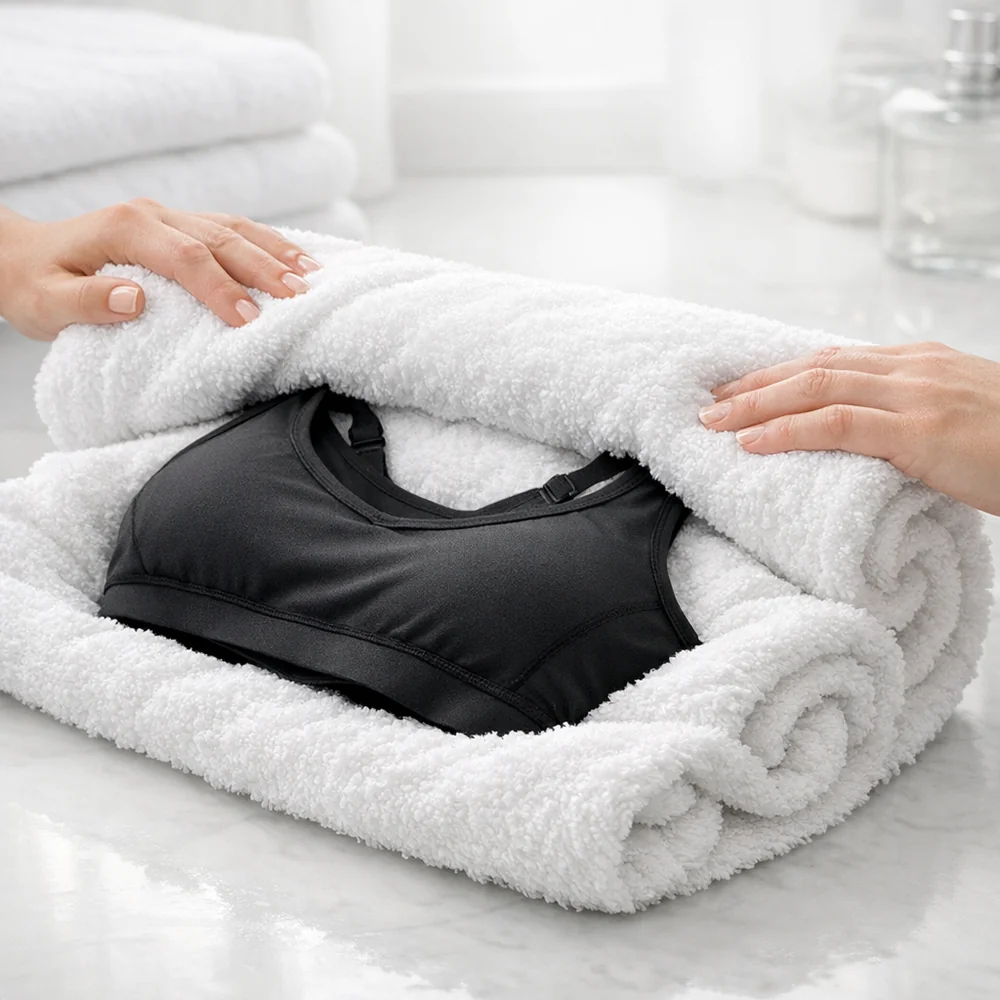
For your most expensive high-impact racing bras, hand washing remains gold standard. It eliminates mechanical stress found in machines and allows you to control exact detergent concentration and water temperature.
Fill a clean basin with cool water and small amount of mild detergent. Submerge the bra and gently squeeze suds through fibers. Don’t wring, twist, or scrub aggressively.
Soak 15-20 minutes letting chemistry lift soils. Rinse under cool running water until all suds disappear. To extract water, lay the bra on a clean dry towel.
Roll the towel like a sleeping bag and press gently. This extracts moisture without wringing. Unroll and hang to dry. This protocol can double effective lifespan of premium gear, keeping wires unbent and hooks unsnagged.
Fabric Softener Damage to Moisture Wicking
Fabric softeners are the enemy of performance. They deposit a waxy layer of cationic surfactants on fabric surfaces. On cotton, this reduces static and feels fluffy.
On activewear, it seals microscopic capillaries responsible for moisture wicking. It turns your high-tech, sweat-wicking racerback into a non-breathable plastic bag, trapping sweat against skin.
Furthermore, this waxy coating creates a biofilm locking in odor-causing bacteria. It prevents detergent from reaching fibers in subsequent washes. If you’ve accidentally used softener, you may need to strip the activewear using vinegar or specialized stripping soak to restore breathability.
The bottom line: Fabric softener turns breathable fabric into a plastic bag by sealing the pores; never use it on performance gear.
Conclusion
Your sports bra supports you through your hardest miles and heaviest lifts. It deserves the same support in return. By adopting gentle, intentional wash routines, you extend gear life and protect your body.
Eliminate heat, banish friction, and say no to fabric softeners. Use mesh bags religiously and treat elastic with the respect it commands. These small adjustments make tangible difference. You’ll save money on replacements and enjoy consistent, reliable support during every workout.
References
- Textile Research Journal. (2015). Degradation of elastane in swimwear and activewear.
https://journals.sagepub.com/home/trj 2. Journal of Applied Polymer Science. (2012). Thermal degradation of polyurethane elastomers.
https://onlinelibrary.wiley.com/journal/10974628 3. Dermatitis. (2008). Textile contact dermatitis: Update on causes and detection.
https://journals.lww.com/dermatitis/pages/default.aspx 4. AATCC Review. (2019). Effects of fabric softeners on moisture management properties of performance fabrics.