Cleaning Yoga Mats & Props: Hygiene Protocols for Porous & Non-Porous Materials
Table of Contents
Things You'll Learn From This Article:
- Your mat collects sweat, skin, and germs fast, so regular cleaning isn’t optional if you want to avoid smells, infections, and slippery practice.
- Figuring out whether your mat is open-cell or closed-cell tells you how careful you need to be and what cleaners are safe to use.
- Closed-cell mats like PVC are easiest to clean because sweat stays on the surface, while open-cell mats soak moisture deep inside and need better drying habits.
- Mild soap and water work well for PVC mats, and they’re the only mats that can handle an occasional bathtub soak.
- TPE mats look similar to PVC but shouldn’t be soaked, because they hold water and can stay damp for too long.
- PU leather mats should only be wiped lightly with water or very diluted vinegar, since oils and soap permanently ruin their grip.
- Too much water and heat slowly break down PU mats, so quick wipe-downs are better than deep cleaning.
- Natural rubber mats are sensitive to sunlight, heat, and harsh cleaners, which can make them brittle or sticky.
- pH‑neutral or enzyme-based cleaners are safer for rubber mats than vinegar or acidic sprays.
- Cork mats naturally resist bacteria, so a simple damp wipe is usually enough to keep them clean.
- Harsh cleaners can strip cork’s natural protection and cause cracking or peeling.
- Rolling up a damp mat creates the perfect environment for fungus, which can start growing within a day.
- Letting your mat fully dry after every practice is one of the most effective ways to prevent mold and athlete’s foot.
- Using a washable yoga towel on top of your mat keeps sweat off the mat and makes hygiene much easier.
- Tea tree oil works on tough PVC mats for fungus, but sensitive mats need non-chemical options like UV‑C light.
- Foam yoga blocks trap sweat deep inside, so soaking them with enzyme detergent is the only way to remove odors.
- Cork blocks should never be soaked, because water will warp and damage them.
- Yoga towels should be washed without fabric softener, since softener ruins absorbency and makes towels slippery.
- Cotton straps should be coiled and washed in a mesh bag to prevent tangling and damage.
- The burrito method—rolling your mat inside a towel and stepping on it—removes water faster without harming the mat.
- Good airflow and patience during drying do more to protect your gear than aggressive cleaning products.
Your yoga mat is way more than just a slab of foam you roll out before class. It’s your personal space, your little sanctuary where you find your balance and get your stretch on. But here’s the thing nobody likes to think about – it’s also basically a science experiment waiting to happen.
Every time you work out, you’re leaving behind a cocktail of sweat, dead skin cells, and whatever was on the floor. Mix those together and you’ve got a buffet for bacteria and fungi. Without some decent cleaning habits, your mat can become home to all sorts of nasty stuff like staph infections, athlete’s foot fungus, and even the virus that causes plantar warts. Yikes.
But you can’t just grab the first cleaning spray you find under the sink. Different mats need different approaches, and using the wrong product can literally destroy your mat – we’re talking dissolved adhesives, ruined grip, and crumbling rubber.
This guide breaks down exactly how to keep all the major types of yoga mats and props properly clean without wrecking them. We’re going way beyond the basic wipe-down here.
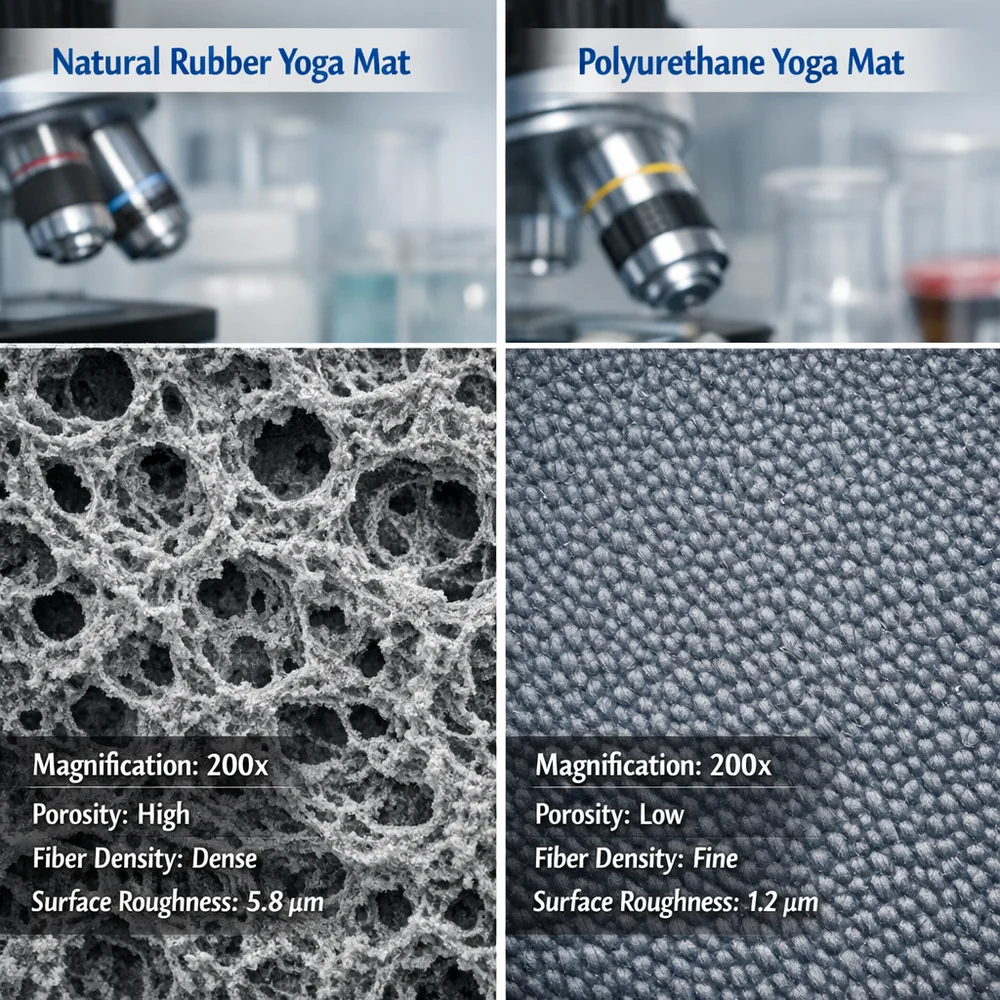
Open-Cell vs. Closed-Cell: Why It Actually Matters
Before you spray anything on your mat, you need to figure out what kind of foam you’re dealing with. This completely changes both your hygiene risks and what you can use to clean it.
Closed-cell mats (think standard PVC, TPE, and NBR mats) have a sealed surface. They’re designed to push water away rather than absorb it. When you sweat on these mats, everything just pools on top. The good news? That makes them pretty easy to clean since the gross stuff stays on the surface where you can actually reach it. The downside is that all that pooling sweat can make things slippery during hot yoga.
Open-cell mats (like natural rubber and PU leather mats) work the opposite way. They’re porous like a stiff sponge, sucking up moisture to keep the surface grippy. Great for sweaty practices, but here’s the catch: they’re also pulling your sweat, oils, and whatever else deep into the mat itself. Simple surface wiping won’t cut it. You need cleaners that can actually penetrate, plus seriously strict drying routines to prevent mold from setting up shop inside.
The bottom line: Closed-cell mats (PVC/TPE) keep sweat on the surface where you can wipe it off. Open-cell mats (rubber/PU) absorb biological stuff deep into the core.
How to Clean PVC and TPE Mats
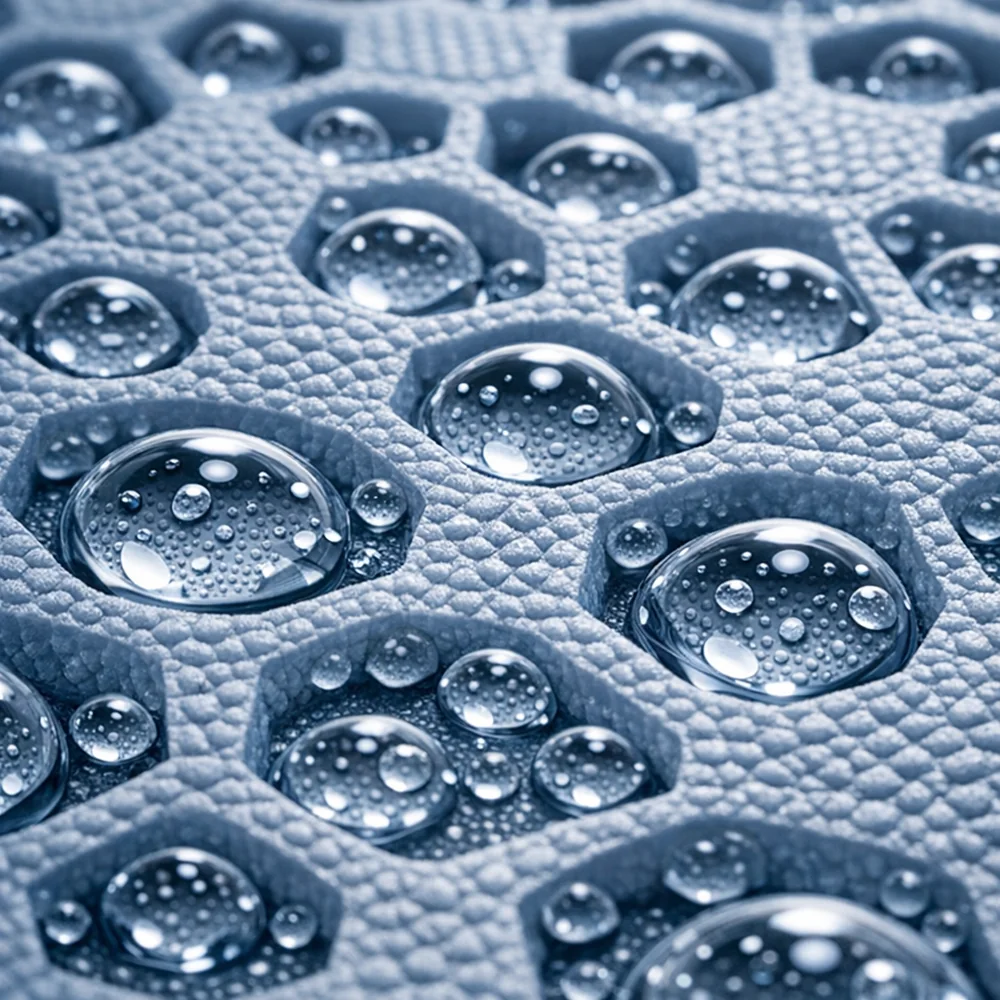
PVC (like the famous Manduka PRO) is basically the tank of the yoga mat world. It’s super dense plastic that’s nearly indestructible and pretty easy to take care of. TPE is its lighter, more eco-friendly cousin with similar properties.
Since these mats don’t absorb water, you can be a bit more aggressive with daily cleaning. Warm water mixed with some mild dish soap will cut right through the body oils that build up. You can also use diluted white vinegar – about one part vinegar to four parts water – to kill surface bacteria without messing up the plastic.
Here’s something cool: PVC mats are the only type you can actually throw in the bathtub for a deep clean. Once a month or so, fill the tub with warm water and a splash of mild detergent. Let the mat soak for about 15 minutes, then give it a gentle scrub with a soft cloth. Rinse it really well to get all the soap off, then hang it over a shower rod to dry.
Important exception: Don’t dunk your TPE mat! Even though it’s technically closed-cell, it’s lighter and more porous than PVC. It can hold onto water and take forever to dry. Stick to spraying and wiping only.
The bottom line: You can soak PVC mats in the tub for deep cleaning, but TPE mats should only get the spray-and-wipe treatment.
Dealing with PU Leather Mats (The Fancy Ones)
PU (polyurethane) leather mats from brands like Liforme and Alo Yoga are the Rolls Royce of grip. They have this super absorbent top layer that drinks up your sweat while pushing away oils. This makes them incredibly grippy but also kind of a pain to clean correctly.
Rule #1: No oils. Ever. Don’t use essential oils, tea tree oil, or any oil-based cleaners. The oil clogs up the tiny pores that give the mat its grip, and once that happens, your mat becomes a permanent slip-n-slide. There’s no fixing it.
Rule #2: No soap either. Dish soap and regular detergents create bubbles that get down into those deep pores and basically can’t be rinsed out. Next time you sweat, that dried soap residue reactivates and you’re sliding all over the place.
What you should use is plain distilled water or an extremely watered-down vinegar solution (like 1 part vinegar to 20 parts water). Spray lightly, wipe immediately with a microfiber cloth, and you’re done. These mats actually have some antimicrobial properties built in, so don’t go overboard trying to clean them.
One more thing: PU mats break down when exposed to too much water and heat over time. So “wipe, don’t soak” isn’t just a suggestion – it’s essential if you want your mat to last.
The bottom line: Never put oils or soap on a PU leather mat. You’ll permanently destroy the grip.
Natural Rubber Mats Need Special Care

Natural rubber mats (like Jade Yoga or Manduka eKO) are made from actual rubber tree sap. They feel amazing and are eco-friendly, but they’re also pretty sensitive.
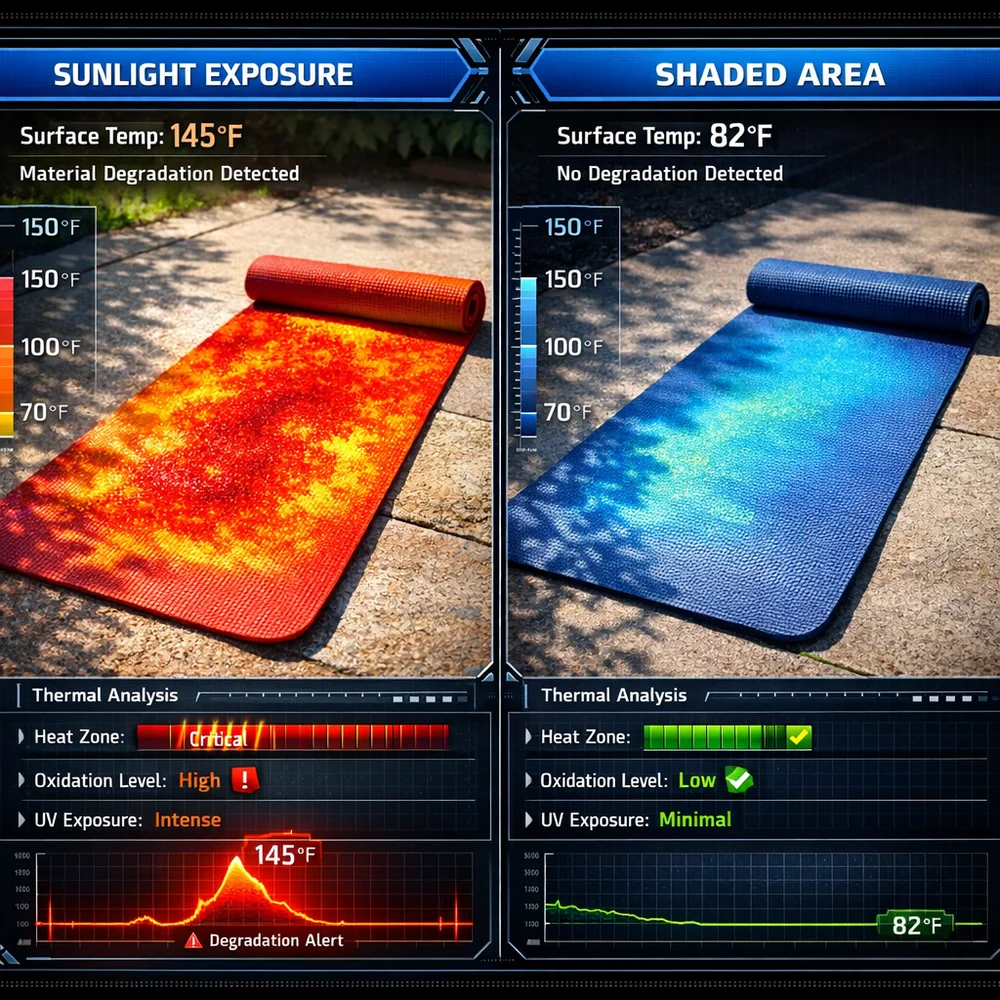
Sunlight is the enemy. UV rays literally break apart the rubber molecules through a process that makes the mat dry out, turn white, and eventually crumble into powder. Never dry your rubber mat in direct sunlight, and definitely don’t leave it in a hot car.
Rubber also doesn’t love acidic stuff. While vinegar works great on PVC, too much can make natural rubber turn sticky or brittle over time. You want a pH-neutral cleaner made specifically for rubber mats, or you could try an enzyme-based cleaner that breaks down sweat proteins without attacking the rubber.
Pro tip: If your rubber mat feels slick or has that weird factory smell, try wiping it down with a salt water solution. The salt acts as a gentle scrub and helps pull moisture out of the pores.
The bottom line: Sunlight and vinegar both degrade natural rubber. Use pH-neutral cleaners and always dry in the shade.
Cork Mats Are Basically Self-Cleaning
Cork mats are the low-maintenance champions of the yoga world. Cork naturally contains this waxy substance called suberin that repels water and actually fights off bacteria and fungi on its own. Mother Nature basically built antimicrobial protection right into the material.
This means you don’t need to go crazy with cleaning products. In fact, using harsh chemicals can strip away that protective waxy layer and make the cork dry out and chip.
Keep it simple: just wipe your mat with a damp cloth after practice. If it really needs a deeper clean, use a very diluted vinegar solution. Never use bleach, alcohol, or heavy-duty cleaners. And always let your cork mat dry completely before rolling it up – trapping moisture against the backing can make the cork layer peel off.
The bottom line: Cork has natural antimicrobial properties thanks to suberin. Avoid harsh chemicals that strip this protective layer away.
Keeping Fungus Off Your Mat
Let’s be real – gym floors and yoga studios are basically fungus highways. Athlete’s foot and plantar warts love warm, wet environments, and your sweaty rolled-up mat is like a five-star hotel for these guys.
Here’s the science: fungal colonization can kick off within 24 hours in a moist environment. If you roll up your mat while it’s still sweaty, you’re basically starting a fungal farm. The smooth surface of PVC and rubber can actually make it worse by trapping moisture instead of letting it evaporate.
The easiest defense? Use a microfiber yoga towel on top of your mat. It catches the sweat before it hits the mat, and you can just throw the towel in the washing machine with hot water to kill any fungi.
If you think you’ve already picked up a fungus, you’ll need to treat it. For tough PVC mats, a Tea Tree Oil spray works great since it’s a natural antifungal. For sensitive rubber or PU mats that can’t handle oils, try a UV-C light wand – it sterilizes without any chemicals.
The bottom line: Throw a microfiber towel over your mat to catch sweat and prevent fungus from colonizing the foam.
Deep Cleaning Foam Blocks
Let’s be honest – yoga blocks are usually the most neglected props until they start to smell. EVA foam blocks are porous and can absorb a ridiculous amount of sweat over their lifetime. Surface sprays don’t really help because the stink-causing bacteria are living deep inside.
To fix smelly blocks, you need to do a deep soak. Fill a basin with warm water and add a good amount of enzyme detergent. Dunk the blocks completely (you might need to weigh them down since they float) and let them soak for 30-60 minutes. The enzymes will work their way into the foam and actually digest the organic gunk feeding the bacteria.
After soaking, press the blocks between dry towels to squeeze out the water – don’t twist or wring them or you’ll tear the foam. Then put them somewhere with good airflow to dry. This can take up to 48 hours depending on humidity.
Important: This only works for foam blocks. Never soak cork blocks. They’ll absorb tons of water, warp, and crumble when they dry. Just stick to surface wiping for cork.
The bottom line: Soak EVA foam blocks in enzyme detergent to kill bacteria deep inside. But never soak cork blocks – they’ll absorb water and fall apart.
Washing Yoga Towels and Straps
Towels and straps can go in the washing machine, but there are some rules.
Never use fabric softener on yoga towels. Softener coats the fibers and kills their absorbency, making your towel useless for catching sweat. Even worse, it makes the towel slippery – which is seriously dangerous if you’re doing inversions or balance poses on a slick towel.
Cotton straps are basically long heavy ropes. If you throw them in loose, they’ll wrap around everything and could damage your machine or the strap. Always coil the strap and put it in a mesh laundry bag first. Wash on hot to sanitize the thick cotton weave.
The bottom line: Skip the fabric softener on yoga towels – it makes them slippery and useless. And always wash straps in a mesh bag so they don’t destroy your machine.
The Burrito Trick for Faster Drying
After you clean any mat, getting rid of excess water is crucial to prevent mold. The “Burrito Method” is the best way to do this without wringing your mat (which can damage it).
Here’s how: Lay your damp mat flat on the floor. Put a big dry bath towel on top, covering the whole thing. Roll them up together tightly, like a burrito.
Once it’s rolled up, step on it and walk along the length. Your body weight pushes the water out of the mat and into the towel. Unroll, remove the wet towel, and hang your mat to finish drying.
The bottom line: The Burrito Method squeezes out water without wringing, protecting your mat while speeding up drying time.
Wrapping Up
A clean mat is the foundation of a healthy yoga practice. Treat your gear with respect and it’ll support you for years without becoming a biohazard.
Be gentle with natural rubber. Respect the delicate chemistry of PU leather mats. Save the heavy-duty cleaning for tough PVC.
And above all else: let your gear dry completely. Honestly, good airflow is the most powerful disinfectant you have.
References
- Centers for Disease Control and Prevention (CDC). (2008). Guideline for Disinfection and Sterilization in Healthcare Facilities.
https://www.cdc.gov/infectioncontrol/guidelines/disinfection/ 2. Journal of Athletic Training. (2010). Bacterial colonization of athletic equipment.
https://natajournals.org/loi/jat 3. International Journal of Hygiene and Environmental Health. (2014). Fungal survival on inanimate surfaces.
https://www.sciencedirect.com/journal/international-journal-of-hygiene-and-environmental-health 4. Journal of Applied Polymer Science. (2018). Degradation of natural rubber and polyurethane foams.
https://onlinelibrary.wiley.com/journal/10974628 5. MicrobiologyOpen. (2019). Antimicrobial properties of cork suberin.
https://onlinelibrary.wiley.com/journal/20458827 6. Journal of Fungi. (2021). Survival of dermatophytes on various surfaces.