Washing Leggings & Yoga Pants: Pilling Prevention & Lycra Care
Table of Contents
Things You'll Learn From This Article:
- Wash leggings only with other smooth, lightweight clothes to cut down on friction that causes pilling, especially on inner thighs.
- Using a mesh laundry bag creates a protective barrier that reduces wear inside the washing machine.
- Turning leggings inside out helps protect prints and designs from cracking or fading and cleans where sweat and oils actually build up.
- Fabric softener damages Lycra and Spandex by clogging sweat‑wicking fibers and making leggings lose their snug fit.
- Cold water keeps colors darker and prints sharper without sacrificing cleanliness, thanks to modern detergents.
- Using too much detergent leaves residue that can mix with sweat and irritate your skin during workouts.
- An extra rinse cycle and smaller detergent amounts help prevent itchy rashes and lingering smells.
- Drying leggings flat avoids stretching and misshaping caused by the weight of wet fabric hanging down.
- Direct sunlight during drying weakens elastic fibers and fades colors over time.
- Let mud dry before brushing it off so dirt doesn’t get pushed deeper into the fabric.
- Enzyme cleaners work best on grass and outdoor stains, while chlorine bleach ruins synthetic stretch fibers.
- Some leggings need a short, low‑heat dryer cycle to reactivate water‑repellent coatings after washing.
- Compression leggings should be washed after every wear to reset their stretch and prevent odor buildup.
- Letting sweaty leggings sit unwashed allows bacteria to multiply and causes permanent smells.
- Zippers and metal hardware from other clothes can tear leggings, so they need to be kept separate or secured.
Let’s be honest—we basically live in leggings. From the gym to the grocery store, they’ve become the undisputed champion of the modern wardrobe. But here’s the thing nobody tells you: for all their versatility, these technical garments are surprisingly fragile. They’re magnets for wear and tear, often looking aged long before your cotton clothes show any signs of use.
Pilling on the inner thighs? Probably your most dreaded issue. Fading prints, loss of elasticity, that persistent musty smell—close seconds. It’s easy to blame the manufacturer or the price, but the uncomfortable reality is these issues are rarely actual defects.
They’re almost always caused by how you’re washing them. Leggings are engineered from advanced technical fabrics like Lycra, Spandex, and high-performance nylon blends. These materials need a completely different approach than your jeans or cotton t-shirts. Treating them like regular laundry is a fast track to ruining them.
This guide breaks down the essential care protocols for your yoga pants and compression gear. We’re not just cleaning here—we’re protecting the delicate elastane fibers that give your gear its snap. Keep your prints vibrant, your fit snug, and your investment lasting years instead of months.
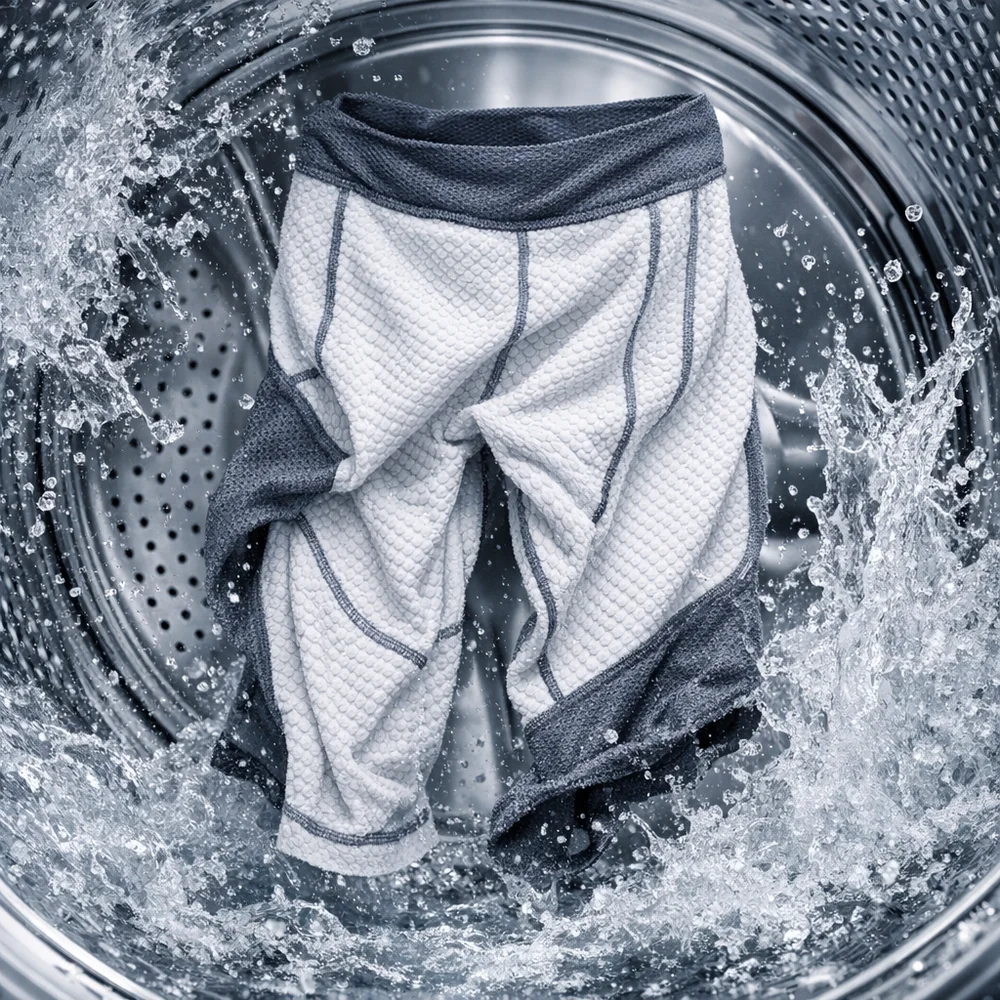
Preventing Pilling on Inner Thighs
Pilling is the mechanism that wrecks the smooth look of activewear—those small, fuzzy balls clinging to the surface. This happens when loose fibers work their way out of the yarn structure. Once free, they tangle with other loose fibers and debris, forming knots anchored to the garment.
Inner thighs are ground zero for this damage because of constant, repetitive mechanical abrasion during movement. Running, walking, even cycling creates a friction zone that relentlessly attacks the fabric surface. While material quality matters (nylon generally pills less than polyester), your laundry habits are the primary accelerant.
To minimize pilling, you need to reduce mechanical abrasion inside the washing machine. Mixing activewear with heavy fabrics is a recipe for disaster. Jeans, towels, canvas jackets—they act like sandpaper against your delicate leggings.
During the spin cycle, this rough abrasion effectively sands the surface of your yoga pants, pulling fibers loose and starting the pilling process before you even wear them again. The rule is absolute: wash leggings only with similar “sleek” fabrics.
You can also massively reduce friction by using a specialized laundry bag. This creates a physical barrier between your leggings and the rest of the load—water and detergent get through, but the abrasive mechanical action that destroys the finish gets blocked.
Turning Inside Out to Protect Prints
Digital prints and foil accents are super vulnerable to abrasion. The surface design is often just a layer of ink or thermal application sitting on top of the fabric weave. In the washing machine, the outer surface scrapes against drum walls and other clothes thousands of times.
This cumulative friction makes prints crack, peel, or fade prematurely. Turning garments inside out is the simplest, most effective preservation technique. It completely changes the wear equation inside the drum.
It also ensures mechanical action attacks the inner liner rather than the delicate outer face. That liner is typically designed to handle abrasion and wick sweat—it’s robust and usually unprinted, making it the perfect sacrificial surface for the wash cycle.
Bonus: body oils, dead skin, and sweat bacteria are most concentrated on the inside anyway. Cleaning the contact surface is way more critical for odor control than cleaning the outside.
The bottom line: Turn leggings inside out before washing. This protects the external print from abrasion and exposes the dirty inner liner to the detergent.
Avoiding Fabric Softener on Lycra and Spandex
That warning label saying “Do Not Use Fabric Softener”? It’s not a suggestion—it’s an operational imperative for technical fabrics. Here’s why.
Softeners work by depositing a thin, waxy coating of cationic surfactants onto fabric fibers. On natural fibers like cotton, this reduces static and makes fabric feel fluffy. On synthetic microfibers, it’s catastrophic.
The coating plugs the microscopic channels engineered to wick sweat. Activewear works through capillary action—drawing moisture away from skin and spreading it across the fabric surface for rapid evaporation. When you use softener, you seal these channels with hydrophobic wax.
Result: a garment that loses breathability, traps heat and moisture against your skin, and creates a swampy, uncomfortable environment during exercise.
There’s more: softeners lubricate the fibers. In compression gear, friction between fibers maintains structure and “snap.” Softener makes fibers slippery, leading to “sagging” where leggings slide down or lose shape mid-workout. Once applied, this coating is notoriously difficult to strip away—often requiring laundry stripping to fix.
The bottom line: Fabric softener is kryptonite for leggings; it clogs wicking channels (stopping sweat evaporation) and lubricates fibers (causing them to sag).
Cold Wash Benefits for Color Retention
Vibrant patterns and deep blacks are activewear staples. Synthetic fibers hold dye in a unique way, but they’re sensitive to heat. Heat energy excites dye molecules, making them less stable within the polymer matrix and more likely to migrate—that’s “bleeding.” Hot or warm water accelerates this.
Cold water slows molecular activity and locks color in.
Here’s the thing: modern detergents are formulated with enzymes that are highly active even at temperatures as low as 60°F (15°C). There’s zero hygienic benefit to boiling your gym clothes. In fact, hot water can “set” protein-based stains like sweat and blood, making them impossible to remove later.
Consistently washing cold preserves high-contrast prints and prevents expensive black leggings from fading to worn-out charcoal. It’s safer for fabric, gentler on the environment, and just as effective when paired with the right detergent.
The bottom line: Wash in cold water. Hot water cooks protein-based stains (sweat, blood) into the fabric and accelerates dye bleeding.
Detergent Residue Causing Skin Irritation
Contact dermatitis is common among athletes—often misdiagnosed as heat rash or chafing. Leggings fit like a second skin, applying constant pressure. If detergent isn’t thoroughly rinsed, it dries into the weave.
When you work out and sweat, that moisture dissolves the dried detergent residue, creating a concentrated chemical solution held firmly against open pores by the compression of the leggings.
This creates perfect conditions for skin irritation. The surfactants and fragrances can penetrate the skin barrier, causing red, itchy, inflamed rashes—especially in the groin and behind the knees where skin is thinner and friction higher.
Always use the “Extra Rinse” option for activewear loads. More importantly, radically reduce detergent quantity. Modern machines use very little water, and standard detergent cups are way too large for these concentrated cycles. Use a third of the recommended dose. If you see suds in the final rinse, you’ve used too much.
Your clothes should come out smelling like water, not a perfumed meadow. Heavy scent = residue that’ll probably irritate your skin.
The bottom line: Use 1/3 of the recommended detergent dose and always use “Extra Rinse” to prevent skin rashes from chemical residue.
Drying Flat vs Hanging

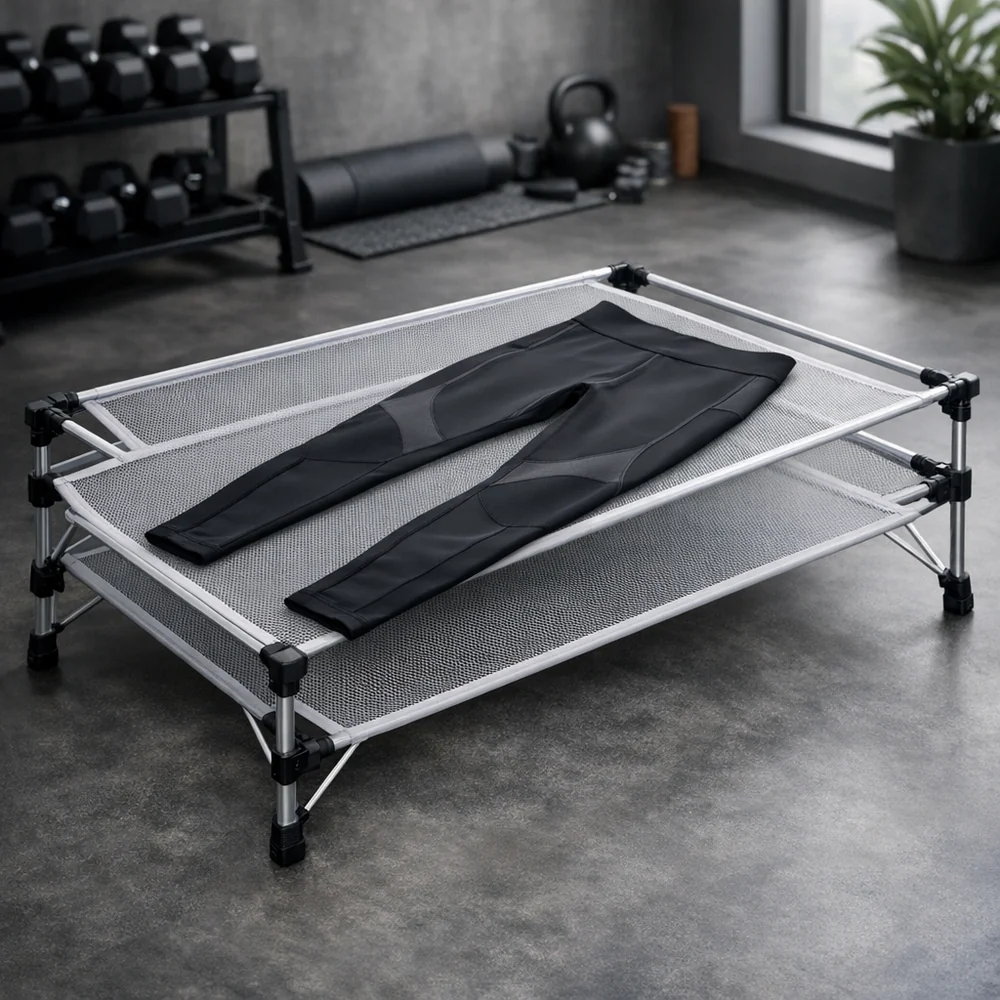
Wet fabric weighs a surprising amount. How you support that weight during drying determines the long-term shape of your garment.
Hanging wet leggings by the waistband causes vertical stretching—gravity pulls the water-heavy legs down, elongating fabric and distorting fit around hips and knees.
Hanging by the ankles is even worse. It distorts the crotch seam and leads to a baggy rise. Drying flat is the only zero-stress method that preserves original engineering.
Lay leggings flat on a mesh drying rack. This allows air to circulate from top and bottom without pulling on fabric. Keep away from direct sunlight—UV rays degrade elastane and fade colors, making them unsuitable for gym use.
If space forces you to hang, don’t use waistband or ankles. Instead, drape over the bar, folded at the knee. This balances waistband weight against lower leg weight, minimizing stretch force on any single point.
The bottom line: Gravity destroys elasticity. Draping wet leggings flat on a rack prevents the waistband and crotch from stretching out.
Removing Mud and Grass Stains from Outdoor Runs
Outdoor running introduces a different class of soil. Mud and grass aren’t like sweat and body oils. Mud is ground-in particles; grass stains are dye-like pigments from chlorophyll.
Rubbing wet mud is a rookie mistake—it pushes dirt deeper into the fiber matrix. The first rule: let it dry completely.
Once dry and crusty, use a stiff brush to mechanically remove bulk soil. Only then introduce water. For remaining discoloration, enzymatic pre-treatment is essential.
Apply spray-on enzyme cleaner or a paste from enzyme detergent to the spot. Let sit at least 15 minutes before washing. Enzymes break down the organic matter binding the stain.
Avoid chlorine bleach at all costs—highly damaging to synthetics. It yellows whites and destroys Spandex, making it brittle and prone to snapping. For tough stains on light colors, oxygen-based bleach (sodium percarbonate) is the safe alternative.
Restoring Water Repellency in Compression Gear
Some technical leggings—especially cold-weather gear—have a DWR (Durable Water Repellent) finish. This chemical coating lowers surface tension, causing water to bead and roll off. Over time, friction and dirt compromise this finish.
Fabric starts to “wet out,” absorbing water instead of repelling it. Paradoxically, washing is step one of the fix—dirt and oil mask the DWR. Removing contaminants lets the polymer work again.
Eventually though, DWR polymer chains become disorganized and need heat to realign. This is the one exception to the “no heat” rule for activewear.
After washing, put DWR-treated leggings in the dryer on low-medium heat for just 20 minutes. This short heat burst reactivates the finish.
If heat alone doesn’t restore beading, the DWR has probably worn off. Use a spray-on DWR restorer to re-coat. Always verify the care label before applying any waterproofing treatments.
Washing Intervals for Compression Fabrics
How often should you wash leggings? For loose sweatpants, maybe you can get a few wears. For compression gear, frequent washing is non-negotiable.
Elastane and Spandex physically stretch out during wear. They suffer “memory loss” when held extended for hours. After a long run or yoga session, the garment is actually larger than when you put it on.
Washing helps “reset” fabric memory. Water and mechanical agitation help fibers retract to their original tight state, ensuring consistent compression every wear.
Hygienically, wash after every single wear. Leggings sit close to skin in high-sweat areas. Bacteria multiply exponentially in warm, moist used activewear.
Letting sweat sit for days encourages bacterial growth and stubborn permastink. It might be tempting to rewear for light stretching, but distinct odors develop rapidly once body heat reactivates dormant bacteria.
Avoiding Zipper Damage from Other Clothes
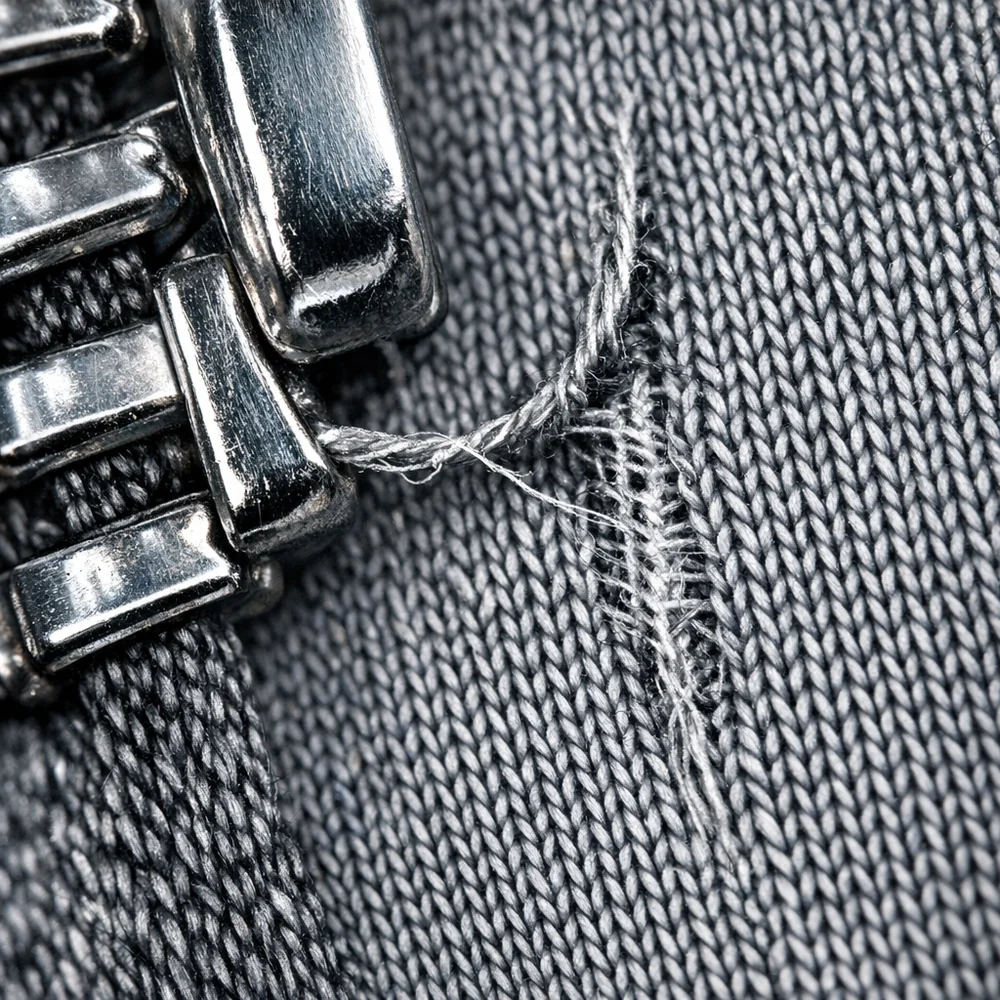
Zippers are apex predators in the laundry world. A single loose metal zipper can shred expensive leggings in minutes. Zipper teeth act like saws, snagging soft loops of specialized knit and tearing holes.
Primary defense: segregation. Ideally, wash activewear in dedicated loads. Keep soft synthetics together; keep hardware-laden jeans and jackets separate.
If mixing is unavoidable, neutralize the threat. Zip every zipper to the top. Button every button, snap every snap. This minimizes exposed sharp edges.
For extra safety, isolate hardware items in their own mesh laundry bags. This protects delicate leggings from hardware rather than just protecting hardware from the machine. Small step, big heartbreak prevention.
The bottom line: Zippers are apex predators in the laundry drum; a single loose zipper can shred leggings. Zip nothing all the way or wash separately.
Conclusion
Leggings are more than pants—they’re technical equipment designed to support movement. Treating them with respect ensures they perform mile after mile, pose after pose.
Skip the fabric softener. Embrace cold water. Dry flat.
These simple, intentional habits prevent pilling heartbreak and sagging annoyance. They keep your favorite pair in rotation for years, maintaining the look and feel of day one.
References
- Textile Research Journal. (2012). Mechanisms of pilling in knitted fabrics.
https://journals.sagepub.com/home/trj 2. Journal of Surfactants and Detergents. (2016). Interactions between cationic softeners and synthetic fibers.
https://www.springer.com/journal/11743 3. Dermatitis. (2019). Allergic contact dermatitis caused by laundry detergents.
https://journals.lww.com/dermatitis/pages/default.aspx 4. Performance Apparel Markets. (2018). Durability of DWR finishes on activewear.