Removing Makeup Stains: Solving Foundation, Lipstick, and Mascara Smudges
Table of Contents
Things You'll Learn From This Article:
- Figure out whether a makeup stain is oil-based or water-based before cleaning, because the wrong cleaner can make it spread or set in.
- Check ingredient labels or test with warm water to tell what kind of makeup you’re dealing with when you’re not sure.
- Use micellar water on delicate fabrics like silk or wool to lift makeup without rubbing or damaging the fibers.
- Blot stains from the back of the fabric when possible so makeup is pushed out instead of driven deeper in.
- White foam shaving cream can break down oily foundation stains on everyday fabrics like cotton and polyester.
- Cold water matters for foundation stains, since heat can lock some ingredients into the fabric.
- Dish soap works better than laundry detergent for lipstick because it’s designed to cut through heavy wax and grease.
- Let cleaners sit for a while instead of rushing—dwell time helps chemicals actually break apart the stain.
- Waterproof mascara and long-wear makeup often need oil to dissolve them, followed by dish soap to remove the leftover grease.
- Always switch to clean cotton or paper as you blot so you don’t spread dark pigments around.
- Dry powder makeup should be removed physically first, using air, vacuuming, or tape, before any liquid touches the fabric.
- Adding liquid too soon to powder makeup can turn it into a dye that’s much harder to remove.
- Collar stains come from friction, so reducing rubbing or adding a barrier can prevent stains before they happen.
- Blot fresh makeup transfers gently instead of rubbing, which only makes them larger and deeper.
- Enzyme cleaners help when makeup is mixed with sweat and skin oils, because they break down the organic material holding the stain together.
- Keep enzyme treatments in lukewarm water, since hot water destroys the enzymes.
- Rubbing alcohol can remove stubborn waxy makeup, but it should be tested first because it can affect some fabrics.
- Work alcohol treatments from the back of the fabric and keep moving to clean absorbent layers.
- Self-tanner stains act like a chemical reaction, so quick rinsing with cold water gives you the best chance of removal.
- Chlorine bleach can make self-tanner stains darker, while oxygen bleach is safer and more effective.
- Towels and pillowcases trap makeup deeply, so they need stronger washing helpers like baking soda and oxygen bleach.
- Fabric softener can make makeup stains harder to remove later by coating fibers with waxy residue.
- Vinegar in the rinse cycle helps keep towels clean without trapping makeup oils.
- Heat drying should wait until you’re sure the stain is gone, because heat can permanently set leftover makeup.
Makeup is specifically designed to stay on your skin through heat, humidity, and friction. When those same products transfer to fabric, they create bonds that laugh at ordinary washing. The long-wear formula that survives your workout does not suddenly become easy to remove just because it landed on your collar instead of your face.
The good news is that once you understand what makes makeup stick, you can choose treatments that actually work. Different products use different carrier systems, and matching your cleaning approach to the specific type of makeup is the key to success.
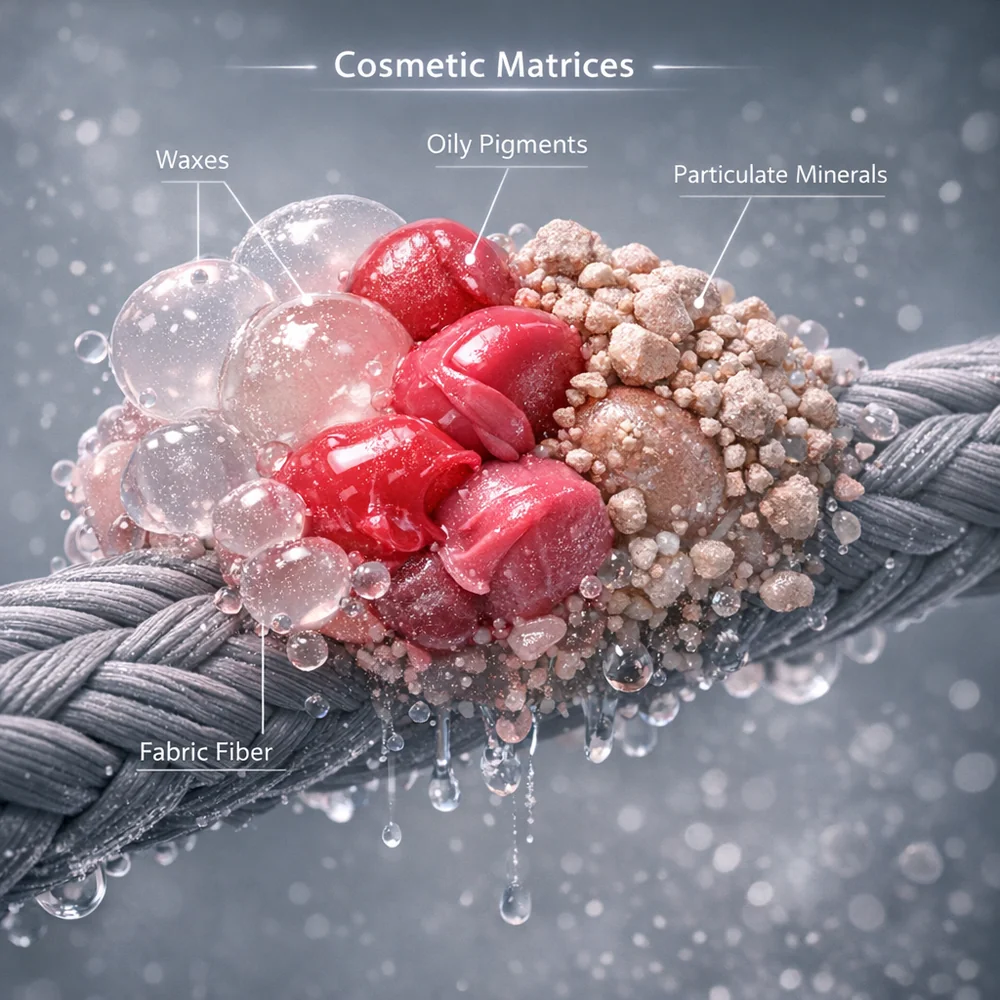
Oil-Based vs. Water-Based Formulas
The first question with any makeup stain is whether the product is oil-based or water-based. This determines everything about your removal strategy.
Oil-based makeup includes most long-wear foundations, creamy concealers, and lipsticks. These products use fats and waxes as their carrier, which makes them naturally water-resistant. If you apply a water-based cleaner without pre-treatment, the oily barrier shields the pigment and nothing gets removed. The stain just spreads when you scrub at it.
Water-based or oil-free products like lightweight tints and many mineral powders use different chemistry. They wash away more easily but often contain concentrated mineral pigments that can act as fabric dyes if allowed to set.
Check the ingredient label if you have the packaging. Terms like “paraffinum liquidum” or “petrolatum” indicate oil-based formulas. Water and glycerin at the top of the list suggest water-based products.
When you are unsure, dab a bit of warm water on the stain. If the color does not budge or smear at all, you are dealing with an oil-based formula that needs more aggressive treatment.
The Bottom Line Oil-based makeup resists water and needs solvent or surfactant pre-treatment. Water-based products dissolve more easily but can still dye fabric.
Micellar Water for Delicates
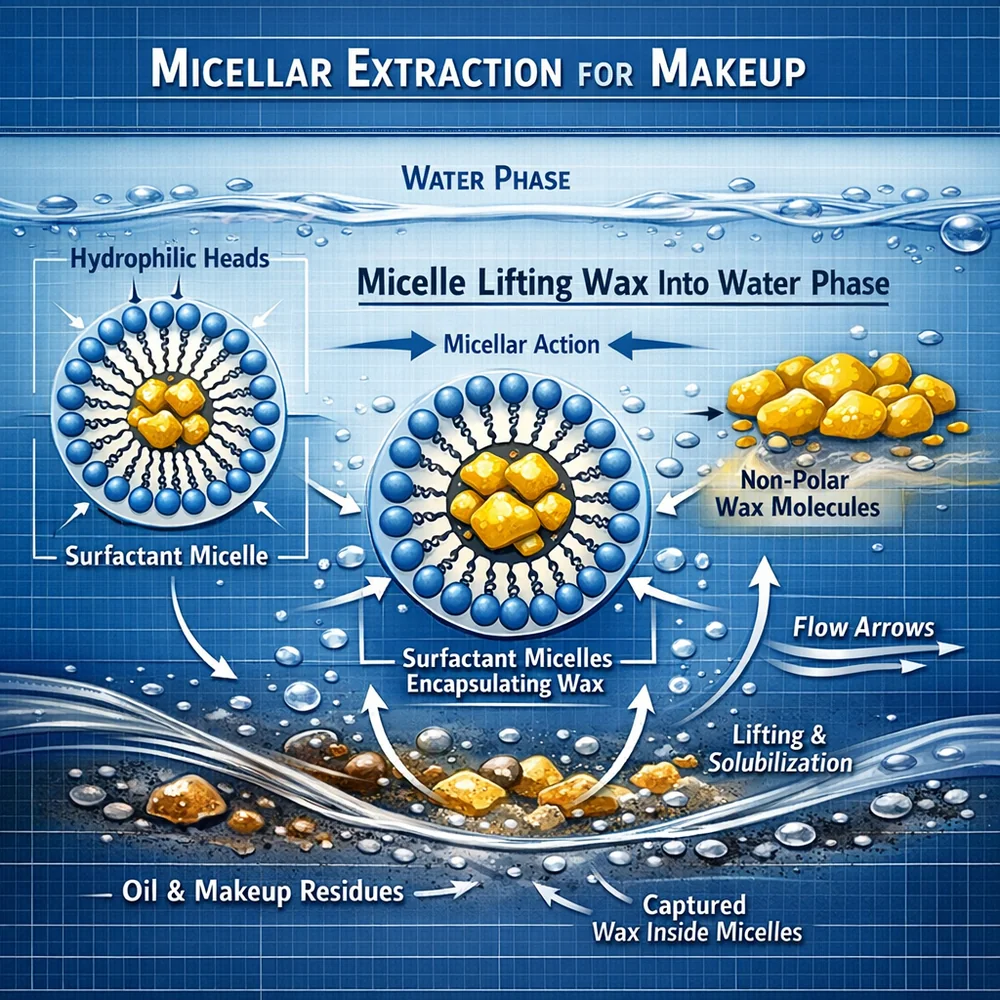
Micellar water has become surprisingly useful for fabric stains, especially on delicate materials like silk and wool where aggressive scrubbing could cause damage.
The solution contains tiny clusters of surfactant molecules called micelles. Each micelle has a water-loving outer shell and an oil-loving core. When you apply micellar water to foundation smudge, the oil-attracting parts of the micelles latch onto the makeup. As you blot, the water-attracting shell lifts the whole mess off the fabric.
This happens gently, without rubbing, which is perfect for fragile fabrics. Use a formula labeled oil-free to avoid leaving a secondary grease ring behind. For silk care, this gentle approach protects the delicate finish.
Place a clean white towel under the stain. Apply micellar water to a cotton round and press it into the stain from the reverse side. This pushes makeup particles forward onto the towel rather than deeper into the weave. Repeat with fresh cotton rounds until no more color transfers.
The Bottom Line Micellar water lifts makeup gently without scrubbing. Perfect for delicate fabrics like silk and wool.
Shaving Cream for Foundation
White foam shaving cream works remarkably well on liquid foundation stains on cotton and polyester blends. The concentrated surfactants in shaving cream are powerful degreasers, and the foam structure lets them penetrate deep into fabric.
Apply a generous amount of white shaving cream, not gel, directly to the stain. Let it sit for about ten minutes. During this dwell time, the surfactants begin breaking apart the oily components of the foundation.
Work the foam gently into the fibers with your fingertips or a soft brush. Rinse thoroughly with cold water. Cold temperature is important because heat can set protein components in some foundations.
This method handles large smudges and collar rings where foundation builds up over hours of wear. If a faint shadow remains after treatment, a follow-up dab of rubbing alcohol addresses residual waxes.
The Bottom Line White shaving foam contains strong degreasers that work on foundation. Apply, wait 10 minutes, rinse cold.
Dish Soap for Lipstick
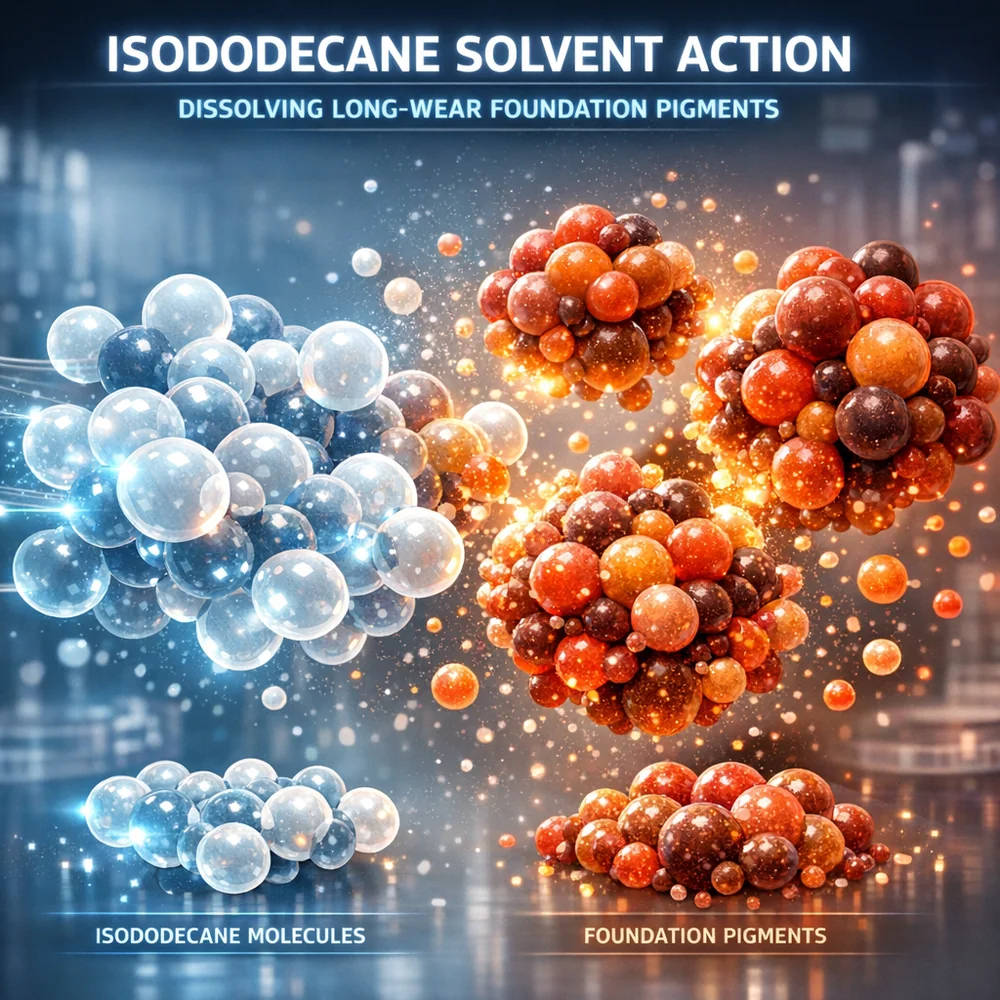
Lipstick combines heavy waxes like beeswax or carnauba with concentrated dyes and oils. These products are engineered to survive eating and drinking. Standard laundry detergent often cannot penetrate the wax barrier to reach the dye underneath.
Concentrated dish soap works much better. The grease-cutting surfactants designed for cooking oil have the power to dissolve lipstick waxes too. Apply dish soap directly to the stain and let it sit for at least 20 minutes.
After the dwell time, add a few drops of warm water and work the area into a lather. Rinse thoroughly. The dish soap dissolves the wax carrier, releasing the dye so subsequent washing can remove it.
If a faint color ghost remains after the wax is gone, treat it with oxygen bleach or a light application of rubbing alcohol. The tannin stain removal approach works for the dye component.
The Bottom Line Dish soap dissolves the wax in lipstick. Apply directly, wait 20 minutes, then lather and rinse.
Mascara and Waterproof Formulas
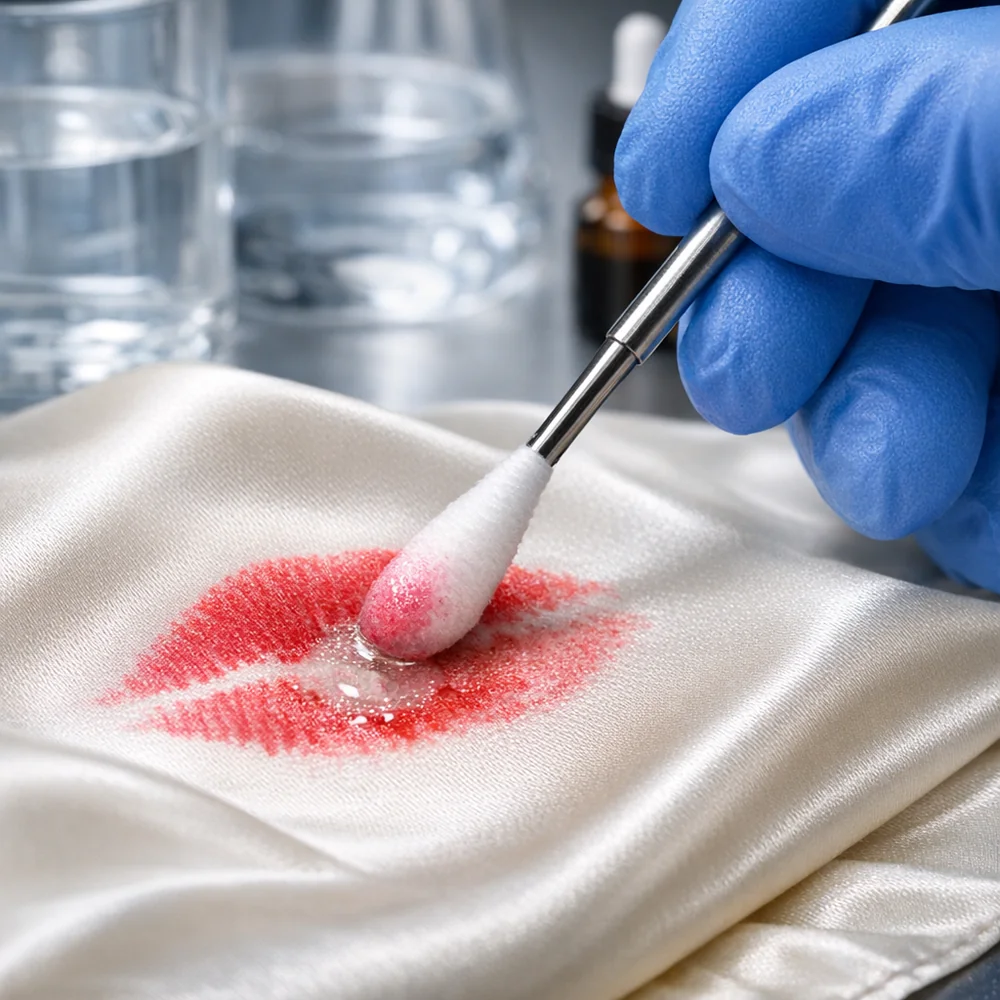
Mascara and waterproof makeup contain film-forming polymers and silicones specifically designed to resist moisture. Products meant to survive sweat and tears inherently resist water-based cleaning.
For regular mascara, oil-free makeup remover on a cotton swab often works. For waterproof formulas, you typically need an oil-based remover to dissolve the hardened polymers. Mineral oil or baby oil can work.
After using oil to dissolve mascara, you must immediately follow with dish soap to prevent a grease stain from forming. The oil lifted the makeup, but now you need to remove the oil.
Work slowly with dark mascara and eyeliner. Use a clean section of cotton for every dab to avoid spreading pigment over a larger area. For pencil eyeliner ground into fibers, a soft brush helps break up the waxy core.
The Bottom Line Waterproof makeup needs oil-based remover. Always follow with dish soap to prevent secondary grease stains.
Powder Makeup Approach
Powdered cosmetics like eyeshadow, blush, and mineral foundation require physical removal before any liquid touches the fabric. The most common mistake is immediately applying a wet cloth, which transforms dry powder into concentrated liquid dye.
First, use a hair dryer on the cool setting to blow loose powder off the surface. Avoid warm air, which can melt any wax binders in the powder.
Next, use a vacuum’s upholstery attachment to pull remaining dust from between yarns. Finally, press adhesive tape onto the spot and lift away. Tape picks up fine particles that escaped the vacuum.
Only after removing as much dry powder as possible should you introduce moisture. Any remaining color can then be treated with micellar water or a mild surfactant. This sequential approach dramatically reduces the risk of creating a permanent dye stain.
The Bottom Line Remove dry powder first with cool air, vacuum, and tape. Only then apply liquid cleaners to residual color.
Preventing Collar Stains
Makeup transfer to collars is mechanical friction. As you move your head through the day, fabric rubs against your neck, abrading makeup from skin onto textile.
A light dusting of translucent setting powder on your neck creates a barrier that reduces transfer. Some people spray a fabric protector on the inside of collars to prevent oils from penetrating.
For formal occasions, consider using a makeup hood or silk scarf when dressing. This prevents contact between face and fabric during the critical putting-on moment.
If you catch a smudge immediately, blot with a dry tissue but do not rub. Rubbing spreads the stain and drives it deeper. Wait until you can treat it properly.
The Bottom Line Setting powder on skin and fabric protector on collars reduce transfer. Blot fresh smudges but do not rub.
Enzyme Pre-Treatment
Makeup stains often include biological residue from your skin: oils, sweat, and dead cells. These organic materials bind makeup pigments to fabric in ways that pure surfactants struggle to address.
Enzyme cleaners containing protease break down these protein-based binders. By digesting the skin cells and sweat proteins mixed with the makeup, enzymes collapse the foundation of the stain.
Apply enzyme solution and let it dwell for at least 30 minutes. Enzymes work best in lukewarm water, between 85°F and 105°F. Hot water destroys them, so avoid boiling temperatures.
After the dwell time, wash normally. The enzymes have done their work, leaving behind loosened pigments that surfactants can now remove.
The Bottom Line Enzyme pre-treatments break down the biological binders in makeup stains. Apply lukewarm, wait 30 minutes, then wash.
Rubbing Alcohol for Wax
Some long-wear lipsticks use synthetic waxes that dish soap alone cannot dissolve. Isopropyl alcohol provides more aggressive solvent power for these stubborn marks.
Place the garment face-down on absorbent paper towels. Apply alcohol to the reverse side, pushing dissolved wax forward onto the paper. You will see pigment bleeding through immediately.
Keep blotting and reapplying, moving to clean paper with each pass. Continue until no more color transfers.
Alcohol evaporates quickly and leaves no residue, but it can dry out natural fibers. Follow up with a cold water rinse. Test on a hidden seam first because alcohol can affect some fabric dyes.
The Bottom Line Rubbing alcohol dissolves waxes that resist dish soap. Apply from the back, blot onto absorbent paper, rinse.
Self-Tanner Stains
Self-tanners are unique because they involve a chemical reaction. The active ingredient DHA reacts with proteins in your skin to create tan color. On protein fibers like silk or wool, it can react with the fabric itself.
For fresh spills, rinse immediately with high volumes of cold water to remove unreacted DHA. Apply a mixture of dish soap and glycerin. The glycerin keeps DHA liquid and prevents it from completing its reaction with the fabric.
Old self-tanner stains may need an oxygen bleach soak. Sodium percarbonate can break the bonds of the pseudo-melanoidins created by the DHA reaction. Never use chlorine bleach, which often darkens DHA stains instead of removing them.
The Bottom Line Rinse fresh self-tanner immediately. Use glycerin to prevent reaction. Oxygen bleach may help old stains.
Towel and Pillowcase Maintenance
White towels and pillowcases accumulate makeup residue with every use. The thick terry loops of towels trap foundation deep where normal washing cannot reach.
Add half a cup of baking soda to your wash along with oxygen bleach. This combination softens water and provides continuous whitening action.
Avoid fabric softener on towels used for makeup removal. Softeners coat fibers with waxy film that traps makeup oils and makes subsequent washing less effective. Use white vinegar in the rinse cycle instead.
For yellowed pillowcases, enzyme spray followed by a hot sodium percarbonate soak breaks down the polymerized oils causing discoloration. Four hours of soak time is usually needed for heavily affected items.
The Bottom Line Baking soda and oxygen bleach in the wash keep towels white. Skip fabric softener and use vinegar instead.
Conclusion
Makeup removal from fabric comes down to matching your treatment to the product’s chemistry. Oil-based formulas need solvents or concentrated surfactants. Water-based products dissolve with gentle treatment but require quick action before pigments set.
The universal rules are: identify the carrier medium, remove dry particles before adding liquid, allow adequate dwell time for cleaners to work, and verify complete removal before heat-drying. These principles apply whether you are rescuing a silk blouse or maintaining everyday towels.
References
- Journal of Cosmetic Science. “Formulation and stability of oil-in-water emulsions.” SCC
- American Cleaning Institute. “Removing Cosmetics from Fabric.” https://www.cleaninginstitute.org/
- Textile Research Journal. “Surfactant interaction with oily soils.” Sage Journals
- Good Housekeeping. “How to get makeup out of clothes.” https://www.goodhousekeeping.com/
- International Journal of Cosmetic Science. “Film-forming polymers in waterproof makeup.” Wiley Online Library