Deodorizing Smelly Clothes: Science-Based Methods for Eliminating Fabric Odors
Table of Contents
Things You'll Learn From This Article:
- That “comes back when you sweat” smell is from bacteria living deep in the fabric, not leftover sweat on the surface.
- Polyester holds onto smells more than cotton because oily odor molecules stick to it and normal washing can’t fully reach them.
- If clothes smell fine when cold but stink when warm, bacteria are dormant and reactivate with body heat.
- Warm or hot water works better than lukewarm for odor removal because heat loosens oily smell compounds.
- Baking soda helps with sour, sweaty smells by neutralizing acids, but it only works properly when there’s water involved.
- Vinegar is useful for sharp, ammonia-like smells because it neutralizes alkaline odors instead of acidic ones.
- Enzyme cleaners are best for urine, blood, or pet messes because they break down the actual biological residue, not just the smell.
- Let enzyme treatments sit and air-dry; rushing them or washing too soon stops them from finishing the job.
- Oxygen bleach (like hydrogen peroxide or sodium percarbonate) destroys stubborn smells such as mildew or smoke by chemically breaking them apart.
- Never put clothes in the dryer if they still smell even a little—heat can permanently lock odors into the fabric.
- Sunlight can naturally kill odor-causing bacteria and break down smells, especially for towels and linens.
- Alcohol sprays work for quick fixes on dry-clean-only items, but they don’t replace proper cleaning.
- Hard water can trap smells by leaving mineral buildup on fabric, so softening the water or using borax can make washing more effective.
- For items you can’t wash, sealing them with activated charcoal lets the charcoal absorb odors safely over time.
You wash the gym shirt, it comes out smelling fresh, you put it in the drawer. Then you wear it, start warming up, and thirty minutes later it smells like a locker room. This pattern is frustrating, but it has a simple scientific explanation.
The smell is not leftover sweat. It is the metabolic waste of bacteria that have colonized the fabric. Standard detergent kills surface bacteria but cannot always reach the colonies embedded deep in synthetic fibers. Understanding why odors persist, and what actually breaks them down, transforms laundry from guesswork into targeted chemistry.
Why Polyester Holds Odors Worse Than Cotton
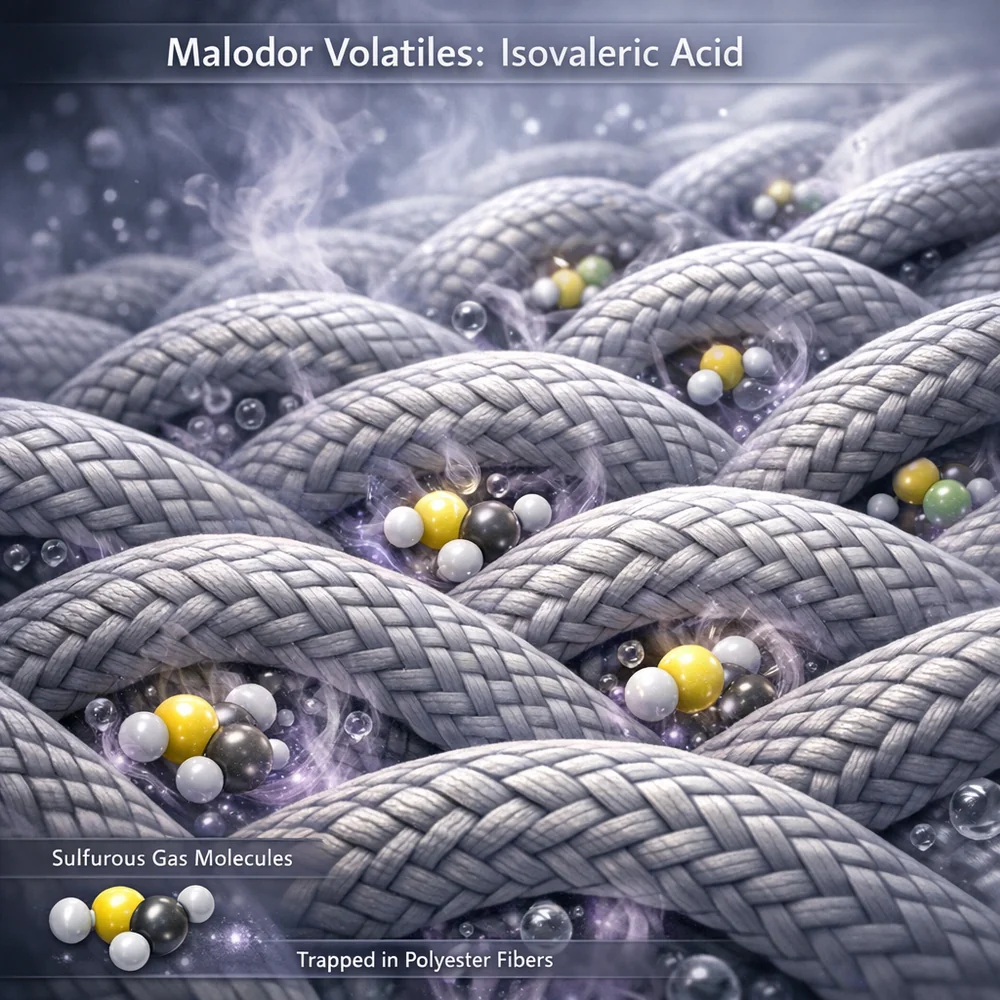
Modern activewear relies on polyester because it wicks moisture away from your skin. But there is a tradeoff. Polyester is a hydrophobic plastic that repels water, creating warm, humid pockets between fibers where bacteria thrive.
Bacteria like Staphylococcus hominis feed on the fatty acids in your sweat and produce volatile compounds as waste. These include isovaleric acid (the sour smell) and butyric acid (the rancid smell). Because polyester is non-polar, these oily odor molecules stick to it magnetically.
This bacterial “biofilm” survives standard washing because water-based detergent cannot penetrate it effectively. The garment smells fine in the drawer because the bacteria are dormant. Body heat reactivates them, and they immediately resume producing smell.
The solution is twofold: kill the bacteria and dissolve the biofilm. Methods like laundry stripping do both simultaneously.
The Bottom Line Polyester traps odor-causing bacteria in its hydrophobic fiber structure. Killing surface bacteria is not enough; you must also dissolve the biofilm to stop smell production permanently.
The Physics of Stubborn Smells
Most offensive odors come from small, non-polar molecules that are essentially insoluble in water. These molecules prefer hiding in the hydrophobic regions of synthetic fibers rather than being flushed away during washing.
Two factors help dislodge these molecules: surfactants and heat. Surfactants are detergent molecules that have one end attracted to water and one end attracted to oil. They surround the odor molecules and pull them into the wash water.
Heat reduces the viscosity of trapped oils, making them easier to extract. A lukewarm wash often fails because the specific fatty acids holding the smell stay semi-solid. Following proper wash temperature science ensures the thermal energy needed for extraction.
The Bottom Line Odor molecules are non-polar and cling to synthetic fibers. Hot water and good surfactants work together to break these bonds.
Baking Soda: pH Neutralization
Many common odors are chemically acidic. Sweat, sour milk, and vomit all contain short-chain carboxylic acids. Baking soda, with a pH of 8.3, neutralizes these acids through a chemical reaction that converts them into odorless, water-soluble salts.
This reaction only happens in the presence of water. Dry baking soda on fabric can absorb some surface odors through physical adsorption, but true neutralization requires moisture. Adding half a cup of baking soda to your wash cycle significantly boosts odor elimination.
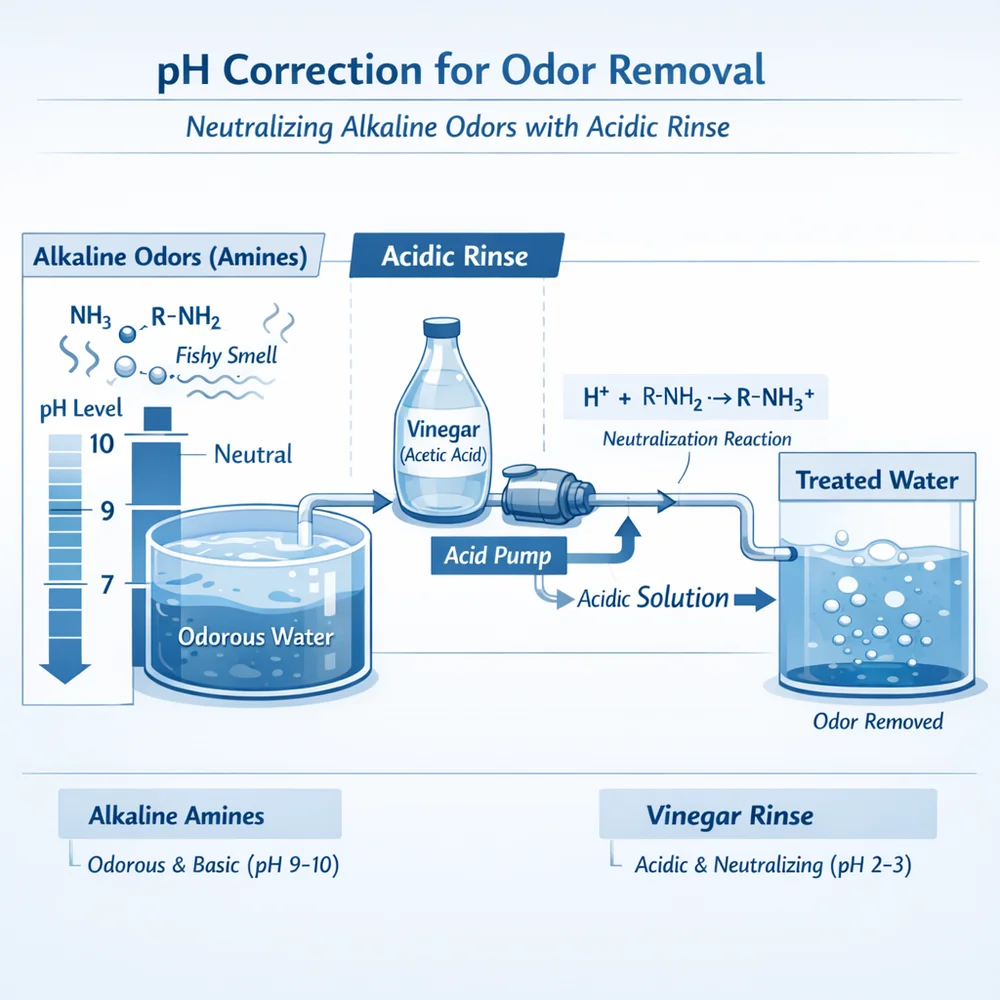
Some odors are alkaline rather than acidic. Ammonia from urine and the fishy amines from decomposition require an acid for neutralization. White vinegar provides this acidity, converting alkaline odorants into harmless salts.
The Bottom Line Match your reagent to the odor’s pH. Baking soda neutralizes acidic smells (sweat, dairy). Vinegar neutralizes alkaline smells (ammonia, fish).
Enzyme Cleaners: Digesting the Source
Pet accidents, blood, and feces contain proteins and urea that continue feeding bacteria long after the liquid dries. Simple pH adjustment cannot remove these complex biological residues.
Laundry enzymes perform molecular surgery on these substances. Protease enzymes cut protein chains into smaller, odorless amino acids. Urease enzymes break down urea crystals, the chemical responsible for the sharp smell of aged urine.
Dwell time is critical for enzyme success. Unlike soap that works through displacement, enzymes need time to navigate the fiber core and complete their reactions. Saturate the problem area and let it air dry slowly. This gives the enzymes the window they need for complete digestion.
The Bottom Line Enzymes digest the biological matter that bacteria feed on. Give them time to work; quick washes waste their potential.
Oxygen Bleach: Breaking the Smell Apart

For smoke, mildew, or environmental pollution odors, oxidation is the most reliable destruction method. Oxidizing agents add oxygen atoms to odor molecules, physically breaking the chemical bonds responsible for the smell.
Sodium percarbonate and hydrogen peroxide are safe for most fabrics. When activated by warm water, they release active oxygen that tears apart volatile organic compounds. This reaction is irreversible, transforming smelly molecules into odorless fragments.
Oxidation also kills fungal spores and bacteria, addressing the “musty” smell of vintage clothes or items stored in damp conditions. Think of it as molecular-level bleaching that targets smell rather than color.
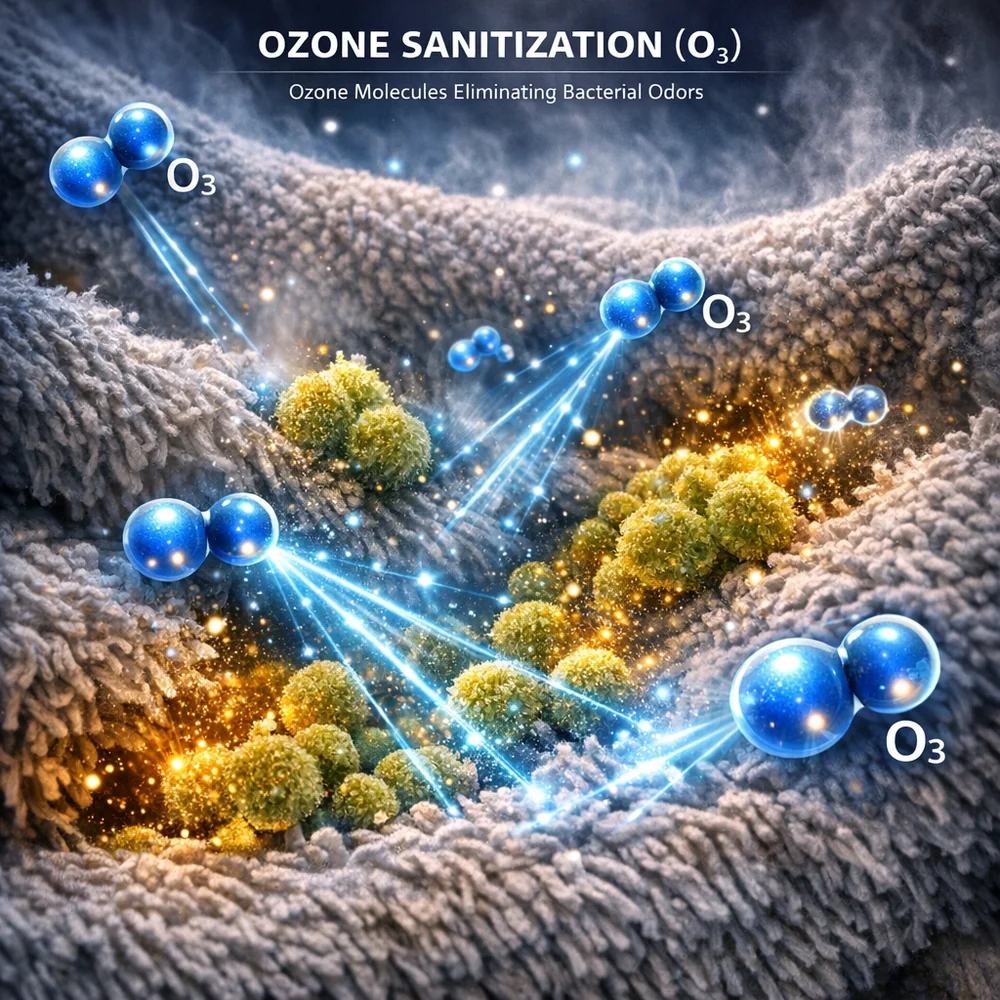
For extreme cases like fire smoke, professional ozone treatment may be necessary. Ozone is a highly reactive gas that penetrates every fiber to oxidize smoke particles. However, ozone can degrade elastic and certain dyes, so professional equipment and proper ventilation are essential.
The Bottom Line Oxygen bleach breaks odor molecules apart at the atomic level. Safe for most fabrics and especially effective against smoke and mildew.
Activated Charcoal for Non-Washable Items
Leather jackets, vintage garments, and other non-washable items require a different approach. Activated charcoal provides physical adsorption without any risk of fabric damage.
A single gram of activated charcoal has a surface area of thousands of square meters, packed with microscopic pores that trap volatile organic compounds. Seal the smelly item in an airtight container with activated charcoal for several days. The odor molecules evaporate from the textile and get captured by the charcoal.
This method is slow but completely safe for the most delicate materials. It works particularly well for “old attic” smells on heritage items.
The Bottom Line Activated charcoal pulls odor molecules out of non-washable items over several days. Zero risk to fabric integrity.
Sunlight: Free Deodorizing Power
Direct sunlight contains ultraviolet radiation that breaks chemical bonds in organic molecules through a process called photolysis. Hanging smelly clothes in the sun destroys odor compounds at the molecular level.
UV light also kills bacteria and fungal spores, providing combined sanitization and deodorizing. For musty towels or damp-smelling linens, a few hours of sun exposure often works better than re-washing.
Turn items inside out to protect dyes from UV fading. Three to six hours of direct exposure is typically sufficient for natural fibers. This zero-waste approach costs nothing and uses no chemicals.
The Bottom Line Sunlight physically breaks apart odor molecules through UV photolysis while killing bacteria. Free and effective.
The Alcohol Spray Technique
Theatre costume departments have used vodka or rubbing alcohol as a quick deodorizer for decades. High-proof alcohol kills odor-causing bacteria on contact and dissolves the oily residues that trap scents.
Because alcohol has a low boiling point, it evaporates quickly, carrying dissolved odor molecules away with it. Mist high-odor areas like underarms and collars with 70% alcohol solution for an instant reduction in the bacterial population.
This technique works especially well for dry-clean-only items like blazers or wool coats. However, it does not remove the physical debris (dead skin, sweat minerals) that will eventually attract new bacteria. Consider it a maintenance step between deeper cleanings.
Use plain, unflavored alcohol to avoid secondary staining. Follow up periodically with proper garment care including full washing when the fabric allows.
The Bottom Line Alcohol spray kills bacteria and evaporates quickly, carrying odors with it. Great for quick refreshes of non-washable items.
The Dryer Mistake That Makes Odors Permanent
The tumble dryer is where many odor problems become permanent. High heat provides the activation energy for residual oils and proteins to bond chemically with fabric. If a garment smells even slightly after washing, the dryer will “cook” those molecules into the fiber.
Always smell garments before drying. If any scent remains, retreat while the fabric is still damp. Air drying suspicious items is always safer because it allows inspection without heat-setting.
Once an odor has been heat-fixed, it becomes nearly impossible to remove without aggressive chemical strippers that may damage the textile.
The Bottom Line Check for smell before drying. Dryer heat permanently bonds residual odor molecules to fabric.
Hard Water Interference
If you live in an area with high mineral content, hard water may be undermining your deodorizing efforts. Dissolved calcium and magnesium react with detergent to form a sticky film called soap scum that coats fibers and traps bacteria.
This mineral mesh creates a persistent “damp towel” smell regardless of detergent quantity. In fact, more detergent in hard water often makes things worse by providing more material for scum formation.
Introduce a water softener or chelating agent like borax or washing soda. These chemicals “wrap” around mineral ions, preventing them from bonding with soap or fabric. Periodic vinegar rinses also strip existing mineral deposits.
The Bottom Line Hard water minerals trap bacteria and odors. Use water softeners or chelating agents to keep fibers clear.
Smoke and Tobacco Rescue
Smoke particles are among the most difficult odors to remove because they consist of extremely fine carbon soot and resinous tar. These penetrate deep into yarn interiors where they form strong bonds.
Start with a prolonged soak in hot water with sodium carbonate (washing soda) to break down the tar. Follow with a grease-cutting detergent to lift carbon particles. Multiple cycles are often required for complete removal.
For items exposed to heavy fire smoke, professional restoration may be the only option. These situations often involve “dry-smoke” where molecules have been driven into fabric by heat, requiring industrial-grade ozone treatment.
The Bottom Line Smoke odors require alkaline soaks to break down tar, followed by multiple wash cycles. Severe cases need professional ozone treatment.
Conclusion
Scientific deodorizing means identifying the chemical nature of the odor and applying the correct countermeasure. Acidic smells need baking soda. Alkaline smells need vinegar. Biological matter needs enzymes. Smoke needs oxidation.
The common thread is that masking with fragrance never solves the problem. You must break the bonds holding the odor molecules to the fiber, then flush them out. Avoid the dryer until you are certain the smell is gone, and address hard water if it is undermining your results.
With these principles, even “permastink” activewear and musty vintage finds can be restored to truly neutral freshness.
References
- Applied and Environmental Microbiology. “Microbial Ecology of Fabric Malodor: Fatty Acid Breakdown and Biofilm Production.” ASM Journals
- American Cleaning Institute. “Odor Neutralization Protocols.” https://www.cleaninginstitute.org/
- Textile Research Journal. “Volatile Organic Compounds on Synthetic Fibers.” Sage Journals
- Consumer Reports. “Deodorizing Reagent Efficiency.” https://www.consumerreports.org/
- Journal of Surfactants and Detergents. “Temperature and Surfactant Effects on Lipid Extraction.” Springer Link