Laundry Enzyme Biology: The Science of Catalytic Stain Removal
Table of Contents
Things You'll Learn From This Article:
- Different stains need different enzymes, so the detergent you choose really does matter for what you’re washing.
- Protein stains like blood, milk, egg, and grass come out better in warm—not hot—water because protease enzymes do the work.
- Greasy stains improve a lot with low-temperature washes when lipase enzymes can break fats into washable pieces.
- Starchy food spills can leave invisible stiffness if they’re not treated with amylase, even when the color seems gone.
- Cotton clothes fade and pill over time partly because of damaged fibers, and cellulase enzymes help smooth those fibers back down.
- Food thickeners from sauces, ice cream, and dressings are easier to remove when detergents contain mannanase enzymes.
- Very hot water can ruin enzymes, so boiling washes can actually reduce cleaning power for modern detergents.
- Cold water that’s too cold can slow enzymes down, making stains harder to remove unless the detergent is designed for it.
- Chlorine bleach destroys enzymes, so using it with enzyme detergents cancels out much of their benefit.
- Enzymes and surfactants work as a team: one breaks stains apart, the other washes the pieces away.
- Letting a wash run its full cycle gives enzymes time to work, especially on old or layered stains.
- Detergents stay effective on the shelf because enzymes are temporarily “switched off” and only activate in the wash.
- Activewear and synthetic fabrics benefit from enzyme detergents because body oils build up easily in those fibers.
- Modern detergents clean well at lower temperatures mainly because enzymes replace the need for extreme heat.
- Cold-water washing is becoming more effective as new enzymes are developed to work at very low temperatures.
Every time you wash a load with a modern detergent, millions of microscopic biological machines are getting to work. These are enzymes, protein catalysts originally derived from bacteria and fungi that have been engineered to break down specific types of stains. Unlike chemicals that strip everything indiscriminately, enzymes target specific molecular bonds with surgical precision.
This targeted approach is why modern detergents can achieve deep cleaning at temperatures that would have been impossible a generation ago. Your grandmother needed boiling water to get blood out of fabric. You can do it at 30 degrees because proteases are doing the heavy lifting. Understanding which enzymes target which stains helps you pick the right detergent and use it effectively.
The major enzyme classes in laundry detergents are proteases for proteins, lipases for fats, amylases for starches, and cellulases for damaged cotton fibers. Each operates within a specific temperature and pH window, and knowing these limits helps you get maximum performance from your wash cycles.
Proteases: Breaking Down Proteins
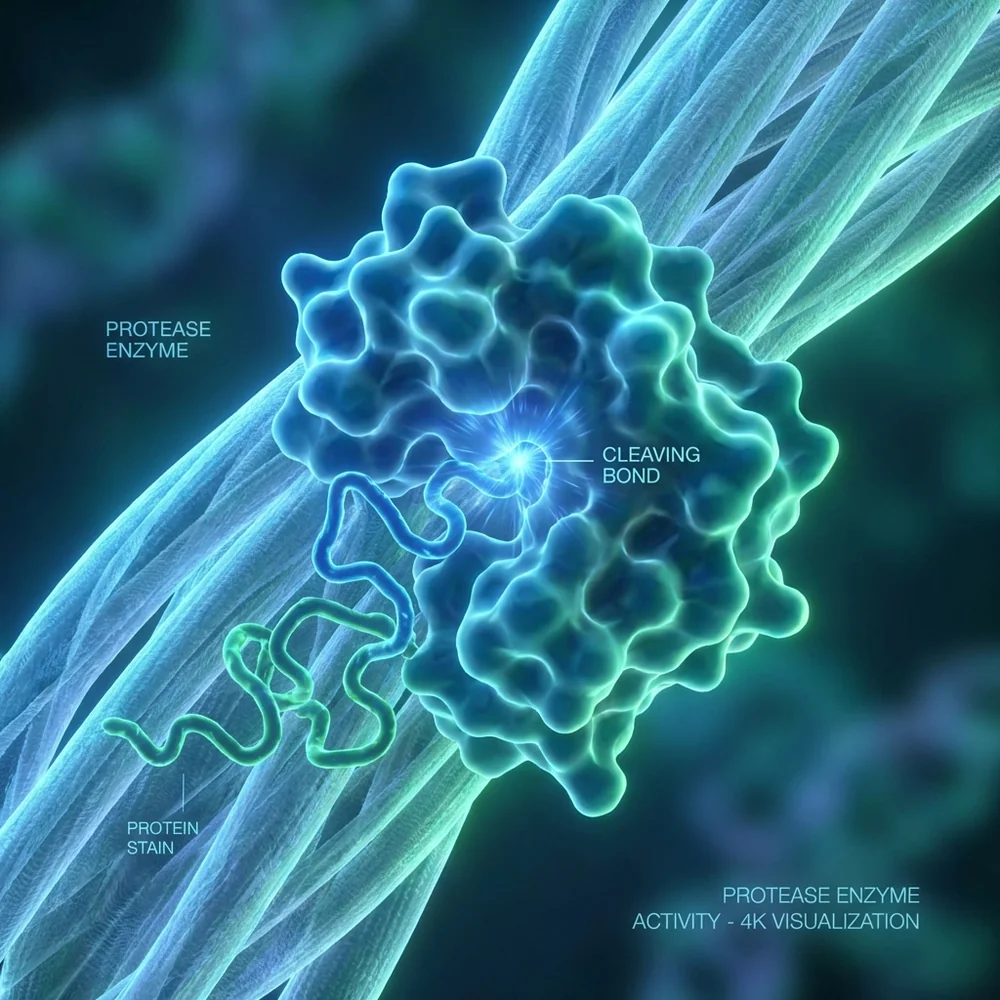
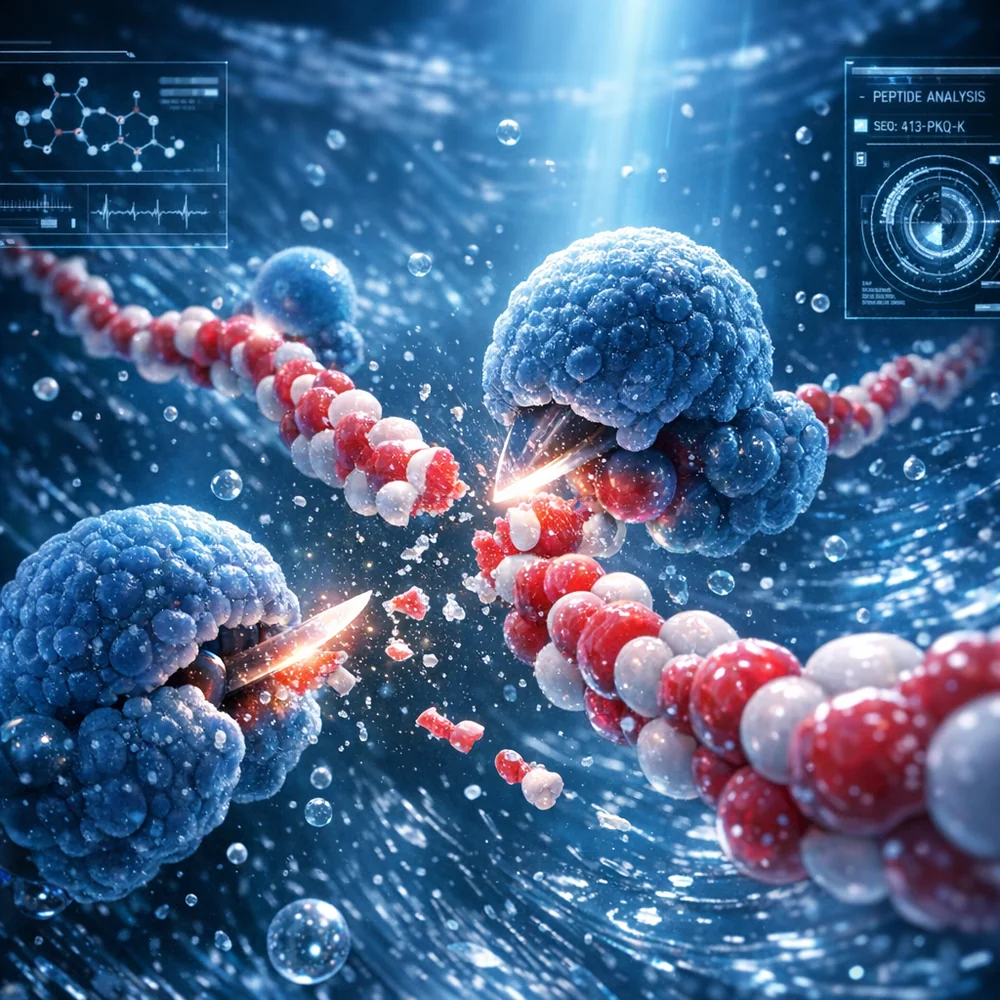
Proteases are the most widely used enzymes in laundry products. They target the peptide bonds that hold protein chains together, which is exactly what you need for biological stains like blood, egg, grass, and dairy.
When you spill milk on your shirt, the proteins in the milk create an insoluble matrix that anchors other soils to the fiber. Surfactants alone struggle to penetrate this barrier. The protease enzyme works by inserting a water molecule into the peptide bond, a reaction called hydrolysis. This fragments the large protein polymer into short-chain peptides and individual amino acids that dissolve easily in the wash water.
The performance of proteases depends heavily on pH. Most detergent proteases are engineered to work best between pH 9 and 10.5, which is why they pair well with alkaline builders like washing soda. At lower pH, the enzyme’s active site becomes protonated and loses efficiency. At extremely high pH, the protein structure of the enzyme itself denatures.
The Bottom Line Proteases break protein chains into water-soluble fragments. They are the foundation of biological laundry cleaning and work best in moderately alkaline conditions.
Lipases: Dissolving Grease
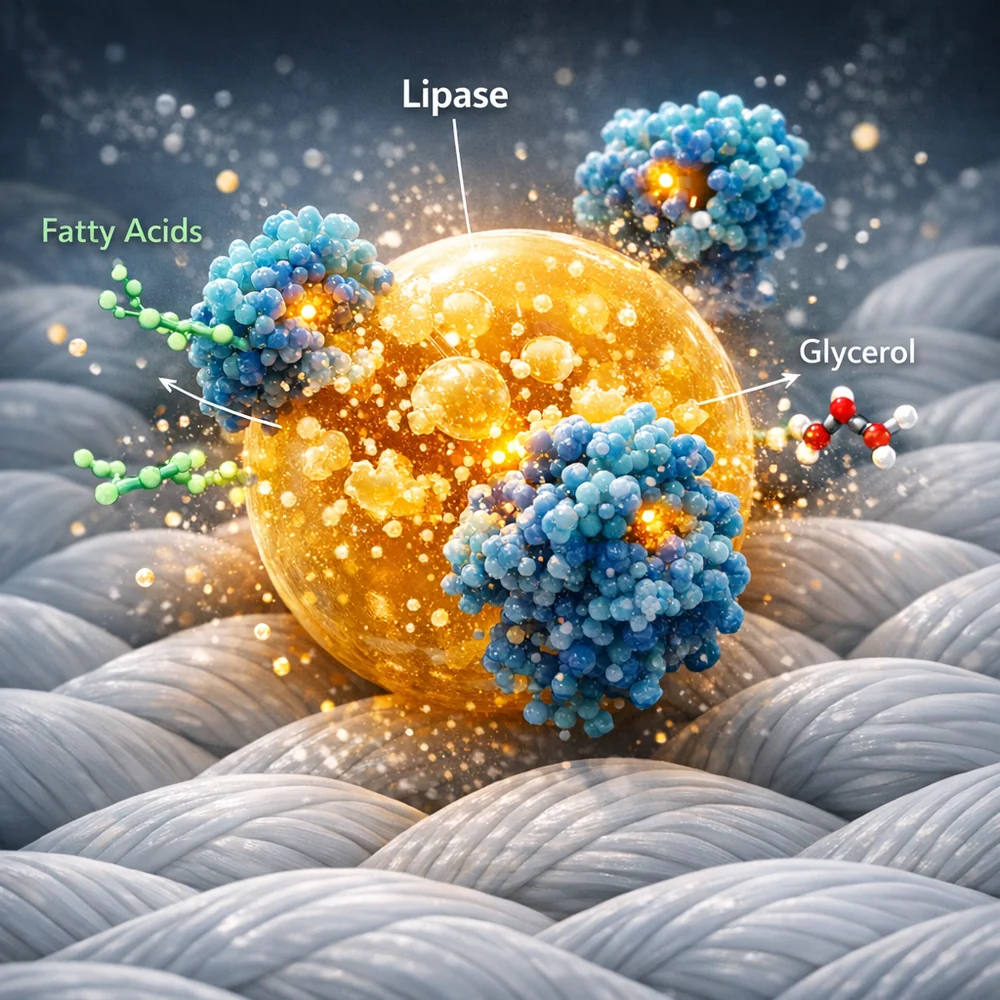
Lipases target the ester bonds in triglycerides, which are the molecules that make up fats, oils, and sebum. Grease stains are particularly challenging because they are hydrophobic, meaning they actively repel water. Worse, they act as glue that traps other soil and pigment.
The lipase enzyme catalyzes the breakdown of triglycerides into free fatty acids and glycerol. Glycerol is immediately water-soluble. The free fatty acids then get picked up by surfactants and carried away. This dual-action approach handles stubborn stains like butter, cosmetics, and body oils at temperatures as low as 30°C.
Interestingly, lipases often exhibit “multi-wash” efficacy. Because oils emulsify slowly, some lipase activity continues on the fabric through drying and into the next wash cycle. This cumulative action prevents the gradual dinginess that develops when oxidized lipid residues accumulate on white fabrics over time. For activewear care, lipases are essential for managing the high lipid load from perspiration and skin cells trapped in synthetic fibers.
Amylases: Cutting Through Starch
Amylases target the glycosidic bonds that hold starch molecules together. Starch is everywhere in modern processed food, used as a thickener in everything from gravy and pasta sauce to infant formula and hot chocolate.
When starchy foods spill on fabric, they create a powerful adhesive layer that traps other pigments and soils deep within the fibers. Surfactants struggle to penetrate this sticky barrier. Amylases work like molecular scissors, rapidly chopping the long starch chains into smaller oligosaccharides and simple sugars like glucose and maltose.
Without amylase, starch-fixed stains often leave behind a faint, stiff residue that can be felt on the fabric even after the visible pigment is gone. This makes amylase particularly important for family laundry where food spills are frequent.
The Bottom Line Amylases dissolve starch-based adhesive layers that trap pigments and soil. They are critical for removing food stains that surfactants alone cannot handle.
Cellulases: Restoring Fabric Appearance
Cellulases are unique among laundry enzymes because they target the fabric itself rather than soil. Over time, mechanical friction from wear and washing breaks the glucose chains in cotton fibers, creating microscopic “fibrils” on the surface.
These fibrils catch light differently than smooth fiber, making colors appear faded. They also trap soil, contributing to the gradual graying that cotton develops over many wash cycles. Cellulase enzymes specifically hydrolyze these weakened microfibrils.
This process is called bio-polishing. By removing the microscopic fuzz, cellulase restores the smooth surface of the fiber, improving color contrast and preventing the formation of larger pills. While this involves a sacrificial loss of a tiny amount of cotton, the net result is a garment that maintains its original appearance much longer. For those concerned about preventing pilling on sweaters made of cotton blends, cellulase is the most effective chemical intervention available.
Mannanases: The Specialty Enzyme
Mannanases are a more recent addition to detergent formulations. They target mannans found in guar gum and locust bean gum, thickeners used extensively in modern food manufacturing.
These gums appear in ice cream, salad dressings, chocolate, and countless other products. Because they are designed to be stable and thick, standard proteases and surfactants struggle to remove them. Mannanase specifically cleaves the molecular backbone of these thickeners, liquefying them and releasing whatever food pigments are trapped within.
The growing importance of mannanase reflects the food industry’s shift toward “natural” plant-based thickeners. Stains from barbecue sauce or gourmet ice cream that once seemed impossible to remove often vanish with mannanase-enriched detergents.
The Bottom Line Different enzymes handle different molecular challenges. Multi-enzyme detergents provide a coordinated attack on complex stains with multiple chemical components.
Temperature and pH Sensitivity
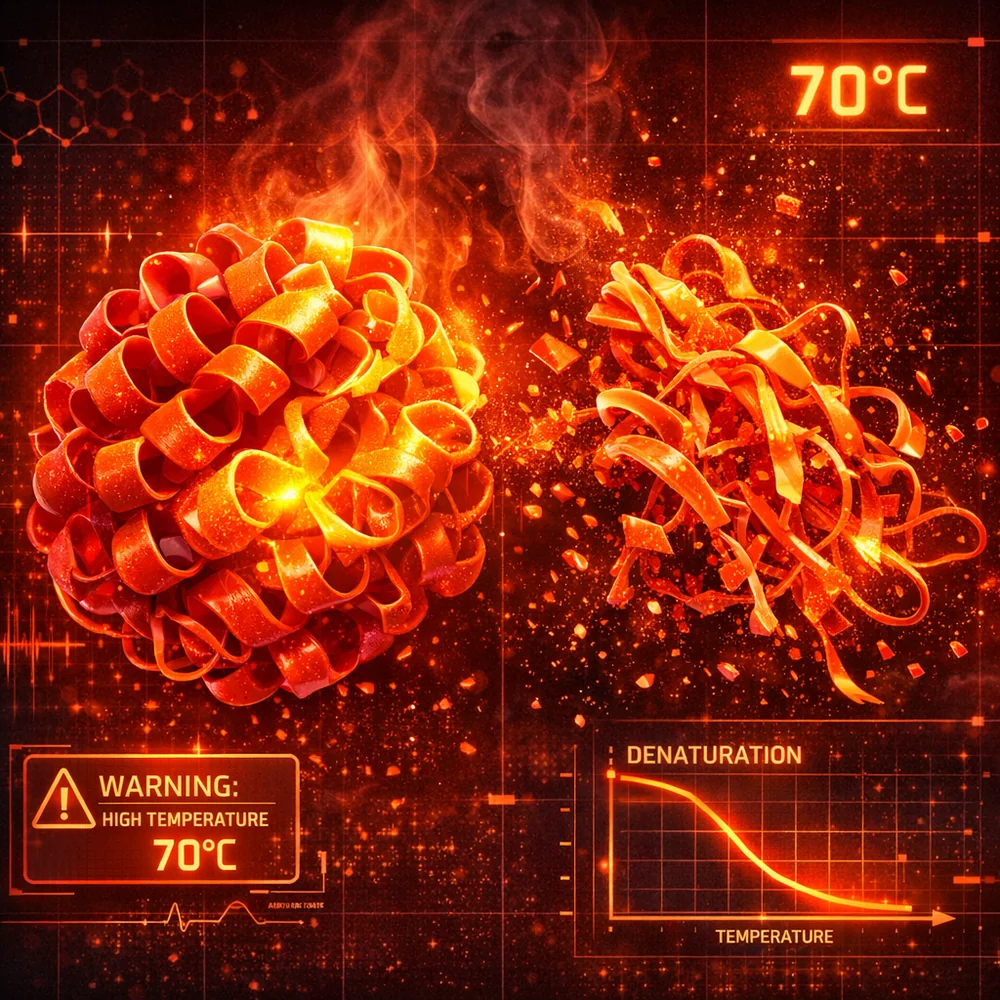
Because enzymes are proteins, they are highly sensitive to their environment. Get the conditions wrong and you switch them off entirely.
Thermal activation is a key concept. Most laundry enzymes are designed to work between 30°C and 60°C. If water is too cold, below about 20°C, there is not enough kinetic energy for the enzyme to bind and react efficiently. If water is too hot, above 70°C for most classes, the enzyme’s three-dimensional structure unravels permanently. This is called denaturation.
The pH of wash water can also “poison” an enzyme. Detergent formulators carefully balance alkalinity to favor surfactant activity while avoiding enzyme damage. Most modern enzyme cocktails work best between pH 8 and 10. Using aggressive additives like chlorine bleach alongside enzymes is counterproductive because the oxidative attack destroys the enzyme’s protein structure instantly.
Keeping Enzymes Alive in the Bottle
Maintaining enzyme activity in the concentrated chemical environment of liquid detergent is a significant engineering challenge. Enzymes are unstable in water, concentrated surfactants, and the presence of protease enzymes that want to digest their neighboring proteins.
Formulators use stabilization systems to solve this. Reversible inhibitors like boric acid bind to the enzyme’s active site and freeze it in an inactive state while in the bottle. Once the detergent dilutes in wash water, the inhibitor dissociates and the enzyme activates. Other tactics include polyols like propylene glycol that stabilize the protein structure.
Premium formulations may encapsulate enzymes in wax or polymer beads that only dissolve at the specific temperature and mechanical conditions of the wash cycle. These stabilization technologies allow a modern biological liquid to remain effective for months on the shelf, a feat that was impossible in early enzymatic detergents.
The Bottom Line Enzymes in liquid detergent are kept dormant through molecular shielding until diluted in warm wash water. This prevents premature degradation during storage.
The Future of Cold-Water Enzymes
The next frontier is enzymes that work at temperatures even lower than current formulations allow. Research focuses on “extremophilic” enzymes derived from organisms living in extreme environments like deep-sea hydrothermal vents or arctic ice.
Cold-active or psychrophilic enzymes have highly flexible protein structures that maintain catalytic activity at temperatures as low as 5°C to 10°C. Integrating these into consumer products could enable truly effective “tap-cold” washing, significantly reducing the carbon footprint of home laundry.
Directed evolution and protein engineering are also creating “designer enzymes” with narrowed specificities. For example, enzymes that target only the cellulose bonds that cause pilling without affecting overall cotton fiber strength are a major goal for textile longevity.
How Enzymes and Surfactants Work Together
The most effective cleaning happens through teamwork between biological enzymes and chemical surfactants.
Enzymes perform the heavy lifting by breaking large, insoluble polymers into smaller fragments. Once these fragments are small enough, surfactants can emulsify them and carry them into the bulk of the wash water. Without the enzyme, the surfactant might never reach the core of a dense protein or starch stain. Without the surfactant, the enzymatic breakdown products would sit on the fiber and potentially redeposit elsewhere.
This partnership is especially apparent with complex stains like chocolate or curry that contain lipids, proteins, and pigments. A multi-enzyme detergent addresses every molecular component simultaneously, allowing for shorter wash cycles and better results in high-efficiency machines.
The Bottom Line Enzymes liquefy complex stain matrices while surfactants emulsify and flush away the fragments. This sequential teamwork delivers thorough cleaning at the molecular level.
Conclusion
Laundry enzyme biology represents one of the most sophisticated applications of biotechnology in daily life. By leveraging proteases, lipases, amylases, and cellulases, modern detergents achieve stain removal that once required harsh chemicals and boiling water.
These protein catalysts offer a pathway to sustainable cleaning by enabling cold-water washing and extending garment lifespan through bio-polishing. The shift from brute-force chemistry to enzymatic targeting means stains are removed with precision while underlying fibers remain intact.
Understanding the temperature and pH requirements of these biological catalysts helps you maximize their potential. Avoid excessive heat that denatures enzymes. Avoid mixing them with chlorine bleach. Give them appropriate time to work, especially on set-in stains. Used thoughtfully, enzymes ensure that cleaning is as much a biological process as a chemical one.
References
- Biotechnology and Bioengineering. “Enzymatic Hydrolysis of Protein Stains on Textile Substrates.” Wiley Online Library
- Applied and Environmental Microbiology. “Characterization of Highly Stable Lipases and Proteases for the Detergent Industry.” ASM
- Textile Research Journal. “Cellulase Bio-Polishing: Impacts on Cotton Fiber Strength and Pilling Resistance.” Sage Journals
- Journal of Surfactants and Detergents. “Synergy Between Enzymes and Anionic Surfactants in Low-Temperature Cleaning.” Springer
- Enzyme and Microbial Technology. “Development of Amylases and Mannanases for Modern High-Efficiency Laundry Formulations.” ScienceDirect