Biofilm and Odor Biology: The Microbiome of the Washing Machine
Table of Contents
Things You'll Learn From This Article:
- That sour washing machine smell comes from living microbes, not just leftover dirt, and spraying fragrance won’t fix it.
- Bacteria in your washer protect themselves by building slimy biofilms that normal wash cycles and detergents can’t easily break through.
- The bad smell is caused by gases the microbes release as they eat oils, skin cells, and soap residue inside the machine.
- Modern high‑efficiency washers make odors more likely because they use less water and often run cold, leaving food behind for bacteria.
- Fabric softener feeds the problem by leaving fatty residue that bacteria love and that sticks stubbornly to the machine.
- Hard water can make biofilms tougher by adding minerals that harden the slime layer and shield bacteria from cleaners.
- Hot, empty “service washes” with oxygen bleach are one of the most effective ways to reset a smelly machine.
- Enzyme-based cleaners work differently than bleach by digesting the biofilm’s structure, which can be gentler but slower.
- Synthetic clothes like gym wear hold onto odor chemicals inside the fibers, so the smell can come back as soon as you sweat.
- Simply adding more detergent or scent doesn’t remove trapped odor molecules and often makes the problem worse.
- Leaving the washer door open after use helps because drying out the drum makes it harder for microbes to survive.
- Mold and bacteria often hide in places you don’t see, like the door gasket and outer drum, long before smells show up.
- People with eczema or sensitive skin may react more strongly to bacteria and allergens coming from a dirty machine.
- Regular high-temperature washes help prevent allergens and microbes from building up and spreading to clean clothes.
- New washer technologies like silver ions, ozone, and even “good bacteria” aim to stop biofilms before they start.
If your washing machine has ever developed that funky “sour” smell that seems impossible to get rid of, you are not dealing with a simple cleaning problem. What you are actually fighting is a living organism: a structured community of bacteria and fungi that has built a microscopic fortress inside the hidden crevices of your machine. Scientists call these structures biofilms, and understanding them is the key to reclaiming your laundry’s freshness.
Your washing machine might seem like an inhospitable place for life. It floods with water, gets blasted with detergent, and spins at high speeds. But for certain microorganisms, this is actually paradise. The machine provides everything they need: warmth, moisture, and a constant supply of food in the form of dead skin cells, body oils, and residual soap. These bacteria do not just survive in your machine; they thrive, building complex communities that are remarkably difficult to destroy.
The smell is not actually the bacteria themselves. It is the chemical byproducts they produce as they digest organic matter. These volatile organic compounds (VOCs) are what create that distinctive “damp towel” or “musty basement” odor that can cling to your clothes even after a fresh wash. Understanding the biology behind these smells is the first step toward actually solving the problem instead of just covering it up with more fragrance.
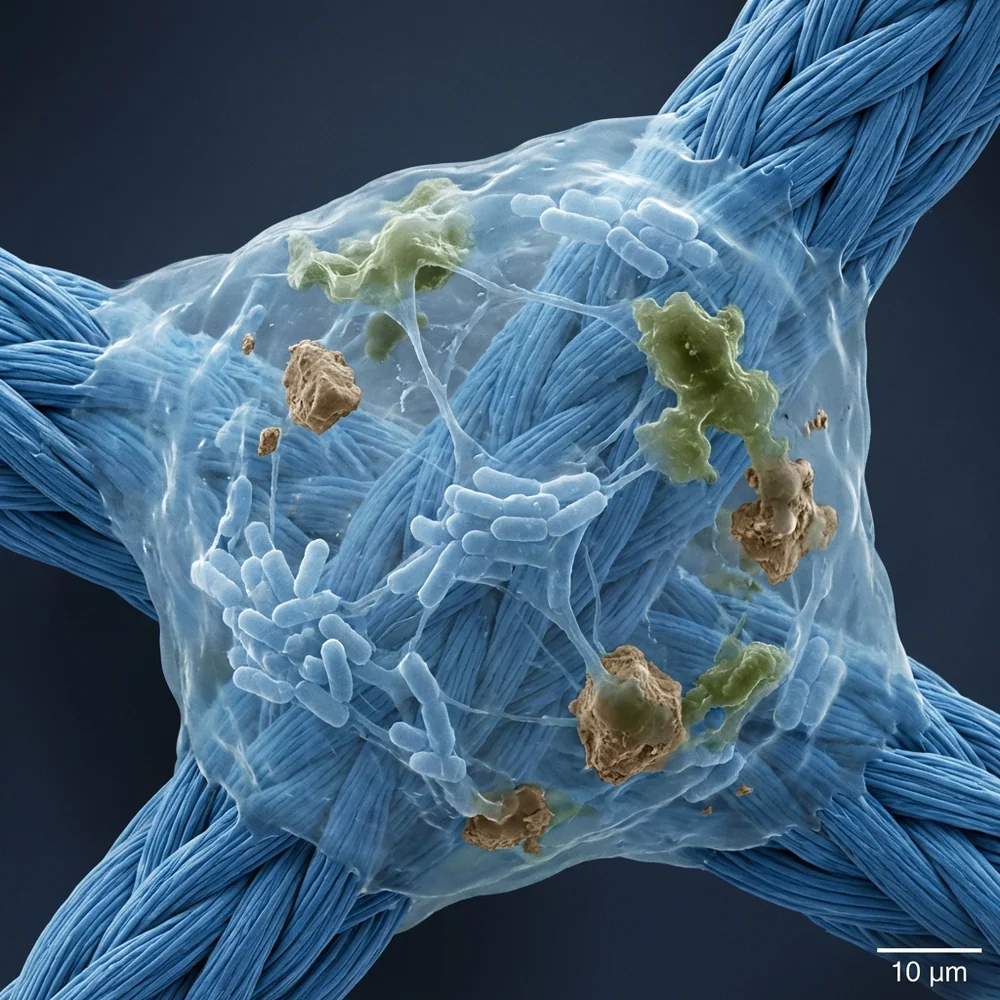
What Exactly Is a Biofilm and Why Should You Care
A biofilm is not just a random collection of bacteria stuck to a surface. It is a highly organized biological structure with its own architecture and defense mechanisms. Think of it like a tiny city for microbes, complete with protective walls and communication systems.
The process starts when “pioneer” bacteria land on a surface like the outer drum of your washing machine. These initial colonizers begin producing something called Extracellular Polymeric Substance or EPS for short. This is essentially a slimy matrix made of sugars, proteins, and DNA that the bacteria excrete around themselves. The EPS serves as a protective shield, anchoring the colony to the surface, filtering nutrients from the water, and blocking out threats like detergents and disinfectants.
Within this gooey matrix, bacteria communicate with each other through a process called quorum sensing. They release chemical signals into their environment, and when enough signals accumulate (indicating a high population density), the entire colony shifts its behavior. They ramp up EPS production and become even more resistant to attack. This is why biofilms are so much harder to kill than free-floating bacteria. A standard wash cycle might kill the exposed bacteria on the surface, but the core of the colony remains protected deep within its slimy fortress.
To actually dismantle a biofilm, you need chemicals that can penetrate or dissolve the EPS matrix. This is where advanced laundry enzymes come into play. Enzymes like carbohydrases can break down the sugar chains in the EPS, while proteases digest the protein scaffolding. Once the matrix is compromised, oxidizing agents can reach the exposed bacteria and finish the job.
The Bottom Line Biofilms are not just “dirt” you can wash away. They are organized microbial communities protected by a self-produced gel matrix that requires specialized chemistry to penetrate and destroy.
The Bacteria Behind Your Laundry’s Bad Smell
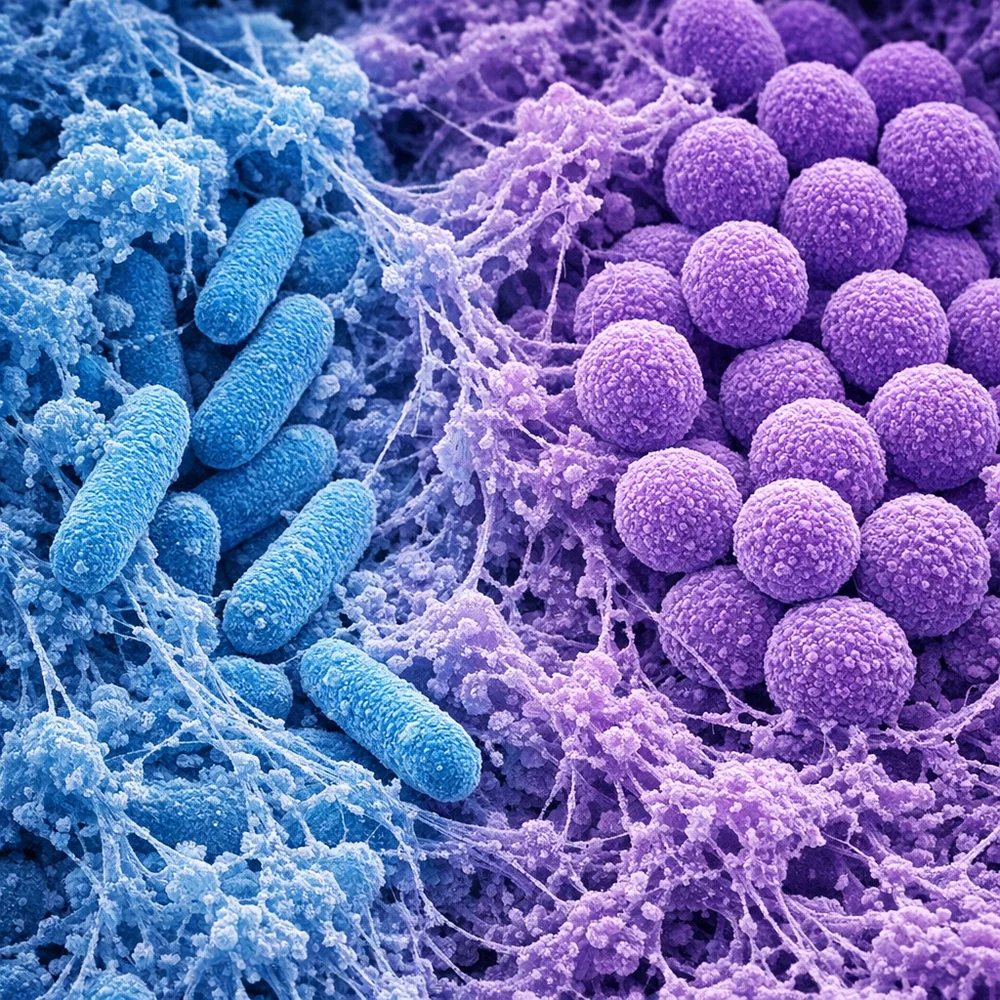
The washing machine microbiome is surprisingly diverse, hosting a variety of bacteria and fungi that each contribute their own chemical signatures to the odor problem. Some of the most common residents include species like Pseudomonas aeruginosa, Moraxella osloensis, and various strains of Staphylococcus and Micrococcus.
Among these, Moraxella osloensis is the real troublemaker. Research has identified this bacterium as a primary producer of 4-methyl-3-hexenoic acid, a compound that creates that unmistakable “wet towel” smell. Other bacteria produce different VOCs like isovaleric acid which smells like sweat, or dimethyl trisulfide which has an onion-like sulfurous odor. These compounds are particularly annoying because they bind readily to synthetic fibers, as explored in the science of scent chemistry.
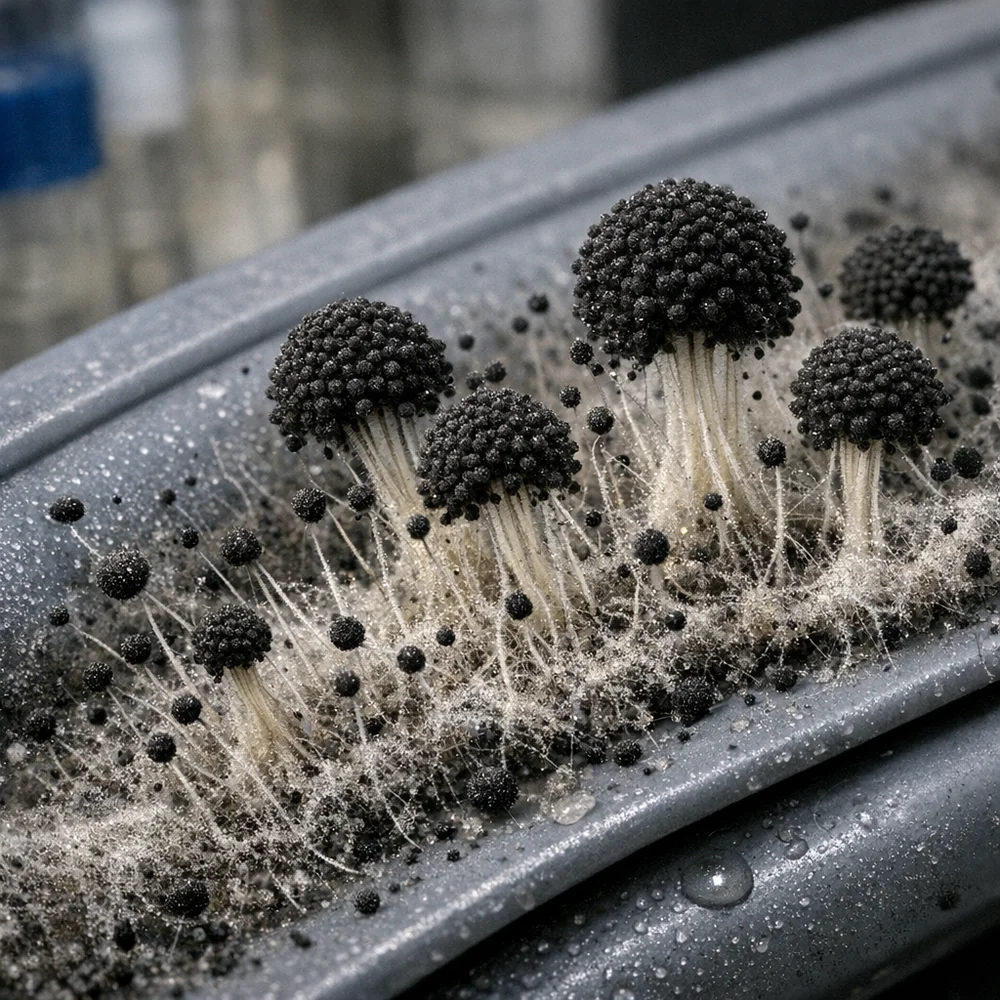
Fungi join the party too, especially in the humid folds of the door gasket. Species like Aspergillus and Penicillium thrive in these conditions. Beyond just causing odors, these molds can trigger respiratory issues and allergic reactions in sensitive individuals. The bacteria and fungi often form symbiotic relationships where the waste products of one species become food for another. This creates an incredibly stable ecosystem that can persist for years if left untreated. Breaking this cycle usually requires either high-temperature washes or aggressive oxidizers like oxygen bleach.
Why Modern Efficient Washers Make the Problem Worse
Here is the frustrating irony: the same features that make modern washing machines environmentally friendly also make them better habitats for biofilms. High-efficiency (HE) machines and cold-water washing have inadvertently created the perfect conditions for microbial colonization.
Traditional top-loading machines used huge volumes of water that essentially flushed away nutrients and residues every cycle. HE machines use dramatically less water, which leaves behind concentrated deposits of soil and detergent. These residues, especially fabric softener which is basically a fatty lipid, act as a “starter culture” for biofilm formation. The bacteria do not even have to work hard to find food; you are essentially serving them a buffet with every load.
Cold-water washing compounds the problem. Temperatures below 30°C are comfortable for most bacteria, avoiding the thermal shock that would kill them in a hot wash. This low-temperature, high-nutrient environment is the microbiological equivalent of a luxury spa. Over months of use, a thin layer of organic buildup called “scrud” accumulates on the parts of the machine you never see, like the outer drum. Because this surface is hidden, the biofilm can grow thick and mature before you ever notice the smell. By the time your clothes start coming out funky, the colony has already established serious defenses.
This is the same mechanism that makes HE washer mechanics so tricky to maintain. The efficiency that saves you money on water and energy bills requires more vigilance on the sanitization front.
The Bottom Line Energy-efficient washing (low water, cold temps) saves resources but creates an ideal environment for biofilm growth. Modern machine owners must compensate with periodic high-heat sanitization cycles.
How Hard Water Makes Everything Worse
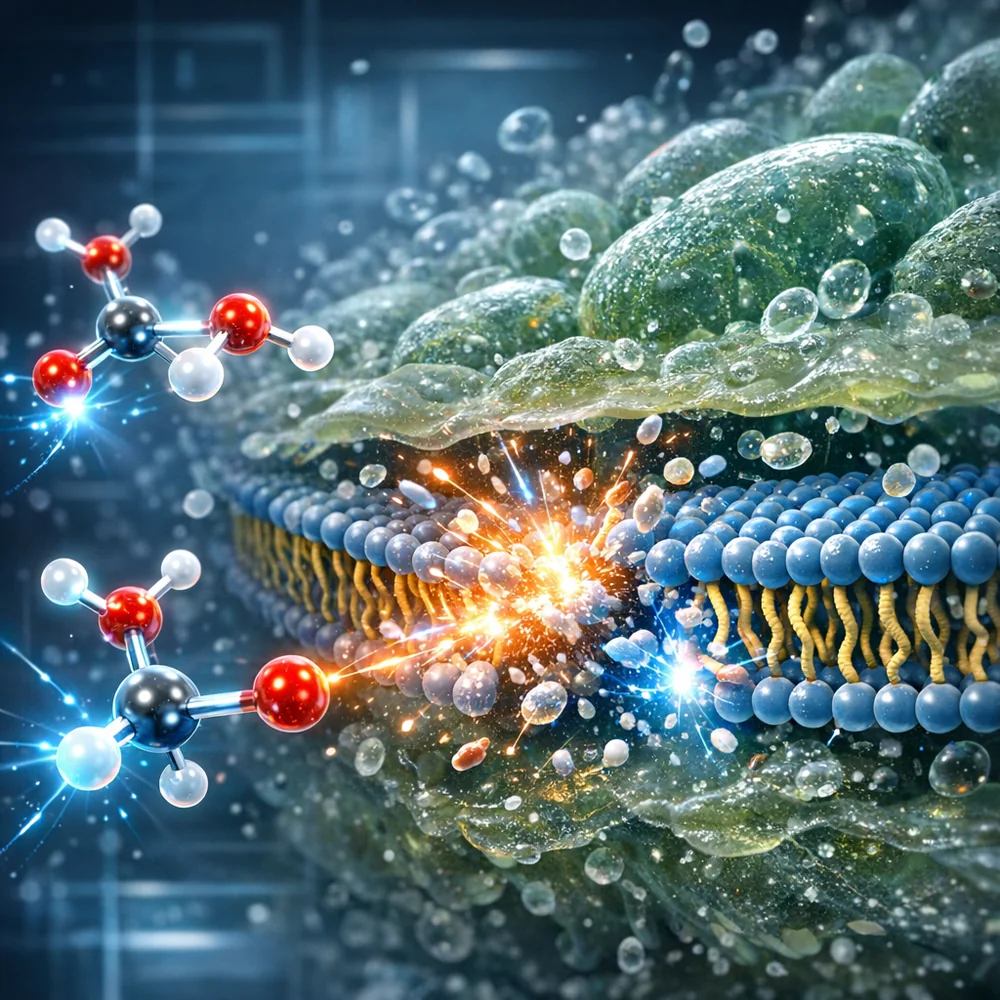
If you live in an area with hard water, your biofilm problems are likely even worse. The mineral content of your water directly affects how tough and resistant the EPS matrix becomes.
In hard water laundry chemistry, calcium and magnesium ions are dissolved in the water. When these ions encounter the biofilm’s EPS matrix, they act as “cross-linkers” that bind the polysaccharide chains together. This mineralizes the biofilm, making it significantly more rigid and resistant to chemical penetration. What you end up with is sometimes mistaken for lime scale, but it is actually a hybrid structure that is part biological and part mineral.
These calcified biofilms are particularly stubborn because the mineral layers shield the underlying bacteria from oxidative shock. You might run a hot bleach cycle and kill everything on the surface while the protected core survives to repopulate. Breaking through these hybrids often requires a two-pronged attack: an acidic cleaner to dissolve the mineral component followed by an oxidizer to kill the exposed bacteria.
Fabric softener makes this even worse. The cationic surfactants in softener are positively charged molecules that bind to the negatively charged surfaces of bacterial cells and the EPS matrix. This creates a sticky, water-resistant layer that is incredibly difficult to rinse away. If you are a heavy fabric softener user and notice persistent “sour” smells, this combination of hardness minerals and softener residue is probably your culprit.
Killing Biofilms: Oxidation Versus Enzymes
When you actually need to sanitize your machine or a load of smelly clothes, you have two main chemical strategies: you can burn the biofilm out with oxidizers, or you can digest it with enzymes. Both work, but they have different strengths.
Oxidizers like sodium percarbonate (oxygen bleach) or sodium hypochlorite (chlorine bleach) work by chemically destroying everything they touch. The oxidizing agents tear apart bacterial cell walls and break down the molecular chains of the EPS matrix simultaneously. This is the “scorched earth” approach and it is extremely effective. For a deep machine clean, running a hot cycle with a heavy dose of oxygen bleach is essentially the gold standard. The combination of high heat and aggressive chemistry leaves very little alive.
The enzymatic approach is more surgical. Specialized enzymes can target specific components of the biofilm without the collateral damage of strong oxidizers. Proteases break down the protein scaffolds holding the matrix together. Cellulases strip away the microscopic cotton fibers that bacteria use as physical anchors. When these enzymes work alongside surfactants, they essentially “unlock” the biofilm structure, allowing the mechanical action of the water to flush away the debris.
This gentler approach is often recommended for people with skin sensitivities or laundry routines for eczema. It removes the microbial triggers without leaving behind harsh chemical residues that could irritate vulnerable skin. The trade-off is that enzymatic cleaning usually requires longer contact time and may not be as immediately effective against heavily calcified biofilms.
Why Your Gym Clothes Keep Smelling Even After Washing
Have you ever noticed that your polyester workout clothes smell fine right out of the dryer but start reeking the moment you warm up at the gym? This is not your imagination and it is not because you are sweating more. It is a case of VOCs hiding inside the fibers themselves.
The chemistry works like this: low-molecular-weight acids like acetic acid are highly volatile. They mostly evaporate during a hot wash and rinse cycle. But higher-molecular-weight compounds like dimethyl trisulfide are hydrophobic meaning they hate water but love plastic. Synthetic fibers like polyester and nylon are essentially forms of plastic. These smelly molecules literally dissolve into the fiber structure, where water-based rinsing cannot reach them.
When you wear the garment and your body heat warms it up, these trapped VOCs begin to volatilize back out of the fibers. The smell was not eliminated; it was just temporarily dormant. To truly break this cycle, you need a surfactant with a high enough HLB (Hydrophile-Lipophile Balance) to pull these hydrophobic odor molecules out of the fiber matrix and into the water where they can rinse away.
Simply adding more fragrance to your wash does absolutely nothing to solve this. You just end up with what I call “perfumed sour” where floral scent notes sit on top of the underlying funk. The bacterial chemistry is still there, waiting to announce itself the moment conditions are right.
The Bottom Line Odors in synthetic fabrics persist because hydrophobic VOCs migrate into the plastic fiber structure where water cannot reach them. Only high-HLB surfactants or aggressive oxidation can pull these molecules out.
What This Means for Your Skin Health
For most people with healthy skin, the bacteria living in their washing machine are not a serious health concern. Your body’s natural defenses can handle incidental contact with Moraxella or Pseudomonas without problems. But for people with compromised skin barriers, the story is very different.
Conditions like atopic dermatitis, psoriasis, or eczema create breaks in the skin’s natural defenses. When these individuals wear clothes that have been contaminated with non-resident bacteria from the washing machine, they can experience flare-ups or secondary infections. Staphylococcal “super-shedders” in a household can deposit high volumes of bacteria into the machine that then get redistributed to everyone’s clothes during subsequent washes.
The biofilm also acts as a reservoir for allergens. Dust mite droppings, pollen, and other irritating particles can become trapped in the EPS matrix and persist through multiple wash cycles. This means that clothes coming out of a biofilm-contaminated machine can actually carry more allergens than when they went in.
For households with sensitive individuals, the solution is regular “service washes” where you run the machine empty on its highest temperature setting (60°C or higher) with an oxidizing agent. This periodic thermal shock keeps the machine’s microbiome under control and prevents allergen accumulation. This same principle underlies hygiene in industrial laundry settings and is worth adopting at home.
The Future of Biofilm Prevention
The laundry industry is starting to recognize biofilms as a serious design challenge, and new technologies are emerging to address the problem proactively rather than reactively.
Some manufacturers are integrating silver-ion generators into their machines. Silver ions ($Ag^+$) are naturally antimicrobial, disrupting bacterial metabolism and preventing the initial attachment phase of biofilm formation. If bacteria cannot stick to the drum surface in the first place, they cannot establish colonies.
Ozone injection systems are another promising approach. Ozone ($O_3$) is a powerful gas-phase oxidizer that can penetrate every crevice of the machine, including areas that liquid cleaners never touch. It kills bacteria and neutralizes odors at temperatures much lower than hot water, potentially solving the energy-efficiency versus hygiene trade-off.
Even more interestingly, there is research into “probiotic laundry” where beneficial bacteria are intentionally added to compete with odor-causing species. By establishing a “friendly” microbiome in your machine, you can prevent pathogenic or malodorous species from gaining a foothold. This biological control approach represents the cutting edge of green chemistry, offering machine hygiene without constant reliance on harsh oxidizers.
Conclusion
The battle against washing machine biofilms and the odors they produce is fundamentally a biological problem that requires chemical solutions. As we have pushed toward more efficient machines and colder wash temperatures, we have inadvertently created better habitats for microbial life. The “sour” smell that plagues many households is not inevitable but is the predictable result of microbial metabolism in an ideal growing environment.
Understanding the lifecycle of biofilms reveals why simple fixes often fail. These are not just surface deposits you can wipe away but are organized communities with their own protective infrastructure. Effective control requires chemicals that penetrate the EPS matrix, whether through enzymatic digestion or oxidative destruction, followed by practices that prevent rapid recolonization.
A balanced approach combining enzymatic cleaning, periodic oxidative shocks, and proper machine ventilation (leaving the door open between uses) is the key to managing the laundry microbiome. As new technologies like silver ions and ozone become more common, maintaining a hygienic machine will become easier. Until then, knowledge is your best weapon: the more you understand about the invisible organisms sharing your home, the better equipped you are to keep them in check.
The Bottom Line Machine hygiene is a prerequisite for garment hygiene. Maintaining a low-microbial drum through periodic thermal or oxidative treatments is essential for preventing odor transfer to fabrics.
References
- Jackisch-Matschke, K., et al. (2020). Microbial Diversity and Biofilm Formation in Domestic Laundry Machines. Journal of Applied Microbiology.
- Munk, S., et al. (2001). Microbial Odor Formation on Wet and Dried Laundry. Journal of Surfactants and Detergents.
- Kubota, H., et al. (2012). Moraxella osloensis on Laundry: A Major Cause of Malodor. Applied and Environmental Microbiology.
- Schramm, L. L. (2005). Emulsions, Foams, and Suspensions: Fundamentals and Applications. Wiley-VCH.
- Versluijs, P. (2011). Textile Chemicals: Environmental Data and Facts. Springer Science & Business Media.