Handling Lead & Asbestos Laundry: Safe Toxic Dust Protocols
Table of Contents
Things You'll Learn From This Article:
- You should never wash work clothes with lead or asbestos at home because regular machines can spread toxic dust to your family and other laundry.
- Employers are responsible for arranging professional laundry services when work clothes are contaminated with lead or asbestos above legal limits.
- Contaminated clothing must be sealed, clearly labeled, and transported carefully so no dust escapes during handling.
- Lead dust is heavy and gets trapped deep in fabric, while asbestos fibers are tiny and can float in the air with very little movement.
- Industrial laundries use closed systems and special machines so toxic dust doesn’t escape into the air or water.
- HEPA filters are used during sorting and drying because they capture almost all dangerous dust particles before workers can breathe them in.
- Wastewater from washing lead-contaminated clothes has to be treated so lead doesn’t end up in public sewers or the environment.
- Asbestos-contaminated clothing often needs extra-long wash and rinse cycles with strong detergents to fully remove embedded fibers.
- Laundry workers handling these clothes wear full protective gear, including respirators, gloves, and disposable coveralls.
- Laundry staff must clean themselves before leaving work so they don’t carry lead or asbestos home on their skin or hair.
- Filters, lint, and sludge from the laundry process are hazardous waste and must be tracked and disposed of at approved facilities.
- Clean clothes are tested after washing to make sure no lead or asbestos remains before they are returned for reuse.
- Regular testing of machines and work areas helps catch small contamination problems before they become serious exposure risks.
- Professional hazardous laundry isn’t just cleaning clothes—it’s a controlled safety process designed to stop toxic exposure at every step.
Laundering textiles contaminated with hazardous industrial materials like lead dust and asbestos fibers represents a critical intersection of occupational health and toxicological science. These contaminants pose severe long-term health risks such as neurological damage from lead exposure and pulmonary fibrosis or mesothelioma from asbestos inhalation. Proper management requires more than just standard cleaning because it necessitates a sophisticated system of containment, filtration, and specialized chemical neutralization to ensure that the laundering process does not become a source of secondary exposure for the workers or the environment.
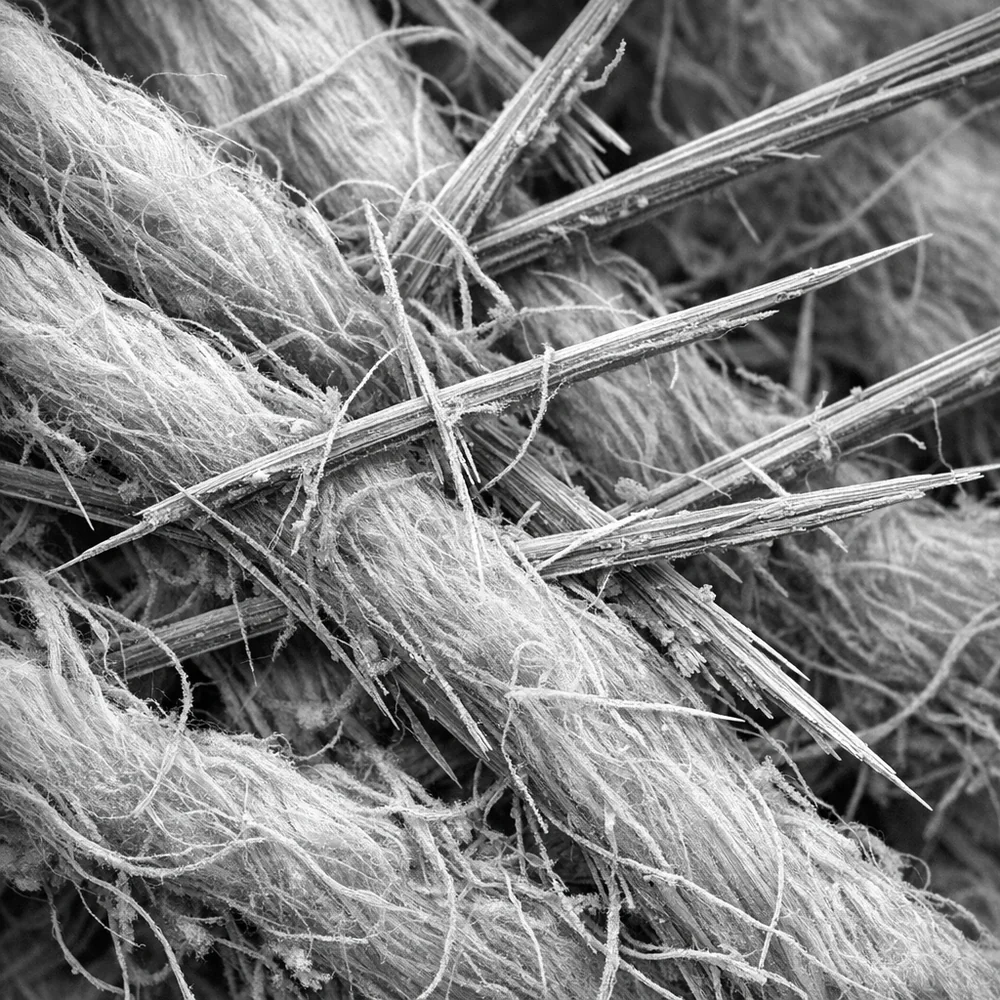
At the molecular level, lead and asbestos behave differently within a textile matrix. Lead often manifests as heavy inorganic dust that can be trapped within the weave of the fabric while asbestos fibers are microscopic and needle-like, capable of becoming deeply embedded or aerosolized during the slightest agitation. Industrial-grade protocols for these materials are governed by strict OSHA standards that mandate the use of dedicated facilities, high-efficiency filtration, and rigorous documentation to verify biohazard laundry protocols. This article details the technical standards and engineering controls required for the safe processing of these toxic materials.
OSHA Regulations for Lead and Asbestos Clothing
The processing of garments contaminated with lead and asbestos is subject to the Occupational Safety and Health Administration (OSHA) 29 CFR 1910.1025 and 1910.1001 standards. These regulations explicitly prohibit the practice of “home laundering” for any items used in environments where lead or asbestos exposure exceeds the Permissible Exposure Limit (PEL). Employers are legally mandated to provide professional laundering services that utilize “closed-loop” systems to contain the contaminants. Furthermore, the facility performing the laundry must be informed in writing of the specific hazardous nature of the articles to ensure they implement proper protection for their own staff.
OSHA also mandates specific labeling and transport requirements for these textiles. Contaminated items must be placed in sealed impermeable bags or containers that are clearly marked with health hazard warnings. For lead-contaminated items, the warning must specify the risk to the central nervous system and reproductive health. For asbestos, the warning must state that the material is a carcinogen and that no dust should be released into the air. These administrative controls ensure that the chain of custody for hazardous materials is never broken which is a critical component of industrial laundry workflow optimization.
The Bottom Line OSHA mandates that hazardous textiles be managed in an “occupational cage.” By prohibiting home laundering and requiring written notification for commercial facilities, the regulations ensure that toxic dusts are contained within professional, filtered industrial environments.
Prohibiting Home Laundering of Toxins
The prohibition against home laundering lead and asbestos is a cornerstone of “take-home” toxin prevention. Domestic washing machines are entirely inadequate for removing heavy metal dusts or microscopic mineral fibers. Furthermore, the agitation process in a domestic machine can cause lead particles to settle in the machine’s drum or drainage system which potentially contaminates the family’s subsequent loads of clothing. This “secondary contamination” has been historically linked to elevated blood lead levels in the children of industrial workers which makes professional laundering a vital public health intervention.
Commercial facilities utilize industrial-grade extractors with high G-force spin cycles that can physically drive heavy lead particles out of the fabric weave. These machines are also equipped with specialized wastewater filtration systems that prevent the contaminants from entering the public municipal sewer system. In contrast, domestic drainage systems have no such failsafes. By centralizing the cleaning process in a controlled environment, employers can ensure that the “occupational risk” remains confined to the workplace and does not extend to the employee’s residential sanctuary.
High-Efficiency Particulate Air (HEPA) Washers
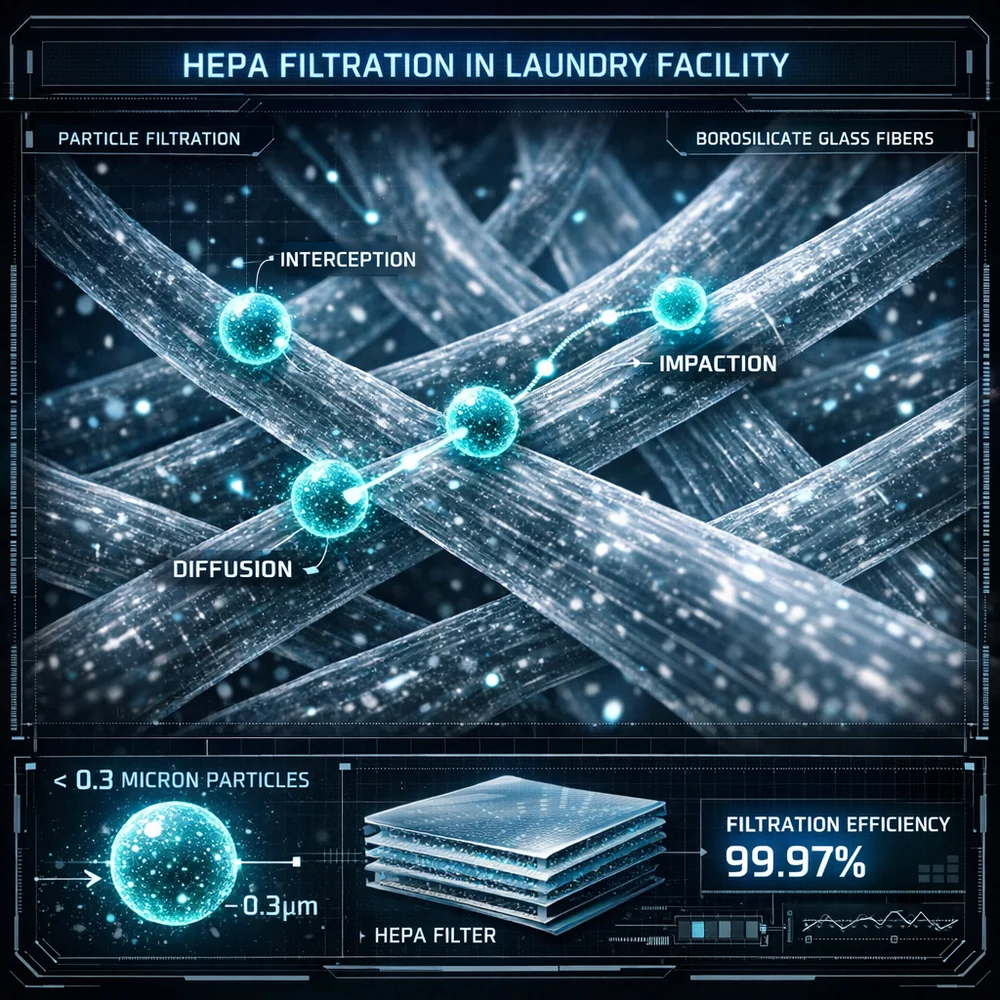
While standard washing machines utilize water for cleaning, the “drying” and “sorting” phases for lead and asbestos laundry require using High-Efficiency Particulate Air (HEPA) filtration. HEPA filters are capable of trapping 99.97% of particles as small as 0.3 micrometers which ensures that any dust aerosolized during the process is captured before it can be inhaled. Professional sorting areas for hazardous laundry are typically maintained under negative air pressure with the exhaust air passing through a bank of HEPA filters.
Some advanced industrial machines utilize a “HEPA-vacuum” pre-cycle before the water is introduced. This process uses high-cfm suction to remove loose dust from the surface of the dry garments which reduces the “soil load” that enters the wastewater. This stage is critical for lead dust because it is extremely heavy and prone to settling at the bottom of the wash drum. By combining mechanical suction with High-Efficiency filtration, facilities can achieve a level of decontamination that is physically impossible utilizing aqueous cleaning alone.
The Bottom Line HEPA filtration is the respiratory shield of toxic laundry processing. By managing the air quality during sorting and drying, facilities prevent the aerosolization of microscopic asbestos fibers and lead dust, protecting both the environment and the operator.
Wastewater Filtration for Lead Removal

Treating wastewater from lead laundering is a complex exercise in environmental chemistry. Lead ions and dust particles are regulated as hazardous materials and their discharge into municipal sewers is strictly controlled under National Pollutant Discharge Elimination System (NPDES) permits. Industrial laundries must utilize a multi-stage filtration system that includes settling tanks, sand filters, and specialized ion-exchange resins. These resins are designed to “scavenge” lead ions from the water and reduce the concentration to parts-per-billion levels before discharge.
In cases of high lead concentrations, facilities may use chemical precipitation techniques. By adding coagulants like ferric chloride or organic polymers to the wastewater, the dissolved lead can be converted into an insoluble “floc” that settles at the bottom of the treatment tank. This lead-rich sludge is then collected, dewatered, and disposed of as hazardous waste. This level of environmental stewardship is what separates a professional industrial facility from an unoptimized laundry that may lack the infrastructure for wastewater regulations compliance.
Asbestos Fiber Entrapment Prevention
Asbestos fibers present a unique challenge because of their needle-like morphology and “persistent” nature. Once embedded in a cotton fiber, they can be difficult to dislodge via standard mechanical action. To ensure the total removal of these fibers, industrial laundries utilize high-surfactant loads and extended “flush” cycles. The surfactants reduce the surface tension of the water allowing it to penetrate deeper into the fabric weave and “lubricate” the asbestos fibers so they can be rinsed away.
The final rinse cycles for asbestos laundry are monitored for “fiber count” using phase-contrast microscopy (PCM) or transmission electron microscopy (TEM). This ensures that the garments returned to the worker have a fiber burden that is indistinguishable from new fabric. If a batch fails a fiber-count test, it must be subjected to a specialized “re-wash” cycle or disposed of as hazardous waste. This commitment to verification is a core component of RABC EN14065 certification for facilities processing hazardous industrial textiles.
The Bottom Line Asbestos fiber removal is a product of “lubricated mechanical action.” High-concentration surfactants combined with extended rinsing phases are necessary to overcome the physical interlocking of mineral fibers with natural textile yarns.
Personal Protective Equipment (PPE) for Laundry Staff
Staff members handling soiled lead and asbestos laundry are subjected to the same PPE requirements as the workers who generated the contamination. This includes using “Tyvek” coveralls, nitrile gloves, and N100 or P100 HEPA-filtered respirators. The sorting area is a “high-risk” zone where no eating, drinking, or smoking is permitted to prevent accidental ingestion of lead dust. Staff must also undergo regular blood lead level (BLL) monitoring and pulmonary function tests to ensure that the administrative and engineering controls are effective.
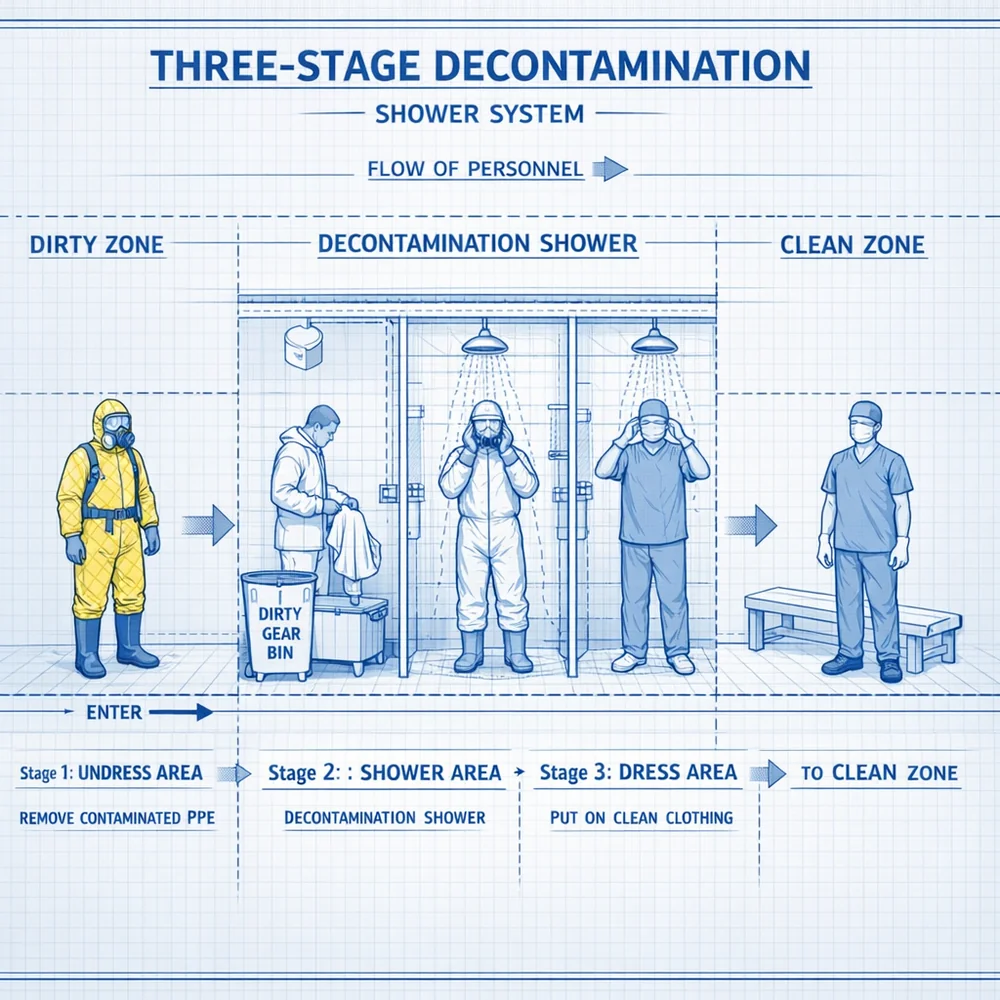
Decontamination zones for laundry staff are mandatory. Upon leaving the soiled area, staff must pass through a “shower-out” facility to ensure that no contaminants remain on their skin or hair. Their own work uniforms are laundered separately utilizing the same hazardous protocols. By treating the laundry operators as “at-risk” industrial workers, the facility ensures a culture of safety that prioritizes health over throughput. This meticulous attention to PPE is the hallmark of a medical-grade industrial hygiene facility.
Hazardous Waste Sludge Disposal
The byproduct of hazardous laundry processing, including filters, sludge, and contaminated lint, must be managed as hazardous waste. This material contains concentrated levels of lead and asbestos and cannot be disposed of in standard municipal landfills. Instead, it must be manifested and transported by a licensed hazardous waste hauler to a Class I or Class II disposal site. For asbestos-containing lint and sludge, you must “wet” the material and seal it in leak-tight containers to prevent any possibility of fiber release during transport.
Facilities must maintain detailed waste manifests that track the volume and destination of every shipment of hazardous byproduct. These records are subject to inspection by the EPA and local environmental agencies. The “cradle-to-grave” responsibility for hazardous materials means that the laundry facility is legally responsible for the waste even after it has left their site. This rigorous administrative burden is one of the primary reasons why many companies choose outsourced laundry service for their hazardous textile needs.
Testing for Residual Contamination (Wipe Tests)
To verify the cleanliness of the finished garments and the processing environment, industrial facilities utilize “wipe tests” or “ghost-wipe” samples. This involves swabbing a 10cm x 10cm area of the laundered textile or the interior of the machine drum and analyzing the swab for lead or asbestos content using Atomic Absorption Spectroscopy (AAS) or microscopy. These tests provide a quantitative measurement of the “residual surface contamination” and are compared against the facility’s internal safety benchmarks.
A successful wipe test result is often required before a facility can release a batch of lead-contaminated coveralls back into service. These tests also help to identify “cross-contamination” risks within the plant. If a wipe test on a clean sorting table shows trace amounts of lead, it indicates that the dust is not being properly contained in the soiled area. This real-time feedback loop allows managers to adjust their barrier washing procedures and air filtration schedules to maintain absolute environment security.
The Bottom Line Wipe testing provides the empirical “ground truth” for hazardous laundry safety. By quantifying the residual lead and asbestos on processed textiles, facilities can prove their compliance with OSHA standards and guarantee the safety of the end-user.
Conclusion
Handling lead and asbestos laundry is one of the most technical and legally sensitive areas of professional industrial hygiene. By adhering to the strict guidelines of OSHA 1910.1025 and 1910.1001, you can ensure that toxic dusts are eradicated from work clothes without endangering the laundry staff or the environment. The use of HEPA-filtered washers, multi-stage wastewater treatment, and rigorous residual testing transforms the laundering process into a high-precision decontamination tool.
Ultimately, the goal of these protocols is to break the cycle of “take-home” exposure and protect the long-term health of industrial workers. As our understanding of low-level toxicological effects continues to evolve, these standards will only become more critical. A facility that can successfully manage these hazardous materials is not just a laundry; it is a vital partner in the industrial safety ecosystem. Through the disciplined application of engineering controls and scientific verification, professional industrial laundries ensure that work clothes are truly clean at the molecular, mineral, and microscopic levels.
References
- Occupational Safety and Health Administration. “29 CFR 1910.1025 - Lead Standard.” OSHA
- Occupational Safety and Health Administration. “29 CFR 1910.1001 - Asbestos Standard.” OSHA
- Journal of Occupational and Environmental Hygiene. “Evaluation of Lead Dust Removal Efficiency in Industrial Laundering.” Taylor & Francis
- Environmental Protection Agency. “Management of Asbestos-Containing Waste Materials.” EPA
- International Journal of Hygiene and Environmental Health. “Take-Home Lead Exposure and the Role of Professional Laundering.” Elsevier