RABC EN14065 Certification Guide: Biocontamination Protocols
Table of Contents
Things You'll Learn From This Article:
- Clean-looking laundry isn’t always safe; real hygiene means controlling germs at every step, not just checking the final result.
- Treat laundry like a one-way process: once items move from dirty to clean, they should never cross back.
- The biggest risks often come from everyday things like staff hands, air in clean areas, carts, and transport—not just the washing machine.
- Focusing on a few critical steps (like wash temperature, bleach level, or cart cleaning) works better than trying to control everything equally.
- Industrial hygiene aims to kill almost all microbes, not just reduce them enough to look or smell clean.
- Strong chemicals and high heat are used on purpose in industrial settings to stop dangerous germs from surviving or growing back.
- Fabric softeners can actually make hygiene worse by leaving residue that helps bacteria grow.
- Regular germ testing on finished textiles and rinse water helps catch problems before they affect customers or patients.
- Keeping clean and dirty areas physically separated, with airflow control, greatly lowers the chance of re‑contamination.
- Staff movement matters: changing clothes and protective gear when switching areas prevents people from spreading germs.
- Heat-based disinfection is simpler to control, while chemical disinfection needs close monitoring of dose, pH, and water quality.
- Good records are just as important as good washing—every load needs traceable data on machines, chemicals, temperatures, and staff.
- Automated tracking like barcodes or RFID makes it possible to quickly investigate issues if a problem shows up later.
- Uniforms used in sensitive industries are handled as safety equipment, not regular clothing.
- Setting clear target values (like temperature or pH) and stopping the process when they aren’t met prevents unsafe laundry from reaching use.
- Managing laundry hygiene is similar to food safety: identify risks early, control them tightly, and document everything.
The EN 14065 standard known as Risk Analysis and Biocontamination Control (RABC) represents the European benchmark for ensuring the microbiological quality of processed textiles. Unlike traditional laundry management which often focuses on visual cleanliness, the RABC system is a proactive quality assurance framework modeled after the HACCP principles used in the food industry. It shifts the focus from sporadic end-product testing to a comprehensive, continuous monitoring of the entire industrial process. By identifying every point where a textile could potentially become contaminated from the soiled collection point to the final delivery, RABC ensures that the hygienic integrity of the linen is maintained at all times.
For industries such as healthcare, pharmaceuticals, and food processing, RABC certification is more than a regulatory requirement; it is a critical component of their risk mitigation strategy. The system requires a deep understanding of microbial kinetics and the specific survival mechanics of pathogens within a laundry environment. It mandates the implementation of specific “control points” where physical or chemical interventions are applied to break the chain of infection. This article provides a clinical analysis of the RABC framework and its application in advanced industrial hygiene settings.
Risk Analysis and Biocontamination Control
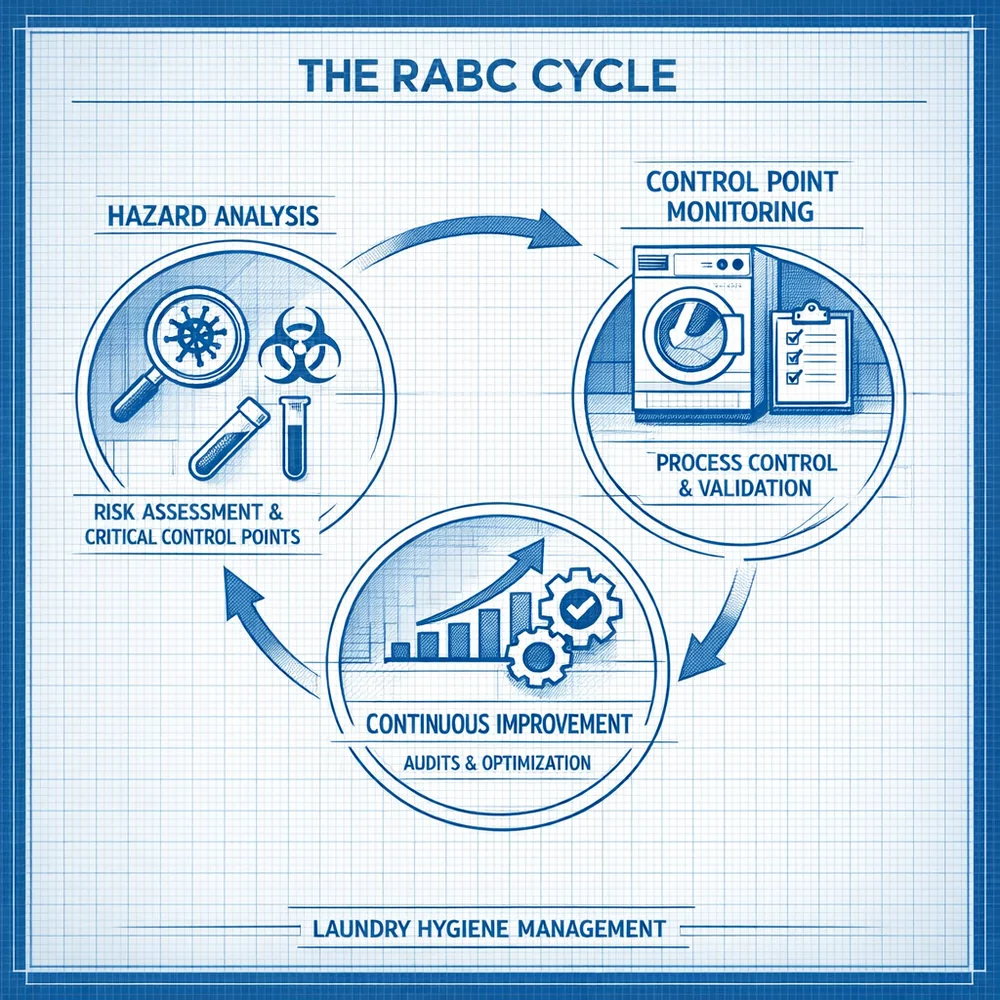
The core of the RABC system is the formal Risk Analysis which involves a systematic audit of the entire laundry facility to identify “hazard points.” These are specific moments or locations in the workflow where a sanitized textile could potentially be re-colonized by bacteria, viruses, or fungi. Common hazard points include the sorting of soiled linen, the hands of operators, the air quality in the finishing zone, and the cleanliness of the transport carts. For each identified hazard, the facility must assess the “severity” of the risk and the “probability” of its occurrence.
Once the risks are identified, the RABC framework requires the establishment of “Critical Control Points” (CCPs). These are stages in the process where a specific control can be applied to eliminate or reduce the risk to an acceptable level. For example, the wash temperature and a minimum chlorine concentration are CCPs for the disinfection phase while a specialized cart wash cycle is a CCP for the distribution phase. By focusing resources on these critical points, laundry managers can ensure that their hygiene efforts are scientifically targeted rather than applied arbitrarily.
The Bottom Line RABC is a process-oriented quality system. It differs from traditional quality control by prioritizing the monitoring of operational parameters during production ensuring that microbial safety is built into the workflow through the management of Critical Control Points.
Difference Between Consumer and Industrial Hygiene
There is a profound scientific divide between consumer-level cleanliness and the industrial hygiene standards mandated by RABC EN 14065. Consumer laundry is primarily focused on the removal of visible soil and the restoration of aesthetic qualities like softness and scent. In contrast, industrial hygiene treats the textile as a medical or pharmaceutical asset where the primary objective is the achievement of a specific “log-reduction” in microbial population. While a consumer machine might achieve a 2-log reduction, an RABC-certified facility is designed to consistently achieve 5-log to 7-log reductions (99.999% to 99.99999% kill rate).
The chemical profile of industrial hygiene is also significantly more aggressive. Consumer detergents are reformulated for low-temperature efficacy to save energy, whereas industrial RABC protocols utilize high-alkalinity builds and chlorine bleach chemistry to ensure the eradication of non-enveloped viruses and spores. Furthermore, RABC prohibits the use of domestic-style fabric softeners because they can build up a waxy film that serves as a nutrient for bacterial regrowth. Industrial finishing is performed using high-heat pressing which provides a final thermal “kill step” that is absent in domestic drying.
Microbiological Testing of Textiles
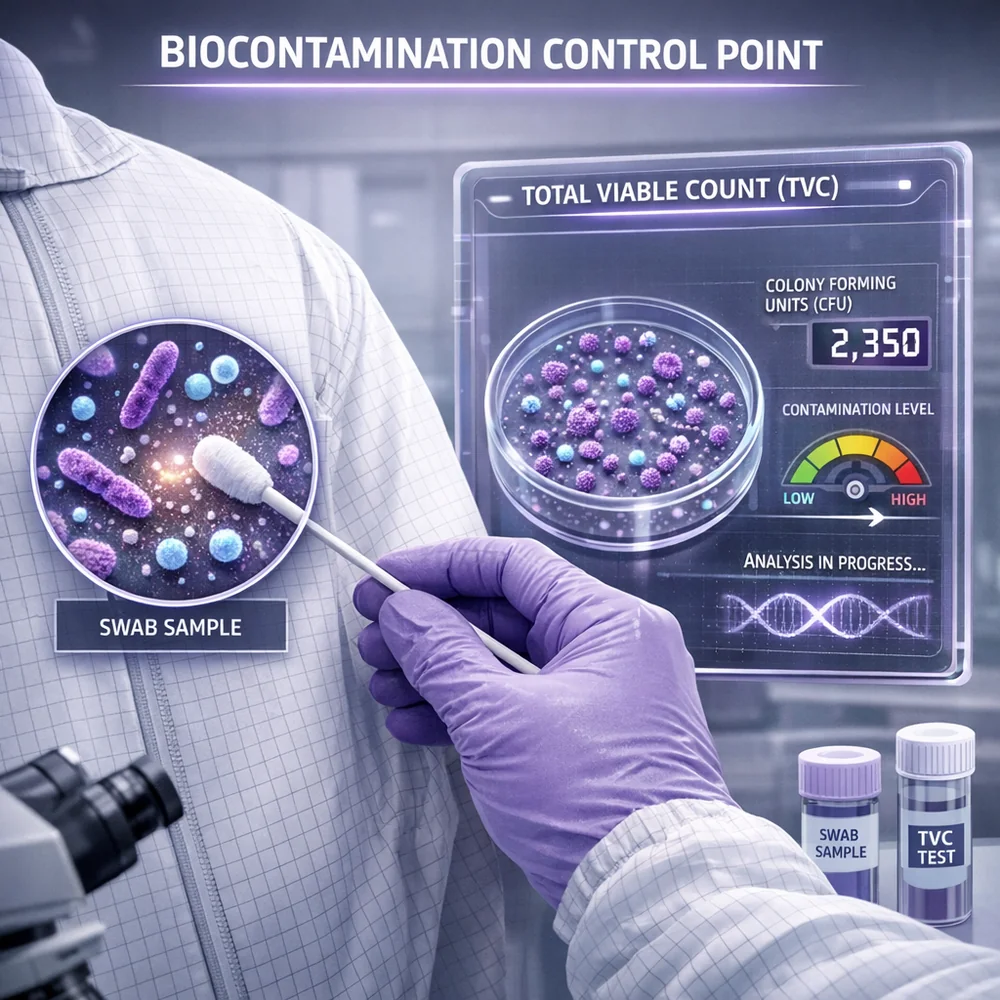
To verify that the RABC system is functioning correctly, the facility must implement a regular schedule of microbiological testing. This involves the use of “contact plates” largely consisting of agar-filled dishes that are pressed against the surface of a processed textile. These plates are then incubated at specific temperatures to determine the number of Colony Forming Units (CFUs) present. EN 14065 specifies strict limits for different industries; for example, surgical textiles must often show zero CFUs while hospitality linens may have a slightly higher threshold.
In addition to surface testing, RABC-certified plants also monitor “process indicators” such as the bacterial counts in the final rinse water. If the rinse water shows high microbial levels, it indicates a failure in either the disinfection cycle or the water recovery and recycling systems. This data is trending over months and years allowing managers to identify seasonal variations in water quality or the emergence of resistant environmental flora. Microbiological testing provides the empirical “ground truth” that validates the facility’s risk analysis.
Separating Clean and Dirty Zones
The physical architecture of an RABC facility is governed by the principle of “zonal separation.” The plant must be clearly divided into a “soiled” (dirty) side and a “clean” (finishing) side with a physical barrier between them. This is often achieved through the use of barrier washing machines explained which ensure that textiles only move in one direction. The air pressure in the clean zone is maintained at a higher level than in the soiled zone to prevent the movement of airborne bio-aerosols.
Staff members are strictly assigned to either the clean or dirty side for their entire shift. If a staff member must cross between zones, they must pass through a “decontamination airlock” and change their PPE. This prevents the “human vector” of cross-contamination where an operator’s hands or clothing could inadvertently transfer pathogens from a soiled bag to a stack of clean towels. Zonal separation is the primary physical control measure in the RABC system largely transforming the plant into a one-way production line where the risk of re-contamination is architecturally eliminated.
The Bottom Line Zonal separation is the spatial manifestation of risk control. By isolating the intake and dispatch zones with structural barriers and pressure differentials, the facility prevents the movement of pathogens through both physical contact and air currents.
Thermal vs Chemical Disinfection Standards
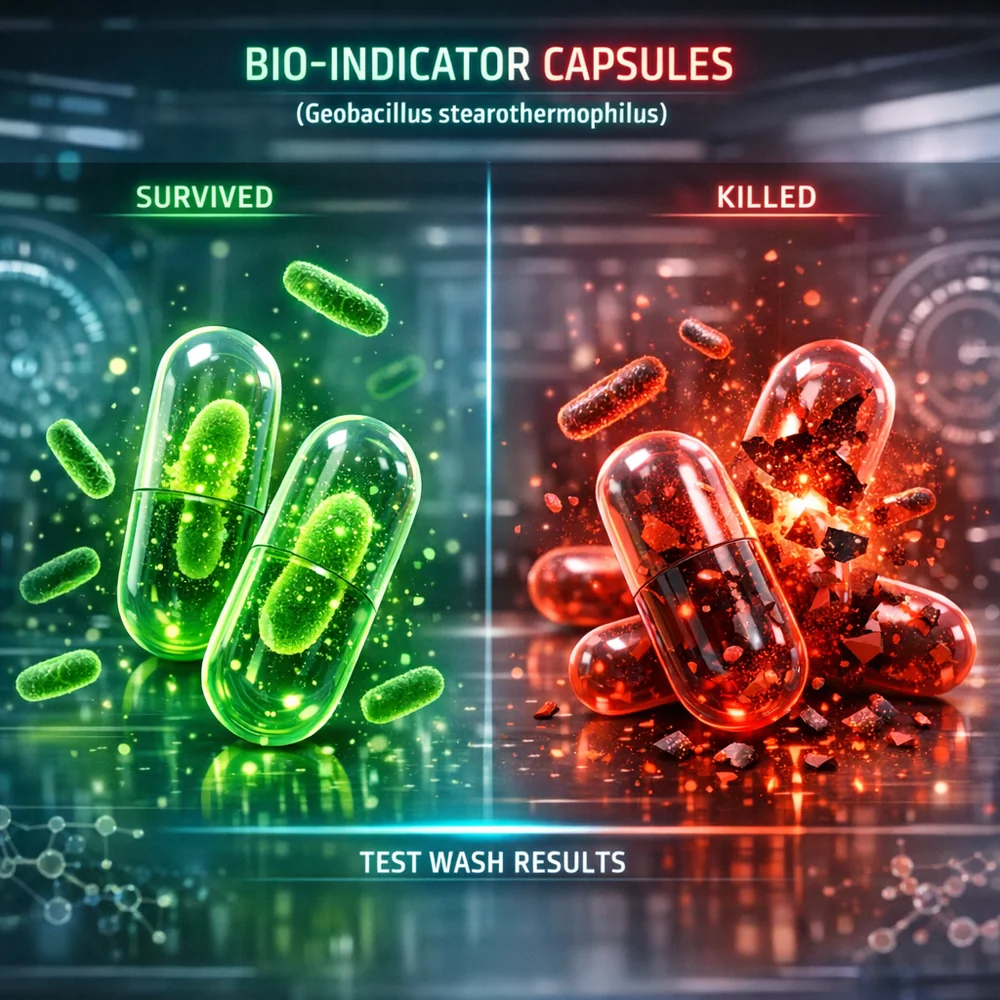
The RABC standard allows for two primary pathways to achieving textile sanitization being thermal disinfection and chemical disinfection. Thermal disinfection relies on the high-energy denaturation of proteins typically requiring a temperature of 71°C (160°F) for a duration of at least 25 minutes. This is the preferred method for cotton-based textiles that can withstand high temperatures. It is a predictable and easily monitored process requiring only a calibrated thermometer and a timer to verify.
Chemical disinfection is used for delicate or synthetic fabrics that may suffer from thermal degradation. This process utilizes oxidants such as sodium hypochlorite or peracetic acid at lower temperatures typically around 40°C to 60°C. The efficacy of chemical disinfection is more complex to monitor because it depends on the precise concentration of the chemical, the pH of the solution, and the “organic load” of the water. For an RABC facility choosing the chemical path, the automated chemical dosing system maintenance protocol becomes the most critical Critical Control Point in their hygiene chain.
Documentation and Traceability Requirements
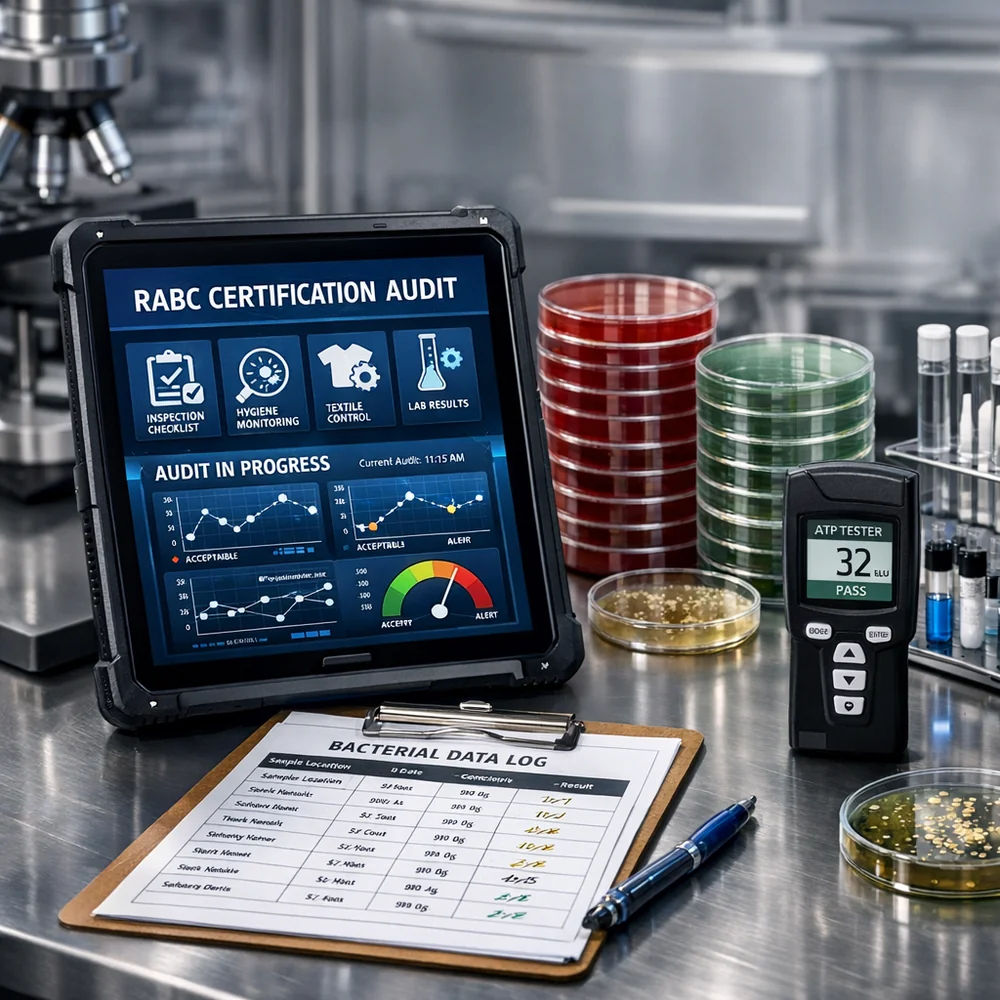
Documentation is the administrative engine of the RABC system. Under EN 14065, a facility must be able to trace every single item or batch through the entire process. This “traceability chain” includes records of which machine processed the item, what chemicals were used, what the peak temperature was, and which staff members handled the load. This is typically achieved using RFID or barcode tags embedded in the textiles. In the event of an outbreak at a client facility, the RABC laundry can quickly audit its records to determine if a lapse in hygiene protocol occurred during the processing of that specific lot.
Furthermore, the documentation must include evidence of staff training and equipment calibration. Detergent pumps and thermostats must be calibrated by a third party annually to certify their accuracy. The facility must also maintain a “microbiological log” of all contact plate results and any “corrective actions” taken when a result exceeded the target threshold. This administrative rigor ensures that hygiene is a managed process rather than a set of informal habits. A facility that lacks a robust documentation system cannot achieve RABC certification regardless of how clean its finished articles appear.
The Bottom Line Documentation transforms hygiene from an ad-hoc achievement into a repeatable industrial process. Traceability ensures that every textile can be linked back to a specific set of verified environmental and chemical conditions providing a legal and technical shield against infection liability.
Uniform Sanitation Standards
Industrial uniforms, particularly those used in pharmaceutical cleanrooms and food processing plants, are subjected to the highest tier of RABC requirements. These garments are not just clothing; they are environmental control devices designed to contain the human microbiome and prevent its shed into the production zone. The laundering process for these uniforms often includes “cleanroom-grade” water (often deionized or RO water) and is performed in a terminal-HEPA filtered environment to ensure the absolute absence of both viable microbial life and inactive particulate matter.
For these high-standard garments, the RABC system includes a “particulate monitoring” phase. This involves the Helmke Drum test where the garment is rotated in a drum while air is pulled through it to a particle counter. The process must achieve a specified “Class” rating (e.g., ISO Class 5) to be considered safe for use. By integrating particulate control with microbiological sanitization, RABC provides a holistic safety profile for technical textiles. This technical depth is why cleanroom garment processing remains one of the most specialized sectors of the industrial hygiene market.
HACCP for Laundry
The adoption of Hazard Analysis and Critical Control Points (HACCP) for laundry, the conceptual parent of RABC, marks a significant milestone in the evolution of industrial hygiene. HACCP for laundry requires the facility to define “Target Values” for every critical parameter. For example, a target value might be a pH of 11.5 for the wash cycle and a fabric pH of 6.0 for the dispatch cycle. Any deviation from these values triggers a “Corrective Action” such as a machine pause or a re-wash of the entire batch.
This system effectively creates a “hygienic safety net.” If the steam pressure fails and the temperature drops below 71°C, the HACCP system automatically flags the load as “potentially contaminated” and prevents it from being unloaded to the clean side. This fail-safe mechanism is essential for protecting vulnerable populations in healthcare settings. By treating the laundry as a “food-grade” production facility, RABC ensures that the textiles meet the same safety standards as the meals served to patients or the medications administered in a hospital.
Conclusion
The RABC EN 14065 certification is an intensive data-driven commitment to microbiological excellence. By identifying every risk point in the industrial plant and implementing rigorous Critical Control Points, certified laundries provides a level of textile safety that is unattainable through standard processes. The system’s reliance on microbiological testing, zonal separation, and comprehensive documentation creates an environment where hygiene is a measurable and auditable industrial output.
As global health standards continue to rise and pathogens become increasingly resistant to traditional treatments, the importance of the RABC framework will only grow. It represents a paradigm shift from “cleaning the linen” to “managing the biocontamination risk.” For facilities that handle the most sensitive textiles from hospital linens to pharmaceutical uniforms, RABC is the ultimate assurance of safety. Ultimately, the successful implementation of this system ensures that textiles serve their intended purpose being protecting the health of the people who wear them and the integrity of the environments they inhabit.
References
- European Committee for Standardization. “EN 14065: Textiles , Laundry Processed Textiles , Biocontamination Control System.” CEN
- Cleanroom Technology. “Microbiological Validation of Laundering Processes According to RABC.” Cleanroom Technology
- Journal of Applied Microbiology. “Developing HACCP-Based Management Systems for Industrial Laundry.” Wiley
- International Journal of Environmental Research and Public Health. “Comparing the Microbial Load of RABC Processed vs. Non-Certified Textiles.” MDPI
- Textile Service Magazine. “Preparing Your Facility for RABC Certification: A Step-by-Step Guide.” TRSA