Restaurant Linen Grease Removal: Food-Grade Chemistry
Table of Contents
Things You'll Learn From This Article:
- Heavy kitchen grease doesn’t come out with heat alone; it needs strong alkaline chemicals that actually break grease into washable soap.
- Very greasy linens are a safety issue, not just a cleanliness problem, because leftover oils can catch fire in dryers.
- Industrial laundries use much stronger and more targeted cleaners than home detergents to stop grease from sticking back onto fabric.
- High heat helps remove grease, but it has to be balanced so fabrics aren’t damaged and skin-safe pH is restored afterward.
- Protein stains like eggs, dairy, and meat need enzymes first, before hot and harsh washing, or they can get “set” into the fabric.
- Washing steps are done in a specific order—enzymes first, then high alkalinity—so each type of stain is handled properly.
- Dryer cool-down cycles are essential so hot, oily linens don’t trap heat and ignite after they’re stacked.
- White napkins stay bright through oxygen bleach and optical brighteners, but only if rinsing is thorough to avoid dull buildup.
- Starch isn’t just for looks; it helps protect tablecloths by absorbing spills so stains wash out more easily later.
- The stiffness and feel of table linens are controlled very precisely to match the restaurant’s style.
- How dirty linens are stored and transported matters—airflow and quick turnaround prevent mold and sour smells.
- Mixing very dirty items with lightly soiled ones spreads grease, so sorting before washing is critical.
- Clean, crisp restaurant linens are the result of careful chemistry, timing, temperature control, and safety rules working together.
The hospitality and food service industry faces a unique set of laundry challenges primarily driven by the accumulation of complex organic lipids and proteins that are resistant to standard cleaning methods. Restaurant linens, including napkins, tablecloths, and kitchen towels, often reach the laundry facility with high concentrations of animal fats, vegetable oils, and carbonized food particles. Removing these substances requires more than just high temperatures; it demands a sophisticated chemical approach that utilizes alkaline hydrolysis and advanced emulsification to break the molecular bonds between the grease and the fabric fibers.
Unlike domestic laundry where “grease” usually refers to minor cooking splashes, industrial restaurant laundry management is a high-volume operation where oil saturation can reach levels that pose significant safety risks. The physics of oil-fiber interaction, particularly with synthetic and blended fabrics, necessitates the use of specialized detergents that can lower interfacial tension effectively. Furthermore, the risk of spontaneous combustion in industrial dryers is a well-documented hazard in commercial kitchens adding a layer of critical safety protocol to the drying phase. This article details the technical processes required to maintain hygienic and aesthetically brilliant restaurant linens.
Alkaline Hydrolysis of Animal Fats
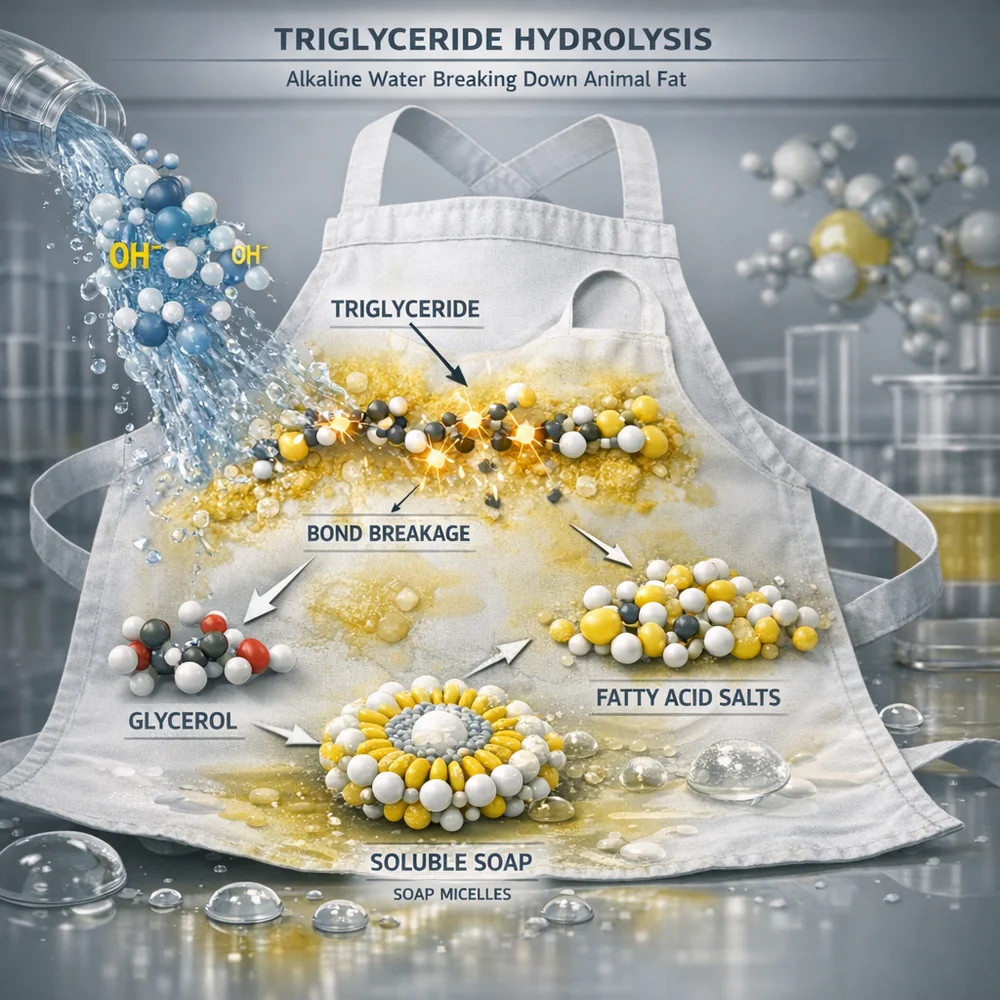
The most potent chemical reaction used for the removal of heavy food-grade grease is alkaline hydrolysis often referred to as saponification. Most kitchen oils are triglycerides which are insoluble in water and tend to form a hydrophobic barrier on the surface of cotton fibers. By introducing high-alkalinity builders into the wash cycle such as sodium hydroxide or potassium hydroxide, the laundry system raises the pH to 11.0 or higher. At this elevated pH, the hydroxide ions attack the ester bonds of the triglycerides breaking them down into glycerol and water-soluble soaps.
This process is fundamentally different from a simple detergent wash. Instead of merely surrounding the grease molecules, alkaline hydrolysis chemically transforms the grease into a cleaning agent that aids in the further removal of soil. The effectiveness of this reaction is highly dependent on temperature because the rate of hydrolysis increases significantly above 60°C (140°F). However, the use of such aggressive alkalinity requires subsequent peroxide-based souring steps to ensure that the fabric pH is returned to a safe level (5.5-6.5) before it comes into contact with human skin.
The Bottom Line Alkaline hydrolysis converts insoluble animal fats into water-soluble carboxylate soaps. By chemically altering the molecular structure of the grease, industrial systems achieve a level of deep cleaning that surfactants alone cannot reach in high-oil environments.
Industrial Emulsifiers vs Home Detergents
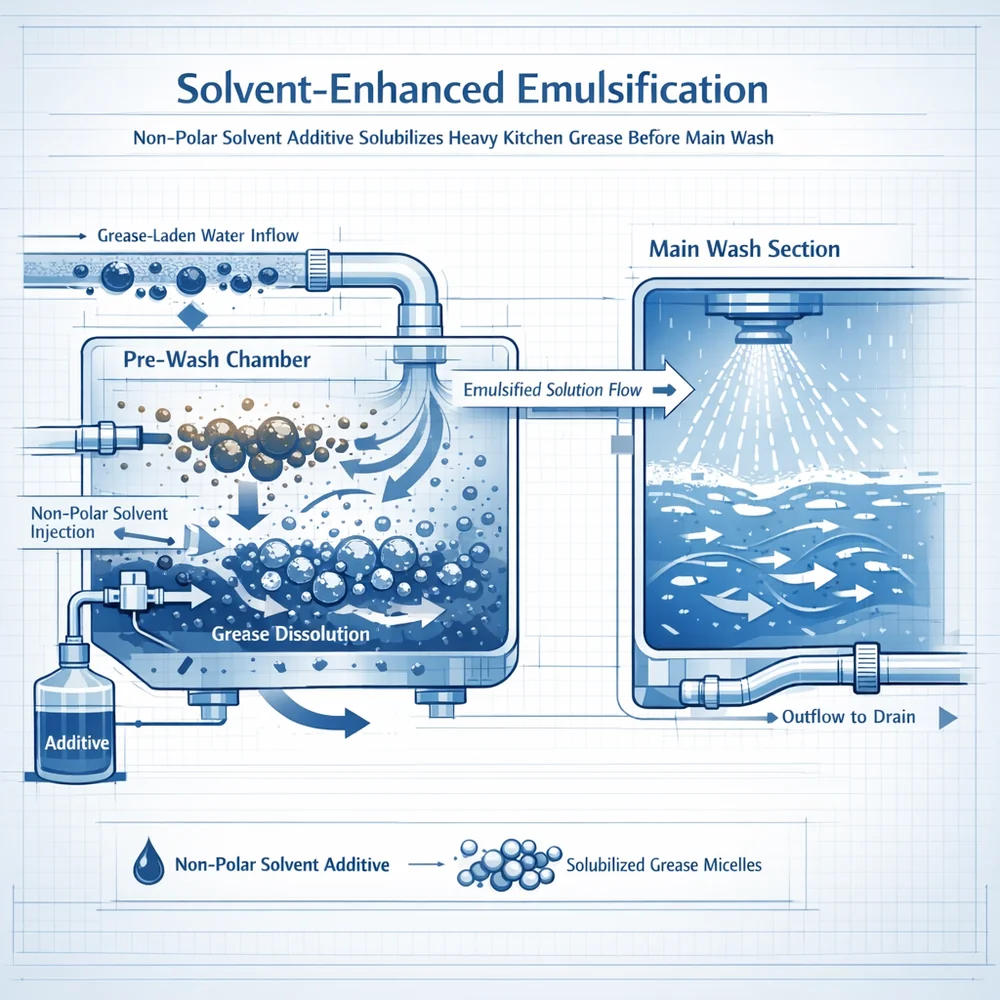
There is a significant performance gap between domestic detergents and the industrial emulsifiers used in professional restaurant laundries. While home detergents are designed to be “all-purpose” and safe for a wide variety of fabrics, industrial emulsifiers are highly specialized surfactants with a high HLB (Hydrophilic-Lipophilic Balance) value. These molecules are engineered to have a strong affinity for non-polar molecules like cooking oils largely forming stable micelles that prevent the re-deposition of grease back onto the clean fabric.
Industrial emulsifiers often contain a blend of non-ionic surfactants that remain effective even in the presence of the high alkalinity required for saponification. They are also designed to work at lower water-to-linen ratios which maximizes the concentration of the active ingredients and increases the mechanical friction between the towels. For high-volume operations, these emulsifiers are injected via automated dosing pumps to ensure that the exact stoichiometric ratio required for the specific oil load is met. This precision prevents the “graying” effect common in poorly managed laundries where residual oil film gradually traps environmental dust.
Spontaneous Combustion of Greasy Rags in Dryers
A critical safety hazard in restaurant laundry is the risk of spontaneous combustion which is a phenomenon where the oxidation of residual oils generates enough heat to ignite the fabric. This most frequently occurs in items that have been saturated with vegetable or drying oils such as linseed oil or heavy frying fats. Even if the towels feel dry, any residual oil that was not removed during the wash phase can continue to oxidize when subjected to the high temperatures of an industrial dryer. If these items are then folded and stacked while still hot, the heat cannot dissipate leading to a rapid rise in temperature and eventual ignition.
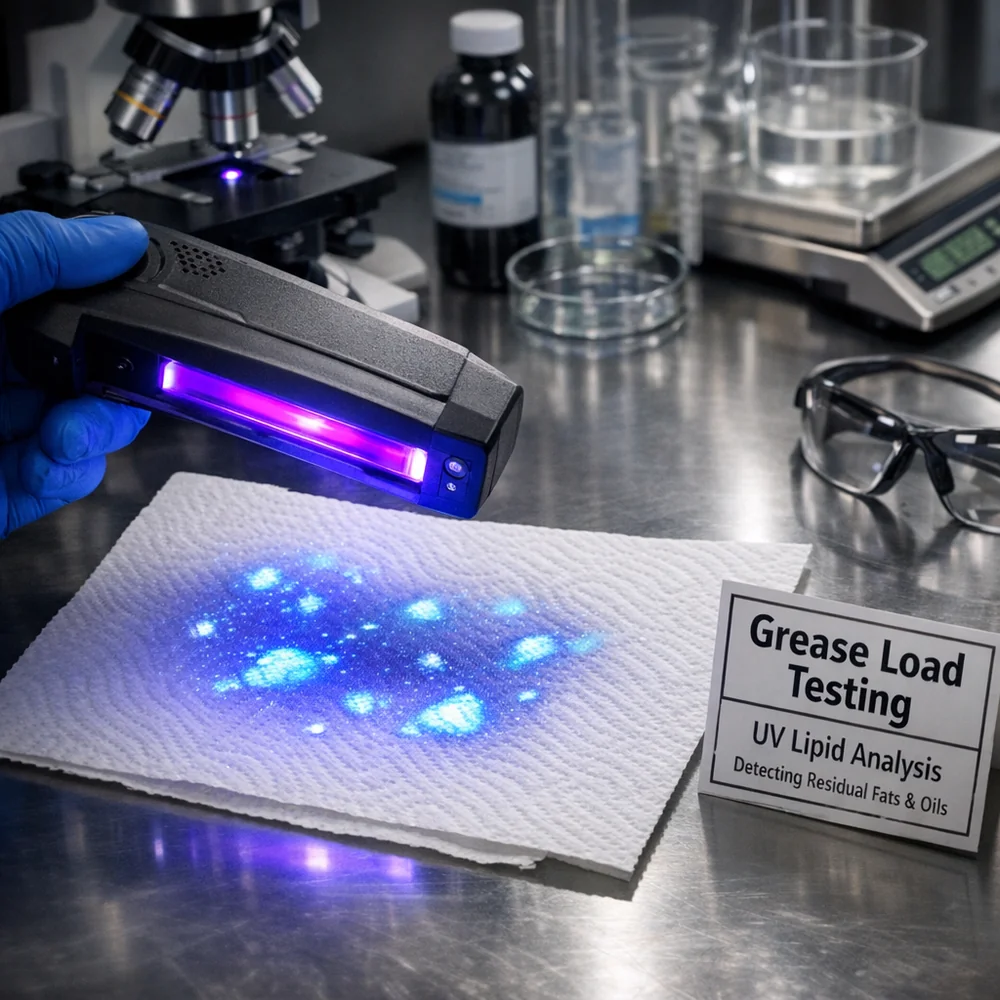
To prevent this, commercial facilities implement a mandatory “cool-down” cycle in their dryers. This phase ensures that the temperature of the linen is brought down below 40°C (104°F) before the items are removed and stacked. Additionally, the use of detecting industrial grease protocols ensures that any items with significant oily residue are rejected from the standard drying flow and returned for a second wash cycle. The combination of thorough chemical extraction and disciplined dryer management is the only way to eliminate the fire risk associated with kitchen textiles.
The Bottom Line Spontaneous combustion is a byproduct of exothermic oil oxidation. Eliminating this risk requires a 100% chemical removal of residual lipids followed by a mandatory thermal cool-down phase before linens are compressed into stacks.
Enzyme Presoaks for Food Stains
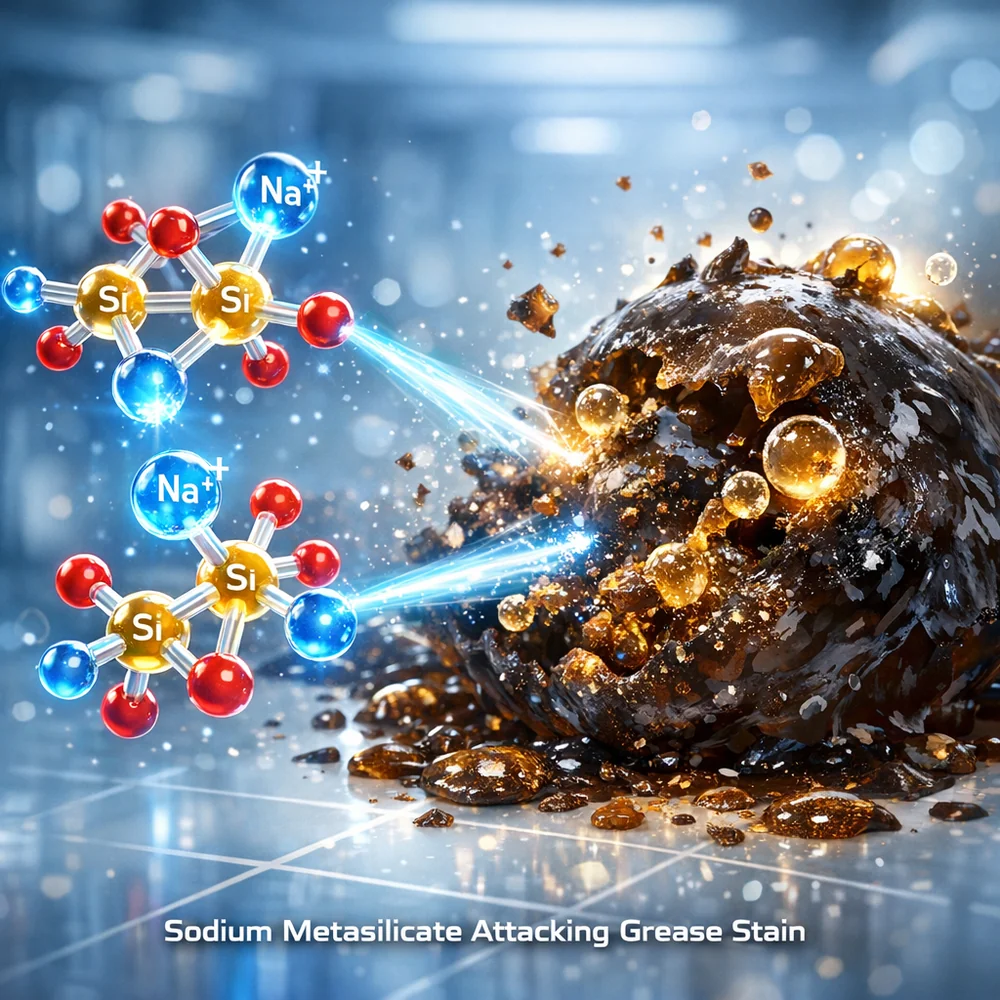
While alkalinity handles the lipids, protein-based food stains like egg, dairy, and meat juices require a more targeted approach. Industrial laundries utilize enzyme-based presoaks which contain high concentrations of proteases and amylases. These biological catalysts function by hydrolyzing the peptide and glycosidic bonds that hold protein and starch stains to the fabric. By breaking these large molecules into smaller water-soluble fragments, the enzymes allow the subsequent surfactants to rinse them away with minimal mechanical action.
The effectiveness of these enzyme systems is highly temperature-sensitive. Most industrial proteases are optimized for temperatures between 40°C and 55°C (104°F to 131°F). If the water is too hot, the enzymes will denature and lose their catalytic power while if too cold, the reaction rate will be too slow for high-volume processing. For maximum efficiency, restaurant linens are often subjected to a dedicated “break” cycle where enzymes are allowed to work for 10-15 minutes before the high-heat, high-alkalinity bleaching phase begins. This sequential approach ensures that all components of the “food stain matrix” are addressed.
Whiteness Retention in Napkins
Maintaining the visual brilliance of white napkins is a primary aesthetic goal for high-end restaurants. Over time, recurring exposure to tannins from wine and food dyes can lead to a gradual loss of brightness even if the grease is successfully removed. To combat this, industrial facilities utilize a combination of oxygen-based bleaching and high-substantivity optical brighteners. The bleaching phase targets the chromophores of food dyes while the optical brighteners shift the spectral reflectance of the fabric toward the blue end of the scale to mask any residual yellowing.
Consistency in whiteness retention requires careful monitoring of the “build-up” of laundry chemicals. If the rinsing cycles are insufficient, optical brighteners and residual detergents can accumulate eventually causing the napkins to take on a grey or blue-green cast under artificial restaurant lighting. Professional laundries use spectrophotometers to measure the “White Index” of their outgoing stock ensuring that every napkin meets the brand’s visibility standards. This level of quality control is what allows luxury venues to maintain linens that look brand-new for hundreds of wash cycles.
Starching Protocols for Table Linens
The crisp, formal feel of high-quality tablecloths is achieved through the precise application of starching protocols during the final stages of the laundry cycle. Industrial starch, often derived from corn or rice, is injected into the final rinse or applied during the ironing process. The starch fills the microscopic gaps between the cotton fibers creating a stiff, smooth surface that is resistant to both wrinkles and new stains. A well-starched tablecloth not only looks better but also functions as a sacrificial barrier because the starch absorbs the first layer of spilled liquids making the next wash cycle more effective.
The degree of starching is measured in “stiffness units” and is customized based on the restaurant’s preference. Fine dining establishments typically require a “heavy starch” for their white cotton linens while more casual venues may opt for a “soft finish.” To ensure a uniform application, the linens are processed through industrial flatwork ironers (mangles) while they are still slightly damp. The heat of the ironer gelatinizes the starch largely bonding it to the fibers and creating a lustrous, hotel-quality finish. This thermo-mechanical bonding is essential for preventing the starch from “flaking” or creating dust during use.
The Bottom Line Starching is a finishing process that improves both aesthetics and soil resistance. By gelatinizing the starch under the high heat of a flatwork ironer, industrial facilities create a protective barrier that extends the time between required heavy cleanings.
Transporting Soiled Kitchen Laundry
The final technical challenge in the restaurant laundry cycle is the management of soiled linen transport. Kitchen textiles are often saturated with organic matter that can serve as a breeding ground for bacteria and mold if left in a warm, damp environment. To prevent the development of “sour” odors and permanent mold stains, restaurant staff must use breathable mesh bags for transport and ensure that the linen reaches the laundry facility within 24 to 48 hours of use. Plastic bags should be avoided for soiled kitchen linen because they trap moisture and accelerate the growth of anaerobic bacteria.
Upon arrival at the laundry, the linens are sorted by soil level to prevent “soil transfer” which is the process where grease from a heavily soiled kitchen rag migrates to a lightly soiled napkin during the wash. Professional facilities use automated conveyor systems to move the sorted bags directly into the washing machines minimizing manual contact and the risk of cross-contamination. By treating the logistics of the soiled linen with as much care as the washing chemistry, restaurants can preserve the life of their linens and maintain a high standard of professional hygiene throughout their operation.
Conclusion
The successful removal of restaurant grease from commercial linens is a triumph of industrial chemistry over complex organic soils. By leveraging the power of alkaline hydrolysis to saponify animal fats and industrial emulsifiers to manage high-oil loads, professional laundries maintain the highest standards of hygiene and presentation. Every stage of the process from the enzyme-rich presoaks to the precision starching and ironing is designed to work in synergy to restore the fabric to its original state.
Furthermore, the integration of safety protocols to mitigate the risk of spontaneous combustion demonstrates the technical maturity of the industry. The transition from a greasy, food-stained napkin to a crisp, white, and hygienic item is the result of a perfectly calculated wash formula. As the culinary industry continues to evolve, the science of maintaining its textiles will remain a vital albeit invisible part of the guest experience. Ultimately, the cleanliness of the linens serves as a silent ambassador for the restaurant’s commitment to quality and professionalism.
References
- Professional Laundry Manager. “Advanced Emulsification Strategies for High-Fat Linen Loads.” PLM
- Fire Safety Journal. “An Experimental Study on the Spontaneous Combustion of Cooking Oil Saturated Textiles.” Elsevier
- Journal of Agricultural and Food Chemistry. “Hydrolysis of Triglycerides in Alkaline Aqueous Media.” ACS Publications
- Textile Research Journal. “Mechanical and Chemical Effects of Industrial Starching on Cotton Fibers.” Sage Journals
- International Journal of Hospitality Management. “The Impact of Linen Quality on Guest Perceptions of Hygiene.” ScienceDirect