Cleanroom Garment Processing: How to Control Particles and ESD
Table of Contents
Things You'll Learn From This Article:
- Cleanroom garments aren’t treated like normal work clothes; they’re handled as tools that help block particles and static from entering sensitive spaces.
- Even tiny dust particles can cause big problems, so garments must be cleaned to standards that are stricter than the cleanroom air itself.
- Washing these garments happens inside controlled, filtered rooms so they’re never exposed to regular air after cleaning.
- Ultra‑pure water is used because normal tap water leaves behind minerals that turn into contamination when fabric dries.
- Static electricity from body movement can damage electronics, so special fibers in the fabric spread and release static safely.
- Rough washing, the wrong detergents, or fabric softeners can ruin the static‑control fibers and make a garment unsafe to use.
- Garments are tested after washing to make sure they don’t shed particles when someone moves around in them.
- Some industries need garments to be sterile, which means extra steps like steam sterilization or radiation after cleaning.
- How garments are packed matters; double bagging and sealed packaging keeps them clean until the moment they’re worn.
- The way you put on a cleanroom suit follows a specific order to stop particles from your body reaching the outside of the garment.
- Repeated washing and sterilizing slowly breaks down synthetic fabrics, even if they still look fine.
- Regular strength and fabric tests help catch worn‑out garments before they start shedding particles.
- Every garment is tracked by barcode or RFID so its wash count, test results, and age are always known.
- Tracking data makes it possible to pull aging or defective garments out of use before they cause contamination.
- Cleanroom laundry is as much about monitoring and testing as it is about washing, because consistency matters more than appearance.
Processing cleanroom garments is the most demanding sector of the industrial laundry industry because the goal is the absolute control of particulate matter and electrostatic discharge (ESD). Cleanrooms, especially those in semiconductor fabrication and pharmaceutical manufacturing, operate under strict ISO 14644-1 classifications where even a single microscopic particle can cause catastrophic failure in an integrated circuit or contaminate a sterile drug batch. Consequently, you must treat cleanroom garments not just as clothing but as environmental containment systems designed to bridge the gap between human physiology and the requirement for a zero-contamination environment.
Achieving the level of cleanliness required for ISO Class 5 and Class 6 environments involves a specialized laundering process known as “cleanroom laundering.” This workflow utilizes ultra-pure water, HEPA-filtered air, and specialized cleaning agents in a controlled environment that is itself often an ISO Class 4 or 5 cleanroom. Every stage of the process, from initial particulate testing to final sterile packaging, is monitored with laser particle counters and surface conductivity meters. This article examines the technical protocols and mechanical systems that enable you to successfully process these specialized textiles.
ISO Class Particulate Limits for Laundry
The success of a cleanroom laundry facility is measured by its ability to process garments that meet the particulate limits defined by ISO 14644-1. For an ISO Class 5 environment, the air must contain no more than 3,520 particles of 0.5 micrometers or larger per cubic meter. While the ISO standard primarily regulates the air, your garments must have a significantly lower “particulate burden” to ensure they do not shed into the environment. Transitioning garments between different ISO levels requires a dedicated laundering cycle that can achieve a 99.99% reduction in surface particulates.
Current high-standard facilities utilize “point-of-use” particle monitoring during the drying and folding phases. According to the 2015 update of ISO 14644-1, the emphasis has shifted toward the consistent monitoring of 0.5 µm and 1.0 µm particles because these are the most critical for micro-electronic and optical manufacturing. However, for pharmaceutical applications, you must also monitor for particles as large as 5.0 µm under EU GMP Annex 1 to prevent potential microbial carrier particles from entering sterile zones. Meeting these limits requires a “clean-to-clean” workflow where the laundry never leaves a filtered environment.
The Bottom Line Particulate control is the defining metric of cleanroom laundry. For ISO Class 5 compatibility, the garment must not only be cleaned of surface debris but also be processed in an environment where the ambient air and water are purer than the cleanroom where the garment will be used.
Electrostatic Discharge (ESD) Fabric Care
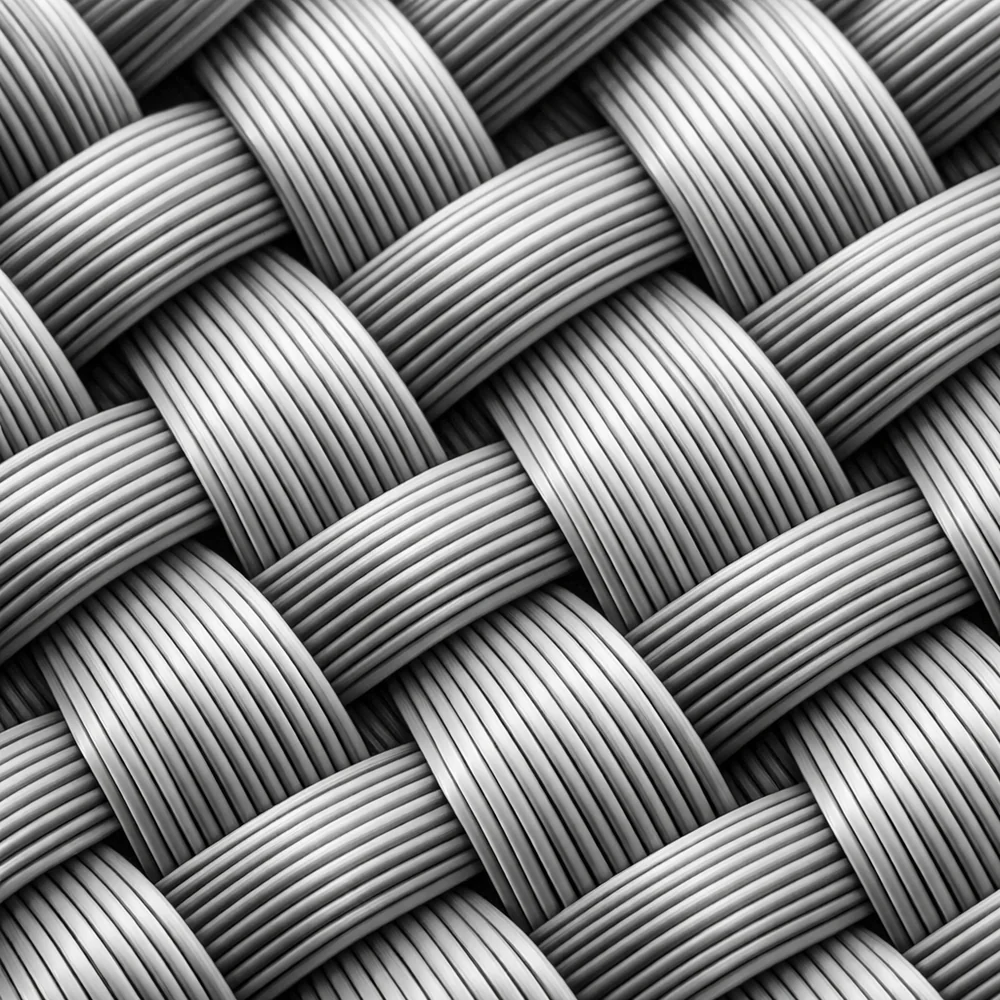
Electrostatic discharge (ESD) is a primary concern in cleanrooms processing sensitive electronic components. Human movement generates significant triboelectric charges, which can reach several thousand volts in a low-humidity environment. To mitigate this risk, cleanroom garments are constructed with a grid of conductive fibers, typically carbon or metal-based filaments, woven into the synthetic base fabric. These fibers serve as a “Faraday cage” that dissipates static electricity across the surface of the garment and safely to the ground via ESD-safe footwear and flooring.
Laundering ESD garments requires a careful balance to avoid damaging these conductive filaments. Aggressive mechanical action or using improper surfactants can lead to “fiber fracture,” where the continuity of the conductive grid is broken. Furthermore, using standard fabric softeners is strictly prohibited because they create an insulating waxy layer that increases surface resistivity. You must verify ESD performance after every wash using surface resistivity meters, and any garment that fails the Ohm-per-square test is immediately retired to prevent the risk of a “static event” in the cleanroom.
Barrier Washing Systems for Cleanrooms
The mechanical foundation of cleanroom laundering is the barrier-wall washing system. Similar to hospital-grade laundry standards but with higher filtration requirements, these machines are installed through a wall that separates the “dirty” intake side from the “cleanroom-laundry” side. The clean side of the laundry is typically maintained as an ISO Class 5 or 4 environment. Personnel on the clean side must wear full “bunny suits” and adhere to strict gowning protocols to prevent self-contamination of the processed items.
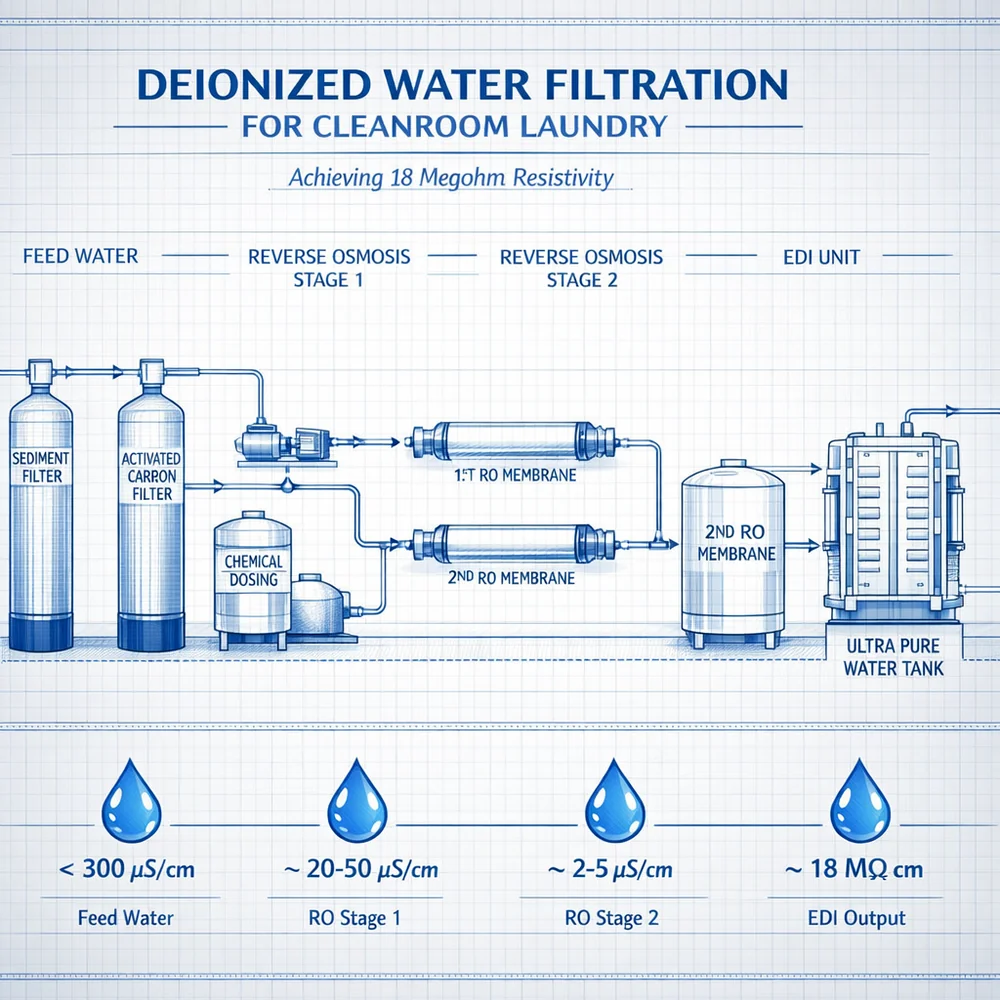
A unique feature of cleanroom washers is the use of high-volume water filtration. The water used in these machines is processed through Reverse Osmosis (RO) and Deionization (DI) systems until it reaches a resistivity of 18 Megohms-cm. This “pure water” is necessary because standard tap water contains dissolved minerals and salts that would leave a particulate residue on the fabric as it dries. Every rinse cycle is a decontamination step that ensures the textile is practically “ion-free” by the time it enters the extraction phase.
The Bottom Line Barrier systems for cleanrooms incorporate “pure water” chemistry and air-locked environments. By ensuring that the final rinse and drying phases occur in a Class 5 environment, the facility prevents the re-contamination of the textiles by environmental particulates or ionic minerals.
Sterile Packing Protocols (Autoclave vs Gamma)
For cleanrooms in the pharmaceutical and biotechnology sectors, garments must be not only clean but also sterile. You achieve sterility through two primary methods: steam sterilization (autoclaving) or gamma irradiation. Autoclaving utilizes high-pressure steam at 121°C (250°F) to achieve a 10-log reduction in microbial life. However, repeated autoclaving can lead to the “polymer degradation” of synthetic cleanroom fabrics, reducing their strength and increasing their particulate shedding over time.
Gamma irradiation provides a “cold” sterilization alternative using Cobalt-60 sources to destroy microbial DNA without the thermal stress of steam. This method is preferred for items with sensitive conductive filaments or specialized plastic components. Regardless of the method, you must pack the garment in a double-bagged, vacuum-sealed container within the Class 5 cleanroom before sterilization. This ensures that the garment remains in a “sterile-ready” state until the moment it is opened in the gowning anteroom of the client facility.
Analyzing Water Quality (Deionized/RO)
The chemical hallmark of cleanroom garment processing is the reliance on deionized and reverse osmosis water. Standard “hard water” contains calcium, magnesium, and silica ions that can form microscopic crystals when the fabric is dried. In a semiconductor cleanroom, these crystals are considered “contaminants” that can lead to product defects. A cleanroom laundry must maintain an on-site water purification plant that monitors Total Organic Carbon (TOC) and resistivity in real-time.
Water quality is also critical for the effectiveness of any surfactant load for heavy soil. Pure water has a much higher solvency for particulates than mineral-laden water, allowing for effective cleaning with much lower concentrations of chemicals. This reduces the risk of chemical residue buildup on the fibers. For high-standard facilities, the water room is the heart of the operation, providing a continuous supply of 18MΩ water that is verified by automated sensors before every wash cycle.
The Bottom Line Pure water (RO/DI) is the universal solvent of cleanroom hygiene. By eliminating dissolved minerals and organic carbon from the wash liquor, facilities prevent the formation of “drying residues” that would otherwise manifest as particulate contamination in the cleanroom.
Testing for Particulate Shedding (Helmke Drum Test)
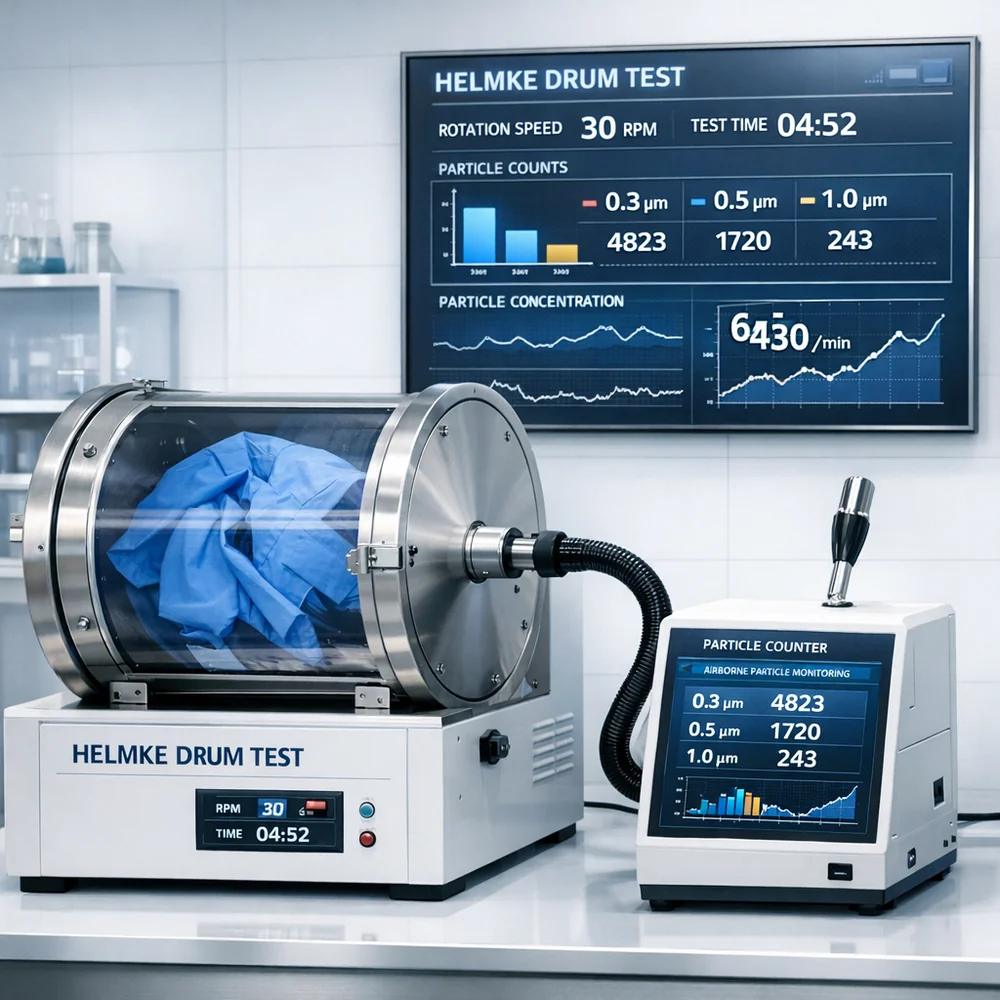
To verify the particulate integrity of a cleanroom garment, the industry uses the Helmke Drum Test. In this procedure, you place a laundered garment inside a rotating stainless steel drum. As the drum rotates, air is drawn from the center of the drum and passed through a laser particle counter.
This counter measures the number of particles (of 0.3 µm, 0.5 µm, and 5.0 µm sizes) shed by the garment into the air. This test simulates the mechanical stress the garment will undergo during normal human movement.
The results of the Helmke Drum test allow you to classify the garment according to IEST-RP-CC003 standards. A Category I garment, which is the highest rating, is suitable for use in an ISO Class 3 or 4 environment. If a garment begins to show an increase in particulate shedding over several wash cycles, it is a sign of fabric aging and polymer breakdown.
You must retire these garments immediately, even if they look clean. This data-driven approach to “lifecycle management” is what distinguishes a professional cleanroom service from a standard laundry.
Cleanroom Gowning Protocols Post-Wash

The most critical moment in the cleanroom lifecycle is the gowning process itself. Even a perfectly laundered garment can be contaminated in seconds if the operator does not follow a specific gowning sequence. This sequence follows a “top-down” approach where you apply the hairnet and mask first, followed by the hood, the suit (bunny suit), and finally the boots and gloves. This ensures that any particles shed from the operator’s head or skin are contained within the inner layers of the garment before the outer layer is applied.
Post-wash, garments are presented to the operator in a “gown-ready” fold. This specialized fold ensures that you can step into the suit without the garment touching the floor or any non-sterile surfaces. Industrial laundries provide specific folding guides to their clients to ensure this transition is successful.
The gowning area is typically divided into “clean,” “transition,” and “donning” zones, each with its own air pressure and filtration standards. By integrating the laundry fold with the gowning protocol, the facility ensures that the integrity of the RABC EN14065 certification is maintained until the moment of use.
The Bottom Line Gowning is the final stage of the contamination control chain. By providing garments in a technical “sterile-fold,” industrial laundries enable operators to transition into their suits with zero contact with non-sterile surfaces, maintaining the integrity of the ISO 14644 environment.
Polymer Degradation Monitoring
Cleanroom garments are primarily constructed from polyester or other synthetic polymers chosen for their durability and low-shedding characteristics. However, repeated exposure to high-temperature laundering, autoclaving, and industrial detergents causes the polymer chains to break down in a process known as chain scission. This results in the fibers becoming more brittle and prone to “brush-shedding,” where tiny fragments of the fiber are released during movement.
To monitor for polymer degradation, facilities use “tear strength” and “burst strength” testing on sacrificial samples from every lot. Additionally, microscopic analysis of the fiber surface can identify early signs of “fibrillation,” where the smooth surface of the fiber begins to peel and create microscopic hooks. This preventive monitoring ensures that you replace garments before they become a source of contamination. Managing the “wash-life” of a cleanroom garment is a balance between maximizing the client’s ROI and maintaining absolute environmental security.
Barcode Tracking for Lifecycle Management
Modern cleanroom laundry operations utilize barcode or RFID (Radio Frequency Identification) tracking to manage the lifecycle of every individual garment. You scan every suit at multiple points: soil intake, wash start, finish exit, and dispatch. This provides a digital history for every piece that details exactly how many times it has been washed and sterilized. If a specific lot of fabric is identified as having a manufacturing defect, the tracking system allows for an immediate “recall” of every garment made from that material.
This data is also used to predict when a garment is nearing the end of its useful life. For example, a garment may be rated for 50 autoclave cycles before the ESD fabric care performance begins to degrade. The tracking system can automatically flag the garment for retirement once it reaches the 48th cycle. This level of granular visibility is essential for meeting the “traceability” requirements of the pharmaceutical industry and ensures that your cleanroom is never compromised by an aging or defective garment.
Conclusion
The science of cleanroom garment processing is a high-stakes discipline where the margins for error are measured in micrometers. By integrating the physics of particulate control with the requirements for ESD protection and microbial sterility, industrial laundries provide a critical service to the world’s most advanced manufacturing sectors. The use of RO/DI water, barrier-wall washing, and Helmke Drum testing ensures that every garment becomes an active participant in maintaining the ISO 14644 environment.
As we move toward even more sensitive manufacturing processes in the age of nanotechnology and advanced biopharmaceuticals, the role of cleanroom laundering will only become more critical. The commitment to technical excellence from the initial particulate analysis to the final barcode-tracked dispatch is what allows these facilities to function as sterile hygiene plants. Ultimately, the successful processing of cleanroom garments is a testament to the power of controlled industrial chemistry in protecting the integrity of human progress.
References
- International Organization for Standardization. “ISO 14644-1:2015 - Classification of Air Cleanliness by Particle Concentration.” ISO
- Institute of Environmental Sciences and Technology. “IEST-RP-CC003.4: Garment Considerations for Cleanrooms and Other Controlled Environments.” IEST
- Journal of Particulate Science and Technology. “Evaluation of Particulate Shedding in Synthetic Cleanroom Fabrics.” Taylor & Francis
- Cleanroom Technology. “Sterilization Effects on the Physical and Conductive Properties of Cleanroom Textiles.” Cleanroom Technology
- ESD Association. “ANSI/ESD S20.20-2021: Protection of Electrical and Electronic Parts, Assemblies, and Equipment.” ESDA