Reusable Paper Towel Alternatives: Swedish Dishcloths, Bamboo, and Unpaper Towels
Table of Contents
Things You'll Learn From This Article:
- Paper towels add up fast, both in waste and money, especially if you use them daily for small kitchen tasks.
- Swedish dishcloths soak up a lot more liquid than paper towels and dry quickly, which helps prevent bad smells.
- The stiff feel of a dry Swedish dishcloth is normal and actually helps with light scrubbing once it’s wet.
- One reusable cloth can replace dozens of paper towel rolls over a few months, depending on how you use it.
- Bamboo towels feel the most like regular paper towels, making them easier to switch to without changing habits much.
- Bamboo towels can be washed and reused many times, but they slowly wear out and aren’t indestructible.
- Simple fabric “unpaper towels” work like regular kitchen rags and fit easily into normal laundry routines.
- Letting used cloths fully dry between uses is one of the most important steps for keeping them sanitary.
- Bacteria grow in damp cloths, so hanging or spreading them out works better than tossing them in a pile.
- Washing kitchen cloths in hot water does most of the work needed to keep them hygienic.
- Households that use a lot of paper towels can save noticeable money within the first year of switching to reusables.
- The cost of washing reusable towels is usually minimal if they’re added to existing laundry loads.
- Natural-fiber cloths like cotton and cellulose can often be composted at the end of their life, unlike synthetics.
- Cutting worn-out cloths into smaller pieces helps them break down faster in compost.
- Microfiber is great for dry dusting but sheds tiny plastic fibers when washed, which natural cloths avoid.
- For wiping up spills, cotton and cellulose cloths absorb water just as well as synthetic options.
- Mildew smells usually come from cloths staying damp too long, not from the cloth itself.
- Thin cloths dry faster and are easier to keep fresh in humid kitchens.
- Open baskets or mesh containers store used cloths better than sealed bins because they allow airflow.
- Having a simple system for storing and washing reusable towels makes them easier to stick with long term.
The paper towel has become so embedded in modern kitchen routines that imagining life without it feels almost primitive. Spills happen. Hands get wet. Grease splatters. The reflexive reach for the paper towel roll handles these moments with a disposable convenience that seems impossible to replicate. Yet the sheer volume of paper towels consumed, and subsequently sent to landfills, makes this convenience increasingly difficult to justify.
Americans alone consume over 13 billion pounds of paper towels annually, according to industry data. Most of this material ends up in municipal waste streams, where even biodegradable paper takes months to decompose in the oxygen-starved conditions of a landfill. The environmental arithmetic suggests that reusable alternatives deserve serious consideration, despite the habit change they require.
This guide evaluates the leading reusable options against the practical demands of actual kitchen use. The analysis addresses absorbency, durability, hygiene management, and true cost when calculated over meaningful time periods. The goal is providing information sufficient to match specific products with specific household needs.
How Swedish Dishcloths Work
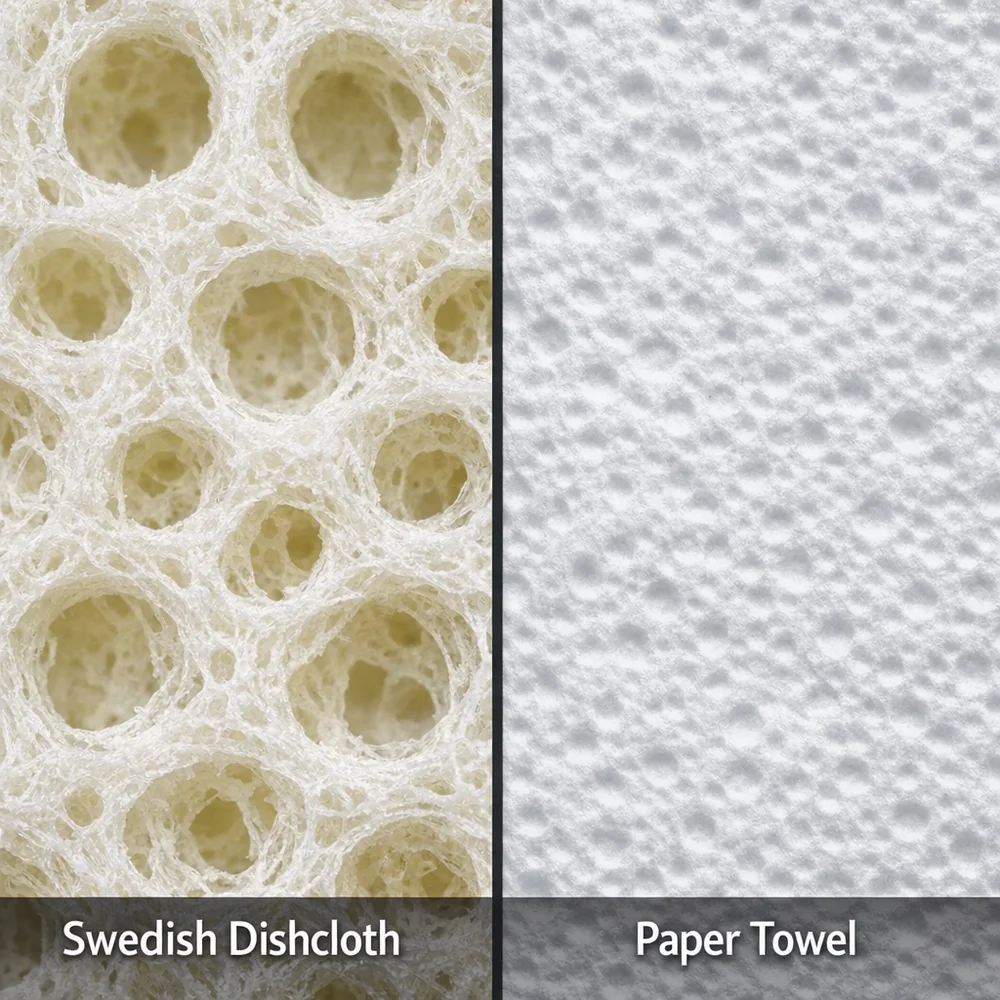
Swedish dishcloths have gained popularity as a hybrid product that bridges disposable and reusable categories. Made from a blend of cellulose, which is wood pulp, and cotton, these thin, stiff cloths absorb liquid like a sponge and can be rinsed, wrung, and reused many times before reaching the end of their functional life.
The absorbency of Swedish dishcloths stems from cellulose’s molecular structure. The same material that gives paper its absorbent properties is present here in a more durable form. A standard Swedish dishcloth can absorb 15 to 20 times its dry weight in water, outperforming both paper towels and conventional cotton rags on a gram-for-gram basis.
When dry, Swedish dishcloths become stiff and somewhat cardboard-like. This texture surprises first-time users but actually contributes to their utility. The rigidity helps scrub light residue from surfaces without the limpness that makes wet cotton rags difficult to manipulate. Upon wetting, the cloths soften and become pliable, adapting to curved surfaces and uneven textures.
The typical lifespan of a Swedish dishcloth ranges from two to six months with regular use, depending on usage intensity and care practices. This translates to replacing 15 to 50 rolls of paper towels per cloth. Manufacturers often claim equivalence to “17 rolls of paper towels,” though actual experience varies with individual usage patterns.
Key Insight: Swedish dishcloths absorb 15-20 times their weight in water, outperforming paper towels and cotton rags by a significant margin.
Bamboo Towels for Durability
Bamboo towels represent a more recent entry into the reusable market, positioning themselves as the closest analogue to conventional paper towel form and function. These products typically come on rolls, tear along perforated lines like paper towels, but withstand washing for reuse. The pitch is simple: use them like paper towels, wash them, and use them again.
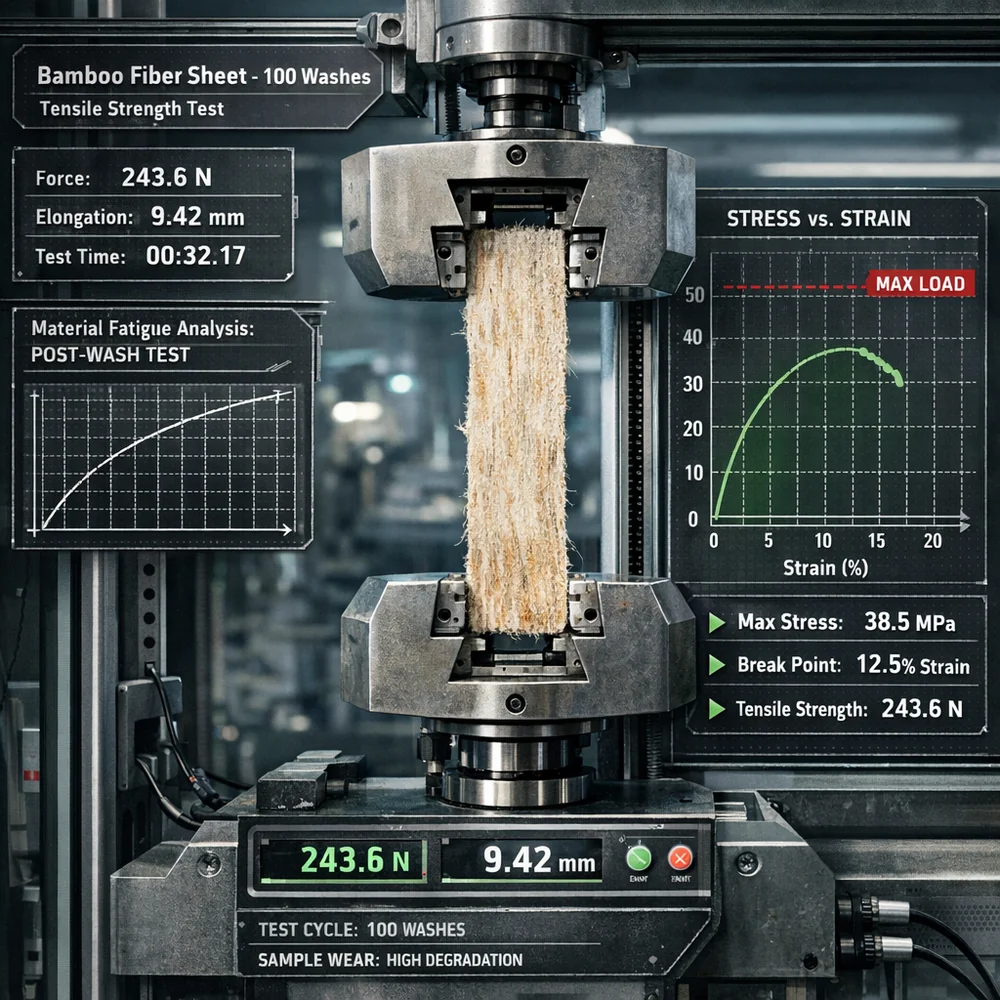
The durability claims for bamboo towels generally cite 80 to 100 washes per sheet before the material degrades beyond usefulness. Some products claim higher numbers, while actual user experience often falls short of marketing claims. The bamboo fiber becomes progressively thinner and weaker with each wash cycle, eventually developing holes or tearing during use.
Bamboo as a raw material offers genuine sustainability advantages. The plant grows rapidly without irrigation or pesticides, regenerates from its root system without replanting, and sequesters carbon efficiently. However, the process of converting bamboo into soft textile fibers often involves chemical processing, through viscose or rayon production, that diminishes some of these environmental benefits.
The paper-like format of bamboo towels eases the transition from conventional paper towels. Households can continue using the roll holder and the familiar tear-and-use motion while introducing the new step of washing for reuse. This gradual behavior change may prove more sustainable for some families than an abrupt switch to entirely different products.
Key Insight: Bamboo towels withstand 80-100 washes on average. Their paper-like format appeals to those transitioning from disposables.
The Unpaper Towel Approach
Unpaper towels are simply pieces of fabric cut to approximately paper towel size, often with finished edges to prevent fraying. They typically consist of cotton, flannel, or a combination of absorbent materials. Unlike the specialized materials in Swedish dishcloths or bamboo towels, unpaper towels use conventional textiles that behave like any other laundry item.
The washing routine for unpaper towels integrates easily with regular laundry cycles. After use, soiled towels can accumulate in a designated container until you have enough to wash, then join a regular load of towels or kitchen linens. Hot water wash cycles are recommended for kitchen towels to address the elevated bacterial loads that food contact surfaces accumulate.
Between washes, managing used unpaper towels requires some system to prevent odor and mold development. Wet towels stuffed into a closed container will sour quickly. Better approaches include open containers that allow air circulation, drying racks where used towels can air out before washing, or mesh bags that contain towels while permitting airflow.
The simplicity of unpaper towels makes them easy to produce at home. Basic sewing skills, or even no-sew techniques using pinking shears, convert old flannel sheets, receiving blankets, or cotton bath towels into functional unpaper towels. This upcycling approach eliminates even the modest purchase cost of commercial alternatives.
Key Insight: Wash unpaper towels with your regular towel load using hot water. Allow them to dry completely between uses to prevent mildew.
Managing Bacterial Growth
The primary hygiene concern with any reusable kitchen textile involves bacterial accumulation. Cloths used to wipe food-contact surfaces, clean up spills of raw meat juices, or handle food waste can harbor dangerous pathogens if not properly sanitized. Understanding bacterial dynamics in cloth allows for effective risk management.
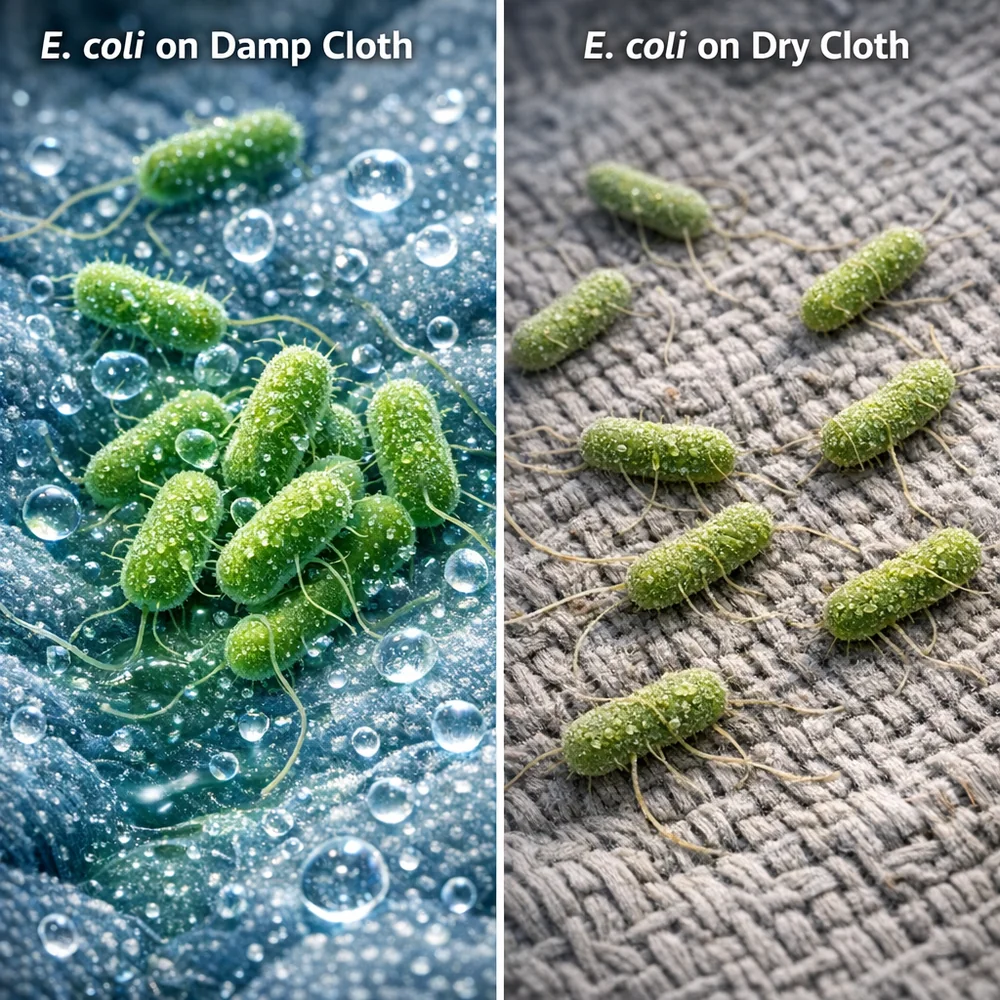
Bacteria require moisture, nutrients, and moderate temperatures to multiply. Kitchen cloths provide all three: residual moisture from use, organic nutrients from food residue, and the warm temperatures typical of home environments. Studies published in hygiene-focused journals have identified coliform bacteria, Salmonella, and E. coli in improperly managed kitchen textiles.
The most effective control measure is complete drying between uses. Bacteria cannot multiply without moisture, and most pathogens die as cloths fully dry. Spreading used cloths flat or hanging them singly, rather than bunching in a pile, accelerates drying. Sunlight provides additional antimicrobial benefit through UV radiation and should be leveraged when practical.
Regular hot water washing completes the hygiene cycle. Laundry water temperatures above 140°F, or 60°C, kill vegetative bacteria, while the physical action of the wash cycle removes dried residue that could harbor protected cells. Adding a sanitizing agent like chlorine bleach or oxygen bleach provides additional kill against organisms that might survive hot water alone.
Key Insight: Bacteria need moisture, food residue, and warmth. Dry cloths completely between uses to break the growth cycle.
The Real Cost Savings
The economic argument for reusable towels hinges on usage volume and replacement frequency. Light paper towel users may find that the purchase cost of reusables takes years to recover. Heavy users can achieve payback within months. Honest analysis requires estimating your actual consumption patterns.
A typical household using paper towels as the primary absorbent for kitchen tasks might consume 2 to 4 rolls per week. At current retail prices averaging around $1.50 per roll for quality brands, annual paper towel spending ranges from $156 to $312. Value brands reduce this figure somewhat, while premium brands increase it.
A starter set of 12 unpaper towels typically costs $15 to $30, depending on materials and construction quality. Swedish dishcloth multipacks run $10 to $20 for enough to last six months. Bamboo towel rolls fall in similar ranges. The incremental cost of washing these items with existing laundry loads approaches zero.
The comparison clearly favors reusables for households with moderate to heavy paper towel usage. A $30 investment in quality unpaper towels that last a year saves $126 to $282 compared to paper towel purchase. The savings compound in subsequent years as the reusables continue serving while paper towel costs continue accumulating.
Key Insight: Heavy paper towel users (4 rolls/week at $1.50/roll) spend $312 annually. A $30 unpaper towel set pays for itself in 5 weeks.
Composting at End of Life
When reusable textiles finally reach the end of their useful life, disposal options depend on material composition. Products made from natural fibers, including cotton, cellulose, and bamboo processed to natural fiber standards, can return to the soil through composting. Synthetic blends and those made from chemically processed bamboo, such as rayon or viscose, should not be composted.
Swedish dishcloths composed of cellulose and cotton biodegrade effectively in home compost systems. Their high carbon content classifies them as “brown” material that balances the nitrogen-rich “green” materials like food scraps. Cutting or tearing worn cloths into smaller pieces accelerates decomposition by increasing surface area for microbial action.
Cotton unpaper towels similarly qualify for composting, with one important caveat: residual detergent, fabric softener, or bleach from washing may affect compost quality. Cloths washed with minimal-ingredient, plant-based detergents present fewer concerns than those treated with conventional products containing optical brighteners and synthetic fragrances.
Bamboo towels derived from mechanically processed bamboo fiber theoretically compost, but the reality depends on manufacturing specifics that consumers cannot readily verify. Bamboo rayon or viscose undergoes chemical processing that may leave residues affecting biodegradability. When in doubt, these products are better directed to textile recycling programs than to home compost.
Key Insight: Swedish dishcloths and cotton unpaper towels can be composted at end of life. Cut them into small pieces to speed decomposition.
Microfiber vs Natural Fiber
The choice between microfiber and natural fiber cloths involves tradeoffs that extend beyond simple absorbency comparisons. Microfiber excels at some tasks while presenting environmental concerns that natural fibers avoid. Understanding these differences helps allocate each material to its optimal use.
Microfiber cloths consist of very fine synthetic fibers, typically polyester and polyamide, split to create maximum surface area. This structure makes them exceptional at picking up dust and trapping small particles. For dry tasks like dusting, polishing glass, or wiping electronics, microfiber outperforms natural alternatives significantly.
For absorbing liquid spills, natural fibers hold their own or exceed microfiber performance. Cotton and cellulose absorb water into their fiber structure, while microfiber relies on capillary action between fibers. For wet cleaning tasks, the difference is minimal. For mopping up significant liquid volume, absorbent natural fibers often prove more practical.
The environmental concern with microfiber involves microplastic shedding during washing. Each cleaning releases synthetic fiber fragments into the wastewater stream, contributing to the pervasive microplastic pollution now documented in oceans, freshwater, and soil ecosystems. Natural fiber cloths do not share this liability, making them preferable for environmentally conscious consumers.
Key Insight: Microfiber excels at dusting and glass polishing; natural fibers are better for absorbing spills. Use each for the task it does best.
Preventing Mildew
Mildew growth represents the practical failure mode that drives many users back to paper towels. A reusable cloth that consistently smells musty fails to provide the freshness expected from a kitchen cleaning tool. Preventing mildew requires managing drying conditions between uses and between washes.
Swedish dishcloths offer inherent advantages for drying. Their thin profile and cellulose structure allow rapid moisture evaporation. Simply draping a used Swedish dishcloth over the faucet or dish rack typically achieves complete drying within hours, even in moderate humidity. This quick-dry property explains much of their popularity.
Thicker cotton cloths require more intentional drying strategies. Hanging singly, not bunched or folded, on a drying rack with adequate air circulation prevents the moisture retention that enables mildew. Proximity to heat sources like stovetops or dishwashers can accelerate drying, though direct heat from burners creates fire hazards.
Routine machine washing at appropriate intervals prevents mildew establishment even when daily drying is imperfect. A mildewed cloth can often be rescued by washing with hot water and oxygen bleach or by sanitizing with a dilute chlorine bleach solution. Prevention through proper drying proves easier than remediation, however.
Key Insight: Thin Swedish dishcloths dry within hours. Thicker cotton unpaper towels need proper hanging and air circulation to prevent mildew.
Smart Storage Solutions
Accumulating used cloths between washes requires a system that contains odor without creating conditions that accelerate bacterial growth or mildew development. The container matters less than the airflow and drainage it provides. Several approaches work well depending on kitchen layout and preferences.
Wire or mesh baskets allow air circulation while containing the cloths until wash day. Positioning such a basket where it receives some airflow, near a window or heat source, enhances drying of cloths that entered the basket still damp. The visible accumulation also provides a reminder of when laundry attention is needed.
Wet bags designed for cloth diaper storage apply equally well to kitchen cloths. These laminated fabric bags contain moisture and odor while awaiting laundry day. They typically feature zipper closures and can be washed along with the cloths they contain. This approach trades airflow for containment, working best when wash frequency is high.
Dedicated small laundry bags for kitchen cloths simplify washing by keeping these items separate from clothing. Kitchen cloths can then receive hot water and bleach treatment without concern about color bleeding or damage to delicate items. The bag goes directly from storage basket to washing machine, minimizing handling of soiled cloths.
The transition from paper towels to reusable alternatives requires modest investment and some adjustment to daily habits, much like the switch to a zero-waste laundry routine. The financial payback arrives within months for typical households, and the environmental benefit accrues with every future use. Yet the decision ultimately rests on whether the habit change fits your household’s rhythm and priorities.
Swedish dishcloths suit users who want high absorbency with minimal behavior change and quick disposal at end of life. Bamboo towels appeal to those who prefer the roll-and-tear format while introducing reusability. Cotton unpaper towels offer durability, easy care, and the option to make them yourself from materials already on hand.
Most households find that some combination works better than exclusive reliance on any single product. Swedish dishcloths for countertop wiping, unpaper towels for hand drying, and perhaps a retained supply of paper towels for particularly messy or hygienic-concern situations represents a pragmatic compromise that reduces waste without demanding perfection.
Key Insight: Use a mesh basket or wire container for used cloths to allow air circulation. This prevents the sour smell of cloths left in sealed containers.
The Bottom Line
References
- Treehugger. “Best Reusable Paper Towels of 2024.”
- The Guardian. “Are Reusable Paper Towels Worth It?”
- Better Homes & Gardens. “Expert Reviews of Reusable Paper Towels.”
- UN Environment. “Beat Plastic Pollution: Sustainable Consumption Patterns.”
- ScienceDirect. “Environmental Impact of Paper Waste and Alternatives.”