Essential Oils in Laundry: Safety Risks, Pet Toxicity, and Fire Hazards
Table of Contents
Things You'll Learn From This Article:
- Essential oils in laundry are mostly about scent, not cleaning, because detergent, water, and heat do the real work.
- Adding oils won’t meaningfully kill germs unless you use very high amounts, which creates other safety and skin risks.
- Many essential oils can ignite at temperatures your dryer actually reaches, making direct use in the dryer a real fire hazard.
- Putting oils straight onto dryer balls and using them immediately is riskier than letting them sit for a day so the most flammable vapors evaporate.
- Line drying scented items avoids dryer fire risk entirely.
- Essential oils can leave permanent oil spots on clothes, especially if applied undiluted or used on synthetic fabrics.
- Heavier or darker oils, like patchouli or blue chamomile, are more likely to stain than lighter citrus or mint oils.
- Mixing essential oils directly into detergent can interfere with how the detergent works and how the scent releases.
- Separating cleaning and scenting—washing normally, scenting later—is safer and more predictable.
- Using only a few drops of oil on wool dryer balls is enough; adding more increases risk without much extra smell.
- Rotating dryer balls so freshly oiled ones rest for 24 hours fits safety into a normal laundry routine.
- Cats can be poisoned by oils that are safe for humans because their bodies can’t break down certain compounds.
- Tea tree, clove, cinnamon, oregano, and wintergreen oils are especially dangerous around cats, even from fabric contact.
- Dogs handle oils better than cats but can still get sick from concentrated exposure.
- Repeated low-level exposure to essential oils can permanently trigger allergies, even if you were fine with them before.
- Older, oxidized oils are more likely to cause allergic reactions than fresh ones.
- Using the smallest possible amount and keeping oils stored tightly sealed, cool, and dark lowers allergy risk.
- If someone in the household has fragrance sensitivity, essential oils in laundry can be a hidden trigger.
The natural fragrance appeal of essential oils has led plenty of people to incorporate them into laundry routines as alternatives to synthetic fragrances. From DIY foaming soap to scented dryer balls, there is no shortage of suggestions for various oils and various purposes. But those same concentrated botanical compounds that smell so nice also create safety risks that casual users rarely think about.
Essential oils are not simply “natural” versions of synthetic fragrances. They are complex mixtures of volatile organic compounds. Some are flammable. Some are toxic to certain animals. Some can cause allergic sensitization that lasts for life. Some react badly with fabric dyes. Understanding these properties is necessary before you start adding oils to your laundry.
This guide covers the safety framework for using essential oils in laundry, focusing on the risks that actually matter and the strategies that reduce them. The goal is enabling informed use, not blanket discouragement.
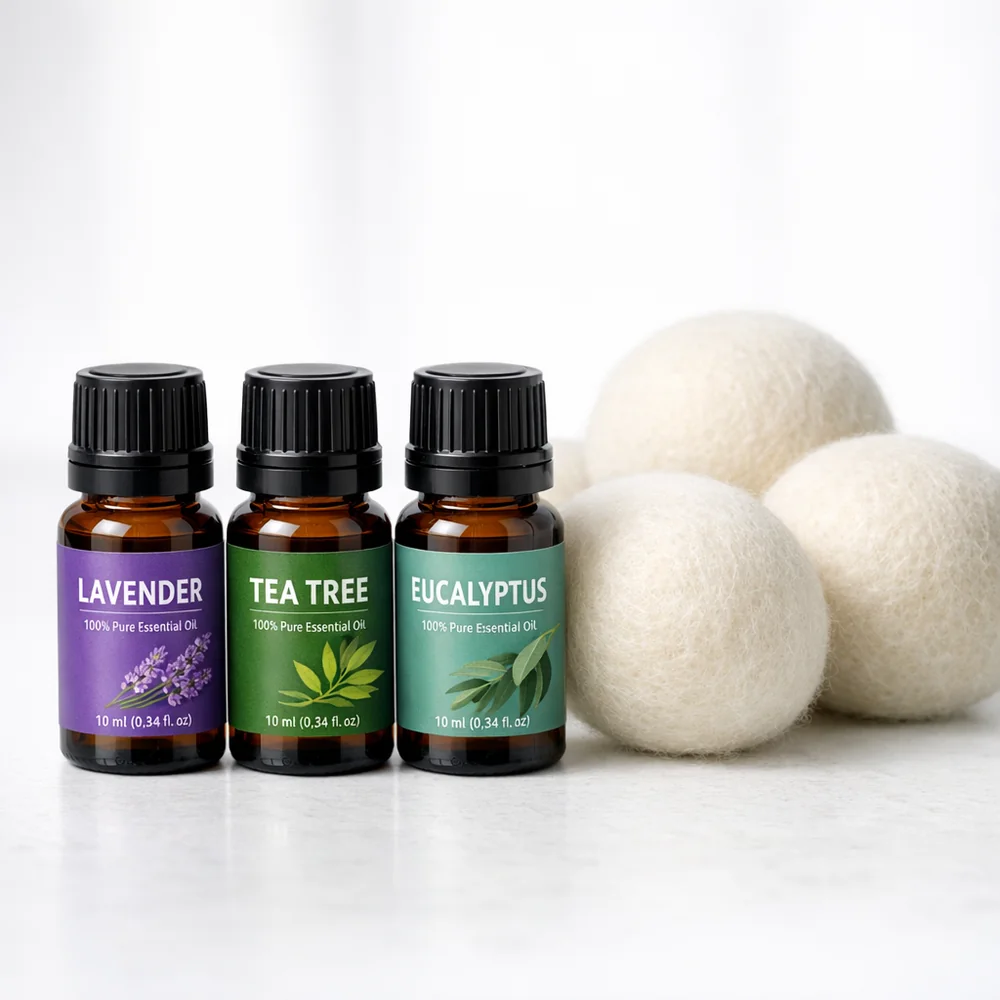
Do Essential Oils Actually Clean Anything?
Before we get to safety, let us examine whether essential oils even do what people claim. Marketing and blog content promote various oils as effective cleaning agents, antimicrobials, and moth repellents. The evidence behind these claims varies a lot.
Lavender, tea tree, and eucalyptus oils do demonstrate antimicrobial activity in laboratory settings. Studies have shown these oils inhibiting bacterial and fungal growth on agar plates and in controlled liquid cultures. However, the concentrations required for significant antimicrobial effect typically exceed what remains on fabric after dilution in wash water and subsequent rinsing.
The practical antimicrobial contribution of essential oils added to laundry is minimal. The heat of drying, the surfactant action of detergent, and the massive dilution in wash water all vastly outperform the marginal contribution of whatever essential oil traces remain. Using oils for their fragrance is honest. Claiming antimicrobial benefit requires concentrations that would create other problems.
Moth-repellent claims for lavender and cedar oils have better foundation. Studies have shown that volatile compounds from these oils deter clothes moth egg-laying and larval feeding. However, the effect requires ongoing volatile emission that laundered residues simply cannot sustain. Preventing moth damage requires more comprehensive strategies than just scenting your laundry.
Key Insight: Essential oils kill bacteria in lab tests, but the concentrations needed are far higher than what survives the wash and rinse cycles.
The Real Fire Hazard in Your Dryer

The most serious safety concern with essential oils in laundry is fire risk in clothes dryers. Essential oils are volatile organic compounds, and many have flash points, the temperature at which their vapors can ignite, within or near the temperatures reached in household dryers.
Clothes dryers exhaust at temperatures ranging from 125°F to 185°F, with drum and fabric temperatures sometimes exceeding these levels depending on load size and cycle settings. Many essential oils have flash points right in that range. Eucalyptus ignites at 120°F. Sweet orange and lemon are at 115°F. Tea tree is at 140°F. Lavender and peppermint sit at 156°F.
This is not theoretical. Fire departments have documented dryer fires attributed to essential oils, particularly when oils were applied directly to dryer balls or fabric immediately before a drying cycle. The confined, heated environment of a dryer drum can elevate localized oil concentrations to dangerous levels.
To reduce this risk, either avoid essential oils on items going into dryers or ensure adequate time for oil volatilization before drying. Adding oils to wash water works because they largely wash out. Applying very lightly to wool dryer balls and allowing 24 hours for drying before use reduces risk. Reserving oiled items for line drying eliminates the risk entirely.
Key Insight: Many essential oils have flash points below dryer operating temperatures. Concentrated applications can contribute to dryer fires.
Oil Spotting That Does Not Wash Out
Beyond fire safety, essential oils can cause visible permanent damage to fabrics through oil spotting. Despite their volatile nature, essential oils are still oils, hydrophobic substances that stain fabric similarly to cooking oils or petroleum products.
Concentrated application of essential oils to fabric can leave visible darker spots where the oil has saturated fibers. These spots may not wash out because the oil has bonded to synthetic fibers or displaced natural fiber coatings. Dark fabrics show spots as glossy areas while light fabrics show them as darkened patches.
Spotting risk is highest with undiluted oil application. Adding oils to wash water where they disperse and largely rinse away presents minimal spotting risk. Adding oils to wool dryer balls creates some risk, which you can reduce by using the minimum necessary amount and applying to the interior of the ball rather than the surface that contacts fabric.
Some essential oils are more prone to spotting than others. Heavier, resinous oils like patchouli and sandalwood leave more residue than lighter citrus or mint oils. Colored oils like blue chamomile can leave visible tint stains in addition to oil spots.
Key Insight: Essential oils are still oils. Direct application to fabric can leave permanent dark spots, especially on synthetics that absorb oil readily.
The Truth About Tea Tree and Antibacterial Claims
Tea tree oil carries a strong antimicrobial reputation derived from Australian aboriginal use and laboratory research. The active compound terpinen-4-ol demonstrates genuine antibacterial and antifungal activity across multiple studies. However, translating laboratory efficacy to practical laundry benefit involves obstacles that marketing rarely acknowledges.
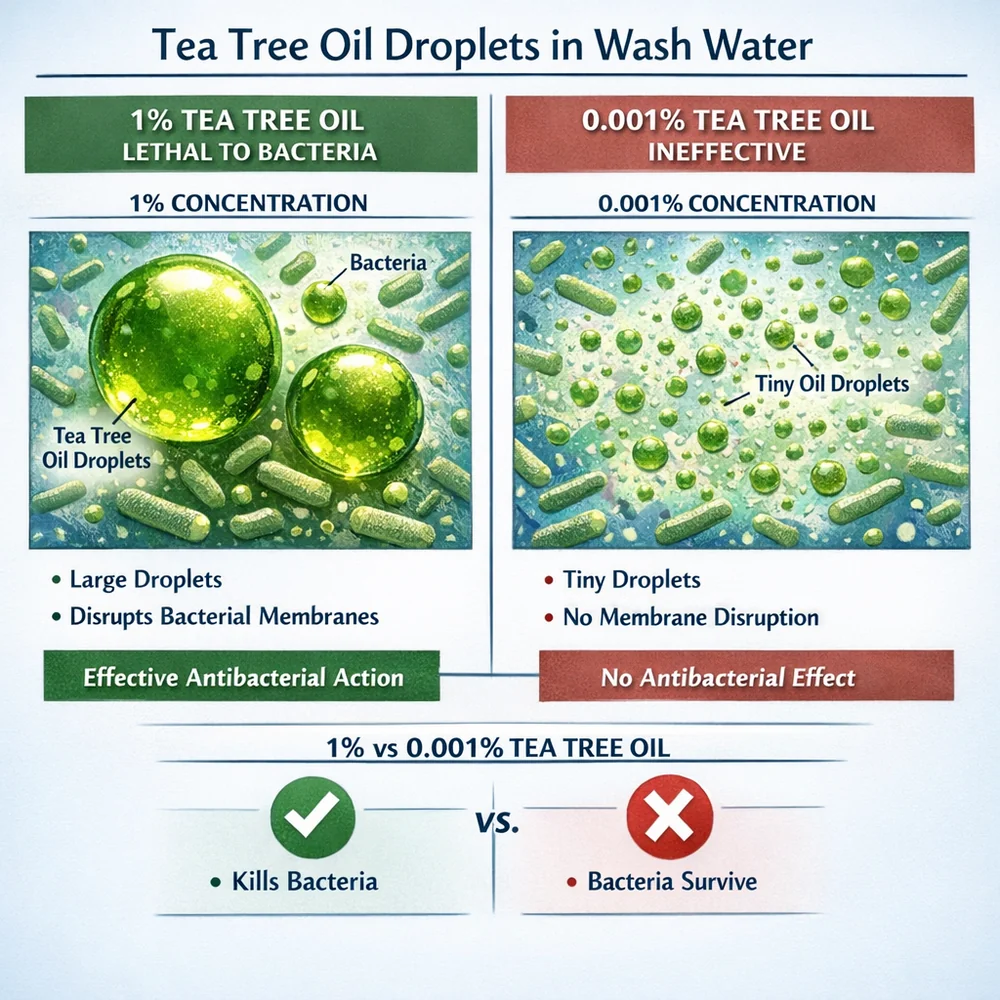
Antimicrobial action requires contact between the antimicrobial agent and the target organism at an effective concentration for sufficient duration. In laundry, essential oils added to wash water become heavily diluted, a few drops in gallons of water. Contact time is brief, just minutes. Most oil rinses away before it can have any effect.
Studies examining antimicrobial efficacy in actual laundry conditions rather than controlled laboratory settings have generally found minimal benefit from essential oil addition. The heat of washing and the surfactant action of detergent provide the antimicrobial effect. Essential oils contribute primarily fragrance.
The exception might be soaking protocols where items remain in oil-containing solution for extended periods. A pre-soak in water with substantial essential oil addition, measured in tablespoons rather than drops, might achieve meaningful antimicrobial contact. But at those concentrations you run into the skin sensitization and cost concerns discussed below.
Key Insight: Tea tree oil needs direct contact at 0.5-1% concentration to kill bacteria. Laundry dilution drops this to 0.001% or less, which is ineffective.
Mixing Oils Into Your Detergent
Many users add essential oils to unscented or fragrance-free detergent to create custom-scented laundry products. This approach works but introduces considerations beyond simple mixing.
Essential oils and detergent formulations may interact in ways that affect both fragrance release and cleaning performance. Some surfactants can solubilize essential oil compounds, reducing the fragrance that volatilizes during drying. Other interactions might destabilize the detergent emulsion or affect enzyme activity if the detergent contains enzymes.
A safer approach involves adding oils at the drying stage rather than the washing stage, either through wool dryer balls or by very light spritzing of damp laundry before drying. This separates cleaning and scenting, avoiding chemical interactions while still achieving the fragrance goal.
If adding oils to wash water, do so after the detergent has already been added and dissolved. This reduces interaction potential. The oils will largely wash out during rinsing, contributing fragrance primarily during the wash itself rather than persisting on finished laundry.
Key Insight: Adding oils to detergent can reduce both fragrance and cleaning power if the oils interfere with surfactant or enzyme function.
Using Wool Dryer Balls Safely

Wool dryer balls have become the standard vehicle for essential oil delivery to laundry. Adding drops of oil to the balls provides fragrance that releases gradually during the drying cycle. This method works but requires attention to quantity and timing for safety.
The optimal quantity is minimal: two to four drops per ball, with three balls per load. This provides noticeable fragrance without creating excessive concentration that raises fire or spotting risk. More drops do not proportionally increase fragrance perception and do increase safety concerns.
Timing matters particularly for fire safety. Applying oil to balls immediately before use means the most volatile and most flammable compounds enter the dryer at highest concentration. Allowing oiled balls to sit at room temperature for several hours, ideally overnight or longer, lets these volatiles evaporate before the heated dryer environment.
A practical approach is rotating balls between active use and resting. With six balls total, three can be in use while three sit freshly oiled. Swap sets at each laundry session and you maintain the 24-hour waiting period without interrupting your routine.
Key Insight: Apply only 2-4 drops per wool ball. Let balls dry 24 hours before use to allow volatile (flammable) compounds to evaporate.
Why Essential Oils Can Kill Your Cat
Essential oils toxic to humans are also toxic to pets, but pets face additional risks from oils that are perfectly safe for humans. The differences in animal metabolism, particularly in cats, create vulnerabilities that require serious awareness in households where pets contact laundered fabrics.
Cats lack the liver enzymes, specifically glucuronyl transferases, that metabolize certain essential oil compounds in humans and most other mammals. Phenolic compounds like those in tea tree, cinnamon, clove, oregano, and wintergreen oils can build up in cats’ systems to toxic levels even from seemingly minor exposure. Cats’ grooming behavior increases exposure as they lick oils from fur.
Dogs tolerate essential oils better than cats but are not immune. Large quantities of tea tree oil applied topically or ingested have caused neurological symptoms in dogs. Pennyroyal oil, sometimes recommended for flea control, is hepatotoxic to dogs.
For households with cats, avoiding phenol-containing oils in laundry is essential, particularly for bedding and fabrics the cat contacts frequently. Lavender and chamomile are generally considered safer for cat households, though caution still applies. Dogs face fewer restrictions but should not have access to concentrated oils or freshly oiled fabrics.
Key Insight: Cats cannot metabolize tea tree, eucalyptus, cinnamon, citrus, or pine oils. Even small residues on bedding can cause liver damage or death.
Allergies That Last Forever
Repeated exposure to essential oils can trigger allergic sensitization, converting a person who previously tolerated an oil into one who reacts to even trace exposure. This phenomenon has been well-documented in aromatherapy and cosmetics and applies equally to laundry exposure.
Sensitization is not the same as irritation. Irritation is a direct effect requiring significant concentration that typically resolves when exposure stops. Sensitization is an immune system response that, once established, triggers on minimal subsequent exposure and may last indefinitely.
Lavender, tea tree, lemon, and ylang ylang are among the oils most commonly associated with sensitization reactions. Oxidized oils, those exposed to air, light, or heat during storage, present higher sensitization risk because oxidation products are more allergenic than fresh oil compounds.
Preventing sensitization involves using minimum effective quantities, avoiding application to skin-contact areas of garments, and maintaining oil freshness through proper cool, dark, sealed storage. Individuals with existing fragrance sensitivities or atopic conditions face elevated sensitization risk and might reasonably avoid essential oil use in laundry entirely.
Essential oils in laundry offer genuine fragrance benefits for those seeking alternatives to synthetic fragrances. However, these benefits come with safety considerations that casual use often overlooks. Fire risk, pet toxicity, fabric damage, and human sensitization all warrant attention before incorporating oils into regular laundry practice.
The safest approach uses minimal quantities applied to wool dryer balls with a 24-hour waiting period before use. Avoiding phenol-containing oils in cat households and disposing of old oils safely reduces specific risks.
For many users, the fragrance benefit may not justify the complexity and risk. Fragrance-free laundry represents a simpler approach that avoids both synthetic and natural fragrance concerns. Those who value essential oil fragrance enough to accept the associated risks can do so informed about what those risks actually entail as part of a zero-waste laundry routine.
Key Insight: Essential oils can cause permanent allergic sensitization. Once sensitized, you may react to even traces of that oil for life.
The Bottom Line
References
- NAHA. “Safety Guidelines for Essential Oil Use.”
- Journal of Applied Microbiology. “Antimicrobial Activity of Essential Oils.”
- ASPCA. “Essential Oils and Cats.”
- Tisserand Institute. “Essential Oil Safety Guidelines.”
- NFPA. “Dryer Fire Prevention and Safety.”