Biodegradable Dish Soap for Camping: Leave No Trace Washing Guide
Table of Contents
Things You'll Learn From This Article:
- “Biodegradable” on a soap label does not mean it is safe to pour into lakes or streams.
- Soap breaks down in soil, not in water, which is why washing near shore still causes harm.
- Even natural soaps can damage fish, algae, and small aquatic animals before they break down.
- Washing dishes directly in a lake or stream exposes wildlife to soap at harmful levels.
- The 200-foot rule exists so soil can filter and neutralize soap before it reaches water.
- Carry water away from the source to wash, instead of bringing dirty dishes to the water.
- Straining out food scraps before dumping dishwater prevents animals from being attracted to your camp.
- Food bits from dishwater should be packed out or buried properly, not scattered.
- Spreading dishwater over a wide area or using a small sump hole helps it break down faster.
- Natural soaps are less toxic than synthetic detergents, but both still need proper disposal.
- Castile soap and camp-specific soaps work similarly if you follow Leave No Trace practices.
- How you use soap matters more than which brand you bring.
- Many meals can be cleaned with hot water and scrubbing, without any soap at all.
- Soap is mainly needed for greasy foods like oils, bacon, or heavy sauces.
- Using less soap reduces your impact without sacrificing basic cleanliness.
- Small amounts of soap from many campers can add up to serious water pollution.
- Soap can trigger algae blooms by lowering oxygen and adding nutrients to water.
- Sand, gravel, or ash can sometimes replace soap for scrubbing dishes outdoors.
- In cold weather, cleaning dishes right after eating makes soap almost unnecessary.
- Frozen or thin soils filter poorly, so minimizing soap use matters even more in winter.
There is something incredibly tempting about washing your dishes right at the edge of a beautiful alpine lake after a long day of hiking. The water is right there, crystal clear and inviting. But here is the thing that trips up even well-meaning campers: that bottle of “biodegradable” soap in your pack does not mean what you probably think it means. Just because something breaks down eventually does not mean you can dump it straight into the water.
This is one of those situations where the marketing has gotten way ahead of the science. Companies slap “eco-friendly” and “biodegradable” on their labels, and people reasonably assume that means the product is safe to use in nature without restrictions. It is not. Understanding why requires getting into what biodegradable actually means, how soap affects fish and other aquatic life, and what Leave No Trace practices look like in real-world camping.
The goal here is not to make you feel guilty about washing a pot. It is to give you the knowledge to do it right so those gorgeous backcountry lakes stay gorgeous for everyone who comes after you.
What Biodegradable Actually Means
When you see “biodegradable” on a soap bottle, all that label is telling you is that the product will eventually break down through natural biological processes. It says nothing about how fast this happens, what conditions are required, or what the soap does to the environment before it finishes breaking down.
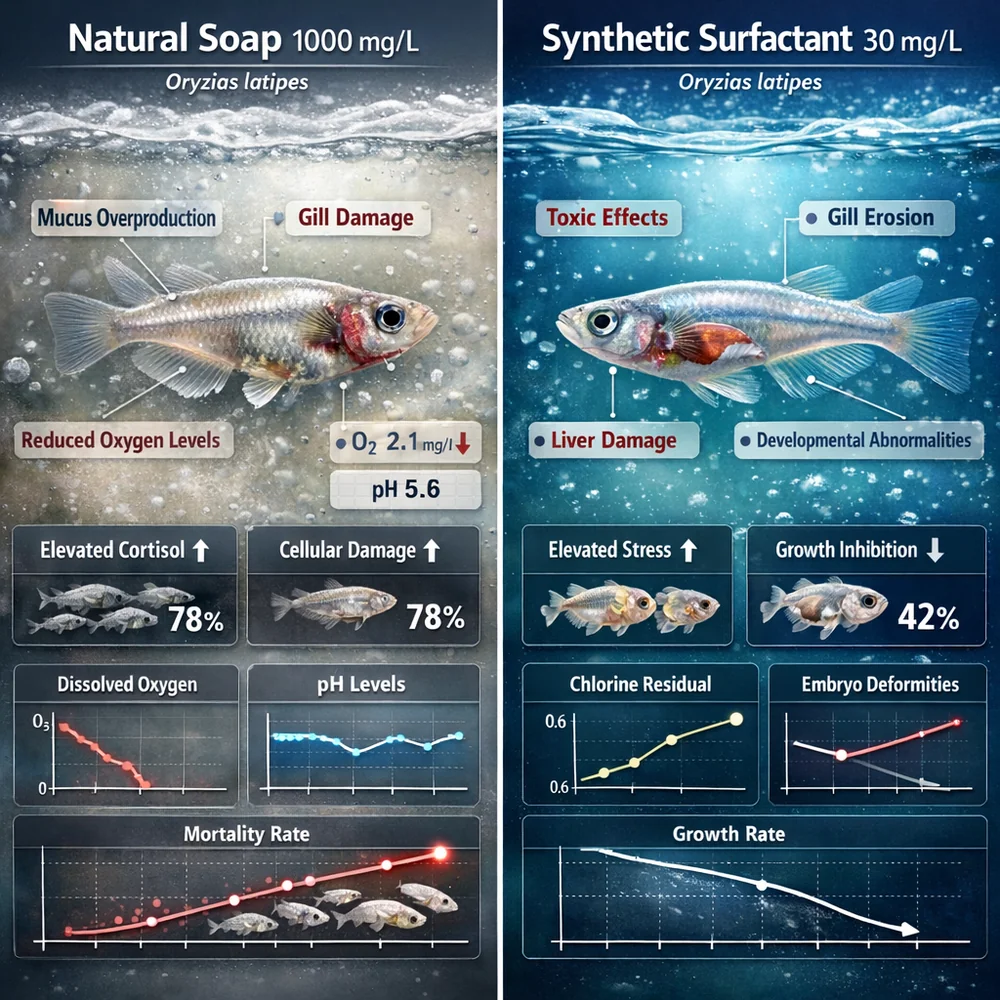
Research published in PLOS ONE tested natural soap compounds against synthetic detergents and found that soap fatty acids achieved 87 to 105 percent biodegradation within 28 days under standardized testing conditions. Sounds great, right? Here is the catch: those testing conditions involve soil microorganisms. The bacteria that break down soap live in dirt, not in water. Biodegradation happens in soil, which is why the 200-foot rule exists.
When soap enters a stream or lake directly, it contacts fish, invertebrates, and aquatic plants before any meaningful biodegradation can occur. The same surfactant properties that let soap cut through grease on your frying pan also make it toxic to aquatic life. The soap eventually breaks down, but the damage happens first.
The Environmental Protection Agency has quantified how much dilution is needed for safe aquatic exposure: roughly 20,000 ounces of water for every single ounce of biodegradable soap. A small alpine lake cannot provide that kind of dilution when multiple camping groups are all washing dishes at the shoreline. Those “small” individual contributions add up to significant environmental damage. Check out the EPA Safer Choice standards for more details on what ingredient safety actually looks like.
Key Insight: Biodegradable means it breaks down in soil, not that it is safe for water. Soap biodegrades through soil bacteria, and water contact harms aquatic life before that process even starts.
How Soap Affects Fish and Aquatic Life
Scientists have actually measured how soap ingredients affect aquatic organisms across the food web, from algae at the bottom to fish at the top. They use standardized testing protocols to measure lethal concentrations, the amount that kills half the exposed organisms, so you can compare different products.
Research comparing natural soap fatty acid salts to synthetic detergents found significant differences. For fish, natural soap compounds showed lethal concentrations of 400 to 1000 milligrams per liter. Synthetic surfactants like sodium lauryl sulfate showed lethal concentrations of only 2.8 to 30 milligrams per liter. That makes synthetics 10 to 100 times more toxic than natural soaps.
For small crustaceans that fish eat, natural soap showed effect concentrations around 40 to 90 milligrams per liter, while synthetic SLS showed 13 milligrams per liter. For algae that form the base of the food web, natural soap demonstrated effect concentrations of 50 to 150 milligrams per liter compared to 24 to 39 for synthetics. The pattern is consistent: natural soaps are less toxic than synthetics, but both cause harm at concentrations easily achieved in small water bodies.
This data supports choosing natural soap for outdoor use, but it absolutely does not give you permission to wash directly in water. The reduced toxicity of natural soap buys you some environmental margin for accidental exposure, not a free pass for intentional discharge.
Key Insight: Natural castile soap is 10 to 100 times less toxic to fish than synthetic detergents. But even those lower concentrations still kill fish, so keep all soap out of the water.
The 200-Foot Rule Explained
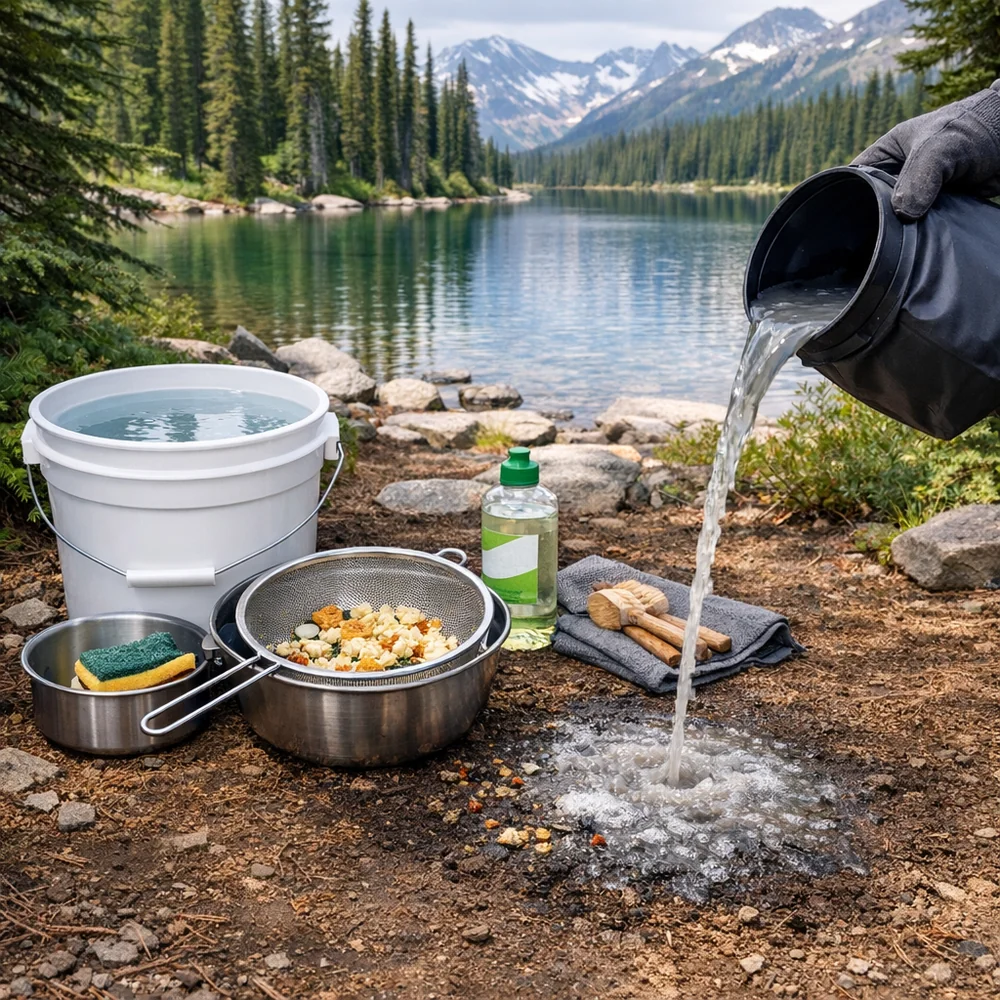
The Leave No Trace principles specify that all washing should happen at least 200 feet from any water source. That is roughly 70 adult paces. This distance exists because it gives soil enough space to filter your wastewater before it can reach streams, lakes, or groundwater.
When soapy water soaks into the ground, soil microorganisms break down the soap compounds while physical filtration removes particles. By the time that filtered water reaches any surface water or groundwater, the harmful surfactants have been converted to harmless breakdown products. This is where “biodegradable” actually delivers on its promise.
In practice, this means carrying water from the source to your washing location rather than bringing your dirty dishes to the lake. Fill a pot or bucket at the water’s edge, walk 70 paces away to your washing station, do your cleaning there, and dispose of the wastewater properly.
The 200-foot distance also accounts for terrain variability. Steep slopes, sandy soils, and areas with high water tables provide less filtration than average. In sensitive alpine environments with thin rocky soils, you might want even more distance to be safe.
Key Insight: The 200-foot rule gives soil time to filter and biodegrade soap before it reaches water. This is where biodegradable actually works.
How to Handle Your Dishwater Properly
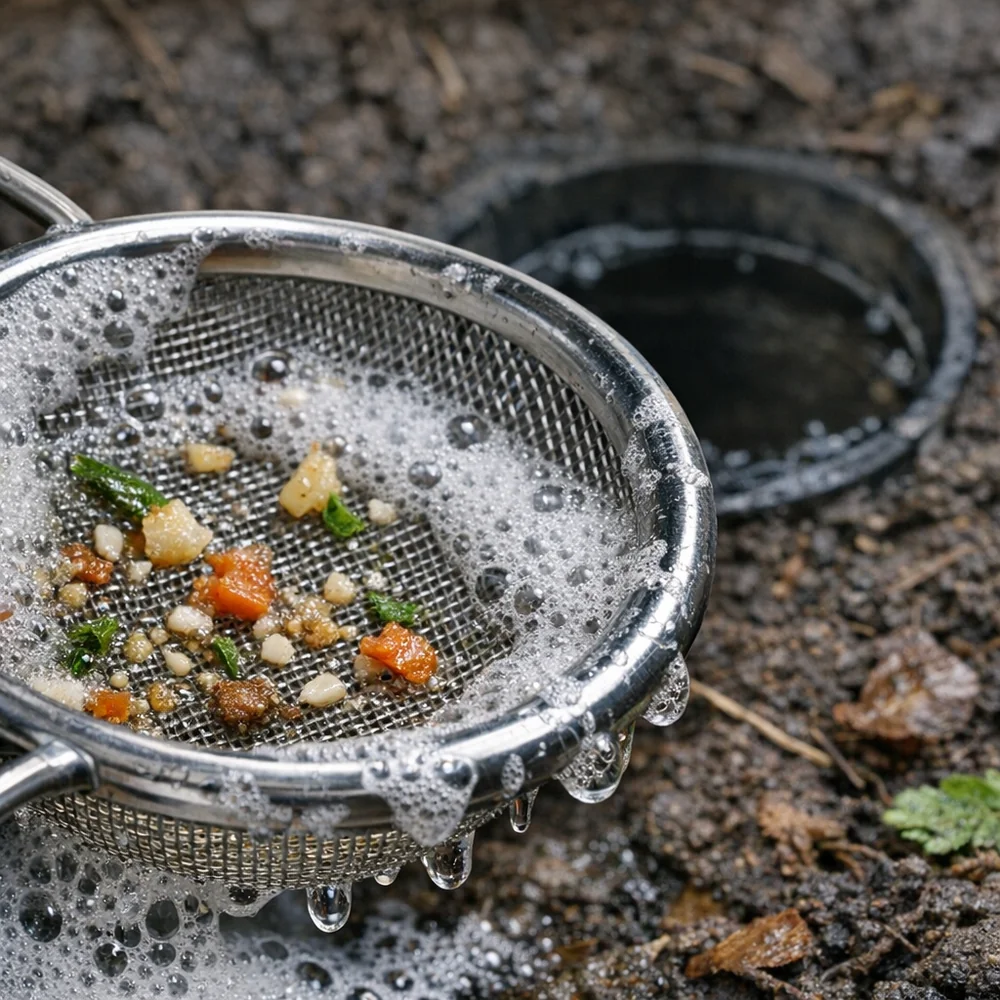
Proper greywater disposal involves two steps: straining out food particles and distributing the wastewater to maximize soil contact. Getting both of these right speeds up biodegradation and prevents attracting wildlife.
Before pouring out your dishwater, strain out all food particles using a fine mesh strainer or a bandana. Those food bits should get packed out with your other garbage or added to a properly dug cathole. Food particles in wastewater attract animals, potentially habituating them to human food sources. That is bad for the animals and bad for future campers.
You have two good options for the strained water itself. Broadcasting means scattering the water widely over a large area so it does not concentrate in any single spot. This works best during daylight when sun and air exposure help with evaporation and breakdown.
The sump hole method, which brands like Campsuds specifically recommend, involves digging a hole 6 to 9 inches deep in soil, pouring your wastewater into it, then covering it back up. This concentrates the breakdown in one location while giving the water maximum soil contact for filtration. Place your sump hole at least 200 feet from water and away from where people camp. For more on responsible waste handling, check out our guide on safe disposal of cleaning chemicals.
Key Insight: Strain food particles from dishwater before disposal. Then broadcast spray the water or use a sump hole at least 200 feet from any water source.
Castile Soap Versus Dedicated Camp Soaps
The outdoor gear market sells products specifically marketed for camping, things like Campsuds and Sea to Summit Wilderness Wash. You can also use general natural soaps like Dr. Bronner’s castile soap. Understanding the differences helps you make an informed choice.
Camp-specific products often emphasize concentration to reduce pack weight, and they may include ingredients optimized for cold-water performance. Their packaging and instructions typically reflect outdoor use and mention the 200-foot rule explicitly.
Castile soap, made through traditional saponification of vegetable oils with potassium hydroxide, consists of fatty acid salts that are among the most biodegradable surfactants available. Research shows potassium oleate, a primary component of castile soap, achieves 88 percent biodegradation with a half-life of about 6 days under standardized testing.
For practical camping use, either option works fine as long as you follow proper protocol. Castile soap might be more available and useful for multiple purposes beyond just camping. Dedicated camp products offer convenience features like travel-sized packaging and concentrated formulas. What matters most is how you use it, not which specific product you choose.
Key Insight: Camp soaps are formulated for cold water and minimal pack weight. Castile soap like Dr. Bronner’s works equally well, just use it sparingly.
Do You Even Need Soap?
Here is something most campers never consider: for a lot of outdoor dishwashing, you might not need soap at all. Hot water combined with mechanical scrubbing removes the vast majority of food residue without any surfactant chemistry required.
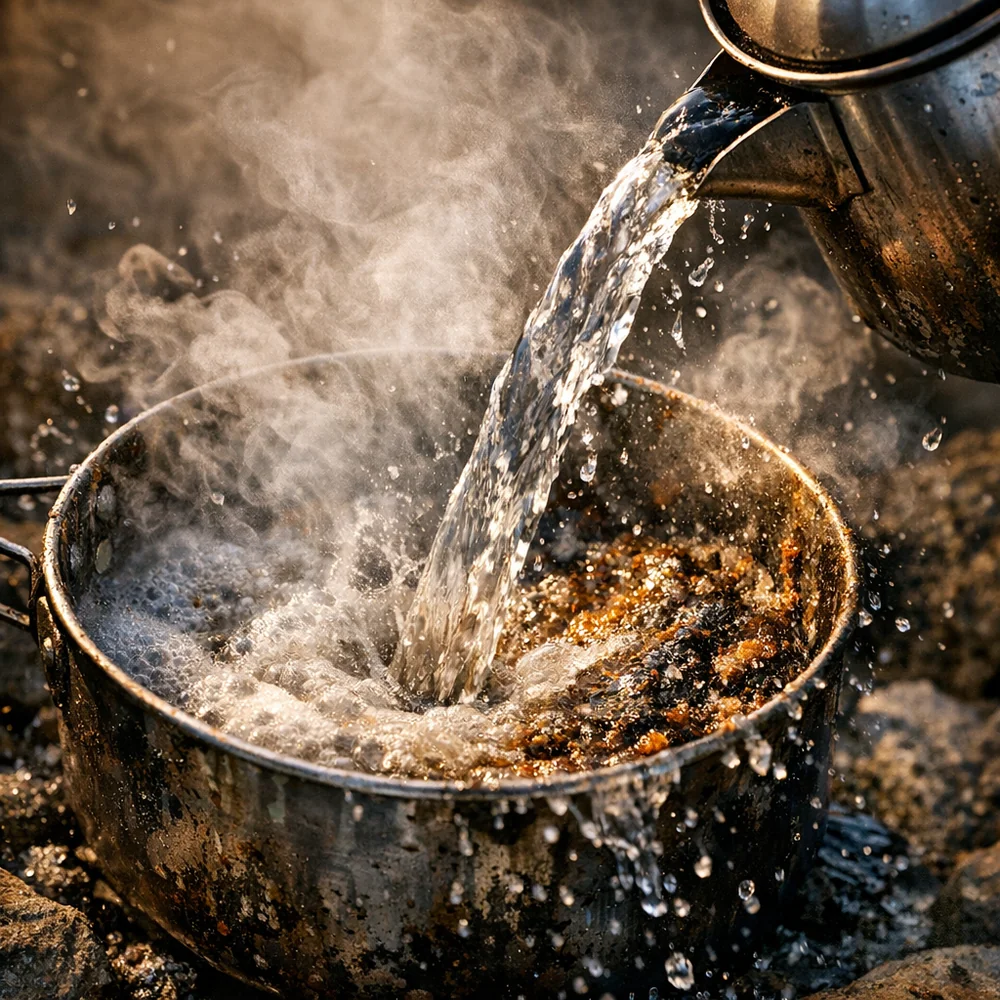
The combination of heat and physical scrubbing loosens and removes food effectively. Boiling water or near-boiling water from your camp stove provides thermal sanitization that addresses food safety concerns. The traditional camping practice of scraping dishes immediately after eating, then cleaning with boiled water and a scrub pad, gets the job done.
Soap becomes necessary primarily when you are dealing with significant grease or oil that hot water alone cannot emulsify. If your camp meal involved bacon grease, oily sauces, or similar fatty foods, soap provides real benefit. For simpler meals like pasta, rice, or rehydrated backpacking food, hot water typically handles it.
This approach minimizes soap use without eliminating it entirely. Carry a small amount of biodegradable soap for when you genuinely need it, and default to hot water for routine cleaning. It is a practical compromise.
Key Insight: For most camp dishwashing, boiling water plus scrubbing works as well as soap. Save the soap for genuinely greasy messes.
Why Soap Causes Algae Blooms
Soap contributes to algal blooms through multiple mechanisms, creating the unsightly green scum that degrades water quality and ruins swimming spots. Understanding how this works reinforces why even small amounts of soap matter.
Surfactants in soap reduce water surface tension, which decreases oxygen transfer from the atmosphere into the water. Lower dissolved oxygen stresses fish and other aquatic life while favoring algae, which produce their own oxygen. This creates conditions where algae thrive while everything else struggles.
Soap ingredients also contain or release nutrients that feed algal growth. While phosphorus has been removed from many modern soaps, other nutrients and organic compounds in soap wastewater contribute to overall nutrient loading. In alpine lakes with naturally low nutrient levels, even small inputs trigger disproportionate algal responses.
The cumulative effect of many campers each contributing “just a little” soap creates environmental damage that no single person caused but everyone contributed to. The solution is collective commitment to keeping soap out of water, not individual calculations about how much personal contribution is acceptable.
Key Insight: Soap feeds algae and reduces dissolved oxygen in water, creating algal blooms that harm fish and ruin swimming areas.
Going Ultralight Without Soap
Weight-conscious backpackers may want to eliminate soap entirely while maintaining acceptable hygiene. Several approaches work for reducing or eliminating soap carry weight.
Sand and gravel provide mild abrasive cleaning that substitutes for soap on many surfaces. Used with water, these natural materials scrub away food residue without adding any foreign substances to the environment. This is a traditional approach that predates commercial soap and still works.
Wood ash from campfires, where fires are permitted, provides mild alkalinity that helps cut grease. The potassium compounds in ash function similarly to soap chemistry, improving cleaning performance without commercial products. Ash should still be disposed of following greywater principles since concentrations can affect water chemistry.
For personal hygiene, the physical act of scrubbing in water removes the vast majority of surface contamination. A thorough rinse in a lake without soap, followed by changing into clean clothes, provides meaningful hygiene improvement. Wet wipes packed out as garbage offer soap-like cleaning without liquid waste disposal issues.
Key Insight: For ultralight camping, hot water plus sand or gravel scrubbing cleans dishes without carrying any soap. Use cold wood ash for grease.
Cold Weather Camping Considerations
Cold temperatures complicate outdoor washing by reducing water availability and making standard techniques less effective. Adapting your practices for winter maintains hygiene while respecting the unique environmental constraints.
Snow provides unlimited water for washing, but melting enough for effective cleaning requires fuel and time. Prioritize which items genuinely need washing and use minimal melted water for the highest-priority tasks.
Immediate cleaning before food freezes is more important in winter than any other season. Scrubbing with snow or ice right after a meal removes soft residue. A final rinse with small quantities of melted warm water handles whatever remains. Soap becomes nearly optional when you scrub with snow immediately.
Frozen ground changes disposal considerations. With soil microorganisms dormant and filtering capacity reduced, even proper distance disposal provides less protection than in warm seasons. Minimizing soap use in winter protects spring meltwater that will eventually carry any winter deposits into waterways.
The phrase “biodegradable soap” has created a lot of unfortunate confusion about what is and is not acceptable for outdoor use. Biodegradability is a genuine property that matters for environmental impact, but it describes behavior in soil environments. It is not permission for direct water contact. Every soap, regardless of marketing claims, needs to stay out of lakes, streams, and rivers.
The practical protocols are straightforward: wash at least 200 feet from water, strain food particles, dispose of wastewater through broadcasting or sump holes, and consider whether soap is necessary at all for what you are cleaning. These practices enable real outdoor hygiene while protecting the aquatic environments that make wilderness experiences worthwhile. You can extend these same principles to your home with a zero-waste laundry routine.
The cumulative impact of many campers each making good decisions creates protected ecosystems. The cumulative impact of many campers each believing their individual soap use does not matter creates damaged lakes and streams. The choice is individual. The consequence is collective.
Key Insight: In winter, scrub dishes with snow immediately after eating before food freezes. Use melted snow for a final rinse. Soap is optional.
The Bottom Line
References
- PLOS ONE. “Natural soap is clinically effective and less toxic and more biodegradable in aquatic organisms.” (2025).
- Treehugger. “Never, Ever Use Soap in a Lake.”
- EPA Safer Choice. “Identifying Greener Cleaning Products.”
- OECD. “Test No. 301: Ready Biodegradability.”
- Leave No Trace. “Center for Outdoor Ethics.”