Refillable Cleaning Systems Guide: Concentrates, Bottles, and Sustainability
Table of Contents
Things You'll Learn From This Article:
- Refillable cleaners work by keeping the same bottle and adding a concentrate plus tap water, so you stop buying bottles that are mostly water.
- Tablets save the most on shipping and storage because they’re dry and lightweight, but you need to wait for them to dissolve before using.
- Liquid concentrates are faster to use and more flexible, but they still ship a lot of water, which reduces some environmental gains.
- Powder refills act like concentrates but activate during use, which can be easier for things like dish soap.
- Plastic bottles are tough and cheap but can scratch over time, making them harder to keep truly clean.
- Glass bottles stay cleaner and don’t hold smells, but they’re heavy and can break if dropped near sinks or tubs.
- Refillable systems usually cost more at first, but they often save money after several refills if you stick with them.
- Buying refills in bulk matters; paying high shipping for single refills can wipe out any savings.
- Reused bottles can grow bacteria if you don’t clean them, especially inside the spray pump.
- Rinsing bottles, letting them dry, and washing them with soap and hot water now and then keeps contamination under control.
- Plastic bottles can develop biofilm (a thin layer of bacteria), which is why an occasional vinegar soak helps keep them sanitary.
- Trigger sprayers are hard to recycle, so using the same spray head as long as possible is key to reducing waste.
- Tablets have the biggest carbon benefit because they’re tiny and light compared to shipping full bottles of liquid.
- Subscriptions are useful once you know how fast you use a product, but starting with one-time orders helps avoid overstock.
- DIY cleaners work well for basic jobs, but you’ll still need commercial products for tougher or specialized cleaning tasks.
- Refillables don’t make sense for products you rarely use, since the savings and environmental benefits depend on regular refilling.
- Spray pumps need maintenance; flushing them with warm water keeps them spraying properly and smelling clean.
The refillable cleaning products market has grown substantially as consumers seek alternatives to the continuous plastic bottle cycle of conventional cleaning products. Systems from Blueland, Branch Basics, Cleancult, and others promise environmental benefits through reusable containers and concentrated refills. Understanding how these systems work, their genuine benefits, and their potential drawbacks enables informed purchasing decisions.
The core concept is straightforward. Rather than repeatedly buying and discarding plastic bottles filled mostly with water, consumers maintain permanent bottles and purchase concentrated refills. The refills may be tablets, liquid concentrates, or powder that combines with tap water to create finished cleaning solutions. The environmental case rests on packaging reduction and shipping efficiency.
This guide covers the practical aspects of refillable systems: bottle materials, contamination concerns, concentrate formats, and real-world usability. The goal is enabling effective adoption while acknowledging limitations that affect some use cases.
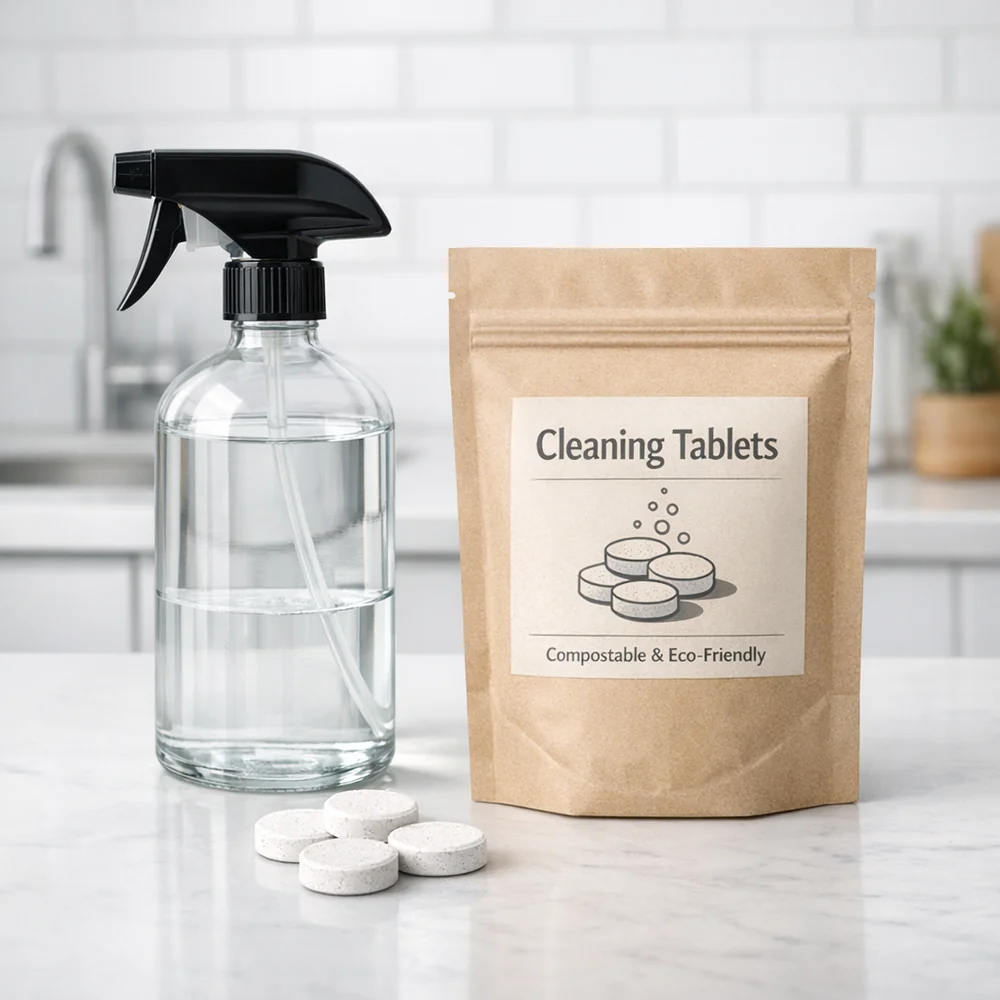
Comparing Concentrate Formats
Refillable systems use various concentrate formats, each with distinct advantages and limitations. Understanding these differences helps match product selection to household needs.
Dissolvable tablets represent the most dramatic water reduction. Dry tablets ship at a fraction of the weight and volume of finished product, eliminating water weight entirely from shipping. Products from Blueland and similar brands use effervescent formulations that fizz when dissolved, ensuring complete dispersal. Tablets require warm water and dissolution time but offer maximum shipping efficiency.
Liquid concentrates, used by brands like Branch Basics, ship actual liquid product that consumers dilute with water. These still contain significant water, making them heavier than tablets, but they dissolve instantly without effervescent chemistry. The single “Concentrate” approach allows one product to serve multiple dilutions for different applications.
Powder formulations, like Blueland’s dish soap, offer tablet-like weight reduction with different handling characteristics. Powder activates when encountering water in use rather than requiring pre-dissolution, which may suit some applications better than tablets.
Key Insight: Tablets are lightest but need warm water and 10-15 minutes to dissolve. Liquid concentrates work instantly but still ship some water.
Choosing Your Bottle Material
Refillable systems typically provide reusable bottles in various materials, each presenting different durability, aesthetics, and environmental characteristics.
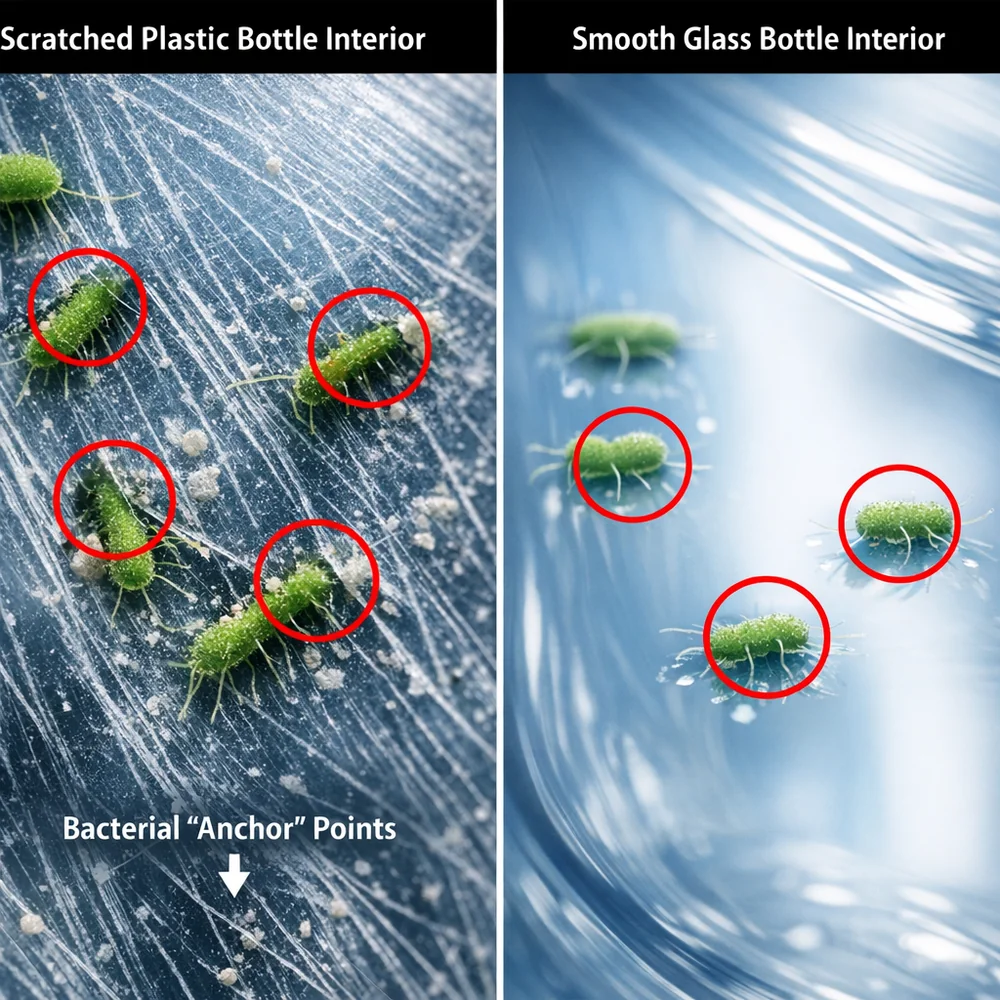
Plastic bottles, typically HDPE or Tritan, offer durability and impact resistance at low cost. They will not shatter if dropped, making them practical for bathroom and kitchen use. However, plastic bottles may degrade over time, developing scratches that can harbor contamination, and may eventually need replacement despite being “permanent.”
Glass bottles provide superior hygiene because glass does not scratch or absorb odors and cleans easily. However, shattering risk makes glass problematic around sinks and in bathrooms where dropped bottles are common. Glass also weighs more for shipping the initial kit.
Aluminum containers, used for some personal care refillables, offer durability and recyclability. However, aluminum reacts with acidic formulations, potentially limiting compatibility with certain cleaning products. Coated aluminum addresses reactivity but adds manufacturing complexity.
Key Insight: Glass is most hygienic but breaks. Plastic is practical but scratches over time. Aluminum is durable but incompatible with some formulas.
The Real Economics of Refillables
One of the most persistent myths is that eco-friendly products are always more expensive. While the initial investment for a refillable system is higher than buying a single bottle of conventional cleaner at a supermarket, the lifecycle cost tells a different story.
A conventional spray bottle averaging $4.50 costs $45.00 by the tenth purchase. A refillable tablet system costing $12.00 initially for the bottle and first tablet, then $2.00 per refill, costs only $30.00 for the same ten bottles’ worth of cleaner. A liquid concentrate system might cost $35.00 initially for the bottle and a 32-ounce concentrate, then $1.50 per diluted refill, totaling $48.50 including the initial buy-in.
Many refillable systems are sold via direct-to-consumer models. For the economics to work, consumers must buy in bundles. Purchasing a single $2.00 tablet with $6.00 shipping makes the system economically unviable. Successful adopters typically purchase 6 to 12 months of refills at once, leveraging bulk discounts and free shipping thresholds.
Key Insight: The “Break-Even Point” for most refillable systems is typically the 5th refill. Beyond that point, the consumer saves 50-70% per bottle compared to buying new conventional plastic bottles.
Preventing Bacterial Contamination
A legitimate concern with refillable systems involves microbial contamination that can develop in reused containers. Understanding contamination risks and mitigation practices enables safe ongoing use.
When spray bottles are repeatedly refilled without cleaning, the pump mechanism and interior surfaces can accumulate residue that supports bacterial growth. Between refills, small amounts of old product remain in bottles, potentially culturing microorganisms that contaminate fresh solutions.
Mitigation requires periodic bottle cleaning: rinsing thoroughly between refills, allowing bottles to dry completely, and washing bottles with soap and hot water periodically, either monthly or when switching products. Spray pump mechanisms are particular contamination points and should be replaced if they develop off-odors or visible buildup.
The contamination concern is real but manageable with basic hygiene practices. The concentrated products themselves typically contain sufficient surfactant to resist contamination, but diluted solutions in bottles provide more hospitable environments for microbial growth.
Key Insight: Rinse bottles before each refill. Dry trigger mechanisms between uses. Replace spray heads if they develop odor or discoloration.
Understanding Biofilm in Reusable Plastic
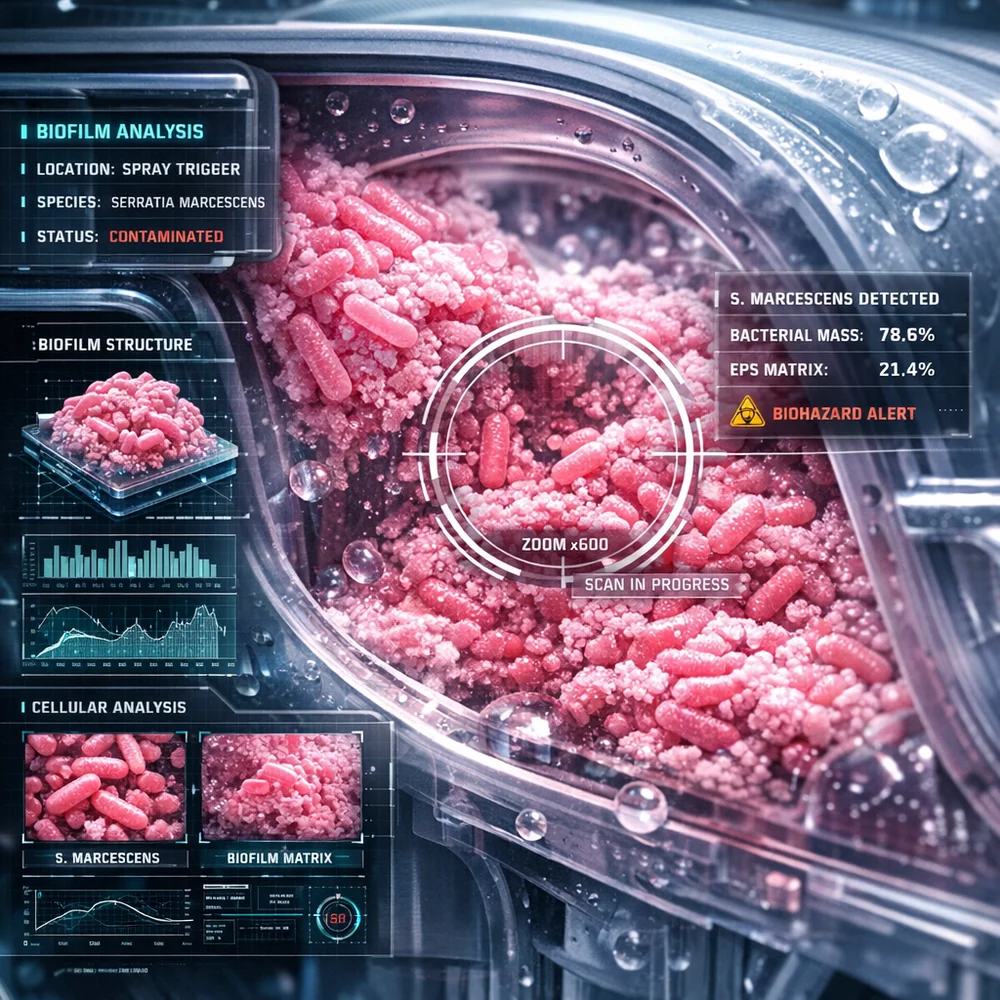
Biofilms are complex clusters of bacteria that adhere to surfaces and secrete a protective slime layer. In refillable systems, plastic bottles are particularly susceptible to biofilm formation.
Under a microscope, plastic surfaces are not smooth. They contain tiny pores and scratches that provide “anchors” for bacteria to take hold. As a cleaning solution sits in a bottle for weeks, its preservative system slowly loses efficacy. If a bottle is refilled without being washed, the “old” bacteria in the biofilm contaminate the “new” product immediately.
Serratia marcescens, a common airborne bacterium, often appears as a pink residue in damp environments like cleaning closets or under sinks. If this enters a refillable bottle, it can rapidly colonize the trigger sprayer.
To prevent this, you should perform a vinegar soak monthly. Acetic acid is highly effective at dissolving the mineral-bacterial matrix of a biofilm, ensuring the bottle remains sanitary for years of use.
Blueland vs Branch Basics vs Cleancult
The three most prominent refillable cleaning brands each take somewhat different approaches, offering consumers choices based on preferences and priorities.
Blueland uses dissolvable tablets packaged in compostable paper, achieving maximum shipping weight reduction. The approach requires tablet dissolution before use and specific Blueland bottles for optimal performance, particularly for foaming soap. EPA Safer Choice and Cradle to Cradle certifications validate environmental claims.
Branch Basics centers on a single liquid concentrate diluted to different strengths for various applications. One product serves as all-purpose cleaner, glass cleaner, bathroom cleaner, and more based on dilution ratio. This simplifies product selection but still ships liquid, which is heavier than tablets.
Cleancult uses recyclable milk-carton-style packaging for liquid refills, providing a familiar format while improving on conventional plastic bottles. The coconut-oil-based formulations emphasize skin safety. Subscription options mirror competitors.
All three achieve meaningful plastic reduction compared to conventional products. The choice between them involves preference for tablet versus liquid formats and specific product formulations.
Key Insight: Blueland = tablets (lightest ship weight). Branch Basics = single liquid concentrate (simplest). Cleancult = recyclable carton refills (familiar format).
Calculating Your Environmental Savings
Marketing claims about environmental benefits deserve scrutiny. Understanding what refillable systems actually save requires examining the full product lifecycle.
The plastic reduction claim is most straightforward. Conventional households may discard dozens of cleaning product bottles annually. Refillable systems reduce this to zero bottles after the initial kit, plus minimal packaging for refills. Over years of use, the plastic elimination accumulates significantly.
Shipping efficiency reduces carbon emissions substantially. Conventional products are 90 percent or more water by weight, meaning transportation primarily moves water that consumers could supply locally. Tablets eliminate this entirely while liquid concentrates reduce it proportionally to their concentration factor.
The honest assessment acknowledges that the initial kit, including bottles, dispensers, and packaging, has environmental impact that must be amortized over many refill cycles. Consumers who purchase kits and abandon the system quickly may not achieve environmental benefit. Commitment to ongoing use is required for the sustainability proposition to materialize.
Key Insight: Real savings come after 1-2 years of consistent use. Initial kit plastic may exceed first year of conventional bottles, but break-even comes quickly.
The Hidden Plastic Problem: Trigger Sprayers
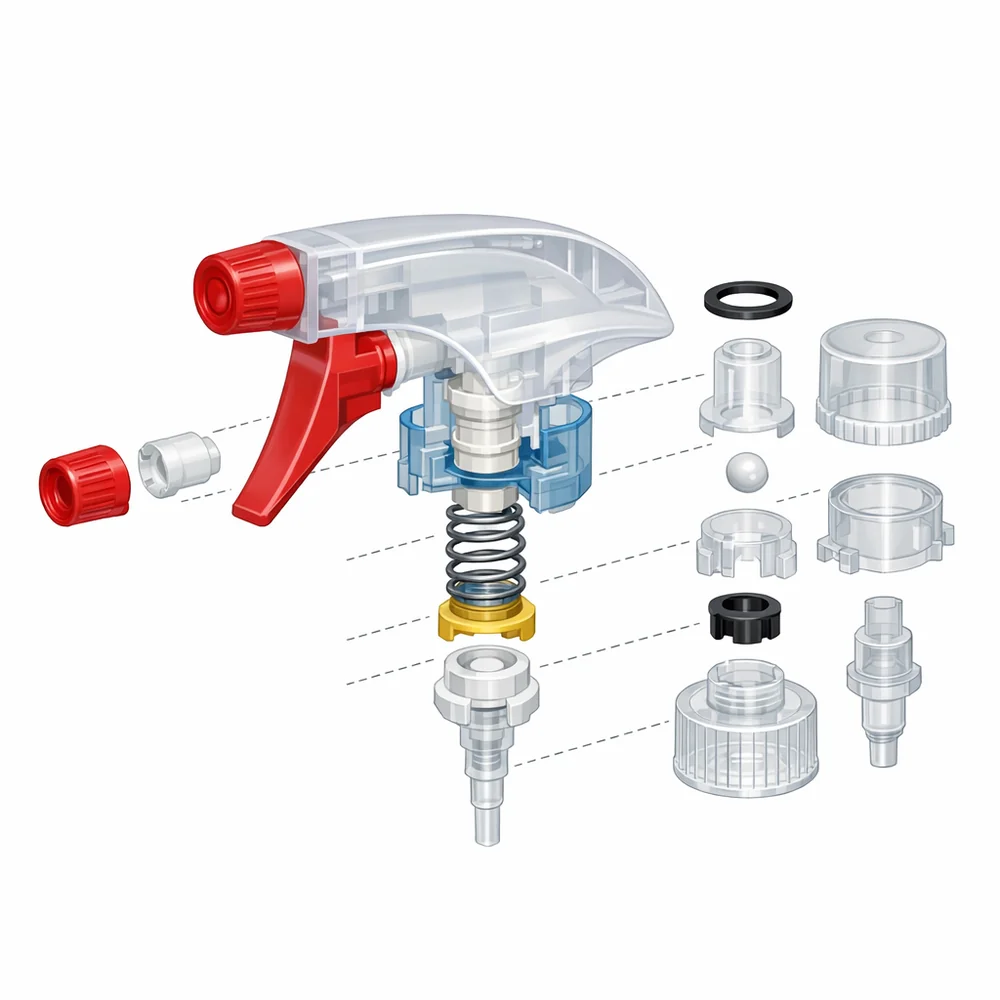
While brands market “plastic-free” refills, the trigger sprayer remains a significant hurdle in the recycling industry. Most high-performance sprayers are composed of multiple materials.
The shroud and handle are typically polypropylene. The internal dip tube is polyethylene. A small stainless steel spring provides the pumping action. Rubber or silicone gaskets complete the seal.
Because these materials are bonded together, they are virtually impossible for standard municipal recycling centers to sort. Consequently, most trigger sprayers end up in landfills. This is why the “permanent” nature of the refillable bottle is so critical. If the consumer replaces the spray head too frequently, the environmental benefit is negated.
Key Insight: The best thing you can do for the environment is to repair, not replace, your spray head. Soaking a clogged head in hot water can often prevent the need to buy a new one.
The Carbon Case for Tablets
Beyond plastic, the true environmental win of refillable systems is in the supply chain logistics.
A standard 16-ounce spray bottle weighs roughly 1.1 pounds. A tablet refill weighs less than 1 ounce. When scaled across a million customers, a single delivery truck can carry 10 times more product when shipping tablets versus liquid bottles. The energy required to produce a small paper pouch for a tablet is 95 percent lower than the energy required to blow-mold a heavy HDPE bottle. Tablets provide the highest “cleaning power per gram of carbon emitted” in the industry.
Managing Subscription Fatigue
Most refillable brands push subscription models that auto-deliver refills at set intervals. Understanding subscription dynamics helps consumers avoid accumulating unnecessary product.
Subscription benefits include automatic replenishment without stockouts, discounted pricing typically at 10 to 20 percent savings, and simplified household management. For products used at consistent rates, subscriptions align supply with demand effectively.
Subscription risks include product accumulation if usage is lower than expected, continued charges for unused products, and reduced motivation to evaluate alternatives. The default company behavior is aggressive subscription conversion because recurring revenue is more valuable than one-time sales.
Beginning with one-time purchases allows usage rate establishment before subscription commitment. Once consumption patterns are clear, subscriptions make sense for high-turnover products while one-time purchasing remains appropriate for specialty products used infrequently.
Key Insight: Start with one-time purchases to establish your usage rate. Convert to subscription only once you know your consumption pattern.
Making Your Own Concentrates
Commercial refillable systems are not the only option for concentrate-based cleaning. Home formulations can achieve similar benefits using bulk ingredients.
Basic all-purpose cleaner can be created from water, white vinegar, and optionally small amounts of castile soap or dish soap. This approach eliminates packaging almost entirely when using bulk-purchased ingredients, though it lacks the formulation optimization of commercial products.
The DIY approach works well for simple cleaning applications but cannot replicate specialized commercial formulations. Enzyme cleaners, effective disinfectants, and optimized surfactant blends require chemistry beyond home mixing capability. The practical compromise uses DIY for basic cleaning while purchasing commercial products for specialized needs.
For those preferring commercial convenience with home customization, purchasing bulk castile soap like Dr. Bronner’s gallons and diluting to application-appropriate strengths provides an intermediate approach.
Key Insight: DIY works for basic cleaning: vinegar + water for surfaces, castile soap for general cleaning. But DIY has limits: it cannot replicate enzyme or disinfectant products.
When Refillables Do Not Make Sense
Despite environmental benefits, refillable systems are not universally superior. Several scenarios favor conventional products.
Commercial or institutional use with high volume may find conventional products more practical. The per-unit cost of concentrates often exceeds conventional products at scale, and the operational complexity of mixing and filling can burden staff time.
Occasional-use specialty products, like oven cleaner or rust remover used twice yearly, do not justify refillable system investment. The initial bottle serves as excellent long-term packaging for infrequent use. Refillable economics only work with regular consumption.
Shared space considerations in roommate situations or vacation rentals may favor conventional products because the bottle-ownership model assumes consistent users. Traveling with concentrated tablets makes sense for some, while others prefer purchasing conventional products at destination.
Key Insight: Refillables work best for consistent household use. Skip them for: occasional-use products, shared spaces, or when traveling.
Keeping Spray Mechanisms Working
The spray pump is often the weakest link in refillable systems. Understanding maintenance extends mechanism life and prevents frustrating failures.
Spray mechanisms accumulate residue as dissolved products pass through them. Over time, this residue can clog the mechanism, cause irregular spray patterns, or develop odors. Regular maintenance prevents these problems.
Flushing with warm water monthly removes accumulating residue before it causes problems. For mechanisms that have become clogged, soaking the pump assembly in warm water, optionally with a small amount of vinegar, overnight often restores function.
Spray mechanisms are consumable components that will eventually need replacement regardless of maintenance. Planning for annual spray head replacement, as most brands sell replacement heads, maintains consistent performance.
Refillable cleaning systems offer genuine environmental benefits through plastic elimination and shipping efficiency. The major brands have demonstrated that the concept works commercially while maintaining cleaning performance comparable to conventional products. For households committed to ongoing use, the sustainability proposition is real and meaningful, often forming the cornerstone of a zero-waste laundry routine.
The practical requirements include basic bottle hygiene to prevent contamination, realistic expectations about dissolution time for tablet products, and commitment to the refill cycle rather than returning to conventional products. The initial kit investment pays off only through sustained use.
The choice between tablet and liquid concentrate formats, and between specific brands, involves personal preference more than fundamental performance differences. All major refillable brands achieve the core environmental benefit. Selection can legitimately favor bottle aesthetics, subscription convenience, or specific product scents without compromising the sustainability proposition.
Key Insight: Flush spray mechanisms with warm water monthly. If clogged, soak in warm water overnight. Replace spray heads annually or when performance degrades.
The Bottom Line
References
- Blueland. “Tablet Technology and Sustainability.”
- Branch Basics. “The Concentrate: Dilution Guide.”
- Cleancult. “Plastic-Free Cleaning Refills.”
- Treehugger. “Best Refillable Cleaning Products of 2024.”
- EPA Safer Choice. “Identifying Greener Cleaning Products.”