Plant-Based Disinfectant Efficacy: Thymol, Citric Acid, and Botanical Antimicrobials
Table of Contents
Things You'll Learn From This Article:
- Natural disinfectants can actually kill germs, but only if they’re EPA-registered and used exactly as directed.
- Checking EPA List N is the quickest way to see whether a product really works against specific viruses or bacteria.
- Contact time matters more than the ingredient—if the surface doesn’t stay wet long enough, the disinfectant hasn’t done its job.
- Thymol-based disinfectants often need around 10 minutes of wet time, so quick spray-and-wipe habits won’t disinfect.
- Citric acid works best against viruses with a fatty outer layer (like flu or COVID), but it’s less effective on tougher viruses.
- Acidic disinfectants like citric acid can damage marble, limestone, and other stone surfaces over time.
- Pine-smelling doesn’t mean disinfecting—only products with pine oil listed as the active ingredient and an EPA number actually kill germs.
- Many “natural” products clean and deodorize without disinfecting, so reading the label matters more than the scent.
- Synthetic disinfectants usually work faster, which can make them more effective in real life if you don’t have time to wait.
- Botanical disinfectants trade speed for a gentler environmental profile, so they’re better for low-pressure, routine use.
- Probiotic cleaners help prevent germ buildup over time but don’t replace disinfectants when you need immediate germ killing.
- Hydrogen peroxide breaks down into water and oxygen and can disinfect faster than many plant-based options.
- Older hydrogen peroxide products may be weaker because the ingredient slowly breaks down over time.
- DIY mixes with vinegar or essential oils don’t reach the strength needed for true disinfection, even if they smell strong.
- Homemade cleaners are fine for everyday cleaning, but they shouldn’t be relied on after illness or contamination.
- Botanical disinfectants work best when you can leave surfaces wet and don’t need instant results.
- Keeping both natural and conventional disinfectants on hand makes it easier to match the product to the situation.
The push toward plant-based cleaning products extends to disinfectants, where consumers increasingly seek alternatives to synthetic antimicrobials like quaternary ammonium compounds and chlorine bleach. The good news is that genuine plant-derived disinfectants exist with proven efficacy against bacteria, viruses, and fungi. The nuance lies in understanding what that efficacy actually means, how it compares to conventional disinfectants, and what usage constraints apply.
The EPA maintains List N, a roster of disinfectants approved against specific pathogens including SARS-CoV-2. Several plant-based active ingredients appear on this list, demonstrating that natural origin and antimicrobial effectiveness are not mutually exclusive. However, the performance parameters, particularly contact time requirements, often differ from conventional alternatives in ways that affect practical usability.
This guide provides the scientific foundation for evaluating plant-based disinfectant claims. The goal is enabling informed selection based on genuine efficacy data rather than marketing assertions.
Understanding EPA List N
The Environmental Protection Agency’s List N identifies disinfectants that meet EPA criteria for effectiveness against specific emerging pathogens. The list gained prominence during the COVID-19 pandemic when EPA published products proven effective against SARS-CoV-2, but the designation extends to other pathogens as needs arise.
Inclusion on List N requires products to submit efficacy data demonstrating kill rates against target organisms under controlled laboratory conditions. The EPA evaluates this data against established standards, approving products that meet specified log-reduction thresholds, typically 3-log or 99.9 percent reduction, within stated contact times.
List N products include both conventional and botanical disinfectants. Among plant-derived active ingredients appearing on List N: thymol from thyme, citric acid from citrus, pine oil, and various proprietary botanical blends. Consumers can search the List N database by active ingredient to identify approved products that align with ingredient preferences.
The EPA registration and List N inclusion requires disclosure of contact time, the duration a surface must remain wet with disinfectant for the stated efficacy to be achieved. This parameter proves critical for comparing products and understanding what effective disinfection actually requires.
Key Insight: EPA List N means the disinfectant has proven lab efficacy against specific pathogens. Active ingredients include thymol, citric acid, and other botanicals.
How Thymol Disinfectants Work
Thymol represents the most prominent botanical disinfectant active ingredient in the consumer market. This phenolic compound derives from thyme essential oil and demonstrates broad-spectrum antimicrobial activity against bacteria, fungi, and certain viruses. Products from Seventh Generation, CleanWell, and other brands feature thymol as their primary disinfecting agent.
The mechanism of thymol’s antimicrobial action involves disruption of microbial cell membranes and interference with cellular respiration. The phenolic structure penetrates lipid membranes, compromising their integrity and causing cellular contents to leak. This mechanism works against a wide range of organisms but requires higher concentrations and longer contact times than some synthetic alternatives.
EPA-registered thymol disinfectants typically require 10-minute contact times for bacterial claims, with some requiring longer times for harder-to-kill organisms. By comparison, quaternary ammonium products often claim efficacy in 1 to 5 minutes. This difference means thymol users must ensure surfaces remain wet substantially longer to achieve stated efficacy.
The 10-minute requirement presents practical challenges for many disinfection scenarios. Surfaces may not remain wet this long without reapplication, especially in dry or warm environments. Users accustomed to spray-and-wipe cleaning may not realize that premature wiping negates disinfection claims. Effective thymol disinfection requires conscious attention to contact time.
Key Insight: Thymol disrupts bacterial cell membranes, similar to how phenolic disinfectants work. It’s effective but needs 10-minute contact time.
Citric Acid as a Virucide

Citric acid provides antimicrobial action through pH modification, creating an acidic environment inhospitable to many pathogens. At sufficient concentrations, typically 2 to 7 percent in disinfectant formulations, citric acid demonstrates virucidal activity against certain enveloped viruses and bactericidal activity against various bacterial species.
The EPA has approved citric acid-based disinfectants for viral claims under specific formulations and contact times. Products appear on List N with typical contact time requirements of 5 to 10 minutes, somewhat better than thymol in some cases but still longer than many synthetic alternatives.
Citric acid’s antiviral mechanism involves denaturing viral envelope proteins and destabilizing viral structures. This effect is strongest against enveloped viruses like coronaviruses and influenza and weaker against non-enveloped viruses like norovirus that lack the lipid envelope vulnerable to acid disruption.
A practical limitation of citric acid disinfection involves material compatibility. The same acidity that kills pathogens also etches calcium-based stone surfaces like marble and limestone. Repeated use on susceptible surfaces causes cumulative damage. Thymol products typically present fewer material compatibility concerns.
Key Insight: Citric acid kills enveloped viruses and bacteria by lowering pH. It’s effective but may etch stone surfaces with repeated use.
Pine Oil Disinfection
Pine oil, derived from pine tree distillation, has a long history as a disinfectant active ingredient. Products like Pine-Sol originally relied on pine oil for their antimicrobial claims, though modern formulations often use synthetic alternatives. True pine oil disinfectants remain available and appear on EPA disinfectant registrations.
Pine oil’s antimicrobial action derives from terpene alcohols and phenolic compounds that disrupt microbial membranes. The mechanism shares similarities with thymol and other phenolic disinfectants. Efficacy requires minimum pine oil concentrations, typically 8 percent or higher for disinfectant claims, and appropriate contact times.
The challenge with pine oil involves distinguishing genuine pine oil disinfectants from pine-scented products that rely on other active ingredients or no active ingredients at all. Pine fragrance alone does not indicate disinfecting capability. Checking the EPA registration number and confirming pine oil as the registered active ingredient verifies genuine pine oil disinfection.
Pine oil concentrations in consumer products often fall below disinfectant thresholds, providing only cleaning and deodorizing without pathogen reduction. Products making disinfection claims must meet EPA registration requirements while products without such claims may smell like pine without any antimicrobial function.
Key Insight: True pine oil disinfectants need 8%+ pine oil concentration for antimicrobial claims. Many “pine-scented” products use synthetic fragrance instead.
Contact Time Matters Most
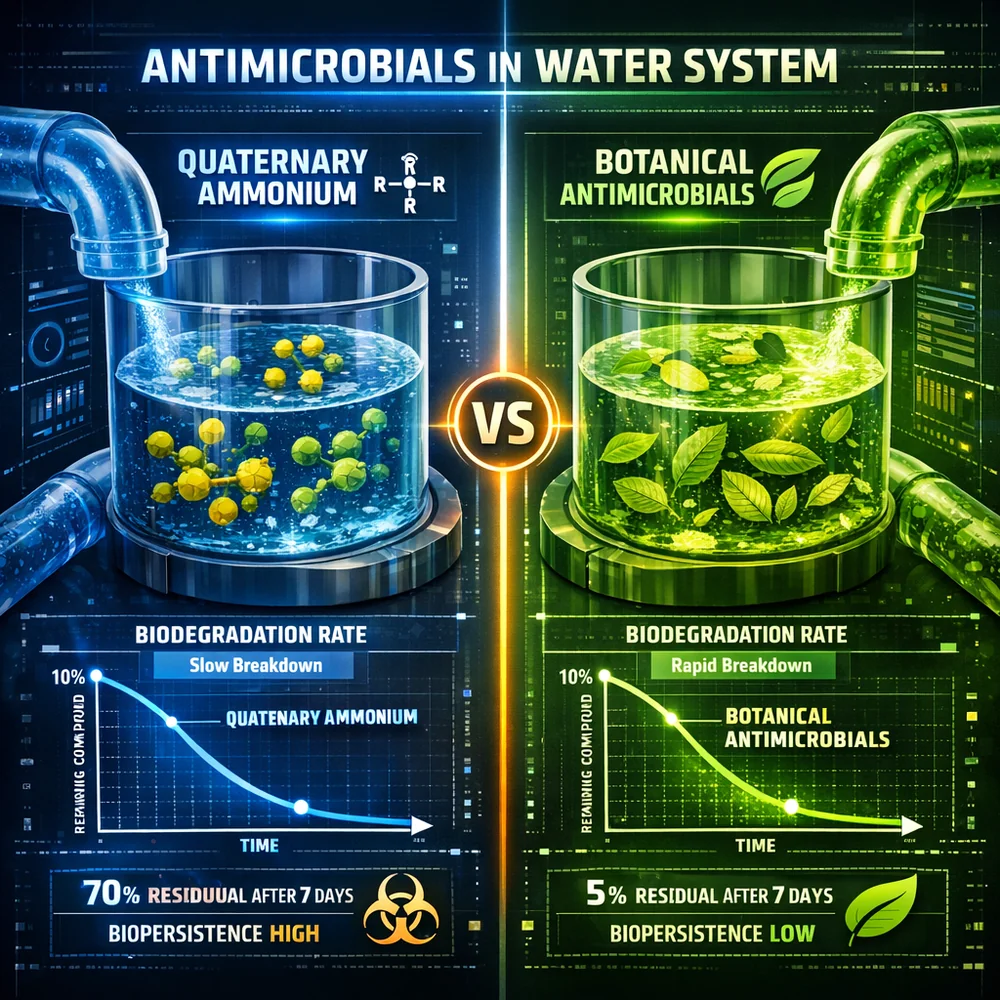
The single most important parameter for evaluating any disinfectant’s practical usefulness is contact time: how long the surface must remain wet with the product for stated efficacy to be achieved. Plant-based disinfectants generally require longer contact times than synthetic alternatives, creating practical constraints that affect real-world effectiveness.
Quaternary ammonium, a synthetic active, typically requires 30 seconds to 5 minutes. Sodium hypochlorite, or bleach, needs 30 seconds to 10 minutes. Thymol requires 10 minutes. Citric acid needs 5 to 10 minutes. Pine oil requires 10 minutes.
The extended contact times for plant-based disinfectants do not indicate inferior chemistry. They reflect the different mechanisms and concentrations involved. But for practical disinfection, a product that kills in 1 minute and can be applied correctly is more effective than a product requiring 10 minutes if users wipe surfaces prematurely.
Ensuring 10-minute wet contact may require reapplication, especially on vertical surfaces or in warm environments where evaporation occurs quickly. Users must realistically assess whether they will maintain these conditions in actual use scenarios.
Key Insight: Plant-based disinfectants typically need 10 minutes wet contact. Quaternary ammonium works in 1-5 minutes. This is a genuine performance difference.
Comparing to Quaternary Ammonium
Quaternary ammonium compounds, or quats, dominate the conventional disinfectant market due to their fast action, broad spectrum, and material compatibility. Understanding how botanical alternatives compare requires honest assessment of both capabilities and limitations.
Quats function through cationic surfactant action that disrupts cell membranes while also denaturing proteins. The dual mechanism enables fast kill times against a wide range of organisms. Quats are generally non-corrosive to most surfaces, low-odor in formulation, and stable for extended shelf life.
The disadvantages that drive consumers toward botanical alternatives include environmental persistence since quats biodegrade slowly, aquatic toxicity that harms fish and aquatic organisms, potential contribution to antimicrobial resistance development, and concerns about residual exposure on food-contact surfaces.
Botanical disinfectants address these concerns while accepting the tradeoff of longer contact times and potentially shorter shelf life due to natural ingredient volatility. The choice between categories depends on whether fast action or environmental profile weighs more heavily in your priorities.
Key Insight: Quats are faster (1-5 minutes) and more stable than botanicals. Botanicals avoid quat concerns about aquatic toxicity and antimicrobial resistance.
Probiotic Cleaners Are Not Disinfectants
The cleaning product market includes so-called probiotic cleaners that contain beneficial bacterial cultures. These products operate on a fundamentally different principle than disinfectants and should not be confused with them despite sometimes appearing in similar market categories.
Probiotic cleaners add living beneficial bacteria to surfaces where they outcompete pathogenic organisms for resources and space. This competitive exclusion can reduce pathogen populations over time without chemical killing action. Some products also include enzymes produced by these bacteria that break down organic soil.
Crucially, probiotic cleaners do not provide the rapid pathogen reduction that disinfection requires. They are better understood as preventive tools that maintain unfavorable conditions for pathogen growth rather than reactive tools for eliminating existing contamination. For applications requiring immediate disinfection after illness, contamination events, or clinical settings, probiotic cleaners are not appropriate.
The complementary approach uses disinfectants for reactive pathogen elimination and probiotic cleaners for ongoing preventive maintenance. This strategy leverages the strengths of each approach while acknowledging their different roles.
Key Insight: Probiotic cleaners are NOT disinfectants. They add beneficial bacteria that outcompete pathogens but do not kill them on contact.
Hydrogen Peroxide: A Natural Option
Hydrogen peroxide appears in both conventional and natural cleaning product lines, raising questions about its classification. The compound itself, H2O2, is a simple molecule that exists in nature and breaks down to water and oxygen. Whether a specific product is “natural” depends more on marketing positioning than on any meaningful chemical distinction.
Hydrogen peroxide’s antimicrobial action involves oxidative damage to microbial structures. The reactive oxygen species generated by H2O2 decomposition attack cell membranes, proteins, and nucleic acids, providing broad-spectrum efficacy against bacteria, viruses, fungi, and spores.
EPA-registered hydrogen peroxide disinfectants typically require 1 to 10 minute contact times depending on concentration and target organisms. Higher concentrations of 3 percent or more achieve faster kill times. The decomposition to water and oxygen makes hydrogen peroxide appealing for food-contact surfaces and environmentally sensitive applications.
For consumers seeking plant-based cleaning but willing to accept hydrogen peroxide, which arguably qualifies as a natural-origin compound, H2O2-based disinfectants offer faster action than thymol while avoiding synthetic surfactant concerns. The main limitation is instability, as hydrogen peroxide solutions degrade over time, reducing potency of older products.
Key Insight: Hydrogen peroxide works through oxidation, breaking down to water and oxygen. It’s effective, natural-origin compatible, and EPA-registered.
Why DIY Disinfectants Do Not Work
The internet offers numerous recipes for homemade natural disinfectants using essential oils, vinegar, and other household ingredients. Understanding why these preparations typically fail to achieve meaningful disinfection prevents false security about their efficacy.
Essential oil concentrations in DIY preparations rarely approach the levels required for antimicrobial effect. Commercial thymol disinfectants use pharmaceutical-grade thymol at specific concentrations validated through EPA testing. Adding a few drops of thyme essential oil to water does not replicate these conditions.
Vinegar at 5 percent acetic acid provides some antibacterial action against certain organisms but is not an EPA-registered disinfectant. Studies have shown vinegar reducing bacterial counts on surfaces, but not to the 99.9 percent reduction threshold required for disinfectant classification. It is better characterized as a sanitizer with limited spectrum than a disinfectant.
For actual disinfection needs, EPA-registered products provide the formulation, concentration, and validated efficacy that DIY preparations cannot match. Reserving DIY preparations for general cleaning while using registered products for disinfection maintains appropriate expectations for each category. See why DIY cleaners have limits.
Key Insight: DIY essential oil “disinfectants” do not work. They lack the concentration, formulation, and testing that registered disinfectants require.
When to Choose Botanical Disinfectants
Given the contact time and efficacy considerations, botanical disinfectants suit certain applications better than others. Matching product selection to application requirements maximizes the benefit of botanical choices while acknowledging their constraints.
Appropriate applications for botanical disinfectants include routine household surface maintenance where extended contact time is feasible, food service preparation areas where residue concerns matter more than speed, childcare environments where reduced chemical exposure is prioritized, and environmentally sensitive settings near waterways or greywater systems.
Less appropriate applications include outbreak response where rapid area-wide disinfection is needed, high-throughput clinical or food service settings with time pressure, situations where surfaces cannot remain wet for required contact times, and hard-to-kill pathogens including some bacterial spores and non-enveloped viruses.
The practical recommendation involves maintaining both botanical and conventional disinfectants for different scenarios rather than attempting one-size-fits-all substitution. This approach works well as part of a zero-waste laundry routine where you might also use microplastics laundry filters to reduce environmental loading.
Plant-based disinfectants offer genuine antimicrobial capabilities verified through EPA registration and laboratory testing. Thymol, citric acid, pine oil, and hydrogen peroxide all demonstrate pathogen reduction that meets regulatory standards. The “natural” in these products does not mean ineffective.
The honest assessment acknowledges that botanical disinfectants typically require longer contact times than synthetic alternatives and may present narrower spectrum activity against certain resistant organisms. These limitations are real and should inform product selection rather than being dismissed as marketing concerns.
For consumers prioritizing reduced synthetic chemical exposure, environmental compatibility, and availability of plant-derived options, EPA-registered botanical disinfectants provide legitimate solutions. Understanding and respecting contact time requirements transforms these products from potentially ineffective spray-and-wipe applications to genuinely effective disinfection protocols.
Key Insight: Use botanical disinfectants for routine maintenance where 10-minute contact is feasible. Use faster synthetics for outbreak response or time-critical needs.
The Bottom Line
References
- EPA List N. “Disinfectants for Emerging Viral Pathogens.”
- CDC. “Cleaning and Disinfecting Your Home.”
- Seventh Generation. “Understanding Botanical Disinfectants.”
- Treehugger. “Natural Disinfectants That Actually Work.”
- ScienceDirect. “Thymol: Antimicrobial Mechanisms and Efficacy.”