Foaming Hand Soap Tablets: Chemistry, Cost Analysis, and Practical Guide
Table of Contents
Things You'll Learn From This Article:
- Foaming soap tablets fizz because of a simple acid–base reaction, and that fizz helps the tablet dissolve and spread soap evenly in water.
- Not all tablets dissolve at the same speed, so waiting until they fully disappear before using the dispenser helps avoid clogs.
- Foaming pumps are sensitive, and hard tap water can cause buildup that slowly blocks the mesh inside the pump.
- Using distilled or softened water makes tablet soaps and DIY refills work more smoothly and keeps pumps working longer.
- Shaking the bottle too early can push undissolved bits into the pump, so gentle swirling works better while the tablet dissolves.
- You can make your own foaming soap refills from liquid soap by diluting about one part soap to four parts water.
- Too much soap in a refill makes the liquid too thick to foam properly, while too little leads to weak foam.
- Any water-based soap needs protection against bacteria and mold, even if it looks and smells fine at first.
- Tablets and homemade refills without strong preservatives should be used within a short time, usually a week or two.
- Cloudiness, odd smells, or color changes are warning signs that a soap solution should be thrown out.
- Glass dispensers last longer and don’t absorb smells, but they can break easily if dropped.
- Plastic dispensers don’t shatter but often wear out faster, especially the pump parts.
- Tablet costs make sense only when you calculate price per finished ounce, not just price per tablet.
- A durable dispenser spreads its cost over many refills, which matters more than small price differences between tablets.
- Tablets reduce shipping weight a lot because you’re not transporting water, which lowers transportation emissions.
- Environmental benefits depend on where tablets are made and how much packaging they use, not just the tablet format itself.
- Fragrance behaves differently in tablets, often smelling strongest during dissolving and milder during regular use.
- Refillable dispensers can grow bacteria over time, especially inside pumps where soap and moisture stay trapped.
- Periodic deep cleaning with a mild bleach solution helps prevent buildup and lingering contamination.
- Tablets don’t work equally well in every foaming dispenser, since pumps are designed for specific liquid thicknesses.
- If foam quality drops after switching tablet brands, the pump may be worn or incompatible rather than the tablet being faulty.
- Being able to replace just the pump instead of the whole dispenser saves money and reduces waste over time.
The plastic waste from liquid soap bottles has pushed a lot of people to look for alternatives that cut down on packaging while keeping the convenience of a foaming dispenser. Effervescent hand soap tablets have emerged as one answer, promising to eliminate the need for shipping water weight across supply chains while giving you the familiar experience of foaming hand soap. Drop a tablet in water, wait for it to dissolve, and you get what looks like the same product that used to arrive in a plastic bottle.
But the chemistry involved in making this work introduces complexities that marketing rarely mentions. Water-based solutions need preservation against microbial growth. Fragrance stability changes when you formulate for dry storage and then reconstitute. The economics depend on usage patterns and dispenser longevity that vary widely across households. Understanding these factors lets you realistically assess whether tablet systems make sense for your situation.
This guide provides the technical background for evaluating foaming soap tablets critically. The goal is not to push you toward or away from them but to give you information that product packaging typically leaves out.
How the Fizzing Chemistry Works
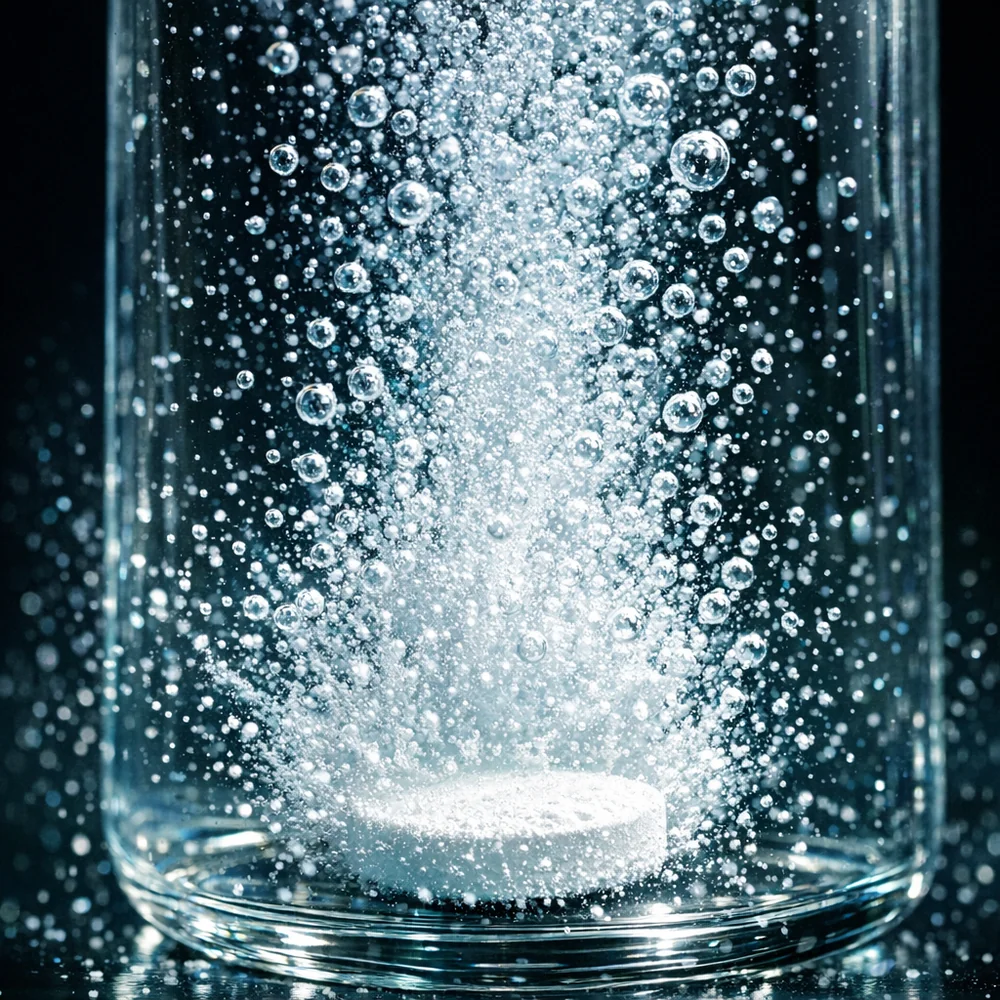
Effervescent tablets create their characteristic fizzing through an acid-base reaction that happens when dry tablet contacts water. The most common formulation combines citric acid with sodium bicarbonate, which is just baking soda. When water hits both components, they react to produce carbon dioxide gas. This same chemistry powers antacid tablets and bath bombs.
The reaction follows straightforward acid-base principles. Citric acid donates hydrogen ions that react with bicarbonate to produce carbonic acid, which immediately falls apart into water and carbon dioxide gas. The bubbling serves multiple purposes: it accelerates tablet dissolution, helps disperse surfactants throughout the solution, and gives you a visual signal that the tablet is working.
Beyond the fizzing pair, soap tablets contain surfactants in dry form, typically sodium cocoyl isethionate or sodium lauryl sulfate blended with binding agents that maintain tablet integrity during storage and shipping. The surfactant concentration in the dry tablet has to be calibrated to produce an appropriate final concentration when dissolved in the specified water volume. Too little surfactant gives weak foam, too much creates a solution that may irritate skin or clog dispensers.
The binding agents that hold tablets together during transit must dissolve completely without leaving residue. Polyethylene glycol compounds commonly serve this function, though some formulations use natural alternatives like modified starches. These binders affect dissolution time, with some tablets dissolving in under a minute while others need five minutes or more of soaking with occasional shaking.
Key Insight: Soap tablets fizz because citric acid reacts with baking soda to produce CO2 gas, which helps dissolve and disperse the surfactants evenly.
Why Pumps Get Clogged
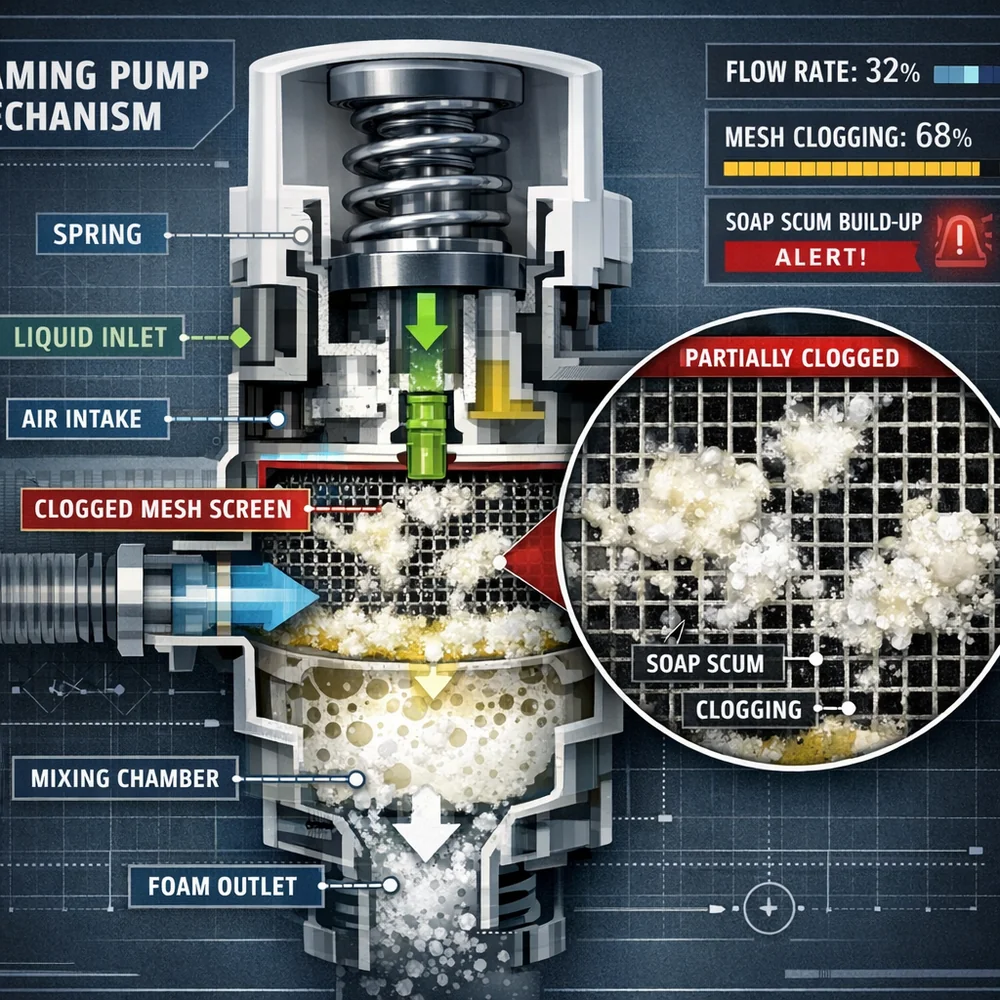
Foaming soap dispensers work differently from regular soap dispensers. Rather than simply drawing liquid and pushing it out, foaming pumps mix the soap solution with air as it passes through a mesh screen, creating the foam. This mechanism is sensitive to solution viscosity and particle content.
Tablet-based solutions can clog foaming pumps when tablets contain undissolved particles or when the solution is mixed with mineral-heavy water. Hard water causes particular problems because calcium and magnesium ions react with surfactants to form insoluble soap scum that accumulates on the mesh screen. Over time, this restricts flow and degrades foam quality.
Prevention starts with using appropriately softened or distilled water for reconstitution. Some tablet manufacturers explicitly recommend this, while others stay silent on water quality. If you have hard water and choose to use tap anyway, expect to clean pumps more frequently.
Let tablets dissolve completely before inserting the pump assembly. Shaking or stirring aggressively while tablet fragments remain can push those pieces into the pump mechanism. Patience during dissolution, with gentle swirling rather than vigorous shaking, produces cleaner solutions that are kinder to pumps.
Key Insight: Hard water reacts with surfactants to form soap scum that clogs foam pump mesh screens. Use filtered or distilled water with tablets.
Making Your Own Refills
Some people extend the tablet concept by making their own foaming soap refills from concentrated liquid soap rather than buying tablets. The principle is similar: add a small amount of concentrated product to water and shake. This approach requires understanding correct dilution ratios.
The standard ratio for foaming dispensers using liquid castile soap or concentrated hand soap is approximately one part soap to four parts water. This produces a solution thin enough to flow through foaming pump mechanisms while concentrated enough to create stable foam when mixed with air. Higher soap concentrations create solutions too thick for most pumps. Lower concentrations may not foam adequately.
Water quality matters for DIY refills just as much as for tablet dissolution. Distilled or reverse-osmosis water produces the most stable solutions, particularly with castile or other true soap-based concentrates rather than detergent-based ones. The fatty acids in true soaps react readily with hard water minerals, forming curds that can separate and clog dispensers.
DIY solutions lack the engineered dissolution and suspension characteristics of commercial tablets. Surfactants may separate over time, with oils floating to the top. Regular shaking before each use can re-emulsify separated solutions, but persistent separation indicates either incompatible ingredients or insufficient surfactant concentration.
Key Insight: For DIY foaming soap, use a 1:4 ratio of liquid castile soap to water. Thicker ratios clog pumps; thinner ratios produce weak foam.
Why Preservatives Matter
Pure water supports microbial growth. Within days of mixing a water-based soap solution, bacteria and fungi begin colonizing the container, feeding on surfactants and any organic additives present. Without preservatives, a homemade or tablet-based soap solution becomes a bacterial culture medium rather than a hygiene product.
Commercial tablet systems address this in several ways. Some tablets contain dry preservatives that activate upon dissolution, protecting the finished solution for a defined period. Others recommend using prepared solution within a specific timeframe, typically one to two weeks. A few rely on high surfactant concentrations or extreme pH values that inherently resist microbial growth.
Common preservatives in tablet systems include sodium benzoate, potassium sorbate, and phenoxyethanol. These are generally recognized as safe at standard personal care concentrations, though some consumers prefer to avoid them. If you specifically seek preservative-free options, strict adherence to short shelf-life guidelines becomes essential.
DIY refills face particularly acute preservation challenges. Without laboratory-grade preservative systems, homemade solutions should be prepared in small batches sized for use within one week. Refrigeration extends this slightly but creates inconvenience and does not eliminate growth entirely. Any visible cloudiness, unusual odor, or color change indicates contamination requiring disposal.
Key Insight: Water-based soap solutions need preservatives or they become bacterial breeding grounds within days. Check if tablets include them.
Glass vs Plastic Dispensers
The container holding dissolved tablet solution affects both environmental calculus and user experience. Glass and plastic dispensers each have advantages and disadvantages.
Glass offers indefinite reuse without degradation. It does not absorb odors or colors from solutions, does not scratch from cleaning, and does not become cloudy or brittle with age. Quality glass dispensers can function for decades with only pump replacement as needed.
The fragility of glass presents obvious disadvantages in bathrooms with hard tile or stone floors. A dropped glass dispenser may shatter, creating safety hazards and requiring immediate replacement. Households with young children or pets that might knock dispensers from countertops should weigh this risk against durability benefits.
Plastic resists breakage but degrades over time. Surfactants can break down certain plastics, causing cloudiness and brittleness after months of use. Pumps attached to plastic dispensers often represent the failure point, with springs wearing out or seals degrading before the bottle itself fails. Some tablet systems sell pump-only replacements while others expect you to replace everything.
Key Insight: Glass dispensers last decades and never absorb odors; plastic degrades, but glass breaks if dropped on hard floors.
What Tablets Actually Cost
The economic case for foaming soap tablets rests on eliminating the cost of shipping water. Tablets are lighter and smaller than equivalent bottles, reducing transportation costs and theoretically allowing per-ounce prices to compete with traditional products. Whether this translates to actual savings depends on specific pricing and usage patterns.
Most foaming soap tablets produce 8 to 12 fluid ounces of finished solution. Calculating cost per ounce means dividing tablet cost by solution volume produced. A tablet priced at $1.50 that produces 10 ounces costs $0.15 per ounce. Compare that to the unit price of traditional foaming soap shown on store shelf labels.
At current market pricing, tablets typically cost slightly more per ounce than economy brands but compete favorably with premium or natural brands. The gap narrows with subscription or bulk purchasing. Environmental motivations rather than pure economics often drive adoption.
Total cost of ownership must include dispenser amortization. A $15 glass dispenser lasting five years distributes that cost across hundreds of refills, becoming negligible. A $10 plastic dispenser failing after six months substantially increases per-use expense. Choosing durable containers affects long-term economics more than marginal tablet pricing differences.
Key Insight: Calculate true cost by dividing tablet price by the ounces of solution it creates, then compare to the per-ounce price of bottled soap.
The Environmental Math
The primary environmental claim for soap tablets involves reduced carbon emissions from transportation. Shipping water across supply chains moves weight that contributes nothing to product function. Tablets eliminate this by adding water at the point of use.
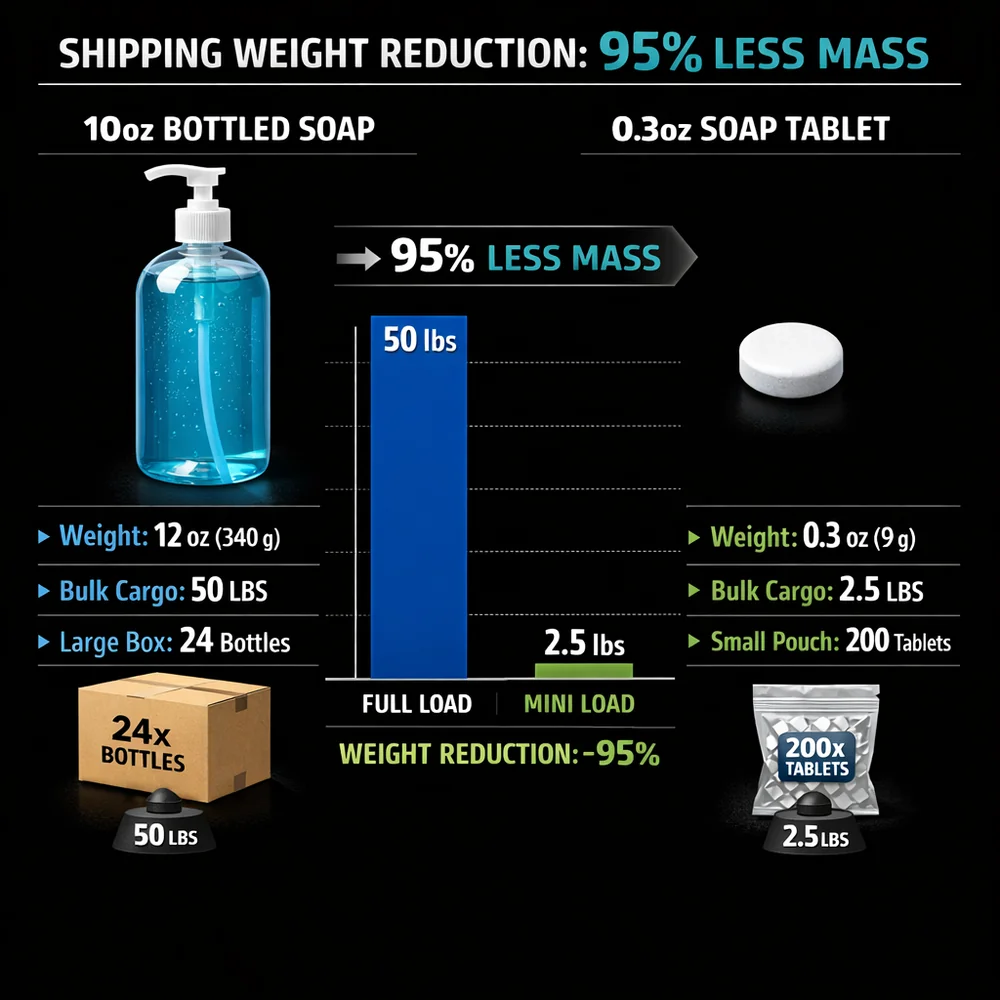
Weight savings are substantial. A standard foaming soap bottle weighs roughly 10 to 12 ounces full. The equivalent tablet weighs perhaps 0.3 ounces. Even with protective packaging, tablet shipments move roughly 95 percent less weight per unit of finished product. This translates directly to reduced fuel consumption.
Additional benefits come from reduced packaging volume. More tablets fit in a shipping container than equivalent bottles. Warehousing requirements decrease similarly. These efficiencies compound direct weight savings.
However, full lifecycle analysis matters. If tablets ship from farther away than locally produced liquid soap, distance can offset weight advantages. If packaging includes substantial plastic, disposal impacts need consideration. The cleanest environmental case applies to tablets with minimal packaging from relatively nearby manufacturing.
Key Insight: Tablets weigh 95% less than bottled soap, reducing the carbon footprint of shipping. This is the main environmental benefit.
How Long Does the Scent Last?
Scent is a significant factor in hand soap selection, and fragrance behaves differently in dry tablet form versus liquid. Stability challenges differ between formats, affecting scent perception from manufacturing through use.
In dry tablets, fragrance must survive manufacturing and storage without evaporating or degrading. The absence of water removes one oxidation pathway common in liquids, potentially extending stability. However, tablets often sit without airtight packaging, allowing volatile fragrance molecules to escape over extended storage.
Upon dissolution, fragrance experience changes again. The effervescent reaction can rapidly volatilize fragrance compounds, creating an initial burst followed by milder ongoing aroma. Whether this pattern is desirable depends on preference. Some appreciate the aromatic dissolution process while others prefer consistent scent profiles.
Product formulation significantly affects the experience. Some tablets compensate for volatilization by including higher initial fragrance. Others use encapsulated fragrances that release gradually rather than during the fizz. Generalizations about tablet fragrance are unreliable.
Key Insight: Dry tablets preserve fragrance longer than opened liquid bottles, but scent may fade if tablets are stored in non-airtight packaging.
Keeping Refillable Systems Clean
The refillable nature of tablet systems introduces contamination vectors that single-use products avoid. Each time you open a dispenser to add water and new tablet, you potentially introduce microorganisms from hands, air, and water sources. These can colonize the dispenser and contaminate subsequent batches.
Biofilm formation presents particular concern. Bacteria establishing biofilm colonies on dispenser surfaces resist washing and persist through multiple refill cycles. These colonies periodically release bacteria into soap solution, maintaining contamination even if individual batches start sterile. The warm, moist, nutrient-rich dispenser interior provides ideal biofilm conditions.
Prevention requires periodic sanitization beyond simple rinsing. Between every fourth or fifth refill, clean dispensers thoroughly with diluted bleach solution at 1 teaspoon per quart of water. Treat all solution-contacting surfaces, including pump internals. Some users fill dispensers with sanitizing solution and pump it through before rinsing.
Physical inspection provides additional protection. Before refilling, examine the interior for visible residue, unusual colors, or slimy textures indicating growth. Any such signs should prompt thorough sanitization before reuse.
Key Insight: Biofilms can colonize refillable dispensers and persist through cleaning. Periodically sanitize dispensers with diluted bleach solution.
Do Tablets Work With All Dispensers?
Not all foaming soap tablets work with all dispensers. Solution viscosity, intake tube size, and mesh screen specifications all affect whether a particular combination functions properly. Compatibility issues may appear as poor foam, pump failure, or solution that refuses to dispense.
Most tablet manufacturers design products for their proprietary dispensers. These matched systems optimize solution thickness and pump specifications for reliable operation. Using one brand’s tablets in another’s dispenser may work but is not guaranteed. Some brands explicitly state their tablets work in any standard foaming dispenser while others recommend specific hardware.
The foam mesh inside dispensers wears over time, affecting compatibility with different solutions. A dispenser producing excellent foam with one tablet brand may struggle with another that generates slightly thicker solution. If you switch brands and notice degraded performance, the issue may be pump condition rather than tablet quality.
Pump replacement availability varies. Some manufacturers sell replacement pumps extending container life indefinitely. Others design pumps as non-replaceable, expecting complete unit replacement when pumps fail. This difference significantly affects long-term cost and waste.
Foaming soap tablets represent genuine innovation in reducing environmental impact from daily hygiene products. By eliminating water from supply chains, they address real inefficiency in how liquid soap reaches consumers. The fundamental concept has merit.
Adopting tablets means accepting tradeoffs traditional products avoid. Preservation becomes your responsibility rather than the manufacturer’s. Dispenser maintenance matters more with indefinitely reused equipment. The economics depend on usage patterns and choices that vary across households.
The most satisfied tablet users enter the category with clear understanding of what they are taking on. They appreciate environmental benefits, tolerate modest additional complexity, and select durable equipment. For them, tablets deliver on their promise. Others may find the friction outweighs sustainability benefits. This approach often forms the core of a zero-waste laundry routine.
Key Insight: Match tablet brands with their recommended dispensers for best results. Cross-brand use works sometimes but is not guaranteed.
The Bottom Line
References
- Blueland. “Foaming Hand Soap Starter Set and Ingredients.”
- B Corp. “Blueland Sustainability and Impact Report.”
- EPA Safer Choice. “Safer Choice Standard for Multi-Surface Cleaners.”
- ScienceDirect. “Effervescent Tablet Dissolution and Formulation.”
- Springer. “Journal of Industrial Microbiology & Biotechnology: Biofilm Formation.”