Safe Disposal of Cleaning Chemicals: Hazardous Waste and Safety Protocols
Table of Contents
Things You'll Learn From This Article:
- Leftover cleaners aren’t just trash—some can harm water, soil, or people if you pour them down the drain or toss them out.
- Products that are flammable, very acidic or very alkaline, unstable, or poisonous belong at a Household Hazardous Waste (HHW) drop-off, not in regular garbage.
- If a cleaner is water‑based and meant to go down the drain during normal use (like dish soap), small leftovers usually go down the drain the same way.
- Septic systems are extra sensitive; strong or concentrated cleaners can kill the helpful bacteria and cause costly damage.
- Mixing or dumping incompatible cleaners (like bleach and ammonia) can create dangerous gases even after you’re “done” using them.
- Fragrance-heavy cleaners can contain hormone‑disrupting chemicals that don’t fully get removed by wastewater treatment and can affect wildlife.
- Keeping chemicals in their original containers matters because labels are how disposal staff know what they’re dealing with.
- Putting chemicals into food or drink containers increases leak risks and makes accidental poisoning much more likely.
- If a bottle is damaged or leaking, placing it inside a larger sealed bag or container helps prevent spills until disposal.
- Mild acids or bases can sometimes be neutralized carefully to make them safer, but strong industrial products should always go to HHW.
- Aerosol cans are pressurized and can explode if crushed or heated, even when they seem empty.
- Some “empty” aerosol cans can be recycled only after all pressure is gone; hazardous ones still need HHW handling.
- Local HHW programs are designed to safely destroy or treat chemicals that don’t belong in drains or landfills.
- Buying fewer harsh chemicals and choosing simpler, biodegradable options reduces what you’ll need to dispose of later.
Every household eventually faces the question of what to do with cleaning products that are expired, unwanted, or left behind by previous residents. The temptation to pour everything down the drain or toss containers in the trash seems convenient but creates hazards ranging from damaged plumbing to environmental contamination to the genuine risk of injury to sanitation workers.
The chemistry that makes cleaning products effective, including oxidizers, acids, bases, and solvents, also makes their disposal consequential. These reactive substances can damage wastewater treatment systems, contaminate groundwater, or react dangerously when combined with other disposed materials. Understanding proper disposal protects both personal safety and community infrastructure.
This guide provides protocols for safely disposing of common household cleaning chemicals. The guidance addresses both routine disposal of everyday products and the more careful handling required for concentrated or hazardous materials.
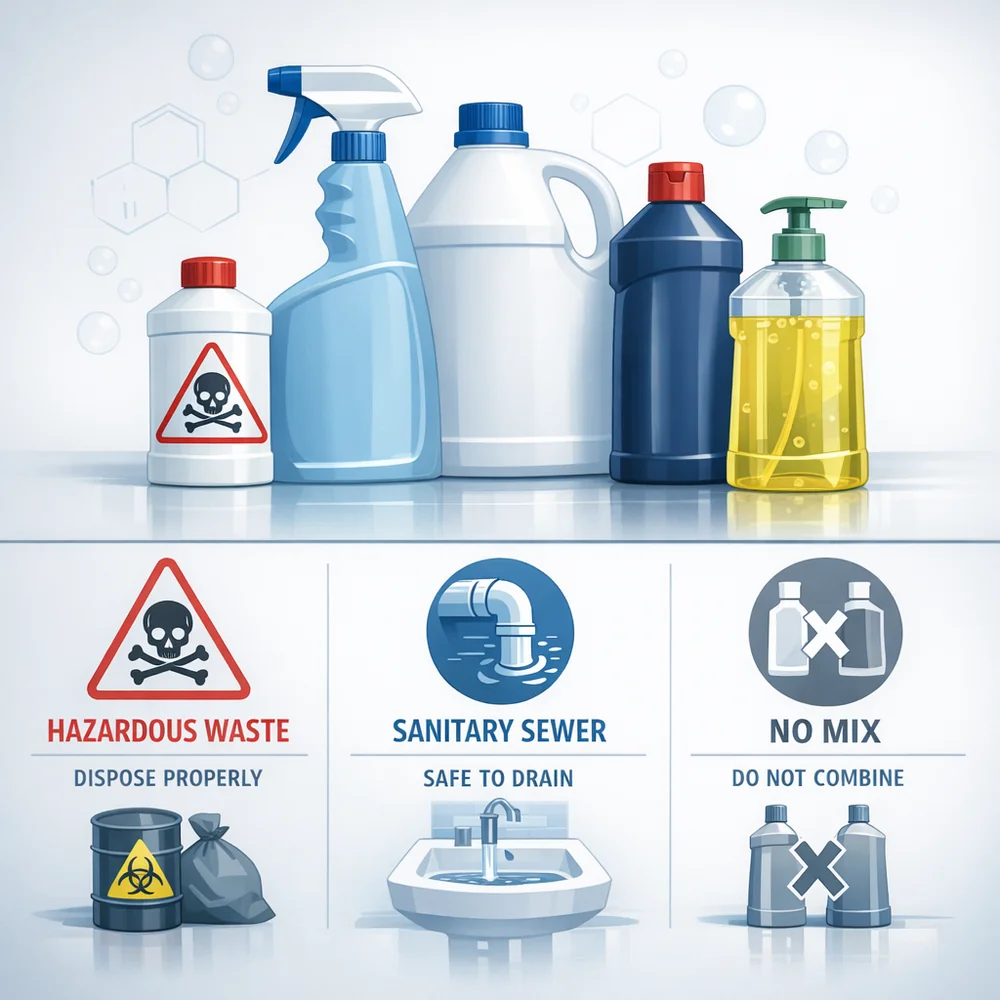
Hazardous Waste vs Drain Disposal
The fundamental decision for cleaning product disposal involves whether the material can safely enter the wastewater system or requires handling as hazardous waste. The distinction depends on the specific product formulation and local wastewater treatment capabilities.
Most finished cleaning products in dilute form, including ready-to-use sprays, diluted solutions, and rinse water, can enter the sanitary sewer system without concern. Municipal wastewater treatment is designed to handle the residues from normal household cleaning. The key word is “dilute,” as concentrated products and pure chemicals present different considerations.
Products that typically require hazardous waste handling include solvent-based products like furniture polish and some stainless steel cleaners, concentrated pool chemicals, drain cleaners with sulfuric acid, oven cleaners with strong lye, and any products displaying hazard symbols for corrosivity, flammability, or poison. Even physical waste like microplastics laundry filters needs specific disposal consideration. Unknown products from estate cleanouts should be assumed potentially hazardous.
Hazardous waste collection varies by municipality. Many communities operate permanent collection facilities while others conduct periodic collection events. Some allow small quantities of certain hazardous products in regular trash if properly prepared. Contacting local waste management or checking municipal websites provides specific guidance for your area.
Key Insight: Dilute cleaning products and rinse water can go down the drain. Concentrated chemicals, solvents, and older products may require hazardous waste disposal.
The Deadly Bleach and Ammonia Reaction
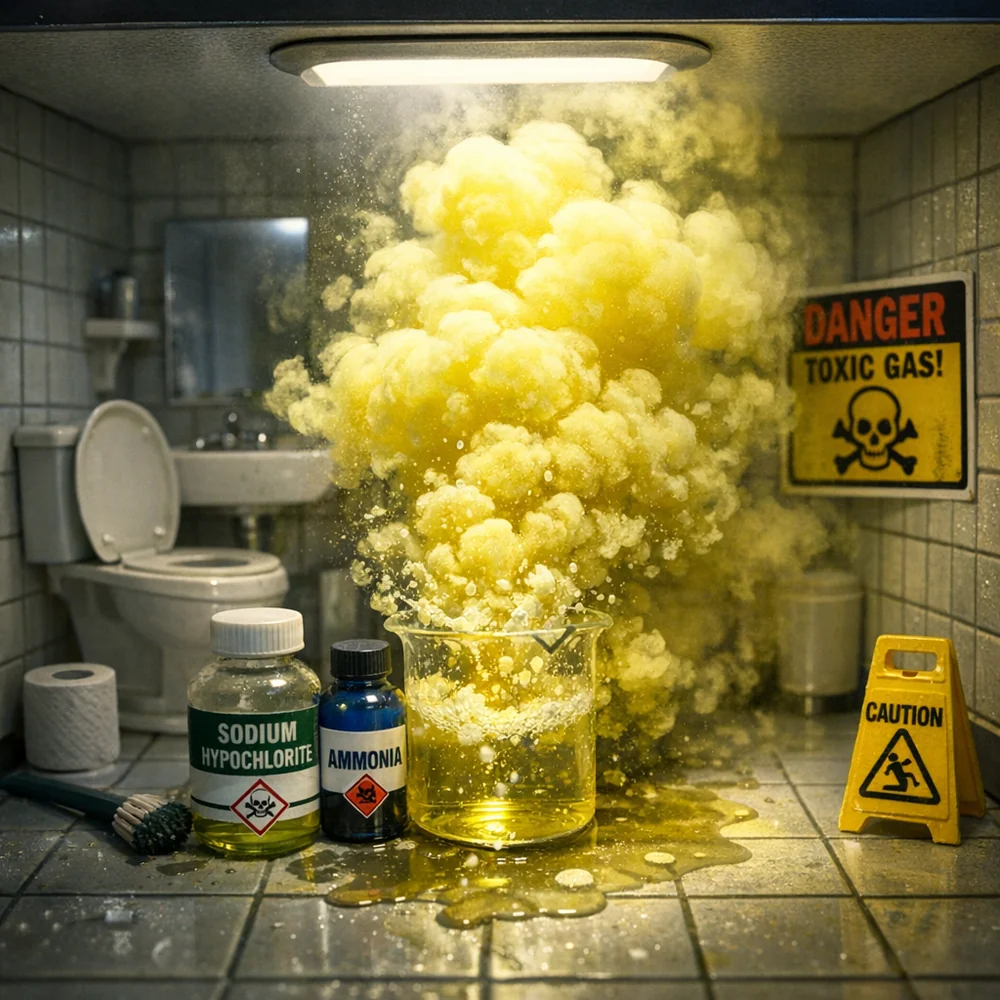
The single most important disposal safety rule involves never mixing bleach, which is sodium hypochlorite, with ammonia or ammonia-containing products. This combination generates chloramine gas, a toxic vapor that has caused deaths in household settings when this rule is violated.
The chemistry is straightforward. Sodium hypochlorite reacts with ammonia to produce chloramine compounds, which are volatile and toxic. In enclosed spaces like bathrooms, chloramine concentration can rapidly reach levels causing severe respiratory distress, pulmonary edema, and death.
The danger extends beyond intentional mixing. Pouring bleach down a drain recently treated with ammonia-based cleaner, or disposing of bleach containers in the same trash bag as ammonia products, can create conditions for unintended combination. Allow thorough rinsing and ample time between using these product types.
Many products contain ammonia without obvious labeling. Glass cleaners, some multipurpose cleaners, and certain floor products may list “ammonia” or “ammonium hydroxide” among ingredients. When in doubt, avoid mixing any cleaning products and dispose of each type separately.
Key Insight: Bleach + ammonia = chloramine gas, which can kill within minutes in enclosed spaces. NEVER mix these products or dispose of them together.
Neutralizing Acids Before Disposal
Acidic cleaning products, including toilet bowl cleaners, rust removers, and descaling solutions, can be neutralized before disposal to reduce their hazard class. Neutralization converts reactive acid to harmless salt and water, making disposal safer for plumbing and wastewater systems.
Baking soda, which is sodium bicarbonate, provides the most accessible neutralizing agent for household use. Adding baking soda to acidic waste produces an effervescent reaction as carbon dioxide releases. Continue adding baking soda until fizzing stops, indicating that the acid has been consumed.
The neutralization reaction is exothermic, meaning it releases heat, and it produces gas. Perform neutralization in well-ventilated areas, adding baking soda gradually to avoid rapid foaming that could overflow the container. Allow the mixture to cool and settle before disposing of the neutralized solution down the drain.
Strong acids like sulfuric acid drain cleaners warrant extra caution. The heat generation from neutralizing concentrated sulfuric acid can be substantial. For such products, professional hazardous waste disposal may be safer than attempting home neutralization.
Key Insight: Add baking soda to acidic cleaners until fizzing stops before disposal. This converts dangerous acid to safe salt water.
Handling Mystery Chemicals
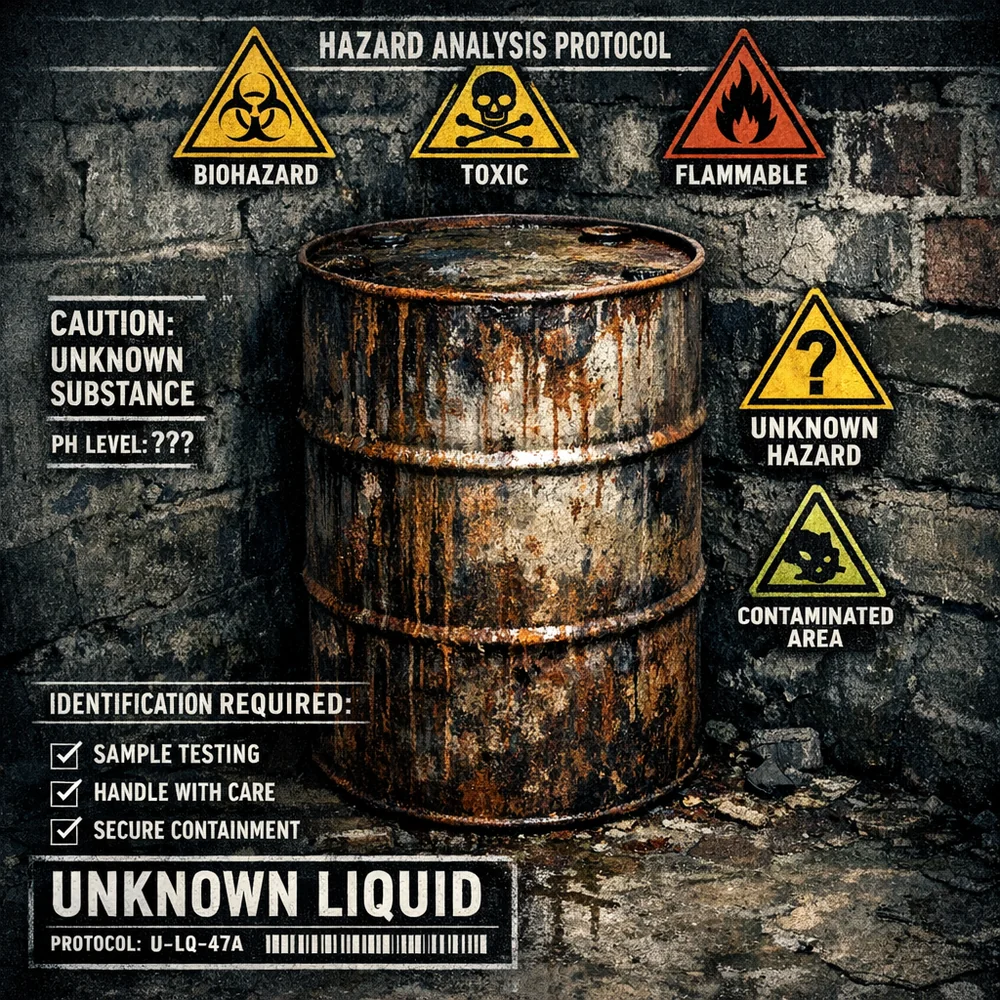
Estate cleanouts, inherited properties, and long-forgotten storage areas can yield containers of unknown liquids. These mystery products present heightened disposal challenges because proper handling depends on knowing what the substance is.
Never attempt to identify unknown liquids by smelling them. Many hazardous substances can cause injury from vapor inhalation alone. Similarly, do not mix unknown liquids with anything else or pour multiple unknowns into a single container. Such combinations risk violent reactions.
The safest approach for unknown liquids involves containment and professional disposal. Keep the material in its original container if possible, or transfer to a clean container with secure closure if the original is compromised. Label the container “UNKNOWN - DO NOT OPEN” and transport to a hazardous waste collection facility.
Some waste facilities can provide identification services or at least safe disposal pathways for unknowns. The cost and inconvenience of proper disposal is minimal compared to the risk of injury or environmental damage from improper handling.
Key Insight: Unknown chemicals are assumed hazardous. Never smell, taste, or mix them. Contact your local hazardous waste facility for disposal guidance.
Recycling Spray Bottles Correctly
Empty cleaning product containers present recycling questions that the recycling symbol alone cannot answer. The containers themselves are often recyclable plastic, but the spray mechanisms that make them functional complicate recycling streams.
Most plastic cleaning bottles are made from HDPE, which is resin code 2, or PET, which is resin code 1. Both are widely accepted for recycling. However, the trigger spray mechanisms contain mixed materials including metal springs, plastic of different types, and sometimes rubber gaskets. These mixed-material assemblies are generally not recyclable through curbside programs.
Proper preparation for recycling involves removing the trigger spray assembly from the bottle and disposing of it in regular trash. The bottle should be rinsed to remove product residue, which can be done during normal cleaning use by refilling with water and using as a rinse sprayer before disposal. Labels do not need removal as label material is separated during recycling processing.
Some manufacturers have introduced recyclable spray mechanisms, and refillable systems using durable bottles avoid the single-use question entirely. When purchasing new products, considering packaging end-of-life reduces future disposal complexity.
Key Insight: Recycle the bottle but trash the spray mechanism. The metal springs and mixed plastics in triggers contaminate recycling streams.
Protecting Your Septic System
Households with septic systems rather than municipal sewer connections face additional considerations for cleaning product disposal. Septic systems rely on bacterial digestion of waste, and antimicrobial cleaning products can disrupt this essential biological process.
The bacteria in septic tanks digest organic matter, converting it to gases and simpler compounds that can safely disperse into drain fields. Concentrated disinfectants entering the tank kill these bacteria, potentially causing system backup, odor problems, and ultimate system failure requiring expensive remediation.
Normal use of disinfecting cleaners, rinsed with substantial water, typically dilutes sufficiently to avoid significant impact. Problems arise from concentrated disposal, such as emptying a bottle of bleach or discarding large quantities of disinfectant after a cleaning project.
For septic households, disposing of concentrated disinfectants through hazardous waste collection rather than the drain protects system function. Products labeled as septic-safe have been formulated to minimize bacterial disruption, though even these should be used in moderation.
Key Insight: Disinfectants kill the beneficial bacteria your septic system needs. Use minimal quantities and avoid pouring concentrated products down drains.
Solvent-Soaked Rags Can Start Fires
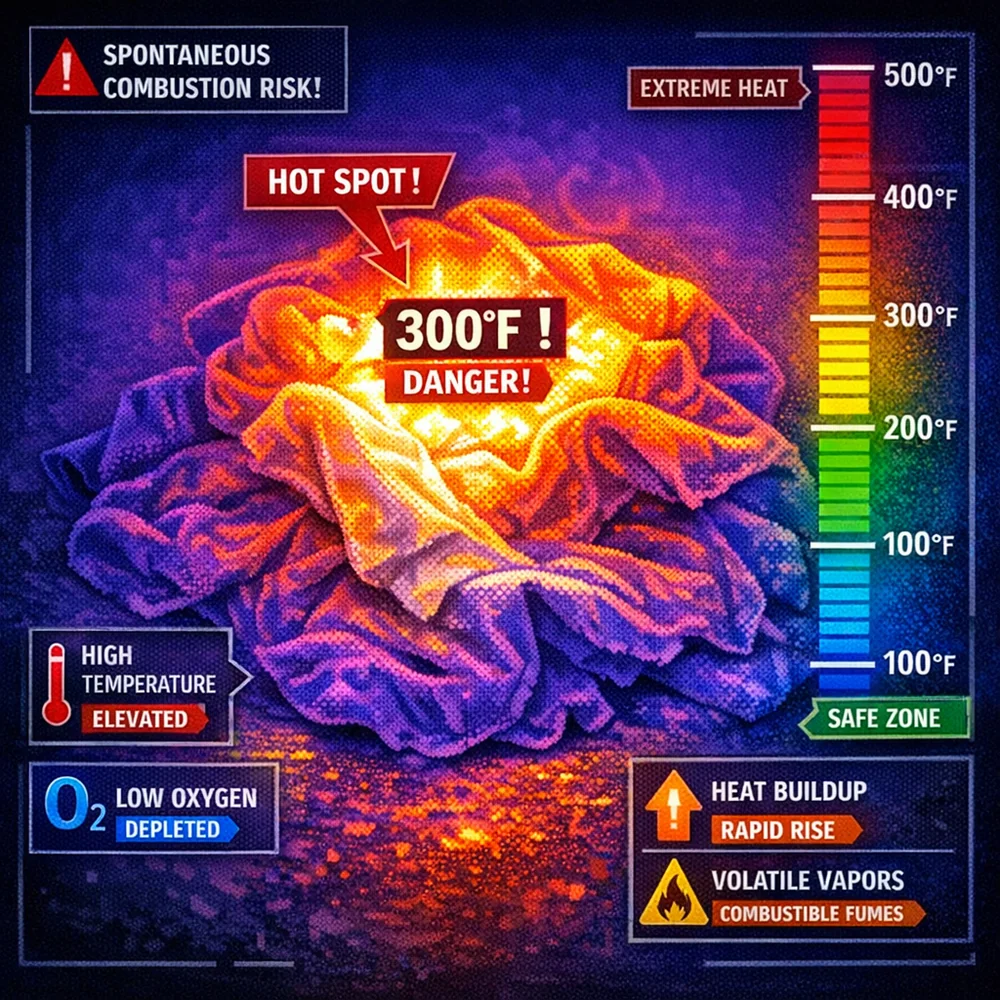
Rags, towels, and cloths used with solvent-based products present unique disposal hazards that differ from the products themselves. The large surface area of oil or solvent-soaked fabric enables exothermic oxidation reactions that can progress to spontaneous combustion without any external ignition source.
The mechanism involves slow oxidation of the solvent or oil generating heat. In a crumpled pile, this heat cannot dissipate and accumulates. When temperature rises sufficiently, the material ignites. This process has caused house fires, garage fires, and industrial fires when solvent-soaked materials were improperly piled or discarded.
Safe disposal requires either allowing complete drying with adequate air circulation by spreading flat on a non-combustible surface outdoors, or preventing oxidation by submerging in water in a sealed metal container. Once fully dry, the rags no longer present spontaneous combustion risk and can be disposed normally.
Products of particular concern include linseed oil from wood finishing, furniture oils, stains and varnishes, and petroleum-based cleaning solvents. Drying oils like linseed oil present the greatest risk because their oxidation, which is how they “dry” and cure, is strongly exothermic.
Key Insight: Solvent-soaked rags can spontaneously ignite hours after use. Hang them flat to dry or store in water-filled metal containers until disposal.
Disposing of Paint Thinner
Paint thinner and related solvents require special handling that goes beyond normal hazardous waste protocols due to their flammability, toxicity, and persistence in the environment. These products should never enter the drain system or be disposed with regular trash.
Used paint thinner can often be reclaimed for additional use rather than disposed. Allowing used thinner to settle in a closed container separates dissolved paint from the usable solvent. The clear solvent above can be decanted for reuse, while the paint sludge at the bottom requires hazardous waste disposal.
When disposal becomes necessary, paint thinner requires transport to a hazardous waste collection facility. The container should be original or clearly labeled, sealed to prevent vapor release, and transported in a vehicle area where spills could not contact passengers or ignite.
Some communities accept paint thinner at household hazardous waste events but not at permanent facilities. Others have year-round drop-off options. Proper planning ensures disposal options are identified before accumulating significant quantities requiring transport.
Key Insight: Paint thinner can be reused multiple times. Let it settle, decant the clear liquid, and only dispose of the sludge as hazardous waste.
Creating a Chemical Inventory
Managing disposal effectively begins with knowing what products you have and maintaining awareness of their hazard characteristics. A simple inventory system prevents the accumulation of forgotten products and enables informed disposal decisions.
Physical inventory involves walking through all storage locations where cleaning products might accumulate: under sinks, in utility closets, in garages, in basements, and in any other areas where products might have been stored and forgotten. Recording each product and its hazard characteristics creates a reference for future disposal.
Date-marking new products when purchased helps track age and guides disposal decisions. Products past their useful life lose effectiveness and may require more careful disposal as chemical degradation alters their properties.
Minimizing product variety reduces both inventory complexity and disposal burden. Households that maintain few multipurpose products have fewer disposal decisions than those accumulating specialized products for every conceivable task.
Safe disposal of cleaning chemicals requires acknowledging that these products’ useful properties, their ability to dissolve, oxidize, sanitize, and react, also make them hazardous when improperly handled at end of life. The convenience of assuming everything can go down the drain or in the trash exposes household members, sanitation workers, and the environment to avoidable risks.
The core protocols are straightforward. Dilute solutions can flow to sewer. Concentrated products, solvents, and unknowns require hazardous waste handling. Never mix products during disposal. Attend to special cases like solvent-soaked materials with extra care. Building awareness of these principles into household routine, perhaps as part of a zero-waste laundry routine, makes safe disposal automatic rather than an afterthought. Many practitioners use soap nuts precisely because they avoid the chemical disposal burden entirely.
Local resources make safe disposal accessible in most communities. Hazardous waste collection facilities, periodic collection events, and retailer take-back programs all provide pathways for proper handling. The modest effort of using these resources protects the community infrastructure that serves everyone.
Key Insight: Inventory your cleaning products annually. Expired or unknown products become disposal problems when forgotten.
The Bottom Line
References
- EPA. “Reducing and Reusing: Household Hazardous Waste.”
- Earth911. “How to Recycle Cleaning Products and Containers.”
- The Spruce. “Safe Disposal Guide for Household Chemicals.”
- CDC. “Cleaning and Disinfecting Safety Protocols.”
- ScienceDirect. “Hazardous Waste Management: Domestic and Industrial.”