Removing Cloudy Film From Glassware
Table of Contents
Things You'll Learn From This Article:
- Cloudy glass can come from two different problems, and only one of them can be fixed, so checking the cause first saves time and effort.
- A quick vinegar rub tells you a lot: if the cloudiness fades, it’s mineral buildup; if nothing changes, the glass is permanently damaged.
- Hard water leaves minerals behind when it dries, especially in hot dishwasher cycles, and those layers add up over time.
- Regular dish soap won’t remove mineral haze because it’s not designed to dissolve minerals, but mild acids like vinegar can.
- Glass etching is actual damage to the glass surface caused by overly alkaline conditions, and no amount of cleaning will reverse it.
- Using too much dishwasher detergent can harm glassware, even if the dishes look clean.
- Very soft water can be just as risky as hard water because it lets detergent become more aggressive.
- Extremely hot dishwasher settings speed up glass damage, especially for older or thinner glasses.
- Mineral film usually looks evenly cloudy, while etched glass often shows rainbow colors or uneven patches in bright light.
- Soaking glassware in diluted white vinegar for 15–30 minutes can fully restore clarity if minerals are the problem.
- Drying glasses right away with a lint-free cloth prevents new water spots from forming.
- Citric acid works like vinegar but stronger, and you can control how powerful it is by adjusting the mix.
- Baking soda adds gentle scrubbing power, but it should be used carefully on delicate or decorative glass.
- Dishwasher salt isn’t the same as table salt and only matters if your dishwasher has a built-in water softener.
- Rinse aids help water slide off dishes instead of drying in droplets that leave spots behind.
- Vinegar can be used as a simpler rinse-aid alternative if you want to avoid commercial products.
- Preventing glass etching means using less detergent, avoiding very light loads, and keeping temperatures reasonable.
- Lead crystal should always be hand washed because dishwashers damage it quickly.
- Acid cleaners that are safe for regular glass can harm lead crystal if they’re too strong or left on too long.
- Vases get cloudy from standing flower water, not dishwashers, and long vinegar soaks work best for them.
- Swirling rice or cleaning beads inside a vase helps scrub spots you can’t reach by hand.
- Wine glasses last longer when hand washed, held by the bowl, and dried immediately.
- Lipstick residue needs to be removed first or it will stick around no matter how well you wash the glass.
- If hard water is a constant issue, treating the water itself can reduce cleaning work everywhere in the house.
- Monthly light vinegar treatments prevent invisible buildup from turning into visible cloudiness later.
- Detergent needs can change over time, so adjusting amounts occasionally helps protect glassware.
- Dirty dish racks and dishwasher interiors can undo good glass cleaning habits if they’re not cleaned too.
- Matching the cleaning method to the material prevents damage, not just with glass but with household items in general.
Pulling cloudy glassware from a supposedly clean dishwasher ranks among the most common kitchen complaints. Understanding the chemistry reveals that not all haze stems from the same cause, and this distinction determines whether restoration is possible.
Two processes create cloudiness: mineral deposit filming and molecular-level glass etching. One responds to simple remedies; the other is irreversible damage. Distinguishing them saves effort and prevents further harm.
Hard Water Mineral Deposits Explained
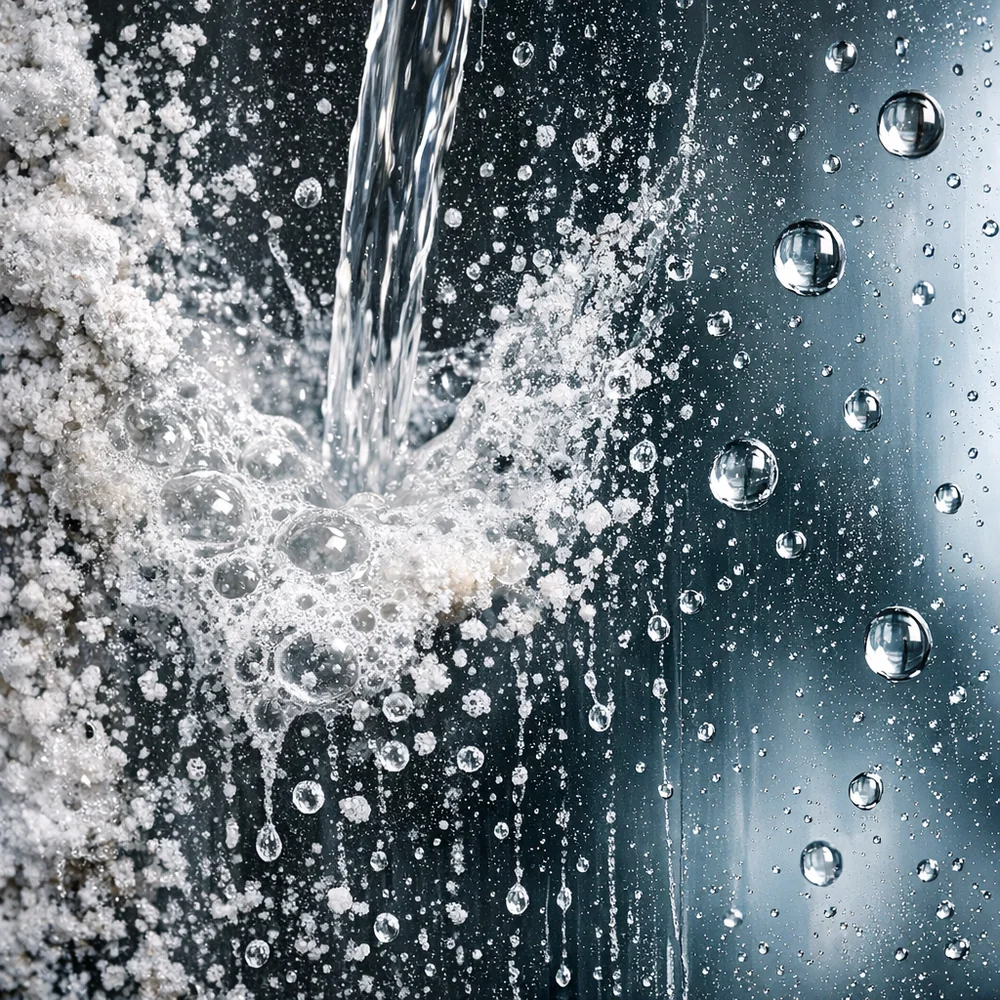
The most common source of cloudy glassware, and fortunately the most treatable, involves mineral deposits left behind when hard water evaporates. Calcium and magnesium ions dissolved in hard water cling to glass surfaces as the water dries, creating a visible film that obscures the natural transparency of the glass.
This filming process accelerates during dishwasher cycles where high temperatures speed evaporation while preventing the gradual drainage that would carry minerals away. Each wash cycle deposits additional mineral layers, gradually building up the characteristic cloudy appearance that obscures glass clarity.
The mineral nature of these deposits means they respond to acidic dissolution. Unlike organic residues that detergents break down, mineral deposits require acids to dissolve their crystalline structure. This chemical reality explains why standard dish soap fails to remove hard water cloudiness while vinegar and citric acid often succeed completely.
Testing distinguishes mineral deposits from etching with simple household materials. Dampen a cloth with white vinegar and rub a small area of the cloudy glass. If the haze begins lifting, mineral deposits cause the cloudiness, and full restoration remains achievable. If vinegar produces no visible change, etching has damaged the glass structure itself.
The Bottom Line Mineral deposits respond to acid. Dampen with vinegar: if haze lifts, it is removable. If not, the damage is permanent etching.
The Chemistry of Glass Etching
Glass etching represents actual degradation of the glass material rather than surface contamination. At the molecular level, alkaline conditions attack the silicon-oxygen bonds that give glass its structure, essentially dissolving the glass surface and creating microscopic pitting that scatters light and appears cloudy.
The formal term for this degradation, sometimes called “glass corrosion” or “glass sickness,” involves a two-stage chemical process. Initial de-alkalization occurs when sodium and other alkali ions within the glass structure exchange with hydrogen ions from surrounding water. This stage often passes unnoticed.
When pH rises sufficiently high, typically above 9, hydroxide ions begin attacking the silicate network directly. This network dissolution phase breaks the fundamental bonds that give glass its properties, leaving behind an etched, roughened surface that cannot be restored through any cleaning process.
Several factors increase etching risk during dishwashing. Very soft water, which lacks minerals to buffer pH levels, creates more alkaline conditions. Excessive detergent concentrations raise pH beyond safe levels. High water temperatures accelerate chemical reactions. Paradoxically, too little soil on dishes means excess detergent attacks glassware surfaces directly rather than the food residues it was designed to remove.
The Bottom Line Etching is permanent molecular damage. It happens when pH rises too high, attacking the glass structure itself. No cleaning can fix it.
Visual Identification of Etching Versus Deposits
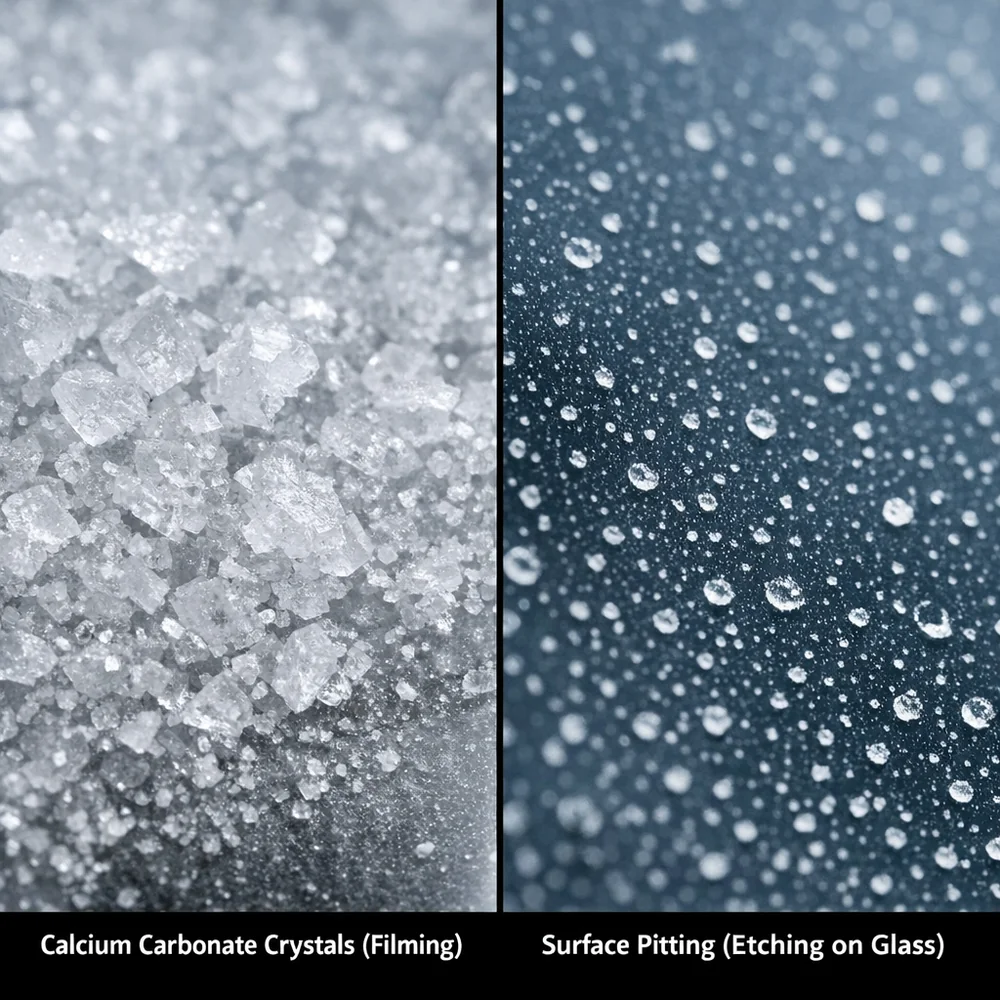
Beyond the vinegar test, visual examination helps distinguish between removable deposits and permanent etching. Each condition creates distinct visual signatures when examined properly.
Hold the affected glass at an angle toward a bright light source. Mineral deposits appear as uniform white or gray hazing that coats the entire surface evenly. The cloudiness has a somewhat matte quality but remains consistent across the glass surface.
Etched glass displays different characteristics under the same lighting. Look for iridescent rainbow effects, subtle color shifts toward blue, purple, pink, or brown. These colors result from light interference patterns created by the uneven surface topography of etched glass. The damage often appears more pronounced in certain areas rather than distributed uniformly.
Running a fingernail gently across the surface provides tactile information. Mineral deposits feel slightly rough but removable. Etched surfaces feel rougher still, with a texture that clearly belongs to the glass itself rather than surface contamination. This texture cannot be scraped or polished away.
Understanding these distinctions helps when evaluating glassware damage alongside other household cleaning challenges. Similar diagnostic approaches apply when assessing fabric care and upholstery damage where surface contamination must be distinguished from material degradation.
The Bottom Line Rainbow iridescence means etching. Uniform white haze means mineral deposits. The fingernail test confirms: scratchy texture is permanent.
Vinegar Soak Methods for Mineral Removal

White vinegar provides the most accessible and effective treatment for hard water mineral deposits on glassware. The acetic acid in vinegar dissolves calcium and magnesium compounds that standard dish soap cannot affect.
For moderately clouded glassware, prepare a soaking solution of equal parts white vinegar and warm water. Submerge affected glasses completely and allow them to soak for 15 to 30 minutes. Stubborn deposits may require longer soaking periods of up to several hours.
After soaking, gently scrub the glass surface with a soft sponge or non-abrasive cloth using circular motions. The acidic treatment loosens mineral bonds, and mechanical action removes the dissolved residue. Rinse thoroughly with clean water to remove all vinegar traces.
Immediate drying with a lint-free cloth prevents new water spots from forming. Air drying allows remaining water to evaporate and deposit fresh minerals, potentially recreating the problem just solved. Microfiber cloths work exceptionally well for this purpose, achieving streak-free finishes without leaving fiber residue.
For extra-stubborn deposits, undiluted vinegar applied directly provides stronger acid concentration. Alternatively, heated vinegar accelerates the dissolution process. Some particularly challenging cases benefit from overnight soaking, though this should be reserved for heavily affected items where quick treatment proves insufficient.
The Bottom Line Equal parts vinegar and warm water for 15 to 30 minutes dissolves most mineral deposits. Dry immediately to prevent new spots.
Citric Acid Treatment Protocols
Citric acid offers an alternative to vinegar that some find more effective for heavy mineral accumulation. Available as a powder, citric acid allows precise concentration control and provides stronger acidic action than standard vinegar dilutions.
Dissolve approximately three tablespoons of citric acid powder in 200ml of hot water for standard cleaning applications. This concentration tackles moderate deposits effectively while remaining gentle enough for regular glassware. Increase concentration for severely affected items.
Apply the citric acid solution to affected glass surfaces and allow contact time for the acid to work. For large surfaces like glass shower doors, covering treated areas with plastic wrap prevents premature drying and maintains acid contact with deposits throughout the treatment period. Two hours of contact time proves effective for most situations.
Glassware benefits from complete submersion in citric acid solution when practical. The even acid exposure treats all surfaces simultaneously, and soaking ensures consistent contact time across the entire piece. Rinse thoroughly after treatment to remove acid residue, then dry immediately with appropriate cloths.
Citric acid appears in many eco-friendly cleaning formulations. Understanding its properties helps evaluate dissolvable cleaning tablets that often include citric acid among their active ingredients.
The Bottom Line Citric acid is stronger than vinegar. Three tablespoons per 200ml of hot water for two hours handles heavy deposits.
Baking Soda Combination Treatments

Baking soda combined with vinegar creates fizzing action that provides mechanical cleaning assistance alongside the acid’s dissolution effects. While this combination neutralizes some acid potency, the bubbling action helps lift loosened deposits from glass surfaces.
Create a paste by mixing three parts baking soda with one part water. After initial vinegar treatment, apply the baking soda paste to affected areas with a soft-bristled brush. The slight abrasive quality of baking soda provides mechanical cleaning action that accelerates deposit removal.
Spray additional vinegar over the baking soda paste to create fizzing action. Allow the reaction to proceed, then gently scrub before rinsing. The combination of acid treatment, mild abrasion, and mechanical bubbling action addresses stubborn deposits from multiple angles.
Exercise caution with antique or valuable glassware when using baking soda treatments. The mild abrasive quality that helps with ordinary glass might scratch delicate surfaces or wear away decorative elements. Test on inconspicuous areas first, particularly with gilded or painted pieces.
The Bottom Line The fizzing helps lift deposits, but the combo neutralizes some acid power. Use sequential treatments for best results.
Dishwasher Salt Explained
European dishwashers commonly include built-in water softeners that require periodic salt refilling. Understanding this system clarifies why some dishwashers consistently produce clear glassware while others struggle with film and cloudiness.
Dishwasher salt differs from table salt in its purity and grain size. The coarse crystals dissolve slowly, providing consistent ion exchange capacity over many wash cycles. Regular salt contains anti-caking additives that interfere with water softener function and can damage softening resin beads.
The water softener works by exchanging calcium and magnesium ions for sodium ions. Sodium compounds do not leave the visible deposits that calcium and magnesium create. Periodic salt replenishment regenerates the ion exchange capacity, maintaining soft water production throughout the softener’s lifespan.
American dishwashers rarely include built-in softeners, relying instead on detergent formulations to address hard water. This design difference explains why European visitors sometimes struggle with American dishwasher results, and why American dishwashers in hard water areas often require additional measures like rinse aids or water softening systems.
The Bottom Line European machines have built-in softeners requiring special salt. American machines rely on detergent formulations instead.
Rinse Aid Chemistry and Function
Rinse aids represent the most effective preventive measure against water spot formation and mineral deposit accumulation on glassware. Understanding how they work enables optimal use while addressing safety considerations.
The primary function of rinse aids involves reducing water surface tension. High surface tension causes water to bead into droplets that dry in place, concentrating dissolved minerals into visible spots. Reduced surface tension allows water to sheet off surfaces, carrying minerals away during the final rinse phase.
Alcohol ethoxylates serve as the primary surfactant in most commercial rinse aids. These compounds dramatically reduce surface tension while remaining stable through dishwasher temperature cycles. Recent research has raised questions about residual rinse aid remaining on dishes after cycles complete.
A 2022 study published in the Journal of Allergy and Clinical Immunology found that rinse aid residues, particularly alcohol ethoxylates, can remain on professional dishwasher-cleaned items and potentially affect gut epithelial barrier function. While the study focused on commercial applications with different rinsing protocols than residential dishwashers, the findings prompted renewed interest in rinse aid alternatives.
Natural rinse aid alternatives include white vinegar placed in the rinse aid dispenser. While less effective than commercial formulations, vinegar provides mild surface tension reduction without synthetic surfactant concerns. Some users fill rinse aid dispensers with lemon juice for similar effects plus additional citric acid treatment.
The Bottom Line Rinse aids reduce surface tension so water sheets off. Vinegar is a natural alternative, though less effective.
Preventing Glass Etching
Since etching damage cannot be reversed, prevention represents the only effective strategy for protecting vulnerable glassware. Several adjustments to dishwashing practices significantly reduce etching risk.
Reduce detergent quantity to the minimum needed for effective cleaning. Most modern detergents work effectively at tablespoon or smaller quantities. Excess detergent creates the alkaline conditions that attack glass structures. If dishes emerge with food residue, increase detergent incrementally rather than starting with maximum amounts.
Optimize water temperature between 120°F and 150°F. Extremely hot water accelerates chemical reactions including glass degradation. Many vintage glasses from before the dishwasher era cannot tolerate temperatures that modern appliances consider standard.
Avoid running extremely light loads where minimal soil leaves excess detergent attacking glassware directly. If washing only a few items, reduce detergent accordingly or consider hand washing delicate pieces.
Select detergents formulated for glass protection. Some products include zinc compounds that coat glass surfaces and reduce alkaline attack. These formulations prove particularly valuable in soft water areas where natural buffering capacity remains limited.
Similar protective approaches apply across different cleaning contexts. Understanding how to protect materials during cleaning informs hand washing hygiene protocols where appropriate product selection prevents damage while achieving cleanliness.
The Bottom Line Etching is permanent. Once the smooth surface of the glass is pitted, no polish will restore it. The only cure is prevention: use less detergent, especially if you have soft water.
Restoring Lead Crystal
Lead crystal requires modified approaches due to its different chemical composition and enhanced vulnerability to damage. The lead oxide content that gives crystal its distinctive brilliance also increases its susceptibility to chemical attack and surface damage.
Never place lead crystal in dishwashers. The combination of alkaline conditions, high temperatures, and mechanical agitation during cycles damages crystal surfaces quickly. Many heirloom crystal pieces lost their clarity to well-meaning dishwasher treatment.
Hand wash crystal in lukewarm water with minimal mild detergent. The lead content softens at temperatures lower than ordinary glass, making warm rather than hot water essential for preservation. Use soft cloths rather than any abrasive materials that might scratch lead crystal’s comparatively soft surface.
Acidic cleaning agents that work safely on soda-lime glass can damage lead crystal. Avoid prolonged vinegar exposure on crystal pieces, and never use citric acid concentrations appropriate for standard glassware. If mineral deposits appear on crystal, use extremely diluted acid solutions with brief contact times.
Dry crystal immediately after washing using soft cloths. The enhanced brilliance of crystal comes partly from its smooth surface finish, which water spots and mineral deposits quickly compromise. Thorough, immediate drying preserves the optical qualities that make crystal distinctive.
The Bottom Line Never dishwash crystal. Hand wash lukewarm with minimal soap. Avoid prolonged acid exposure.
Addressing Cloudy Vases
Vases present cleaning challenges due to their narrow necks and inaccessible interiors. The mineral deposit buildup inside vases comes not from dishwashing but from flower water that sits for extended periods.
Fill cloudy vases with warm water and add white vinegar at approximately one-quarter of the total volume. Allow this solution to soak for several hours or overnight. The extended contact time compensates for the inability to scrub interior surfaces manually.
Rice or aquarium gravel added to the vinegar solution provides interior mechanical cleaning. Swirl the container gently to move the abrasive material across interior surfaces, scrubbing areas that brushes cannot reach. This approach proves particularly effective for narrow-necked vases and decanters.
Commercial cleaning beads designed for vase interiors offer reusable mechanical cleaning assistance. These plastic or stainless steel beads remain in the container during cleaning, providing consistent abrasive action when swirled. The investment pays off for vase collectors who clean multiple pieces regularly.
Prevent future vase cloudiness by changing flower water regularly and adding small amounts of bleach or vodka to inhibit bacterial growth that contributes to residue accumulation. Emptying and drying vases promptly after flower arrangements end prevents extended mineral contact with interior surfaces.
The Bottom Line One-quarter vinegar overnight with rice or gravel for mechanical action reaches narrow-neck interiors.
Wine Glass Care
Wine glasses deserve particular attention because cloudiness and deposits interfere with wine evaluation and enjoyment. The sensory experience of wine depends partly on visual clarity and the ability to observe color characteristics through transparent surfaces.
Quality wine stems often use lead crystal or thin-walled construction particularly vulnerable to dishwasher damage. Hand washing represents the safest approach for valued wine glasses, eliminating etching risk while allowing proper attention to delicate construction.
When washing wine glasses, support the bowl rather than gripping the stem. The joint between bowl and stem represents a high-stress point where many glasses fracture. Twisting motions during washing concentrate force at this junction; instead, rotate the cleaning cloth around the stationary glass.
Remove lipstick and other cosmetic residues before standard washing. Waxy cosmetic bases resist ordinary dish soap and leave visible traces on glassware. Rubbing alcohol on a soft cloth removes these residues effectively before regular cleaning begins.
Polish wine glasses with lint-free microfiber cloths specifically reserved for glassware. Cloths used for other cleaning may carry residues that transfer to glass surfaces. The tiny fibers in dedicated polishing cloths lift water traces without leaving material behind.
The Bottom Line Support the bowl, not the stem, to prevent breakage. Pre-treat lipstick with alcohol. Use dedicated polishing cloths.
Managing Hard Water at the Source
For households with persistently hard water, addressing mineral content at the point of entry provides the most comprehensive solution to glassware filming and spotting issues.
Whole-house water softeners remove calcium and magnesium before water reaches any fixture. This treatment eliminates hard water deposits throughout the home, affecting dishwashing, laundry, bathroom fixtures, and water-using appliances. Initial installation costs recover over time through reduced cleaning chemical consumption and extended appliance lifespans.
Point-of-use water filters offer targeted treatment for specific applications. Under-sink filters treating dishwasher supply water address glassware issues without requiring whole-house treatment. These systems require regular filter replacement but represent lower initial investment than whole-house options.
Testing water hardness provides baseline information for treatment decisions. Hardness test kits available at hardware stores measure mineral content in parts per million or grains per gallon. Results above 120 ppm (7 grains) indicate hard water that will likely cause filming concerns.
Understanding water chemistry connects to broader household maintenance considerations. The same hard water that clouds glassware affects laundry by reducing detergent effectiveness. Resources covering how water temperature affects stain removal often address hard water interference with cleaning chemistry.
The Bottom Line Test your water. Above 120 ppm requires treatment. Whole-house softeners are comprehensive; point-of-use filters are targeted.
Commercial Glass Restoration Products
Several commercial products specifically target cloudy glassware restoration. These formulations typically combine acidic compounds with buffering agents and polishing components for comprehensive treatment.
CLR (Calcium, Lime, Rust) remover effectively dissolves mineral deposits on glassware. The product’s acid blend targets multiple mineral types simultaneously. Follow manufacturer dilution instructions and limit contact time to prevent potential surface damage.
Bar Keepers Friend powder provides mild acidic cleaning with gentle abrasive action. Originally formulated for metal polish, the oxalic acid content dissolves mineral deposits while fine particles polish glass surfaces. This product works well for moderate cloudiness that resists vinegar treatment.
Cascade and Finish manufacture dishwasher cleaning products designed to remove buildup from dishwasher interiors. While intended for machines rather than glassware, running empty dishwashers with these products reduces the residue contamination that contributes to glass filming during regular cycles.
Commercial restoration approaches parallel professional cleaning methods used for other household items. Similar product evaluation considerations apply when selecting eco-friendly solid dish soap options for regular use.
The Bottom Line CLR and Bar Keepers Friend work when vinegar fails. Follow dilution instructions carefully.
Building Sustainable Glass Care Routines
Long-term glassware clarity depends on consistent practices that prevent accumulation while addressing developing issues before they become severe. Building effective routines protects glassware investments while reducing the need for intensive restoration efforts.
Monthly vinegar treatments prevent mineral buildup even when individual wash cycles seem to leave glass clear. Light deposits invisible to casual inspection accumulate into visible cloudiness over time. Periodic acid treatment removes developing contamination before it reaches noticeable levels.
Evaluate detergent quantity every few months as water conditions and product formulations change. Manufacturers frequently adjust product concentrations, meaning the same scoop that worked previously may now deliver different results. Additionally, water hardness varies seasonally in some areas, requiring corresponding detergent adjustments.
Inspect rinse aid dispensers periodically to verify proper function. Blocked dispensers or exhausted supplies leave glassware without the sheeting action that prevents spot formation. Modern dishwashers often display rinse aid levels, but manual verification ensures accuracy.
Reserve vulnerable pieces for hand washing regardless of convenience considerations. Crystal, antique glass, and decorated items simply cannot tolerate dishwasher conditions safely. The time invested in careful hand washing protects irreplaceable items from damage that no treatment can reverse.
The Bottom Line Monthly vinegar treatments prevent buildup. Adjust detergent seasonally. Hand wash irreplaceable pieces.
Integrating Glass Care With Kitchen Hygiene
Glassware care exists within broader kitchen hygiene systems where cleanliness standards and maintenance practices affect multiple domains simultaneously.
Clean dish racks regularly to prevent mineral and bacterial contamination from affecting freshly washed glassware. Racks themselves accumulate deposits as water drains through their structure. Periodic soaking in vinegar solution maintains rack cleanliness that transfers to drying items.
Evaluate dishwasher interior condition as part of glass care maintenance. Mineral deposits, food debris, and residue buildup within the dishwasher compartment affect every item washed within it. Detailed guidance on cleaning dishwasher filter maintenance addresses internal appliance care that supports glassware clarity.
Connect glassware practices with broader household cleaning knowledge. The principles governing effective glass care, understanding chemistry, matching methods to materials, and preventing damage through proper practice, apply across cleaning domains from fabric care to surface sanitization.
These interconnected practices create comprehensive cleanliness that protects household investments while maintaining hygienic conditions throughout living spaces.
References
- Libbey Glassware. Glass Care and Etching Prevention Guide.
- Whirlpool Corporation. Dishwasher Use and Care Manual.
- Journal of Allergy and Clinical Immunology. Rinse Aid Residue Research 2022.
- American Ceramic Society. Glass Corrosion Chemistry.
- NSF International. Dishwasher Performance Standards.