The Science of Dissolvable Cleaning Tablets: Chemistry, Binders, and Efficacy
Table of Contents
Things You'll Learn From This Article:
- The fizzing isn’t just for show—it physically breaks the tablet apart so the cleaner spreads evenly instead of dissolving slowly or unevenly.
- A tablet that leaves chalky bits usually isn’t dissolving fully, often because the formula or water temperature isn’t helping it break down.
- Warm water helps tablets dissolve faster and more completely, especially for binders and grease-cutting ingredients.
- Shaking the bottle matters, particularly with cold water, because it breaks up dense residue that can settle at the bottom.
- Humidity can ruin tablets before you ever use them, which is why airtight containers and quick storage after opening are important.
- Tablets are hard to make because all the ingredients want to react with moisture, even moisture in the air.
- Not all cleaning tablets are equal—small differences in ingredient mixing can change how well they fizz and clean.
- The “dry” format limits which cleaning ingredients can be used, especially powerful liquid surfactants and enzymes.
- Tablets usually rely on surfactants that can exist as solids, which can affect grease-cutting strength compared to some liquid cleaners.
- Enzyme-based stain fighting is harder to include in tablets because the fizzing reaction and heat can deactivate enzymes.
- Binders like PEG hold tablets together for shipping but dissolve in water, which is why the tablet stays solid until you use it.
- Some common pill-making ingredients can’t be used because they repel water and slow dissolution.
- Tablets can fail if they absorb moisture during storage, leading to soft, swollen, or weak products.
- Packaging plays a bigger role than it seems, since it has to block moisture without lasting forever as waste.
- Tablets reduce shipping weight mainly by removing water, which cuts down fuel use and storage space.
- Using tablets at home avoids repeatedly buying plastic bottles, since the same spray bottle gets reused.
- Solid tablets need tighter manufacturing controls than liquids to ensure each one cleans the same way.
- A tablet that dissolves well is the result of careful balance, not just compressed cleaning powder.
Those fizzing cleaning tablets that have started showing up everywhere are not just dried-out liquid cleaners repackaged for eco-points. They represent a genuinely different approach to formulation chemistry, one that requires solving some tricky engineering problems to make everything work. Understanding the science explains why some tablets dissolve perfectly while others leave chalky residue, why certain ingredients like enzymes are hard to include, and how these water-free products actually compare to conventional liquids.
The end result, a soapy solution in a spray bottle, looks simple enough. Getting there involves compressing surfactants, pH adjusters, and fragrances into a dry tablet that stays stable on the shelf but then dissolves rapidly and completely when you add water. This guide digs into how that actually works, from the acid-base reactions that create the fizzing to the binders that hold everything together.
Why the Fizzing Actually Matters
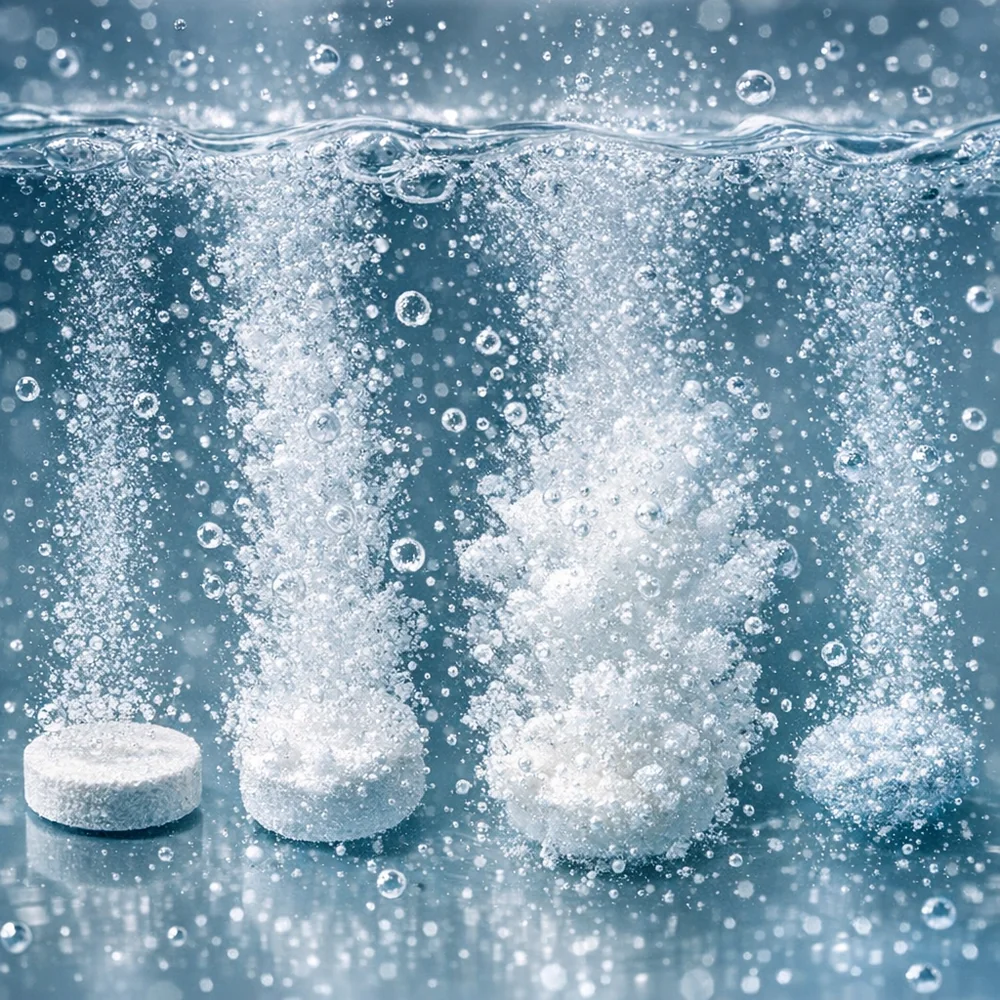
The dramatic bubbling when a cleaning tablet hits water is not there for show. It serves a critical function by physically breaking apart the compressed tablet structure and spreading the cleaning ingredients throughout the solution. Without this active disintegration mechanism, a compressed block of surfactant would dissolve incredibly slowly, like a bar of soap just sitting in water.
The core reaction involves a solid acid, usually citric acid, meeting a solid base, typically sodium bicarbonate or sodium carbonate. When water contacts both components, they react to produce carbon dioxide gas, some heat, and neutralized salt products. All those gas bubbles physically tear the tablet apart while the cleaning agents get released into solution.
Formulators adjust the ratio of acid to base to control the final pH of the cleaning solution. Most general-purpose cleaners need a near-neutral or slightly alkaline pH, so excess carbonate or bicarbonate ensures all the acid gets neutralized while providing some alkalinity for cutting grease. While citric acid is most common, other organic acids like tartaric or malic acid sometimes get used to fine-tune how fast the initial burst of fizzing happens.
Key Insight: The fizzing is functional. An acid-base reaction produces CO2 that breaks the tablet apart and disperses ingredients. Without it, tablets dissolve far too slowly.
How These Tablets Get Made
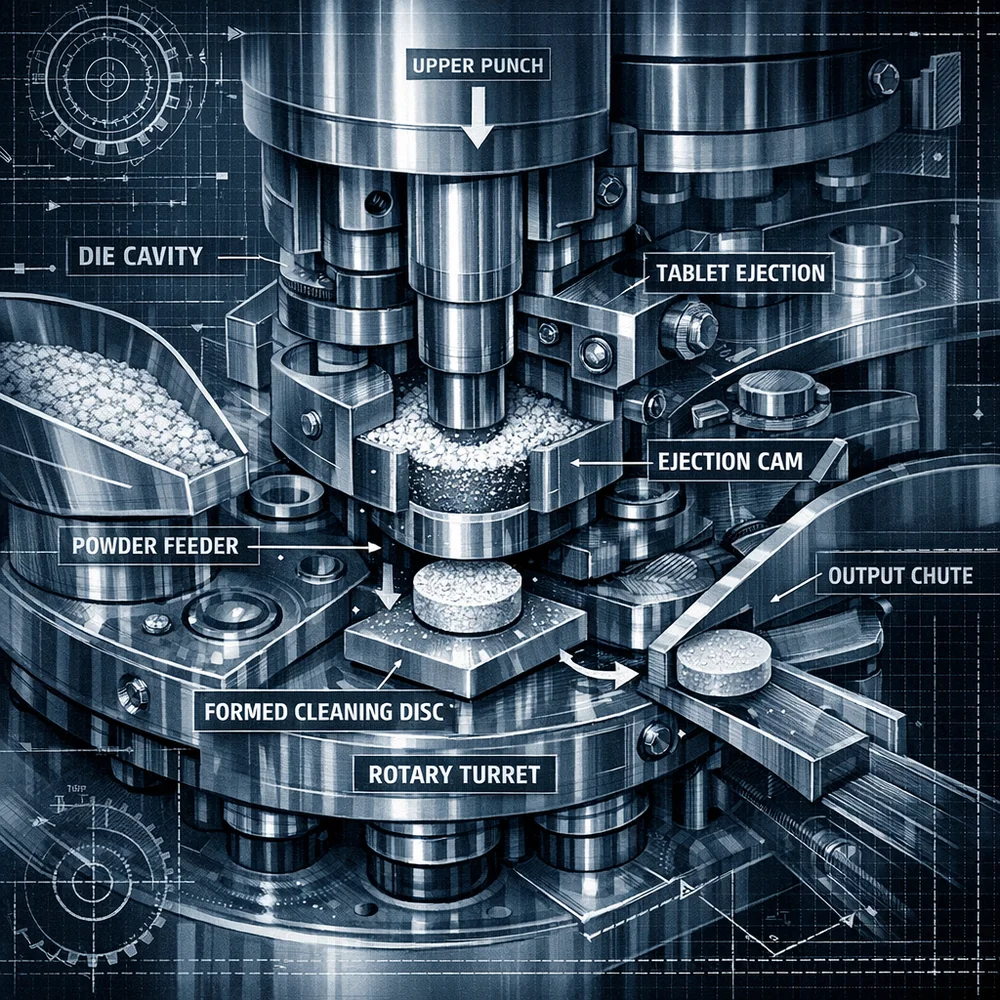
Making effervescent cleaning tablets is much harder than regular tablet compression. Because the ingredients are specifically designed to react when they get wet, the entire manufacturing environment needs to be strictly moisture-controlled. Factories often maintain relative humidity below 20 percent just to prevent the tablets from starting to react prematurely.
The simplest approach is direct compression, where all the ingredients get dry-mixed and fed into a high-speed rotary tablet press. This runs into problems because the ingredients have different particle sizes and densities, causing them to separate in the hopper. If the mix is not uniform, some tablets fizz too vigorously while others barely clean at all. Direct compression also demands expensive high-purity anhydrous materials.
A more sophisticated method is wet granulation using heat-activated fusion. Small amounts of water or heat get applied to the mixture, causing citric acid to release its water of crystallization. That released water then acts as a granulating agent, binding the other powders into larger, more uniform granules. The trick is stopping this reaction quickly through rapid drying before the entire batch fizzes itself apart. When done right, this creates strong uniform granules, though over-processing reduces final tablet strength.
The most advanced approach is twin-screw melt granulation. Instead of water, a low-melting-point binder like sorbitol or PEG-6000 coats the particles. The mixture passes through a heated extruder where the binder melts, then forms granules as it cools. This method is completely water-free, making it safest for highly reactive formulas. It also allows higher concentrations of liquid surfactants to be trapped within granules, addressing the grease-cutting limitations of older tablet designs.
Key Insight: Manufacturing requires below 20% humidity. The acid and base react with any moisture, so factories need strict environmental control.
The Binders and Disintegrants
Compressing powders into a tablet that survives shipping but still dissolves properly requires careful attention to binders. In pharmaceutical tablets, these ingredients just need to be inert. In cleaning tablets, they ideally should contribute to cleaning or at least not interfere with it.
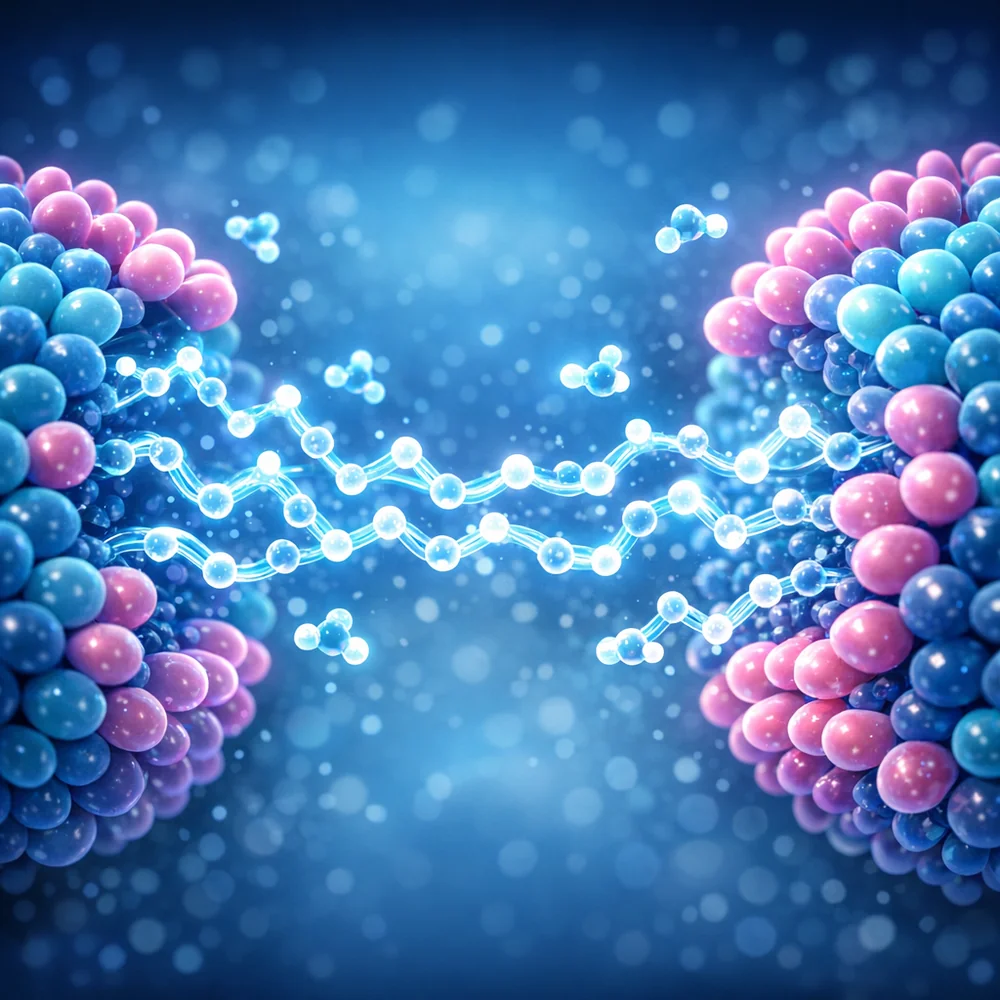
Polyethylene Glycol, usually called PEG, is the industry standard. High molecular weight versions like PEG-4000 or PEG-6000 are waxy solids that melt at relatively low temperatures. During tableting, PEG lubricates everything so tablets do not stick to the press. It also acts as a water-soluble glue holding the tablet together until you intentionally dissolve it.
Tableting also requires lubricants so tablets eject cleanly from the machine. In pharmaceutical pills, magnesium stearate is common, but it repels water. Using it in cleaning tablets would create scum on the water surface and slow dissolution. Instead, formulators use water-soluble alternatives like sodium benzoate, the amino acid L-leucine, or adipic acid.
Disintegrants help ensure complete breakdown. While the effervescent reaction provides the main force, supplemental disintegrants like cross-linked polyvinylpyrrolidone expand rapidly when wet, forcing tablet fragments apart. This prevents the “sand” effect where tiny grains of undissolved acid collect at the bottom. For practical tips on using these products, check our comparison of tablets vs liquids.
Key Insight: PEG is the “glue” holding the tablet together. It is biodegradable and water-soluble, but too much can slow dissolution or leave a film.
Getting Surfactants Into Dry Form
Standard liquid detergents often use surfactants like Sodium Lauryl Sulfate or Alkyl Polyglucosides supplied as aqueous solutions. Making a tablet means sourcing these surfactants as solid, anhydrous forms that can be blended and compressed.
Sodium Coco Sulfate is popular for tablet formulations. It comes as solid noodles derived from coconut oil, serving as both cleaning agent and structural component. Its high melting point and low tendency to absorb moisture make it stable in dry storage. See how plant-based detergents use similar surfactants. Sodium Lauryl Sulfoacetate is another common choice, milder than sulfates but producing excellent foam.
The real challenge is that many high-performance non-ionic surfactants, the ones best for grease removal, are viscous liquids at room temperature. Getting these into a dry tablet requires “plating” them onto porous carrier powders like silica or sodium carbonate so they behave like solids during manufacturing. There are practical limits to how much liquid surfactant a tablet can hold before it becomes too sticky or soft.
Key Insight: Liquid surfactants (best for grease) are hard to put in tablets. They must be absorbed into porous powders first, limiting maximum concentration.
Why Humidity Is the Enemy
The biggest enemy of effervescent tablets is atmospheric moisture. Since the acid-base reaction is triggered by water, even humidity in the air can start a slow pre-reaction that degrades the fizzing power and structural integrity of the tablet before you ever use it.
Ingredients like citric acid naturally attract moisture. If left exposed to humid air, tablets absorb water, become soft, and lose their ability to fizz vigorously. The industry calls this “bloating” or “puffing.”
Manufacturers combat this with anhydrous ingredients, moisture-barrier packaging, and desiccants in storage containers. The compostable paper packaging used by brands like Blueland presents a real engineering challenge. The coating needs to block moisture for months of shelf life while still breaking down in a compost pile. This balancing act is why tablets should go into airtight containers immediately when you receive them. Most refillable cleaning kits now include glass or specialized plastic bottles designed with this in mind.
Key Insight: Store tablets in airtight containers. Even air humidity triggers the acid-base reaction, degrading fizzing power over time.
Manufacturing Quality Control
Ensuring every tablet has the same cleaning power requires the raw material mix to have specific physical properties before it ever reaches the press.
Flow rate, measured in grams per second, determines how fast the machine can run. If powder flows poorly due to irregular shapes or static, tablets end up with inconsistent weight. Angle of repose, the slope angle when powder is poured into a pile, should stay below 40 degrees; higher angles indicate sticky powder that will jam machines.
Carr’s Index compares poured density to tapped density. A high Carr’s Index above 25 percent means powder is too fluffy and will trap air pockets when compressed, leading to tablets that shatter in transit. Loss on Drying (LOD) is the most critical safety check for effervescent products, ideally staying below 1 percent. Any internal moisture above this acts as a catalyst for dormant reaction inside the package, causing swelling pouches or caking.
Key Insight: Carr’s Index measures powder compressibility. Above 25% means the powder is too fluffy to compress properly, causing tablets to shatter during shipping.
Why Warm Water Matters
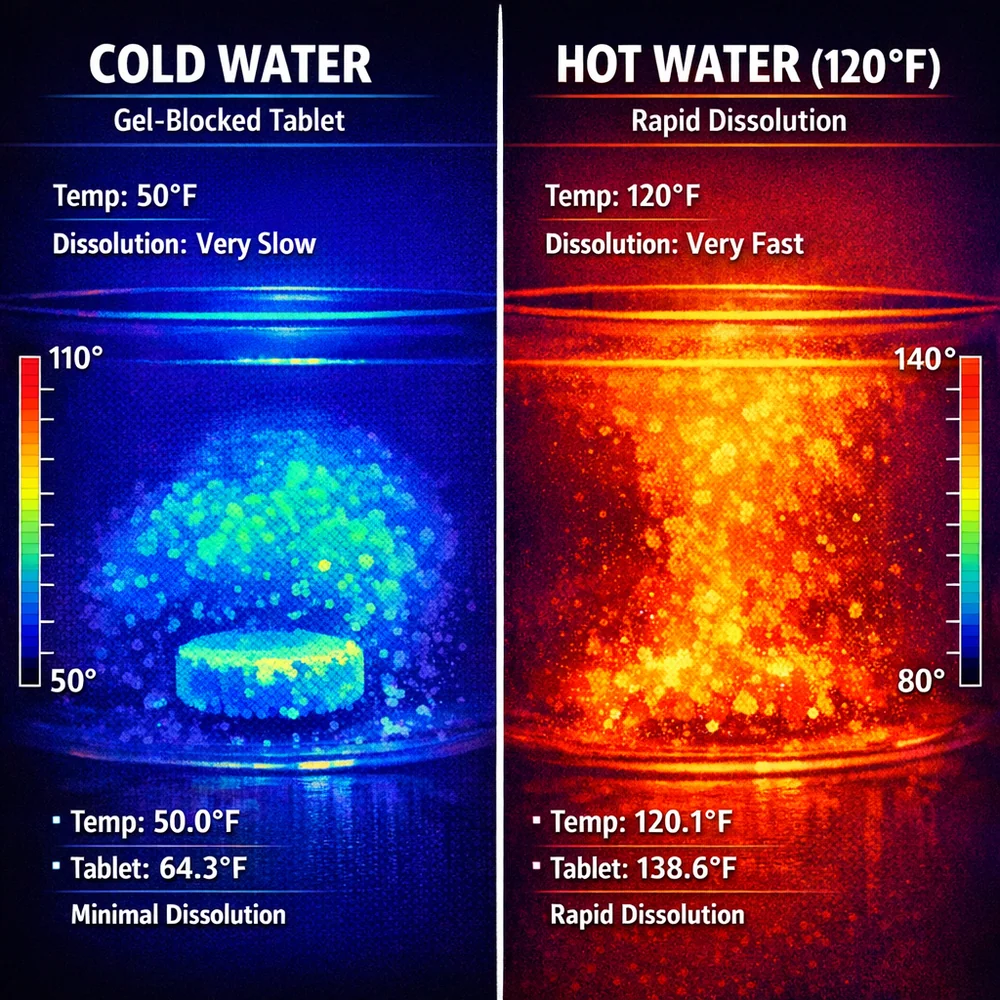
The rate of dissolution follows the Arrhenius equation, which describes how reaction rates increase with temperature. Using warm water for cleaning tablets serves two purposes. It accelerates the acid-base neutralization, generating widespread gas evolution more quickly. It also increases the solubility of binders and surfactants, preventing formation of a viscous gel layer around the tablet that can block water from reaching the core.
A common failure with cold water is the “residue cone,” a pyramid of undissolved material sitting at the bottom of the bottle. This happens when locally saturated salt concentrations near the tablet bottom create a dense layer that inhibits further diffusion. Shaking the bottle disrupts this layer and is critical for complete dissolution in cooler water.
Key Insight: Cold water creates a “gel block” where the outer surfactant turns into thick gel that stops water from reaching the dry center. Warm water dissolves this faster.
The Enzyme Problem
Enzymes like proteases, amylases, and mannanases are standard in premium laundry and dish detergents for breaking down specific stains. Getting them into effervescent tablets is chemically difficult.
The intense localized acidity from citric acid and the rapid pH changes during the effervescent reaction can denature enzymes, rendering them inactive before they ever reach a stain. The heat generated by the exothermic neutralization can also thermally damage sensitive enzyme proteins.
This explains why many tablet-based cleaners focus on general surface cleaning using surfactants and solvents rather than enzymatic stain removal. Brands that do include enzymes must use granulated, encapsulated enzyme technologies that protect protein structure until the solution pH stabilizes. This is more expensive and technically demanding than simple tablet formulation.
Key Insight: Acid-base fizzing can destroy enzymes before they work. Enzyme-containing tablets require expensive encapsulation technology to protect the proteins.
Is PEG Really Eco-Friendly?
PEG is the unsung hero of tablet formulations, but its environmental profile gets questioned. Is it a plastic? Is it biodegradable?
Chemically, PEG is a polyether compound. While it is a synthetic polymer, research shows that lower molecular weight PEGs are readily biodegradable by wastewater bacteria. They are not considered microplastics in the persistent marine debris sense because they dissolve in water.
However, PEG production involves ethylene oxide, which comes from petroleum. While the end product is generally considered safe and biodegradable, it is not “natural” the way a plant oil is. It represents a reasonable compromise: a verifiable-safe synthetic that makes eliminating single-use plastic bottles possible.
Key Insight: PEG is synthetic but biodegradable in wastewater. It is not a microplastic, though production does use petrochemical ethylene oxide.
The Carbon Footprint Argument
The primary motivation behind the tablet revolution is carbon footprint reduction. With conventional cleaning supply chains, water accounting for about 90 percent of liquid cleaner weight gets pumped into plastic bottles at factories, shipped in heavy trucks, and stored in energy-intensive warehouses.
Life Cycle Assessments show that tablets cut transportation emissions by up to 90 percent because one truckload of tablets produces as much cleaning solution as 10 to 15 truckloads of liquid bottles. By moving to refill-at-home models, average households can eliminate 10 to 30 plastic spray bottles per year. From a storage perspective, tablets occupy 95 percent less shelf space, reducing energy needed for warehousing and logistics.
Dissolvable cleaning tablets genuinely are a distinct formulation class, not just dried-out liquids. They rely on acid-base chemistry, solid-state surfactants, and specialized binders that require real engineering to get right. The science confirms that for general cleaning using surfactants and pH adjustment, properly formulated tablets can match liquid performance once dissolved.
The limitations, including struggles with heavy grease due to limited liquid surfactant capacity and enzyme stability issues, are inherent to the dry format constraints. Understanding these chemical realities helps you appreciate what tablet technology accomplishes while setting realistic expectations for specialized tasks like heavy degreasing or enzymatic stain removal.
Technology keeps advancing, and we are likely to see hybrid tablets using new encapsulation techniques to hold more liquid actives. Future innovations will probably focus on bio-based binders to replace PEG and room-temperature enzymes that can survive the violent fizz of dissolution.
Key Insight: Tablets reduce shipping emissions by up to 90% since you are not trucking around water. One truckload equals 15 truckloads of liquid bottles.
The Bottom Line
References
- US Patent 7053039B2. “Effervescent Cleaning Tablets Composition and Method.”
- RSC Pharmaceutics. “Recent advances in the technology of effervescent tablets.”
- Wikipedia. “Effervescent tablet dissolution mechanisms.”
- American Cleaning Institute. “Shelf Life and Product Stability.”
- PubMed. “Biodegradability of polyethylene glycols.”