Dishwashing Hand Hygiene Protocols
Table of Contents
Things You'll Learn From This Article:
- “Hot enough to sanitize” water will burn you, so hand dishwashing works by melting grease first and removing germs through rinsing or sanitizers, not by boiling them.
- Wash dishes in very warm water (about as hot as your hands can stand) so grease actually lifts off instead of smearing around.
- Separate washing from rinsing: one sink (or basin) for soapy washing, another for rinsing or sanitizing, so dirty water doesn’t undo your work.
- Never rinse dirty foam back into the wash water, because it weakens the soap and cools the water that’s breaking down grease.
- Sponges get extremely dirty fast and often spread bacteria, so treat them as disposable or sanitize them daily and replace them weekly.
- Dish brushes stay cleaner than sponges because they dry faster, and you can fully disinfect them with boiling water or bleach.
- Drying tools matter: microfiber cloths remove far more bacteria than cotton, but they must be washed in very hot water after each use.
- Air drying dishes is cleaner than towel drying, since towels easily spread bacteria from hands, counters, and the air onto clean dishes.
- Drying racks can grow bacteria and “pink mold,” so they need regular cleaning, especially the drip tray underneath.
- Dish soap strips the natural oils from your skin, which explains dry, cracked “dishpan hands,” especially with frequent washing.
- Lotions alone don’t fix damaged skin; creams with ceramides, plus a sealing layer like petrolatum or dimethicone, actually help rebuild the skin barrier.
- Wearing the right gloves protects your skin and health, with nitrile gloves offering the best balance of durability and chemical resistance.
- Soap residue can stay on dishes and glasses, so rinse until the surface feels squeaky instead of slippery.
- Delicate glass and crystal need cooler water, mild soap, and immediate towel drying to avoid damage and residue.
- Cast iron and wooden tools follow different hygiene rules, relying more on heat or mild acids (like vinegar) than on heavy soap.
- Cleaning tools need their own routine: brushes, sponges, pads, and racks all require regular sanitizing to stay safe to use.
- Bleach sanitizing only works when measured correctly, used in cool water, and given enough contact time—more bleach is not safer.
- Good dish hygiene comes from consistent habits—clean tools, proper rinsing, and drying methods—not from stronger soap or labels that say “antibacterial.”
Manual dishwashing remains a daily reality for millions, yet few treat it with the hygiene protocols found in professional kitchens. The gap between “looking clean” and “sanitized” is where foodborne illness risks hide.
Unlike dishwashers that use scalding water and caustic detergents, hand washing depends on technique. Water temperature drops, sponges harbor bacteria, and cross-contamination occurs through unwashed hands. A clinical approach protects your household from pathogens while preserving cookware and skin.
The Temperature Imperative
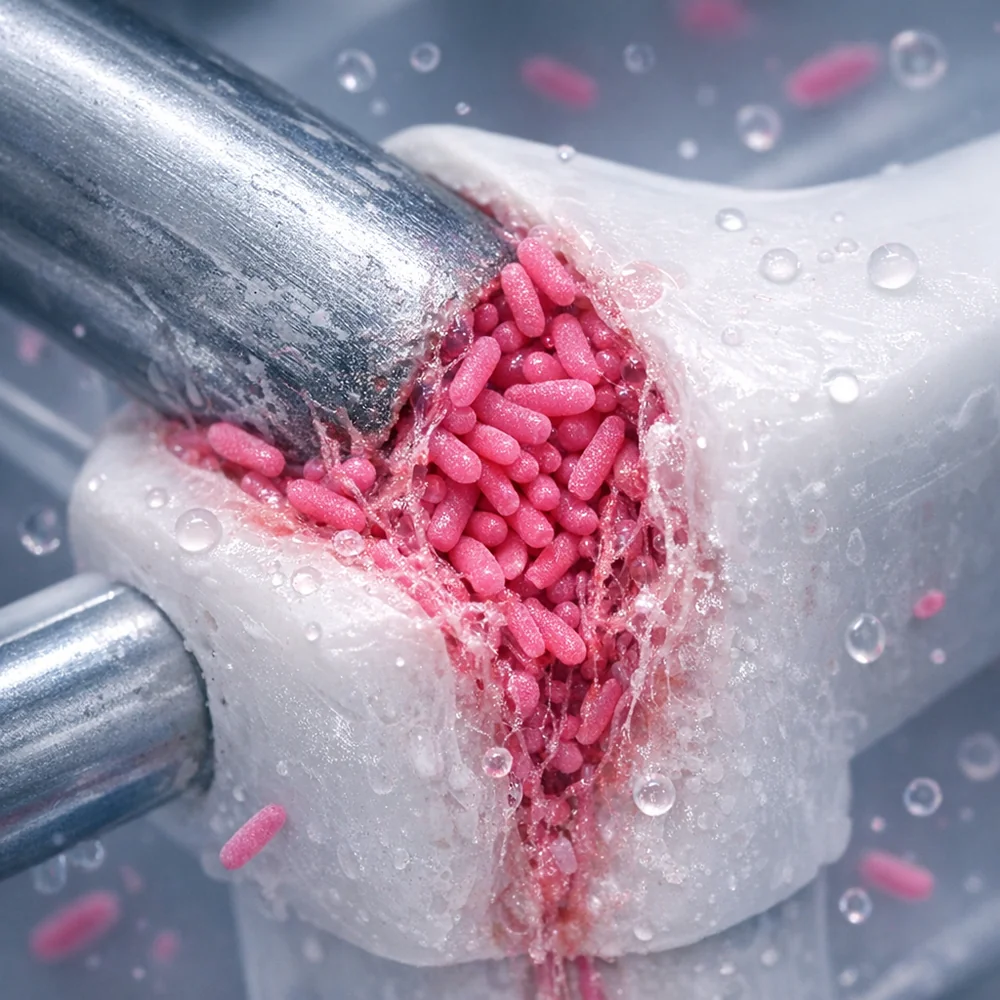
The most persistent myth in hand dishwashing is that your hands can tolerate water hot enough to sterilize dishes. They cannot. Water temperatures capable of thermal sanitization (typically above 171°F or 77°C) cause third-degree burns in less than a second.
Effective hand washing instead relies on a two-stage thermal strategy. The wash water should be as hot as hands can comfortably tolerate, typically between 110°F and 120°F (43°C to 49°C). This temperature range specifically targets grease liquefaction. Animal fats and cooking oils melt around 100°F to 110°F; water below this threshold pushes grease around rather than lifting it no matter how much soap you use.
Sanitization, the actual killing of bacteria, happens during the rinse or soaking stage. Since you cannot hold dishes in scalding water, thermal sanitization requires a separate immersion step using a wire basket or tongs, or reliance on chemical sanitizers. Alternatively, modern antibacterial dish soaps utilize surfactant chemistry to physically dislodge pathogens so they can be rinsed away, rather than boiling them to death.
The Bottom Line Your hands cannot tolerate sterilization temperatures. Effective sanitization requires either chemical agents or separate immersion steps with protective equipment.
The Two-Sink Method
Professional sanitation codes universally mandate a wash-rinse-sanitize workflow. In a home kitchen with a standard double sink, this translates into the “Two-Sink Method.”
Sink one serves as the wash basin. Fill it with hot water and detergent. This water becomes progressively dirtier as you work. Its purpose is soil removal, not sterilization.
Sink two serves as the rinse and sanitization station. In a professional three-compartment setup, these are separate; at home, we combine them. After scrubbing in sink one, the dish moves to sink two for a thorough rinse under running water or dipping in a sanitizing solution.
Crucially, never rinse into the wash water. Spraying dirty foam off a plate back into your soapy wash basin degrades the detergent’s efficacy and cools the thermal mass you utilized to melt grease. Rinsing should always direct waste water down the drain, keeping the wash basin’s chemistry active for as long as possible.
The Bottom Line The “Two-Sink Method” is non-negotiable for hygiene. One sink dissolves grease with heat and surfactant; the second sanitizes. Mixing these steps ensures neither works effectively.
Sponge Science and Cross-Contamination
The kitchen sponge is consistently identified by microbiologists as the single dirtiest item in the average home, often harboring more fecal bacteria than a toilet seat. Its porous structure, combined with constant moisture and food residue, creates a perfect incubator for E. coli and Salmonella.
Cross-contamination occurs when this bacterial reservoir is used to “clean” a surface. Wiping a cutting board with a used sponge often spreads pathogens rather than removing them.
Hygiene protocols require treating sponges as disposable tools or subjecting them to rigorous sanitization. Microwave damp sponges for two minutes daily to kill vegetative bacteria (though this does not remove spores). Better yet, replace sponges weekly. See our guide on sponge vs brush hygiene for more details.
Dish brushes offer a superior hygienic profile. Their non-porous bristles shed water rapidly, preventing the moisture retention that supports bacterial colonies. Sanitizing a dish brush is straightforward: submerge the head in boiling water or a bleach solution weekly. Unlike sponges, brushes can be fully disinfected without structural degradation.
The Bottom Line A kitchen sponge is often dirtier than a toilet seat. Its porous structure creates a perfect bacterial incubator that is nearly impossible to fully sterilize. Frequent replacement or switching to brushes is the only true fix.
Dish Cloths: Microfiber vs. Cotton
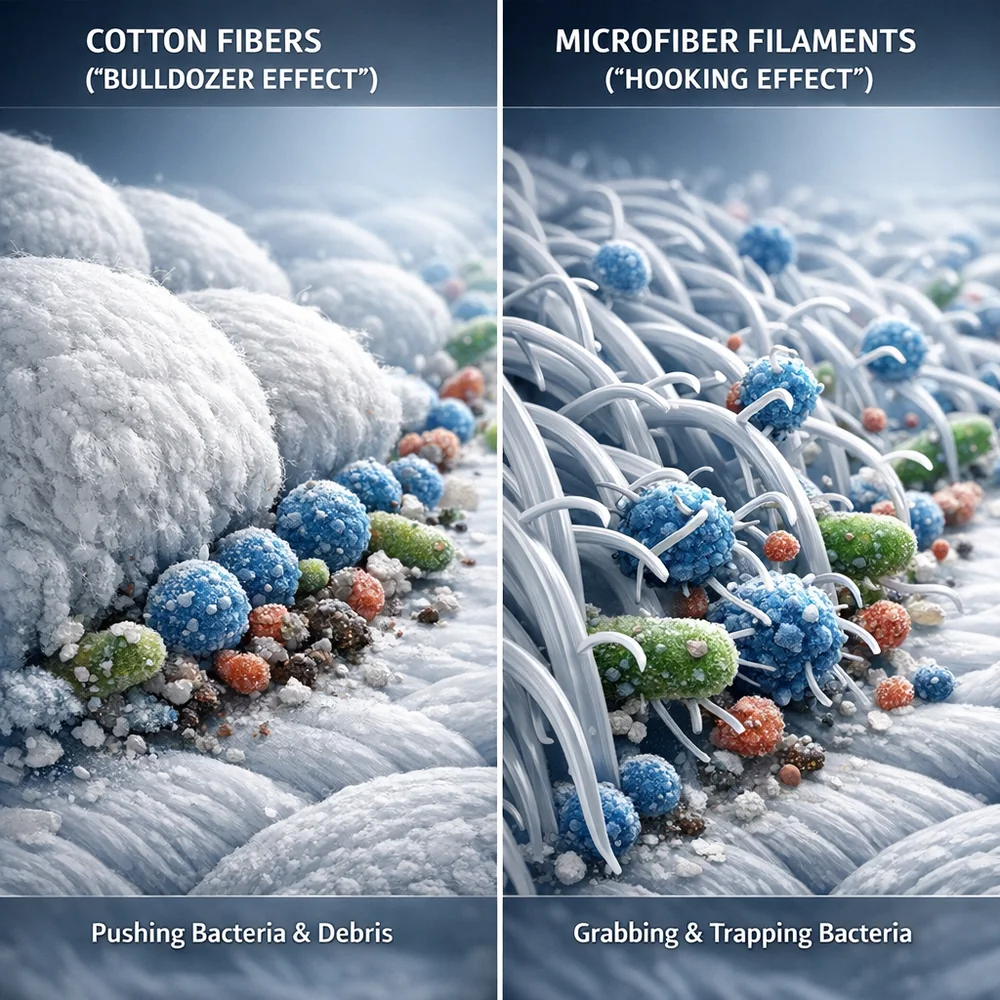
Material science matters when selecting drying tools. Cotton cloths drag bacteria across surfaces, with large fibers pushing microbes rather than picking them up.
Microfiber operates differently. Split fibers thinner than human hair act as tiny hooks, trapping bacteria via van der Waals forces. Studies show microfiber removes 99% of bacteria versus 30 to 70% for cotton. However, the cloth becomes a biohazard, requiring hot water laundering (minimum 140°F) after each use.
The Bottom Line Microfiber removes 99% of bacteria versus 30 to 70% for cotton. But it must be laundered hot after each use or it becomes the biohazard.
Air Drying vs. Towel Drying
The final stage of dishwashing presents a critical choice: air drying or towel drying. From a strict hygiene perspective, air drying is vastly superior.
Dish towels are notorious vectors for cross-contamination. A towel used to dry hands, wipe a counter, and then dry a plate transfers bacteria from every previous touchpoint directly to your clean dish. Even a “clean” towel hanging on a stove handle accumulates airborne grease and bacteria rapidly.
Air drying relies on evaporation, a process that inherently leaves no residue. Placing dishes in a rack allows gravity to drain water droplets, while ambient air finishes the job. For this to work hygienically, the drying rack itself must be sanitized regularly.
The Bottom Line Air drying is vastly superior. Towels transfer bacteria from every previous use directly to your “clean” dish.
Drying Rack Ecology: Hidden Pathogens
The drying rack is often the most overlooked vector in kitchen hygiene. Because it holds “clean” dishes, users assume it is clean. In reality, the runoff from wet dishes contains trace amounts of grease and mineral salts, which pool in the catch tray.
This environment is perfect for Serratia marcescens, an airborne bacterium commonly known as “pink mold.” While often dismissed as a stain, S. marcescens is an opportunistic pathogen that can cause urinary tract and respiratory infections in immunocompromised individuals.
Disinfection of the drying rack should be weekly. A localized scrub with white vinegar kills the bacteria and strips the mineral deposits they feed on. If your rack has a plastic catch tray, run it through the dishwasher top rack monthly.
The Bottom Line That pink slime on your drying rack is an opportunistic pathogen, not just a stain. Scrub with vinegar weekly.
Dermatological Risks of Dishwashing
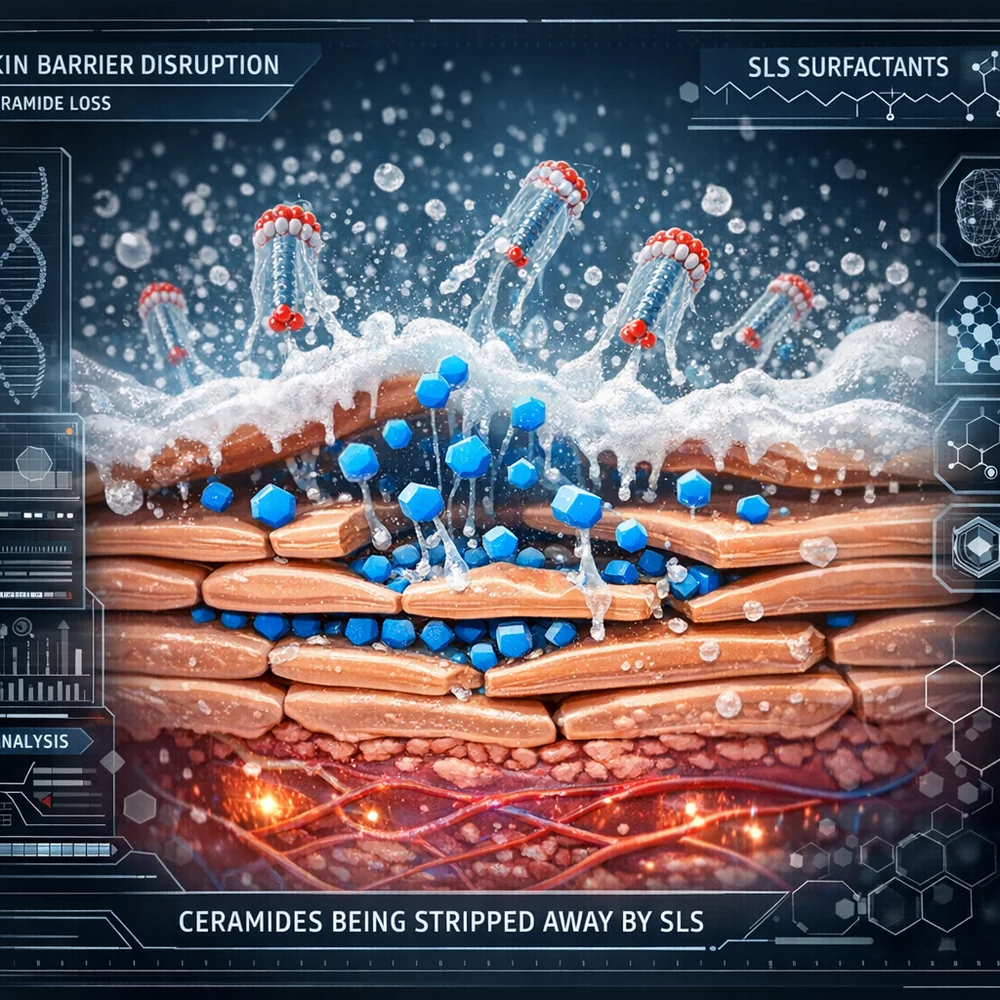
Your hands are the most important tool in the sink, yet dish detergent is chemically engineered to damage them. Sodium Lauryl Sulfate (SLS), the primary surfactant in most detergents, excels at dissolving grease. Unfortunately, the lipid barrier of your skin is also grease.
“Dishpan hands” is chemically known as irritant contact dermatitis. SLS strips the natural oils (ceramides) from your stratum corneum, creating microscopic fissures. These cracks allow irritants to penetrate deeper, leading to redness, itching, and chronic inflammation.
Research confirms that even low concentrations of SLS (0.1% to 1%) increase transepidermal water loss (TEWL), leaving skin vulnerable to infection.
The Bottom Line “Dishpan hands” is actually irritant contact dermatitis caused by SLS stripping biological oils. If you don’t wear gloves, you must replace these oils with ceramide-based creams, not just simple lotions.
The Chemistry of Skin Repair
If dermatitis develops, simple lotions are insufficient because they add moisture, not structure. Effective repair requires “biomimetic” ingredients that replace the stripped barrier.
Ceramides are the lipid molecules acting as “mortar” between skin cells. Detergents wash this mortar away; ceramide creams replace it. Urea draws moisture deep and softens scaly patches. An occlusive layer (petrolatum or dimethicone) seals everything in, preventing water loss while healing occurs.
The Bottom Line Simple lotions only add moisture. True repair requires ceramides (structure), urea (deep hydration), and an occlusive seal to lock it in.
Protective Gear: Glove Selection
Wearing gloves is a safety protocol, not just comfort. Not all gloves offer equal protection.
Nitrile is the gold standard: puncture-resistant, chemical-resistant, hypoallergenic, and durable for scrubbing cast iron. Latex offers dexterity but degrades with fats and is a common allergen. Vinyl is budget but dangerous, prone to microscopic “pinholes” with high failure rates.
For daily use, flock-lined nitrile gloves offer the best balance of protection and dexterity.
The Bottom Line Nitrile gloves are the gold standard. Vinyl provides a false sense of security with poor barrier integrity.
Chemical Residue and Ingestion
Does soap residue on dishes pose a health risk? While the acute toxicity of dish soap is low, chronic ingestion of surfactant residue is a valid concern.
Research into glassware cloudiness often reveals that what looks like “clean” glass actually carries a film of dried detergent. When you pour hot coffee or acidic wine into that glass, the residue redissolves into your drink.
Studies on gut health suggest that high ingestion of certain surfactants can disrupt the mucus membrane of the gastrointestinal tract. While the amounts remaining on a properly rinsed plate are negligible for most adults, inconsistent rinsing habits can lead to accumulation.
The “squeaky clean” test is scientifically valid. Run a wet finger over the washed surface. Resistance (friction) indicates bare material; a slippery feel indicates remaining surfactant film. Rinse until the friction is palpable.
The Bottom Line Residue redissolves into hot drinks. The “squeaky clean” test is valid: friction means bare material, slippery means soap film.
Special Protocols: Crystal and Glass
Delicate glassware requires a modified hygiene protocol. High temperatures fracture lead crystal, and harsh alkalis (like dishwasher detergents) permanently etch the surface.
Wash crystal in lukewarm water using a minimal amount of mild detergent. The porous nature of lead crystal can actually absorb chemical odors, so use fragrance-free soap.
Dry immediately. Unlike standard dinnerware, crystal should not air dry, as prolonged water contact can lead to spotting that requires harsh polishing to remove. Use a dedicated linen or microfiber cloth to polish dry immediately after rinsing.
The Bottom Line Crystal absorbs odors and cracks at high heat. Wash lukewarm with unscented soap and dry immediately.
Special Protocols: Cast Iron and Wood
Hygiene for porous materials like cast iron and wood contradicts standard “soap and water” wisdom.
For cast iron, hygiene relies on heat rather than chemical sterilization. The pan is sanitized during the cooking process. Cleaning aims only to remove food residue that could go rancid. Rinsing with boiling water effectively cleans a seasoned pan without stripping its polymer layer.
Wooden cutting boards require biological warfare, not just chemical cleaning. The natural tannins in wood are antimicrobial, but they need help. After an initial wash, sanitize wooden boards with plain white vinegar (acetic acid) or a salt-and-lemon scrub.
These acidic environments kill bacteria like E. coli that can survive in wood grain. Never soak wood; saturation opens the grain, allowing bacteria to penetrate deeper.
The Bottom Line Cast iron sanitizes during cooking; just rinse hot. Wood needs acid (vinegar or lemon) to kill bacteria in the grain.
Sanitizing Your Tools
Your cleaning tools require their own maintenance schedule to remain hygienic weapons rather than bacterial reservoirs.
Dish brushes should be boiled for 3 minutes or run through the dishwasher weekly. Sponges need microwaving wet for 2 minutes daily; discard them weekly. Scour pads soak in a 10% bleach solution for 5 minutes weekly. Drying racks get scrubbed with a stiff brush and vinegar monthly to remove pink biofilm (Serratia marcescens) that accumulates in joints.
The Bottom Line Tools need their own sanitization schedules. Boil brushes, microwave sponges, bleach scour pads, and vinegar-scrub drying racks.
The Bleach Sanitization Protocol
For households requiring a true “sanitization step” (for example, after preparing raw chicken or for an immunocompromised family member), chemical sanitization is the final line of defense. Chlorine bleach is effective, but only if the chemistry is correct.
The target concentration is 50 to 100 ppm (parts per million). This corresponds to approximately one tablespoon of standard unscented bleach per gallon of cool water. Do not “glug” bleach into the sink; too much bleach leaves toxic residue, while too little fails to kill pathogens.
Temperature matters. Use cool or lukewarm water (75°F to 120°F). Bleach degrades rapidly in hot water, off-gassing into the air as chlorine gas rather than staying in the water to kill bacteria.
Contact time is critical. Disinfection is not instant. Items must be submerged for at least 60 seconds. In professional settings, test strips verify the ppm. At home, precise measurement is your safety check. Always allow bleached items to air dry; the dissipation of the chlorine is part of the process.
The Bottom Line One tablespoon of bleach per gallon of cool water. Items must soak 60 seconds. Hot water makes bleach useless.
Conclusion
Hygiene in the kitchen sink is a discipline, not a product. No amount of “antibacterial” soap compensates for reusing a dirty sponge or rinsing into dirty water. By adopting the two-sink method, prioritizing air drying, and respecting the temperature limits of your own skin, you transform dishwashing from a chore into a primary pillar of household health.
References
- Journal of Environmental Health. Bacterial Survival on Kitchen Sponges.
- FDA Food Code 2022. Manual Warewashing Guidelines.
- Dermatitis. Sodium Lauryl Sulfate and Irritant Contact Dermatitis.
- Journal of Food Protection. Efficacy of Home Sanitization Methods.
- American Academy of Dermatology. Hand Dermatitis Prevention.
- Journal of Hospital Infection. Microfiber vs. Cotton Cleaning Cloths.