Dishwasher Detergent Pods vs Powder
Table of Contents
Things You'll Learn From This Article:
- Dishwasher pods are wrapped in a plastic-like film that dissolves in water but may not fully break down in wastewater systems.
- Powder detergent avoids the film issue completely, since it goes straight into the wash with no plastic involved.
- Powder usually comes in cardboard packaging, while pods require plastic containers that are harder to recycle.
- Enzymes that clean food off dishes stay stable longer when kept dry, which gives powder an edge in long-term effectiveness.
- Some pods can lose cleaning power over time if their enzymes sit in moisture inside the pod.
- Pods can wash away too early if they dissolve during the pre-wash cycle, unless they are placed correctly in the dispenser.
- Powder lets you split doses, so some detergent can help with pre-wash and the rest with the main wash.
- Fixed-dose pods make it easy to avoid using too much detergent, but they don’t let you adjust for light or heavy loads.
- Powder lets you use less detergent for lightly dirty dishes and more when loads are greasy or baked-on.
- Hard water often needs extra detergent, which is easy to do with powder but impossible with single-dose pods.
- Pods generally cost much more per load, and that extra cost adds up over years of regular dishwashing.
- Powder can clump if exposed to moisture, so it needs to be stored tightly sealed and away from humidity.
- Pods are very sensitive to humidity and can stick together or start dissolving if not stored carefully.
- Oversized pods can block the detergent dispenser door, causing poor cleaning results.
- Rinse aid works the same way with both powder and pods and helps prevent spots and streaks.
- Fixed dosing in pods can help reduce glass etching, but powder allows you to lower detergent strength when protecting delicate glassware.
- Some tablet-style detergents offer pod-like convenience without plastic film, though cleaning performance varies.
- Water hardness plays a big role in results, and powder gives more control in areas with mineral-heavy water.
- Cleaning performance often depends as much on dishwasher loading and maintenance as on the detergent you choose.
- Trying both formats in your own dishwasher can reveal which one works best for your water, dishes, and habits.
Standing in the detergent aisle, you face a choice that seems simple but actually involves chemistry, economics, and environmental science. Should you grab those convenient pods in their plastic tub, or stick with good old powder in a cardboard box?
Both get dishes clean. But they work differently, cost differently, and impact the environment differently. And then there is the PVA controversy, research suggesting the “dissolvable” film on pods might not actually disappear. Let us dig into what the science says.

The PVA Film Problem
Every dishwasher pod comes wrapped in polyvinyl alcohol (PVA) film. The marketing says it dissolves completely. The chemistry is more complicated.
Yes, PVA dissolves in water, becoming invisible. But dissolving is not the same as breaking down. Studies published in the International Journal of Environmental Research and Public Health estimate that about 77% of PVA from pods may pass through wastewater treatment plants intact.
Arizona State University research found that complete PVA biodegradation requires specific conditions that many treatment plants simply do not provide: certain microorganisms, adequate oxygen, and sufficient retention time. Without all three, dissolved PVA molecules persist indefinitely in receiving waters.
Environmental groups have raised concerns that persistent PVA can adsorb toxic chemicals and heavy metals, potentially reintroducing them into ecosystems. Researchers have even detected PVA in drinking water and human breast milk, though health implications remain under investigation.
The Bottom Line PVA dissolves, but dissolving is not the same as biodegrading. A significant portion of pod film may persist in the environment after wastewater treatment.
Powder Avoids the Film Question Entirely
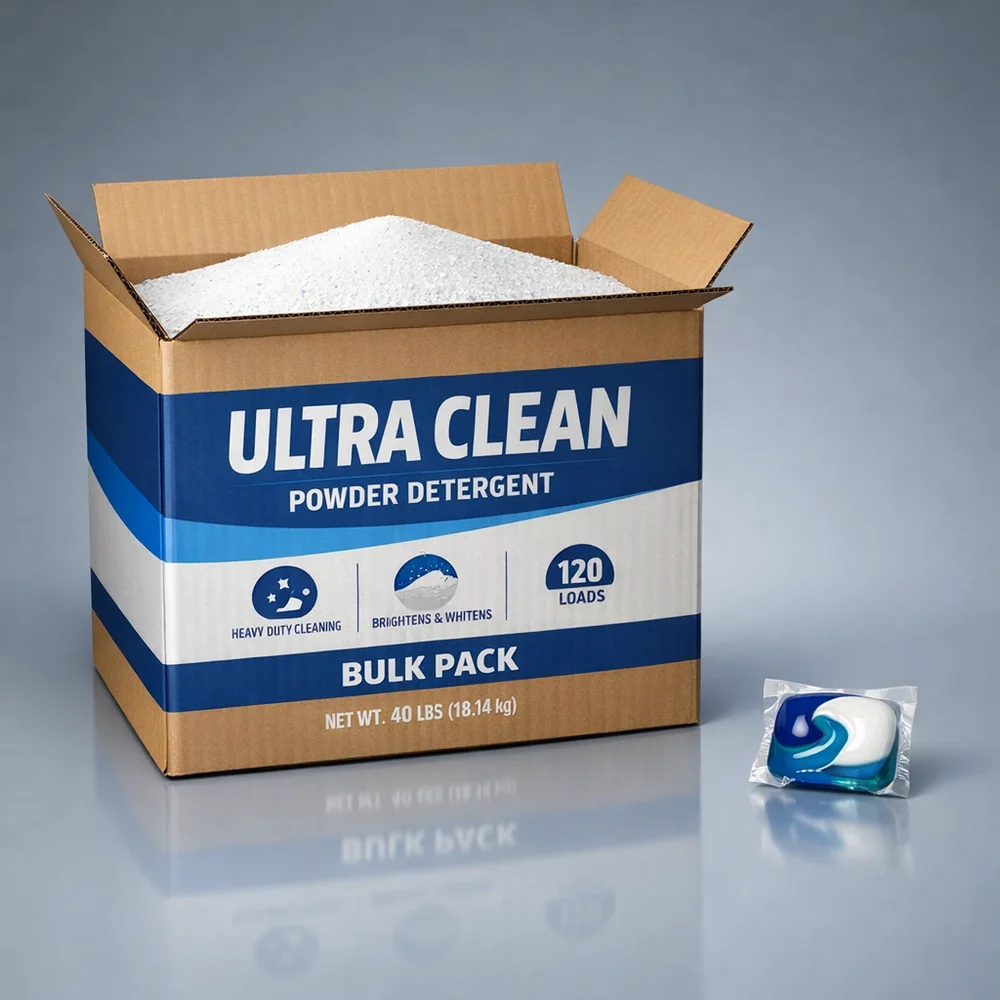
This is powder’s clearest advantage. There is no film to dissolve, no lingering polymer questions. The detergent goes straight into the wash with nothing left behind but clean dishes.
The packaging difference matters too. Powder typically comes in recyclable cardboard boxes. Pods require rigid plastic containers that theoretically get recycled but often end up in landfills.
Some argue pods compensate with shipping efficiency. Concentrated formulas mean less product weight per load. But this partial offset does not eliminate the fundamental difference: powder introduces no plastic at all.
Resources on greenwashing in cleaning labels help evaluate competing environmental claims critically.
The Bottom Line Powder avoids the PVA controversy entirely. No film means no questions about biodegradation. Plus cardboard boxes beat plastic tubs for recyclability.
Enzyme Stability Matters
Modern dishwasher detergents rely heavily on enzymes to break down food. Proteases attack proteins. Amylases tackle starches. These biological cleaning agents work at lower temperatures, saving energy.
But enzymes are delicate. How they are stored affects their potency.
Powder keeps enzymes in a dry, stable environment where they resist degradation for extended periods. Gel-based liquid detergents expose enzymes to moisture that can reduce effectiveness over time.
Pod designs vary. Many use compartmentalized chambers that keep enzymes dry until dissolution. These perform similarly to powder. But gel-filled pods expose enzymes to moisture from day one, potentially losing potency during storage.
Understanding enzyme function connects to broader knowledge about enzyme detergents for challenging cleaning tasks.
The Bottom Line Powder and dry-chamber pods maintain enzyme potency well. Gel-based pods may lose cleaning power during storage. Check expiration dates.
Pre-Wash Cycle Complications
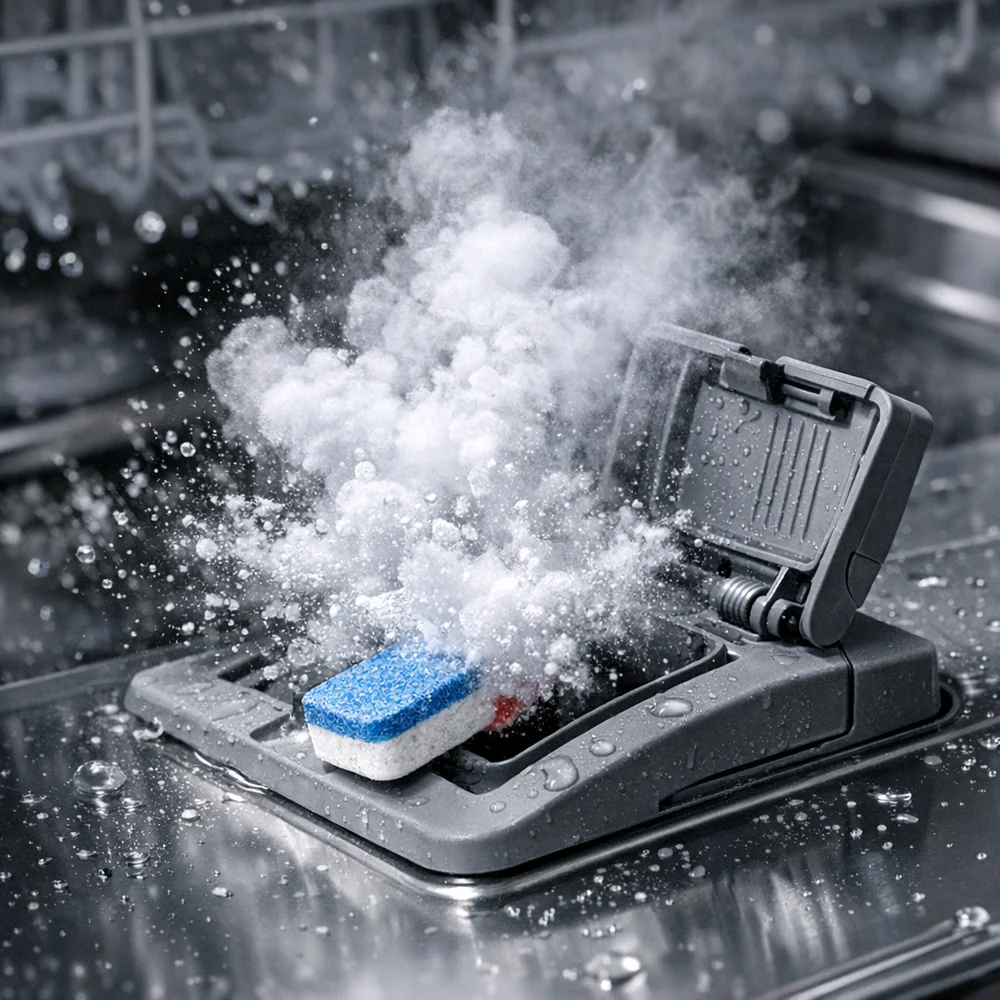
Many dishwashers run a pre-wash cycle, flushing dishes with water before the main wash. This creates a specific problem for pods.
Pods placed loosely in the tub often dissolve during pre-wash, sending detergent down the drain before the main cleaning even starts. Users who experience disappointing pod results frequently make this mistake.
Proper placement in the detergent dispenser solves this. Dispensers release contents only when the main wash begins. Manufacturers recommend dispenser placement for exactly this reason.
Powder offers flexibility pods cannot match. You can put a small amount directly in the tub for pre-wash effectiveness while loading the main dose in the dispenser for the primary cycle.
The Bottom Line Always place pods in the dispenser, not loose in the tub, or pre-wash water will waste them. Powder allows split dosing for pre-wash and main wash.
The Case for Dosing Flexibility
Powder lets you adjust for conditions. Pods give you the same dose every time regardless of need.
A lightly soiled load might need a tablespoon of detergent. Using a full pod wastes product and money while leaving unnecessary residue. Heavy loads sometimes need more than one pod provides; adding a second pod doubles the cost for marginal benefit.
Water hardness affects optimal dosing significantly. Hard water requires more detergent because minerals bind with surfactants, reducing cleaning power. Powder users can increase quantities to compensate. Pod users accept whatever results their fixed dose produces.
However, pods prevent a common user error: overdosing. Many people use far more detergent than necessary, contributing to cloudy film on glassware.
The Bottom Line Powder offers flexibility for varying loads and water conditions. Pods prevent overdosing but force maximum-strength use even when less would suffice.
Storage Affects Both Formats
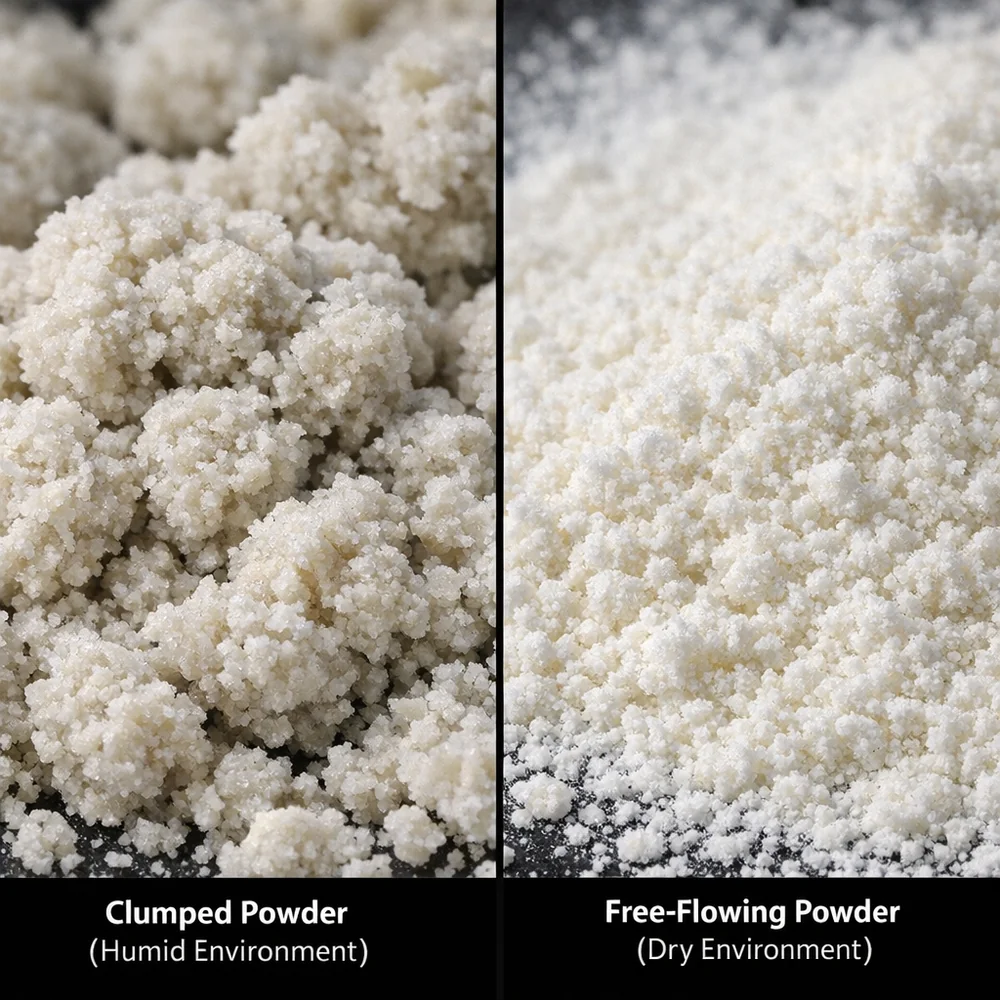
Humidity causes problems for both formats, just different ones.
Powder absorbs moisture and clumps. Severely clumped powder may not dispense properly, leaving undissolved masses that fail to clean. Keep containers tightly sealed, away from dishwasher heat and sink moisture.
Pods are engineered to dissolve on water contact, making them vulnerable to humidity. Humid air causes pods to stick together, soften, or begin dissolving prematurely in the container. Container seals matter more for pods than powder.
Both formats store best in climate-controlled spaces at room temperature.
The Bottom Line Keep both formats sealed and stored away from moisture and heat. Powder clumps when humid; pods stick together and soften.
The Cost Difference Adds Up
Price per load reveals significant differences that compound over years.
Premium pods typically cost 20 to 40 cents per load. Quality powder runs 5 to 15 cents per load. Even premium powder rarely exceeds 20 cents.
Over a dishwasher’s 10 to 15 year lifespan running 200 to 300 loads annually, this adds up. The difference between 10 and 30 cents per load over 2,500 loads represents over $500 in extra spending on pods.
Pods simply cost more to manufacture than powder. The precision dosing, multi-chamber designs, and specialized films require engineering investments that simpler powder production avoids.
The Bottom Line Powder costs roughly half to a third what pods cost per load. Over a dishwasher’s lifetime, this difference pays for itself many times over.
Dispenser Mechanics Matter
How your dispenser works affects performance for both formats.
Dispensers open at specific cycle points to release contents. Powder can accumulate in mechanisms over time, potentially jamming doors or preventing complete opening. Regular dispenser cleaning maintains reliability.
Pods must fit the compartment without blocking the door. Oversized pods prevent complete closure, causing premature release during pre-wash. Check that pods sit freely.
Loading patterns affect dispensers regardless of format. Large items blocking the dispenser door trap detergent inside. Ensure clear space around dispensers.
The Bottom Line Clean dispensers periodically. Ensure pods fit without jamming doors. Keep large items away from dispenser paths.
Rinse Aid Works With Both
Rinse aids reduce water surface tension during the final rinse, promoting sheeting that prevents spots. They work comparably with either detergent format.
Some premium pods incorporate rinse aid alongside detergent. These all-in-one products may reduce the need for separate rinse aid but increase per-load cost.
Powder users always need separate rinse aid if they want its benefits. This adds complexity but costs little per load.
Resources on hand washing hygiene protocols explore reducing chemical exposure through manual washing for those concerned about rinse aid residues.
The Bottom Line Rinse aid improves results with either format. Some pods include it; powder users need separate product.
Protecting Your Glassware
Both formats can contribute to glassware etching under certain conditions: high detergent concentrations, soft water, high temperatures, and light soil loads.
Pods’ fixed dosing prevents the over-concentration that sometimes causes etching. But fixed dosing also prevents reducing concentration when conditions warrant protection.
Powder users can specifically reduce dosing for valuable glassware when etching risk exists. This adjustment capability matters for households with soft water or expensive crystal.
Some detergents include zinc compounds that coat glass surfaces, providing protection regardless of format.
The Bottom Line Both formats can cause etching, but powder allows protective dose reduction for valuable glassware.
Alternative Tablet Products
Products like Blueland offer tablets without PVA film, combining some advantages of both formats.
These compact tablets provide dosing convenience similar to pods without film materials. They dissolve directly in the dishwasher without staged-release technology but avoid biodegradation questions entirely.
Environmental benefits include reduced shipping weight and no plastic film. Performance varies; independent testing shows some tablets performing comparably to leading pods while others lag.
Resources on dissolvable cleaning tablets explore these alternatives further.
The Bottom Line Film-free tablets offer pod convenience without PVA concerns. Performance varies by brand; research before committing.
Plastic-Free Packaging Considerations
Beyond the pod film, total packaging differs significantly.
Powder commonly ships in cardboard boxes that biodegrade readily. Pod containers require moisture-tight sealing that cardboard cannot provide, resulting in plastic tubs.
Refill options exist for some pod products, reducing but not eliminating plastic. Some specialty powders now use plastic-free packaging entirely.
Resources on refillable cleaning systems address household-wide approaches to packaging reduction.
The Bottom Line Powder’s cardboard packaging beats pods’ plastic tubs for recyclability. Refill options help but do not fully close the gap.
Hard Water Changes the Equation
Water hardness affects performance for both formats differently.
Hard water contains minerals that bind surfactants, reducing cleaning power. Powder formulations often include water-softening compounds, and users can increase dosing to compensate.
Pods contain water softeners too, but in fixed quantities designed for average conditions. Hard water areas may find pod performance disappointing when built-in softening cannot handle local mineral content.
Test strips help calibrate expectations. Extremely hard water may require supplemental treatment regardless of format.
Understanding hard water’s effects connects to knowledge about removing mineral deposits from glassware.
The Bottom Line Powder’s adjustable dosing accommodates hard water better than pods’ fixed formulations. Test your water hardness to calibrate expectations.
Making Your Choice
No universal answer works for everyone. Your priorities determine the best choice.
If convenience and consistent dosing matter most, pods work well despite higher cost and environmental questions. The simplicity of dropping a pod and forgetting appeals to busy households.
If sustainability concerns you, powder’s simplicity and proven absence of persistent film materials provide certainty that pods cannot match.
If you have challenging water conditions, powder’s flexibility lets you adapt. If budget matters over the long term, powder saves meaningfully.
Testing both formats for several weeks reveals what works for your specific dishes, water, and lifestyle.
Integration With Kitchen Care
Detergent choice connects to overall kitchen maintenance. Regular dishwasher filter maintenance affects cleaning performance regardless of format.
Proper loading patterns matter more than detergent choice for many cleaning outcomes. Resources on loading dishwasher spray mechanics address these practices.
The relationship between machine care and detergent performance means poor results may indicate machine issues rather than product problems.
The Bottom Line Detergent format is only one factor. Filter cleaning, loading practices, and machine maintenance all affect results.
References
- International Journal of Environmental Research and Public Health. PVA Fate in Wastewater Treatment.
- Arizona State University. Polyvinyl Alcohol Biodegradation Research.
- National Institutes of Health. Environmental Persistence of Dissolved Polymers.
- Consumer Reports. Dishwasher Detergent Testing Methodology.
- American Cleaning Institute. Detergent Formulation Standards.