Remove Sweat Smell from Gym Clothes: The Permastink Problem
Table of Contents
Things You'll Learn From This Article:
- Sweat smell coming back after washing usually means bacteria are stuck in the fabric, not that the clothes are still dirty.
- Polyester gym clothes hold onto body oils much more than cotton, which gives odor‑causing bacteria a better place to live.
- Bacteria protect themselves by forming biofilms, which regular detergent and hot water often can’t break through.
- White vinegar works because it weakens those bacterial “fortresses” and makes the fabric less friendly to odor‑causing germs.
- A simple vinegar soak before washing can make a big difference, and you don’t need to rinse it out before the wash.
- Enzyme detergents help by breaking down sweat, oils, and residue that bacteria feed on, but they need time to work.
- Very hot “sanitize” wash cycles can actually make enzyme detergents less effective by killing the enzymes.
- If clothes smell fine when dry but stink as soon as you warm up, trapped residue is still inside the fabric.
- Rubbing dry fabric between your hands and smelling your palms is a quick way to check if odor is truly gone.
- Slow drying lets bacteria multiply again, even after a good wash, so airflow matters more than heat.
- Hanging gym clothes in damp or crowded spaces can undo all your washing efforts.
- Wearing workout clothes even one extra time without washing feeds surviving bacteria and makes smells harder to remove later.
- Tossing sweaty clothes into a closed hamper creates a perfect environment for bacteria to grow.
- Letting gym clothes dry before putting them in a basket slows bacterial growth and reduces future odor.
- Laundry stripping can reset badly smelly clothes, but it’s rough on activewear and should be a last resort.
- Some gym clothes reach a point where the smell can’t realistically be removed without ruining the fabric.
- Preventing odor from the first wear is much easier than trying to fix deeply embedded smells later.
- Treating gym clothes like a bacteria problem, not just a laundry problem, leads to better long‑term results.
You know what’s weird? You finish a workout, your shirt is soaked, and honestly? It doesn’t smell that terrible. Fast forward to the next gym session: you pull that same shirt out of the drawer, bone dry, freshly laundered. Put it on. Five minutes of warming up and suddenly you’re a biohazard. What gives?
The takeaway: Fresh sweat is pretty much odorless. The infamous gym-clothes stink comes from bacteria that survived your last wash coming back to life when they get warm and wet again.
This isn’t a chemistry problem you can wash away with more detergent or hotter water. It’s a biology problem. Bacteria have literally set up shop inside your fabric, building microscopic fortresses that your regular laundry routine can’t even touch.
Understanding what’s actually happening at the microscopic level—and why polyester seems to smell way worse than cotton—gives you the tools to actually fix the problem instead of just covering it with stronger and stronger fragrances.
Why Synthetic Fabrics Smell Worse
Cotton and polyester react completely differently to the same sweat. Multiple research studies have confirmed what anyone with a gym bag already suspected: synthetic fibers stink way more than natural ones under identical workout conditions.
Researchers at Ghent University did this great study where they made people run on treadmills wearing either cotton or polyester shirts under controlled conditions. After 28 hours of incubation, they had trained odor panels (yes, that’s a real job) sniff the shirts. Polyester smelled significantly worse than cotton—objectively and across multiple evaluators.
The takeaway: Polyester attracts smell-causing Micrococcus bacteria that cotton actively repels. It’s not about who sweats more—it’s about which bacteria your shirt feeds.
The reason comes down to surface chemistry. Polyester is oleophilic—the fibers have a natural affinity for oils. Your skin produces sebum (that’s the oily stuff), and polyester basically grabs it and holds on. Cotton, being hydrophilic (water-loving), doesn’t bond with oils the same way.
Here’s where it gets interesting: different bacteria prefer different surfaces. The really smelly ones—particularly Micrococcus species—thrive on polyester’s oil-rich environment. Cotton supports totally different bacterial communities that just don’t produce the same volatile stink compounds.
Bacteria Build Fortresses: The Biofilm Problem
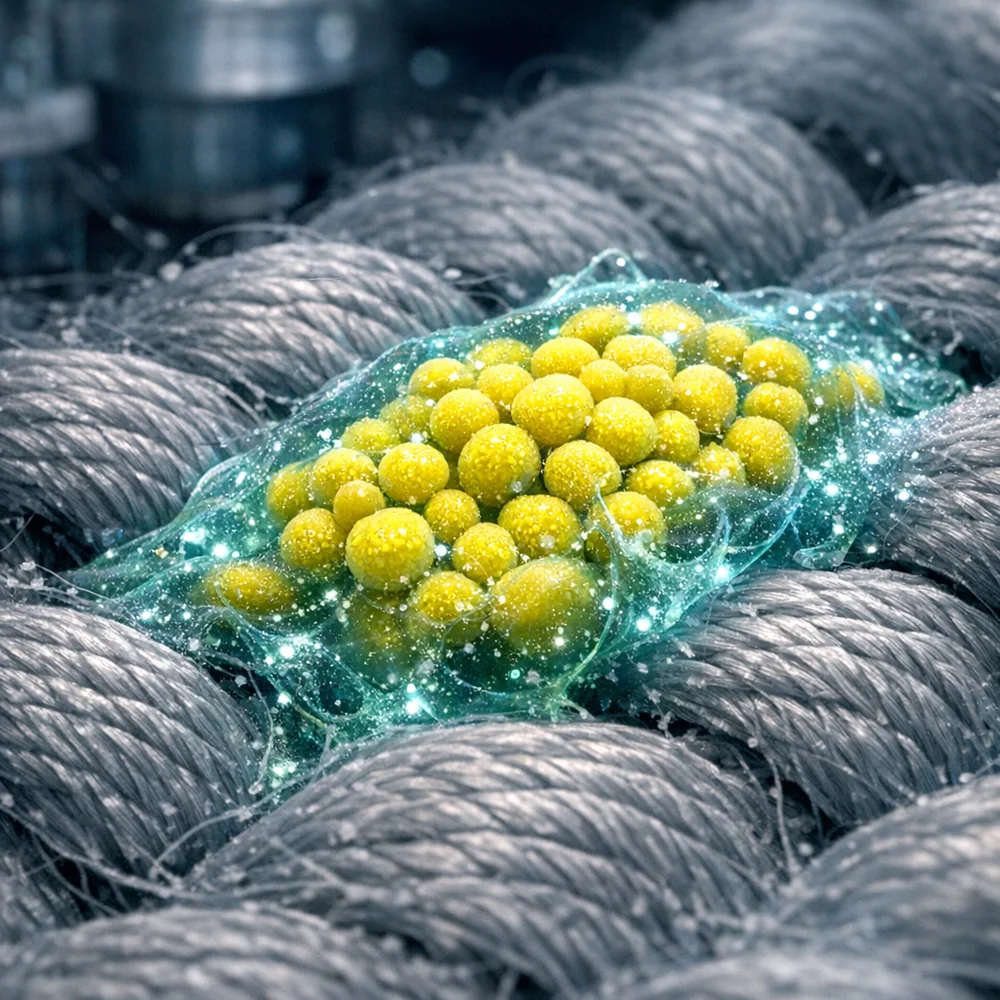
When bacteria find a cozy spot on your gym clothes, they don’t just sit there passively. They build protective structures called biofilms—think of it like a bacterial city with walls.
A biofilm is essentially a slime matrix that bacteria secrete around their colony. This gooey shield serves multiple purposes: it locks the colony to the fiber surface, it stores nutrients for lean times, and most importantly, it blocks detergents and even antimicrobials from reaching the bacteria inside.
The takeaway: Biofilm is a bacterial slime fortress. Your detergent can’t get through the walls, which is why smell survives wash after wash.
This is exactly why “permastink” happens. Even aggressive detergent and hot water will kill bacteria exposed on the outer surface, but the protected colony inside the biofilm survives. As soon as conditions become favorable again (aka you put on the clothes and start sweating), survivors repopulate rapidly.
Standard washing essentially trims the grass but doesn’t kill the roots. The biofilm structure remains intact through multiple wash cycles, ready to regenerate its bacterial population between each wearing.
The Vinegar Soak Protocol
White vinegar is one of the most effective pre-treatments for gym clothes odor because it attacks the problem from multiple angles simultaneously.
First, acetic acid (that’s what makes vinegar vinegar) lowers pH into a range hostile to many odor-causing bacteria. While it won’t sterilize fabric, it creates an inhospitable environment that slows bacterial metabolism.
Second, and more importantly, acidic conditions help break down the biofilm matrix itself. The proteins and polysaccharides that form biofilm structure become less stable in acidic environments, loosening the protective walls around bacterial colonies.
The Protocol:
- Fill a basin with cool water (hot water can set protein-based stains)
- Add 1 cup white vinegar per gallon of water
- Submerge smelly gym clothes completely
- Soak for 30-60 minutes, agitating occasionally
- Proceed directly to washing machine without rinsing
The takeaway: Vinegar pre-soak (30-60 min) destabilizes bacterial biofilm, making the subsequent machine wash way more effective at killing smell.
The vinegar residue actually helps during the wash cycle—don’t rinse it out first. The carry-over acidity continues working during the early phases of washing before dilution neutralizes the effect.
Enzyme Cleaners: Eating the Problem
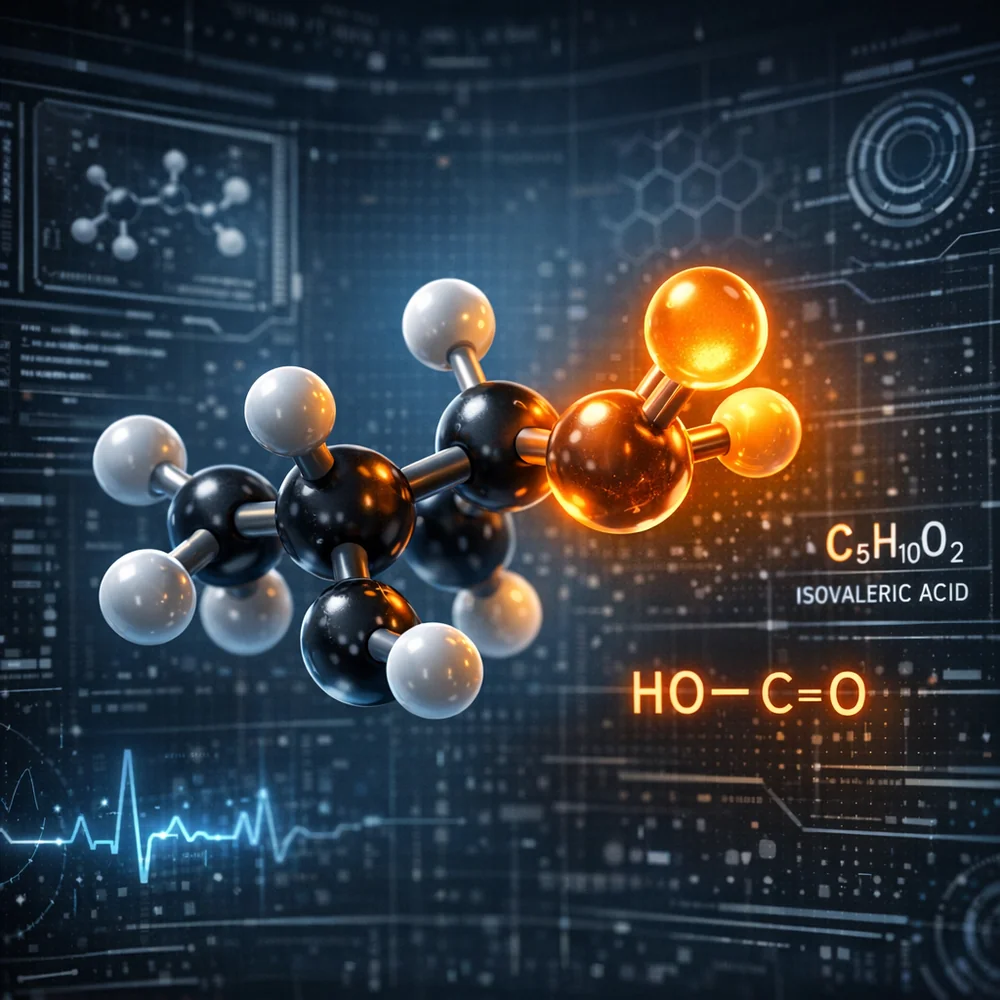
While vinegar attacks the problem chemically, enzyme detergents attack it biologically. These specialized formulas contain proteins that literally digest the components of odor-causing residue.
Protease enzymes break down the protein portions of sweat and biofilm. Lipase enzymes dissolve the sebum and body oils that polyester loves to hold. Together, they dismantle the organic infrastructure that bacteria depend on for survival.
The takeaway: Enzyme detergents don’t just clean—they digest the proteins and oils that bacteria need to survive. No food = no smell.
Enzyme action requires time. Quick wash cycles don’t allow sufficient contact for enzymatic breakdown. For maximum effectiveness, use the longest cycle your machine offers and consider a pre-soak period where the enzyme solution sits on fabric before agitation begins.
Temperature matters too. Enzymes are proteins themselves and become denatured (destroyed) above 60°C (140°F). Ironically, the “sanitize” cycles on fancy washing machines that promise to kill germs are too hot—they kill the enzymes before the enzymes can kill the smell.
Laundry Stripping: The Nuclear Option
When vinegar and enzymes aren’t enough—we’re talking clothes that smell okay when dry but reek within five minutes of wearing—you’ve likely got seriously entrenched biofilm. Laundry stripping can provide a reset.
Standard stripping involves hot water with Borax, washing soda, and detergent. This creates a highly alkaline solution that dissolves accumulated residues including the organic matrix of biofilm. The dramatic brown water people post on social media comes from these dissolved buildups leaving the fabric.
The takeaway: Laundry stripping (borax + washing soda + detergent) is the “nuclear option” that removes deeply embedded biofilm when other methods fail.
However: Standard stripping is too harsh for most activewear. The high heat and alkalinity damage elastane (Spandex), destroy DWR coatings, and can fade colors. A modified cold process using lower chemical concentrations and longer soak times is safer for synthetic fabrics.
Consider stripping as intervention, not maintenance. If you need to strip regularly, your ongoing wash routine isn’t working and needs adjustment.
The “Rub Test” Diagnostic
Not sure if your gym clothes have the smell problem or not? The rub test gives you a quick diagnostic.
Take a questionable garment and rub a section vigorously between your palms for about 10 seconds. Friction generates heat, which volatilizes any trapped compounds. Now smell your palms.
The takeaway: The “Rub Test” heats fabric to release trapped oils. If your hands smell after rubbing the fabric, trapped body oils are still in there.
If you get a whiff of body odor or staleness, that’s confirmation that oil and biological residues remain embedded despite washing. The fabric passed a sniff test when dry and cold but still harbors the compounds that become smelly under body heat.
This test also helps evaluate whether treatment worked. After a vinegar soak and enzyme wash, repeat the rub test. Significant improvement indicates success. No change means biofilm survived and requires more aggressive intervention.
Drying Matters More Than You Think
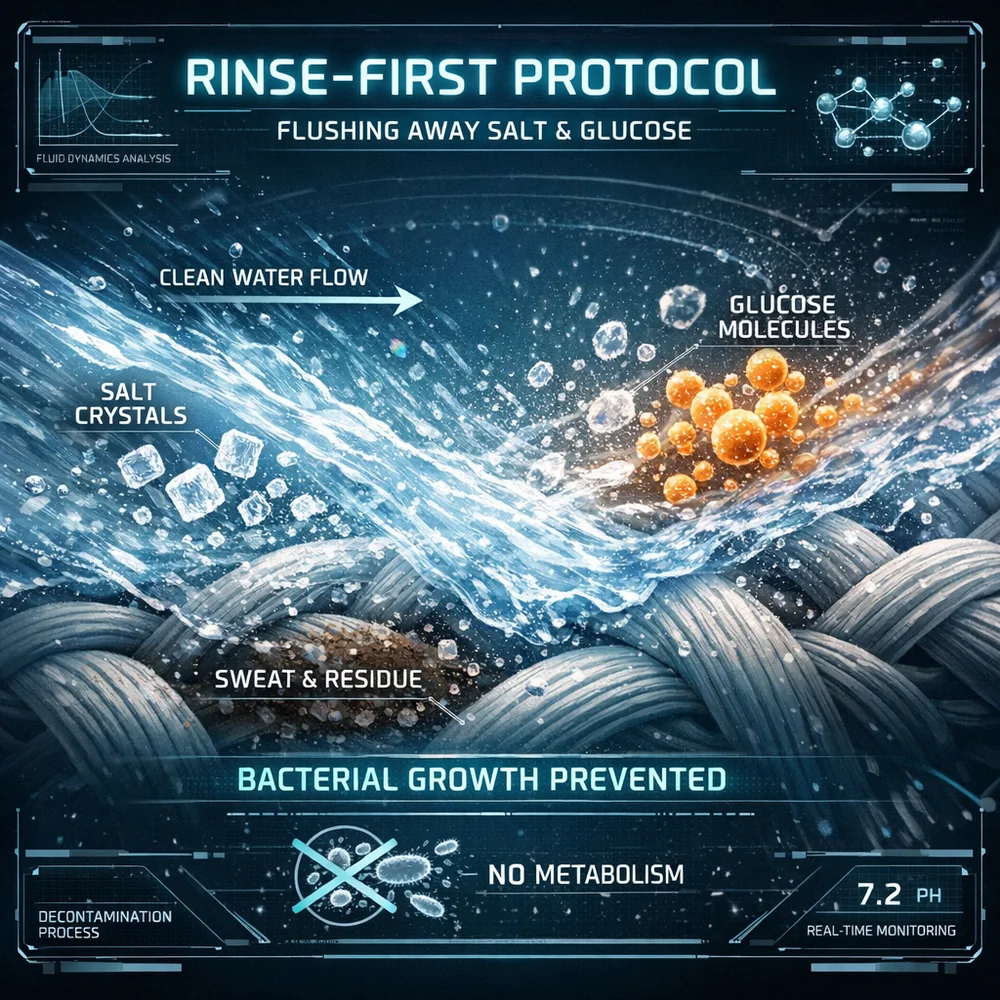
How you dry activewear significantly affects odor outcomes. Bacteria multiply exponentially in warm, damp environments. Slow drying gives surviving bacteria hours of ideal growth conditions to repopulate even freshly washed fabric.
Air drying is generally preferred for synthetic fabrics because high dryer heat damages elastane fibers. But air drying only works if it’s actually fast. Hanging clothes in a humid bathroom or bunching items together on a drying rack creates the slow-dry conditions bacteria love.
The takeaway: Slow drying = more time for bacteria to regrow. Air dry in a well-ventilated area with good airflow, not bunched up in a humid bathroom.
Maximize airflow around each item. Spread clothes across multiple hangers rather than stacking. Position near a window or fan. In humid climates, consider a dehumidifier near your drying area to accelerate moisture removal.
If you must use a dryer, use the lowest heat setting that still produces airflow. The goal is the mechanical air movement, not the heat itself.
Wash After Every. Single. Wear.
One of the biggest contributors to permastink is the “maybe I can wear it again” mentality. That slightly-used sports bra or the shorts you only did stretching in—rewearing unwashed activewear is playing bacterial roulette.
Each wearing deposits fresh sebum, dead skin cells, and sweat residues. Bacteria that survived the last wash get a fresh food supply. Population growth between washes is exponential when conditions are favorable.
The takeaway: Washing after every single wear isn’t optional for activewear. Each rewear adds more bacterial food and accelerates biofilm formation.
The math is brutal: rewear something three times and you’ve potentially allowed bacterial populations to double several times over. That’s orders of magnitude more organisms competing to colonize your fabric.
Yes, washing more frequently means more wear on your clothes. But that wear is predictable and gradual. Bacterial colonization, once established as biofilm, may be permanent regardless of how much you wash afterward.
Your Laundry Basket Is a Petri Dish
Where your sweaty gym clothes go between workout and wash matters a lot. Throwing wet, sweaty items into a closed hamper creates exactly the conditions bacteria dream about: warm, humid, still, dark.
The takeaway: Your laundry basket is a bacteria incubator. Use a breathable mesh bag or basket, never a sealed hamper, for sweaty gym clothes.
By the time you get around to laundry day, that hamper has become an incubation chamber. Bacteria that were a manageable population on your skin have multiplied dramatically in the favorable environment.
Switch to breathable containers for athletic gear. Mesh laundry bags allow airflow that inhibits bacterial growth. At minimum, leave the hamper lid open to promote drying.
Even better: don’t let sweaty items sit at all. Washing immediately after workouts prevents the bacterial multiplication that leads to stubborn colonization. If same-day washing isn’t realistic, at least hang items to dry before adding to the hamper.
When Permastink Becomes Permanent
Sometimes clothes are just too far gone. If you’ve tried vinegar soaks, enzyme washes, and even laundry stripping without success, the biofilm has likely penetrated so deeply into fiber structure that it’s essentially permanent.
At this point, the cost-benefit analysis shifts. Continued aggressive cleaning treatments accelerate fabric degradation. Colors fade, stretch diminishes, and moisture-wicking performance declines.
The takeaway: When all treatments fail, accept that some clothes can’t be saved. The biofilm has won. It’s not a cleaning failure—it’s fabric retirement time.
Consider the garment’s remaining performance value. A premium compression shirt that’s lost its compression isn’t worth saving even if you could eliminate the smell. Retirement to painting clothes or recycling may be the rational choice.
Going forward, implement aggressive odor prevention from day one on new purchases. It’s far easier to prevent biofilm establishment than to eliminate it once entrenched.
Wrap-Up
Gym clothes odor is a microbiology problem masquerading as a laundry problem. Understanding that you’re fighting bacteria—not just stink molecules—changes your entire approach.
Vinegar disrupts bacterial communities and weakens biofilm. Enzyme detergents digest the organic residues that bacteria feed on. Laundry stripping provides a reset when biofilm has become deeply established. Rapid drying and proper storage prevent between-wash bacterial multiplication.
With these tools and understanding, you can keep your activewear genuinely clean rather than just superficially fresh. Your gym bag—and everyone in your vicinity at the gym—will thank you.
References
- Applied and Environmental Microbiology.
(2014). Microbial odor profile of polyester and cotton clothes after a fitness session. https://journals.asm.org/journal/aem 2.
Textile Research Journal. (2011). Influence of fabric construction on odor development in worn textiles. https://journals.sagepub.com/home/trj 3.
Journal of Applied Microbiology. (2018). Biofilm formation on textile surfaces. https://onlinelibrary.wiley.com/journal/13652672 4.
American Cleaning Institute. Laundry science and odor removal. https://www.cleaninginstitute.org