Rust and Metallic Stains: The Chemistry of Iron and Mineral Extraction
Table of Contents
Things You'll Learn From This Article:
- Rust stains don’t come out with regular washing because they’re metal stuck to fabric, not dirt.
- Bleach is the worst thing you can use on rust—it locks the stain in permanently.
- Acids remove rust by dissolving the iron so it can rinse away with water.
- Lemon juice and salt plus sunlight can remove light rust stains from white cottons without scrubbing.
- Sunlight actually helps the lemon method work faster, so outdoor drying matters here.
- Strong commercial rust removers work instantly but can burn skin and damage fabric if left too long.
- Rinsing right away after using strong acids is critical to avoid holes in your clothes.
- Blue or green stains usually come from copper or brass, not iron.
- Diluted household ammonia can remove green copper stains, but it damages wool and silk.
- Yellowing or gray whites after washing often come from iron and minerals in hard water, not from dirt.
- Adding Borax or washing soda helps stop minerals in hard water from sticking to your clothes.
- More detergent doesn’t fix mineral buildup—in hard water, it can actually make clothes look worse.
- Acid rust removers can strip the finish off buttons, zippers, and rivets.
- Coating metal hardware with petroleum jelly or clear nail polish protects it during stain treatment.
- Repeated rust stains often come from a chipped washer drum, rusty drying racks, or metal left in pockets.
- Orange rings in toilets are a clue that iron in your water may be affecting your laundry.
- Rust problems are easier to prevent once you find and fix the source causing them.
- Leaving any acid on fabric too long can weaken fibers, even if the stain is gone.
- Treating rust successfully means thinking in terms of chemistry, not just cleaning.
- Careful handling, good rinsing, and knowing which chemical to use can save clothes from being thrown away.
Rust is the “impossible” stain.
You lean against an old railing, or a metal button on your jeans oxidizes in the wash, and suddenly you have a bright orange streak on your clothes. You throw it in the wash with extra detergent, and it comes out… exactly the same. Or worse.
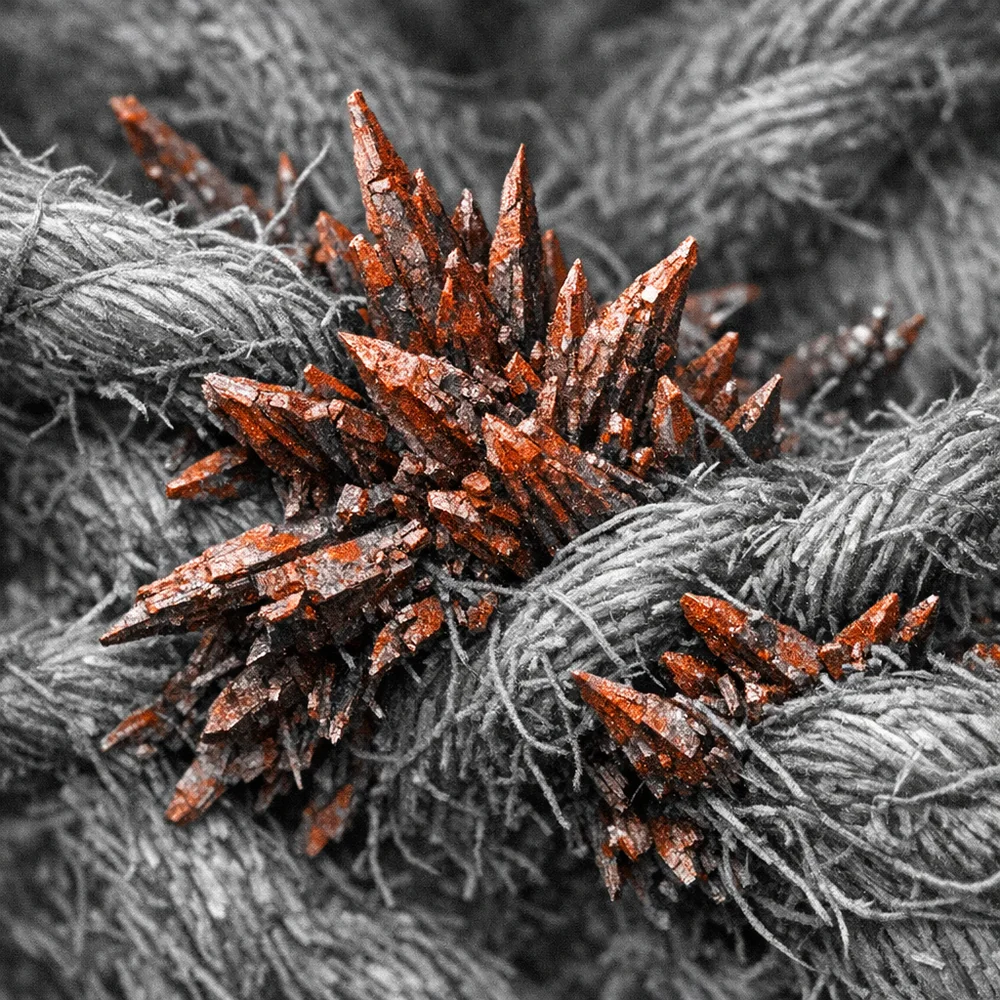
That is because rust isn’t “dirt.” Dirt is organic; rust is mineral. It is iron oxide, a solid metal crystal that chemically bonds to the fiber.
Soap cannot dissolve metal. To remove rust, you have to stop cleaning and start doing inorganic chemistry. You need to dissolve the iron using reductive acids and chelating agents. This guide will walk you through the precise molecular steps needed to turn solid rust back into a soluble liquid, saving your clothes from the landfill.
The Golden Rule: NEVER Use Bleach
If you remember nothing else from this guide, remember this: Chlorine bleach makes rust permanent.
Bleach (Sodium Hypochlorite) is an “oxidizer.” Rust is “oxidized iron.” When you add bleach to rust, you are accelerating the rusting process. You are chemically welding the iron to the fabric.
I have seen tiny orange spots turn into deep, unremovable brown holes within seconds of touching bleach. The bleach converts soluble ferrous iron (Fe2+) into insoluble ferric iron oxide (Fe3+). Once this conversion happens, the stain is practically indestructible. The iron oxide crystals lock into the molecular structure of the cotton cellulose, creating a bond that is stronger than the fabric itself. If you suspect a stain is rust, whitening-without-bleach is the only safe path.
The Bottom Line Chlorine bleach accelerates oxidation, effectively “locking” rust stains into fabric permanently. Never use bleach on a metallic stain.
The Hero Ingredient: Acid
To defeat an oxide (rust), you need an acid.
Acids donate hydrogen ions (H+) that react with the iron oxide. This reaction breaks the oxygen bonds holding the crystal together, turning it from a solid mineral into a soluble liquid cation (Fe2+) that can be rinsed away with water. You don’t need to scrub; you need to let the chemistry do the work.
We will look at three tiers of acids, ranging from gentle kitchen staples to industrial-strength chemicals:
- Citric Acid: Gentle, natural, solar-activated. Best for delicate cottons.
- Oxalic Acid: The industrial standard for rust. Found in commercial removers.
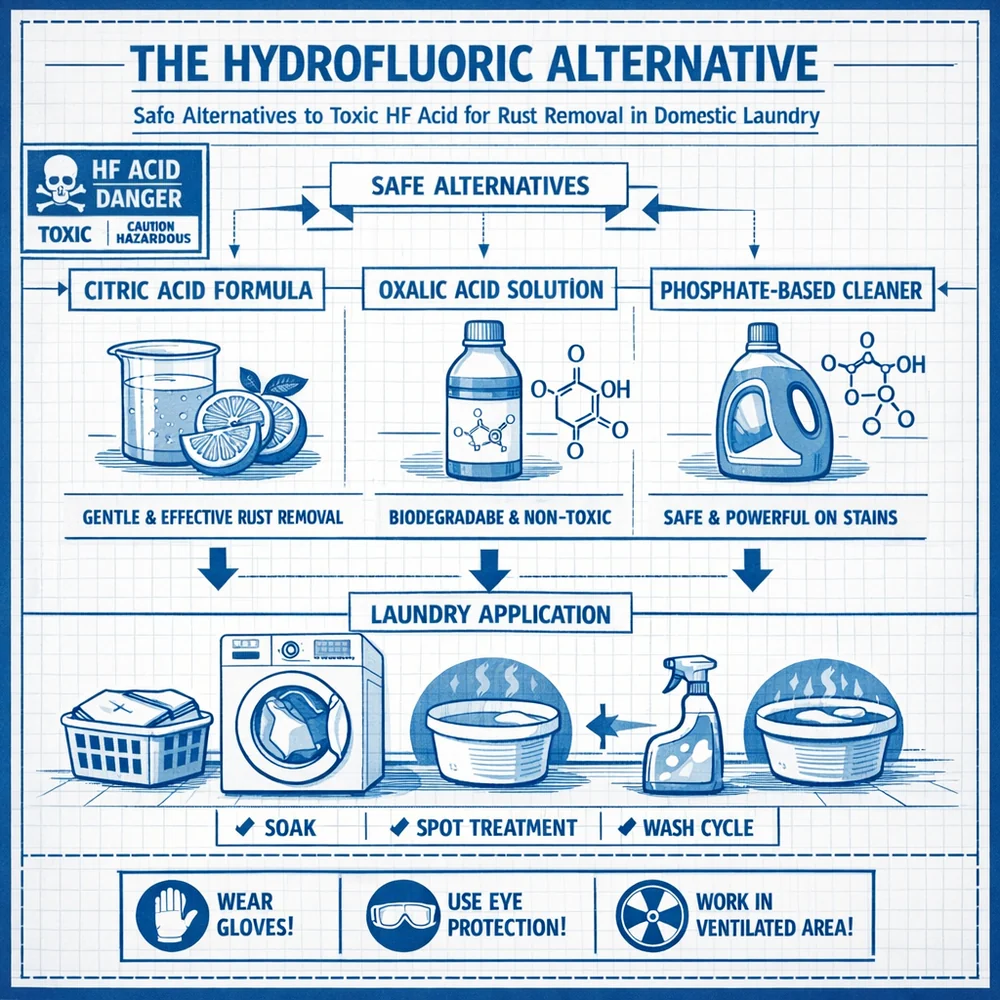
- Hydrofluoric Acid: The dangerous “nuclear” option. Extremely toxic but effective.
Method 1: The Lemon & Salt Trick (Solar Activation)
This is the oldest biological hack in the book, and it works surprisingly well for white cottons and linens. It utilizes a process called “photo-catalysis,” where UV light speeds up the chemical reaction.
The Protocol:
- Saturate: Squeeze fresh lemon juice (which is 5-6% citric acid) onto the stain until it is soaking wet. Do not use bottled lemon juice if possible, as it often contains preservatives that can interfere with the reaction.
- Agitate: Sprinkle a copious amount of table salt (sodium chloride) over the lemon juice. The salt acts as a mild abrasive and increases the ionic strength of the solution, helping the acid penetrate the hydrophilic cotton fibers.
- Solar Power: Lay the garment in direct sunlight.
This is critical. The UV rays from the sun provide the energy to speed up the reaction. The sunlight excites the electrons in the iron atoms, making it easier for the citric acid to “grab” them. As the lemon juice dries, re-wet it. After about an hour, the orange stain will simply vanish.
Rinse thoroughly with cold water to remove the acid residue. Leaving acid on the fabric can weaken the fibers over time, eventually leading to holes.
The Bottom Line Citric acid (lemon juice) combined with solar UV radiation breaks down rust safely on white natural fibers. Keep the stain wet and in the sun for best results.
Method 2: Commercial Rust Removers (The “Nuclear” Option)
For fast results on stubborn stains or synthetic fabrics (where sunlight might fade the color), you need a stronger acid.
Look for a commercial rust remover like Whink, Iron Out, or Carbona Stain Devils. These products typically contain Oxalic Acid or Hydrofluoric Acid.
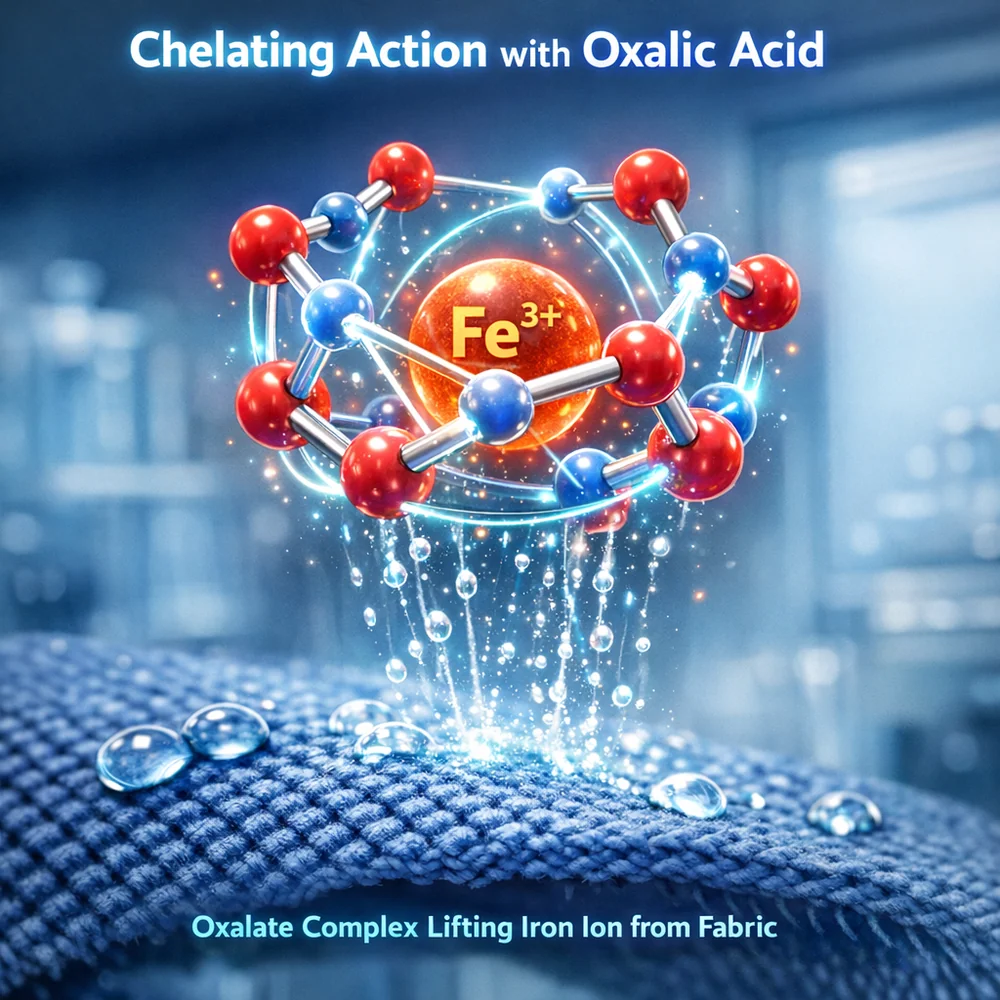
Oxalic acid is a “chelating agent.” It wraps around the iron ion like a claw (chelamak is Greek for claw), pulling it away from the fabric and holding it in solution. It is significantly stronger than citric acid and works without sunlight.
Warning: These are dangerous chemicals. They will burn your skin and can eat through glass and porcelain. Use them with extreme caution, preferably in a well-ventilated area.
The Protocol:
- Place the stained area over a clean white paper towel.
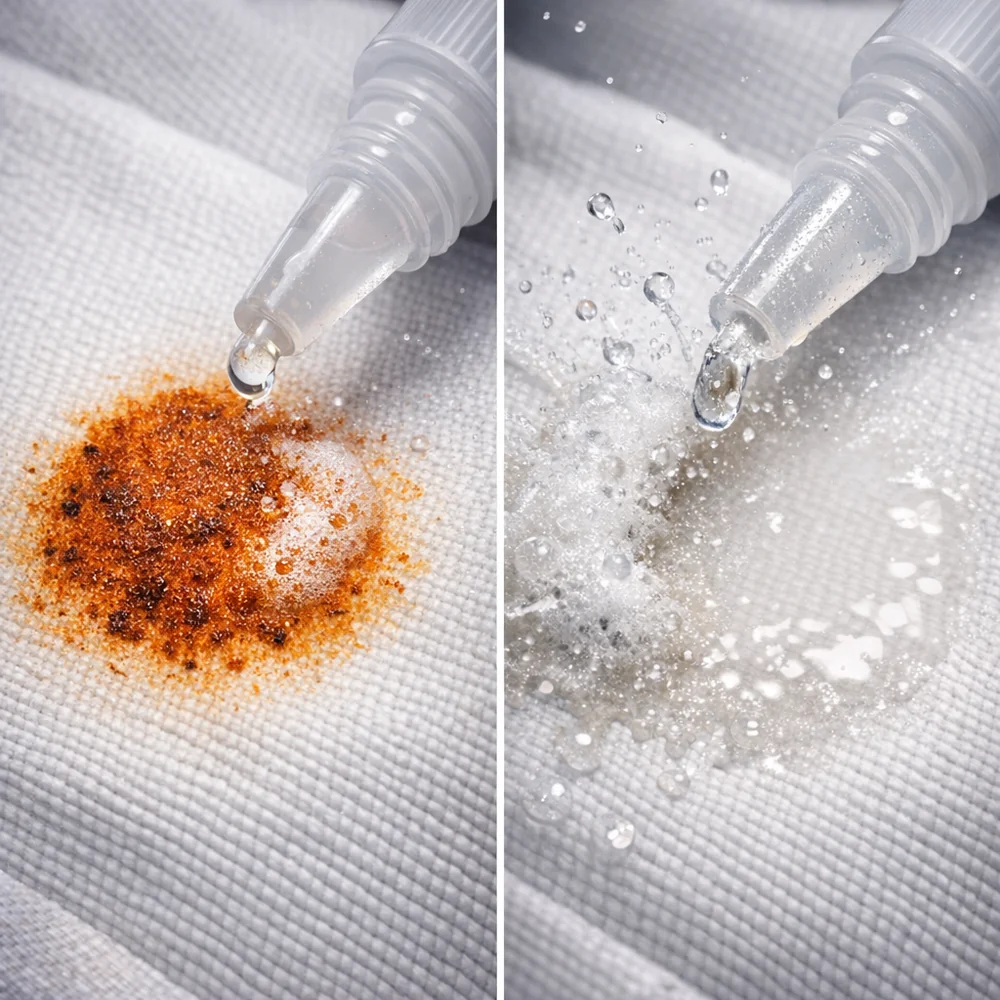
- Apply a single drop of the commercial remover to the stain.
- The rust will disappear instantly—literally in one second. It is chemically fascinating to watch.
- Immediately rinse the fabric for at least 3 minutes under cold running water.
If you leave these strong acids on the cloth, they will hydrolyze (break) the cellulose chains of the cotton, eating a hole right through the shirt. Neutralize the area with a little baking soda and water just to be safe.
The Bottom Line Commercial removers using Oxalic Acid are instantly effective but highly toxic. Apply, watch the stain vanish, and rinse immediately and thoroughly to prevent fabric damage.
Copper & Brass Stains: The Blue-Green Verdigris
Sometimes the stain isn’t orange; it’s blue or green.
This is “verdigris”—the rust of copper and brass. It often happens around the rivets of jeans or the buttons of a jacket. It is chemically known as Copper Carbonate. Unlike iron rust, which is red/orange, copper rust is vibrant teal.
The Lemon & Salt method works here too, but there is a faster trick: Ammonia.
Ammonia acts as a complexing agent for copper. When you mix household ammonia with water (50/50 mix) and dab it on the green stain, it forms a complex with copper ions called the “tetraamminecopper(II)” complex. This complex is water-soluble and has a deep, brilliant blue color.
The Protocol:
- Mix 1 part clear ammonia with 1 part water.
- Dab onto the stain with a cotton swab.
- Watch the stain turn bright blue.
- Blot with a clean cloth until the blue is gone.
- Rinse abundantly.
Note: Do not use ammonia on wool or silk; it behaves as a caustic base and will damage the protein fibers. For delicate fabrics, consult a professional.
The Bottom Line Green stains from copper/brass hardware (verdigris) can be dissolved using a diluted ammonia solution. Rinse thoroughly.
Hard Water Yellowing and “Iron Bacteria”
Do your whites turn dingy gray or yellow after washing? You probably have hard water.
Hard water contains dissolved minerals like calcium, magnesium, and iron. When these minerals meet your detergent, they react to form “soap scum.” This insoluble precipitate coats your clothes, trapping dirt and body oils. Over time, the iron in the water oxidizes, and your whole wardrobe looks rusty.
In some rural areas, you might also have “Iron Bacteria.” These are microorganisms that live in your well or pipes. They feed on soluble iron and excrete microscopic deposits of insoluble rust. They also create a slimy biofilm. If your clothes smell “swampy” or metallic and look yellow, this is the culprit.
You can’t fix this with more detergent. In fact, more detergent makes it worse (more soap scum). You need a “chelating agent.”
The Fix: Add Borax or Washing Soda to every load. These powders bind to the minerals in the water, stopping them from attaching to your clothes. They are “water softeners.” For a deep reset, use a “Laundry Stripping” soak to pull the mineral buildup out of your fabrics. See our Laundry Stripping Protocols.
The “Safety” Zone: Protecting Hardware
Acidic rust removers are non-selective. They will eat the rust, but they will also eat the finish off your metal buttons, zippers, and rivets.
If you submerge a jacket with brass buttons in an oxalic acid solution, the buttons will come out pink or tarnished. The acid strips the outer layer of the metal, ruining the patina.
The Barrier Method: If you are treating a stain near a button, coat the button in a thick layer of petroleum jelly (Vaseline) or clear nail polish first. This creates a waterproof, hydrophobic barrier that protects the metal from the acid. After you rinse the acid away, you can wipe off the Vaseline with a paper towel. This simple step can save a $200 denim jacket from being ruined.
Prevention: Finding the Source
Rust doesn’t just appear; it comes from somewhere. If you are finding random rust spots, play detective.
- Check Your Machine: Inspect the white enamel of your washer or dryer drum. A tiny chip or scratch exposes the steel underneath. In the humid laundry environment, that steel rusts rapidly. When wet clothes touch it, the rust transfers. Fix: Paint over chips with appliance touch-up paint (epoxy).
- Drying Racks: Never dry wet clothes on a metal radiator or a rusty drying rack. Even “stainless” steel can rust over time. Use plastic-coated or wooden racks.
- The “Forgotten” Pin: Check pockets for safety pins, bobby pins, or paperclips before washing. A single bobby pin left in a pocket can rust an entire load of whites.
- The Water Supply: If your toilet bowls have orange rings, you have iron in your water. Install a whole-house water filter to protect your laundry (and your plumbing).
Conclusion
Rust is a mineral, not a mess. It requires a change in mindset from “cleaning” to “chemistry.”
Put away the bleach and the soap. Reach for the acids. Whether you choose the gentle path of lemon and sun or the fast path of chemical removers, the chemistry is the same: dissolve the oxide, rinse the metal, and save the shirt.
Just remember: Rinse well, or the acid that saved your shirt will eventually eat it. Treat the chemicals with respect, protecting your skin and your lungs, and you can reverse the oxidation that threatens your favorite clothes.
References
Journal of Chemical Education. “The Inorganic Chemistry of Iron Oxide Removal from Porous Substrates.” ACS Publications
American Cleaning Institute. “Technical Protocols for Metallic and Mineral Extraction in Residential Laundering.” https://www.cleaninginstitute.org/
Textile Research Journal. “Acid Hydrolysis and the Structural Degradation of Cellulose by Residual Inorganic Acids.” Sage Journals
Consumer Reports. “Evaluation of Rust-Removing Reagents: Efficiency of Oxalic Acid vs. Citric Acid.” https://www.consumerreports.org/
Journal of Surfactants and Detergents. “Synergistic Effects of Chelating Agents and Surfactants in Hard Water Mineral Management.” Springer Link
Water Research. “Iron Bacteria and Biofilm Formation in Domestic Plumbing Systems.” ScienceDirect