Removing Tannin Stains: The Science of Plant-Based Pigments
Table of Contents
Things You'll Learn From This Article:
- Coffee, tea, wine, berries, and grass stains come from plant dyes that bond tightly to fabric, not from grease or protein.
- Regular soap can make these stains worse because it’s alkaline and can lock the color into the fabric.
- Mild acids like white vinegar or lemon juice help loosen plant dyes so they can rinse out.
- For fresh stains, soaking with a vinegar-and-water mix works better than scrubbing right away.
- Red wine spills are easier to handle if you cover them with salt first to soak up the liquid, then rinse from the back with cold water.
- Hot drinks like coffee and tea sink deeper into fabric because heat opens the fibers, so cooling with cold water right away matters.
- Milk or cream in coffee adds protein, which means enzymes (not heat) are needed after the acidic step.
- Old, dried stains need to be softened first; glycerin helps re‑moisturize the stain so cleaners can reach it.
- Berry stains on sturdy white cotton or linen can sometimes be removed by carefully pouring boiling water through the fabric.
- Grass stains need two steps: alcohol to remove the green part, then vinegar to deal with the brownish plant dye left behind.
- Hard water minerals can trap stains in fabric, so a water softener or mineral-fighting detergent can make a big difference.
- If a faint mark remains, soaking in oxygen bleach can break down leftover color without damaging the fabric.
It starts with a slip of the hand. Your morning coffee splashes onto your white shirt, or a glass of red wine tips over onto the tablecloth.
You watch the dark liquid soak in and think, “This is going to leave a mark.”
And you are right. But not all stains are created equal. These aren’t greasy food stains or protein-based blood stains. These are tannins—essentially plant blood.
They behave differently than almost any other stain, and if you treat them wrong (especially if you use the wrong soap), you can actually dye the fabric permanently. But if you understand the chemistry of pH, you can make them disappear like magic.
This guide will teach you how to outsmart the plants.
What is a Tannin?
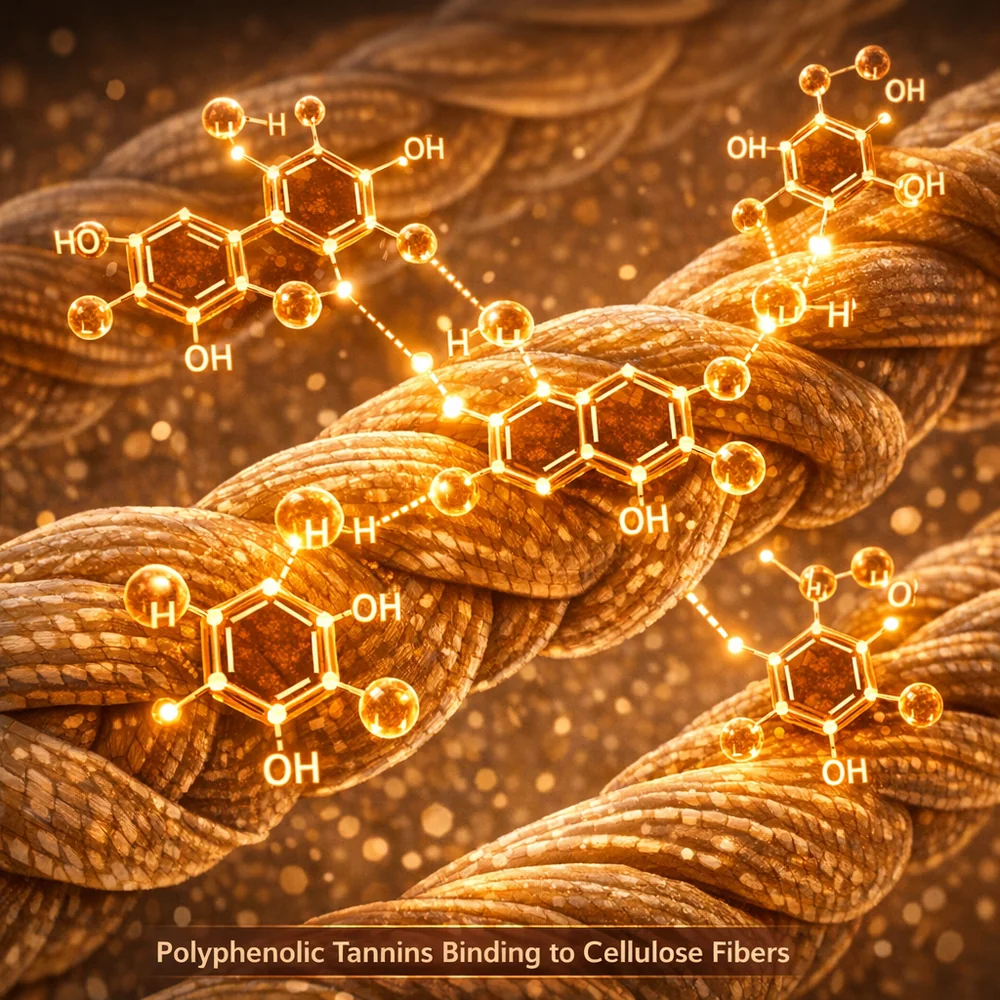
Tannins are natural vegetable dyes found in plants. They are what give red wine its dryness, tea its bitterness, and wood its color.
Chemically, they are “polyphenols.” Think of them as complex molecules that love to grab onto natural fibers like cotton and linen. They form hydrogen bonds with the fabric, acting like a molecular anchor.
Common tannin stains include:
- Coffee and Tea
- Red Wine
- Fruit Juice and Berries
- Perfume
- Tree Sap
Because they are organic dyes, they don’t just sit on top of the fabric; they want to become part of it. Your goal is to break that bond before it becomes permanent.
The Bottom Line Tannins are plant-based dyes found in coffee, wine, and fruit. They bond chemically with natural fibers, acting like a permanent dye if not treated quickly.
The pH Trap: Why Soap Makes It Worse
Here is the biggest mistake people make with tannin stains: they immediately scrub it with bar soap or regular laundry detergent.
Most soaps are alkaline (high pH). Tannins are sensitive to pH. When a tannin stain meets an alkaline substance, the molecules shift structure and the color gets darker.
You are effectively using the soap as a “mordant”—a chemical that fixes dye to fabric.
If you have ever seen a blueberry stain turn from red to blue/gray when you wash it, that is the pH shift in action. Once that happens, the stain is much harder to remove. You need to keep the environment neutral or acidic to keep the tannin soluble.
The Bottom Line Alkaline soaps and detergents can essentially “set” tannin stains and make them darker. Always use a pH-neutral or acidic cleaner for the first step.
The Acid Solution: Vinegar and Lemon Juice
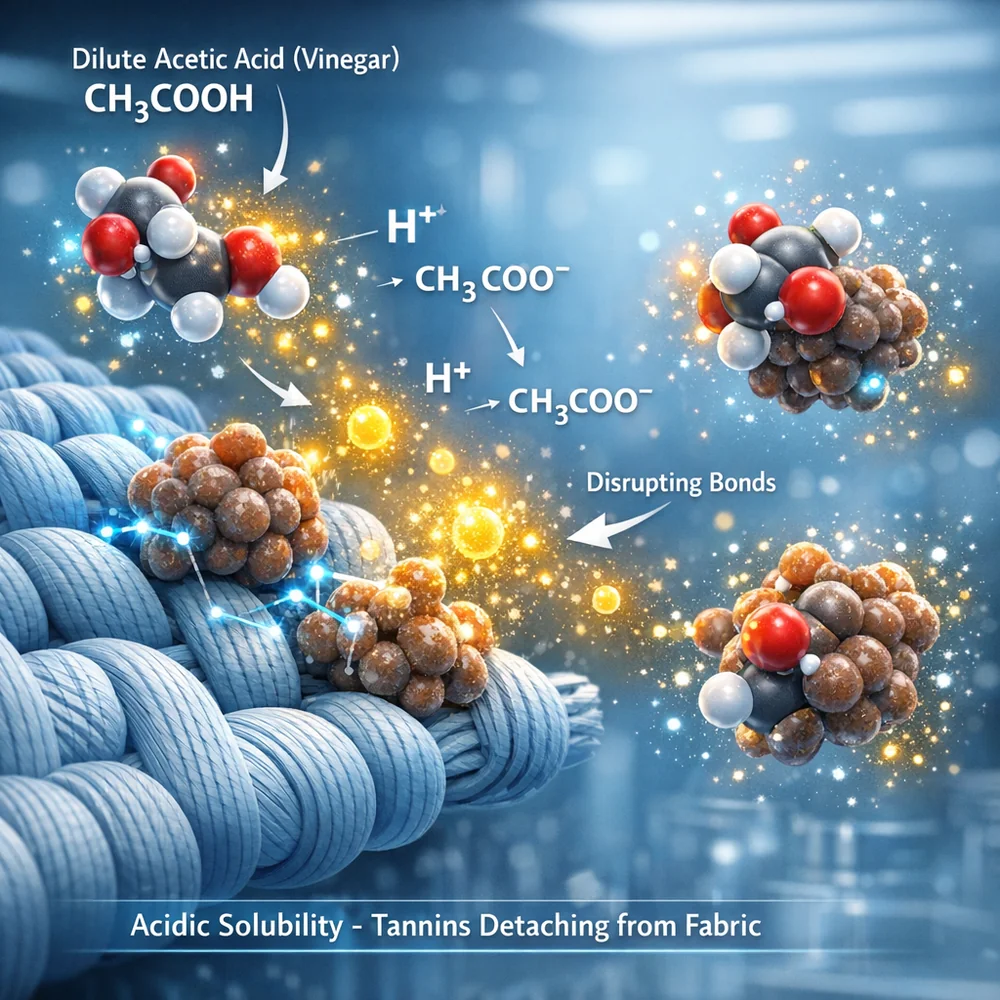
Since alkalis settle tannins, acids release them.
The best first aid for a coffee, tea, or berry stain is a mild acid. White vinegar is perfect for this. The acetic acid neutralizes the alkalinity and protonates the tannin molecules, making them let go of the fabric.
Mix composed of 50% white vinegar and 50% water.
Saturate the stain and let it sit for about 10 minutes. You aren’t scrubbing yet; you are letting the chemistry work. This keeps the stain in a “removable” state so it can be flushed out later. For tough stains on white fabrics, lemon juice works even better because it is slightly more acidic and has a natural bleaching effect.
The Bottom Line Use white vinegar or lemon juice to pretreat tannin stains. The mild acidity keeps the pigment soluble and prevents it from bonding permanently to the fibers.
Red Wine Protocol: The “Salt & Flush”

Red wine is the king of tannin stains. It has deep color and lots of sugar.
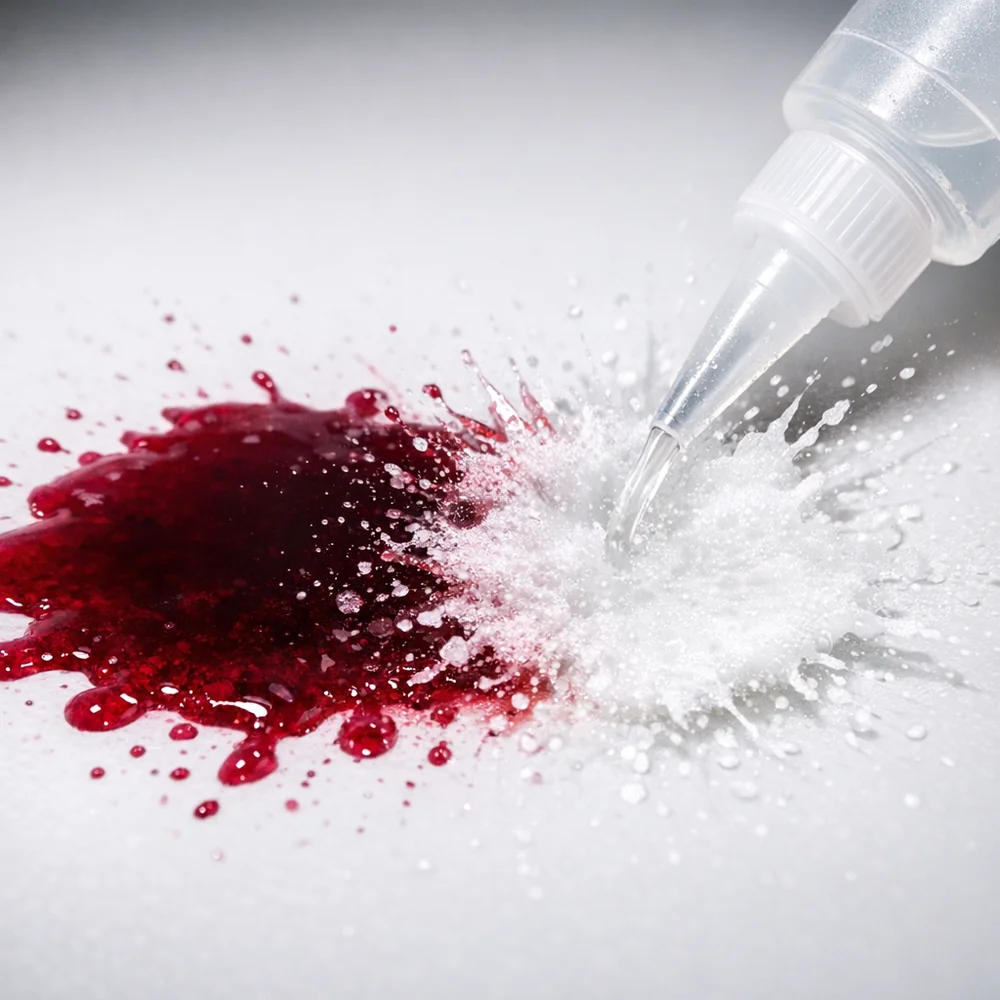
If the spill is fresh and wet, grab the table salt. Pour a mountain of salt onto the spill. The salt doesn’t chemically remove the stain; it physically sucks up the liquid.
It uses osmosis to pull the wine out of the fabric and into the salt crystals.
Once the salt turns pink and wet, brush it off and apply your vinegar solution. Then, do the “flush.” Run cold water through the back of the fabric stain. You want to push the wine out of the fiber, not drive it deeper in from the front.
The Bottom Line For fresh wine spills, use a mound of salt to physically absorb the liquid via osmosis. Follow up with a vinegar soak and a cold water flush from the back.
Coffee & Tea: Dealing with Heat
Coffee and tea are tricky because they are usually hot when they hit your clothes.
Heat opens up the fibers of the fabric, allowing the tannins to penetrate deep into the core. Plus, caffeine and tannins form a complex that is chemically stubborn. If you used cream or sugar, you also have protein and sticky goo to deal with.
Rinse with cold water immediately to cool the fiber.
Then apply your vinegar detergent mixture. If the coffee had milk in it, use an enzyme-based detergent after the vinegar step to eat the milk proteins. Never use hot water on a coffee stain until you are sure it is gone, or you will cook the protein residue.
The Bottom Line Heat helps coffee stains penetrate deep. Cool the fabric instantly with cold water, then use vinegar to break the tannin complex and enzymes to digest any milk/cream.
The Glycerin Trick for Old Stains
What if the stain is weeks old?
Dried tannins form a hard, crusty resin that water just bounces off of. You need to rehydrate the stain to get the chemicals inside. Vegetable glycerin is the secret weapon here.
Glycerin is a humectant—it pulls moisture from the air.
Apply pure glycerin (treat it like a thick soap) to the old stain and let it sit for 30 minutes. It will soften the hardened tannin resin and make it soluble again. Rinse it away, and then treat it like a fresh stain with your vinegar and soap.
The Bottom Line Use vegetable glycerin to rehydrate and soften old, dried-in tannin stains. It restores solubility, allowing you to treat them like fresh spills.
Berry Stains: The Boiling Water Method
Berries are pure pigment. For sturdy whites (like cotton tablecloths or napkins), you can use thermal shock.
Boil a kettle of water. Stretch the stained fabric over a bowl in the sink and secure it with a rubber band. Pour the boiling water from a height (carefully!) directly onto the stain.
The force of the water combined with the heat shatters the pigment structure.
Warning: Do not do this on wool, silk, or synthetic fabrics, or you will ruin them. This is strictly for sturdy plant fibers like cotton and linen. It is an aggressive but incredibly effective technique for fruit stains.
The Bottom Line For sturdy cottons, pouring boiling water through the fabric can physically shatter fruit pigment structures. Use caution and avoid this method on delicates or synthetics.
Grass Stains: The Hybrid Monster
Grass stains are technically tannins, but they are wrapped in chlorophyll.
Chlorophyll is green and acts like a grease. It is hydrophobic (hates water). If you just use water and vinegar, it won’t touch the green part. You need a solvent.
Rubbing alcohol (isopropyl alcohol) is the key.
Sponge rubbing alcohol onto the grass stain first to dissolve the green chlorophyll. Once the green is gone, you will likely see a yellow/brown residue remaining. That is the tannin. Now you can attack that residue with your vinegar and detergent method. It is a two-step punch.
The Bottom Line Grass stains contain both chlorophyll (solvent-soluble) and tannins (water-soluble). Use rubbing alcohol first to remove the green, then vinegar to remove the brown tannin.
Hard Water Issues
If you are doing everything right but the stain won’t budge, check your water.
Hard water contains calcium and magnesium minerals. These minerals love to bond with tannins. They form “insoluble salts” that lock the stain into the fabric. It is like putting a shield of armor over the stain.
You need a water softener or a “chelating agent.”
Add a water softener (like Calgon) to your wash, or use a high-quality detergent that has plenty of chelators instructions. These chemical grab the minerals and keep them away from your stain, allowing the cleaner to work. See our hard water laundry guide for more.
The Bottom Line Hard water minerals effectively lock tannin stains in place. Use a water softener or high-quality modern detergent to prevent mineral interference.
The Final Polish: Oxygen Bleach
Sometimes, even after all the chemistry, a faint shadow remains.
This is where oxidation comes in. You need to bleach the remaining color molecules without damaging the fabric. Sodium percarbonate (oxygen bleach) is the gold standard.
Soak the garment in a solution of hot water and oxygen bleach for at least 4 hours.
The oxygen bubbles will slowly break down the remaining chromophores (color bonds) in the tannin, turning them invisible. It is safe for colors and won’t rot the fabric like chlorine bleach does. Learn more about oxygen bleach chemistry here.
The Bottom Line Use an overnight soak in oxygen bleach (sodium percarbonate) to oxidize and remove any remaining shadow of the stain. It is safe, effective, and color-safe.
Conclusion
Tannin stains are a battle of chemistry, not muscle.
Scrubbing harder won’t hep; thinking smarter will. By understanding that tannins are pH-sensitive and require acidic handling, you can save your favorite shirts from coffee, wine, and berries.
Keep your vinegar handy, respect the pH scale, and steer clear of the bar soap.
The Bottom Line Master tannin removal by controlling pH. Avoid alkalis, use acids for release, and finish with oxygen bleach for a perfect, stain-free result.
References
Journal of Agricultural and Food Chemistry. “The Molecular Mechanisms of Tea Tannin Oxidation and Staining Behavior on Cellulose.” ACS Publications
American Cleaning Institute. “Fruit and Vegetable Stains: A Technical Guide to Plant-Based Pigment Removal.” https://www.cleaninginstitute.org/
Textile Coloration and Finishing. “The Relationship Between pH and the Mordant Bonding of Anthocyanins to Cotton Fibers.” ScienceDirect
Consumer Reports. “The Science of Beverage Stains: Comparative Studies on Coffee, Tea, and Wine Removal Efficiency.” https://www.consumerreports.org/
Dyes and Pigments. “pH-Dependent Optical Stability and Chromophore Shifts in Natural Tannin Solutions.” Elsevier